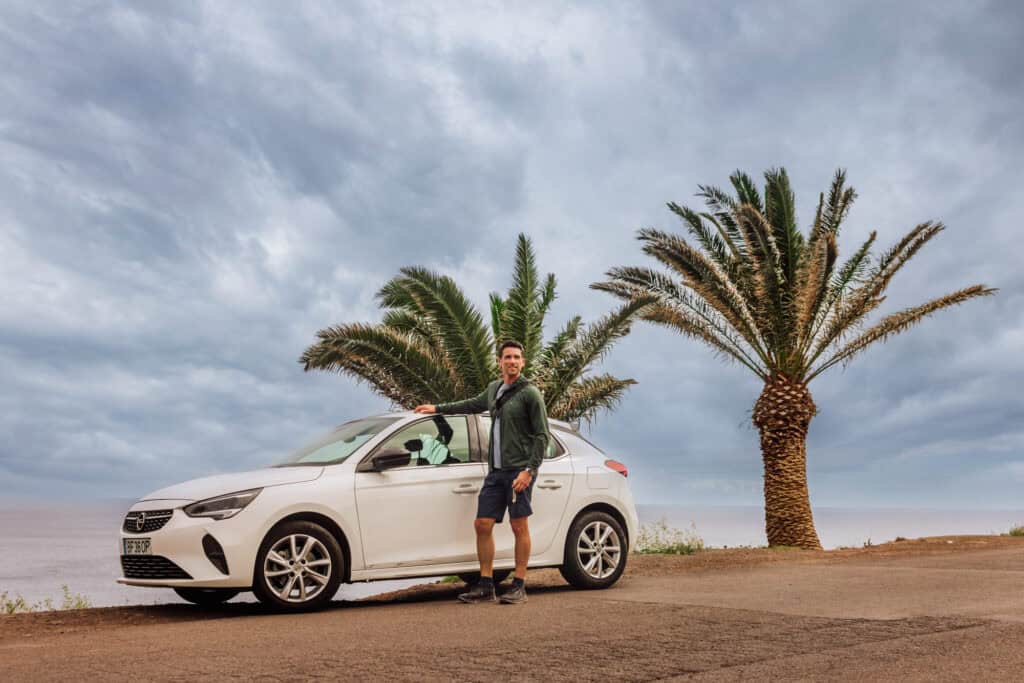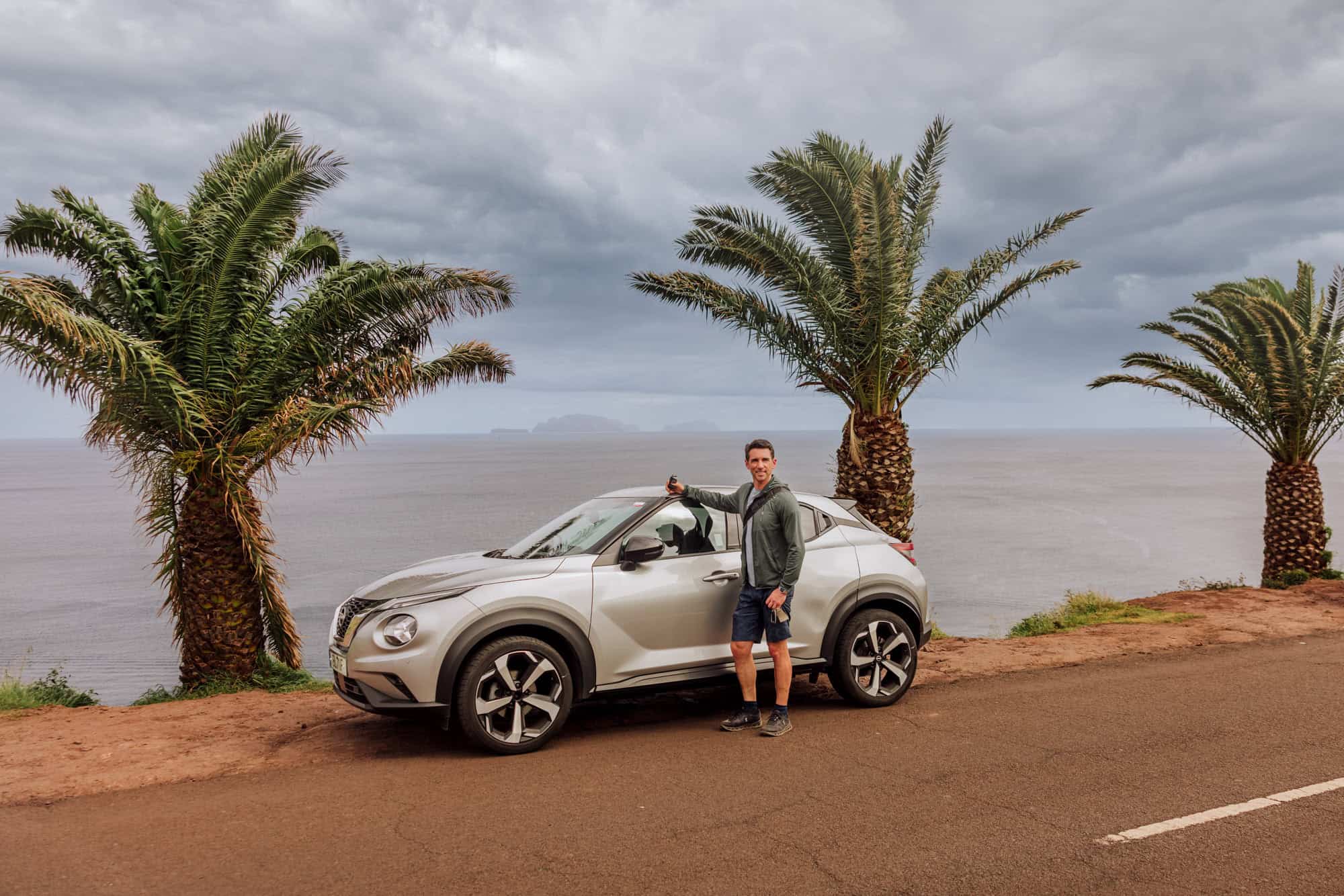
Renting a Car & Driving on Madeira: 10 Things to Know

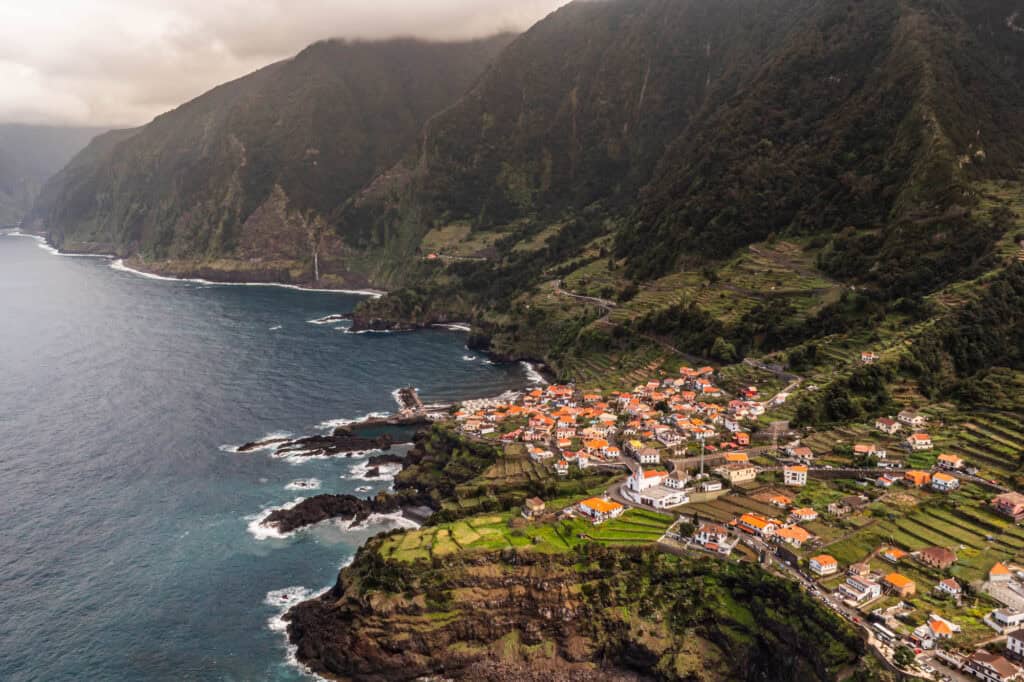
While Funchal is a big city with plenty of sites to see, I’d suggest renting a car and taking a road trip around Madeira to explore the full island.
Based on my experiences, let me answer a few key questions right off the bat:
- You drive on the right side of the road.
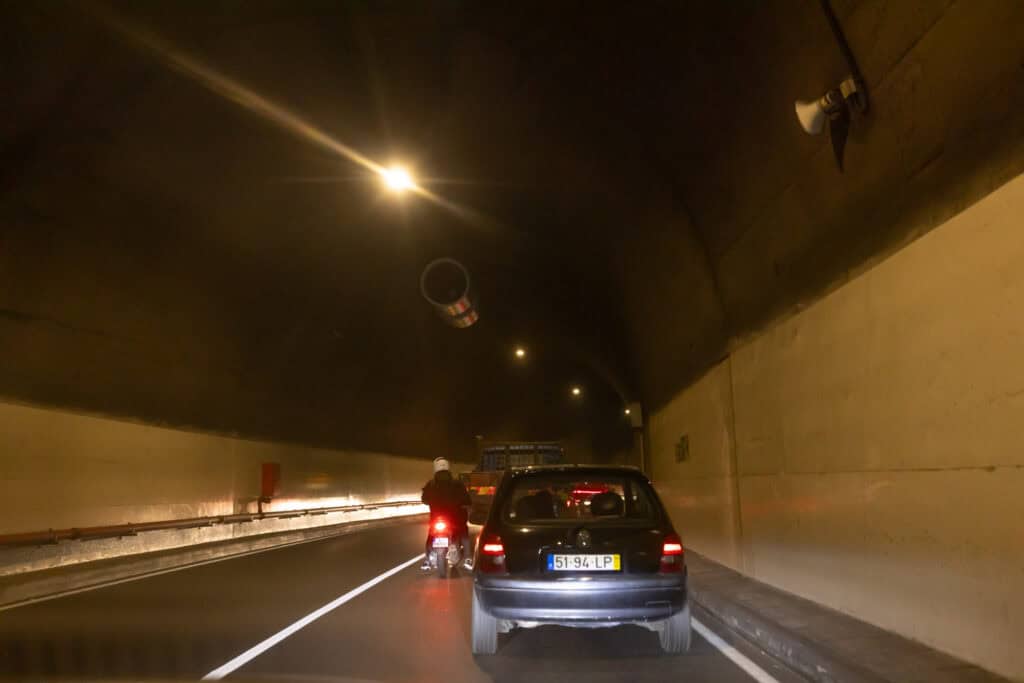
- The highway system includes around 150 tunnels.
- You’ll drive around countless roundabouts (or traffic circles).
- There are no tolls or fees on Madeira’s roads or highways.
You can drive around the entire island of Madeira in under 4 hours, on a circular route that runs about 160km.
The 3 Sites I Use for Every Trip
– For tours: Viator
-For travel insurance: Travel Guard
– For rental cars: Discover Cars
The Best Rates on Rental Cars in Funchal
For the last several years, I’ve been using Discover Cars to find the best deals and prices on rental cars in Europe. Their search produces rates for the big international companies, plus locally-based rental car companies in each city or country.
🚙 ➡️ Click Here to Search Madeira Rental Cars
Renting a Car at the Funchal Airport
Right from the airport in Funchal, you’ll find all of the same car rental companies you’d see in an airport in the US.
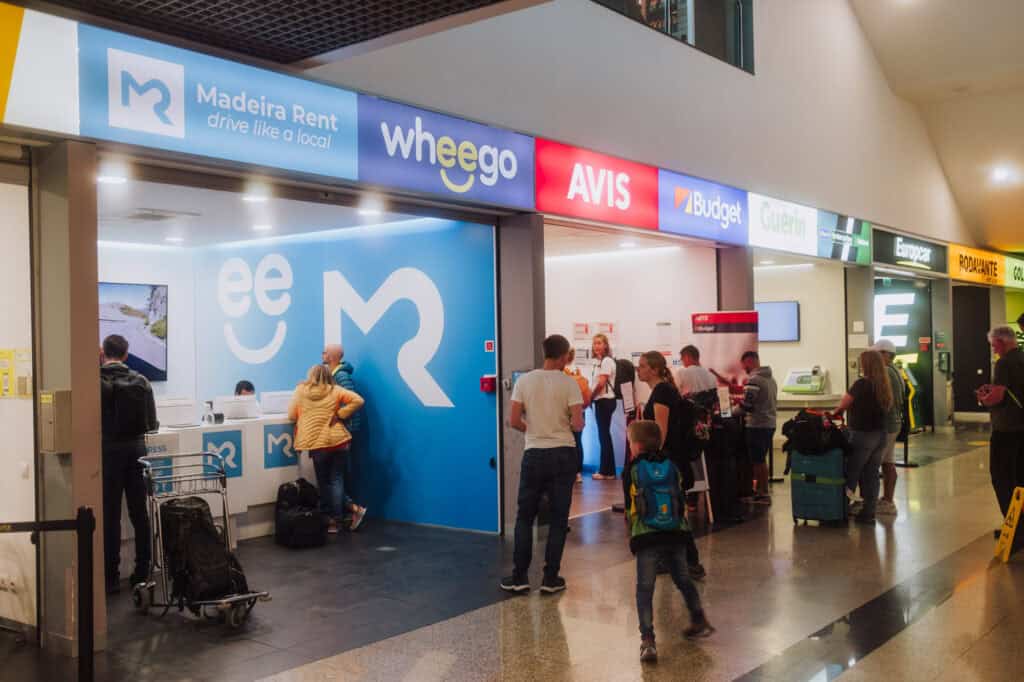
I’ve had great success with a Madeira-based rental company called Madeira Rent (creative name, right?). The friendly, efficient staff is right outside baggage claim, and the cars are a short walk away.

When making your rental reservation, make sure to do it early if you’re traveling in the peak summer months. We had a better selection and cheaper rates during our spring visit to Madeira in April and May.

Plus, remember: you’ll be on steep, narrow, curving roads, and looking for parking in crowded tourist areas. For those reasons I recommend:
- Choosing a car with an automatic transmission… and….
- Opting for efficiency over size. You don’t need or want a big SUV!
Most rental cars are manual. If you’re not comfortable with stick-shift, reserve an automatic early. Automatics are in high demand and more expensive but worth it for the steep terrain if you’re not used to manuals.
Also, while you’ll pay less to rent a car off-site, it’ll require taking a shuttle to a separate lot. Especially after a long flight, I prefer renting a car from a company with a desk/counter right at the airport.
From there, it’s a short walk outside to the waiting cars, right on the airport property.
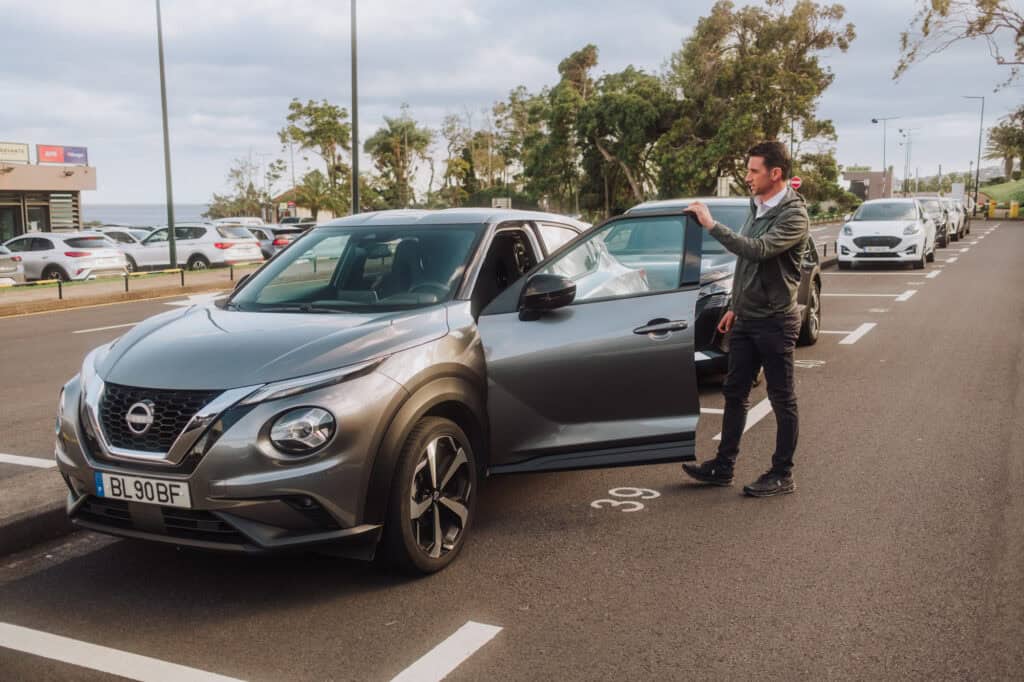
Video: Driving Around Madeira
Madeira’s Highway Tunnels
Driving around Madeira, you’ll find it’s largely a road and highway system made up of a series of tunnels through the mountains, connected by a seemingly endless number of roundabouts.
The tunnels are mostly modern, with bright lights, wide lanes, and high ceilings. A few are a kilometer in length or longer!
Some of Madeira’s tunnels are two lanes, while others are four.
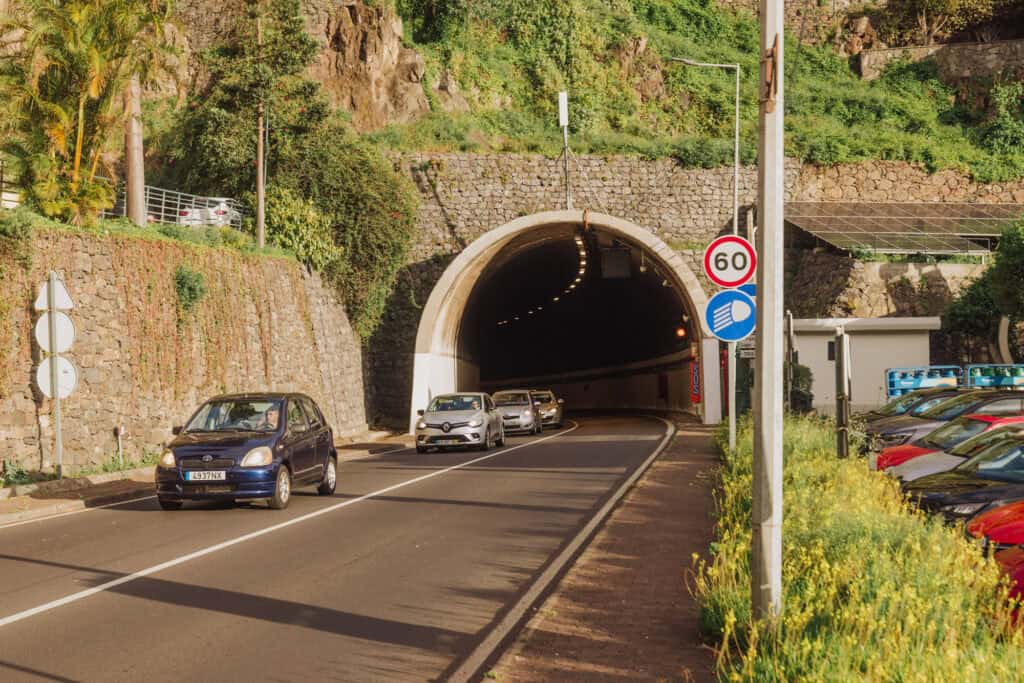
Much of the major construction work on the tunnels was done in the 1980s, 1990s, and early 2000s. Busting pathways through the mountains made it possible to more efficiently access different towns around the island.
❇️ The longest tunnel in Madeira is approximately 3.1 kilometers, connecting Ribeira Brava and São Vicente.
Navigating the Island’s Roundabouts
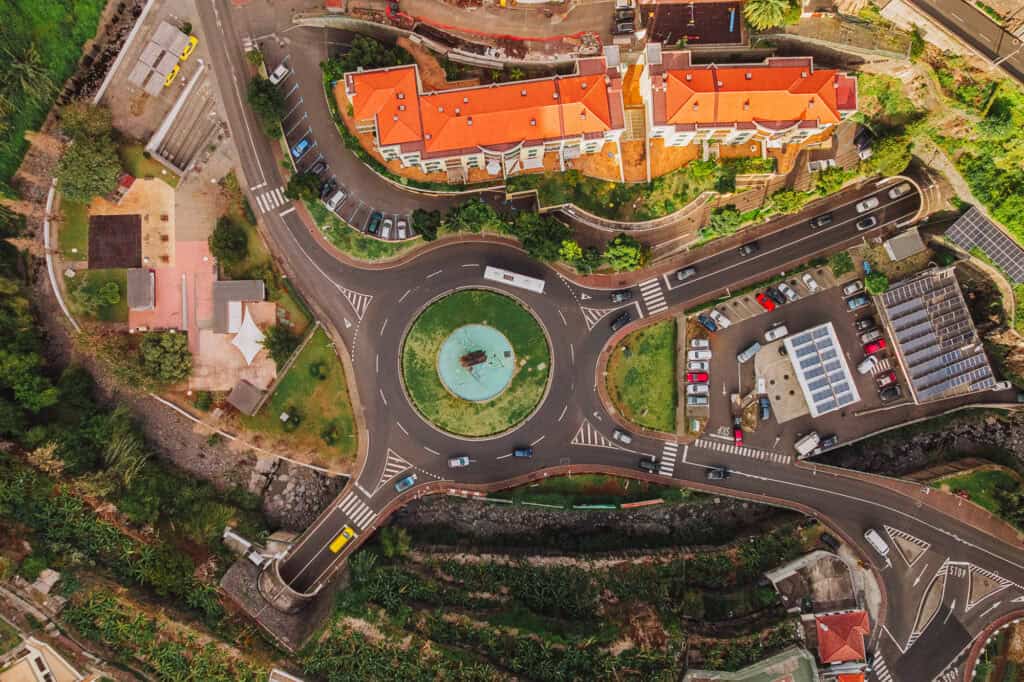
We called them traffic circles growing up, but in Europe, they’re roundabouts. And they’re EVERYWHERE on Madeira.
If you’re not used to them, it just takes a few practice runs to get the maneuvering right.
There are two rules to follow when driving on Madeira’s 2-lane roundabouts:
- Go to the inside lane until you’re ready to exit.
- Move to the outside lane when you’re ready to exit.
From my experience driving around Madeira, it seems like the locals are always prepared to be on a roundabout with a tourist who isn’t quite sure of where they’re going.
Prepare for GPS Failures
You’ll rely on GPS to drive around Madeira. I type the address into both my phone and the rental car’s navigation system.
The directions are always correct and easy to follow … BUT…. your GPS systems will lose signal inside the tunnels.
Often, you’ll drive out of a tunnel and onto a roundabout with the GPS struggling to find a signal and play catchup with your location.
With this in mind:
- Always use both GPS systems, since sometimes the car’s will fail but your phone’s will still work… and…
- Always know the next direction on the route. As you head into the tunnel, glance ahead at what you do when you exit.
The Lack of Road Signage
With GPS and map apps, this isn’t that big of a deal. Still, it’s worth noting that Madeira’s highways don’t have huge signs telling you where you are. This is especially confusing in Funchal, where traffic is heavier.
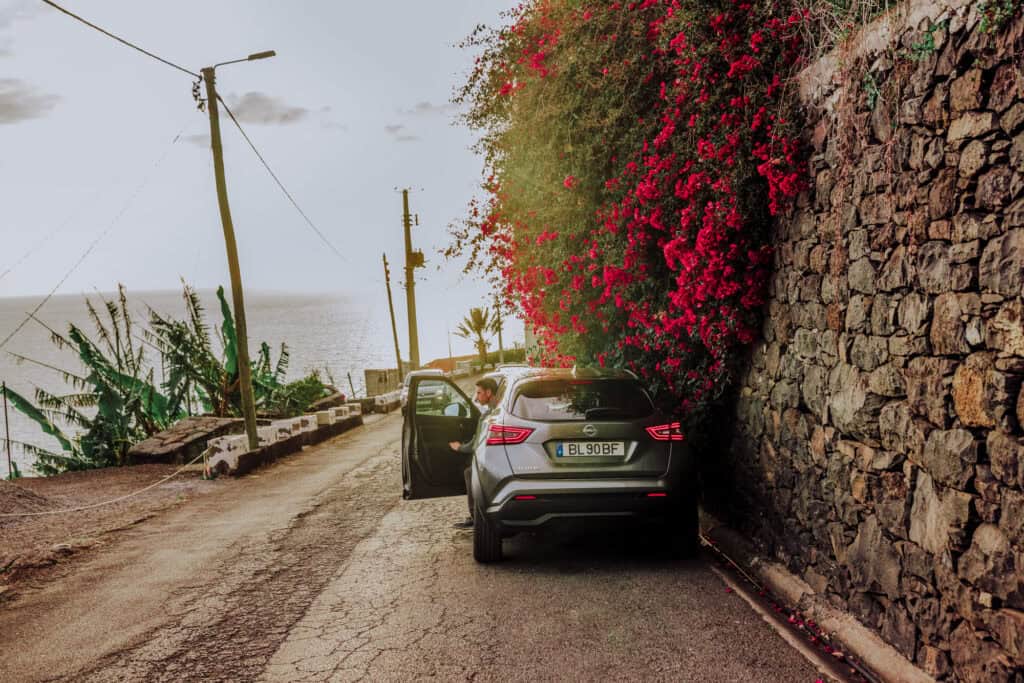
At some of the touristy sites, there are huge lots. At many others, there’s no designated parking and no signs letting you know where to park. Generally, that means it’s okay to park along the street nearby. As you’ll find: that leads to a lot of one-lane driving situations you’ll have to maneuver through, like this seaside location near Calheta:
Speed Limits on Madeira’s Roads
The speed limit for drivers on Madeira usually caps out at 90 kilometers per hour. It’s just under 60 miles per hour.
On a few of the highways, it rises to 120 kilometers, which is around 75 miles per hour.
Double Check for Motorcycles
A warning about motorcycles, which are convenient for locals to use to zip around the island.
Traffic can build up in some of the tunnels, and the motorcycles are allowed to cruise around and in between the cars that are stopped waiting.
Especially in a tunnel, you can usually hear them coming up, but sometimes they seem to come out of nowhere. Just something to keep in mind as you drive around Madeira.
Parking at Madeira’s Top Sites
The parking situations change as you drive around Madeira to the waterfalls, hiking trailheads, beaches, and other sites to explore.
Some, like the Pico Grande Trailhead, will have room for a dozen spots.
At many of them, you’ll find no lot at all and have to find a spot along the street.
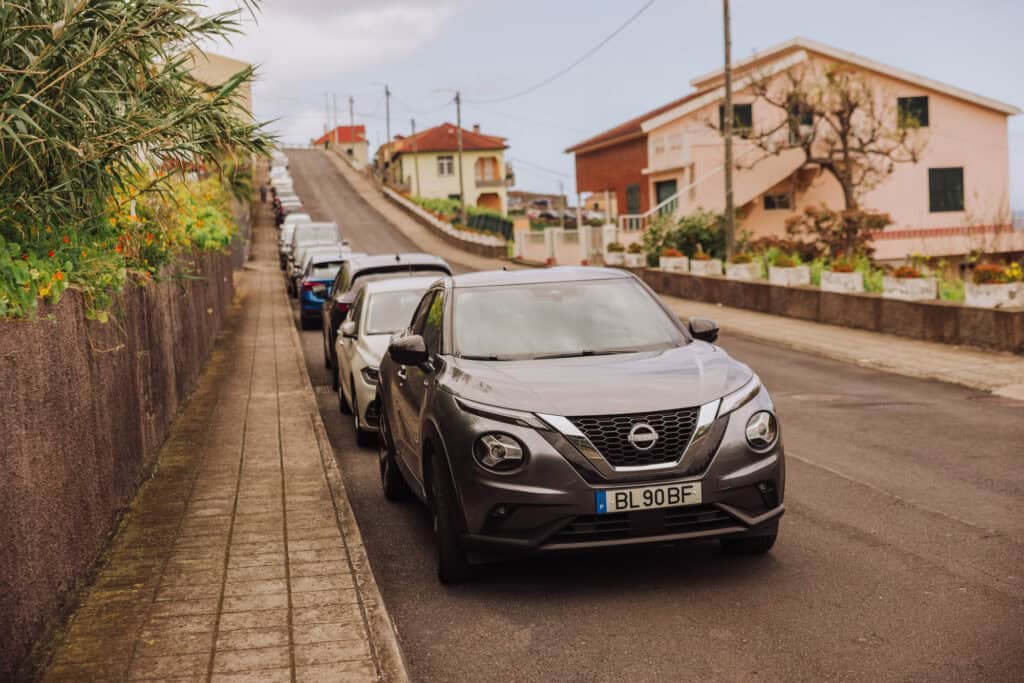
Other more famous sites, like the natural pools in Porto Muniz or the hike at Ponta de São Lourenço, will have large parking lots. Even those fill up during peak times, so be prepared to circle looking for a spot.
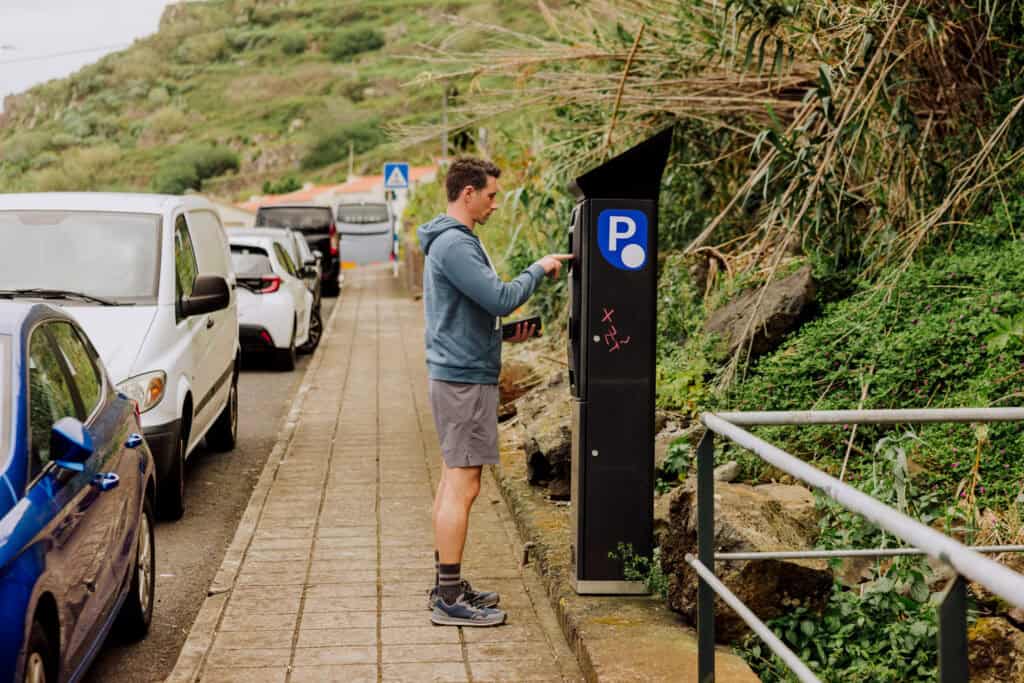
Some of the streetside parking will require payment at kiosks. A few of them only took Euros. (coins) so it’s helpful to bring a handful along as you drive on Madeira.
Road Conditions
I found the main highways to be perfectly paved on Madeira. Once you drive up into more rural areas, the pavement is still almost pristine most of the time. A few roads turn rustic, and go from pavement to either dirt or rocks.
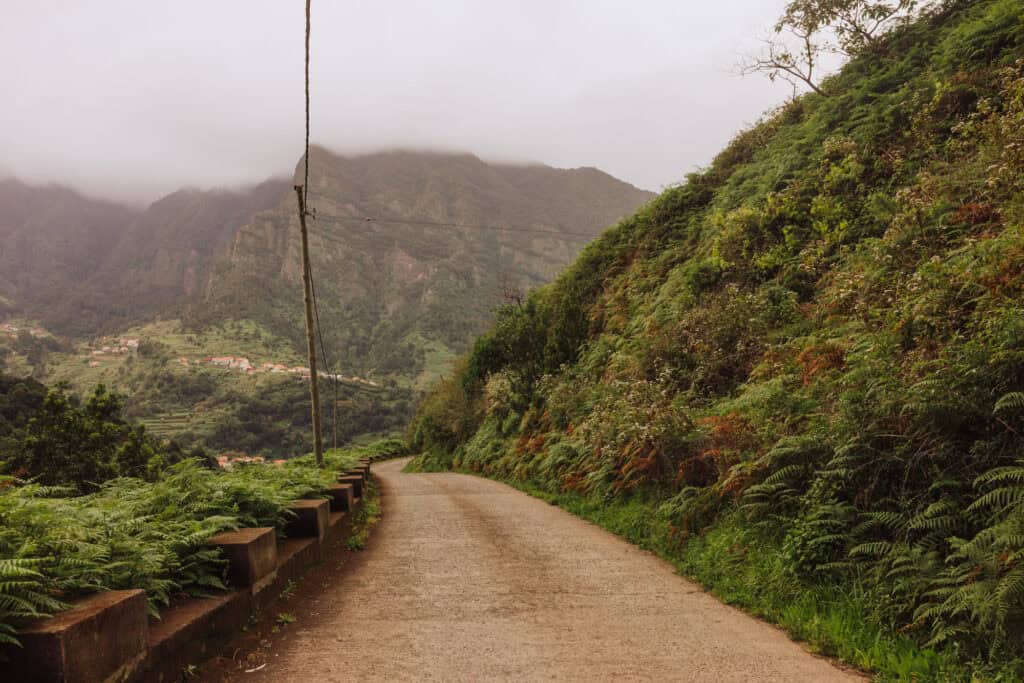
Many roads are steep, twisty, and very narrow, especially in rural or mountainous areas.
Depending on where you go, you could end up on steep, one-lane roads. These were the most challenging for me, since it requires backing up or finding a spot to squeeze over into when another car approaches.
This is a photo of the one-lane mountain road leading to the beautiful Quinta do Barbusano Winery:
Gas Stations on the Island
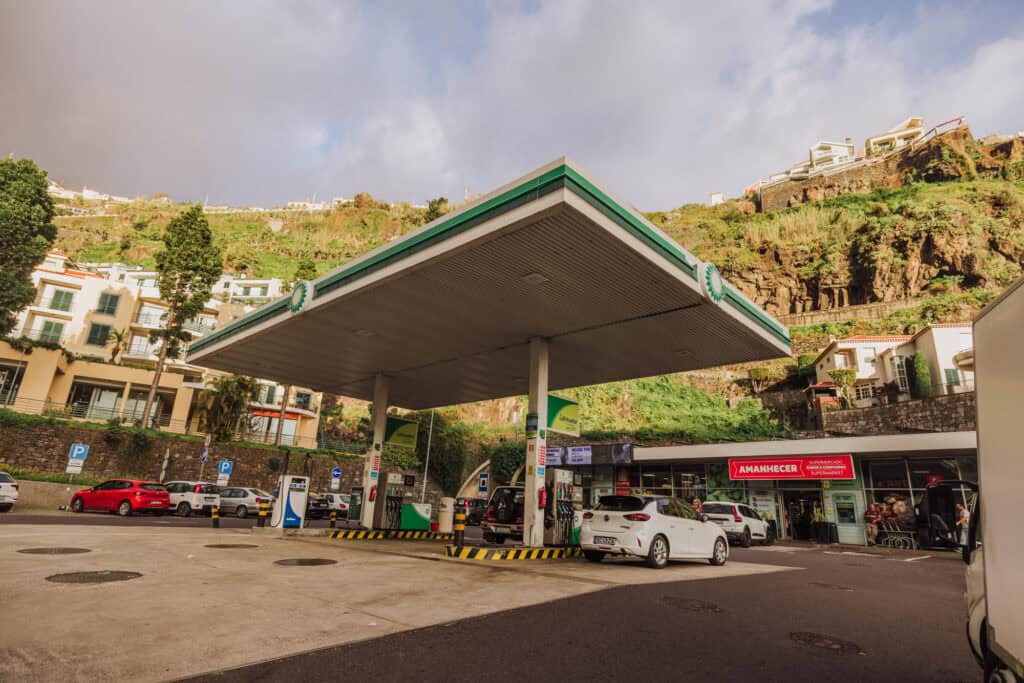
Gas stations are easy to find in all corners of Madeira.
At most of them, you press the amount of gas you want to buy (in Euros) and the pump fills the tank to that threshold. They operate on the honor system, allowing you to pump first and then go inside to pay afterward.
Police Speed Enforcement
Anecdotally, I’ve never seen a police officer on Madeira checking for speeders. I’ve also never seen a mobile photo radar unit. I’m told they exist, but in the many miles I’ve driven on Madeira, I’ve never come across any speed traps.
One Final Thing About Driving on Madeira
While the upper elevations of Madeira see snow flurries each winter, the overall climate is pretty mild year-round.
Still, the weather is complex. It can be sunny on the beach, and when you look up toward the mountains the skies are black with a downpour. Fog and rain are common, especially at higher elevations. Drive cautiously and use headlights when visibility drops.
Enjoy your road trip to Madeira’s best small towns, coastal scenery, and rugged hikes!