Resort Garden Elevates the “Farm to Table” Experience on Madeira

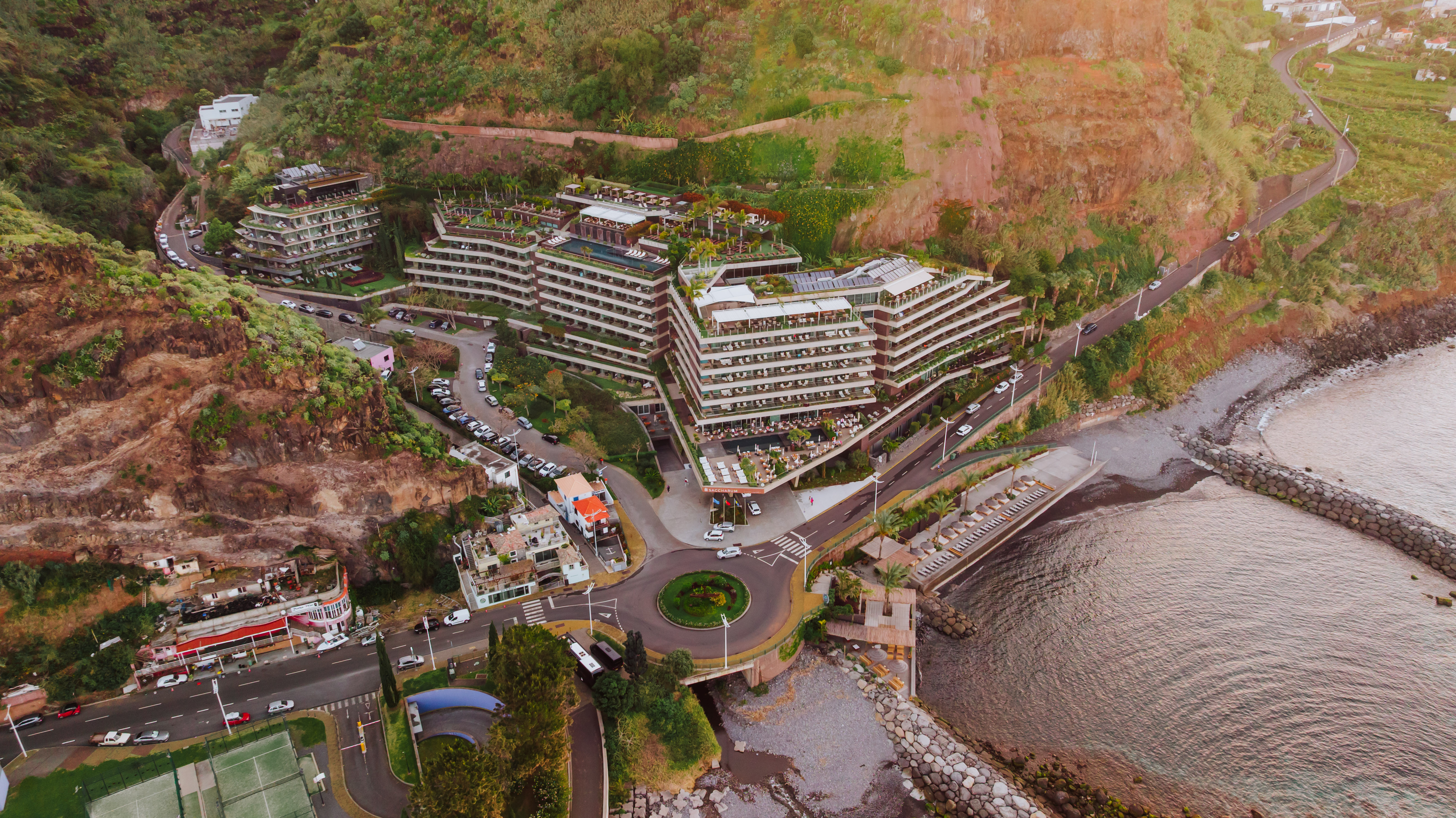
Saccharum is a luxury resort and spa on Madeira’s southern coast.
I have a whole separate post on the hotel itself, near the pretty town of Calheta, but I wanted to dedicate an entire page to my favorite feature: the garden!
I realize I’m in the minority on this one, but hear me out!
On-site gardens are allowing more farm-to-table operations to thrive at hotels outside the US. We’ve stayed at others on Bali and in Costa Rica, too.
It’s great for sustainability, for the guest experience, for the local farmers, and for the hotels’ bottom lines.
I’ve found myself seeking out the hotel gardener(s) to learn more about their crops, and how they’re being used in “farm to table” restaurants on the hotel properties.
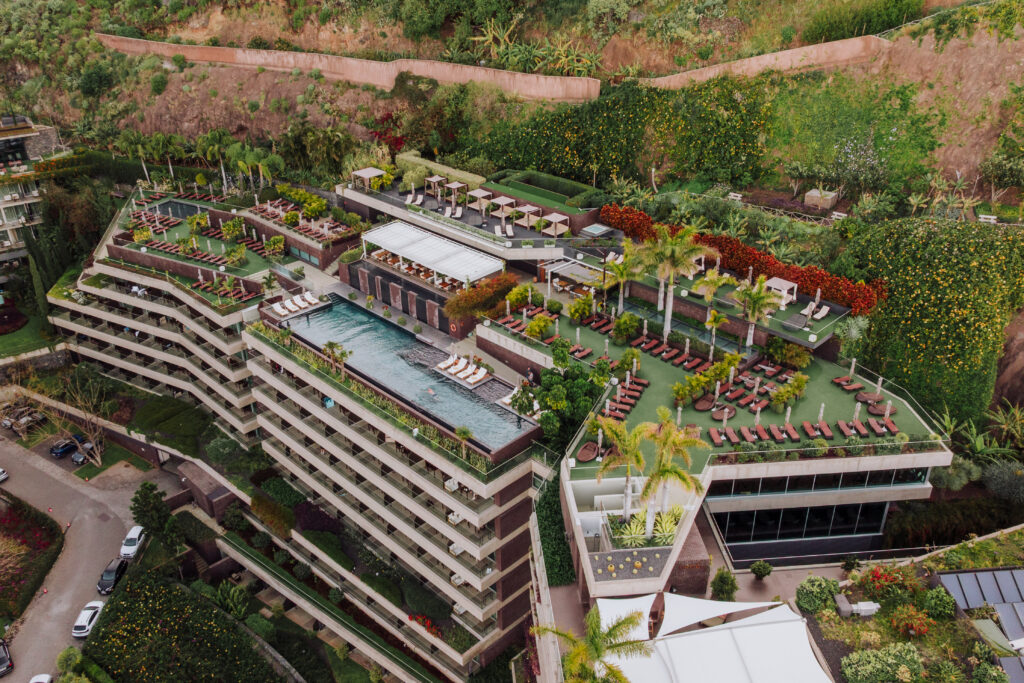
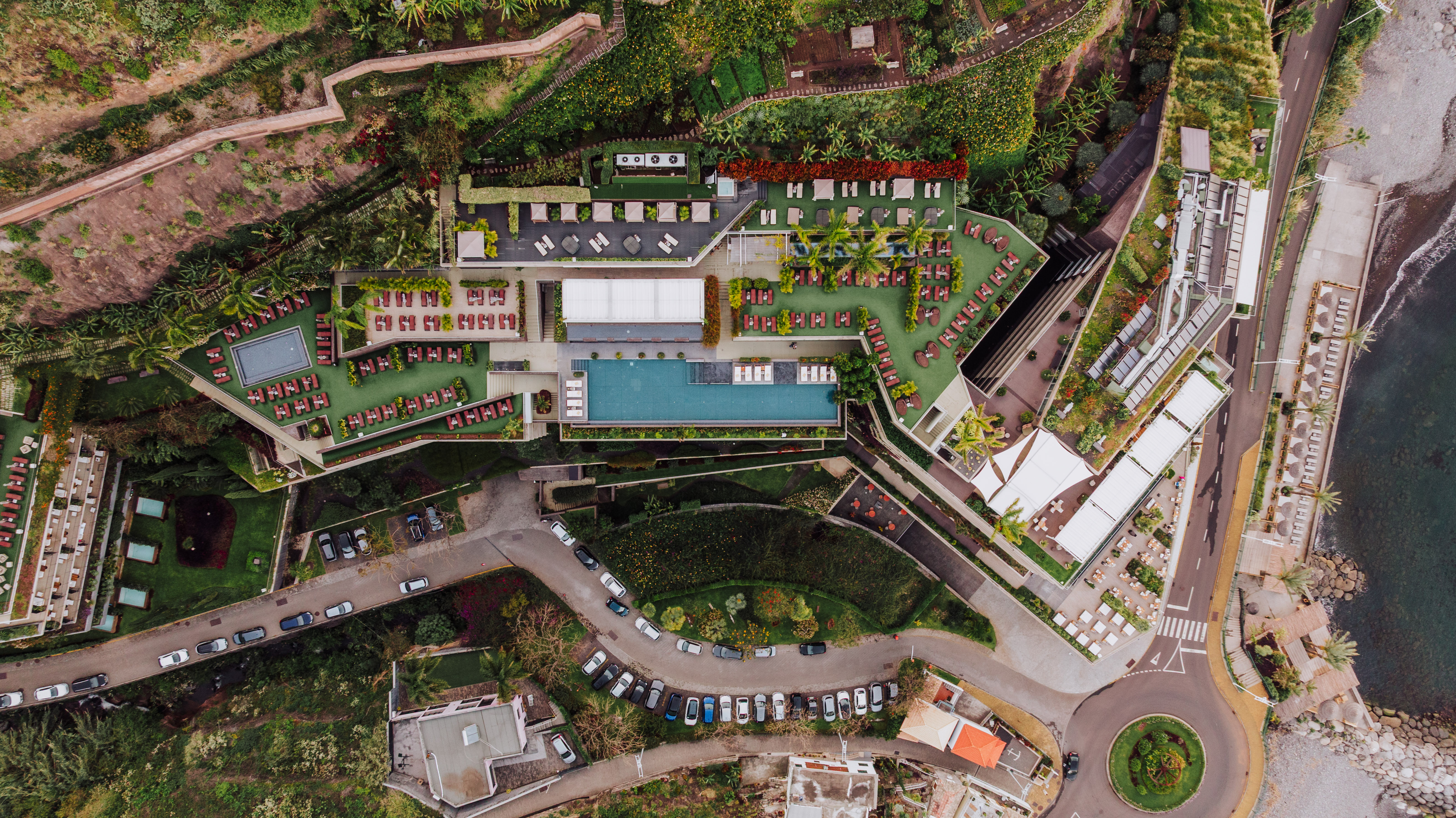
I was blown away by the large, multi-level garden I found at Saccharum on Madeira. From this aerial photo, you can see an overview of the garden against the hillside.
The 3 Sites I Use for Every Trip
– For tours: Viator
-For travel insurance: Travel Guard
– For rental cars: Discover Cars
Saccharum’s Agricultural Past
Agriculture is at the core of Saccharum’s history.
The resort is built on the site of a former sugar cane mill, and its name, “Saccharum,” is derived from the Latin word for “sugar cane.”
These design choices inside the hotel create a unique ambiance that pays homage to the island’s agricultural history, while providing a modern luxury hotel experience for guests.
The luxury, in Brief
The resort boasts 196 rooms and suites, many with private balconies offering ocean or mountain views.
The spa facilities include a sauna, Turkish bath, jacuzzi, a heated indoor pool, and more (which might help you warm up after a dip in one of Madeira’s natural pools on the coast).
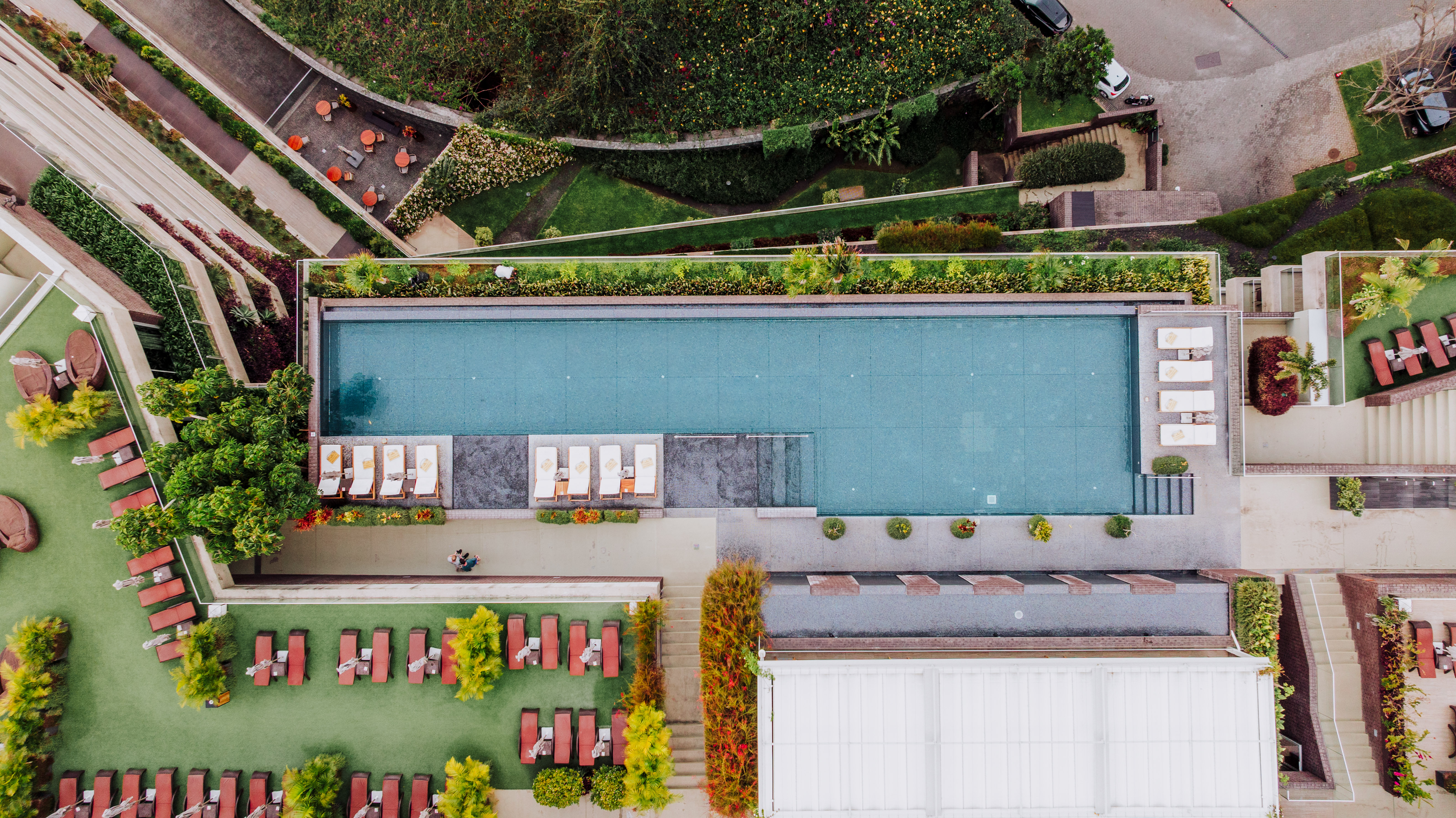
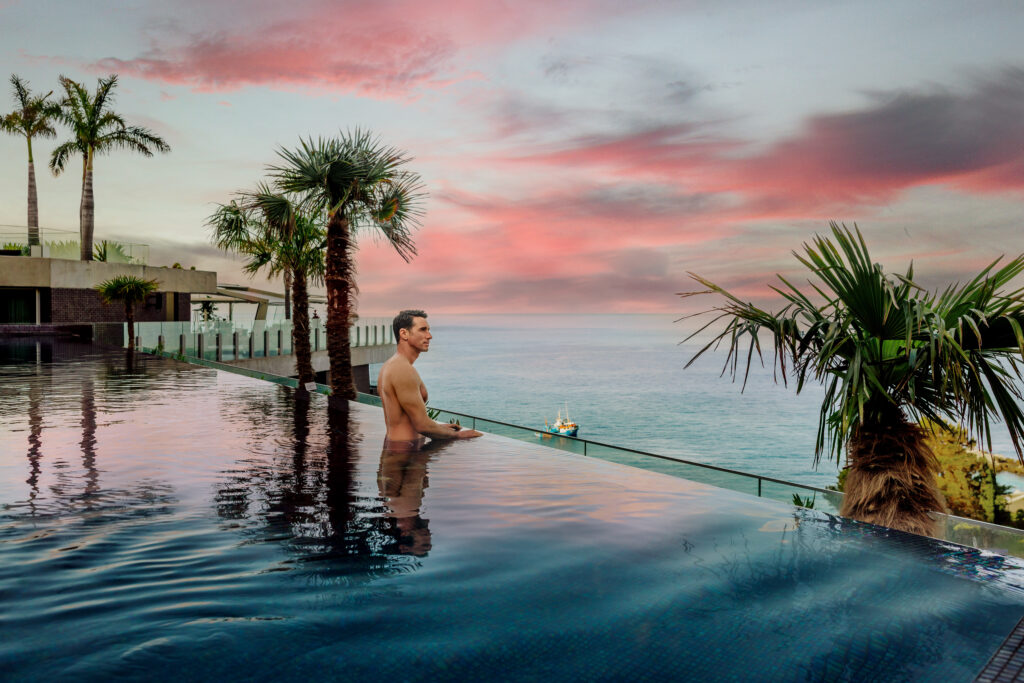
There are four beautiful pools at Saccharum, but none more beautiful than the rooftop’s infinity pool.
Video: Farm to Table on Madeira
The Hotel Garden at Saccharum
OK! Now to my favorite part.
Above the property, you’ll find one of Saccharum’s unsung gems: the Chef’s Garden.
It’s open to guests, and I went to visit MULTIPLE times during our stay. Each time I’d spot something new, and then just sit on the bench on the top level overlooking Calheta and the fishing vessels passing by in the ocean.
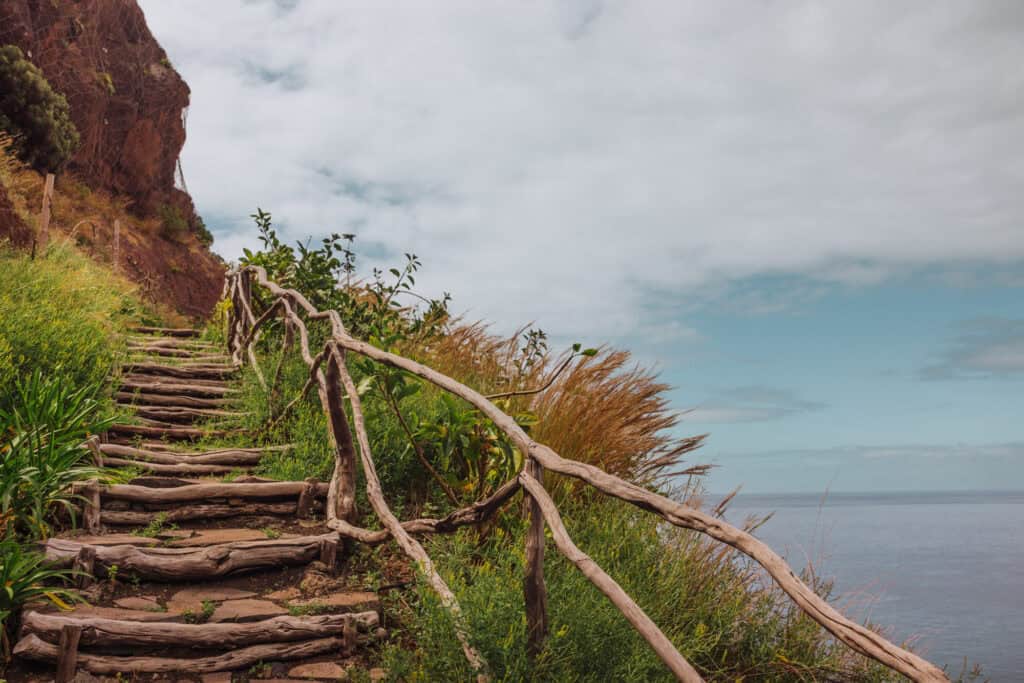
I’ve found myself seeking out the hotel gardener(s) to learn more about their crops, and how they’re being used in “farm to table” restaurants on the hotel properties.
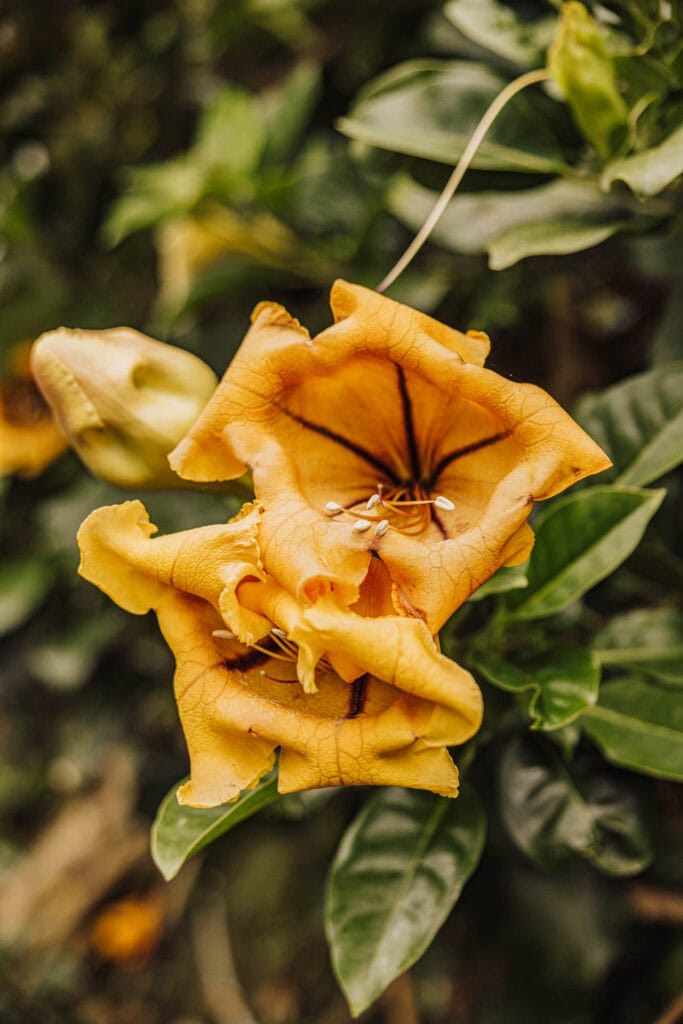
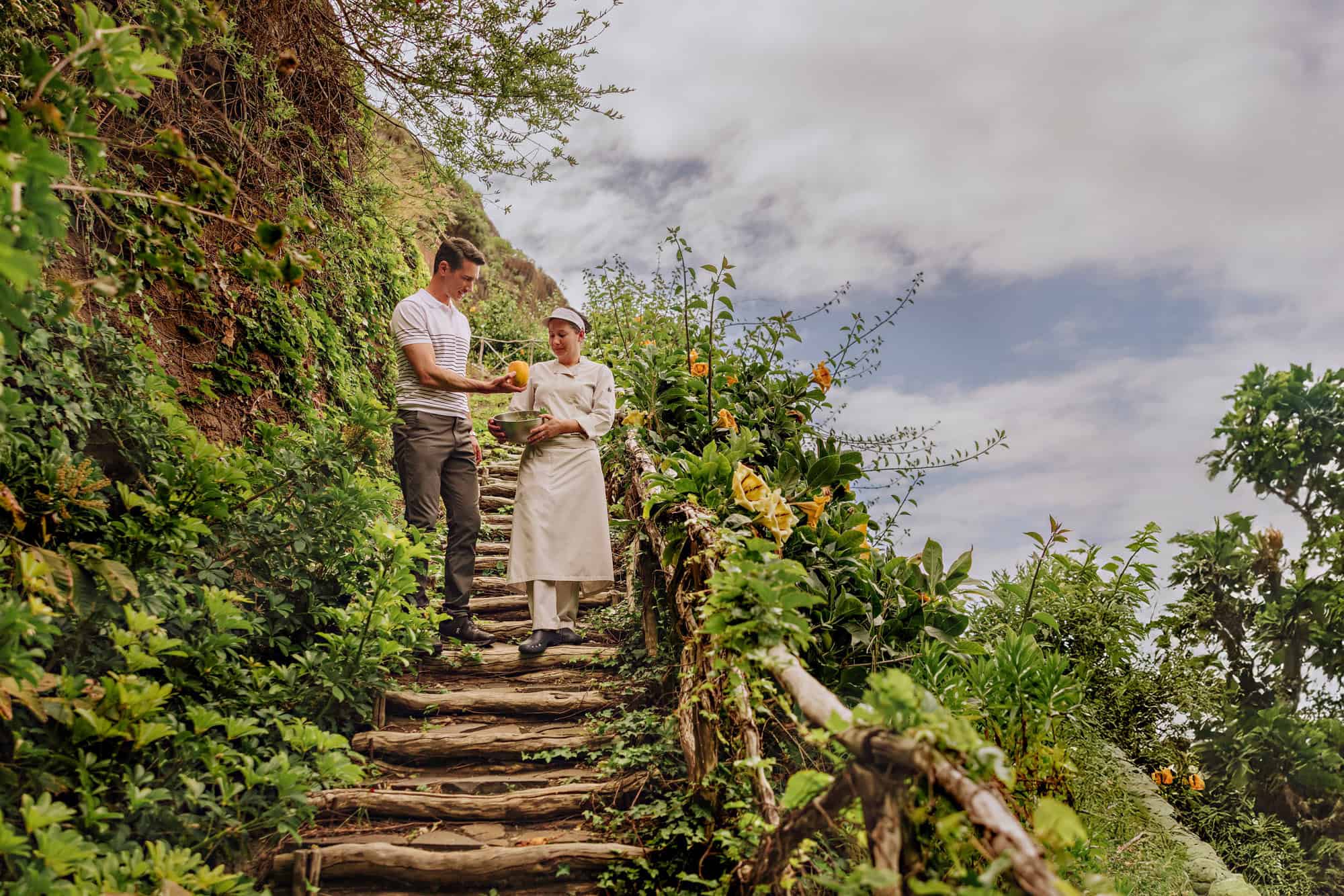
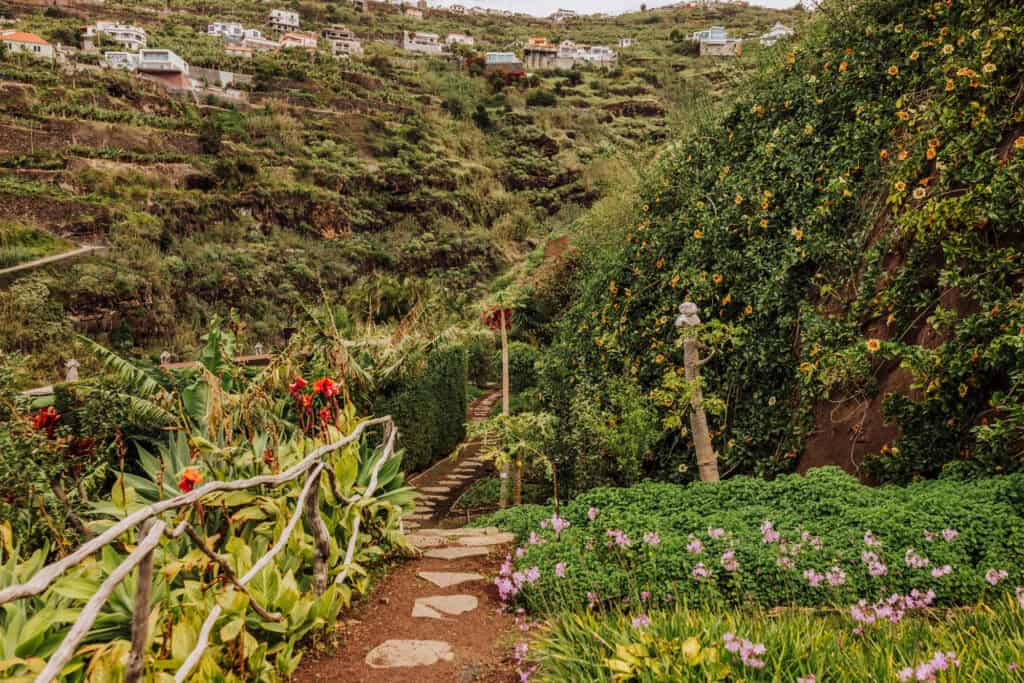
The weather allows them to grow crops year-round at Saccharum, on terraced garden beds, linked together by a set of wooden steps. The setting itself is perfect for photos, surrounded by lush vines and large blooming flowers.
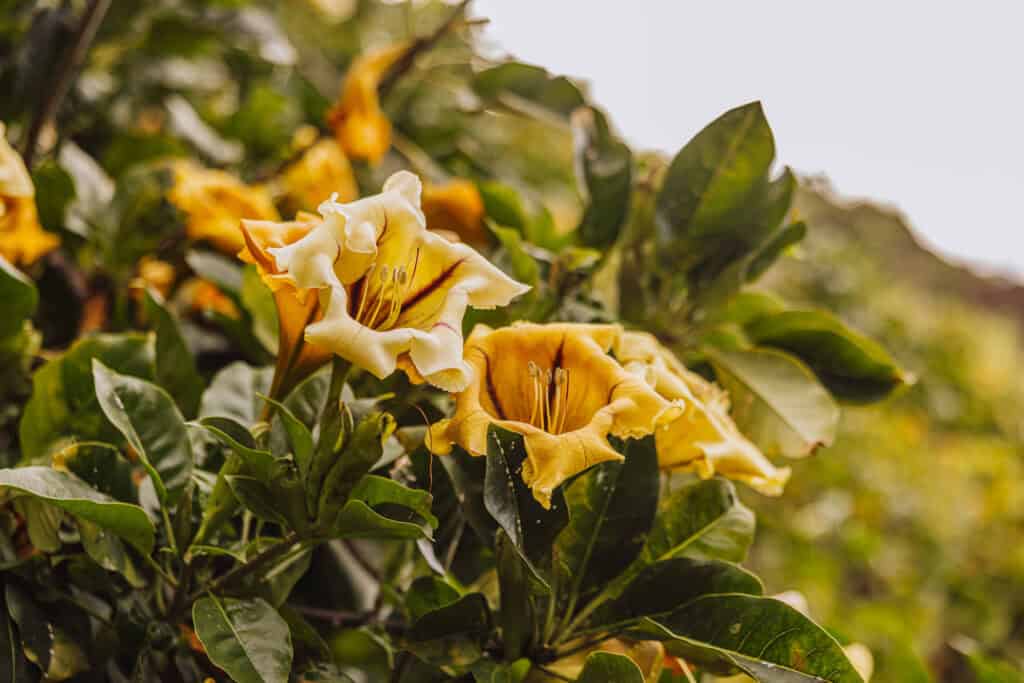
A Chef’s Garden Tour
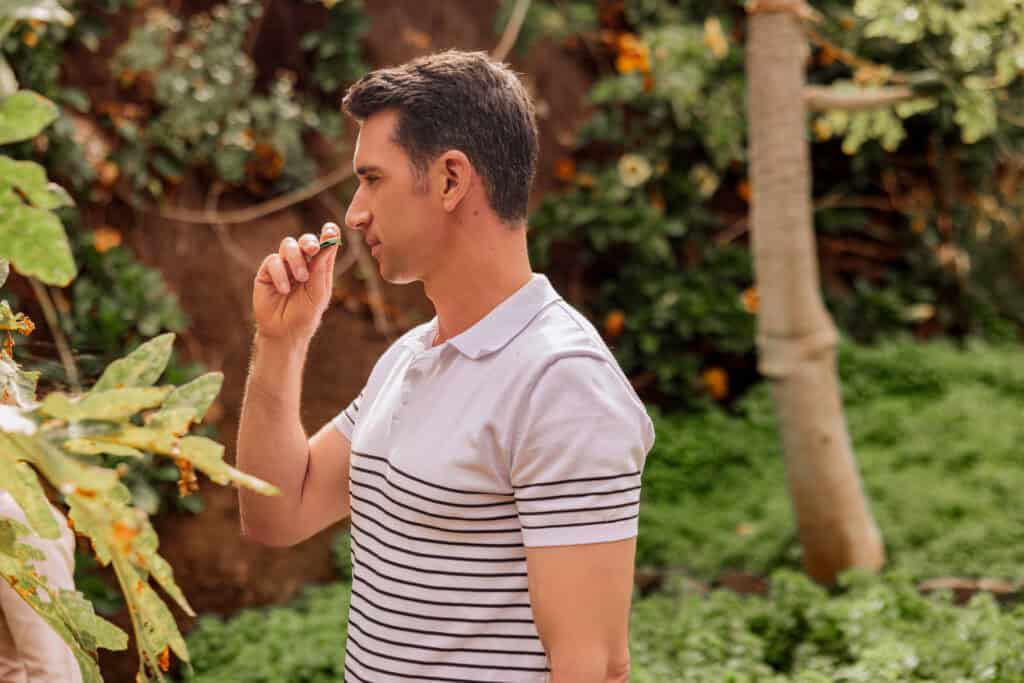
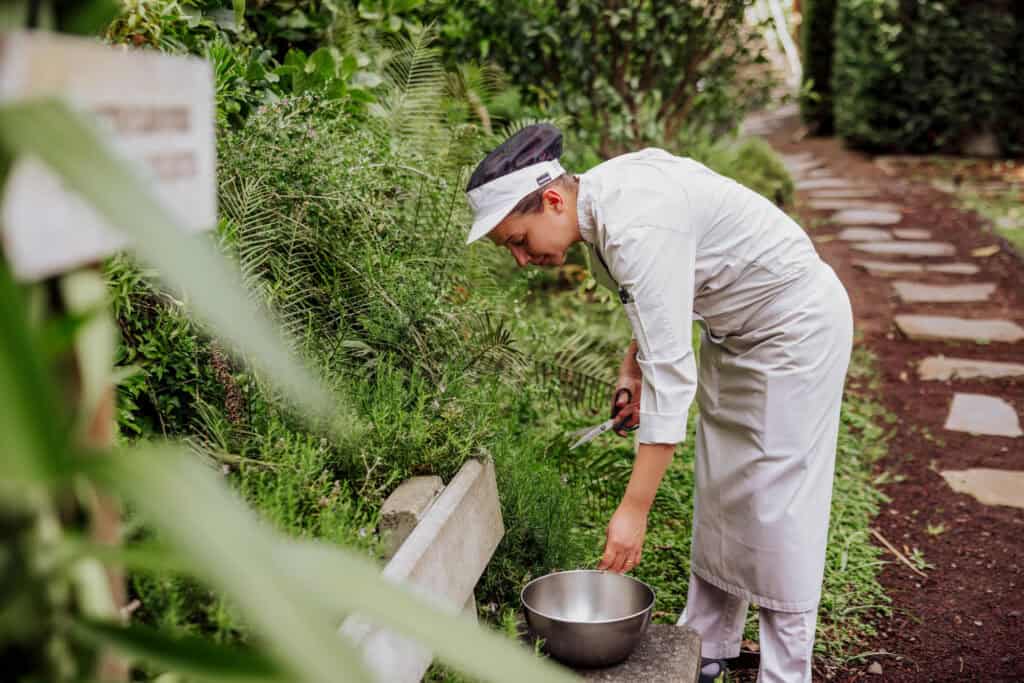
I convinced one of the chefs, Tania, to allow me to shadow her one morning as she walked through picking herbs and fresh produce for the day’s meals. Another member of the staff, Tina, joined us to answer more of my questions.
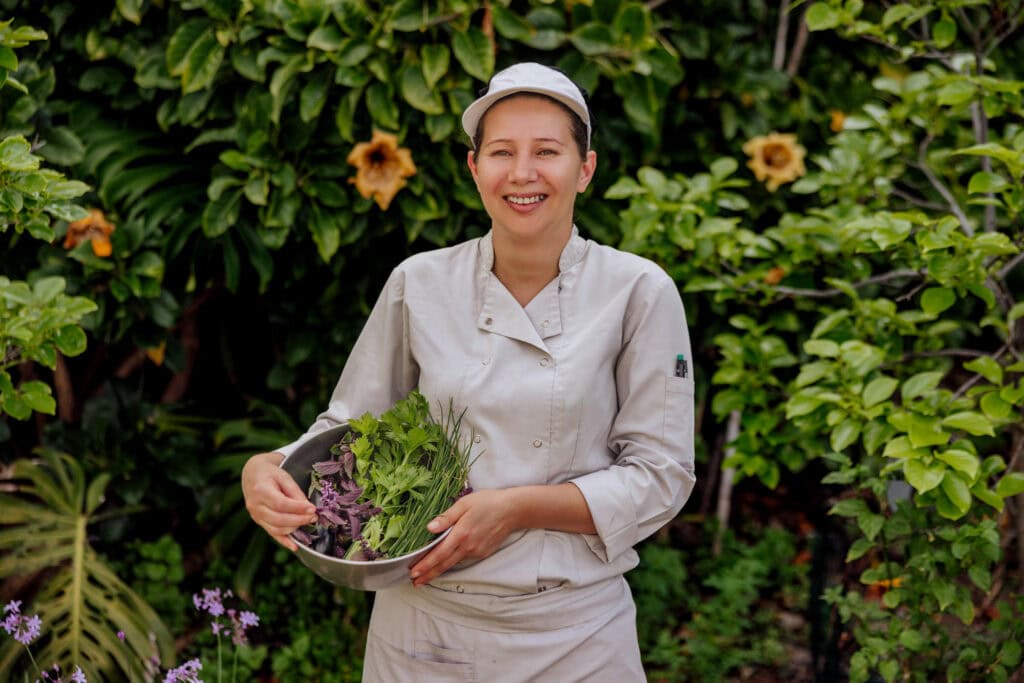
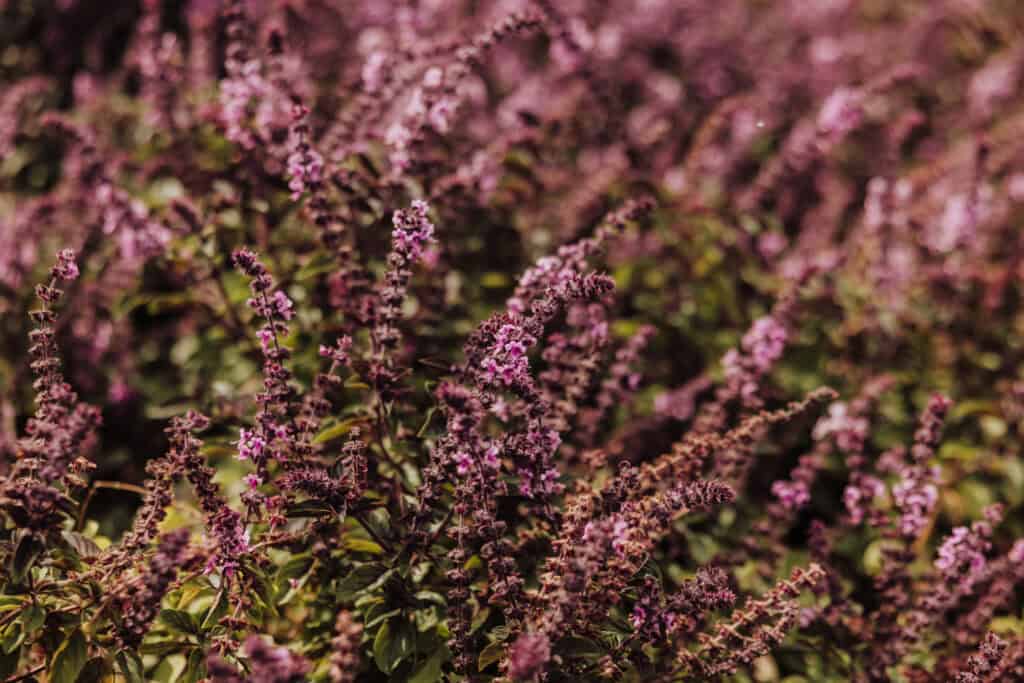
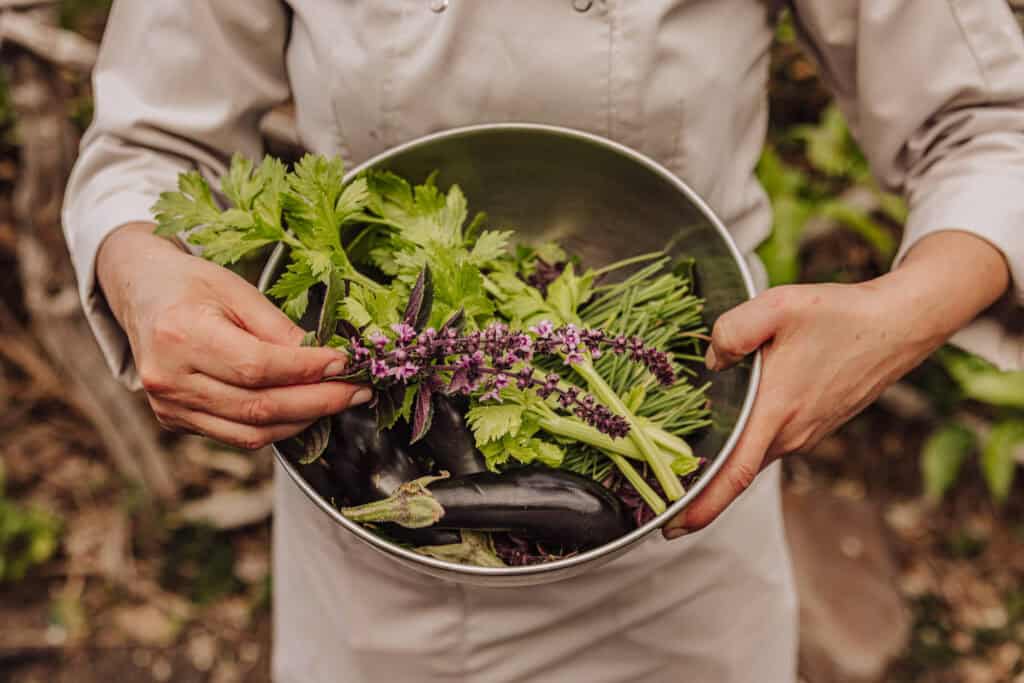
In terms of herbs, they grow like weeds in this perfect mild climate. The basil is out of control (in a good way), with its bright purple flowers.
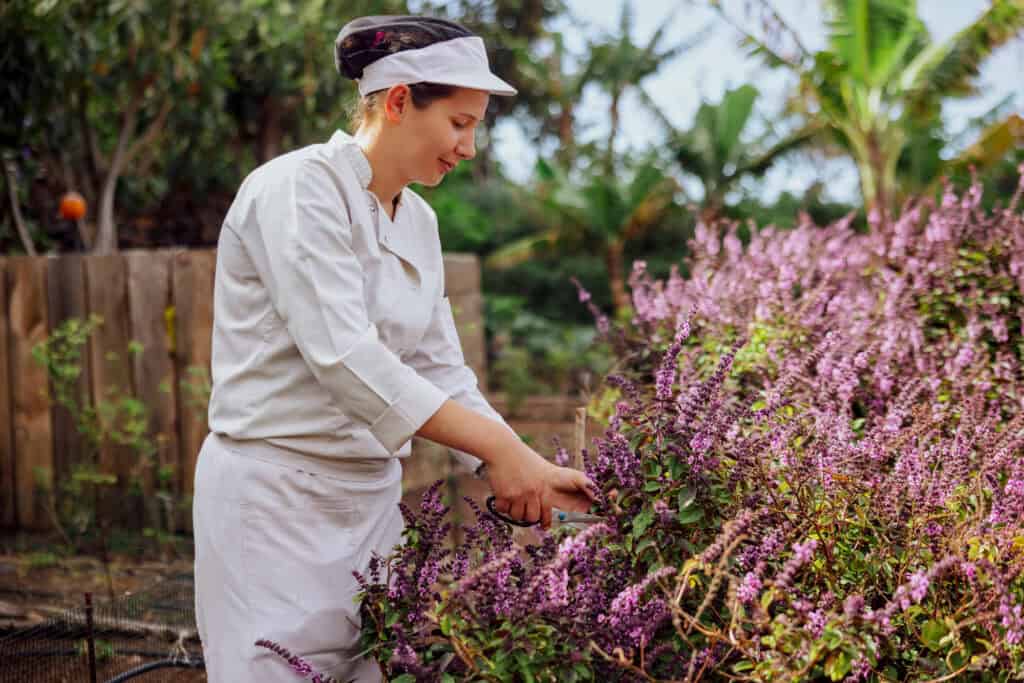
Usually I pinch my basil back, but they use the purple flowers as decor on dishes.
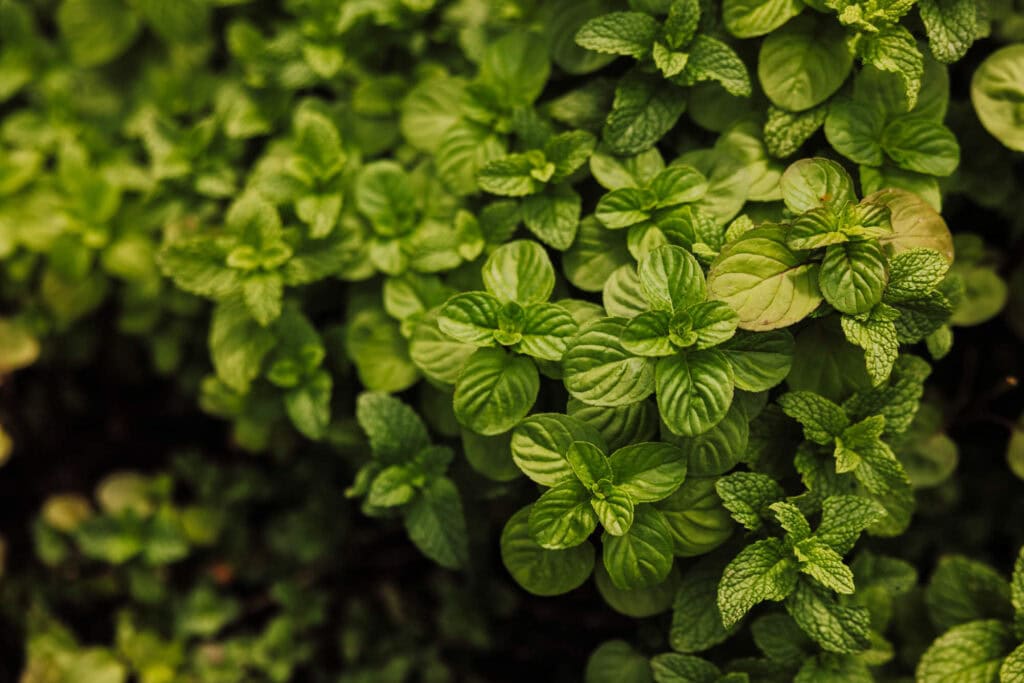
Mint is hard to keep from spreading, but they make good use of it in lemonades, mojitos, and salads.
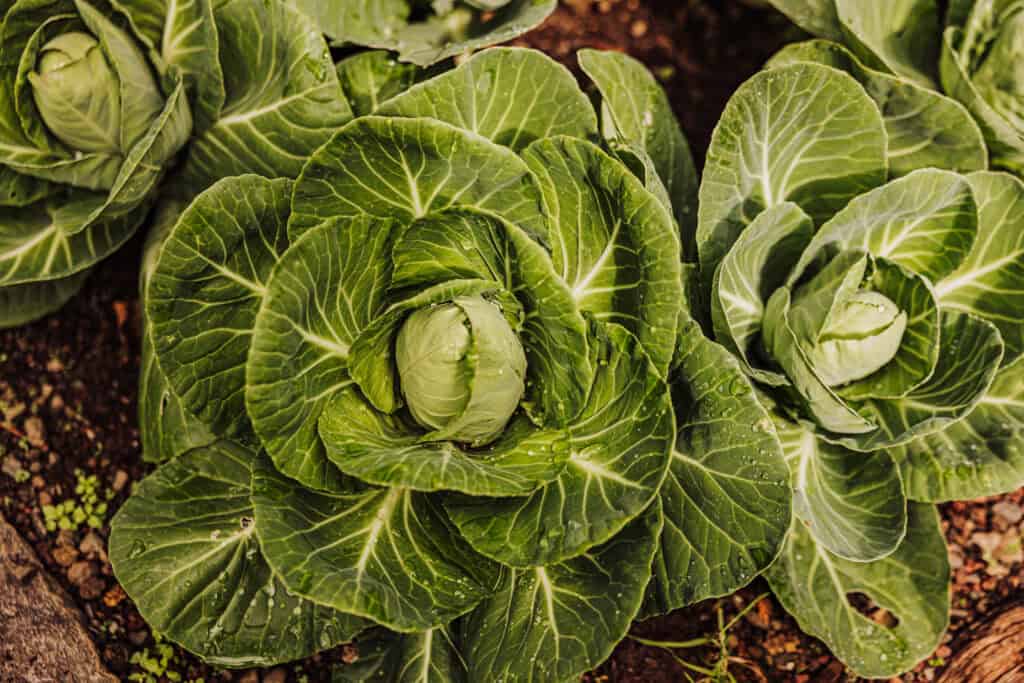
They grow lettuce, tomatoes, squash, broccoli, celery, eggplant, onions, and much more!
Some of the established fruit trees look like they’ve been here forever, but most were planted a decade ago when Saccharum opened.
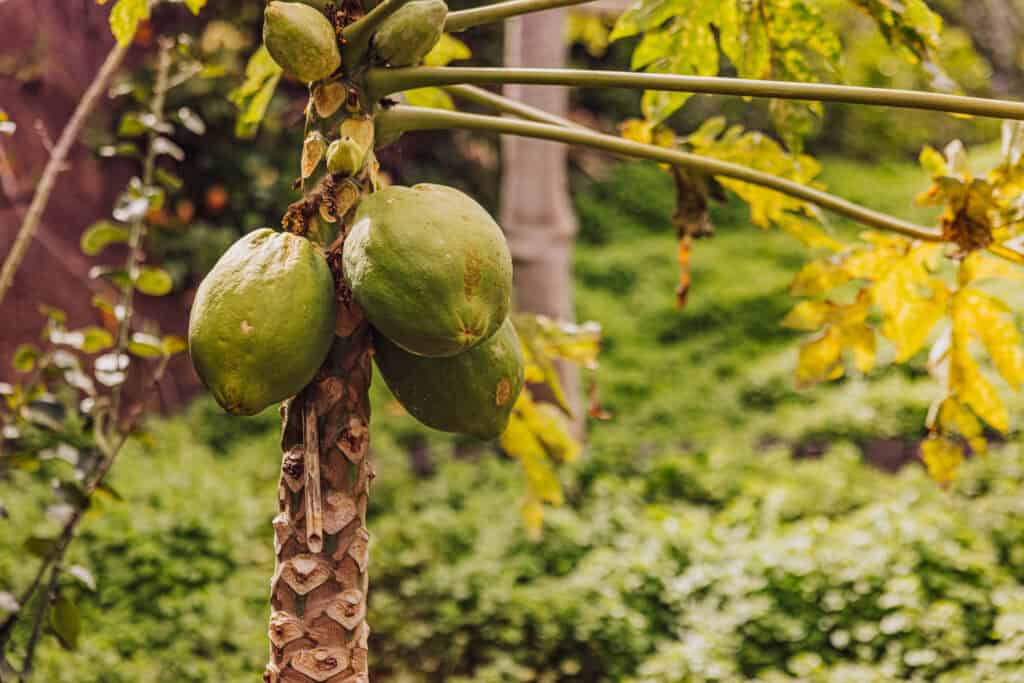
They grow citrus, mangos, bananas, pomegranates, and other fruits.
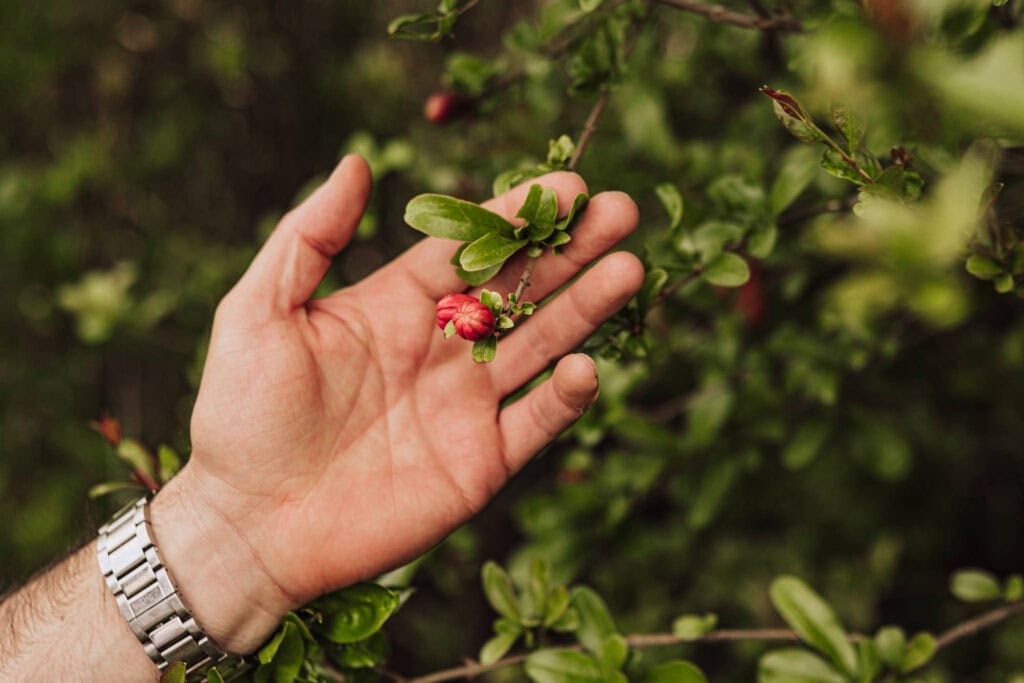
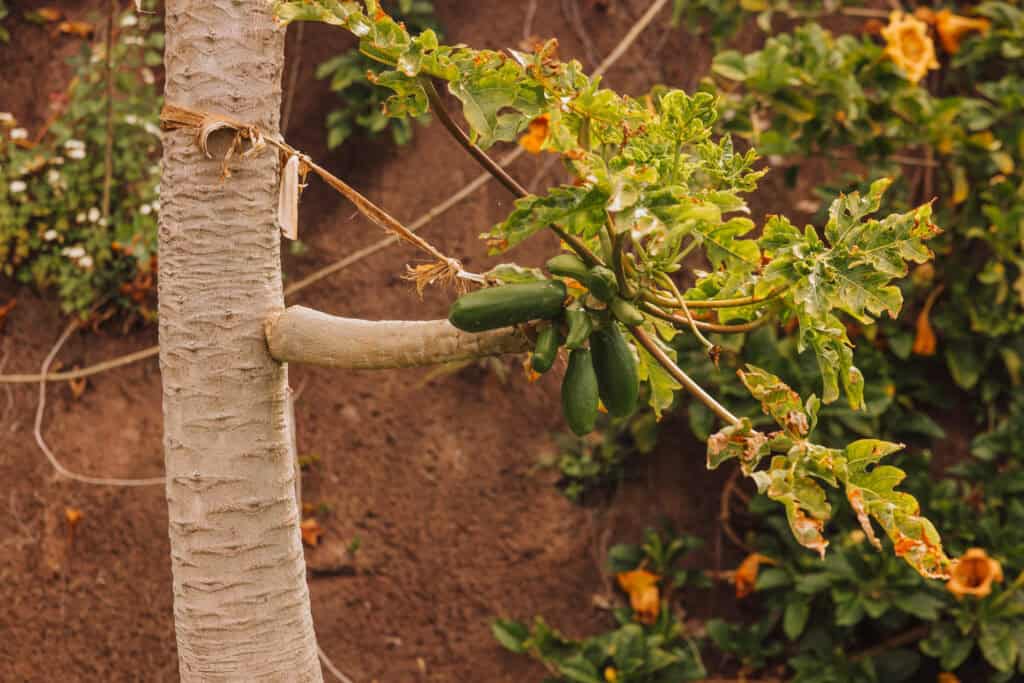
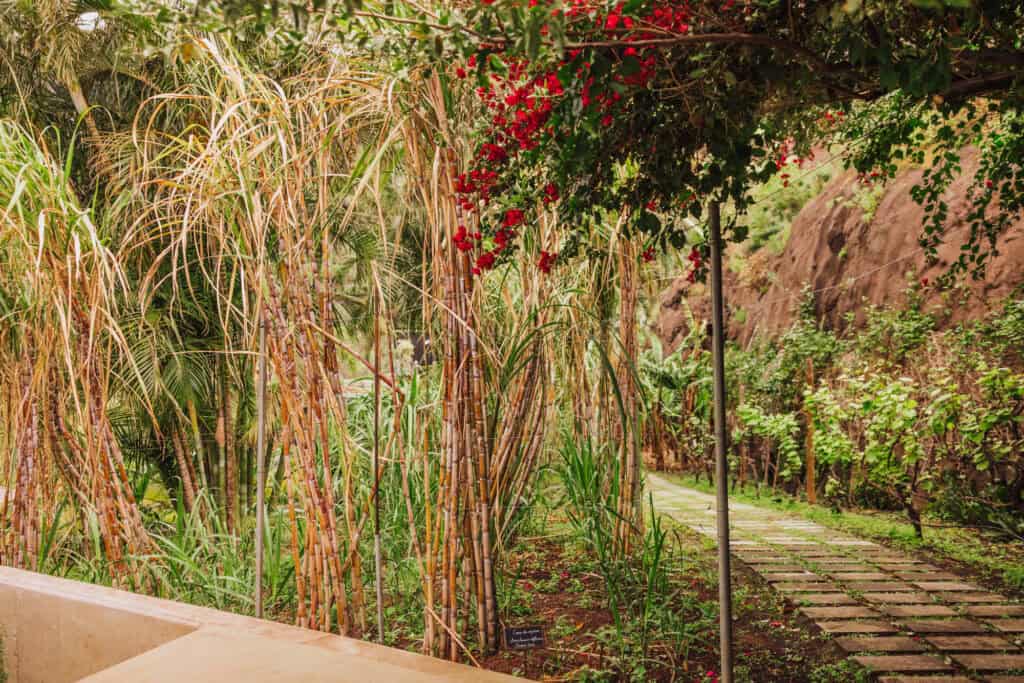
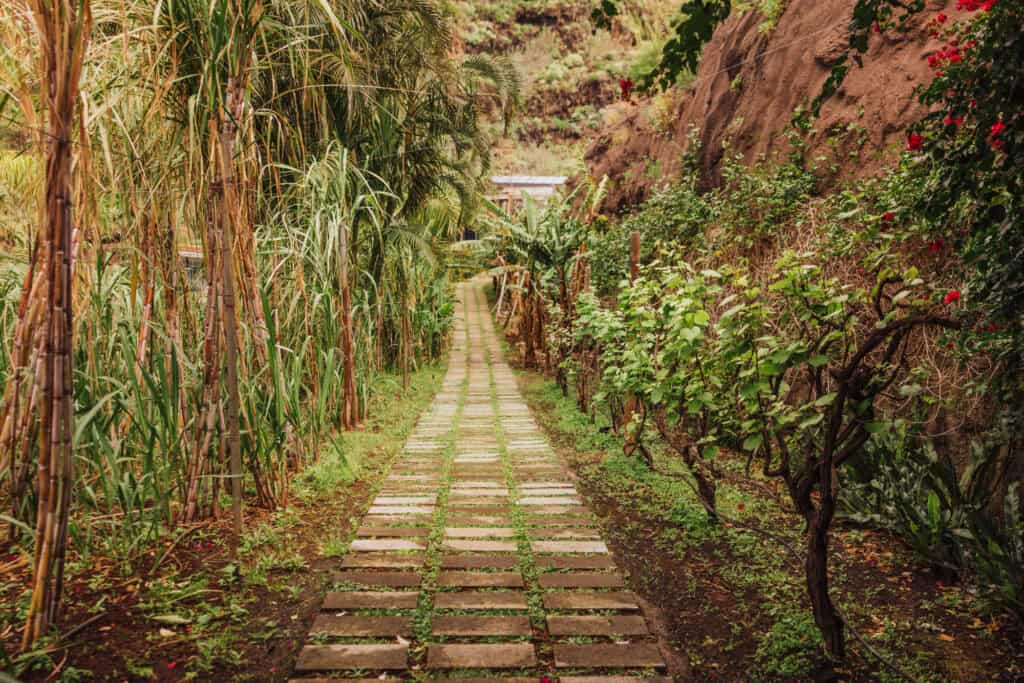
There’s a nod to the resort’s past as a sugar cane mill, with a small sugar cane grove on one end of the garden.
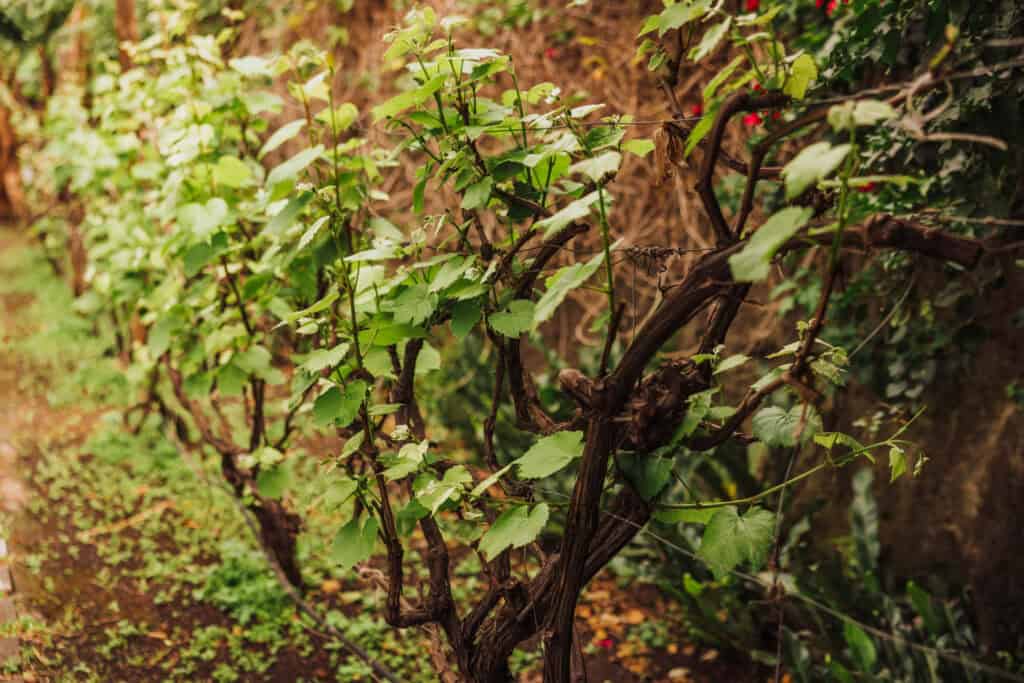
The grapevines aren’t used for wine, but the red and white varieties are put into a lot of salads.
They also have an even larger farm off-site which grows even more of the vegetables used at Saccharum’s restaurants.
Interesting tidbit: The one vegetable they don’t grow and have to buy? Mushrooms.
Farm to Table Restaurants On Site
Restaurants and bars are named after sugar cane processing terms, such as Trapiche (sugar mill). Another, Engenho, is named after a sugar cane mill nearby.
Trapiche
Trapiche is a casual, rooftop restaurant at Saccharum, which overlooks an infinity pool and the ocean. I think it’s probably my favorite restaurant at Saccharum. The meal options are so fresh, filling, and delicious … and also very healthy!
Tania, our chef, brought the veggies and herbs right from the garden into her kitchen to begin prep work for her day.
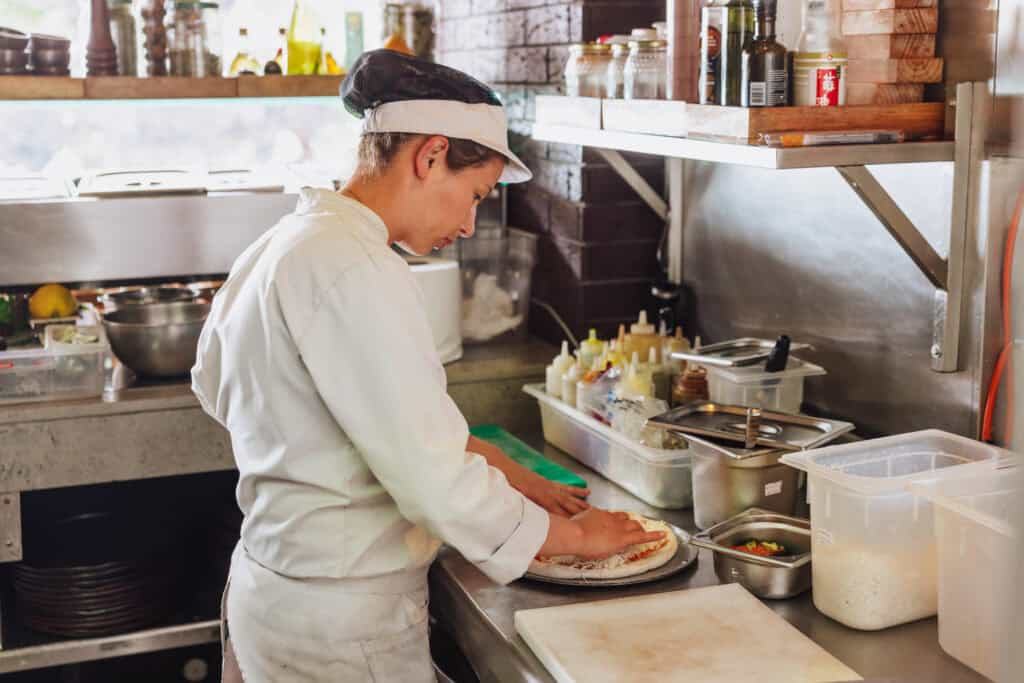
Each of the salad options mentions the greens and veggies that came right from the garden out back.
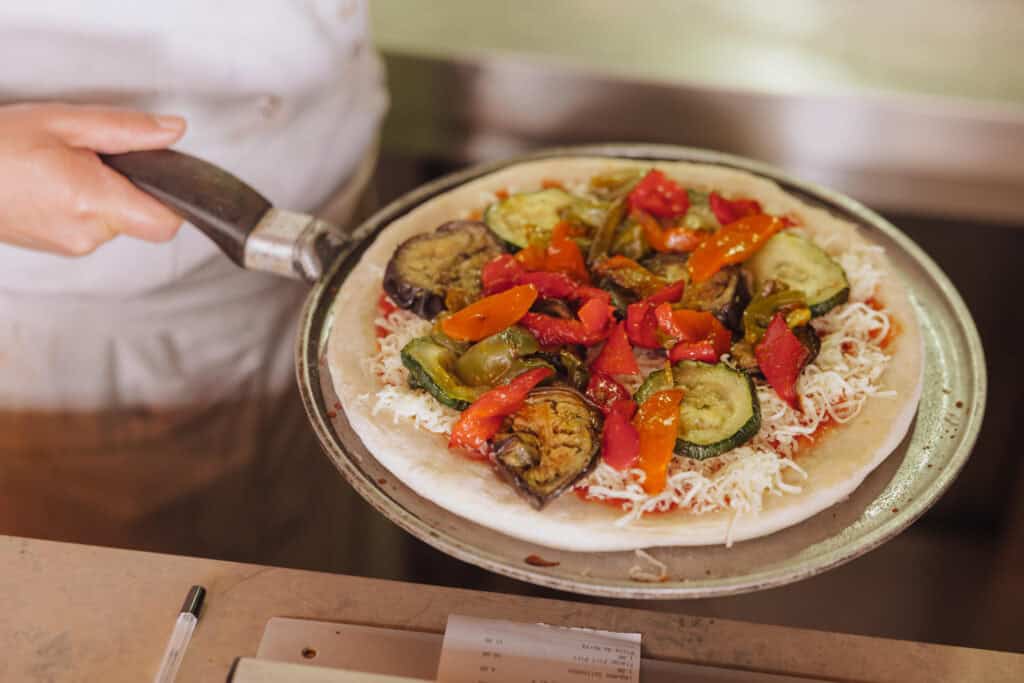
The sandwich and pizza options on the menu do the same. The Pizza de Horta includes vegetables straight from the hotel garden. Delicious.
Saccharum’s other restaurants:
Engenho Restaurant
- Offers buffet-style breakfast and dinner with Mediterranean flavors and ocean views.
Alambique Restaurant
- An à la carte venue serving local and international dishes, open for dinner.
Calhau Beach Club
- Situated on the beachfront, it serves refreshing cocktails and mains, with Bali beds available for relaxation.
Fly Lounge Bar
- Offers drinks, snacks, afternoon tea, and live music in the evenings.
This aerial shows the garden, Trapiche above the pool, and also Calhau Beach Club down on the coast.
Agriculture on Madeira
Agriculture and gardening are both integral parts of Madeira’s culture and identity, and the farm-to-table concept is growing in popularity, especially with the rise of sustainable tourism and eco-conscious travelers.
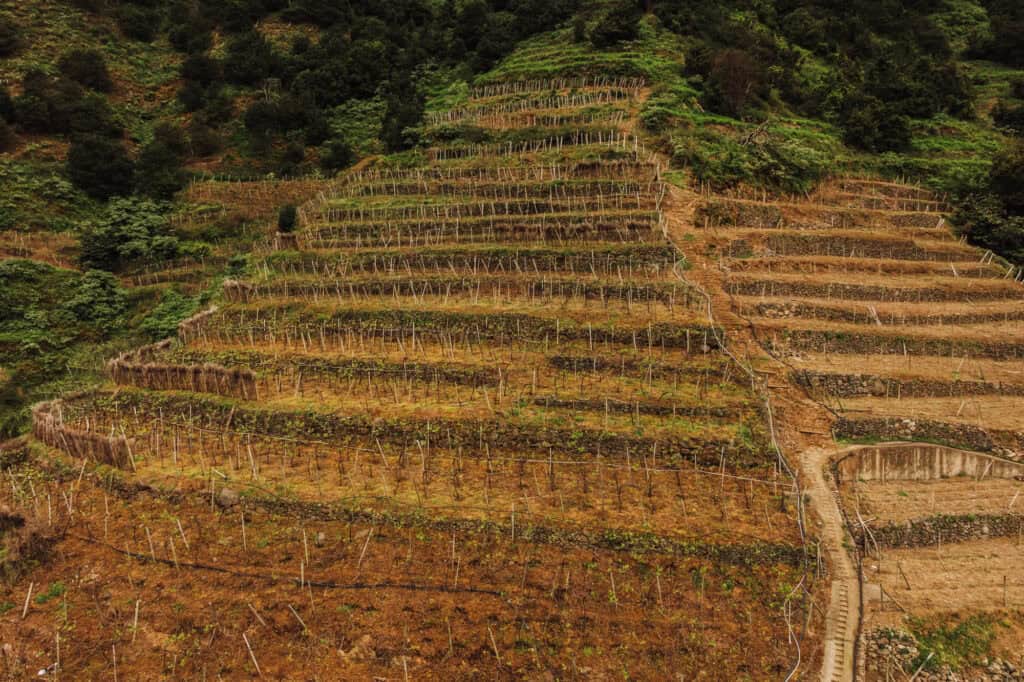
Madeira has a long agricultural history thanks to its fertile volcanic soil, and subtropical climate. While large-scale agriculture is limited by the island’s steep mountains, you’ll see a lot of terraced farming operations as you drive around Madeira.
This hillside is home to Quinta do Barbusano, a vineyard and winery on Madeira.
Sugar Cane
Sugar cane was introduced to Madeira in the early 15th century and became a cornerstone of the island’s economy. Calheta, where Saccharum is located, was one of the key areas for sugar cane cultivation and processing. The original mill on the site played a significant role in this industry, producing sugar, honey, and rum.
Other Crops
Key agricultural products on Madeira include:
- Bananas (a major export crop)
- Sweet potatoes, yams, taro
- Passionfruit, mangoes, avocados, and other tropical fruit
- Vineyards (for Madeira wine)
- Local herbs and greens used in traditional dishes
Local produce markets (including the huge Mercado dos Lavradores in Funchal) reflect the island’s agricultural abundance.
While Madeira doesn’t have a high number of trendy “farm-to-table” restaurants in the modern marketing sense, many spots by default use local produce, meat, and seafood.
Other Gardens on Madeira
Madeira is famous worldwide for its lush, manicured and tropical gardens and botanical displays. In fact, it’s nicknamed the “Island of Eternal Spring” for its year-round blooming plants. We were last on Madeira for a springtime visit in April and May.
The island’s Laurisilva Forest (a UNESCO World Heritage Site) is also a natural, wild version of a “garden”—home to ancient subtropical trees, mosses, and ferns.
Top gardens you can visit include:
- Madeira Botanical Garden: 2,000+ exotic plants
- Monte Palace Tropical Garden: Koi ponds, and plants from around the world
- Palheiro Gardens (Blandy’s Garden): A hilltop garden with orchids and roses
It’s also interesting to come across natural gardens on Madeira’s famous hikes, like Pico do Areeiro (where you can enjoy the sunrise from above the clouds!). I was also fascinated to see the regrowth after a devastating wildfire on Madeira a few years ago, hiking at Pico Grande.
Along the coast, São Lourenço is a protected area on the island’s eastern tip where we found beautiful wildflowers, too. They’re all “must stops” on a Madeira road trip!
I do love meticulously groomed, gorgeous gardens, but I REALLY love a working garden, which is what made the Chef’s Garden at Saccharum such a special surprise during our visit.