How a Wildfire Changed Portugal’s Island of Madeira
Wildfires have had major impacts on parts of the United States, Canada, and Europe. Greece has been hit hard several times in recent years. I recently went to Madeira, a Portuguese island in the Atlantic Ocean, to get a sense of the impact a 2024 wildfire has had on the island and its tourists.
It was named the Curral das Freiras Wildfire, which translates to “Valley of the Nuns.” It’s a small community tucked away in a valley, surrounded by some of Madeira’s tallest peaks. Nuns hid here when pirates invaded the island centuries ago.
The exact cause remains under investigation. Initial reports suggested the possibility of arson, but no definitive conclusions have been reached.
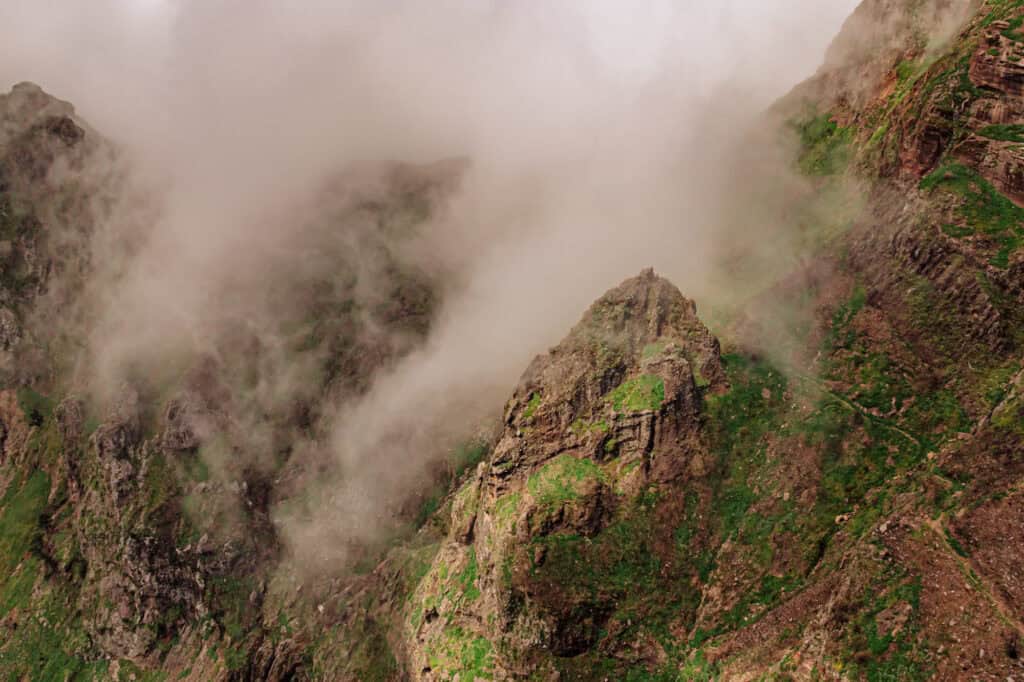
While Madeira is known for its lush laurel forests, dramatic peaks, and mild climate, the island is becoming increasingly vulnerable to droughts, extreme weather events, biodiversity loss, and wildfires.
The 2024 Madeira Wildfire
In August of 2024, Madeira experienced one of its most severe wildfires in recent history. It burned for 11 days, severely impacting the island’s environment and its residents.
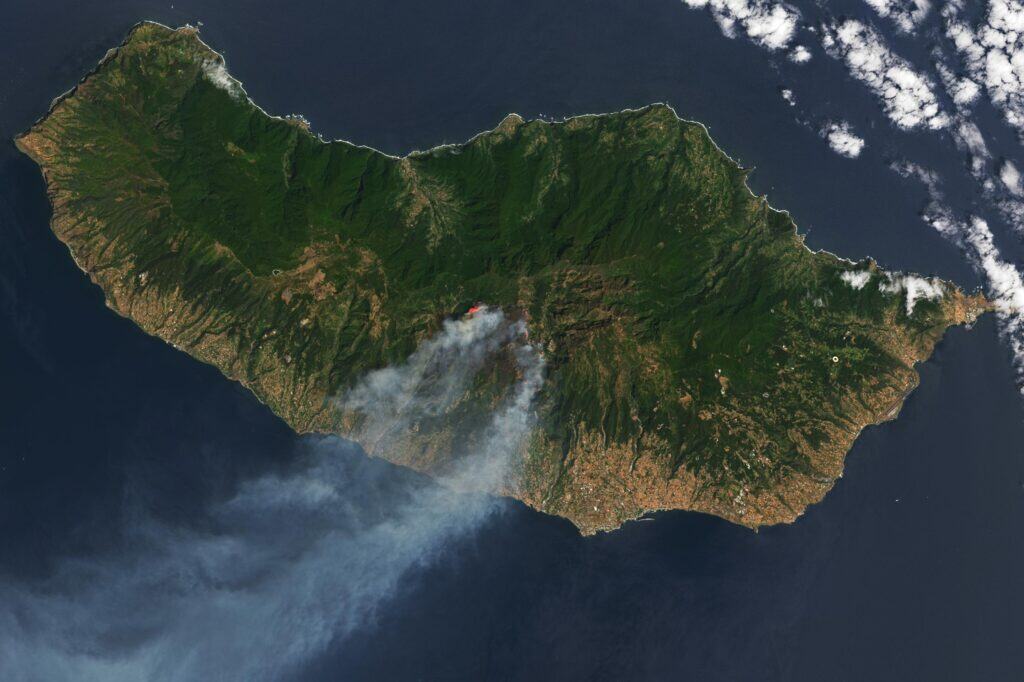
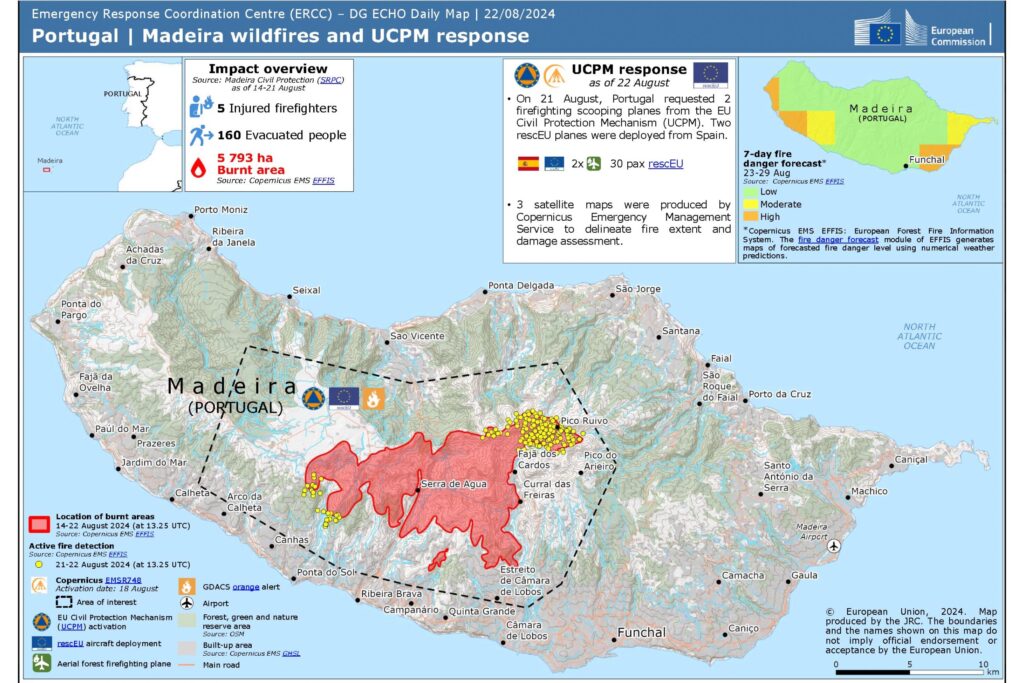
This map shows how much of the island was impacted by the fire’s spread.
Wildfire Details
- Sparked: August 14, 2024
- Contained: August 25, 2024
- Area burned: 12,000 acres (almost 6% of the island’s total area)
- Injuries: 2 firefighters
- Damage: No homes or essential infrastructure burned.
- Cause: Unknown
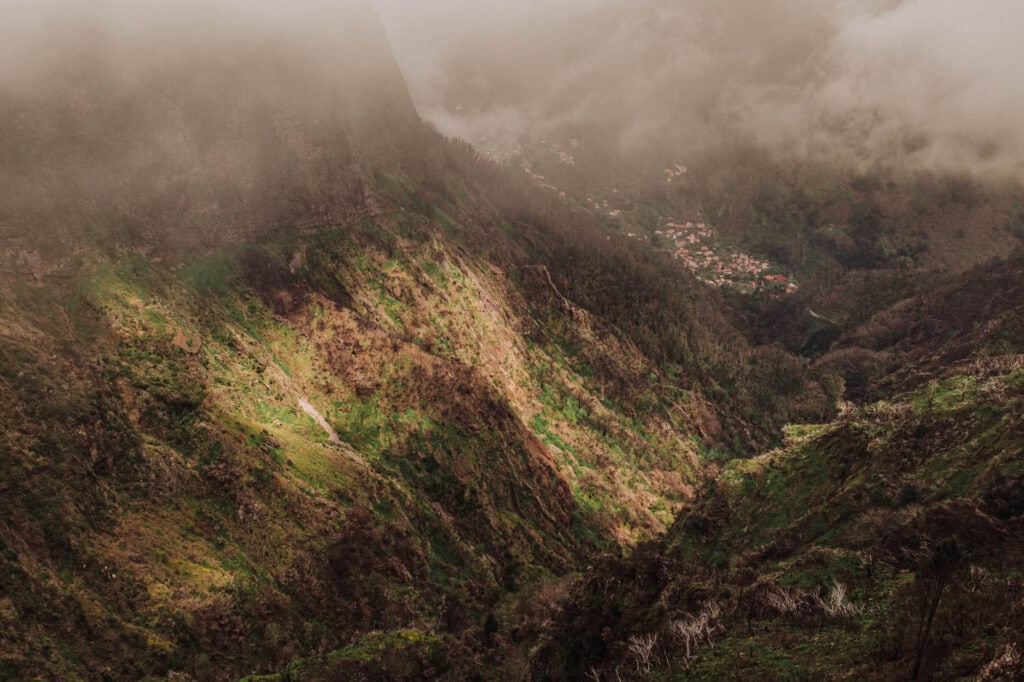
The fire burned in the mountains above small communities, forcing the evacuation of 200 residents as a precaution. You can see the village tucked away in this valley.
Areas Impacted by the Fire
Several regions faced significant threats from the flames:
- Curral das Freiras, the community known as the “Valley of the Nuns” was evacuated.
- Pico Ruivo, the island’s highest peak had flames near its summit.
- Pico Grande, Madeira’s third-highest peak, had flames burning alongside the main trail.
The Wildfire’s Environmental Impact
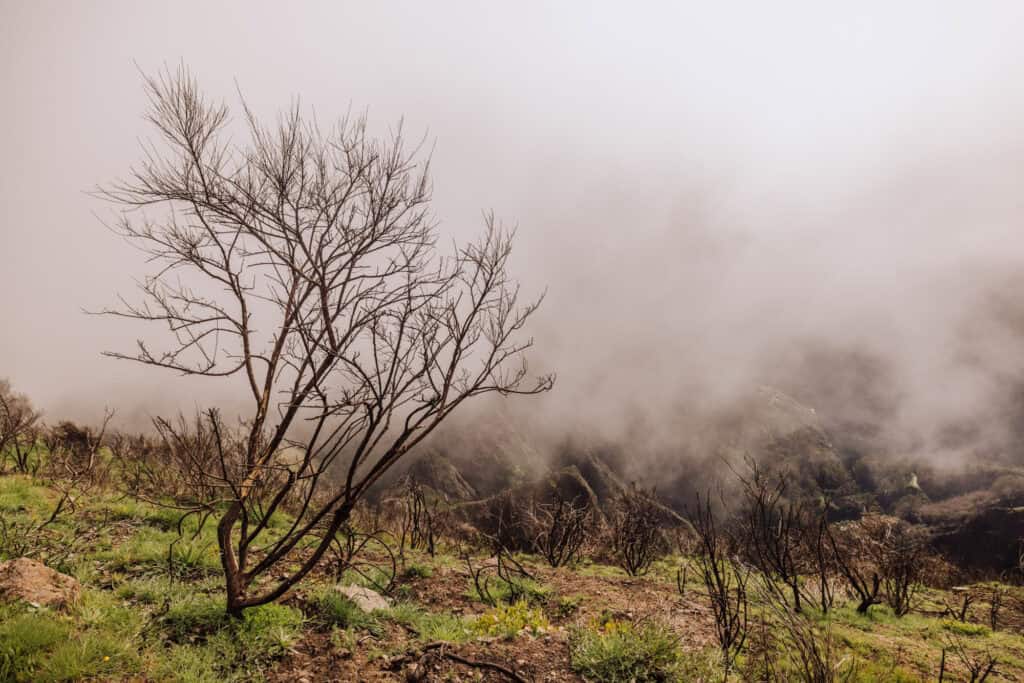
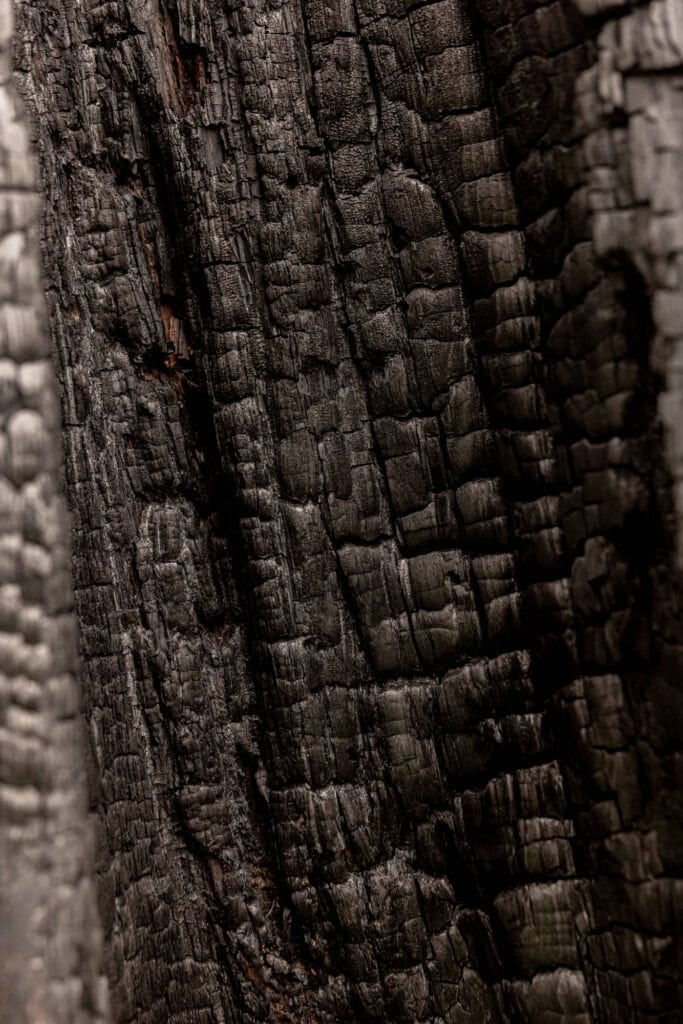
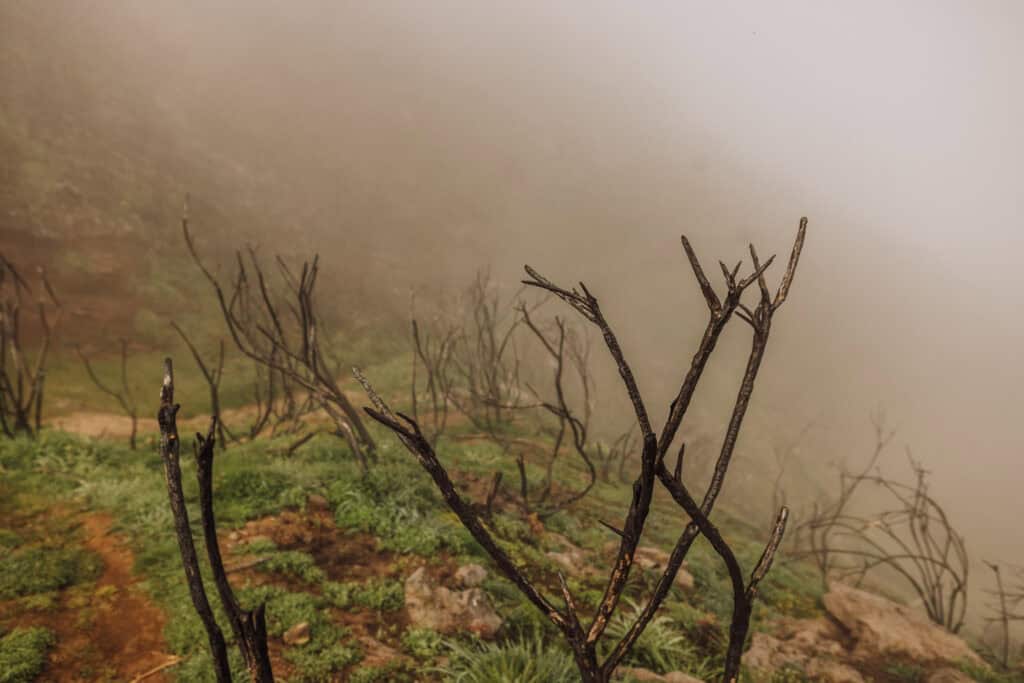
The flames impacted Madeira’s stunning landscapes and unique ecosystems. It blackened hillsides around Madeira’s tallest peaks, like Pico Ruivo and Pico Grande. Massive trees were charred.
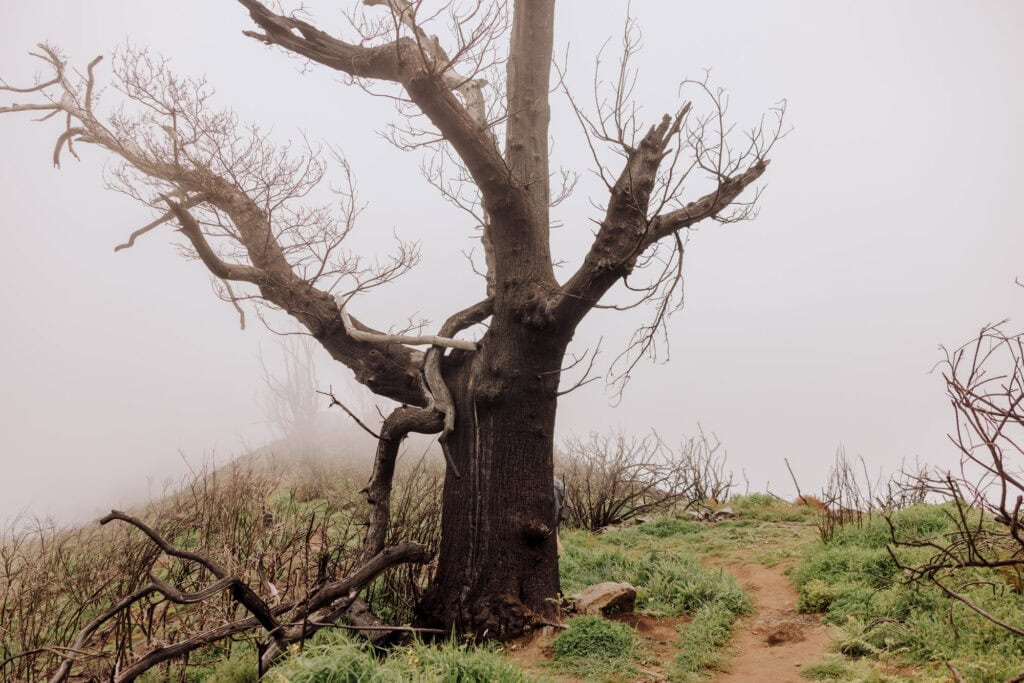
Wildfires also bring the risk of flash floods as storms hit the burn scars.
Portions of the UNESCO World Heritage Laurisilva Forest were singed, but for the most part firefighters were able to keep the flames away. It’s the world’s largest surviving laurel forest, and home to unique plants and animals.
Firefighting Efforts
If you’ve been to Madeira, you can imagine how challenging it would be for fire crews to fight a fire on such steep embankments. Add to that: high temperatures, strong winds, and low humidity.
In the US, it’s not uncommon to have several hundred firefighters deployed on a fire in my state of Arizona, or in neighboring New Mexico or California.
For the 2024 Madeira wildfire, around 200 firefighters were sent to the firelines. Some are based on the island, while others were called in from mainland Portugal, the Azores, and Spain.
Aerial support was key, since the terrain is impossible to access on foot in many spots.
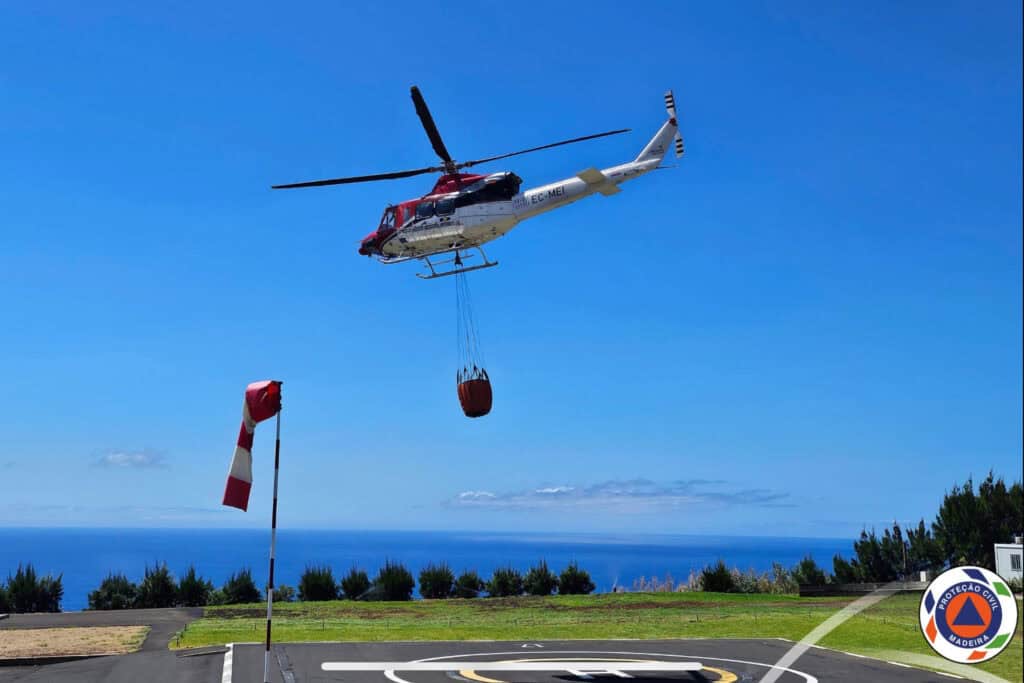
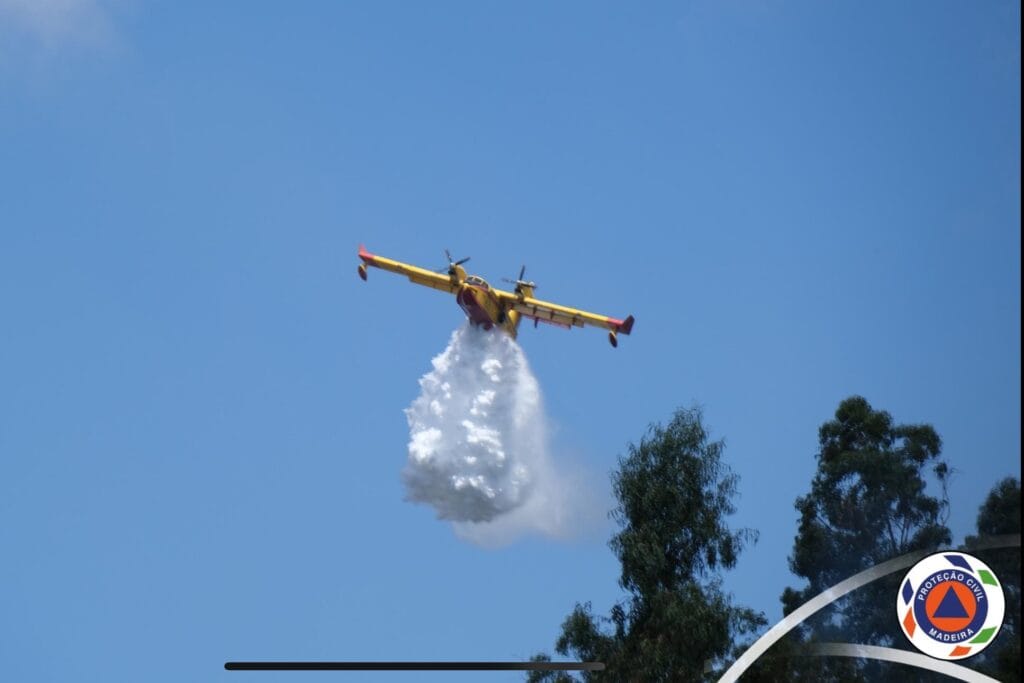
Helicopters made water drops. Plus, a few days in, two Canadair CL-415 water-bombing planes were sent by the European Union.
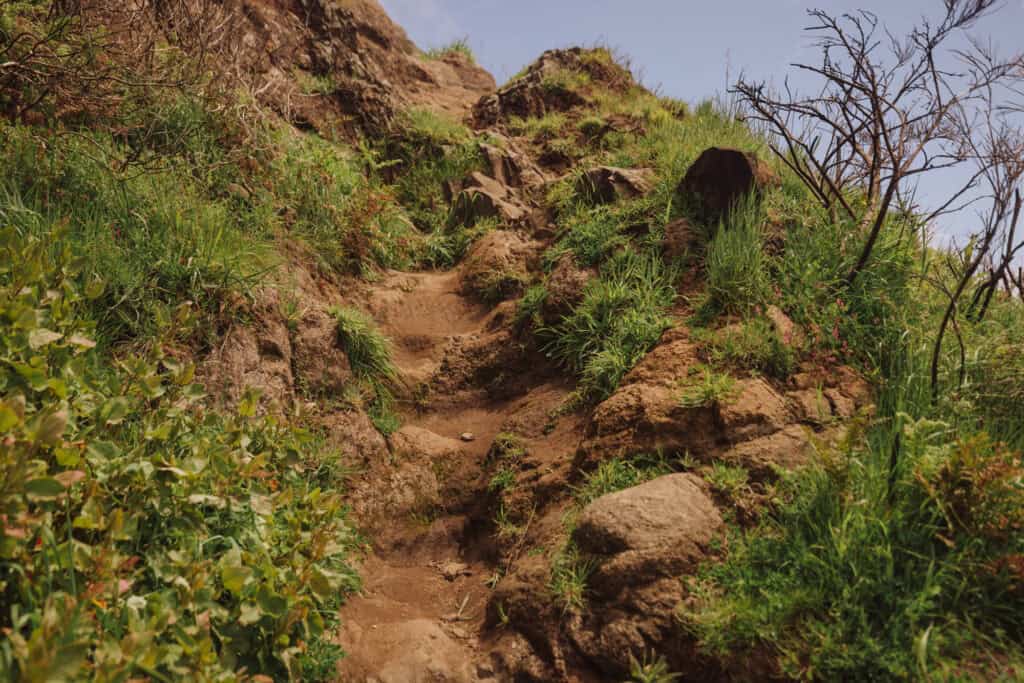
Despite the damage, Madeira’s mountains remain lush, and the scorched areas are turning green again.
The Wildfire’s Impact on Tourism Then & Now
The wildfire disrupted travel and tourism on Madeira, as you’d imagine, during and after the fire.
Dozens of flights were canceled due to smoke and safety concerns. The fire, at the end of the busy summer tourist season, led to a drop in visits.
Ongoing Impacts
Visitors will still see the impacts of the wildfire, most notably at two spots:
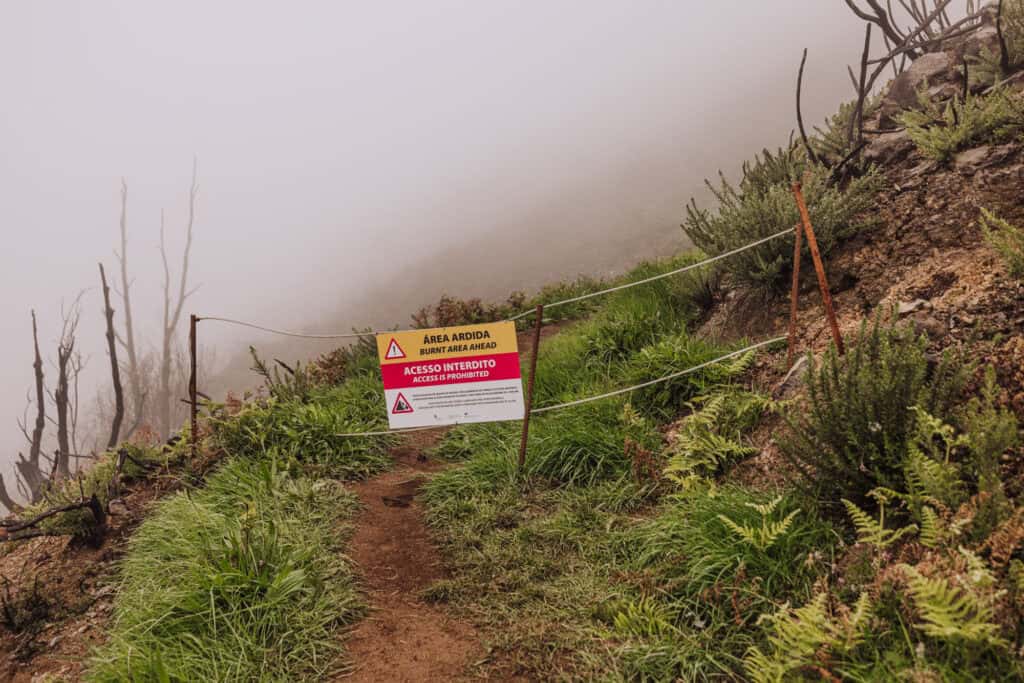
- PR1, the famous trail known as the “Stairway to Heaven,” is closed. While part of the trail (at Pont do Areeiro) remains open, hikers will come to a gate, blocking the rest of the route to Pico Ruivo. Some on Madeira say forest managers and the government were looking to close it anyway due to safety concerns, and the wildfire provided the push they were looking for.
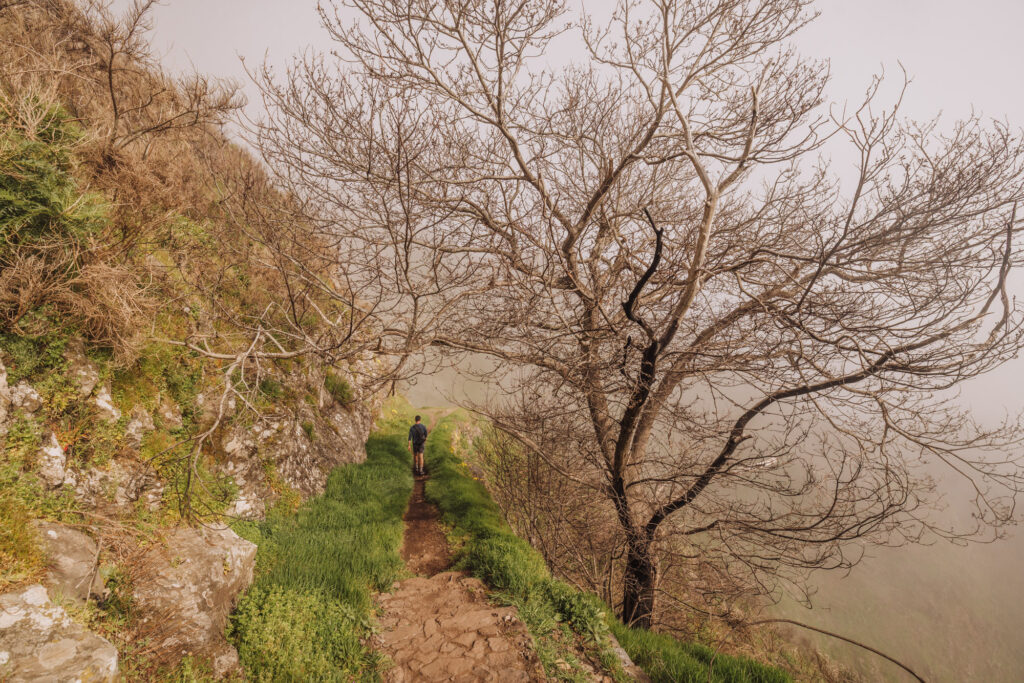
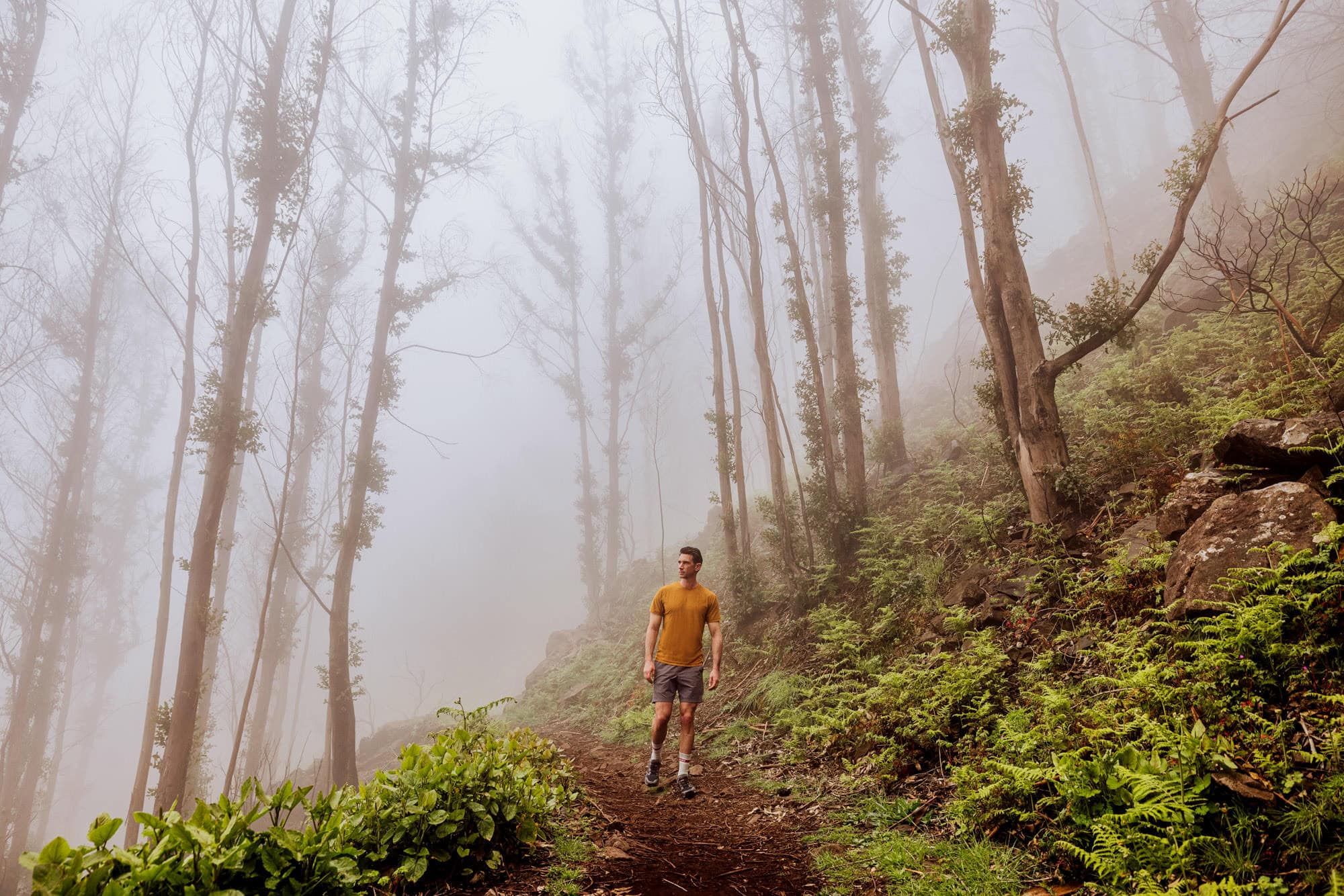
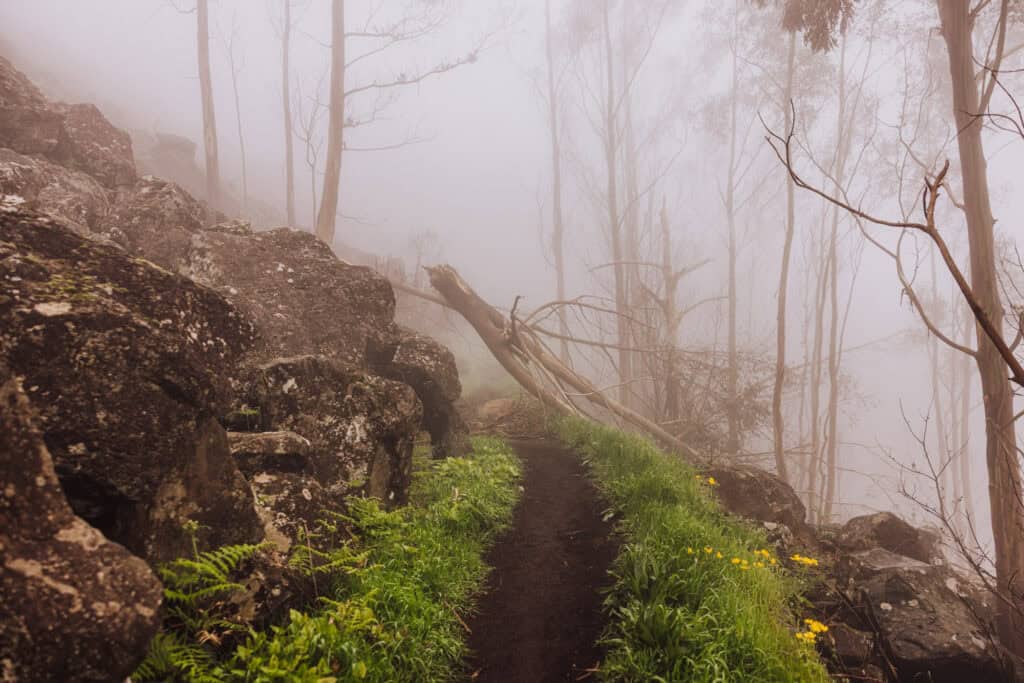
- Pico Grande has reopened to hikers. Along the beautiful trail, you’ll walk through forests burned by the wildfire. Many of the trees are blackened, creating an eerie visual, especially if the area is shrouded in fog. Still, much of the hike is through lush forests untouched by the wildfire.
Climate Change and Future Wildfires on Madeira
Experts warn that climate change may increase the frequency and intensity of wildfires on Madeira.
A researcher from the University of Madeira issued a warning, predicting temperatures will rise between 3ºC and 5ºC in the coming years. That will increase the risk of wildfires and flooding.
Madeira traditionally receives quite a bit of rainfall, and stays green thanks to its mountainous geography and historic levada irrigation channels. Climate change is making rainfall more irregular, with intense bursts of rain followed by longer dry periods.
Pests and diseases are spreading more easily due to milder winters, which could impact the health of trees and lead to more fire fuel if they dry out and die.
Combatting Climate Change
Madeira isn’t home to “climate deniers.” People here know they have to act, and several initiatives are underway:
- Reforestation and fuel management projects aim to reduce fire fuels and mitigate risks.
- New water management plans are being developed to retain and distribute rainwater more efficiently.
- Madeira is part of Portugal’s national and EU climate resilience strategies, with investment in green infrastructure, energy diversification, and sustainable tourism