The Montana Dinosaur Center: The Dino Dig & Museum Experience
The Montana Dinosaur Center is much more than a museum. It offers the rare chance to engage in real paleontological research and fieldwork!
It’s pretty incredible that the entire staff running the place is made up of experts in their field. The Dinosaur Center is a non-profit research institute, which also operates as a museum and visitor center for dino-enthusiasts.
Key Info on a Visit:
- Located in the tiny town of Bynum, Montana
- Founded in 1995 as a non-profit research museum
- Home to historically significant fossils, including the first baby dinosaur bones found in North America and the first dinosaur eggs/nestlings discovered in Montana
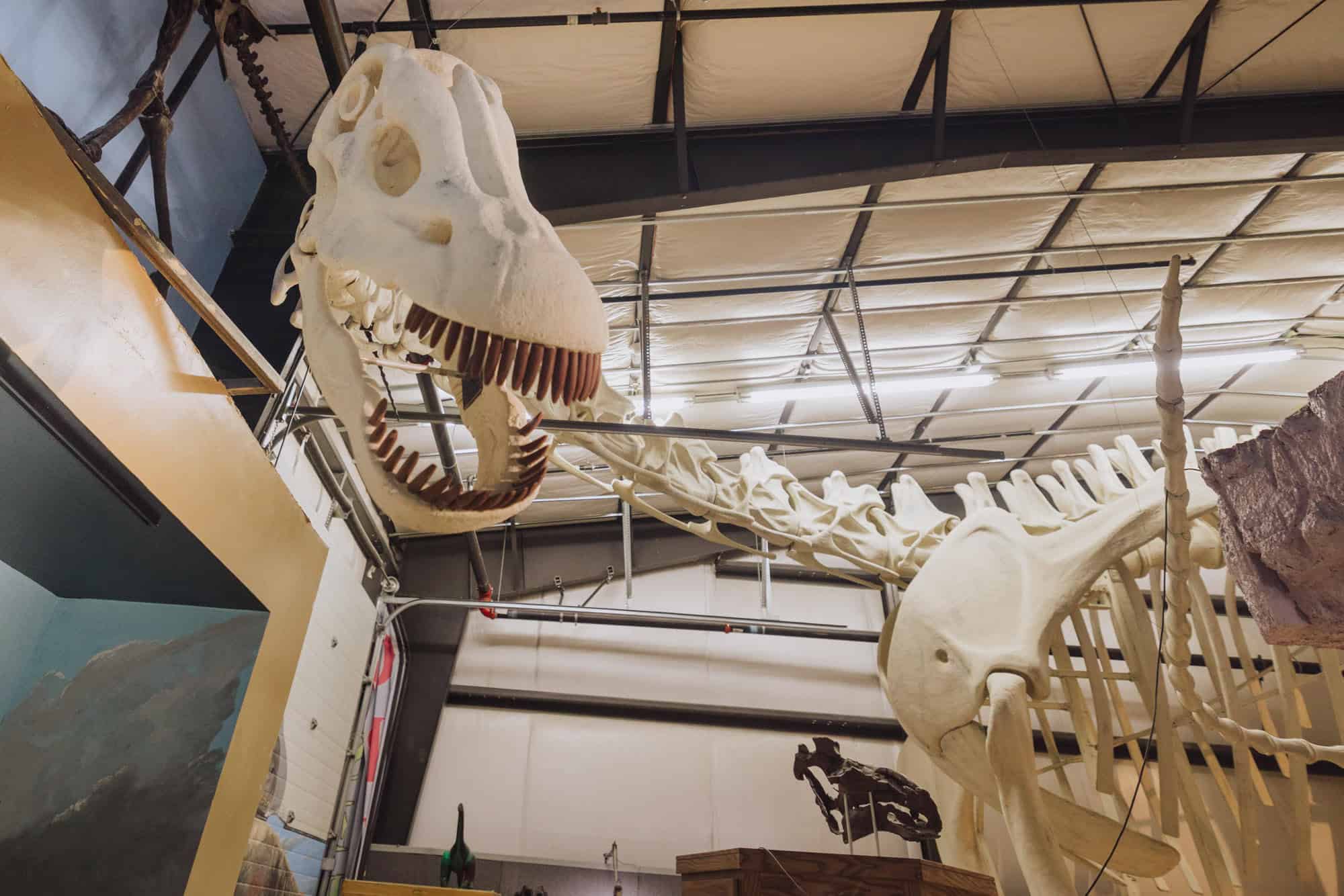
- It’s also home to the world’s longest dinosaur model: a 137-foot-long Seismosaurus
Visiting Information & Schedule
The Montana Dinosaur Center has seasonal hours. It’s open to the public roughly between Memorial Day and Labor Day. You can visit by appointment from October through April.
Location
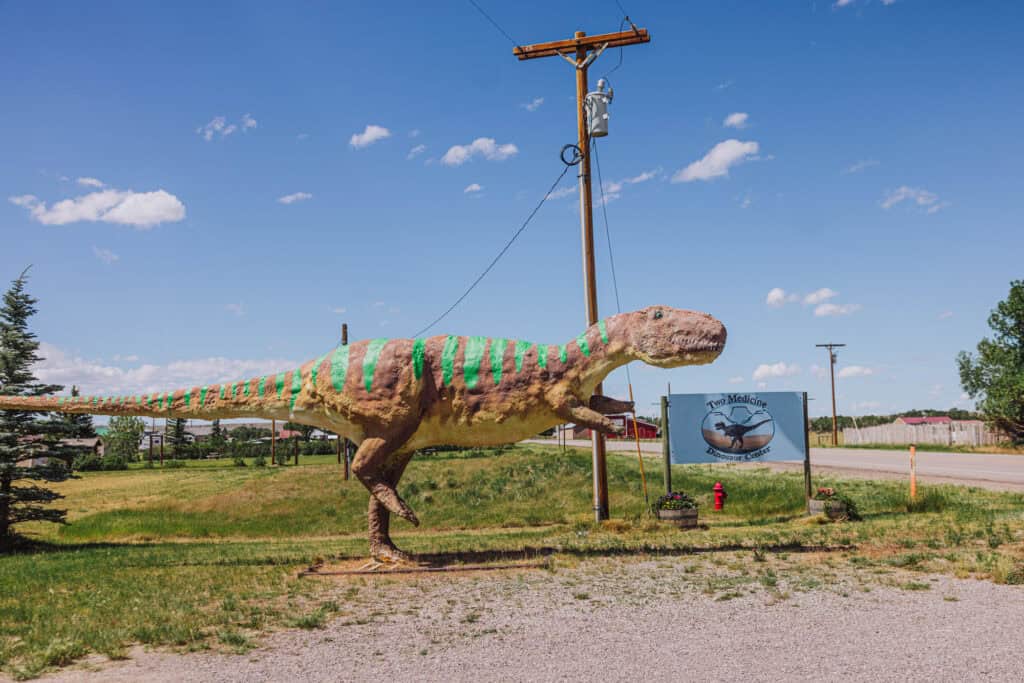
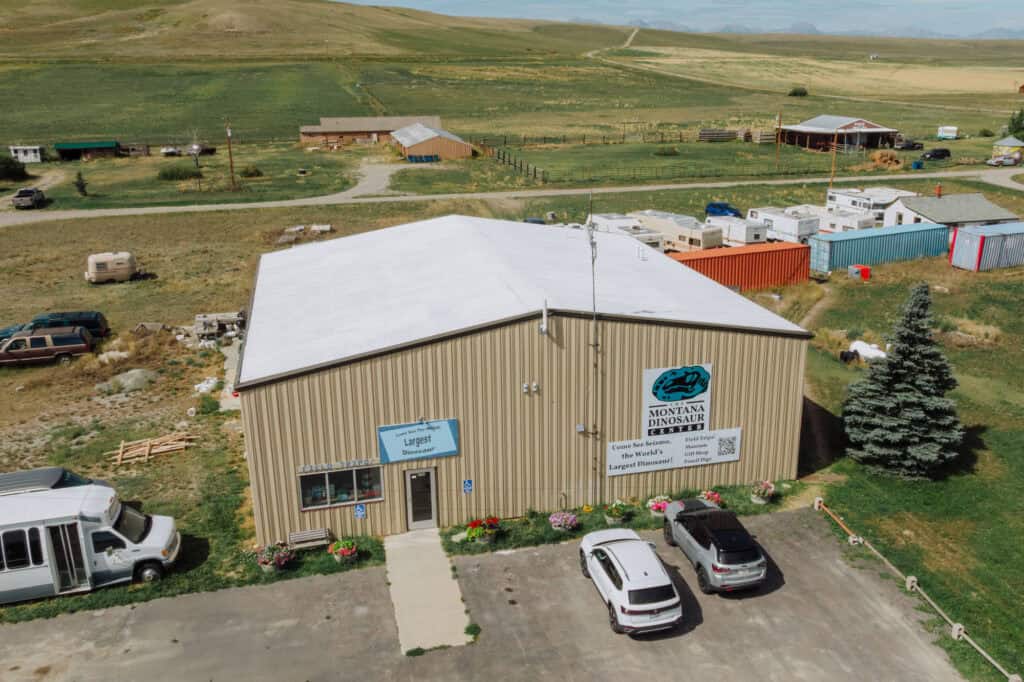
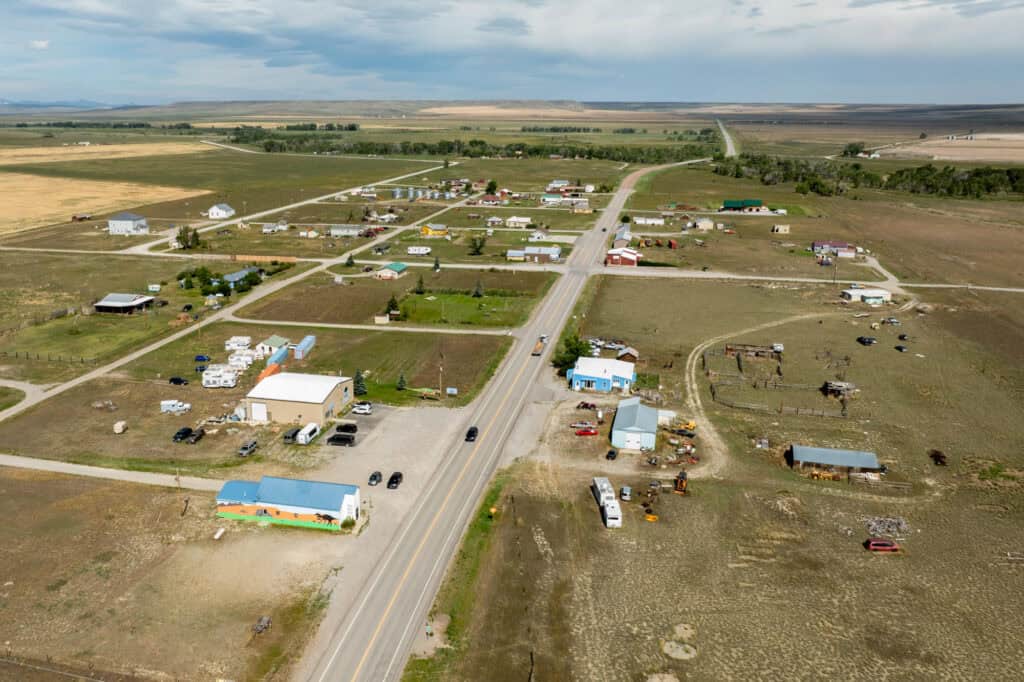
The Dinosaur Center is along Highway 89 in Bynum, Montana, halfway between Great Falls and Glacier National Park‘s east entrance.
The museum is part of the Montana Dinosaur Trail, which connects 14 sites across the state and is a major draw for dinosaur enthusiasts and researchers.
Museum Exhibits
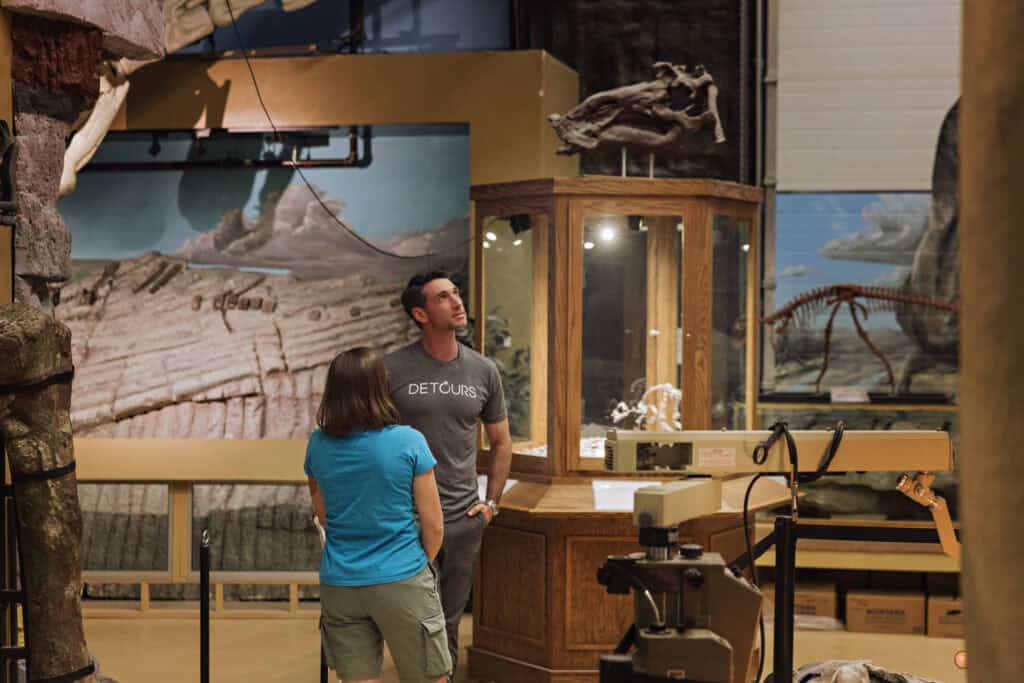
The Montana Dinosaur Center is unique for a number of reasons. When you visit, you’ll immediately notice: the museum is also home to several ongoing projects. Between the professional permanent displays, you’ll find paleontologists working on fossils right on the floor.
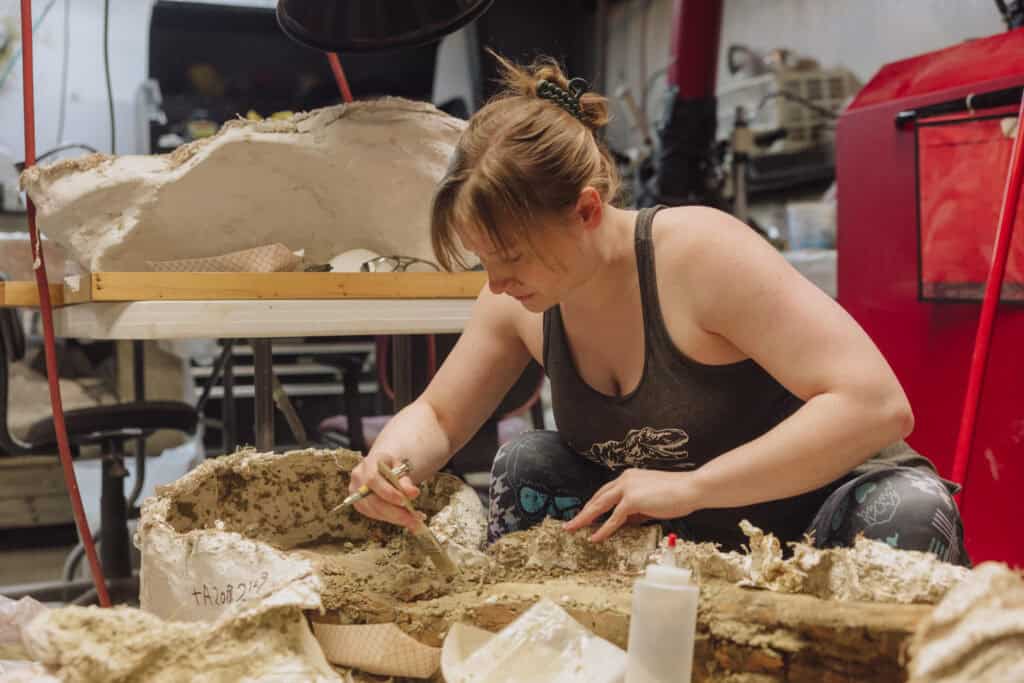
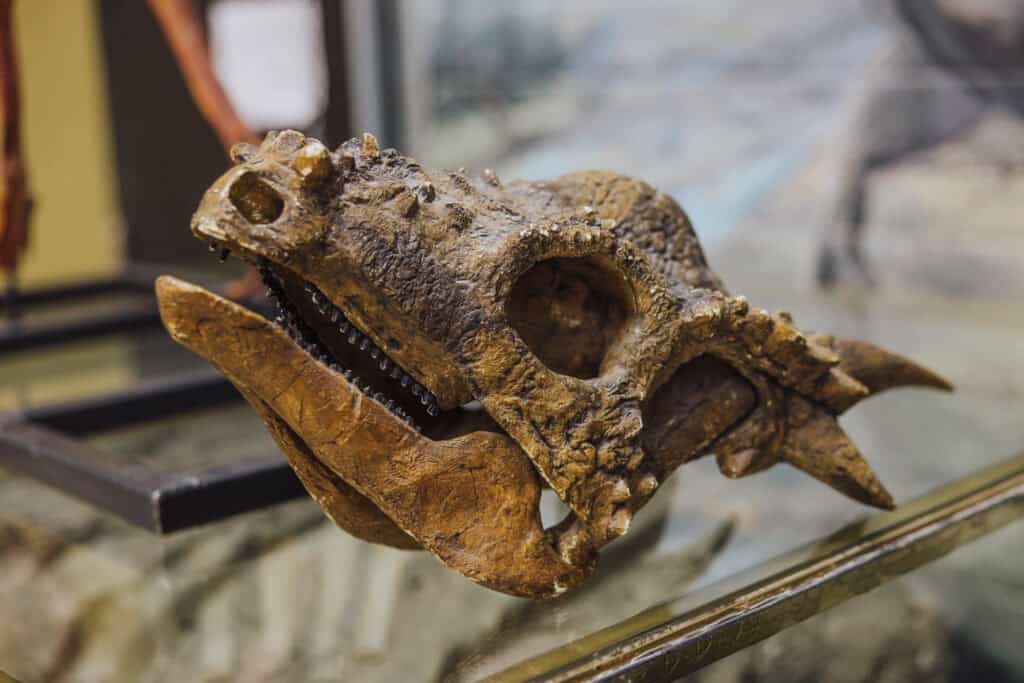
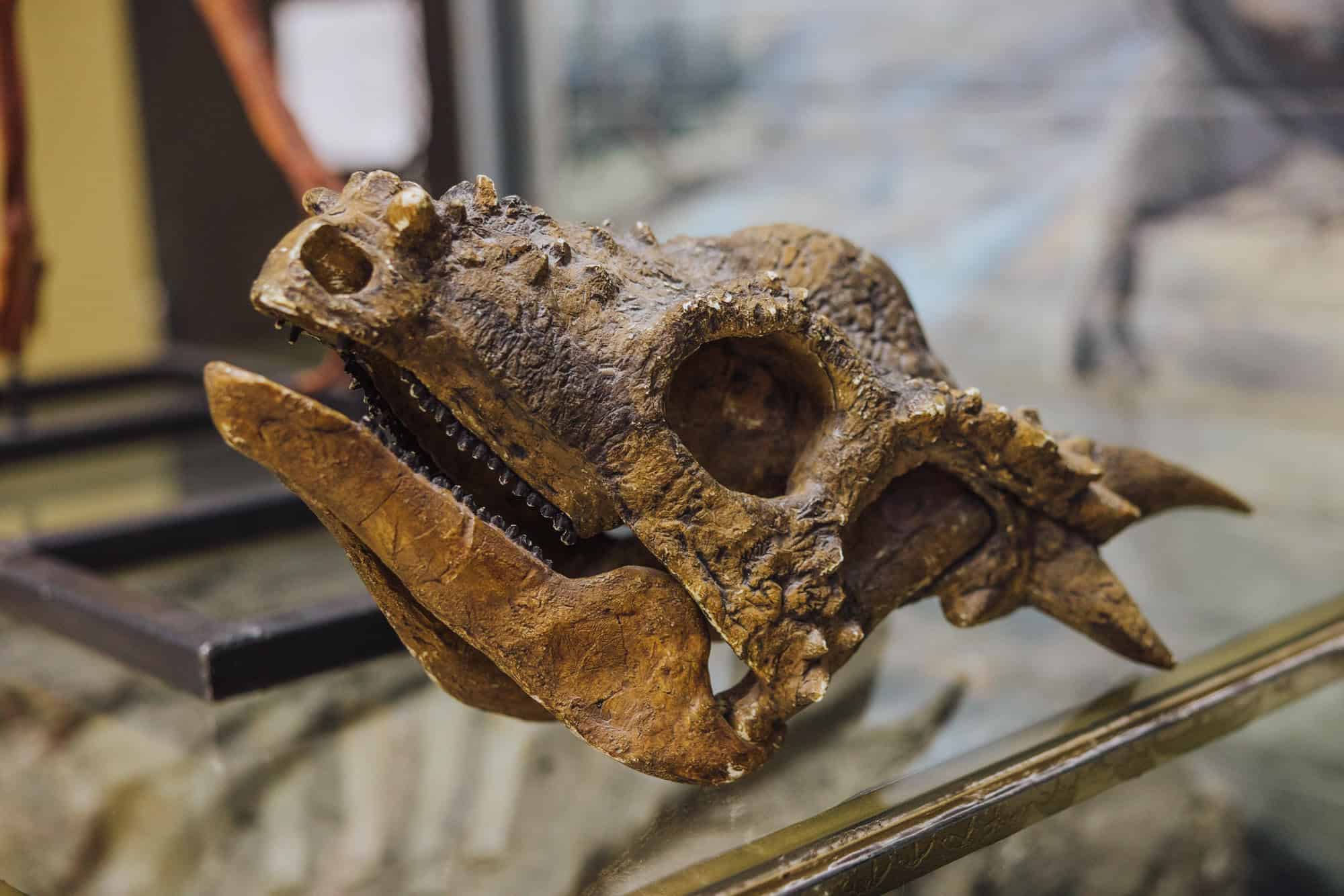
The Montana Dinosaur Center features real fossils of hadrosaurs, ceratopsians, and tyrannosaurs, some newly identified species from the Two Medicine Formation (which is close to the museum’s location in Bynum, MT).
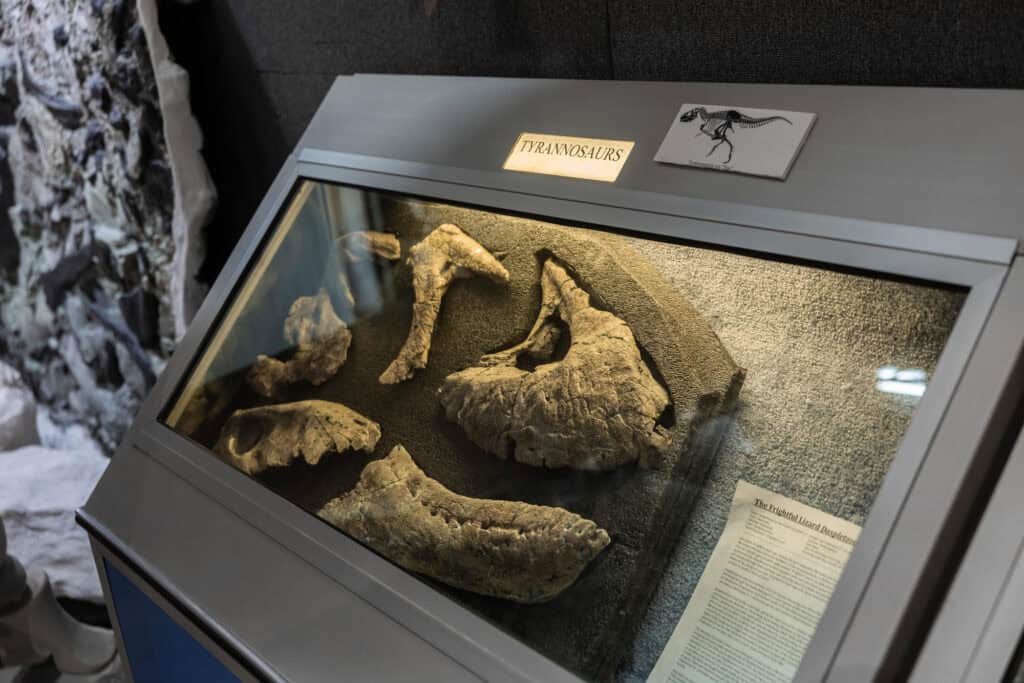
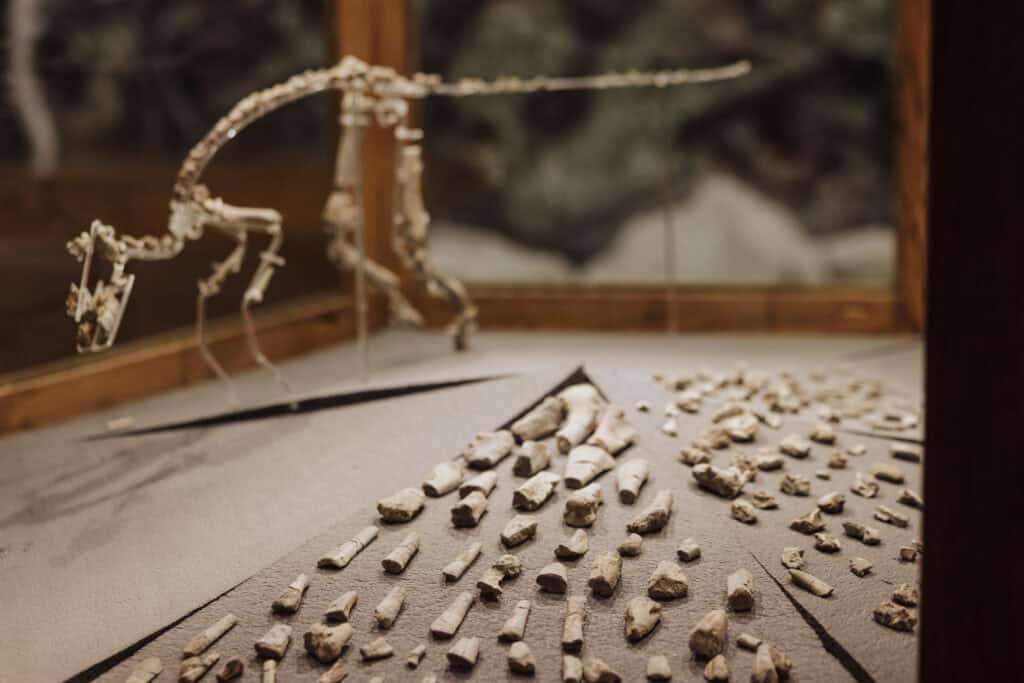
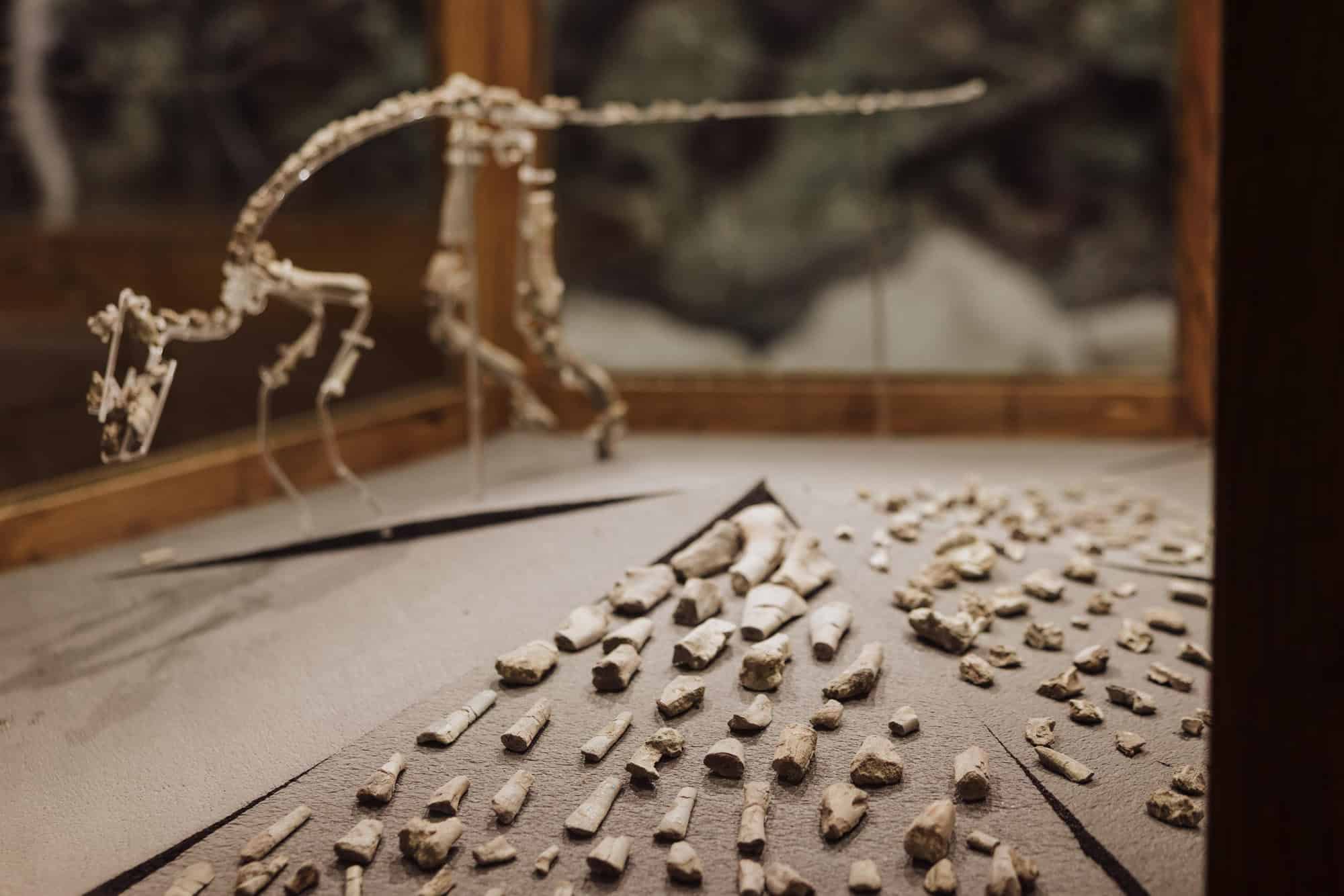
The displays also include fossils from baby dinosaurs, and a wide range of creatures.
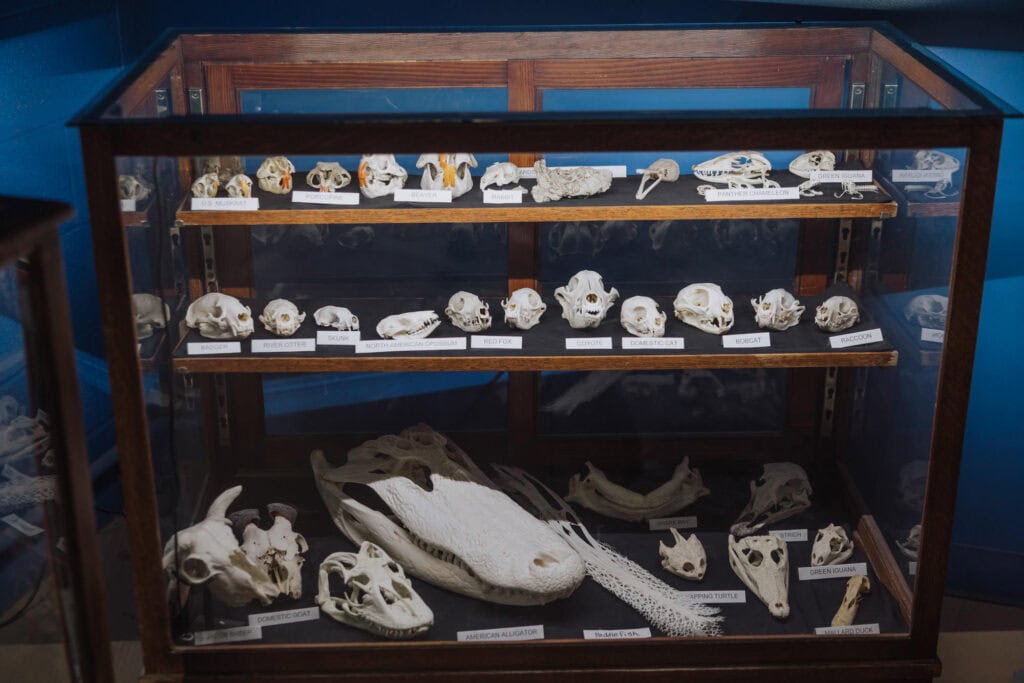
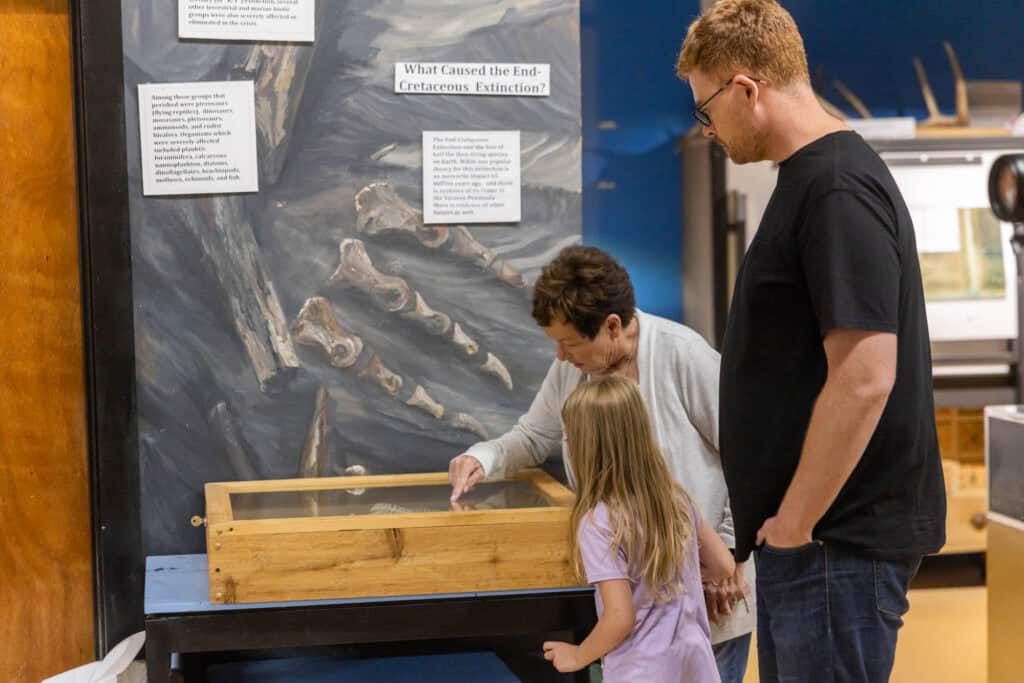
In addition to the fossils, bones, and ongoing project, there’s an extensive educational component to the museum for guests (kids and adults!).
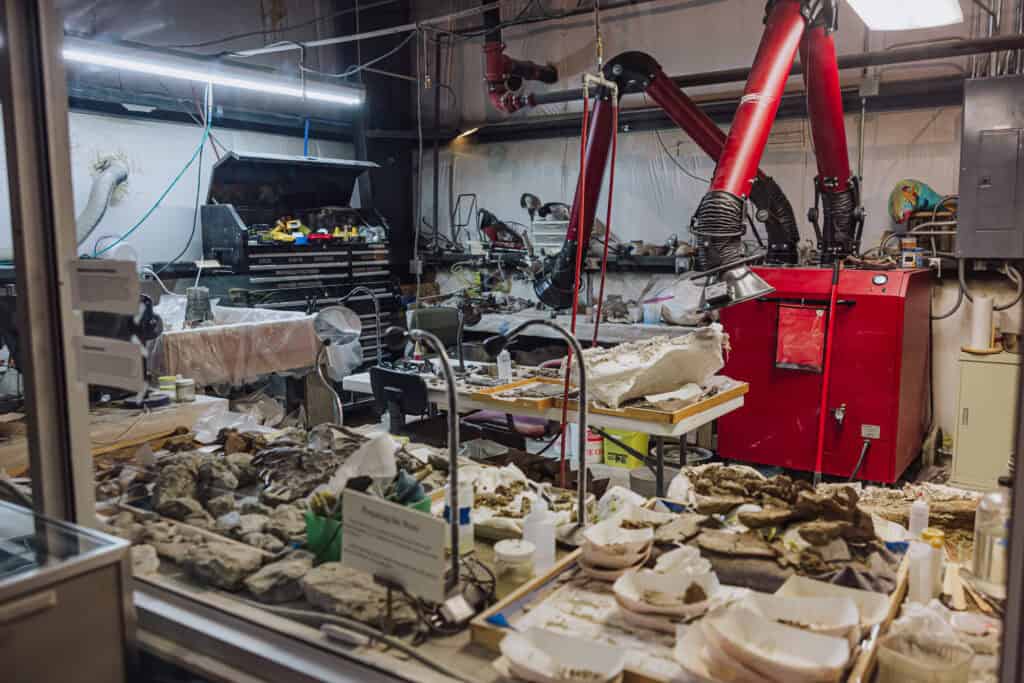
More of the paleontologists’ work goes on behind a glass wall. It’s organized chaos, which they’re happy to explain. It’s a system of toolboxes, lights, vacuums, drills, and tiny tools used to chip away at rock.
Tour a Real Dino Dig in the Field
Yes, THIS is what truly makes the Montana Dinosaur Center unique! Not only do you get to see the fossils and bones, and get to watch paleontologists at work inside … you can join them on a trip to an actual dino dig site in Montana!
It’s relatively close to the museum in Bynum, MT, which is a very rural part of the state.
The Montana Dinosaur Center offers several kinds of tours to dig sites:
Half-Day Tour
This is good for families. There’s no age minimum, so it’s great for young kids.
The half-day tours are offered in the mornings or afternoons. You won’t actually participate in a dig, but you’ll see dinosaur bones at a fossil dig site.
The cost is $125.
Full Day Tour & Dino Dig
A full-day dig site tour will include lessons on field paleontology, fossil identification, and geology.
You’ll get to dig up fossils and bones at an active dig site!
The cost is $250
Private Groups
For a group of up to 10 people, you can have full access to the paleontologists on staff for a full day at the dig site.
The cost is $2250 for the group.
Seismo, the Guinness World Record Holder
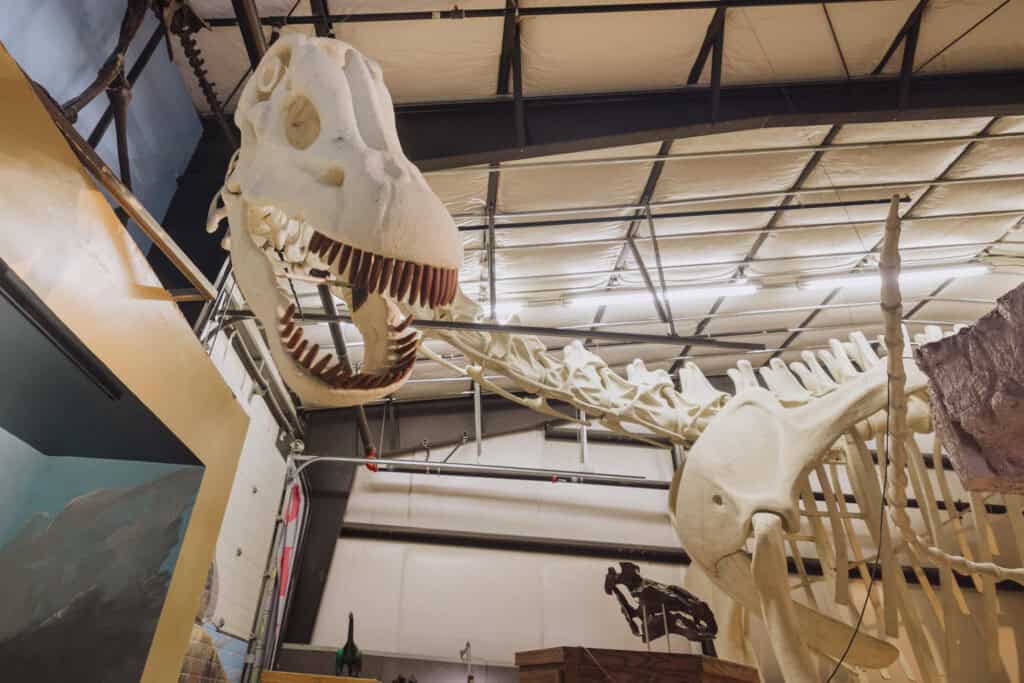
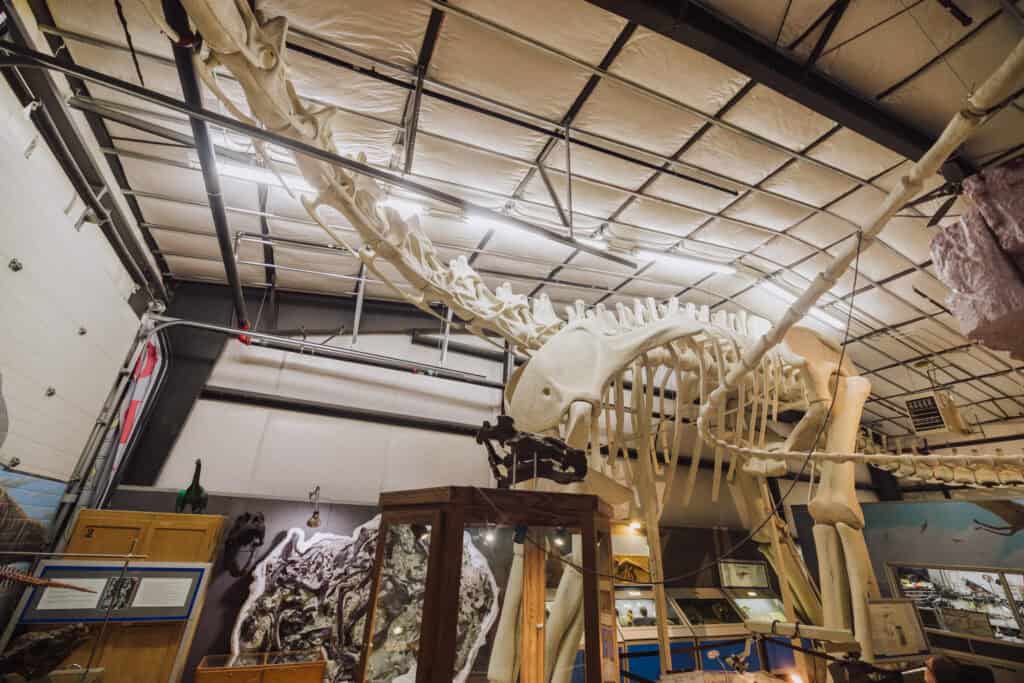
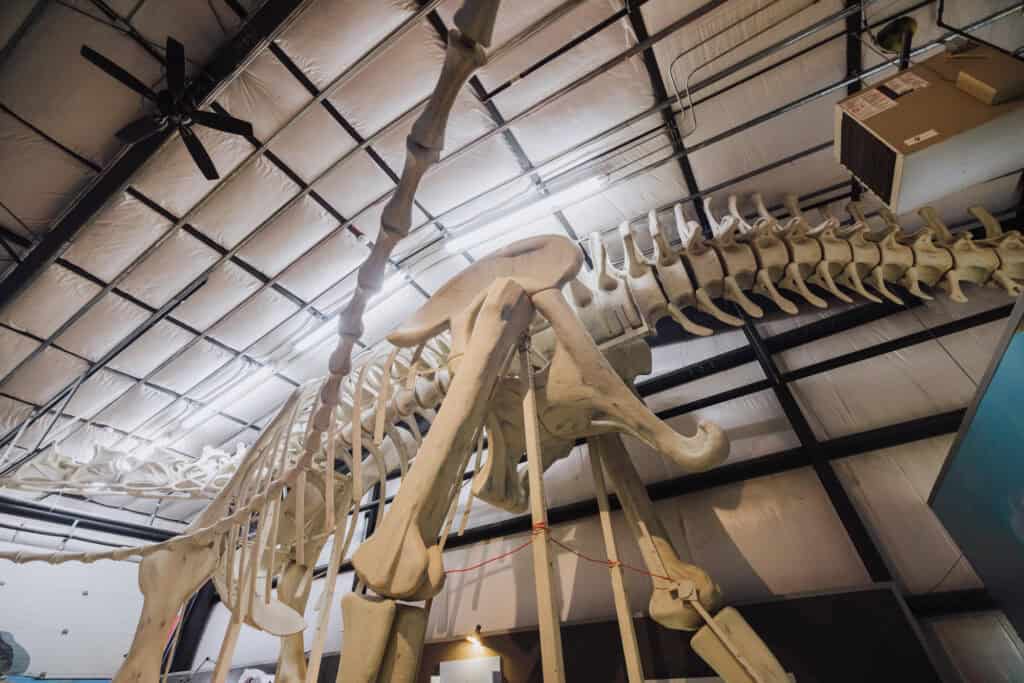
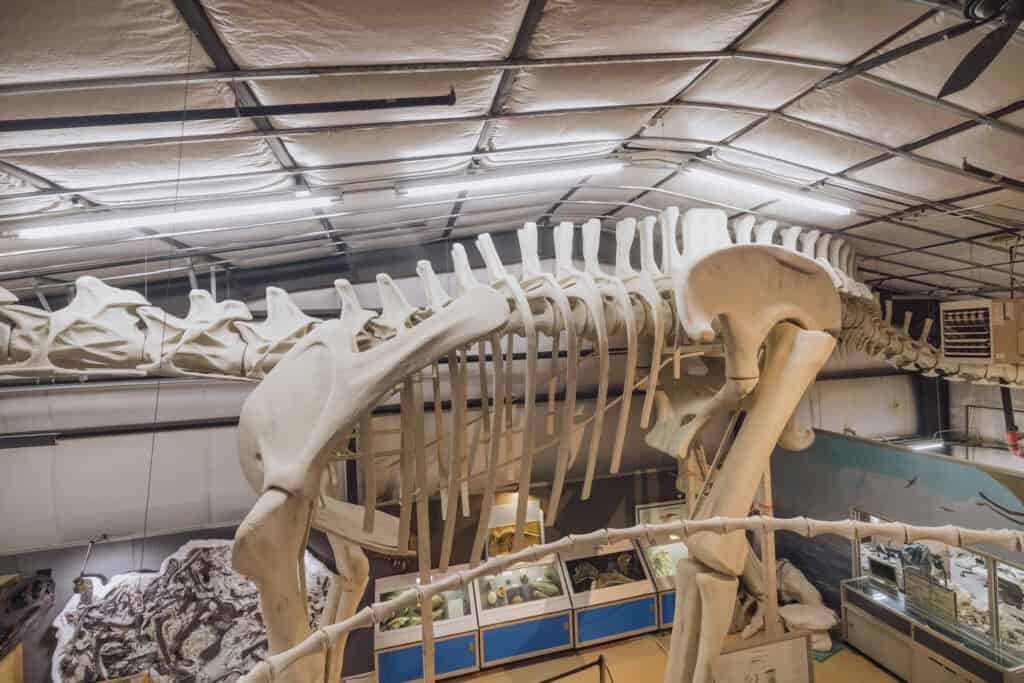
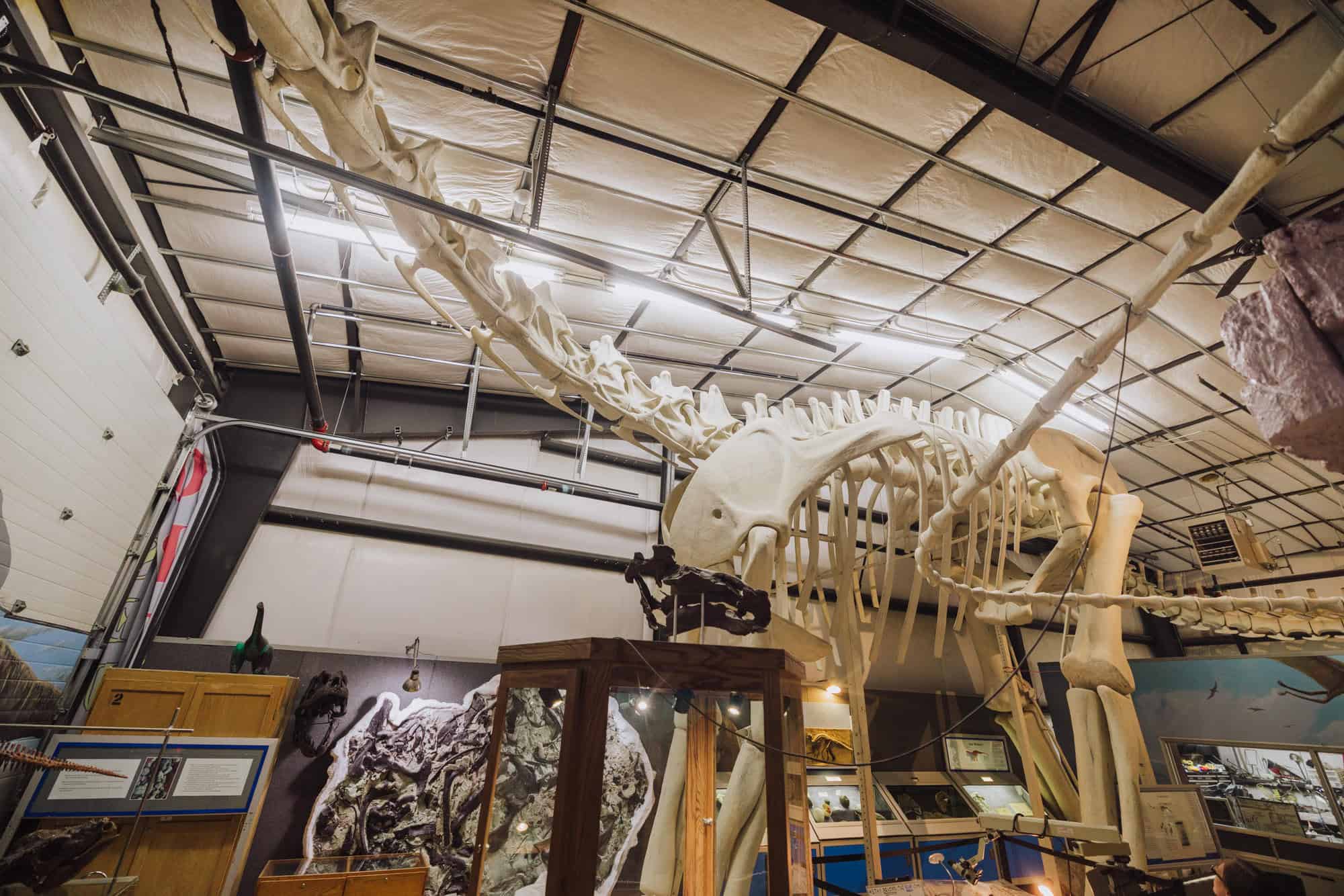
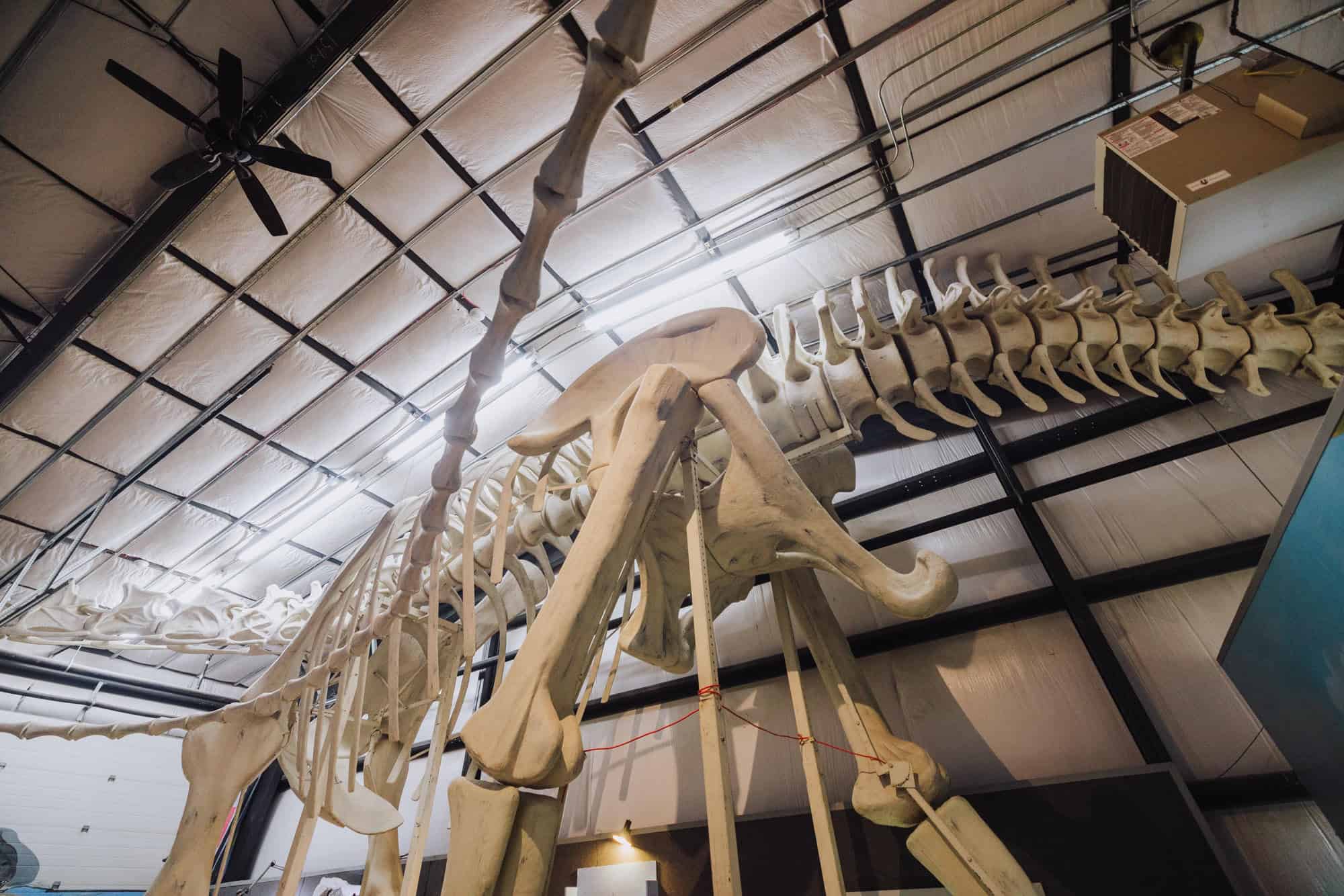
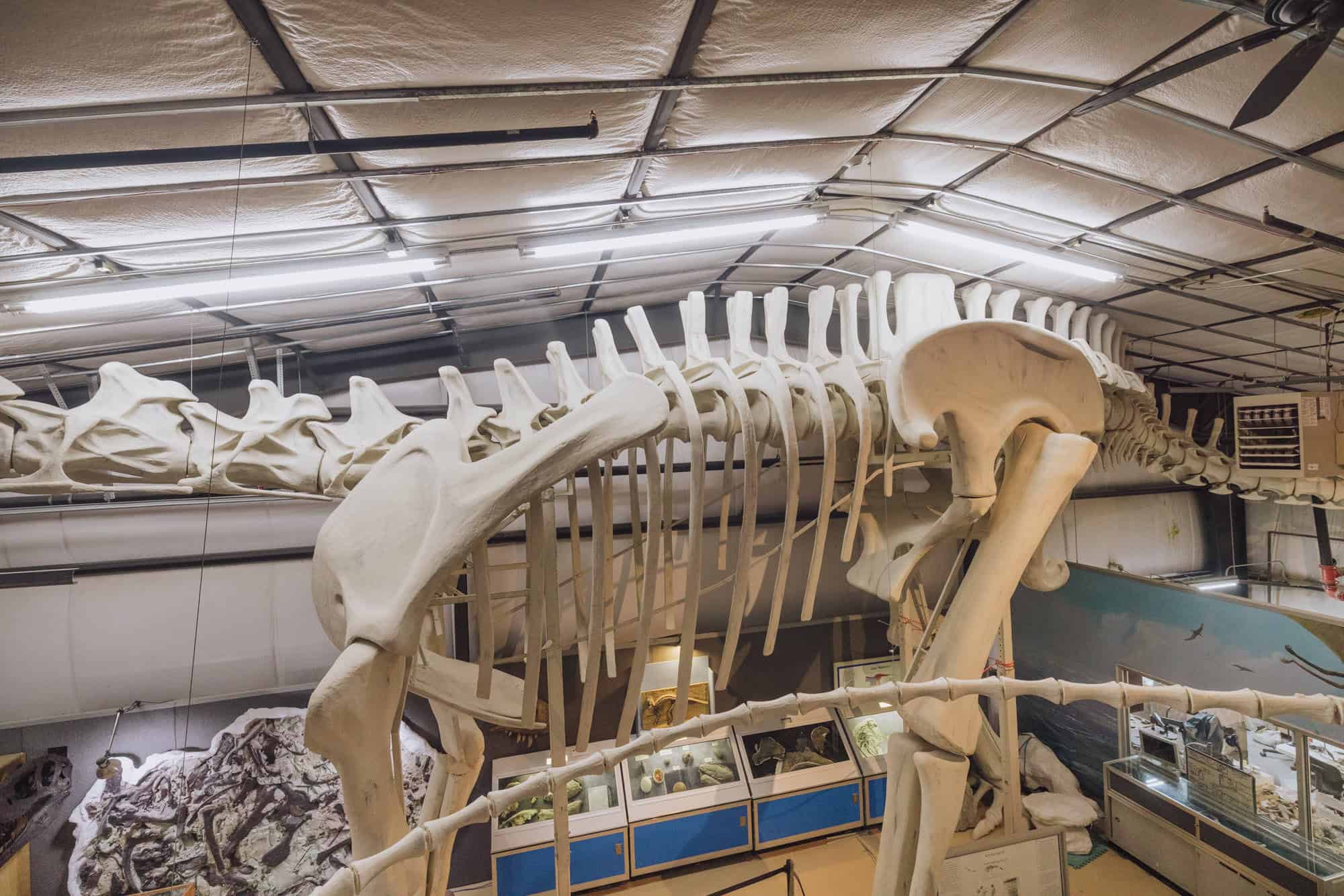
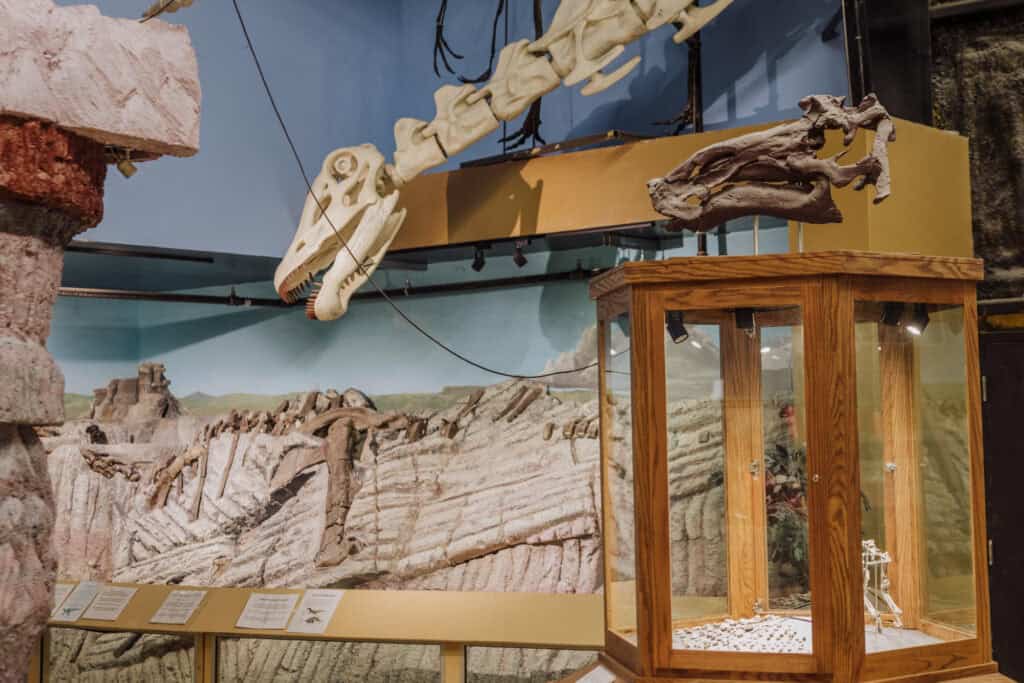
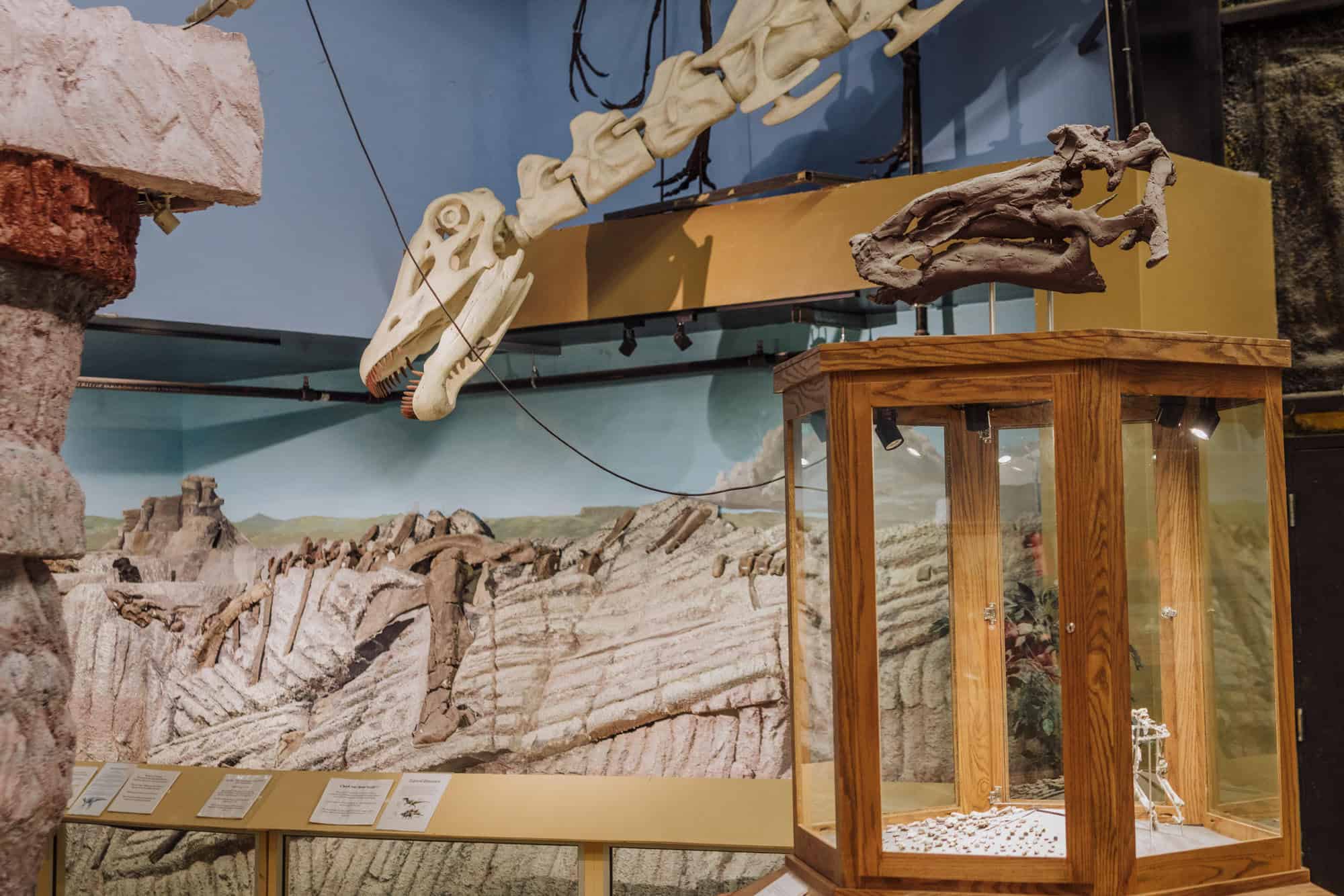
The Montana Dinosaur Center’s most famous resident is “Seismo.” The replica of a seismosaurus skeleton is 137 feet long, and holds the Guinness World Record for “Longest Dinosaur Skeleton.”
Seismo is actually *too big. To fit him into the current complex, he’s in a crouched position with his tail curving around the entire museum.
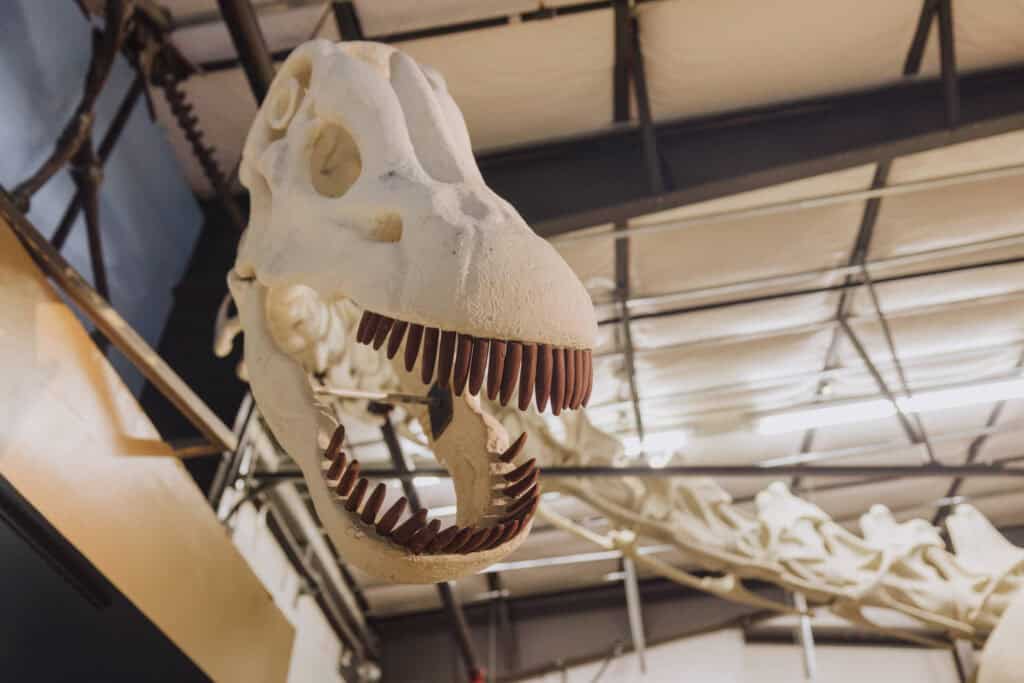
Seismo was found in New Mexico, and a team from Bynum deployed to help dig up the bones. The real bones are in a museum in New Mexico, while much of the remains are still in the ground. He was found in a protected area, so that’s where he’ll stay.
There are plans to expand into a new building, where he’ll fit in a proper pose.
He’s too big to even fit into a photo, so you can see all of him in this gallery:
Dinosaur Eggs Found in Montana
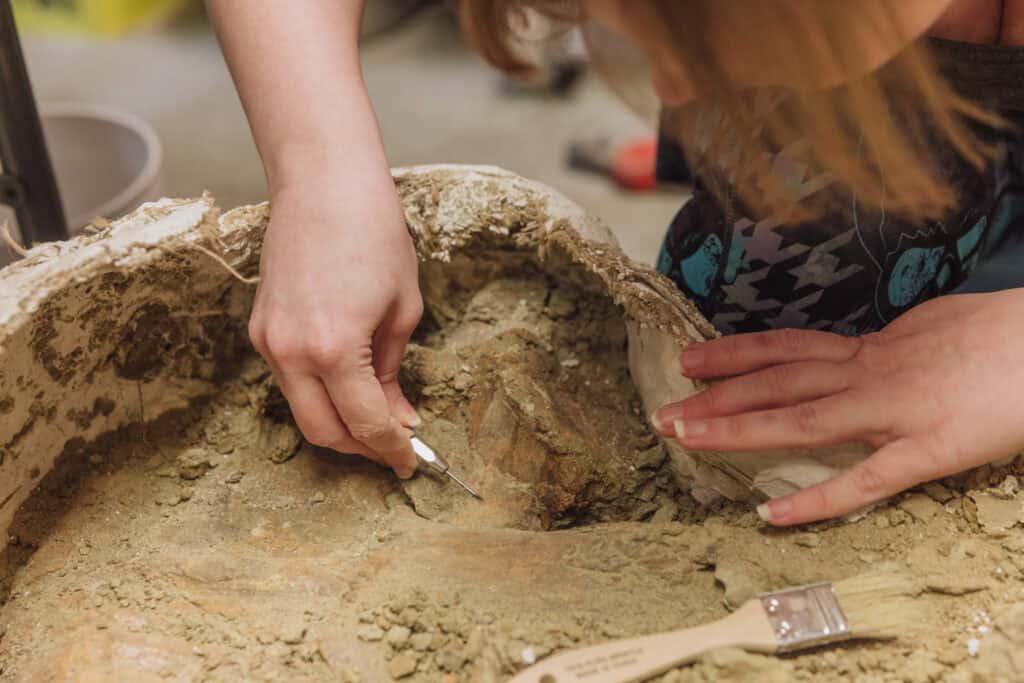
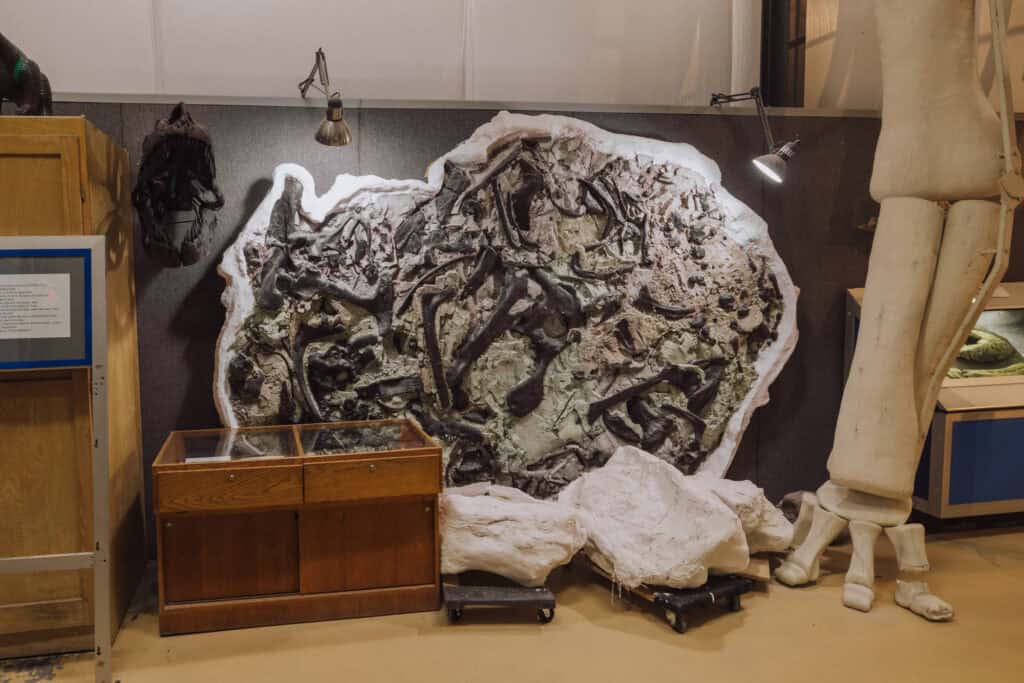
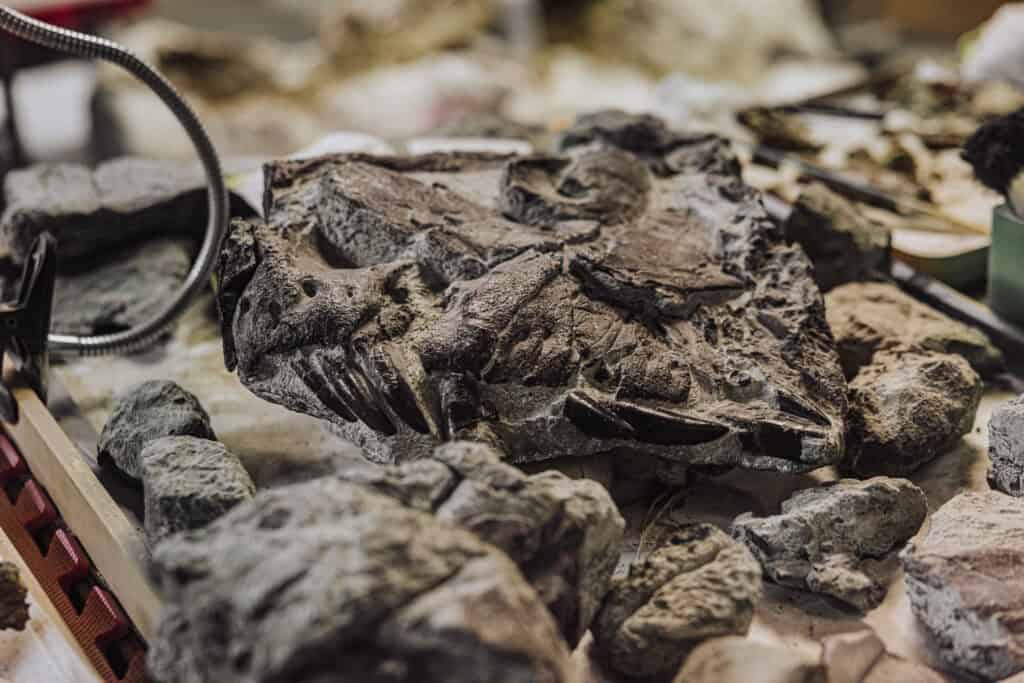
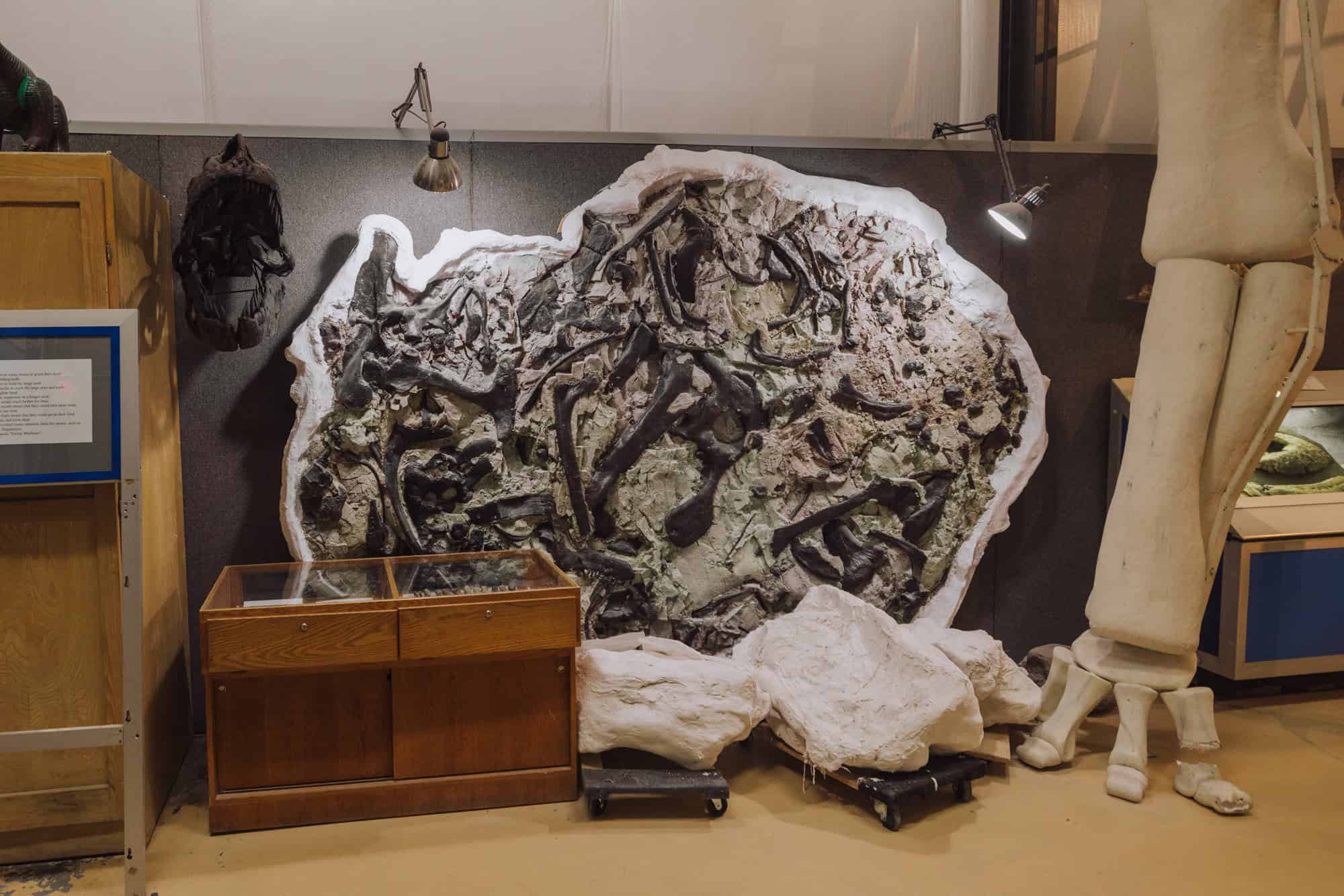
Walking around in the Dinosaur Center, you’ll see staff actively working on egg nests, which were dug up at the nearby Two Medicine area. The dinosaur eggs are encased in a shell (called a field jacket) to be transported and kept together from the field into the museum.
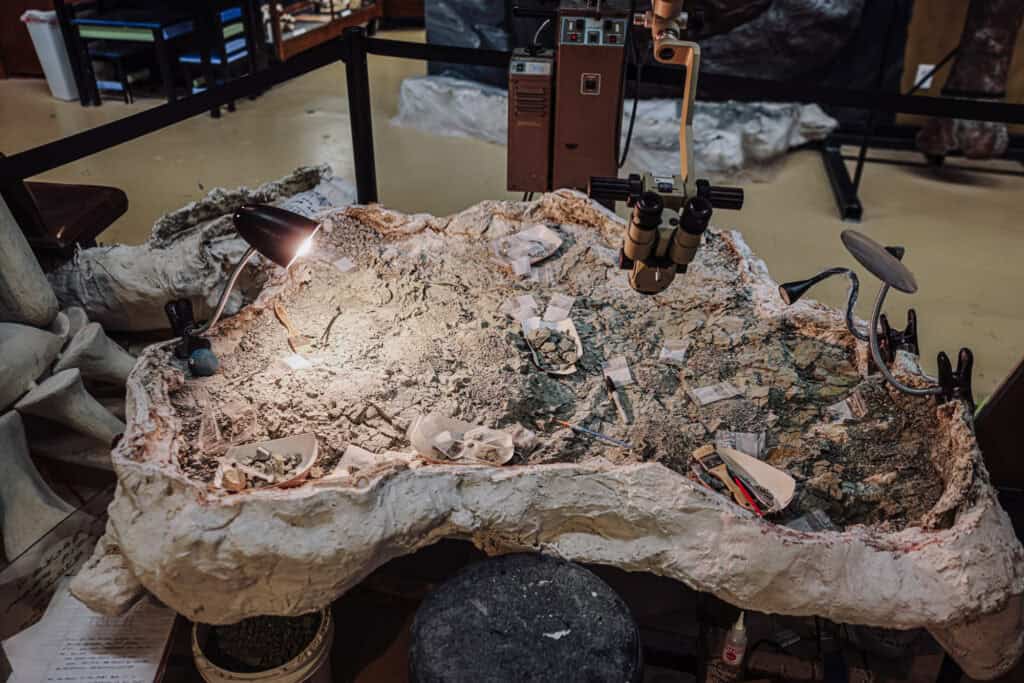
It’s a painstaking process that requires a level of patience I can’t imagine!
As I write this, they’re working on two nests that failed, or didn’t hatch, when they were laid 75(ish) million years ago.
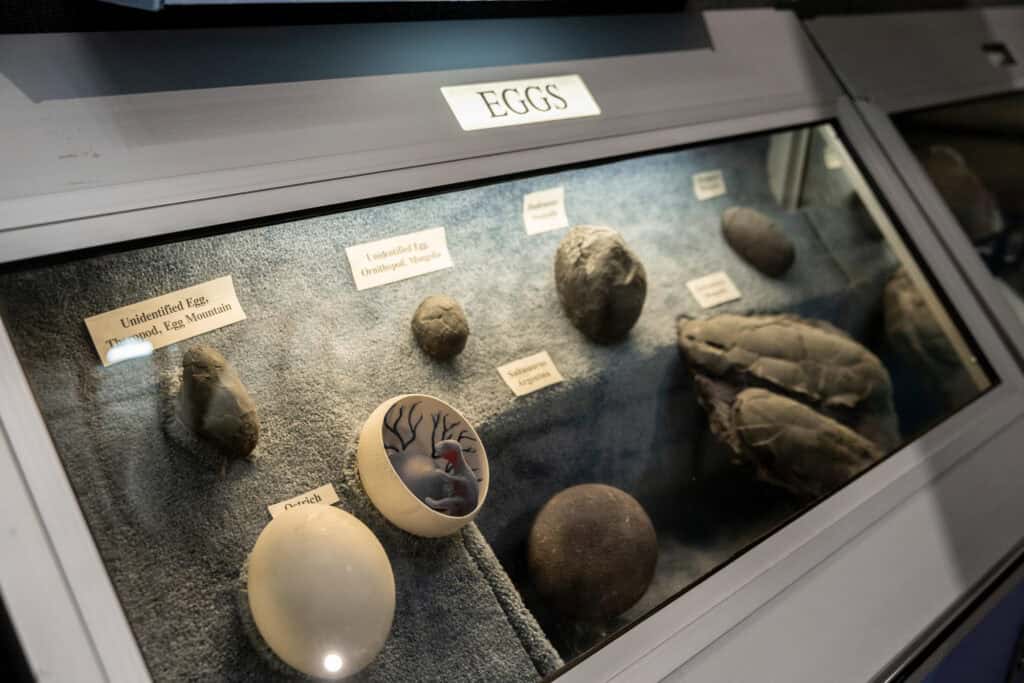
The staff has 12 more field jackets, with a combined 60 (or so) eggs. It’s all from the same species, a therapod. It was a 2-legged, meat-eating dinosaur. They’re not sure if one female kept laying eggs in the same spot, or if a herd chose it as a nesting site.
Behind a glass wall, you can watch the paleontologists on staff chip rocks away from around other recent finds, using tiny, sharp tools. Some are specialized, while others are found at the local hardware shop.
The Two Medicine Formation
The Two Medicine Formation, along the eastern Rocky Mountain Front is one of the most important and fossil-rich dinosaur areas in North America.
It was once part of a floodplain. Seasonal droughts and volcanic ash layers that helped preserve fossils from the Late Cretaceous era, around 80 million years ago.
The Two Medicine Formation is known for groundbreaking paleontological discoveries related to dinosaur behavior and nesting.
Egg Mountain
In 1978, paleontologist Dr. Jack Horner discovered fossilized nests, eggs, embryos, and baby dinosaurs in the Two Medicine Formation, near a site known as “Egg Mountain,” outside Choteau. This was the first hard evidence that some dinosaurs cared for their young, and it changed how scientists viewed dinosaur behavior.
This dig site can be visited on guided tours.
Video: The Montana Dinosaur Center
My Chat With Montana Paleontologists
I was pleasantly surprised by the staff’s willingness to spend quite a bit of time showing me around and answering all of my questions.
They say the dig season in Montana runs from late May through early September. They face a number of challenges, from snow and frozen ground to hunters in the area they have to work around come hunting season.
The scientists spend the fall, winter, and spring months inside the prep lab at the museum.
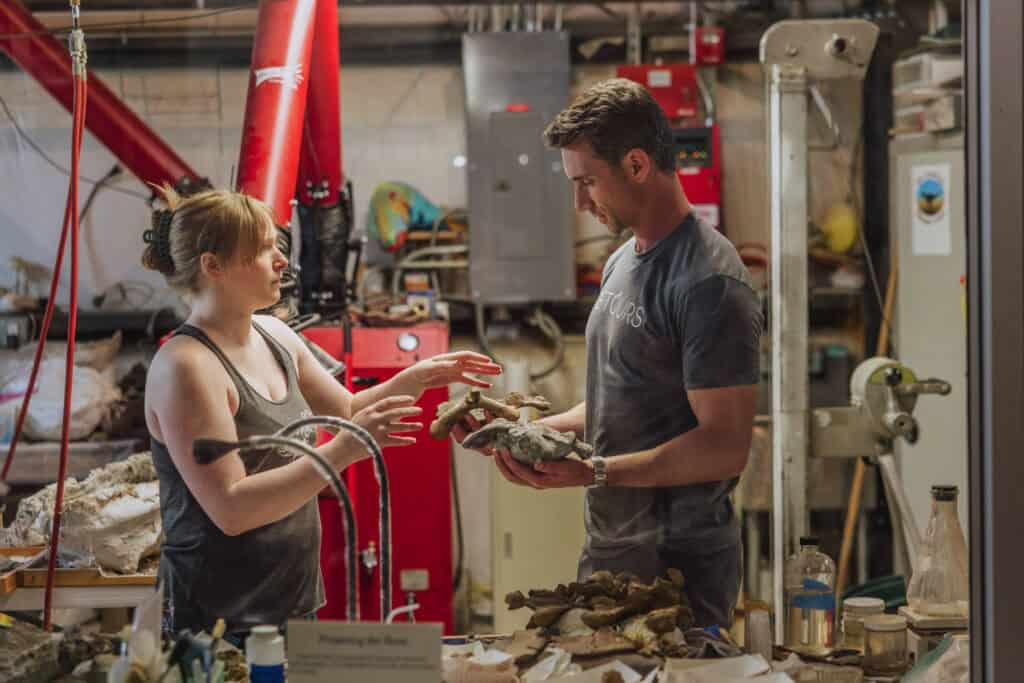
While most of their bones and fossils come from the Two Medicine Formation, they also have items uncovered from the Judith River Formation.
I suppose I shouldn’t have been surprised to hear: it can take many years to go from discovering bones in the field to hauling them into the lab to putting them on display or publishing a paper on their find.
“Our general rule of thumb is: for every hour we spend in the field working on collecting a bone, you’ll spend 5-10 hours in prep lab,” Myra Doughty explained to me.
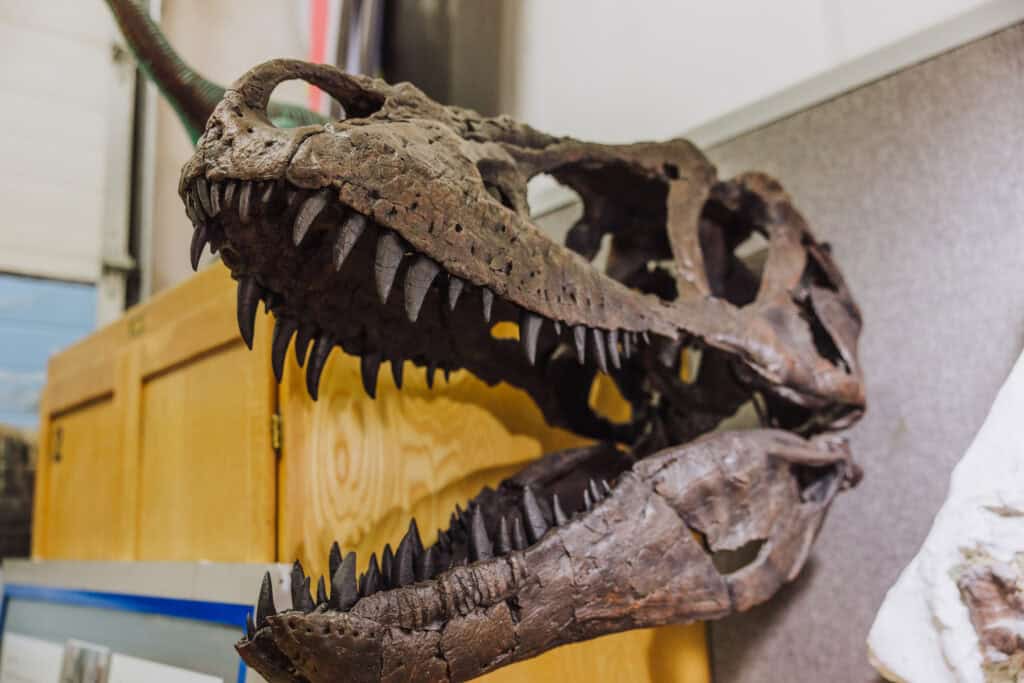
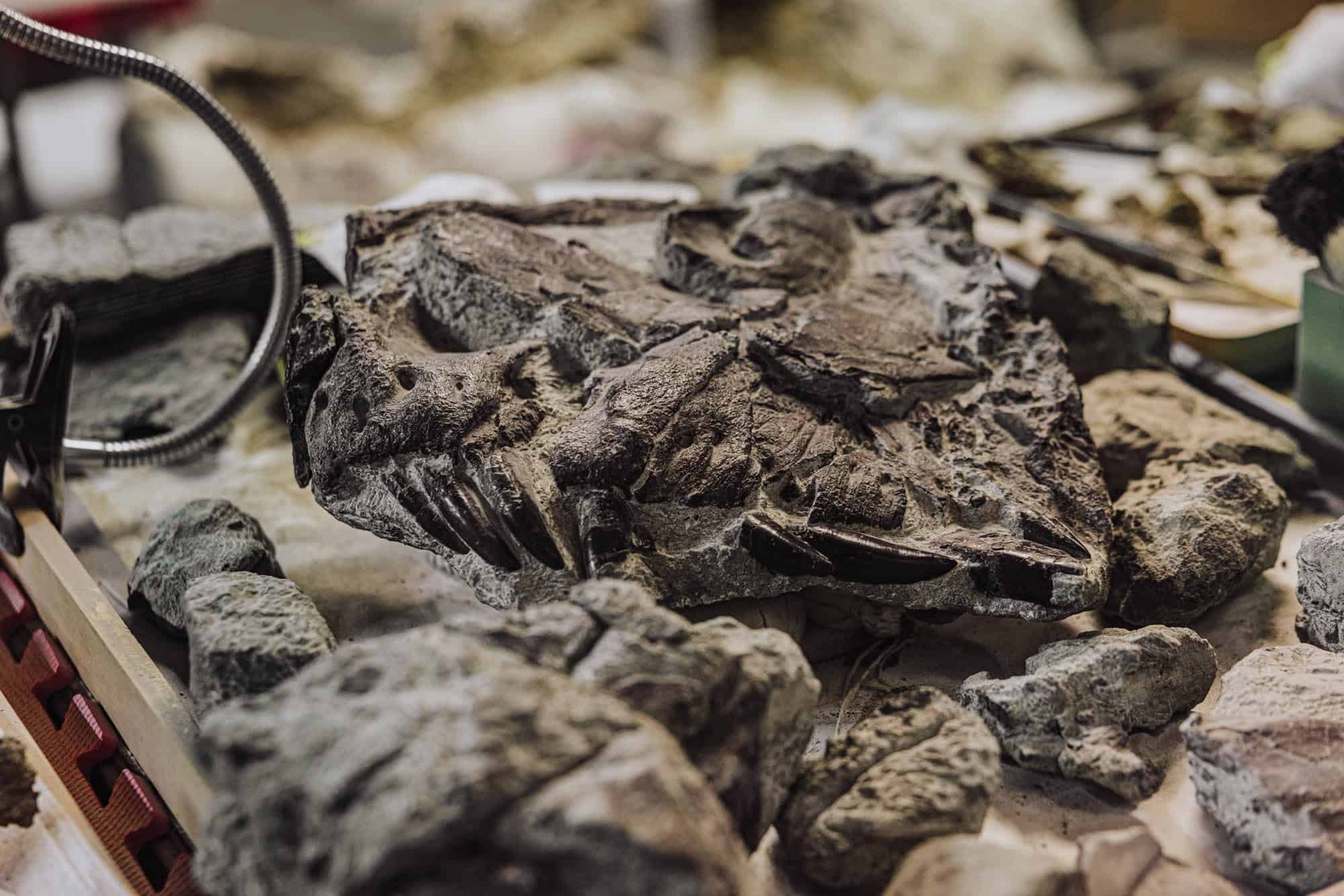
She also let me hold the front nose and part of the face of a Tyrannosaur from the Two Medicine Formation in 1996.
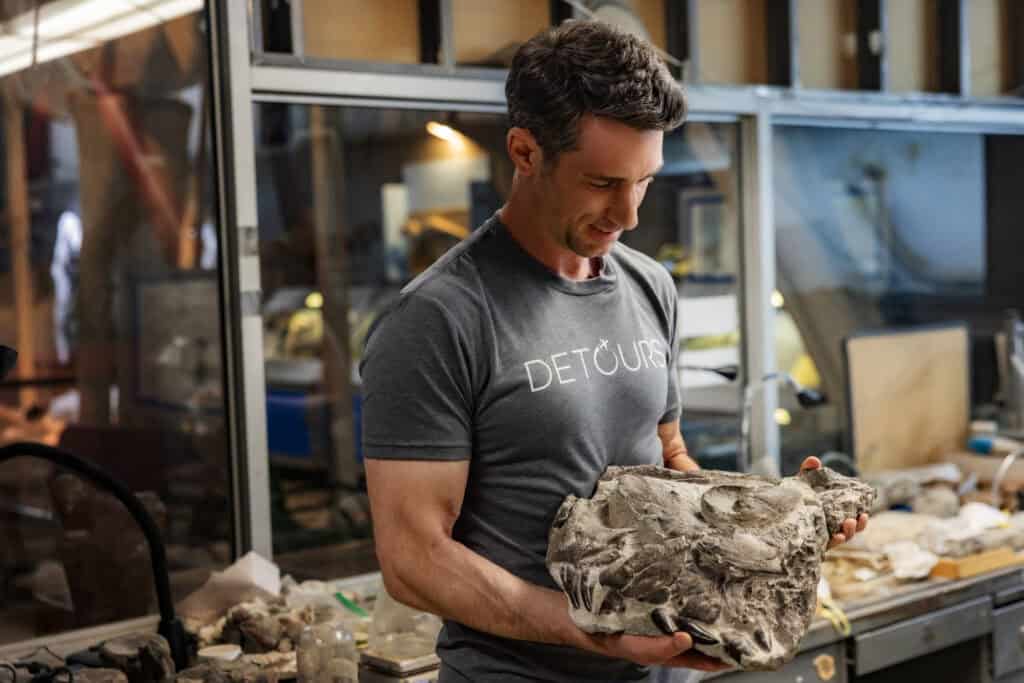
“He’s in very hard rock, harder than concrete,” she said, adding, “Hammers will bounce back off of this.”
A closer look shows off the dino’s teeth, which I noticed are quite shiny. I wrongly assumed they’d been polished.
“There’s nothing on them. No shine or lacquer. That’s the enamel,” Myra explained.
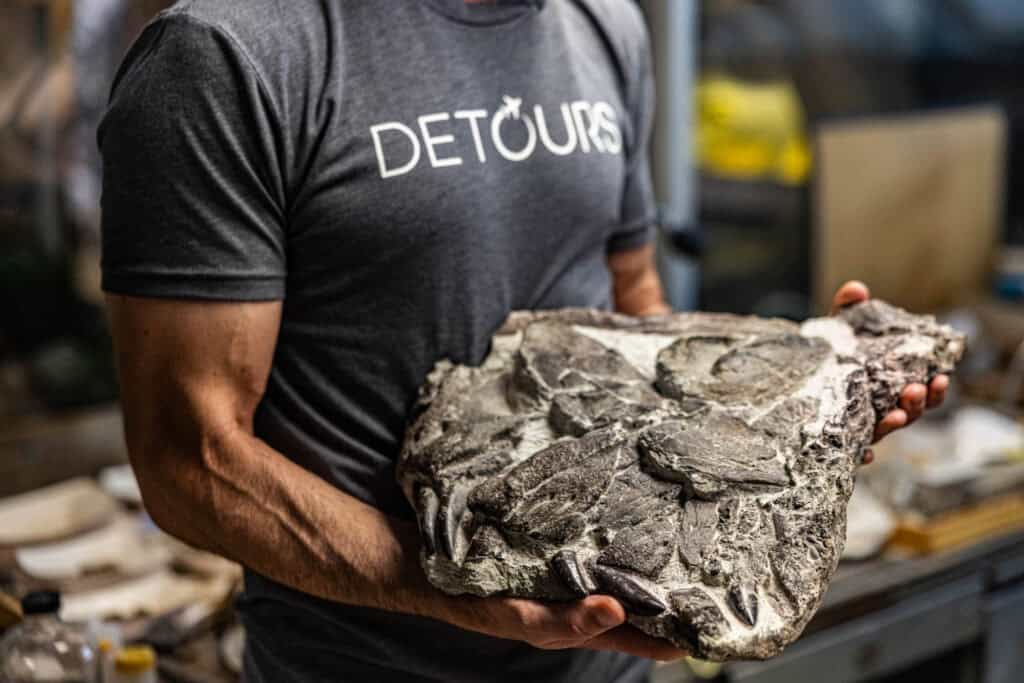
Work at the site where the Tyrannosaur was found began 40 years ago, and continues today.
“People visiting are surprised to hear that a lot of digs are still taking place. They think the digging took place in the 80s and 90s, but we have a lot of stuff we’re working on,” Myra said.
And they’re happy to talk about their new finds with visitors.
“We don’t keep this behind doors. We let people see it. When we run field programs, we let people experience the digging and discovery process. It’s really hands-on,” she said.
It really is!
The Montana Dinosaur Trail
The Montana Dinosaur Trail includes the Dinosaur Center in Bynum, plus 13 other museums and dig sites.
The trail covers roughly 2,000 miles, so plan your route around the sites that interest you most.
Other Stops on the Montana Dinosaur Trail
- Museum of the Rockies – Bozeman
- Upper Musselshell Museum – Harlowton
- Old Trail Museum – Choteau
- Rudyard Depot Museum – Rudyard
- Blaine County Museum – Chinook
- Great Plains Dinosaur Museum & Field Station – Malta
- Phillips County Museum – Malta
- H. Earl Clack Museum – Havre
- Garfield County Museum – Jordan
- Fort Peck Interpretive Center – Fort Peck
- Frontier Gateway Museum – Glendive
- Makoshika State Park – Glendive
- Carter County Museum – Ekalaka
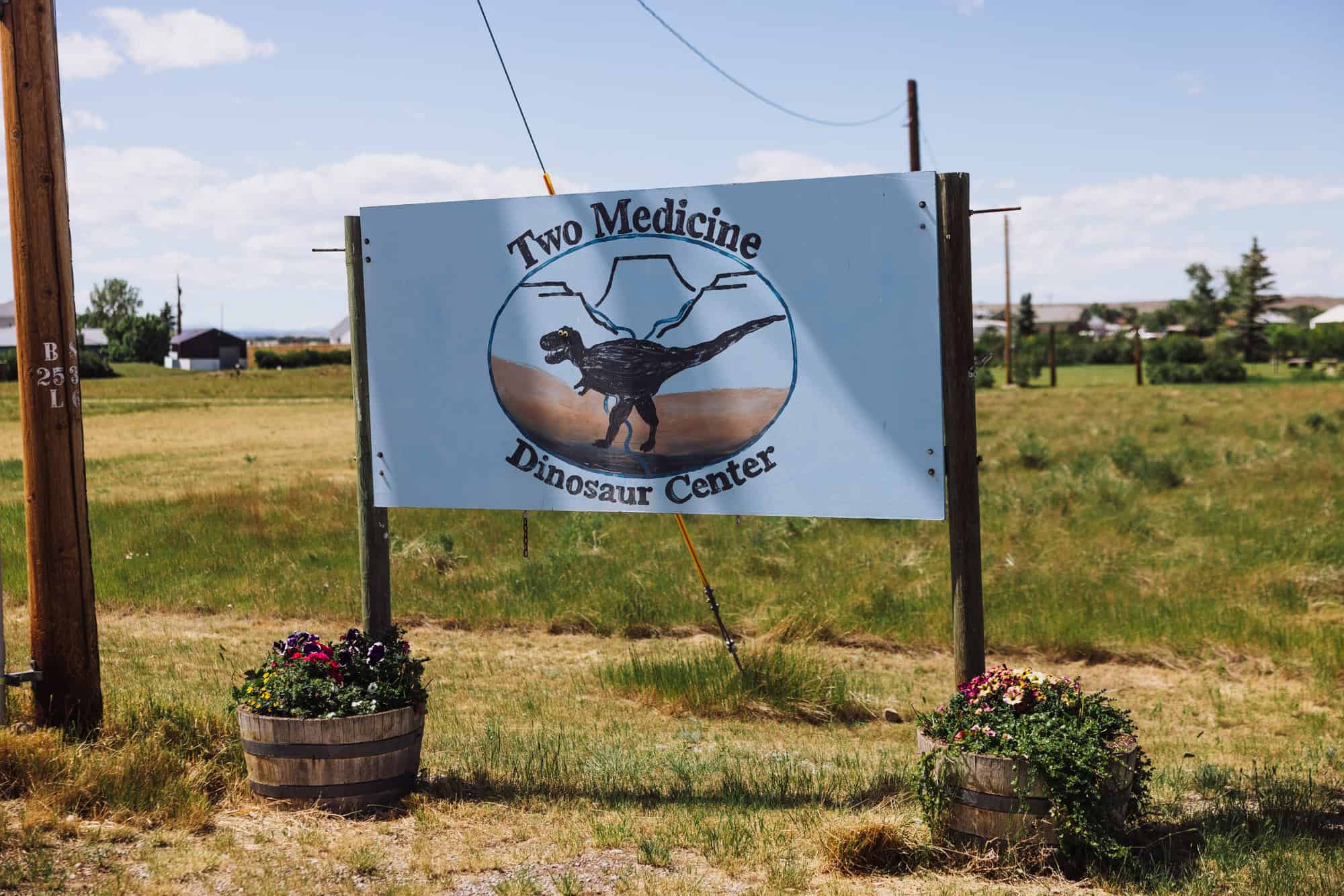
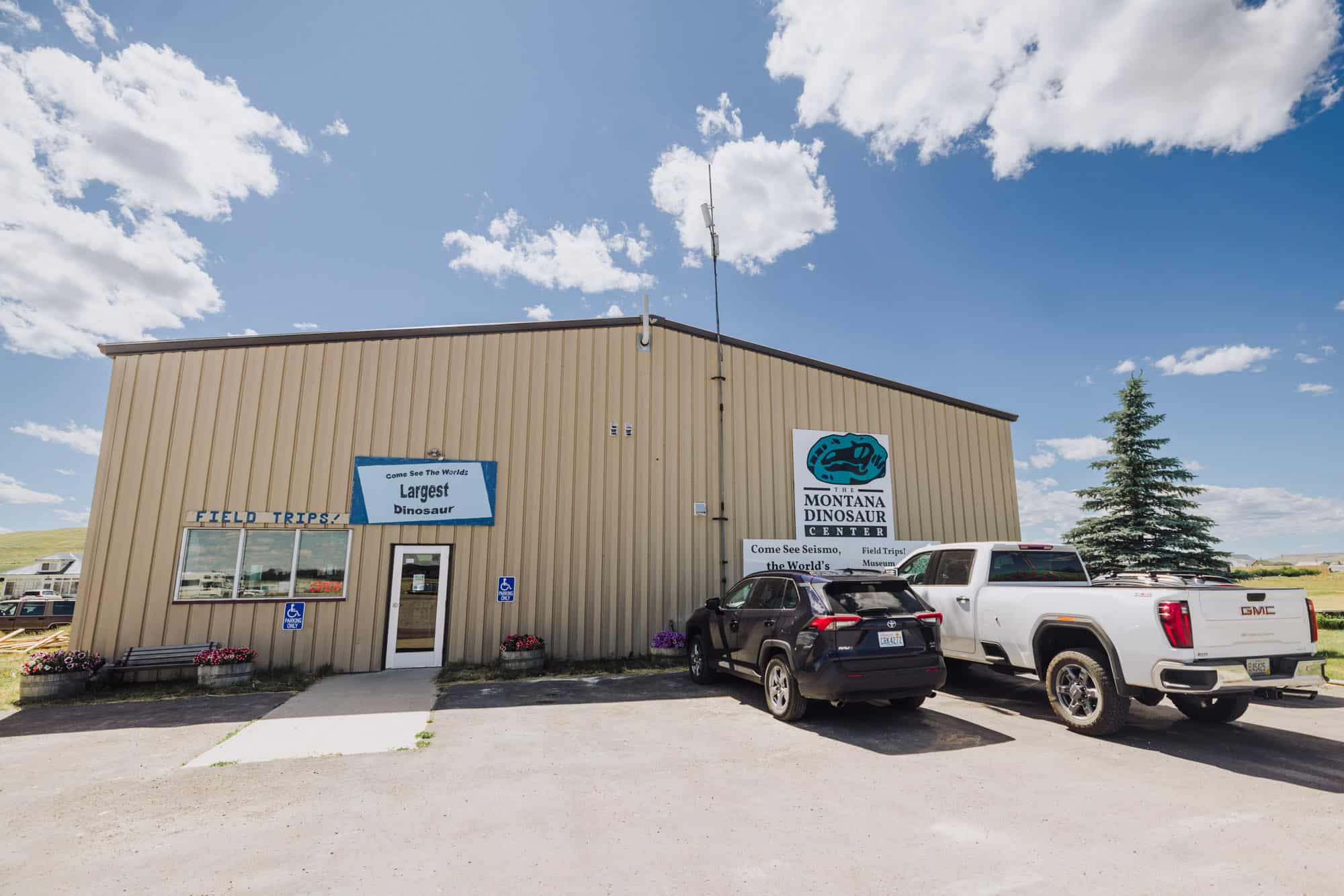
Photos of the Montana Dinosaur Center
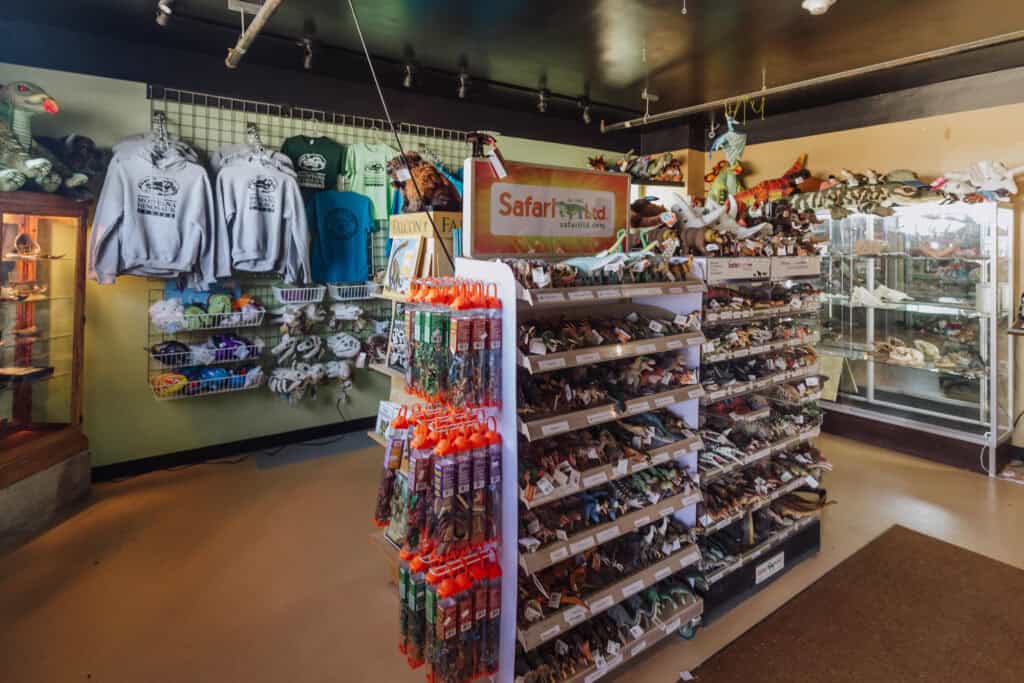
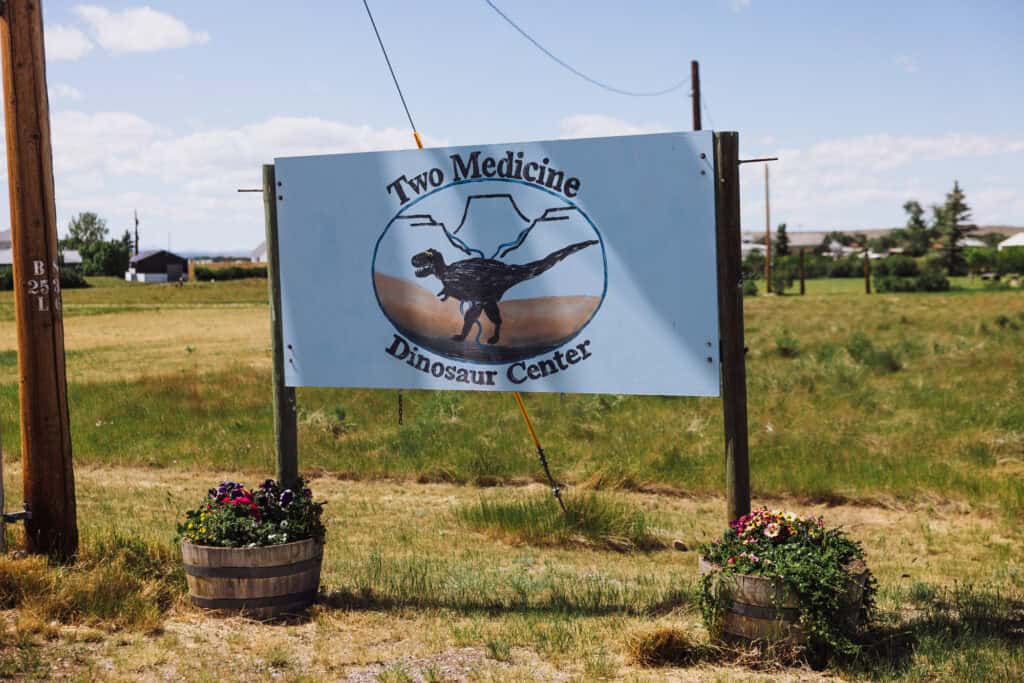
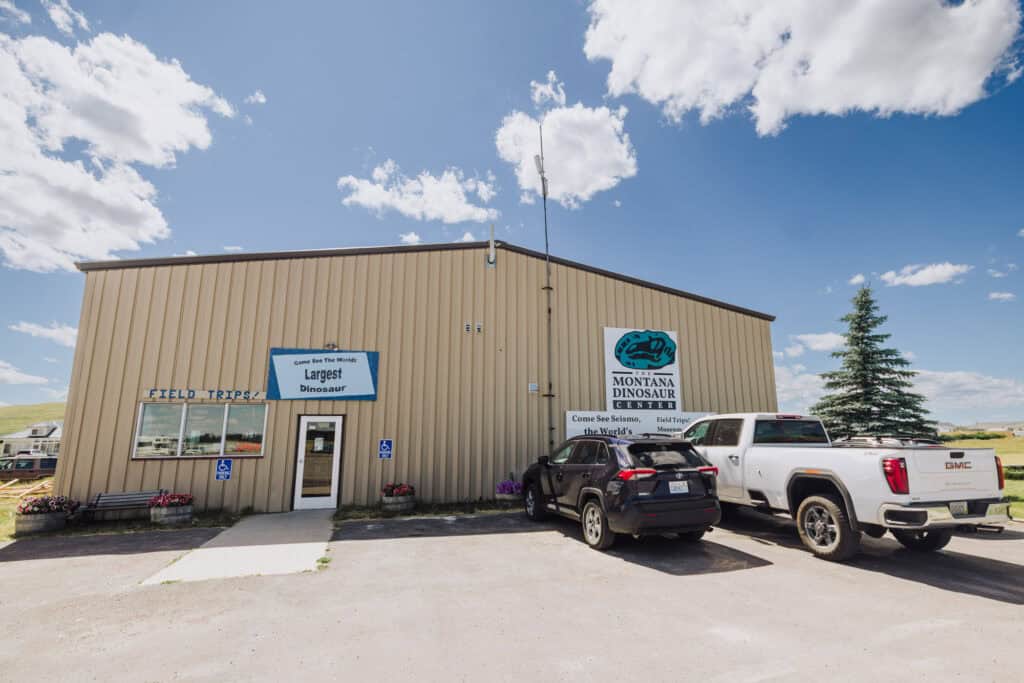
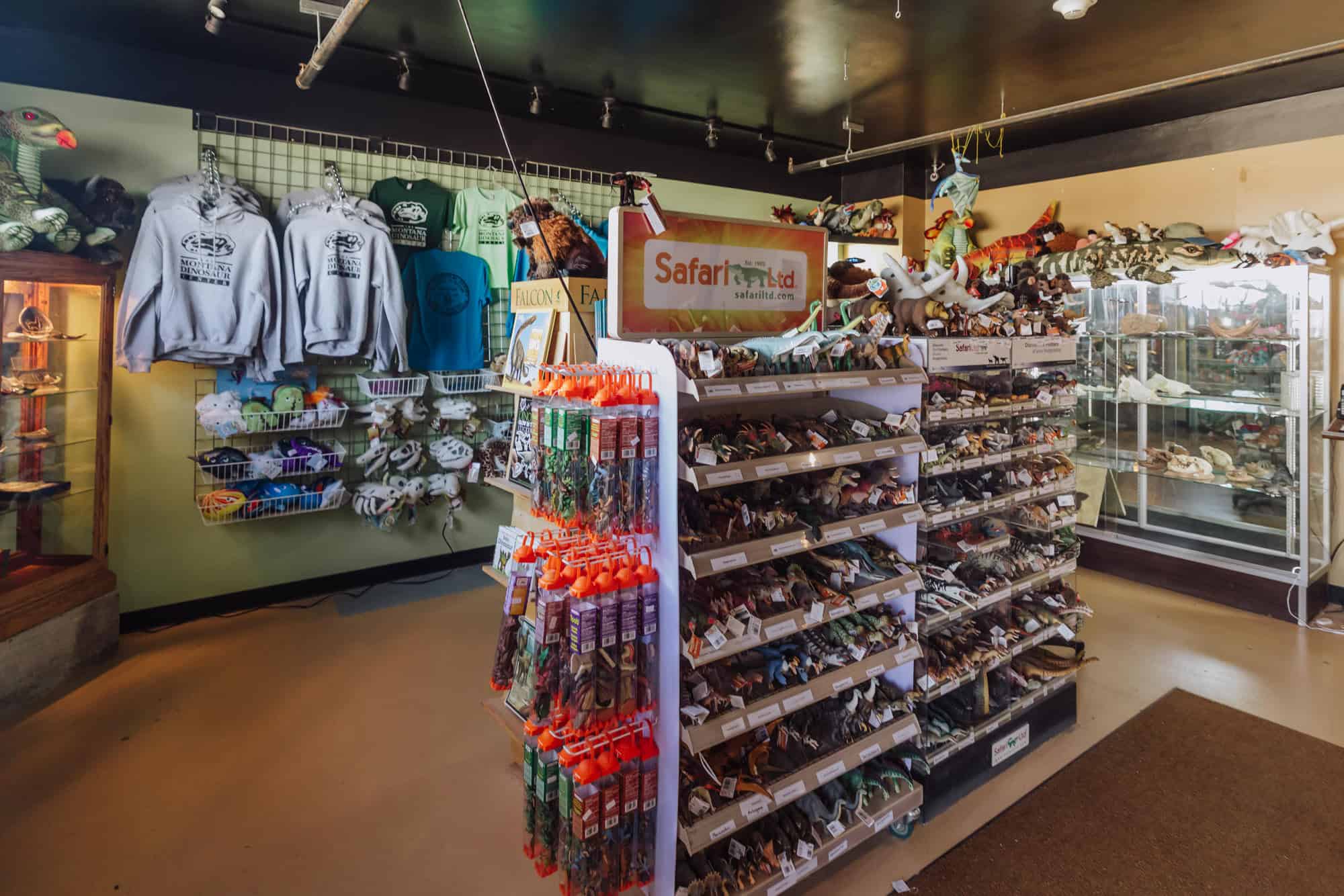
Here are a few more photos from our visit to the museum to show you what to expect:
More Things to Do in Central Montana
Getting to the area is easy. Major airlines fly to the efficient airport in Great Falls, which is home to hotels and restaurants, and many other things to do.
The stretch of the Missouri River in this part of the state is known worldwide for its fly fishing.
While photographers love Glacier National Park, Montana is home to other stunning landscapes. The expansive Bob Marshall Wilderness is home to hiking spots like Swift Dam and Reservoir. Farther east, the Havre, MT, area has the Bears Paw Mountains.
The list really goes on! Check out or Montana page for more ideas!
