Warning: DO NOT VISIT this Elephant Camp
We made a quick stop at the Luang Prabang Elephant Camp, which is a few miles outside the city, on the way to the famous Kuang Si Waterfalls.
It was distressing and sad, to say the least.
We expected to be able to feed free-range elephants.
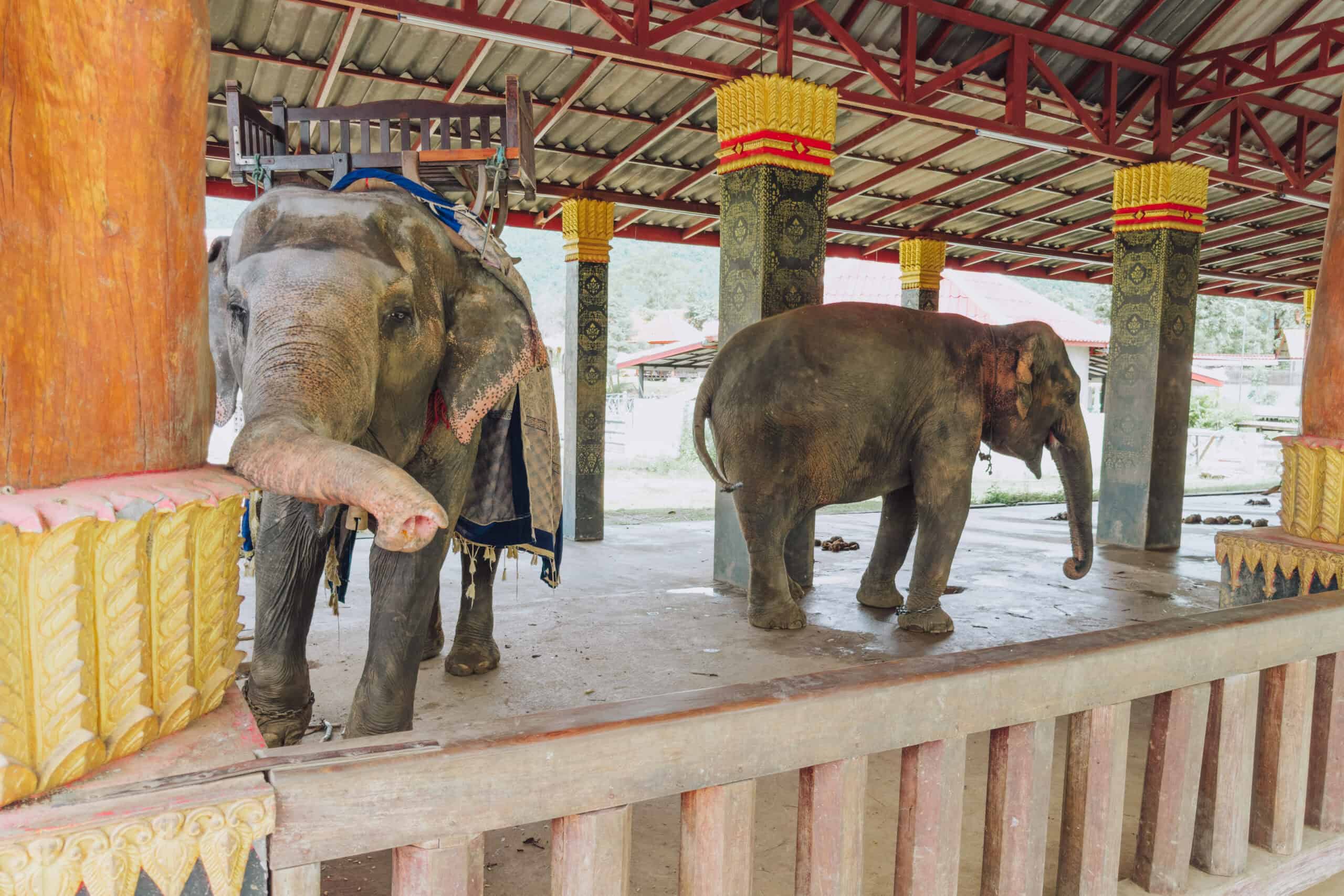
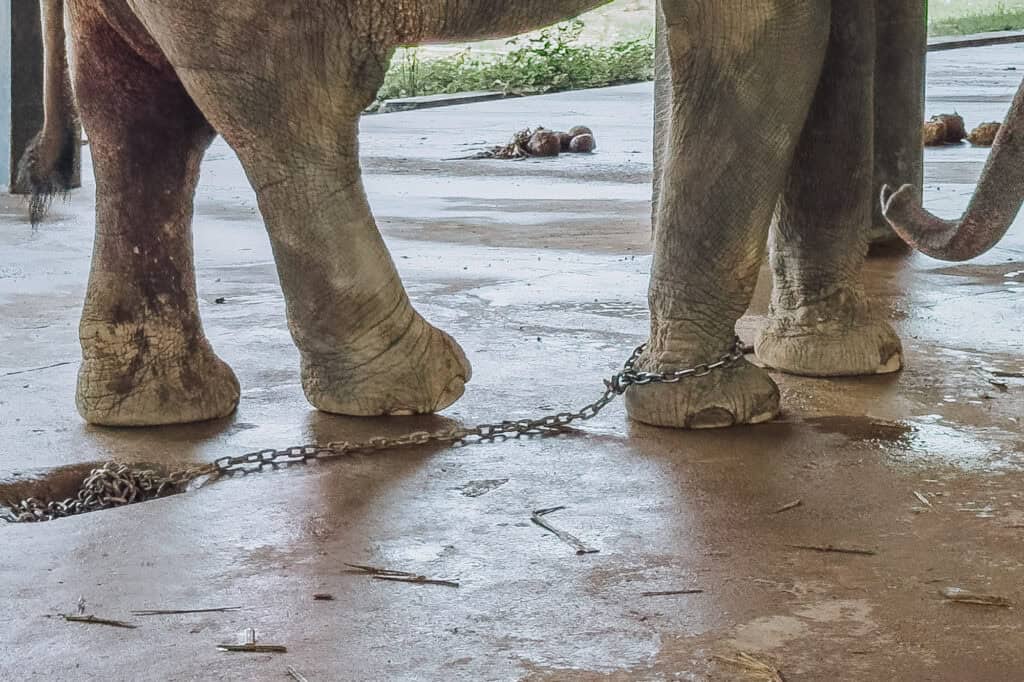
We found five elephants, literally chained to a concrete floor. One had a baby.
They also offer rides, which seem to be popular with certain crowds of tourists.
I’m only posting a few limited photos of this experience as a warning to avoid it if you’re traveling in Luang Prabang. Frankly, the photos are too sad and disturbing.
What We Saw on Our Visit
The camp markets itself as “a great stop on the way to Kuang Si Falls,” capitalizing on its location along a popular tourist route to one of Luang Prabang’s main attractions.
While the owners say the elephants spend their afternoons and evenings unchained and wandering around the large property, it was sad and unnecessary to have them chained up at all.
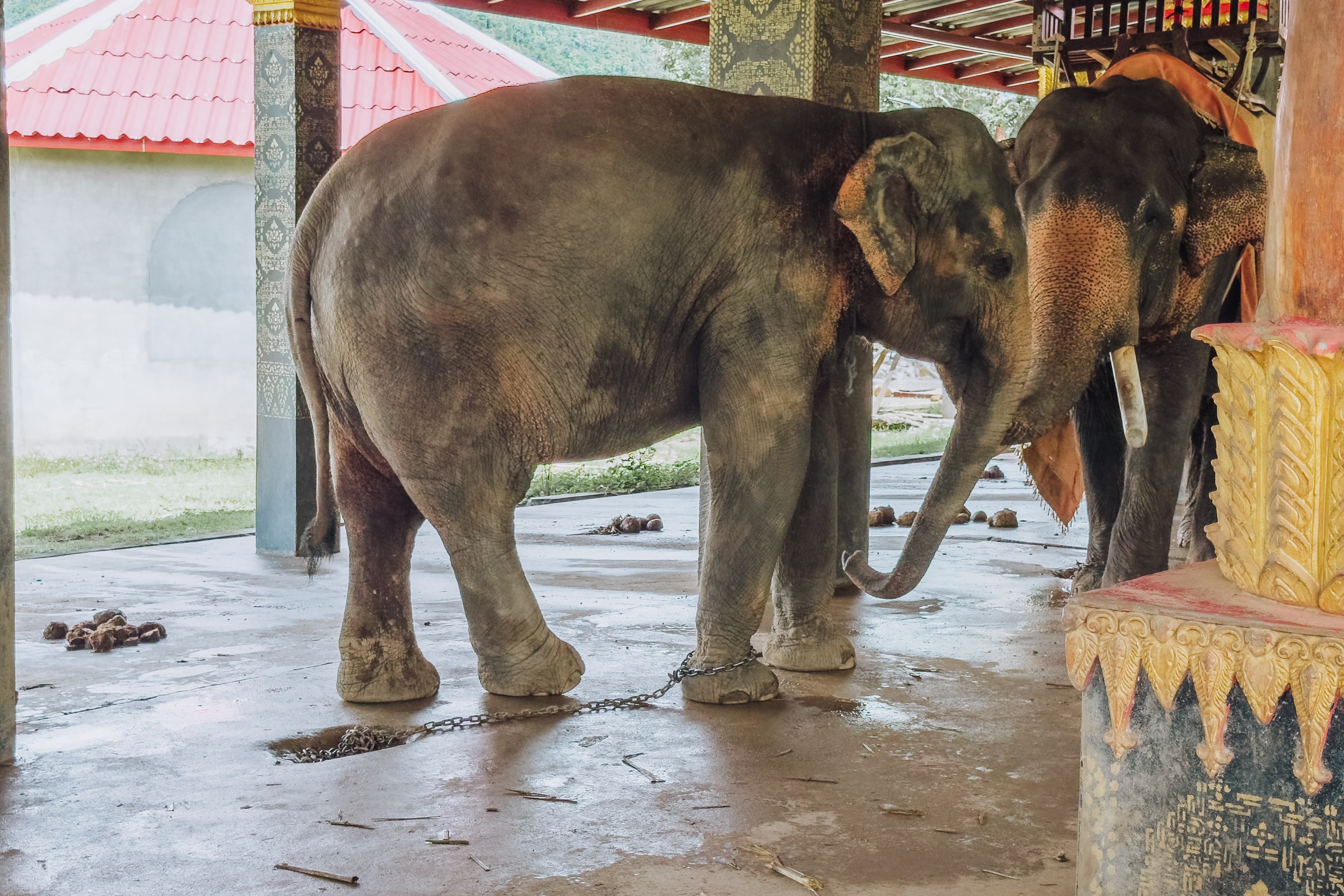
They’re chained in a large barn-type structure, with very little slack on the metal chains.
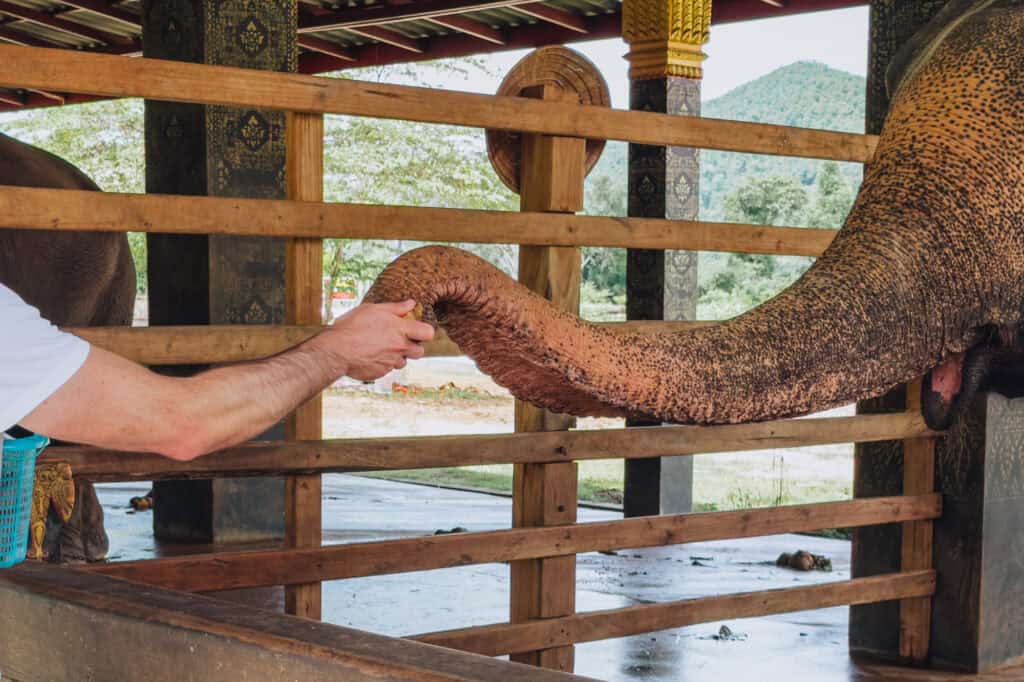
For about $5, you can buy a bucket of bananas and chunks of pumpkin to feed the elephants.
I figured the elephants would be across a fence, and if they were hungry for a snack, they’d wander over to stick their trunks out. There’s no reason at all to have them chained behind the fence.
I have no way of knowing how healthy (or unhealthy) the elephants are.
TripAdvisor Canceled Bookings
TripAdvisor stopped providing bookings for the Luang Prabang Elephant Center “because it does not meet our animal welfare guidelines.”
This kind of action should be seen as a major red flag for tourists.
Broader Context on Elephant Tourism Ethics
Elephants are known to be highly social animals, which enjoy spending time with the herd.
Even seemingly benign activities like tourist bathing of elephants are controversial, as “if the elephants were living in the wild, they wouldn’t be washed several times a day by groups of tourists.
Some here will defend chaining, claiming it’s done in the name of safety. They’ll say chains (longer chains) allow the elephants to forage and move around, while preventing them from getting out of their enclosures and creating a risk.
Meh.
Alternate Elephant Experiences in Laos
Here are some of the top sanctuaries and programs in Laos that prioritize elephant welfare, conservation, and community impact:
| MandaLao | No riding; humane, interactive experiences with rescued elephants |
| Elephant Conservation Center | Focused on rewilding, breeding, and habitat restoration |
| Mekong Elephant Park | Rescued elephants, visitor-funded, no forced interactions |
| Elephant Village Sanctuary | Welfare-driven, community-integrated, educational |
| Lao Elephant Home | Local-based, natural habitat, sustainable tourism |
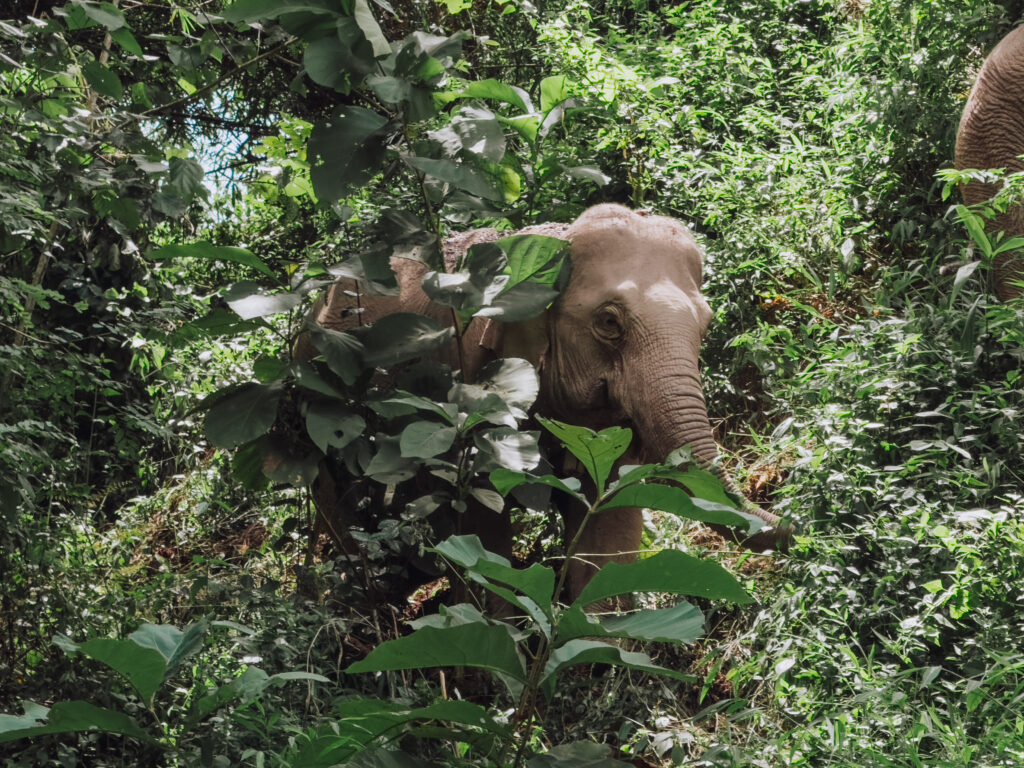
MandaLao Elephant Conservation (Luang Prabang)
- What they offer: A non-riding, hands-off sanctuary where visitors can walk with, feed, and bathe elephants in a natural forest setting. It focuses on education and positive reinforcement instead of performance or exploitation.
- Located in a large, natural area (about 80 hectares) with a scenic riverfront.
Elephant Conservation Center (ECC) – Sayaboury Province
- What they offer: A rescue and rehabilitation facility focused on conservation, breeding, rewilding, and habitat restoration. Offers volunteering opportunities rather than tourist rides.
- Located about 2.5 hours from Luang Prabang with rustic accommodation—better suited for multi-day visits or volunteers.https://khiri.com/regenerative-travel-in-laos-protecting-elephants-and-their-habitat/?utm_source=chatgpt.com
Mekong Elephant Park (Pakbeng)
- What they offer: A conservation and community-focused sanctuary that integrates rescued elephants with organic farming and local crafts.
- Visitors can observe elephants living in natural settings without forced interactions.
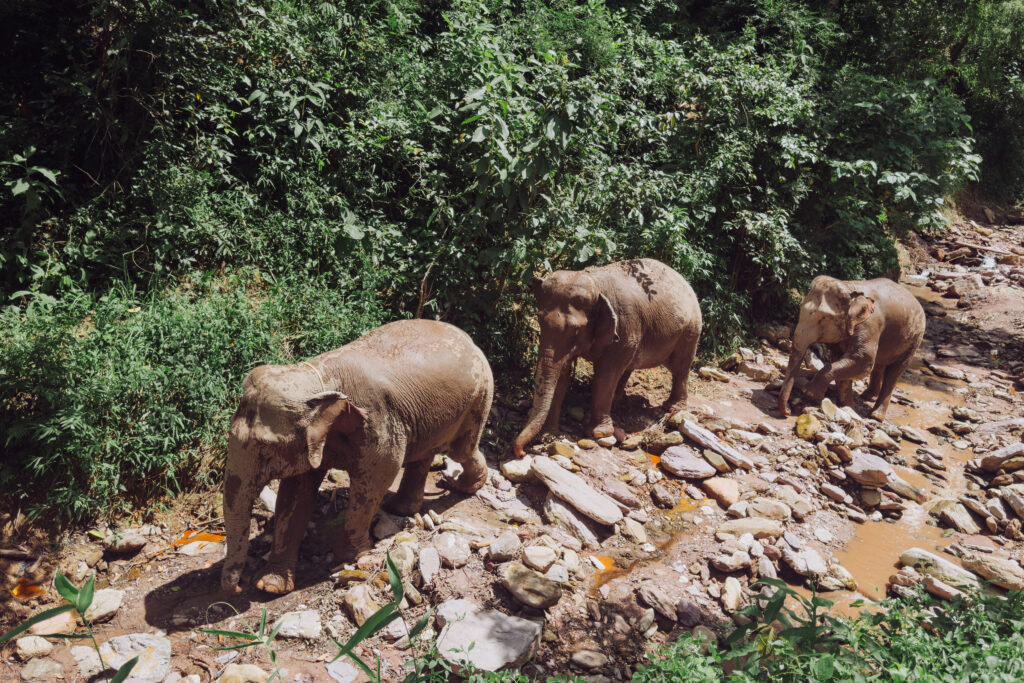
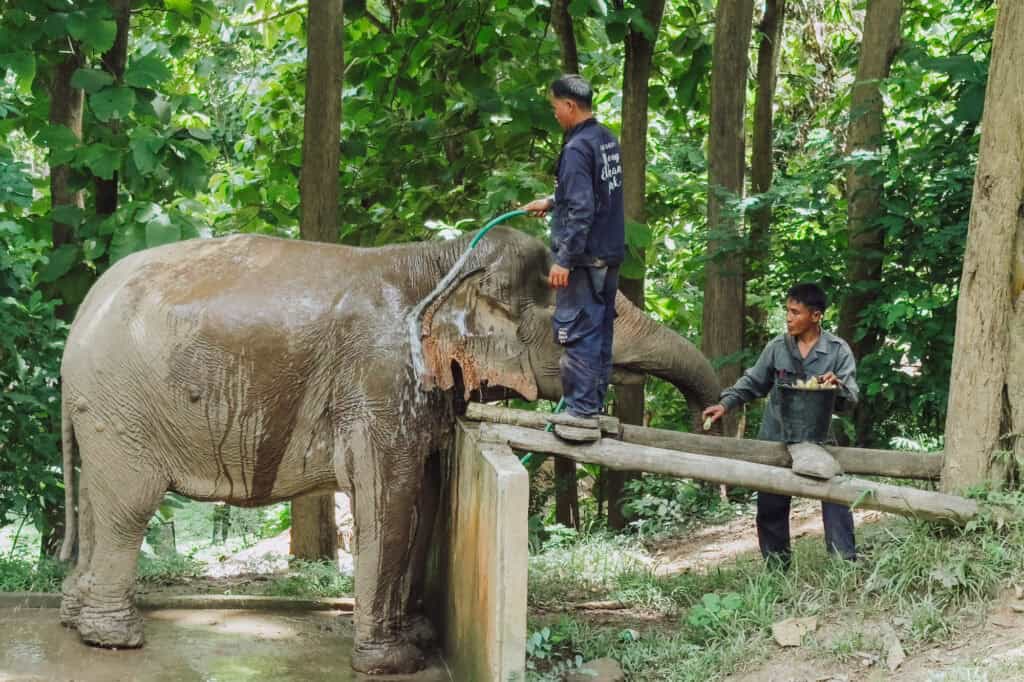
- The photos in this part of the post are from the Mekong Elephant Park.
Elephant Village Sanctuary (Luang Prabang)
- What they offer: A long-standing sanctuary combining elephant welfare with community development and cultural education. Activities include feeding, bathing, and learning via a small on-site museum.
- Employs local people and protects a pristine river valley through a government-supported sustainable tourism lease.
Lao Elephant Home & Sanctuary (Nampouy National Park)
- What they offer: A sanctuary aiming to protect elephants from labor while supporting local communities via eco-tourism.
- Elephants remain in their original natural habitat within the national park.
Wrap: Avoid the Luang Prabang Elephant Camp
While some say the elephants at the Luang Prabang camp were rescued from working as loggers, they shouldn’t be spending their retirement years chained for tourists to feed and ride.
Conservationists urge tourists to seek out sanctuaries where elephants can roam, socialize, and live with dignity—not for entertainment.