
The Mekong Elephant Park: Visitig A Sanctuary in Laos
I was (and still am) wowed by my visit to the Mekong Elephant Park in rural Laos. It’s not easy to get to, but it was an eye-opening experience to spend time with the elephants and people who care for them at this sanctuary.
Laos, once known as “The Land of a Million Elephants,” is now home to around 600.
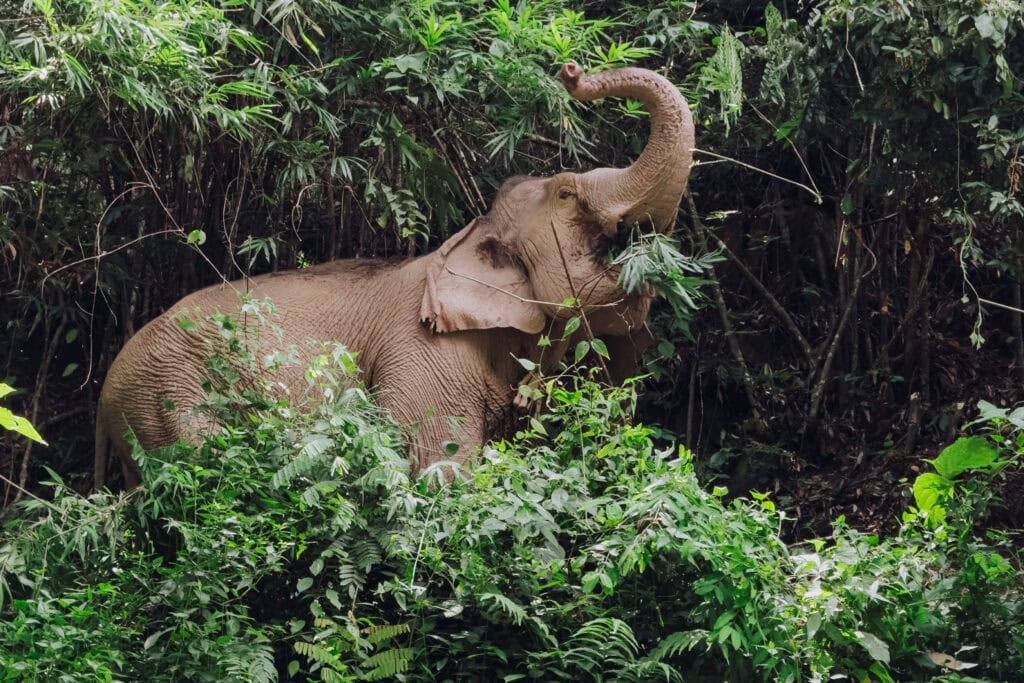
The Mekong Elephant Park was created to both educate the public, and save elephants, who are usually used for logging or tourist rides in Southeast Asia. The sanctuary provides a safe, natural environment where elephants can live healthier lives.
Mahouts (elephant caretakers) are given stable incomes and support, allowing them to care for the elephants without resorting to harmful practices.
Every elephant that finds a home here is a step toward preserving the species. The park’s mission is simple: give elephants the freedom and care they need … and in doing so, give Laos a chance to keep one of its most iconic animals from disappearing.
Key Info on the Mekong Elephant Park
- Location: Pakbeng, Laos
- Hours: From 9:00am daily
- Don’t expect to feed, ride, or bathe the elephants
- Half-day, full-day, and overnight packages are offered
Visiting the Mekong Elephant Park
It’s not easy to visit the sanctuary, but it’s worth the effort. Here’s what you need to know:
Address & Contact Info
- Pakbeng, Oudom Xay Province, Laos
- Phone: +856 81 212 304
- WhatsApp: +856 20 55 320 069
- Email: info@mekongelephantpark.com
How to Get to the Sanctuary
You can get to the Mekong Elephant Park by boat or road.
Smartly, the sanctuary offers 2 or 3-day packages, complete with transportation and lodging, from the city of Luang Prabang.
You can take a slow boat on the Mekong, from Luang Prabang to Pakbeng. They’ll help arrange this and guide you through the process.
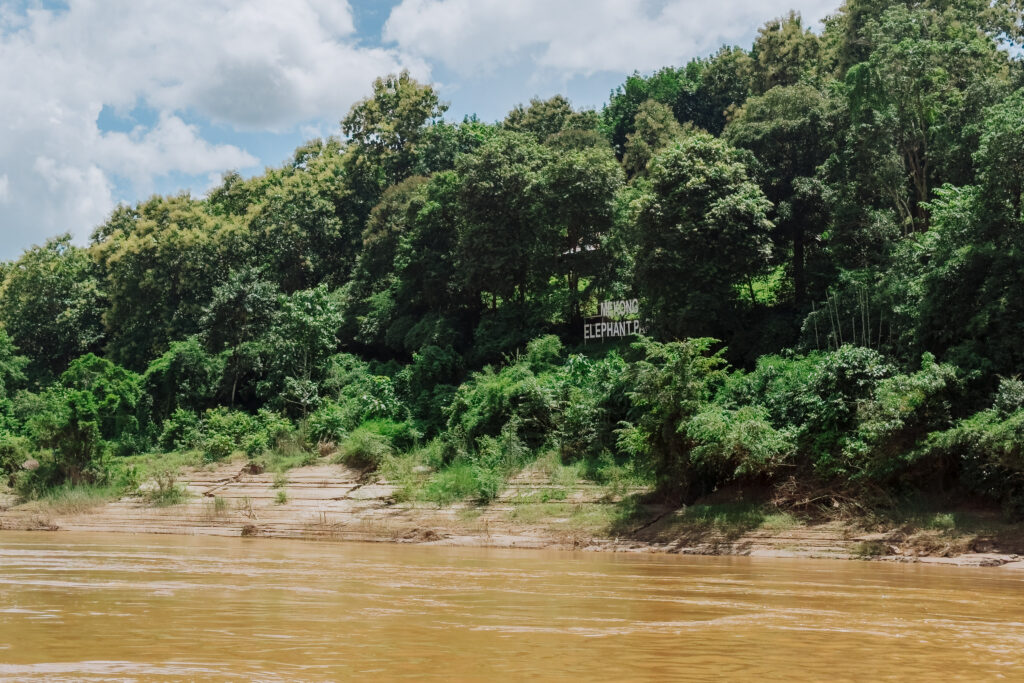
Or, they’ll arrange private transport by boat or van as part of a package. You can see below, it’s right on the bank of the river, which the elephants enjoy playing in.
Costs to Visit & Options
You can visit the elephant sanctuary for a half-day (for $65) or a full day (for $85).
I was pretty surprised about how reasonable the costs are, considering the experience you’ll walk away with!
Two-night packages are $360 per couple, and include accommodations. Rates are even lower during the rainy season (May-September).
Where to Stay
There are lodges across the Mekong from the elephant sanctuary.
As mentioned, the sanctuary also has a few bungalows on site.
- Email: reservation.pakbeng@sanctuaryhotelsandresorts.com
- Website: www.sanctuaryhotelsandresorts.com
What to Wear
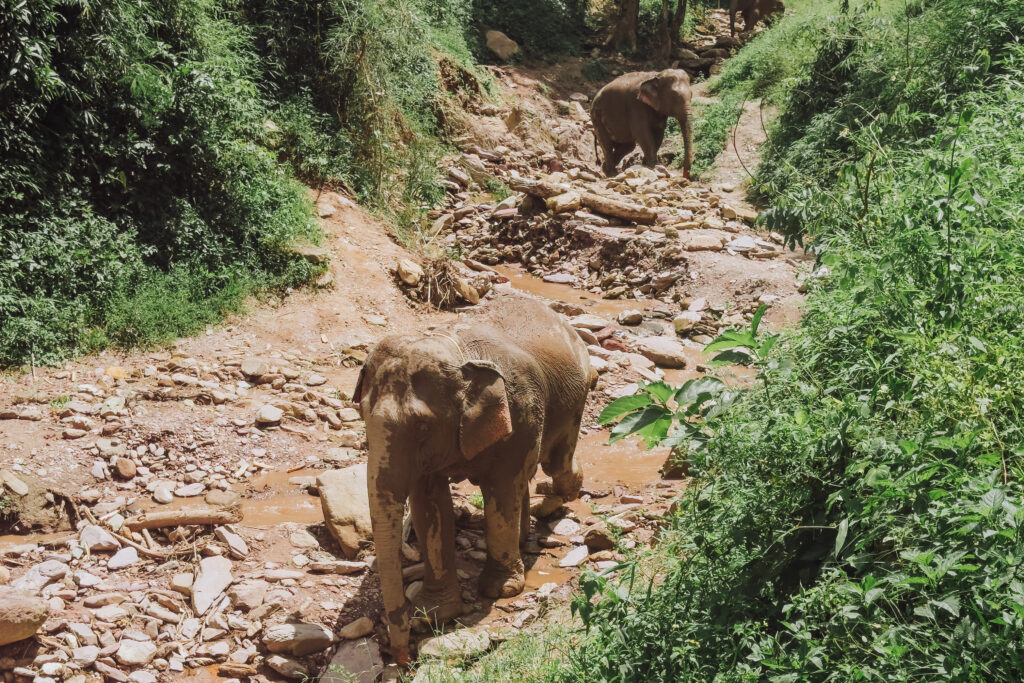
This isn’t a zoo with paved walkways. It’s an outdoor experience, along forest trails.
It’s nice and shady, so the sun isn’t too big of a concern.
Remember: the rainy season runs from May into September.
Regardless of the season, wear walking or hiking shoes that you don’t mind getting muddy, and bring mosquito repellent, too.
Volunteering at the Elephant Sanctuary
To volunteer, they want a long-term commitment. Logistically, they’re set up to welcome a few long-term volunteers, who are willing to work for at least a few months.
Elephants in Danger in Laos
Today, Laos is home to around 600 elephants, a mix of wild and captive.
The number of Asian elephants has dropped sharply, to the point that both the World Wildlife Fund (WWF) and the International Union for the Conservation of Nature (IUCN) list the Asian elephant as endangered.
The challenges elephants face include:
- Habitat loss – Expanding agriculture and development destroy their forests and vital migration corridors.
- Logging – Many elephants are forced into hard labor in the timber industry.
- Tourism – Captive elephants are often exploited for rides or shows.
- Poaching – Still a threat in some regions.
The birth rate has plummeted: in Laos, for every calf born, about ten elephants die.
Elephants are also slow to recover from population declines. A female carries her calf for nearly two years, and it takes another three years to nurse it. That long cycle, combined with declining fertility from years of labor, makes every birth incredibly precious.
The Philosophy at this Elephant Sanctuary
The Mekong Elephant Park’s philosophy is to never require their elephants to act in a behavior that is not natural to them.
They work to provide:
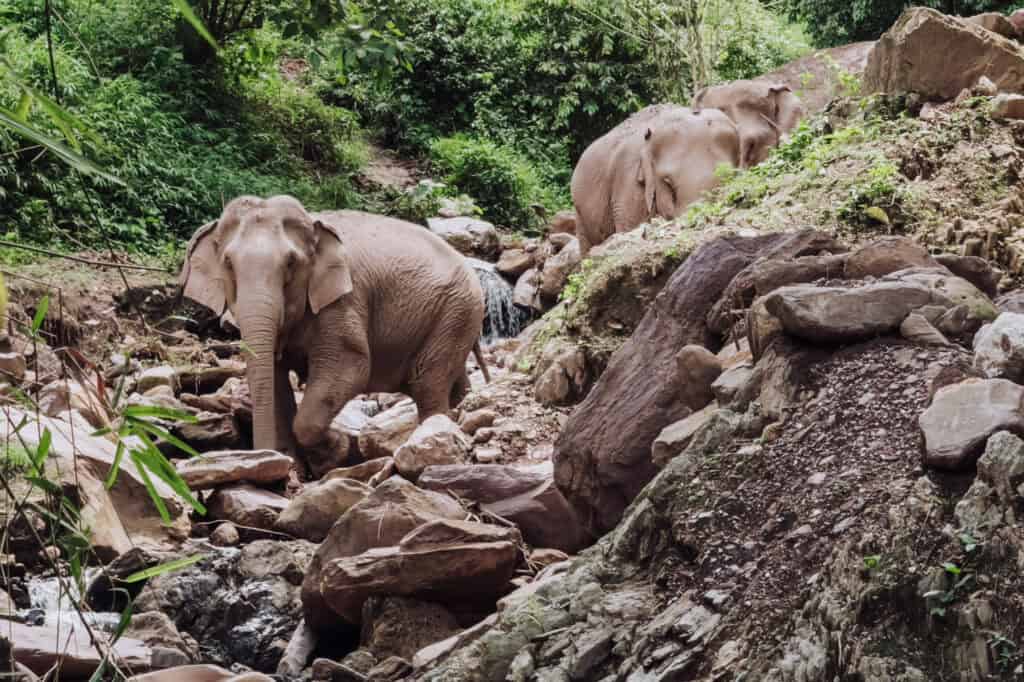
- A natural home for elephants – A safe environment in the forest, where they can roam freely and eat the foods nature intended.
- A small, sustainable park – The sanctuary is designed on a human scale, with tourism focused on education and conservation rather than exploitation.
- Support for mahouts – By offering steady, fair incomes, the park helps mahouts (elephant keepers) step away from the logging industry and build a more sustainable future.
- A second chance for elephants – Many of the elephants come from hard labor or entertainment. At the sanctuary, they can finally live like elephants again.
- Meaningful encounters for visitors – Guests are invited into the elephants’ natural environment to learn, observe, and connect in a respectful, educational way.
No Bathing the Elephants
When you picture elephants in Thailand or Laos, you might be drawn to visiting a site that lets you bathe them in a river.
Frankly, to me, it seems helpful and enjoyable! I was wrong about that.
The experts at the sanctuary say: bathing with strangers is a stressful situation for the elephants.
They naturally love water, and enjoy playing around in it while bathing. Having tourists next to them takes the joy away.
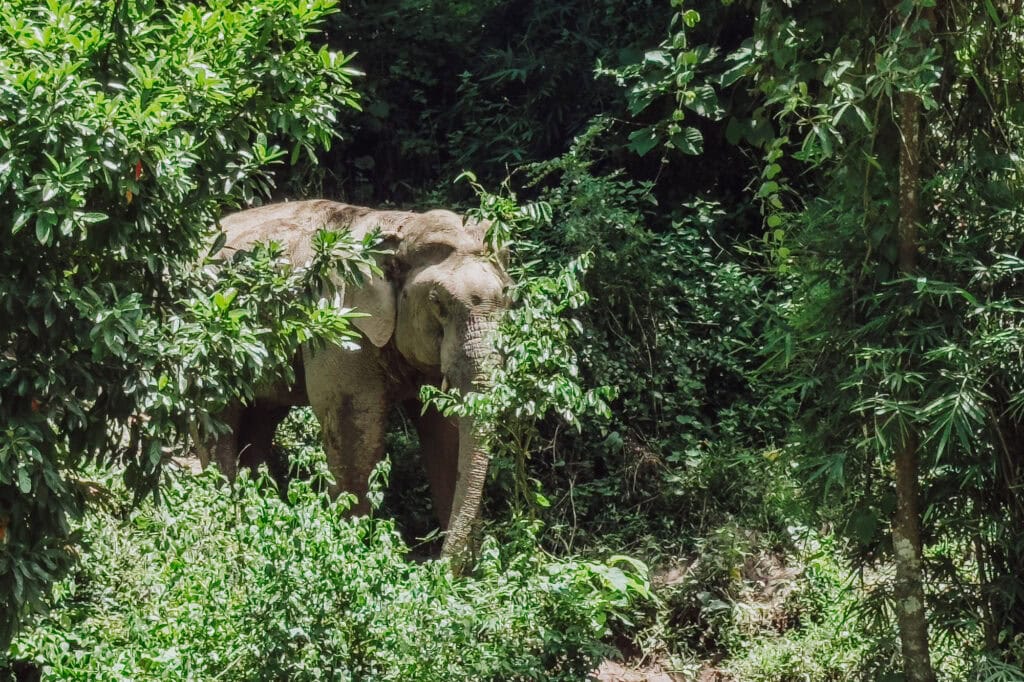
The elephants at the Mekong Elephant Park will often bathe and play in the river in the mornings.
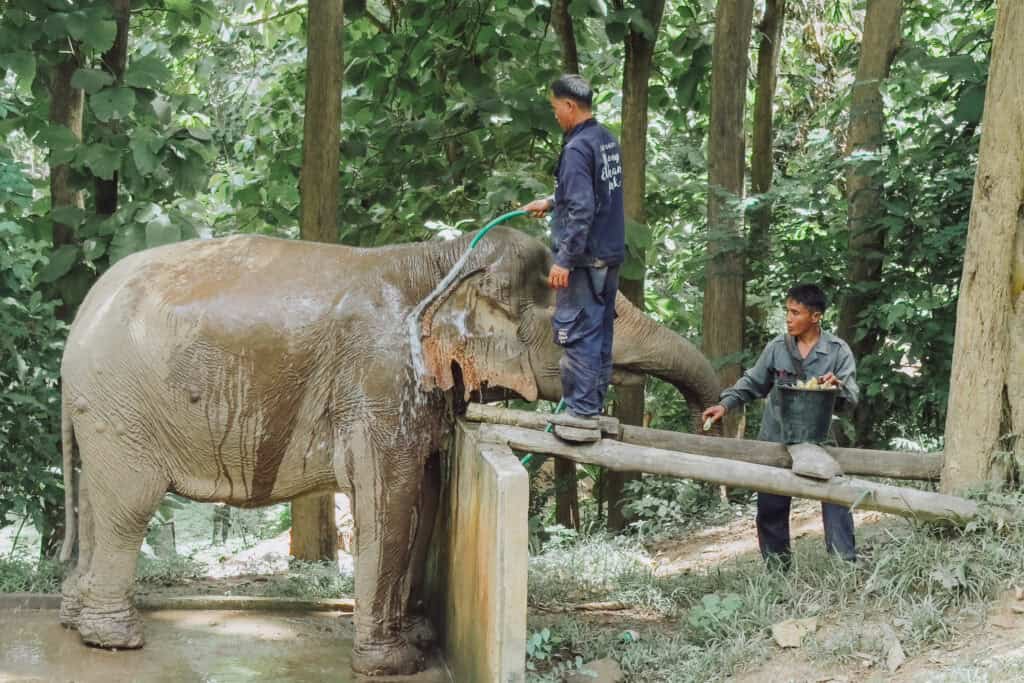
When they need more of a proper bath, they’re only with their individual mahout. It often takes a food bribe to get them o the hose-down area.
The Mahouts: Elephant Keepers
Each elephant has its own mahout. It’s an ancient profession, involving skills that are often handed down through the generations and taught at an early age.
Often, a mahout spends his whole life with the same elephant. Among other things, this relationship enables the mahout to recognize signs of illness and stress in their elephant.
The Elephants at the Sanctuary
There are currently 5 elephants at the Mekong Elephant Park.
[Note: the cost to buy an elephant from its owner in the tourism or logging industry is about $30,000.]
Mae Kham (Granny)
Born: 1954 (Borthan, Sayaboury)
Rescued by Mekong Elephant Park: 2008
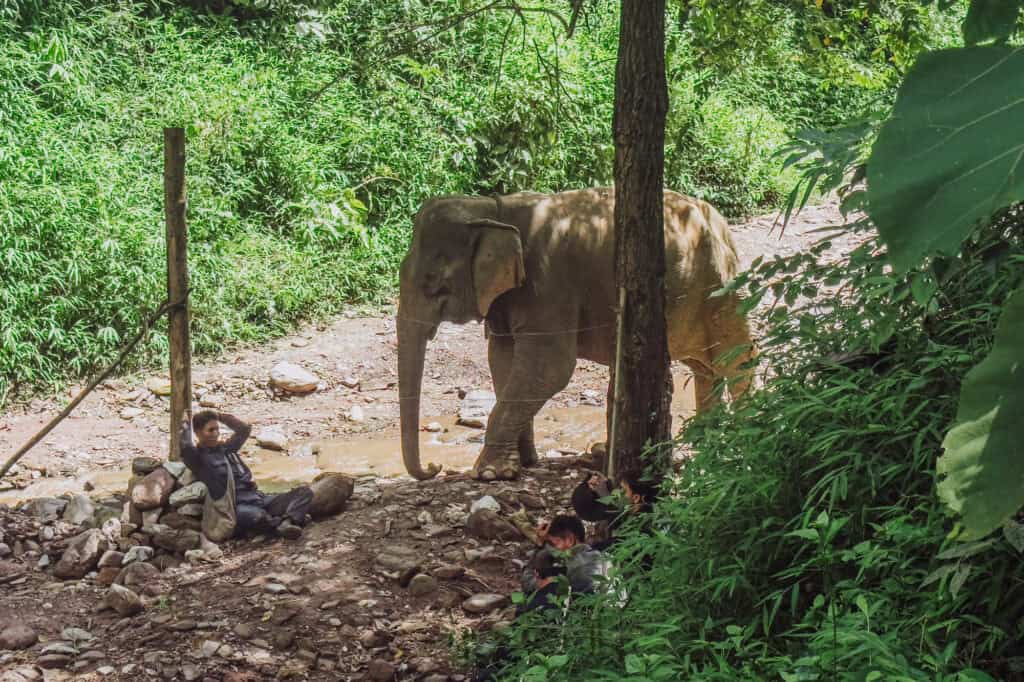
Mae Kham, who’s pictured above with her mahout, is affectionately known as the “VIP” of the park.
She spent more than four decades in the logging industry. Her long years of labor left visible marks—scars on her head, torn ears, and the lasting effects of harsh treatment. With age, she now experiences arthritis, especially during the rainy season, but her longevity has also earned her the honored role of matriarch within the herd.
At the sanctuary, Mae Kham enjoys a peaceful life. Gentle and wise, she radiates calmness and kindness. Unlike many elephants, she isn’t particularly fond of water and often chooses dust baths instead, a quiet ritual that suits her dignified presence.
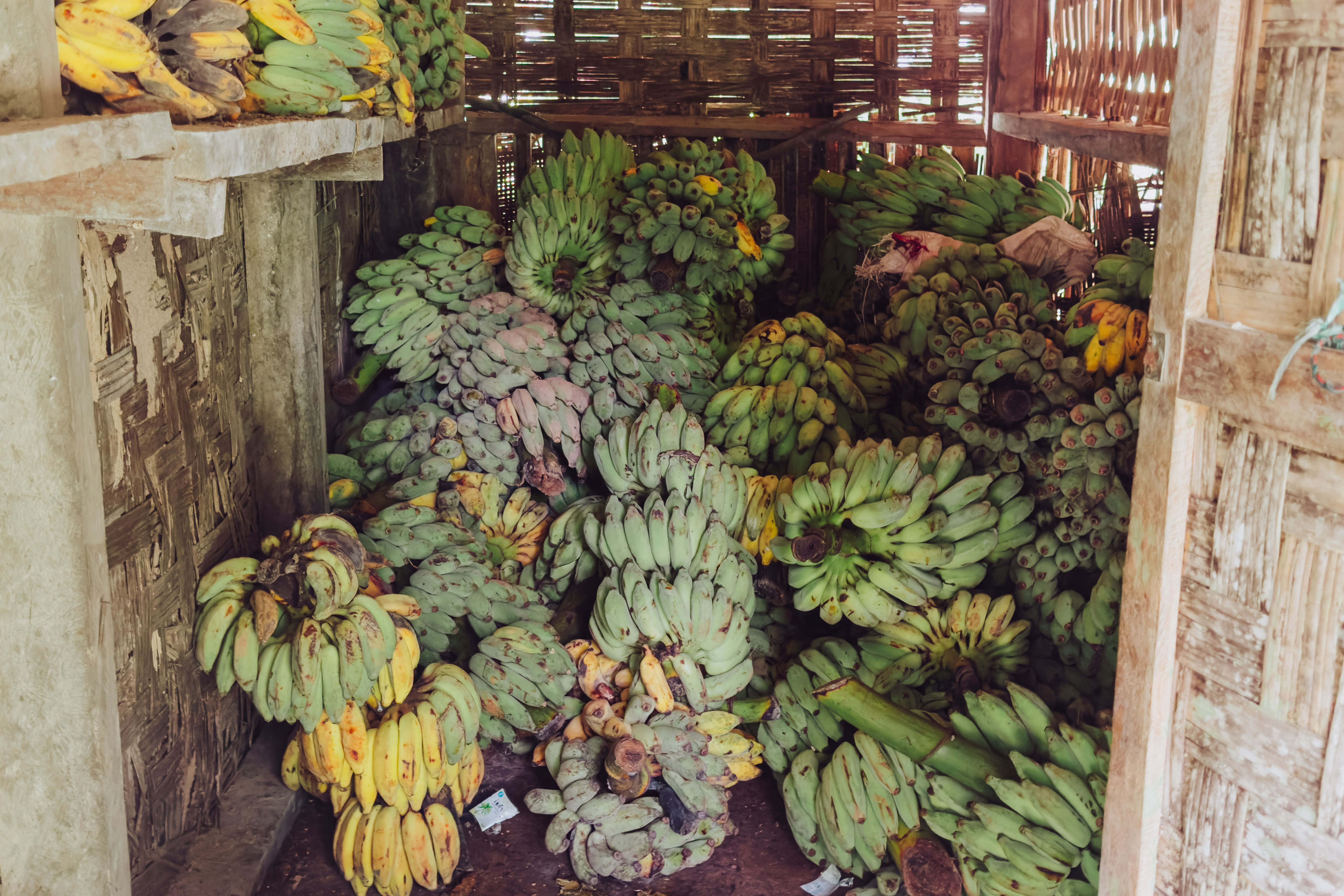
Her vice is food. She’s lured easily by bananas and soft foods, since she’s essentially toothless at her age.
Dokeo
Born: 1992
Rescued by Mekong Elephant Park: February 2025
Dokeo was born in northern Laos and spent much of his life in difficult conditions. For more than ten years, he worked in the logging industry, hauling heavy timber. When that ended, he was sold into tourism in Luang Prabang, where he spent four years carrying visitors. During that time, he was kept away from the forest, denied proper food, and isolated from other elephants. By the time he arrived at the sanctuary, he was dangerously underweight, suffering from foot infections and injuries, and emotionally distressed.
Now, Dokeo is beginning to heal. He has already regained 350 kilos and is slowly rediscovering what it means to live in a calm, natural environment.
Mae Nat
Born: 1980
Rescued by Mekong Elephant Park: January 2023
Mae Nat’s story reflects the difficult reality faced by many captive elephants. She spent years working in the logging industry before being sent abroad, where she lived in Japan and was forced to perform in the tourism and circus trade.
Thanks to an international rescue effort and the generosity of supporters around the world, Mae Nat was finally brought home in January 2023. Now, she is part of the Mekong Elephant Park family and beginning a new chapter of her life in a safe and caring environment.
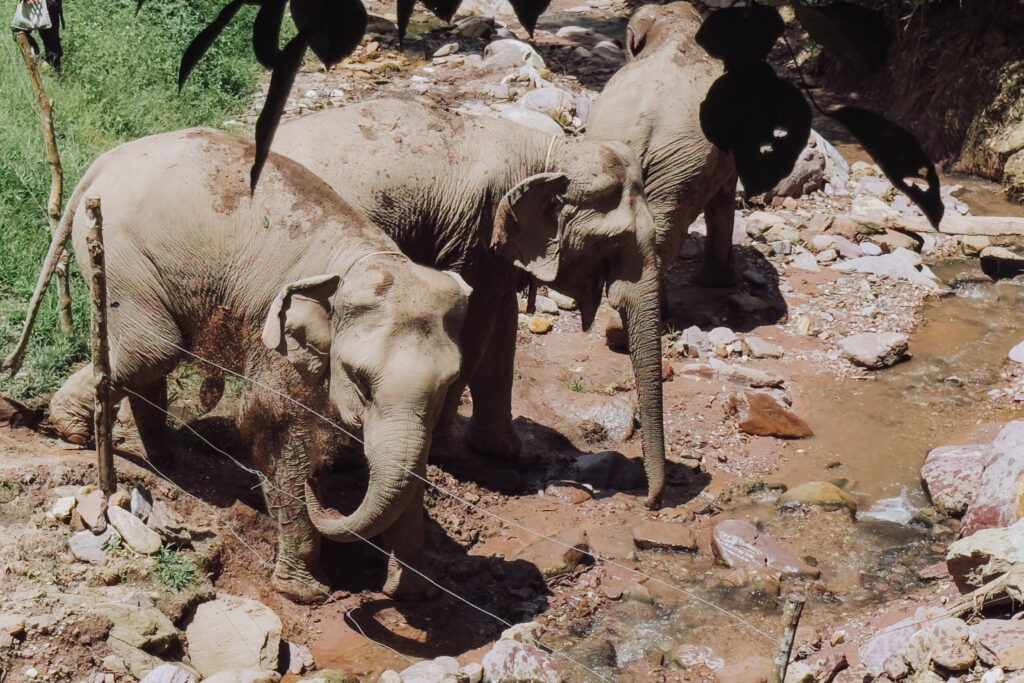
She and her two relatives are constantly by each other’s sides, whether it’s roaming the jungle paths or splashing around in the mud and water.
Mae Nin
Born: 1992
Rescued by Mekong Elephant Park: July 2023
Mae Nin spent nearly 15 years living alone, separated from her family, before finally being reunited with them at the sanctuary in July 2023. For much of her life, she worked in the logging industry, harvesting timber alongside her aunt, Mae Nat, who joined the park earlier that same year.
Her story is also deeply connected to Mae Ping: when Mae Ping’s mother was sold to China, it was Mae Nin who helped raise her. This makes Mae Nin both Mae Ping’s biological aunt and Mae Nat’s niece—three generations of one elephant family now reunited. Today, the trio is inseparable, often seen together enjoying their days in freedom.
Mae Ping
Born: 1997 (Hongsa, Sayaboury)
Rescued by Mekong Elephant Park: 2009
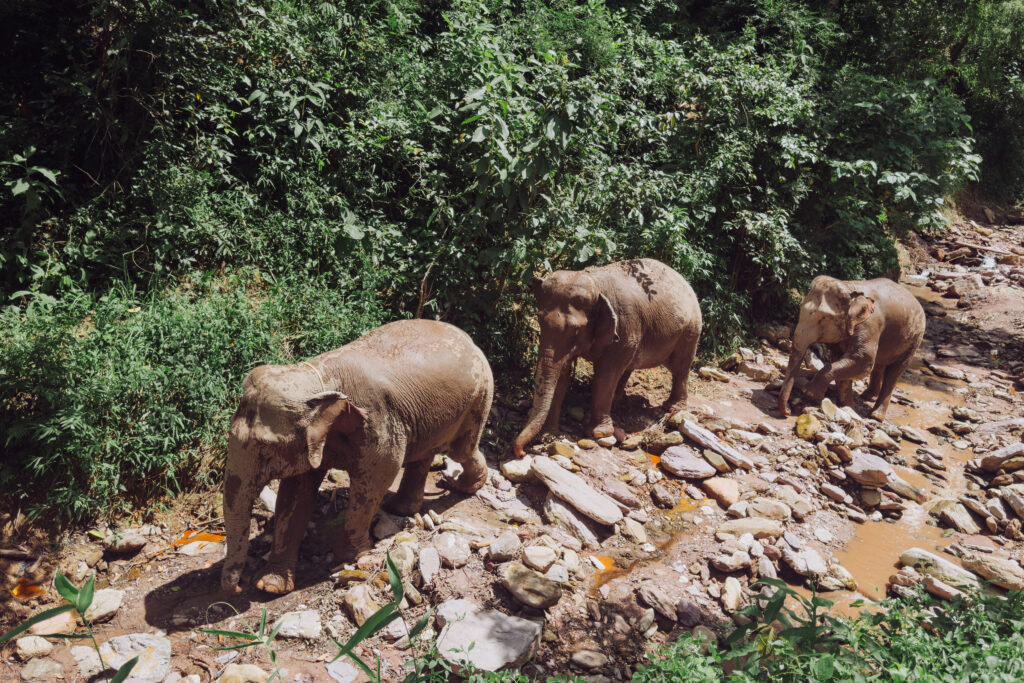
Mae Ping was rescued at a young age and, fortunately, never had to endure years in the logging industry. Instead, her strength and spirited nature have only been guided with care and kindness.
She is known for her lively personality and undeniable charm—curious, playful, a little mischievous, and sometimes willful. These traits make her both endearing and unforgettable, giving Mae Ping a unique presence within the herd.
My Interview with Mekong Elephant Park’s Manager
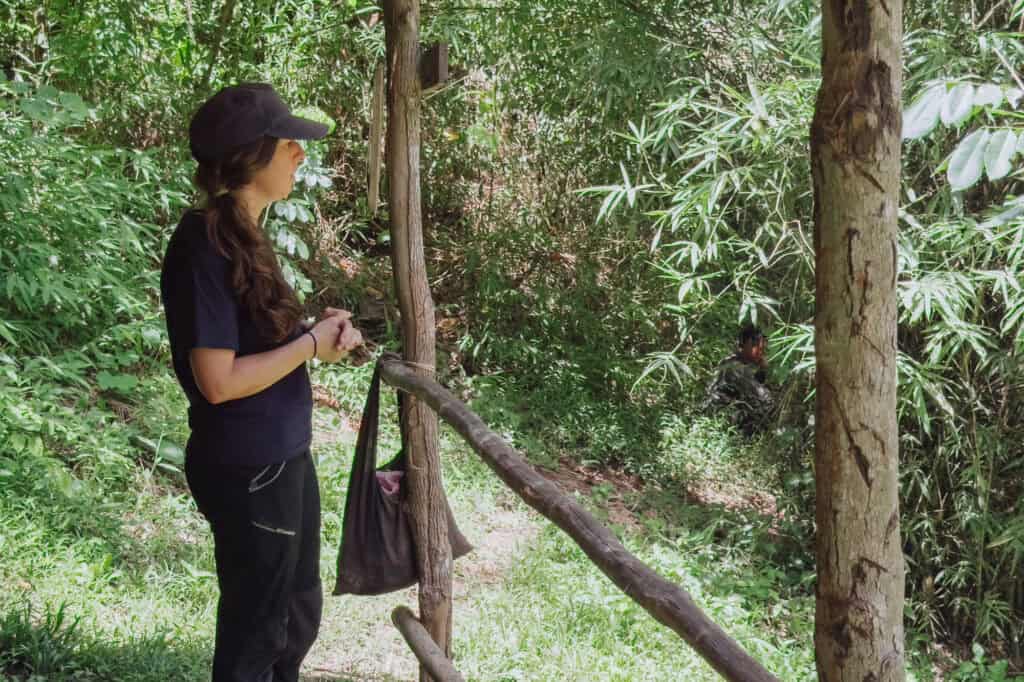
Wendy Legatt has managed the sanctuary for 7+ years. She enthusiastically welcomes visitors, explains their mission, leads tours, and tells the stories of the resident elephants and mahouts.
Here’s part of the transcript of my chat with her at the park:
Jared: “I think a lot of tourists come to Laos or Thailand to bathe or ride an elephant. What’s wrong with that?”
Wendy: “You create stress on the elephant when you have people it doesn’t know bathing and hugging it. Just like when you ride an elephant, it’s not good for the elephant. Most of the time they ride in town because it’s easier to make money. So it’s on concrete, in the sunshine. When you ask for an elephant that he wouldn’t do in the wild, of course you create stress, and it’s not good for the elephant.
Jared: People would be touched to hear about the family reunion you had recently.
Wendy: This is crazy. We reunited 3 elephants from the same family that were separated for 15 years. It took us many, many years. We had to find them, raise the money [to buy the elephant from its owner]. Then, in the middle, Covid arrived, so it was delayed many times. We were so happy when we finally reunited them together, and now they’re inseparable. It shows how social bonds and family bonds are very important for elephants.
Jared: All these years later, they recognized each other?
Wendy: They recognized each other straight away. The memory of an elephant is very powerful, especially for smell.
Jared: You described the surrounding forest as a “silent jungle.” What do you mean?
Wendy: It’s so sad. Over time, the animals have disappeared. Tigers, elephants, all of them poached and sold [for traditional medicine, often in China or Vietnam]. We find everything sold on Facebook Marketplace. The forests are completely empty. You have almost no animals at all. You can do a 3-day trek in a national park, and if you see one squirrel, you’re lucky.
Jared: And when it comes to elephants?
Wendy: Deforestation, poaching, wars, they’ve all caused the population to decline. The biggest challenge: loss of habitat and loss of migration routes. With more roads built, they’ve cut off the natural paths for elephants between Laos, Thailand, Cambodia, and Vietnam, restricting where elephants can naturally roam.
Jared: Is poaching a problem for you?
Wendy: It’s happened right on this property. This is why we pay the military to secure the place. Every morning, they walk around the property to make sure there are no nets or traps that were set during the night.
[Note: Two park rangers have been hired for patrols to safeguard the reserve against poaching. The cost is $4,400.]
Jared: Financially, how do you sustain all of this?
Wendy: Funding is the challenge. We rely on revenue from visitors. It’s an eco-tourism project, so visitors pay for the elephants’ food, land, medical expenses, and the salaries of the mahouts. When we go to rescue another elephant, we’ll fundraise for it. Otherwise, we rely on visitors.

