Visiting the Blue Temple: Wat Rong Suea Ten in Chiang Rai

The Blue Temple is famous for its bright, bold exterior, rather than its historic significance.
I’d say it’s worth a brief visit, as part of a larger temple circuit in the Chiang Rai area.
While it’s a new site (built 2005-2016), there’s a sweet story behind it. Local people were able to rebuild an old spiritual site into what’s become a famous modern-day attraction.
Construction continues on-site today, as you’ll see!
Key Info on a Visit:
- It’s free- no tickets needed
- Dress conservatively and cover your knees
- The earlier you arrive, the smaller the crowd will be
- Hours: Daily from 7:00am – 8:00pm
Tours to Chiang Rai’s Temples
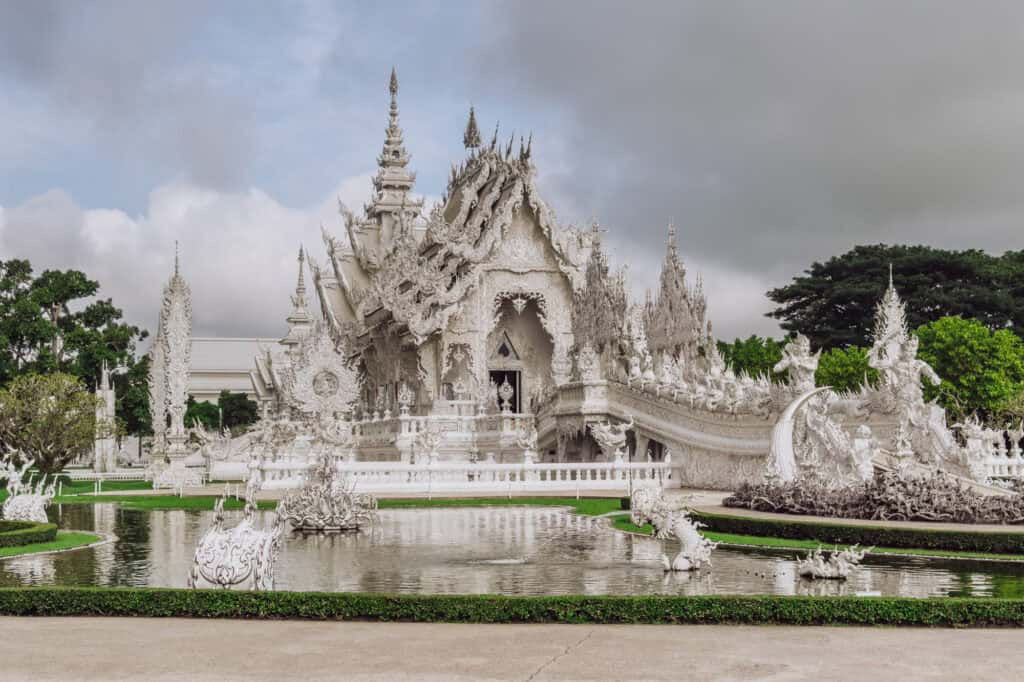
It’s easy to get to the Blue Temple, which is close to the famous White Temple (and others). It might be easiest to take a half-day (or full-day) tour of them from Chiang Rai.
Temple Location
The Blue Temple, officially named Wat Rong Suea Ten, is located just three kilometers outside the city center of Chiang Rai, making it one of the most accessible temples in the city. It’s easy to reach by tuk-tuk or taxi, if you don’t take a tour with a guide from town.
The Cost & Entry Information
Unlike some of Chiang Rai’s more famous attractions, the Blue Temple does not charge an entrance fee.
Donations are welcome, and they help maintain the site and fund future construction projects.
They also sell tiles as a fundraiser, which will be incorporated into the ongoing expansion.
An Explanation of the Symbolism at the Blue Temple
The temple takes its name from the village where it was built. Decades ago, the area was known as “Rong Suea Ten,” meaning “the house of the dancing tiger.”
Villagers said wild tigers once roamed freely here, leaping across the nearby waterway. That colorful name stuck and is now part of the temple’s identity.
The Blue Temple’s design is strikingly different from the White Temple and Black House, the other two points on Chiang Rai’s “temple triangle.”
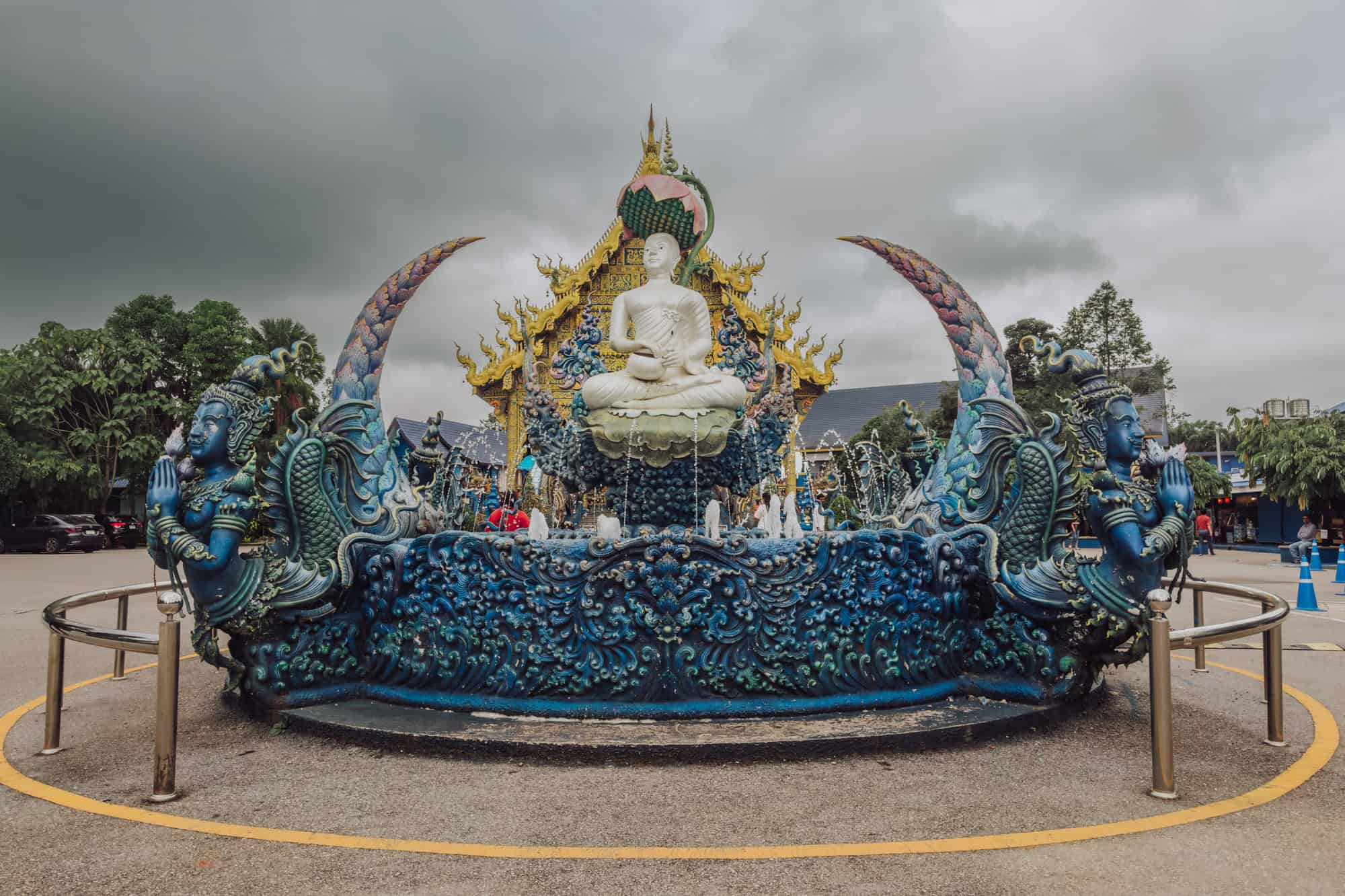
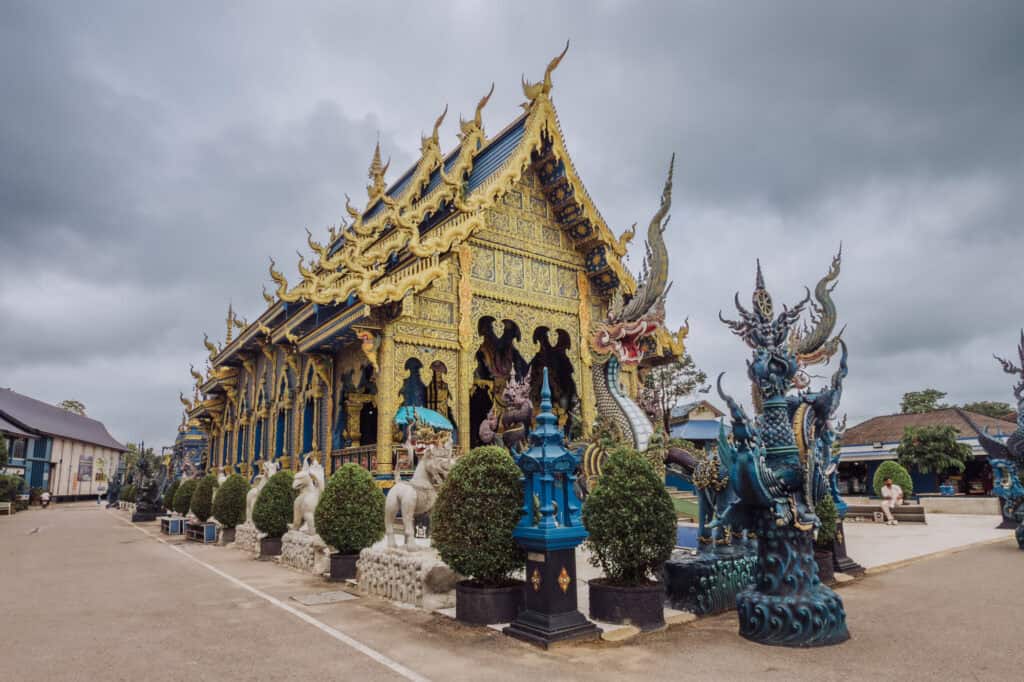
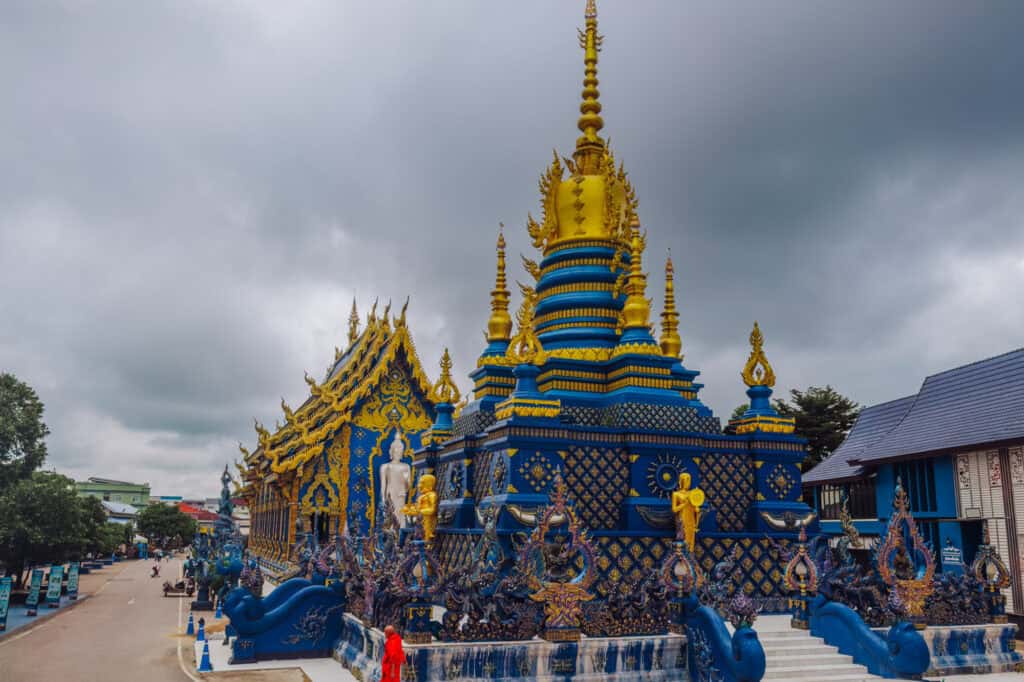
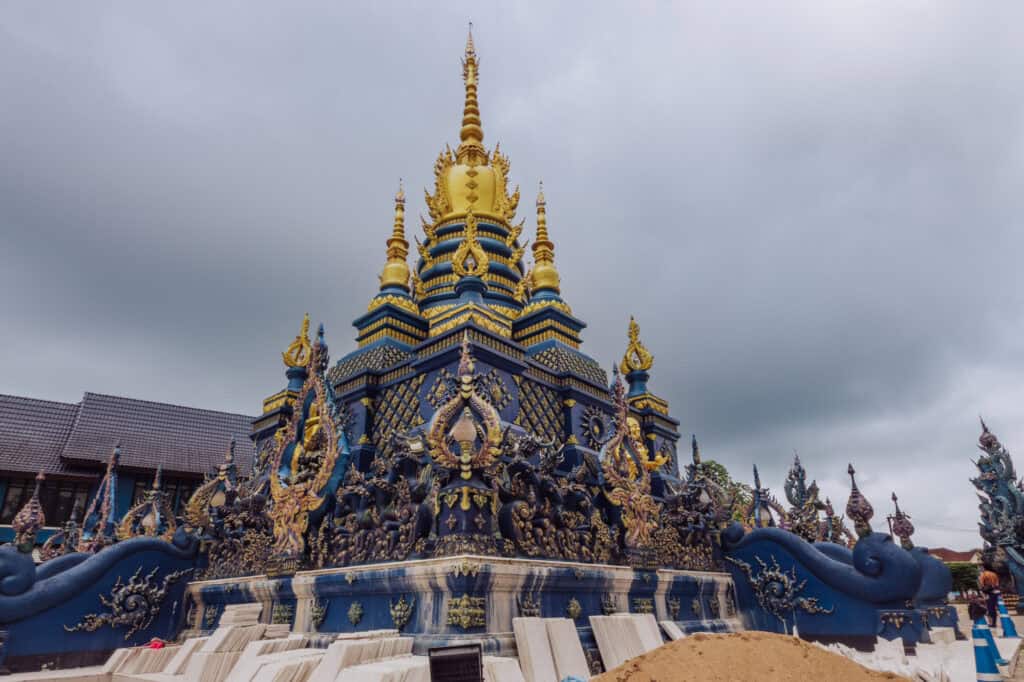
The intense cobalt blue exterior symbolizes Dharma spreading as widely as the sky.
Golden trim and mythical naga serpents add dramatic contrast, while murals and statues highlight contemporary interpretations of Buddhist art.
History & Construction of the Temple
For decades, this site sat empty, with villagers traveling elsewhere to make merit. In 1996, residents of Rong Suea Ten Village decided to restore their own temple so they would once again have a center for worship and community gatherings. With donations and local support, construction slowly began.
Construction on the current complex began in 2005, on the site of a long-abandoned temple.
Work was completed on January 22, 2016, though smaller projects and decorative details continue to be added.
The architect, Phuttha Kabkaew, was a student of Chalermchai Kositpipat, the artist behind Chiang Rai’s famous White Temple. His influence can be felt in the modern design, with imaginative, almost surreal touches, though the Blue Temple has its own unique identity.
The temple was officially registered as a monastery in the early 2000s, and over time, its bold blue design drew national and international attention.
What Visitors Can Expect at the Blue Temple
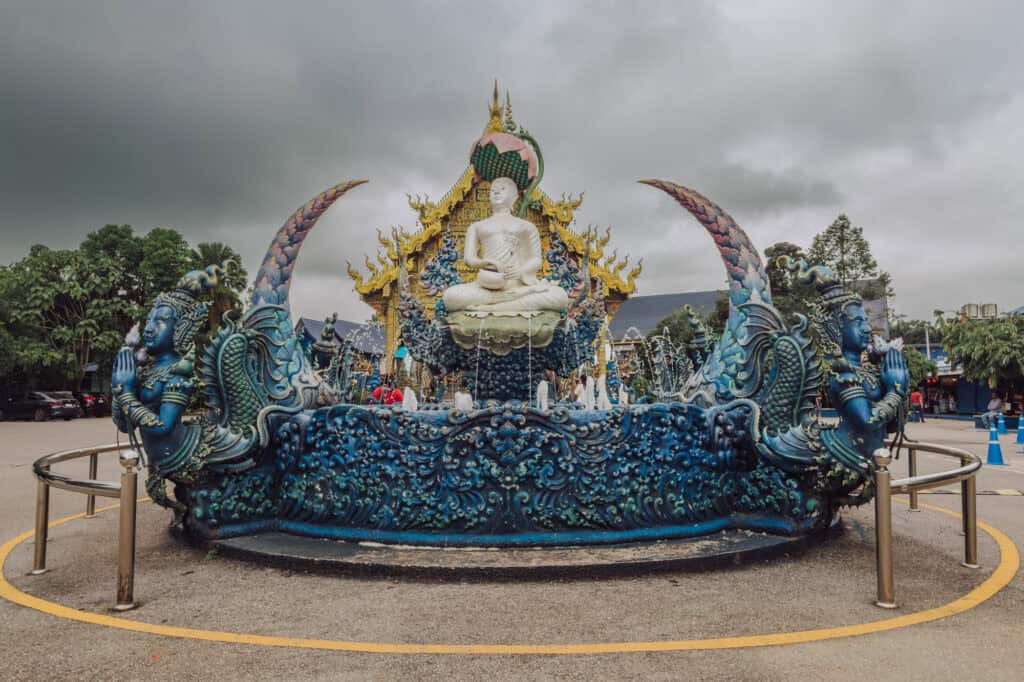
The Blue Temple is less crowded than the White Temple, making it a calmer place to explore, though it has become increasingly popular.
Other highlights include:
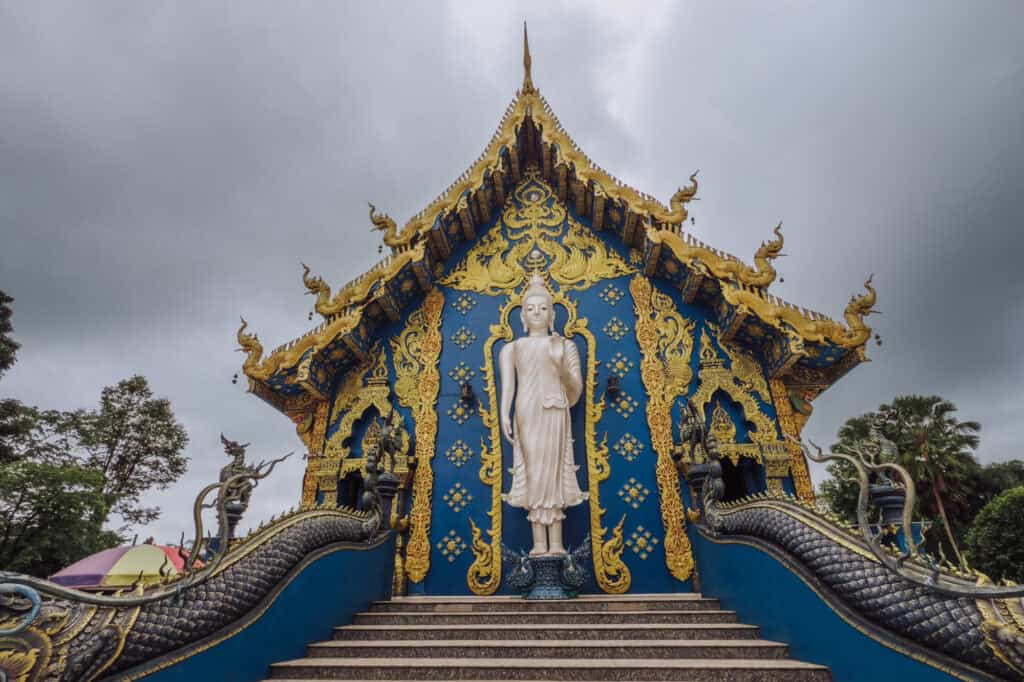
- Naga stairways: Serpent-like guardians that lead into the main hall.
- Interior murals: Filled with symbolism, they emphasize the Four Noble Truths and the Eightfold Path.
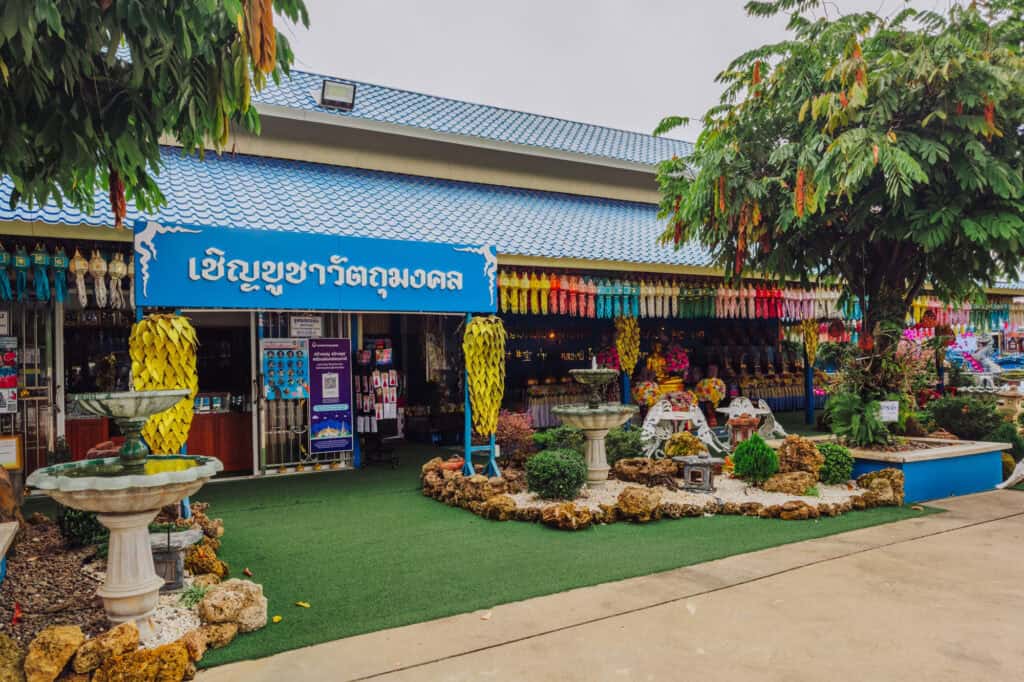
There’s also a touristy strip with shops and food.
Advice For Visiting Wat Rong Suea Ten
- Photography: Allowed both inside and outside, unlike at other temples.
- Atmosphere: While beautiful, it remains an active place of worship, so visitors are asked to dress modestly and behave respectfully. Cover your shoulders and knees as you would at any temple in Thailand.
- Hours: The Blue Temple is open daily from 7:00am to 8:00pm.
- Best time to go: Mornings and late afternoons are quieter, and the light makes the blue and gold details especially photogenic.
Most travelers spend 30–60 minutes here, often combining a visit with nearby attractions such as the White Temple (Wat Rong Khun) and the Black House (Baan Dam Museum).