Iceland’s Famous Black Sand Beach Erodes: Extreme Winter Storms Blamed

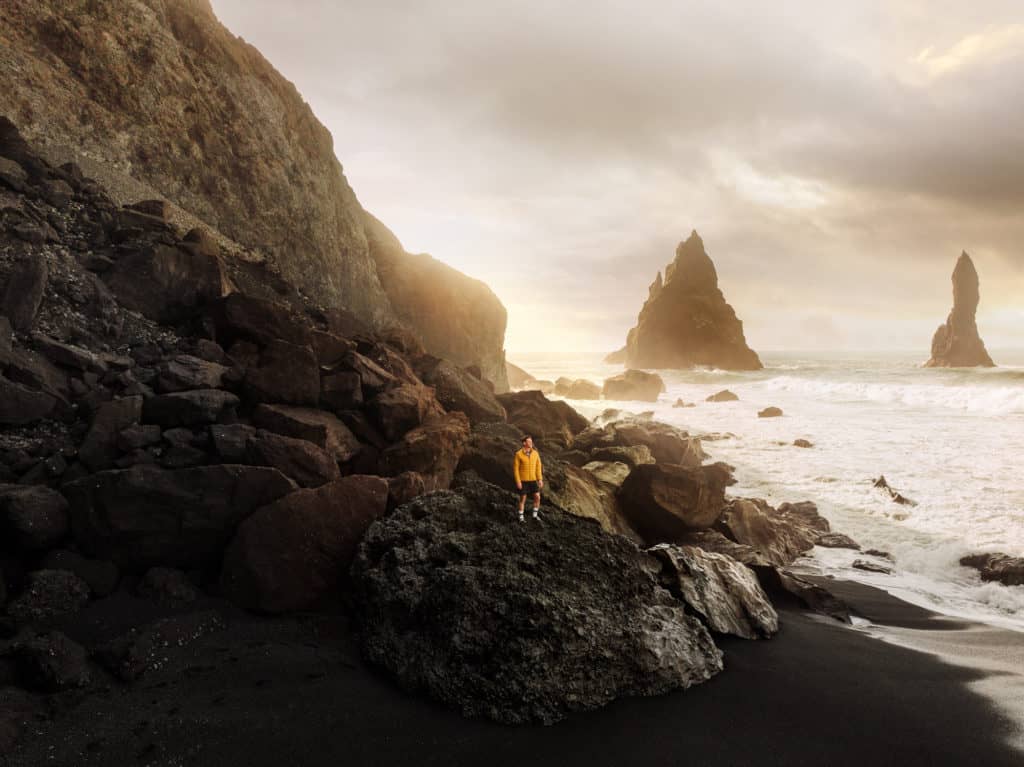
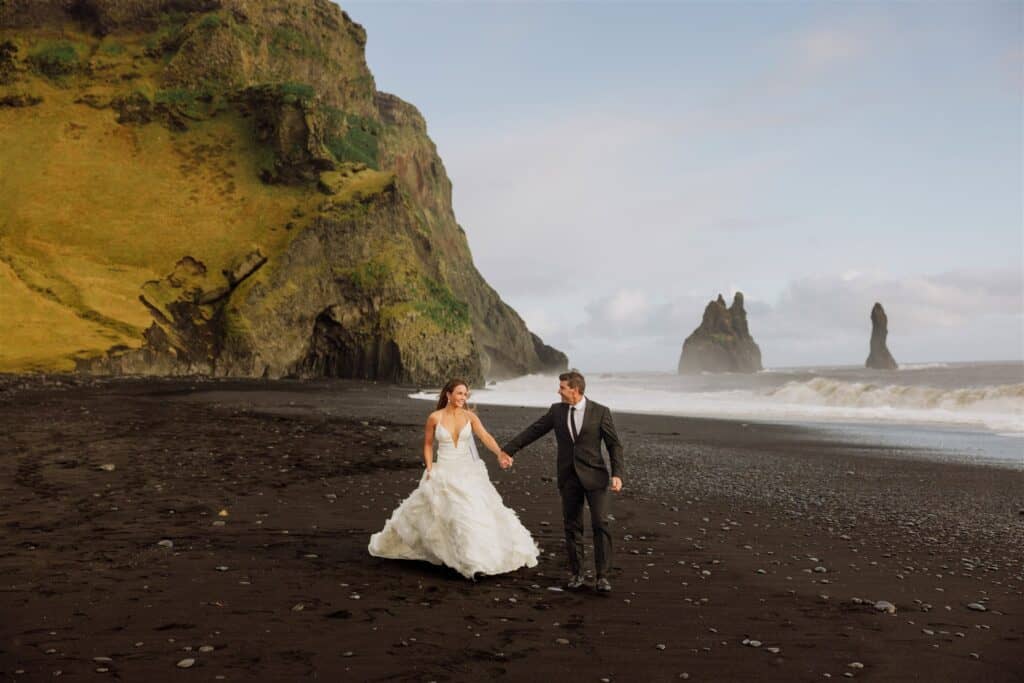
Reynisfjara, Iceland’s famous black sand beach, is one of the island’s most stunning, photographed, and dangerous landscapes.
It changed quickly at the start of 2026, almost entirely eroding away.
During a series of powerful February winter storms, Reynisfjara Beach experienced some of the most dramatic erosion seen along the coast of southern Iceland in modern history.
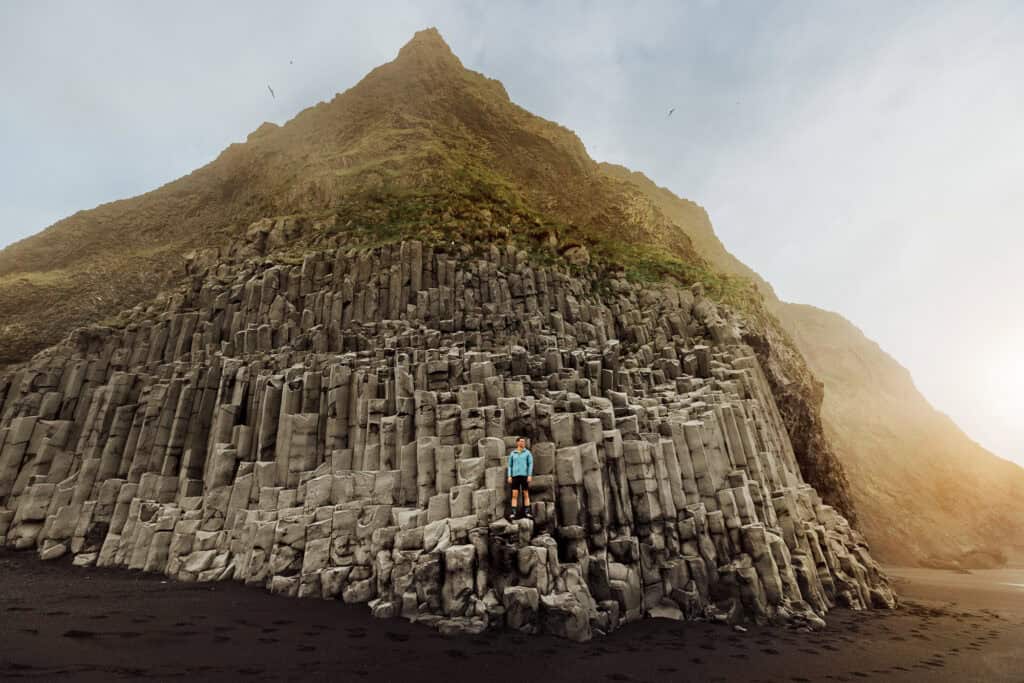
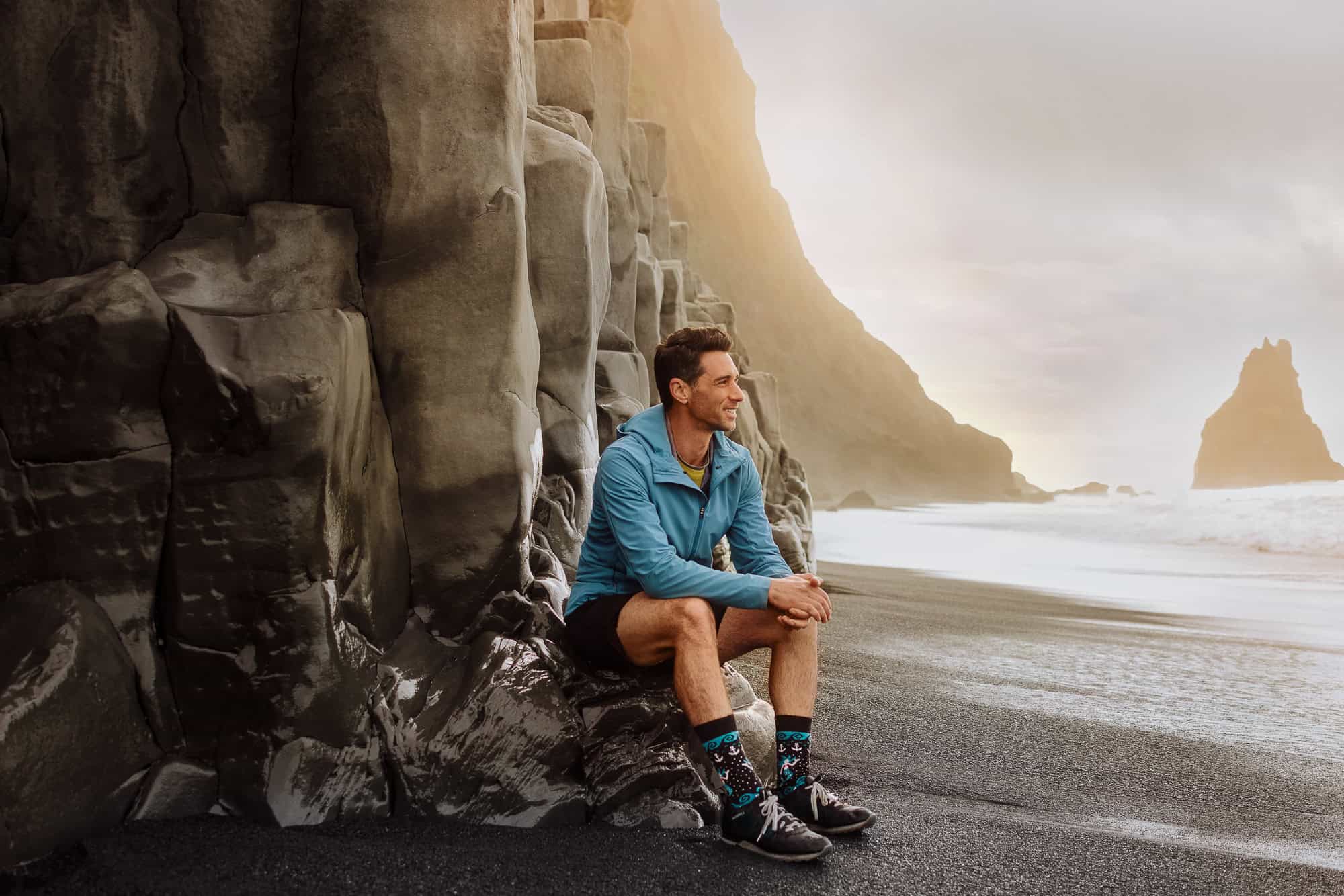
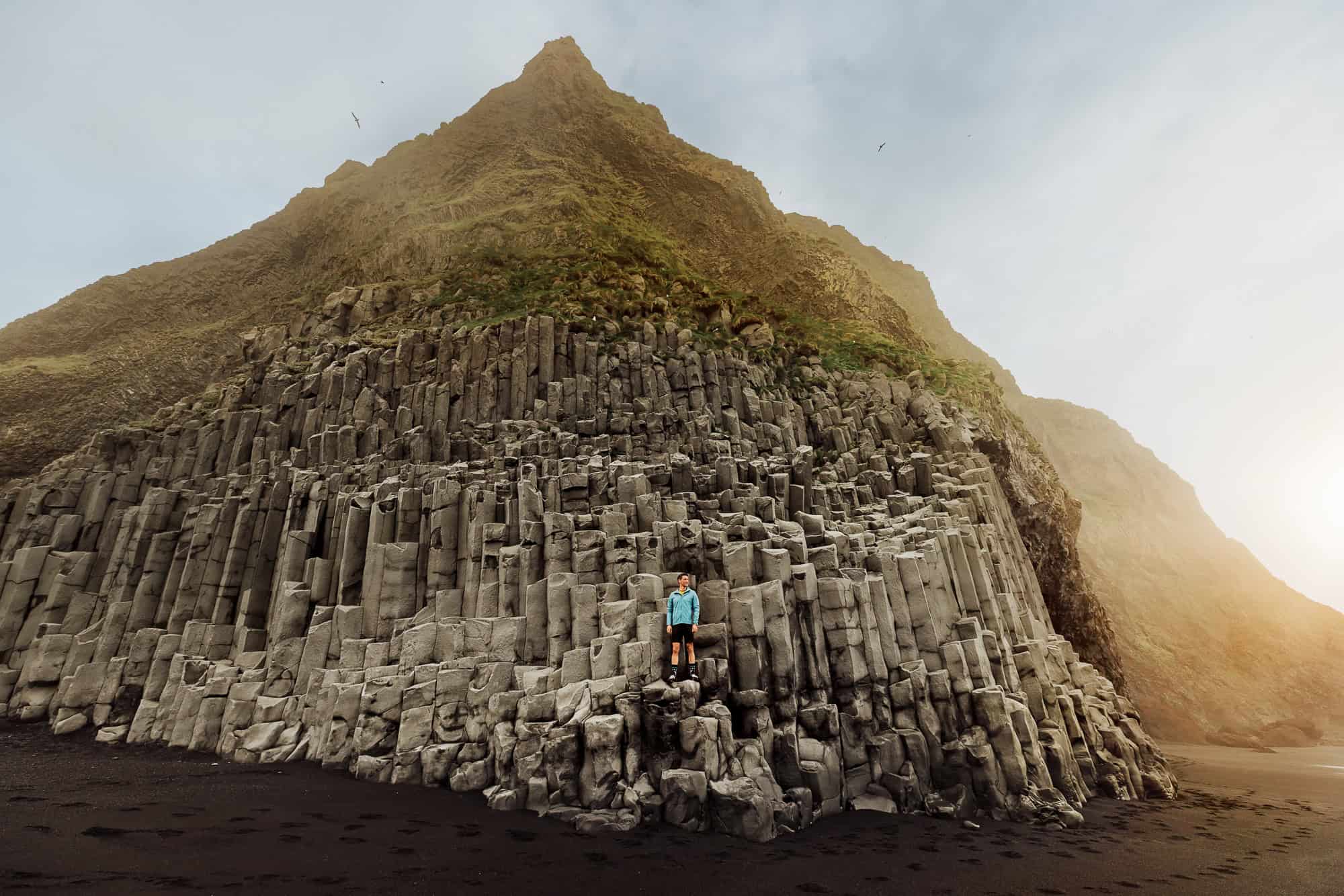
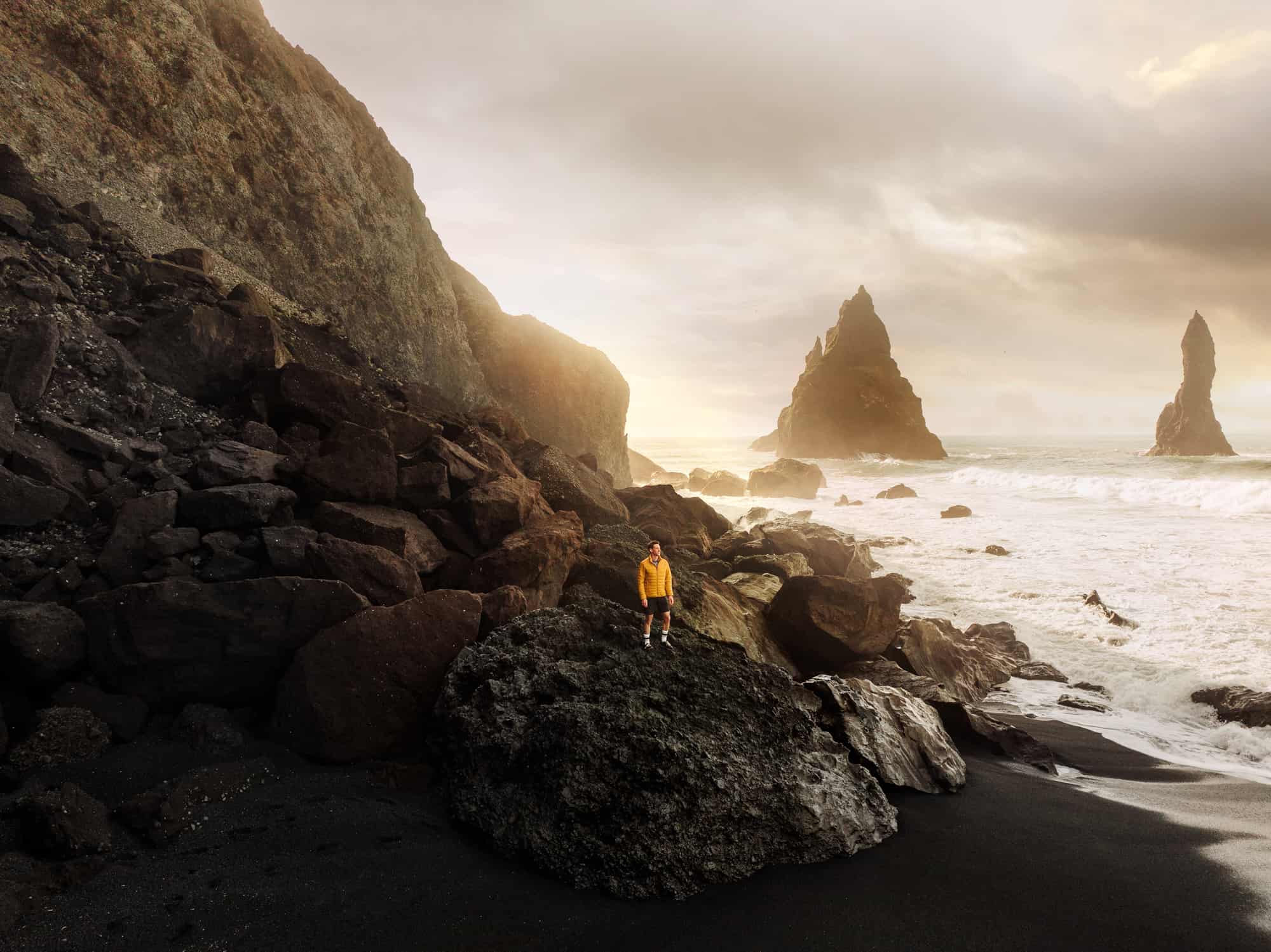
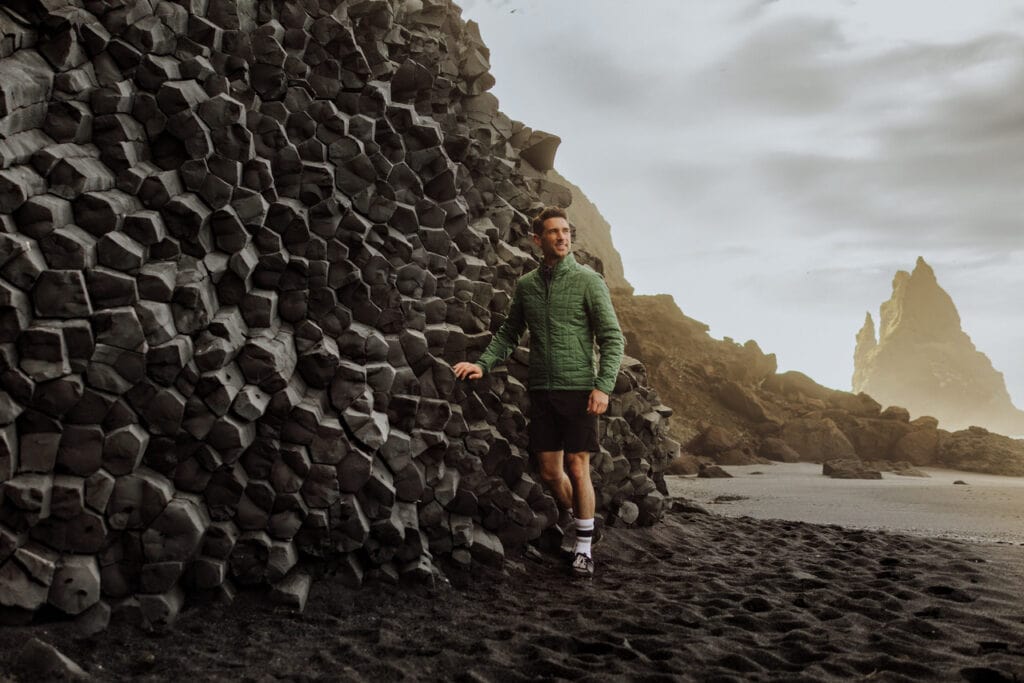
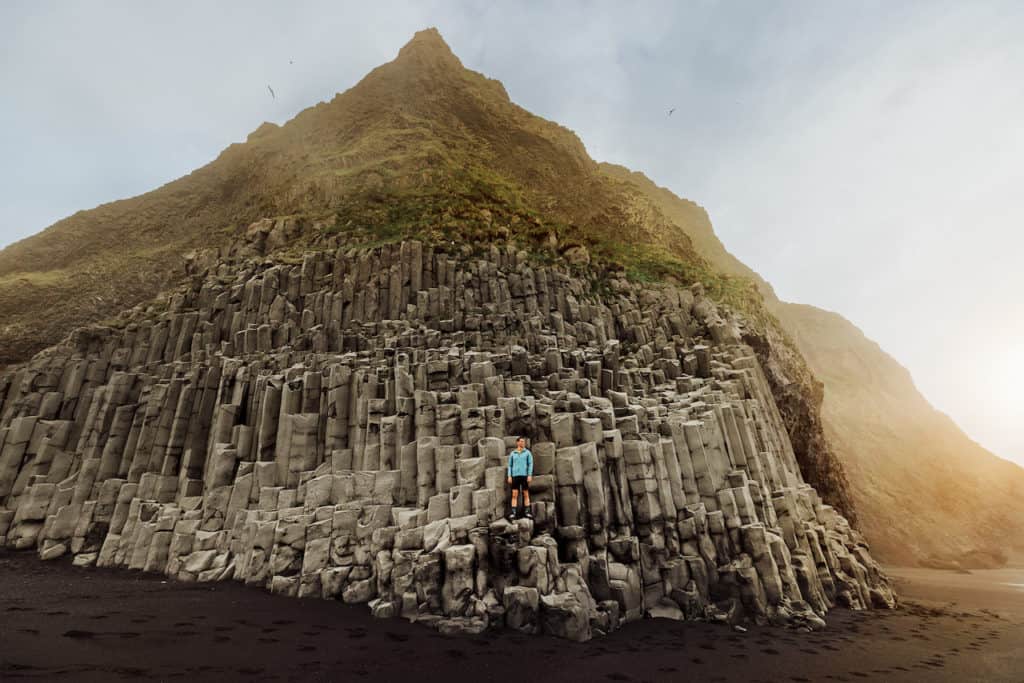
Known for its jet-black volcanic sand, hexagonal basalt columns, Reynisfjara has always been a draw for tourists, drone pilots, newlyweds, and film crews.
Rocks offshore were incorporated into the scenery for scenes from “Game of Thrones.”
Experts say the speed and scale of this winter’s changes are unusual, even by the extreme Icelandic standards!
The shoreline is dramatically changed, and it’s unclear if it can be restored (by man or Mother Nature).
What Happened at Reynisfjara This Winter?
Since early February, prolonged easterly winds and repeated heavy surf have battered Iceland’s south coast. According to coastal engineers with the Icelandic Road and Coastal Administration, these conditions pushed massive volumes of sand westward, stripping Reynisfjara of much of its protective beach width.
The result:
- Large basalt boulders were dragged several meters toward the sea.
- Access paths and walking areas near the beach became unstable or unusable
- Sections of the upper beach dropped off sharply, forming new ravines
The local population is small (Vik is the closest town, a few miles east), and residents say they’ve never seen changes happen this quickly.
The waves are now crashing up onto the basalt columns below.
Why Reynisfjara’s Black Sand Beach Is Eroding So Quickly
Coastal engineer Sigurdur Sigurðarson is quoted in articles saying: the erosion is tied to an atypical winter weather pattern… *not rising sea levels.
Key factors include:
- Persistent easterly winds throughout the winter
- Repeated high-energy wave events
- Waves transporting the black sand away, rather than replenishing the beach.
“The explanation is that there have been persistent easterly winds throughout the winter, often accompanied by very high waves. These easterlies transport sand along the south coast towards the west,” Sigurðarson, with the Icelandic Road and Coastal Administration, explained to the Reykjavik Grapevine.
Under normal conditions, south-westerly winds dominate Iceland’s south coast. Those winds typically move sand eastward, helping replenish beaches like Reynisfjara. This winter, however, easterly winds have been more common, reversing that process and stripping sand away instead.
That means Reynisfjara is effectively cut off from its normal sand supply. It’s something Sigurðarson has never seen in the decades he’s studied the coastline.
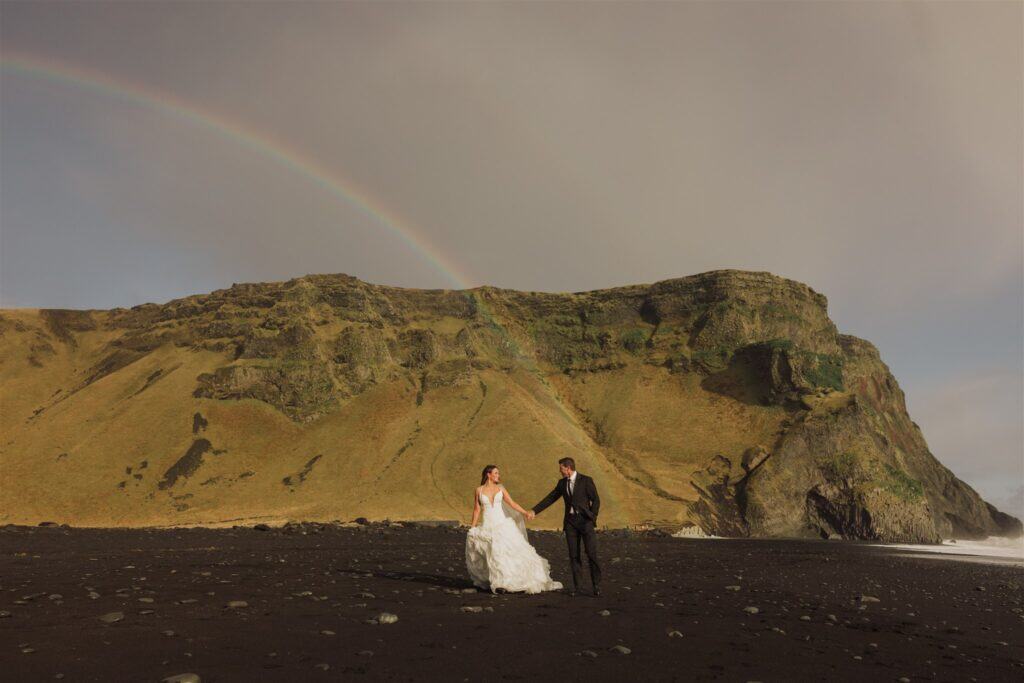
Visiting Reynisfjara Beach
First, I always suggest renting a car in Iceland, because driving around Iceland is relatively easy.
➡️ Click to Check Rental Rates
Or, you can take a tour from Reykjavik:

Is the Black Sand Beach Gone Forever?
There’s no clear answer.
Erosion is a natural process in Iceland, where landscapes constantly shift due to wind, waves, glaciers, and volcanic activity.
However, scientists say it’s impossible to predict whether Reynisfjara will recover, or continue eroding.
Some of the black sand has accumulated farther west, but experts say: there’s no guarantee it will migrate back.
The future of Reynisfjara will depend on the waves.
For now, the black sand beach visitors remember no longer exists in the same form.
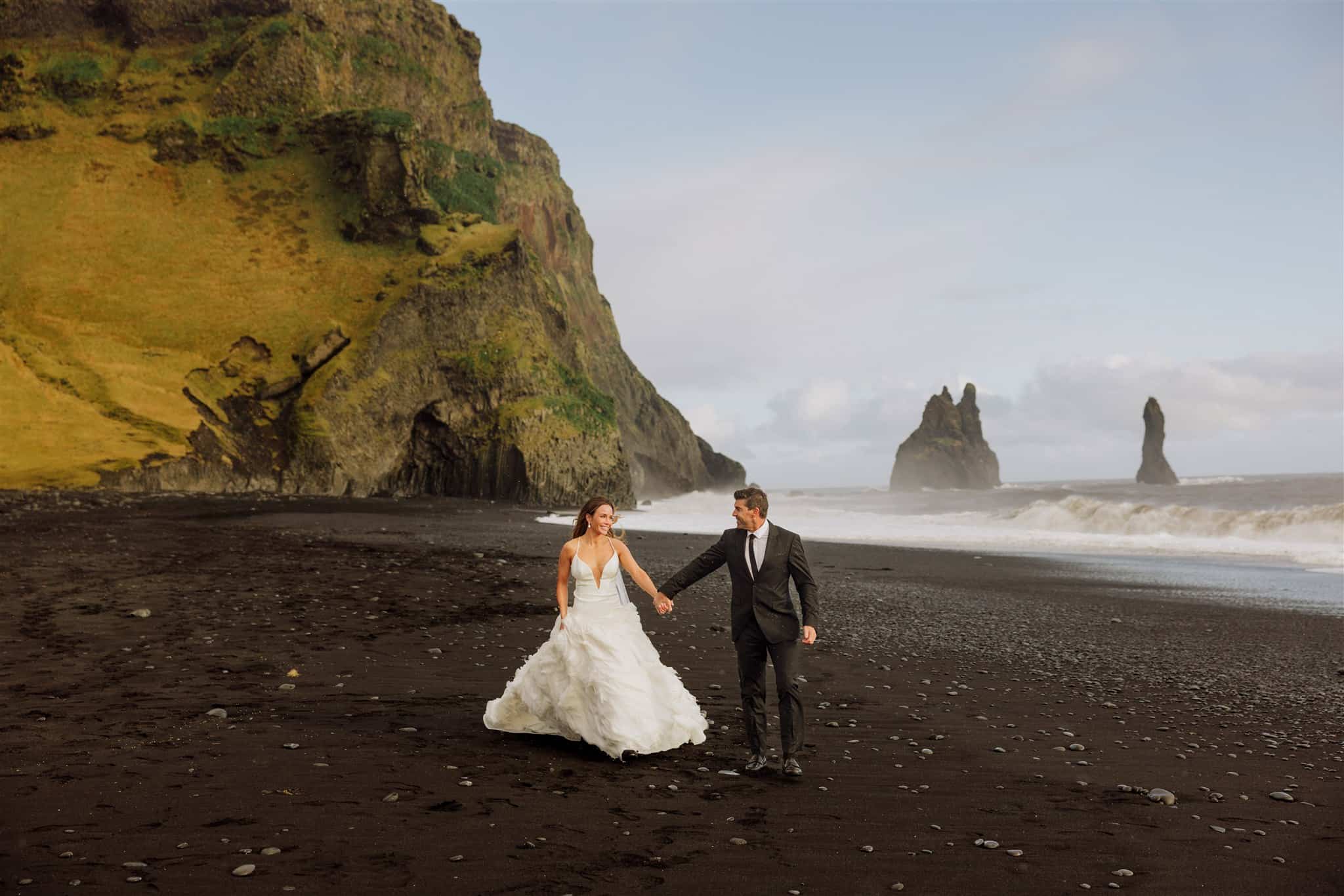
You may remember: visitors could once walk into a cave, like the bride and groom below. This has all eroded away, too, preventing access to the cave.
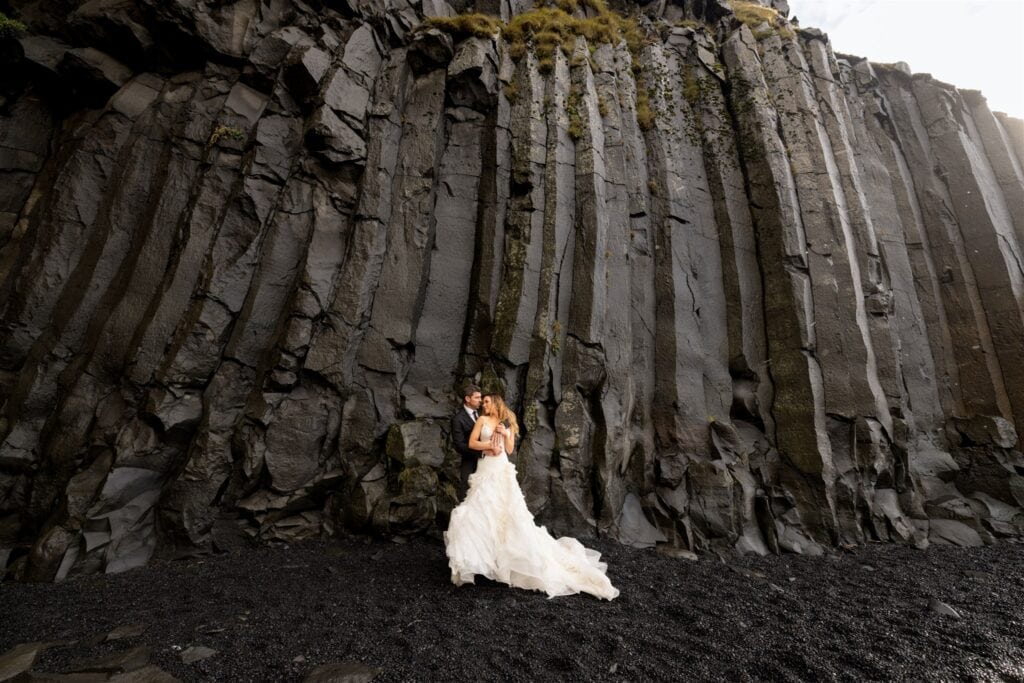
Deadly Sneaker Waves: Why Reynisfjara Is More Dangerous Than Ever
Reynisfjara has a long and tragic history of deadly “sneaker waves.” These powerful surges appear without warning and rush far up the beach.
The beach is full of warning signs. More have been posted since my last trip to Reynisfjara.
Several visitors have been swept into the ocean here over the years, some fatally.
The recent erosion increases that risk:
- Steeper drop-offs make escape harder.
- It’s even more of a challenge to estimate how far the waves can now reach.
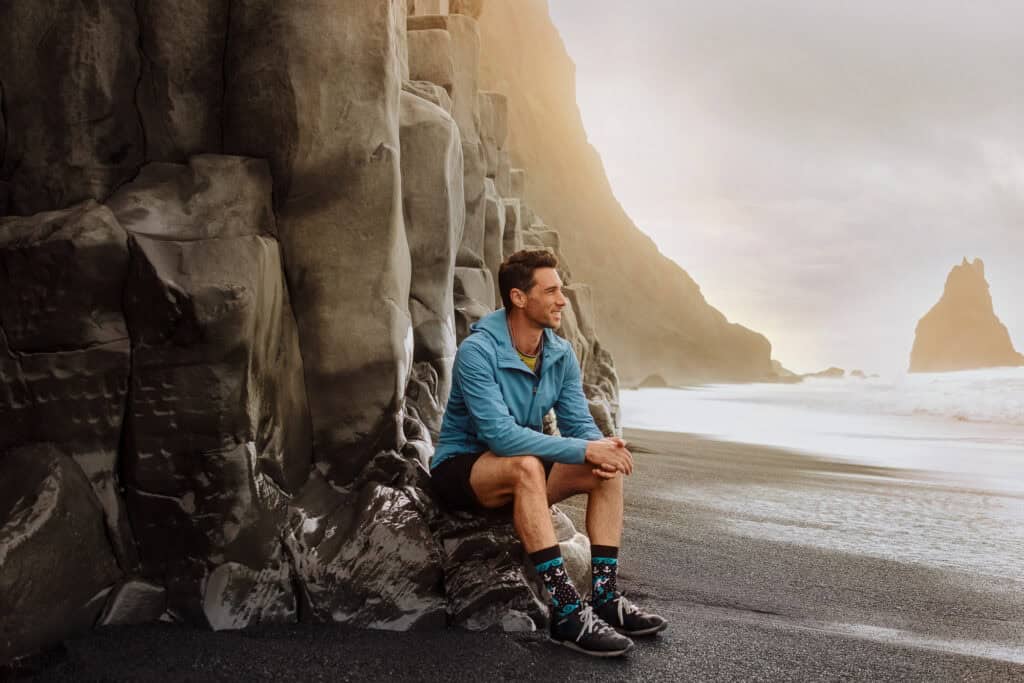
It was always risky to walk to the spot below if the tide was coming in. Now, it’s impossible.
5 Other Black Sand Beaches to Visit in Iceland
Reynisfjara is changed, but it’s still worth visiting the basalt columns.
Here are a few other black sand beaches in Iceland:
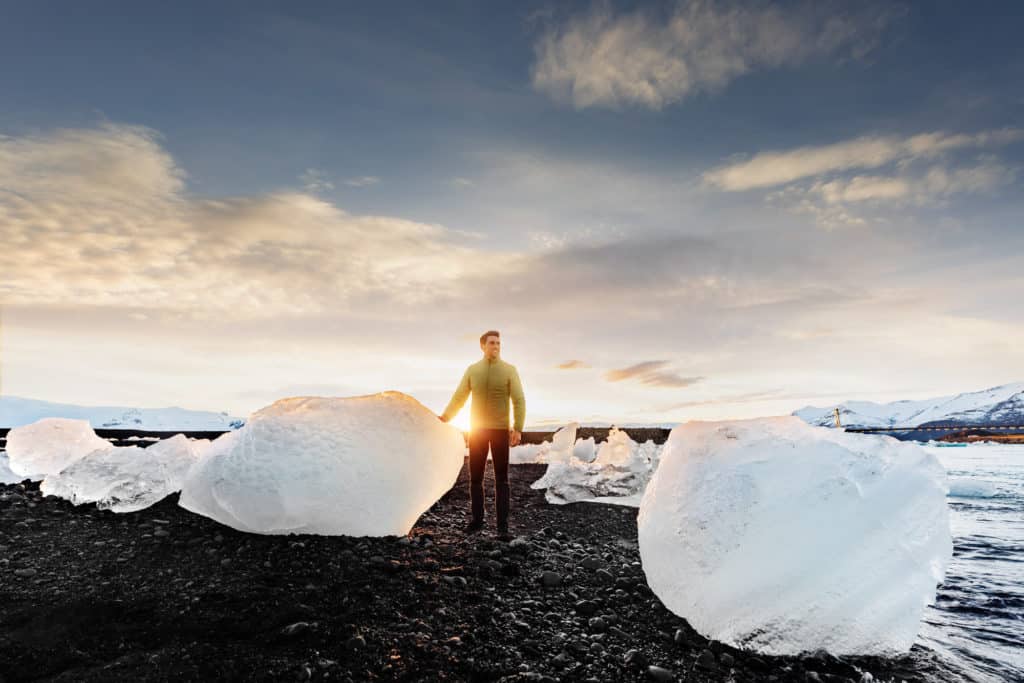
1. Diamond Beach
Located near Jökulsárlón Glacier Lagoon, Diamond Beach is famous for chunks of glacial ice scattered across black sand.
2. Vik i Myrdal Beach
A wide, dramatic shoreline near the town of Vík. It’s close to Reynisfjara.
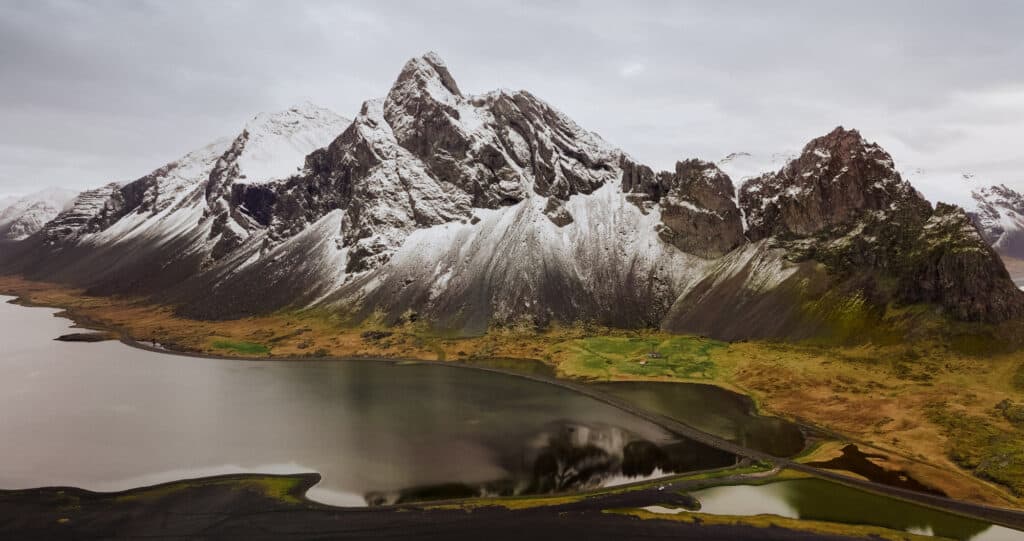
3. Stokksnes Beach
Known for its black dunes and reflections of Vestrahorn mountain. It’s especially popular with photographers.
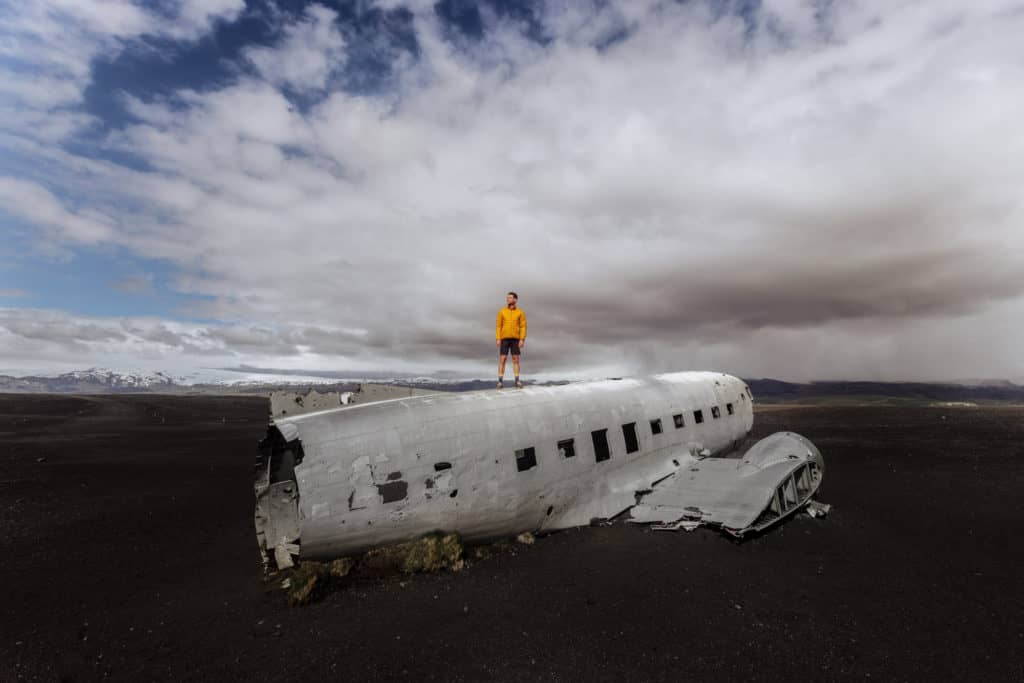
4. Sólheimasandur
This is less of a beach, and more of a vast black sand plain near the famous DC-3 plane wreck, shaped by glacial outwash. It’s a famous spot, but a terribly boring hike!
Trust me: take the bus shuttle!
5. Djúpárlónssandur
A rugged black pebble beach with lava formations and shipwreck remains on the Snæfellsnes Peninsula.
More to Explore
Driving along the Ring Road on Iceland’s southern coast, you’ll come across a series of other black sand beaches (or black lava rock beaches) to explore.
Historic Photos Show Reynisfjara’s Shoreline
What’s happening at Reynisfjara is a reminder that Iceland is geology in motion. Glaciers advance and retreat. Coastlines shift. Beaches appear, disappear, and re-form.