Putting the “Park” Back in Park Avenue: NYC’s New Plan
Park Avenue is one of the most recognizable streets in the world, and it’s about to look very different!
In September of 2026, Mayor Zohran Mamdani and NYC Department of Transportation (DOT) Commissioner Mike Flynn unveiled an updated design for an 11-block stretch of the avenue in Midtown East, from 46th Street to 57th Street.
Key Info on the Park Ave. Redesign
The new plan goes further than earlier versions:
- taking away more car lanes,
- adding a two-way protected bike lane, and
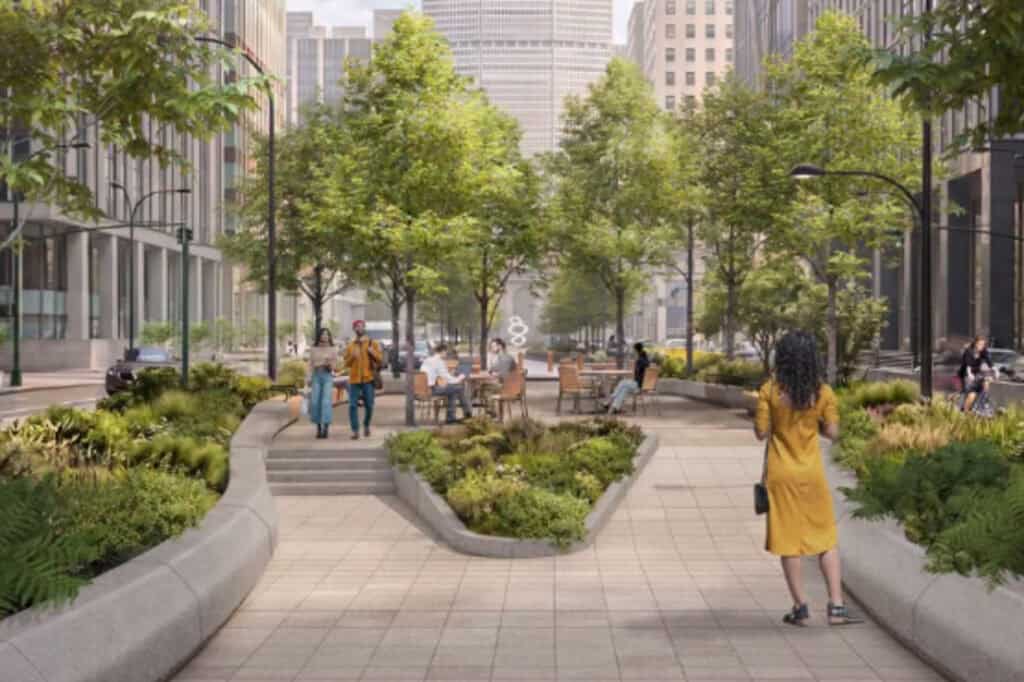
- turning the avenue’s narrow medians into a planted, walkable space.
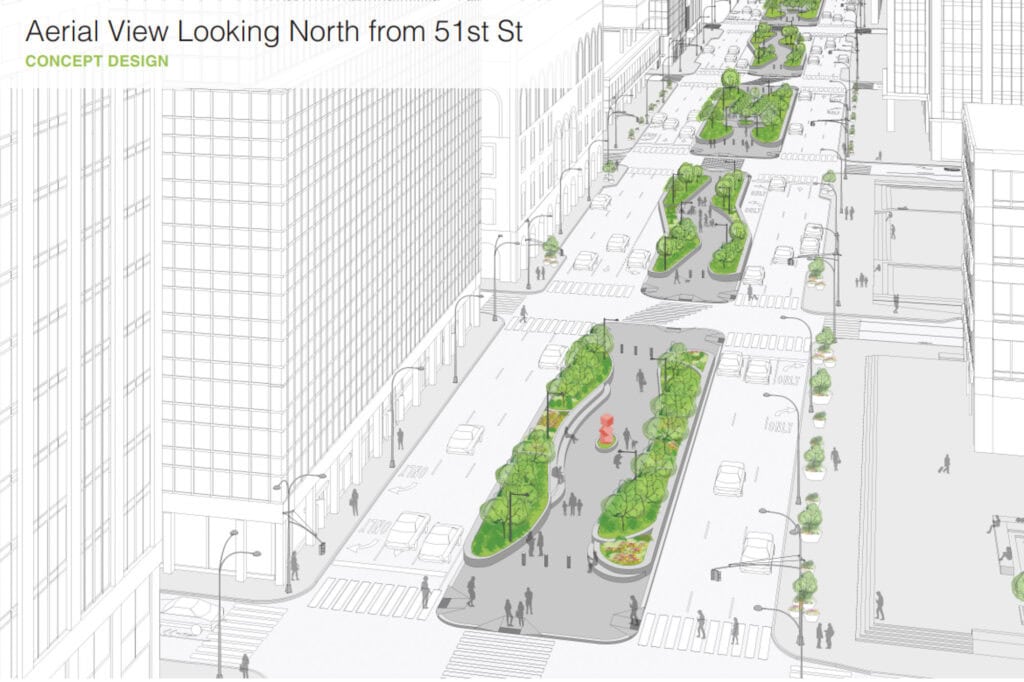
Here’s what’s changing, why it’s happening now, and how long it will take.
The Updated Park Avenue Design
The core idea is to shift space away from cars and give it to people on foot and on bikes.
Key features include:
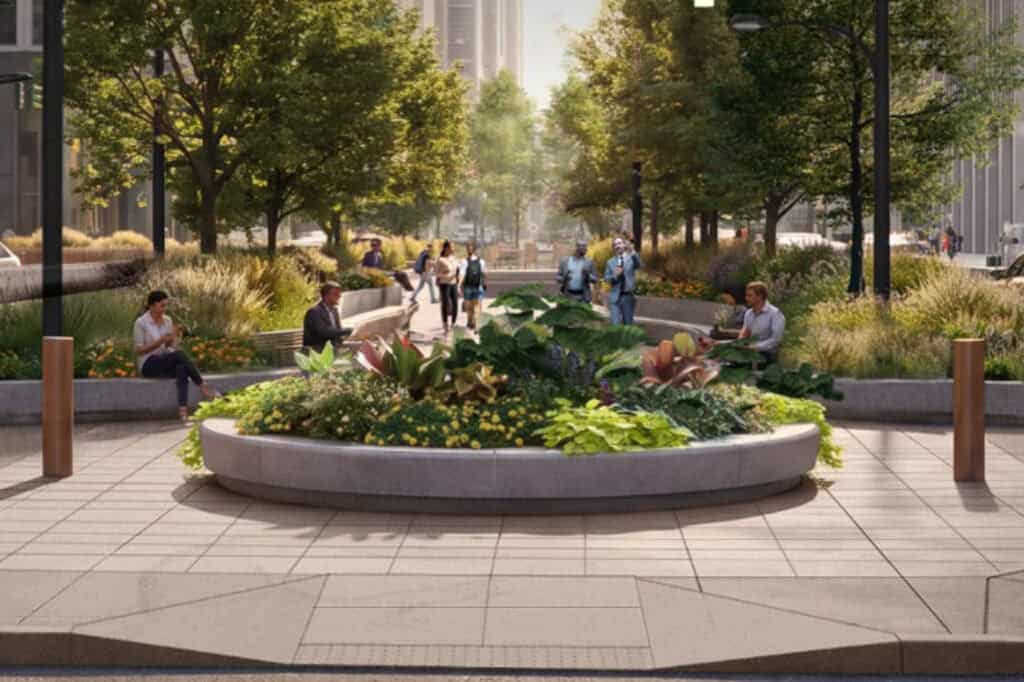
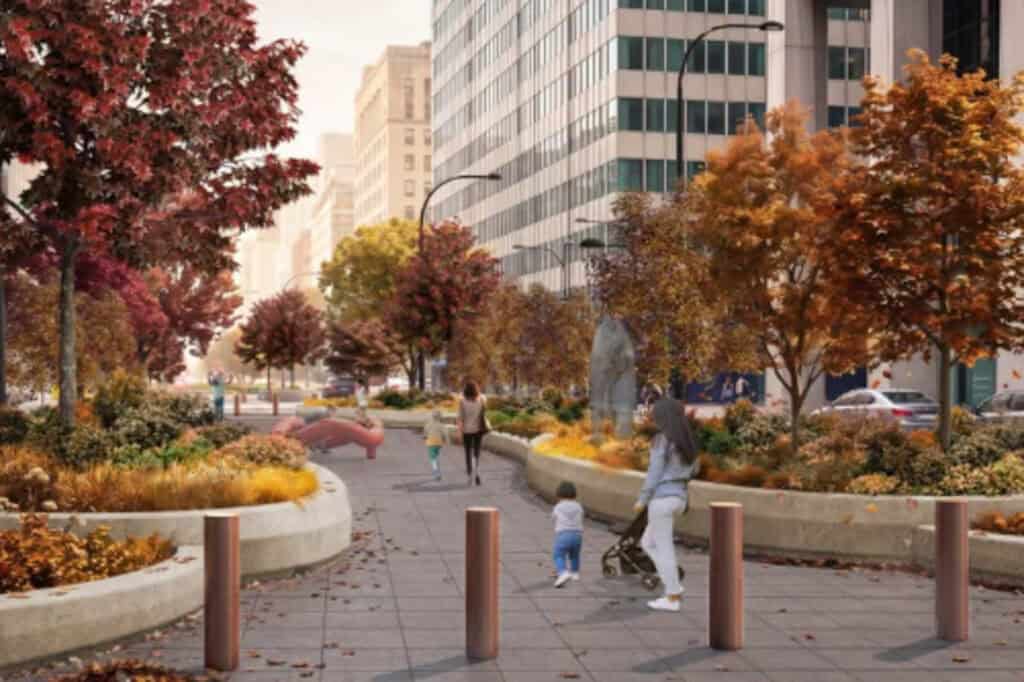
- Wider medians. The center of the avenue will be expanded into a landscaped pedestrian path with trees, plantings and seating.
- A two-way protected bike lane. It will sit in the roadway, in space that is currently a southbound travel lane, and will be separate from the pedestrian median.
- Flexible public space. The median is designed to host rotating programming, temporary art installations and new spots for viewing Midtown landmarks.
- New crosswalks. Additional crossings will link the medians along the corridor so people can move through it more easily.
The NYC DOT describes the goal as a “greener, safer and more people-centered Park Avenue.”
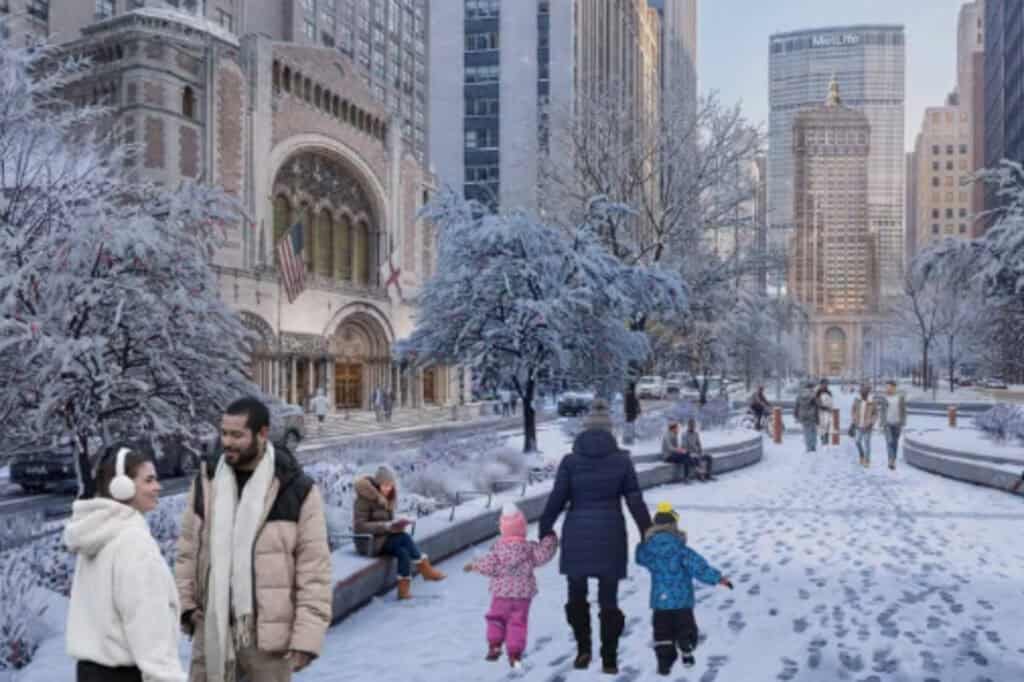
The renderings depict the new Park Avenue becoming another great green space in New York City.
Traffic Impact on the “New” Park Avenue
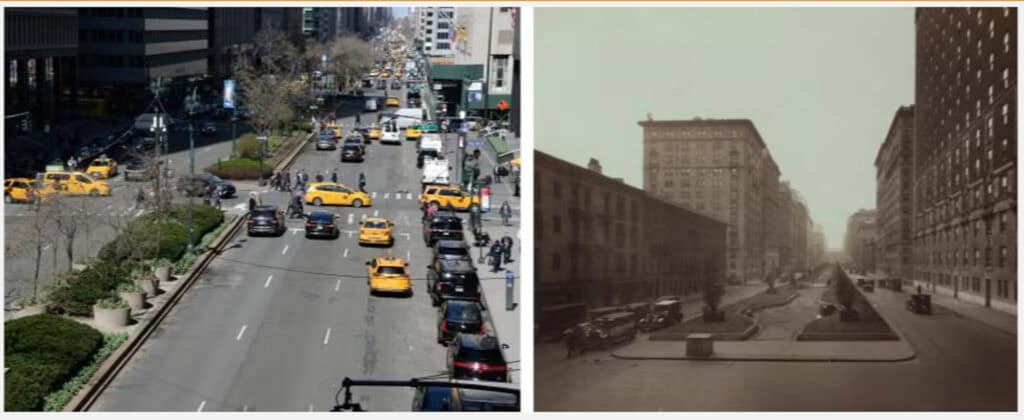
Park Avenue currently has three car lanes in each direction, plus a curbside parking lane on each side.
Under the updated design:
- One travel lane is removed in each direction. That space goes to the widened median.
- One more southbound lane is converted into the two-way protected bike lane.
- Curbside parking stays on both sides of the street.
That leaves two through lanes northbound and one through lane southbound, a major reduction on one of Manhattan’s busiest north-south routes.
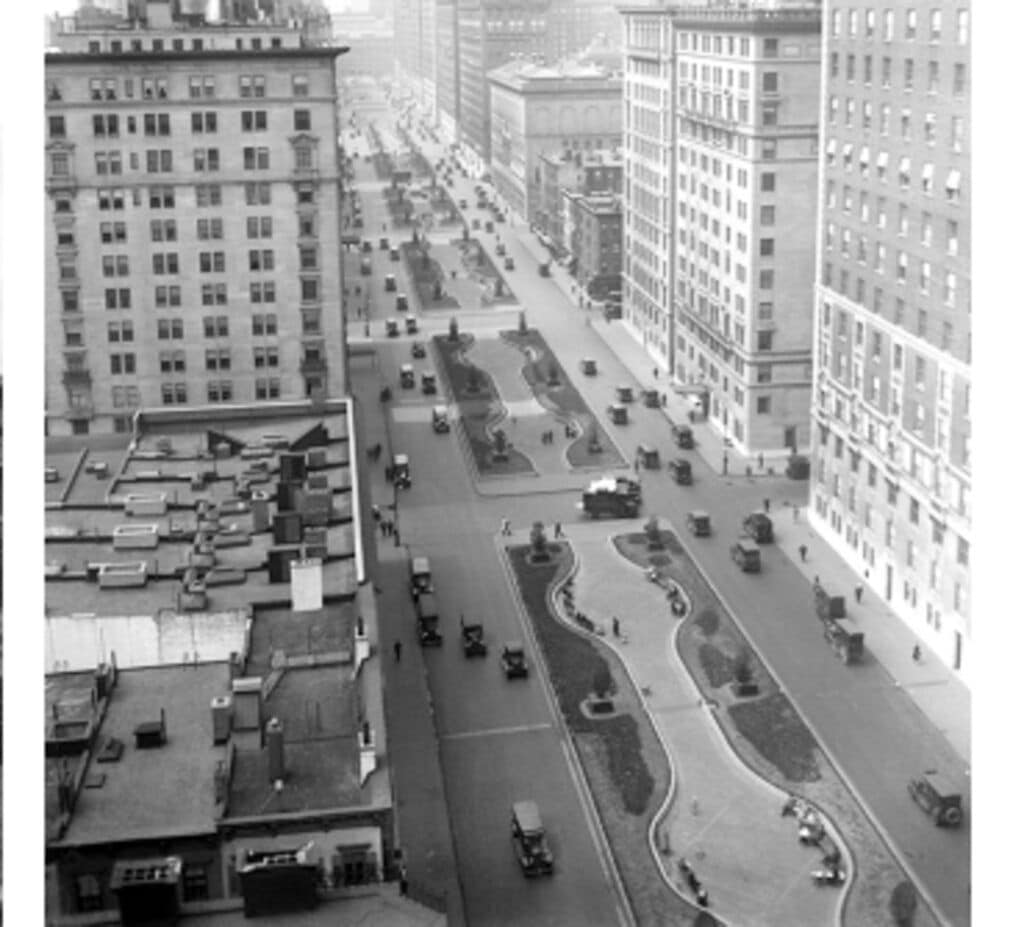
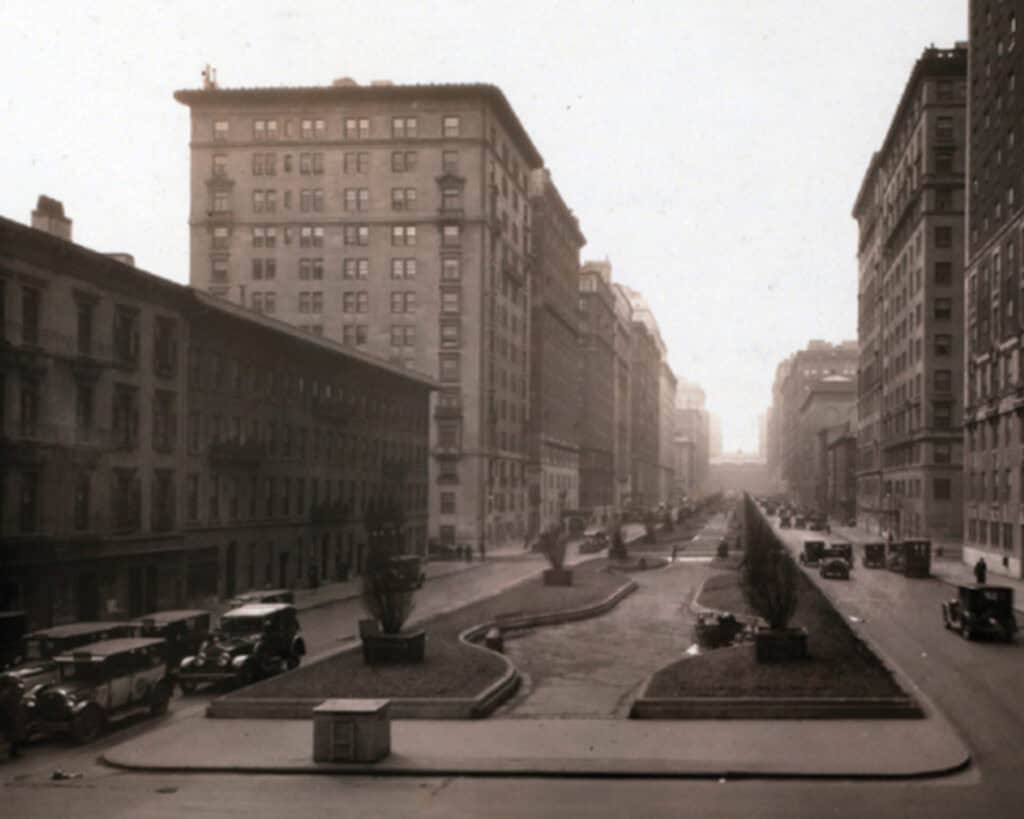
It’s going to be similar to the Park Avenue of the 1920s:
Why Park Avenue Is Being Redesigned
The redesign is possible because of a much bigger project underground.
Directly beneath this stretch of Park Avenue is the Grand Central Terminal train shed, the structure that covers the Metro-North tracks leading into the terminal.
The MTA is carrying out a $1.7 billion rehabilitation to replace thousands of corroded steel beams and columns that hold up the avenue.
That work requires tearing up the roadway and the existing medians.
Instead of simply putting the street back the way it was, the city decided to rebuild it with a new design. Aligning the two projects means the neighborhood goes through one major construction period instead of two.
The renderings include this winterscape, showing one of my favorite seasons: Christmas in New York City.
A Brief History of Park Avenue
As I mentioned above, in some ways, the redesign brings Park Avenue back to what it once was.
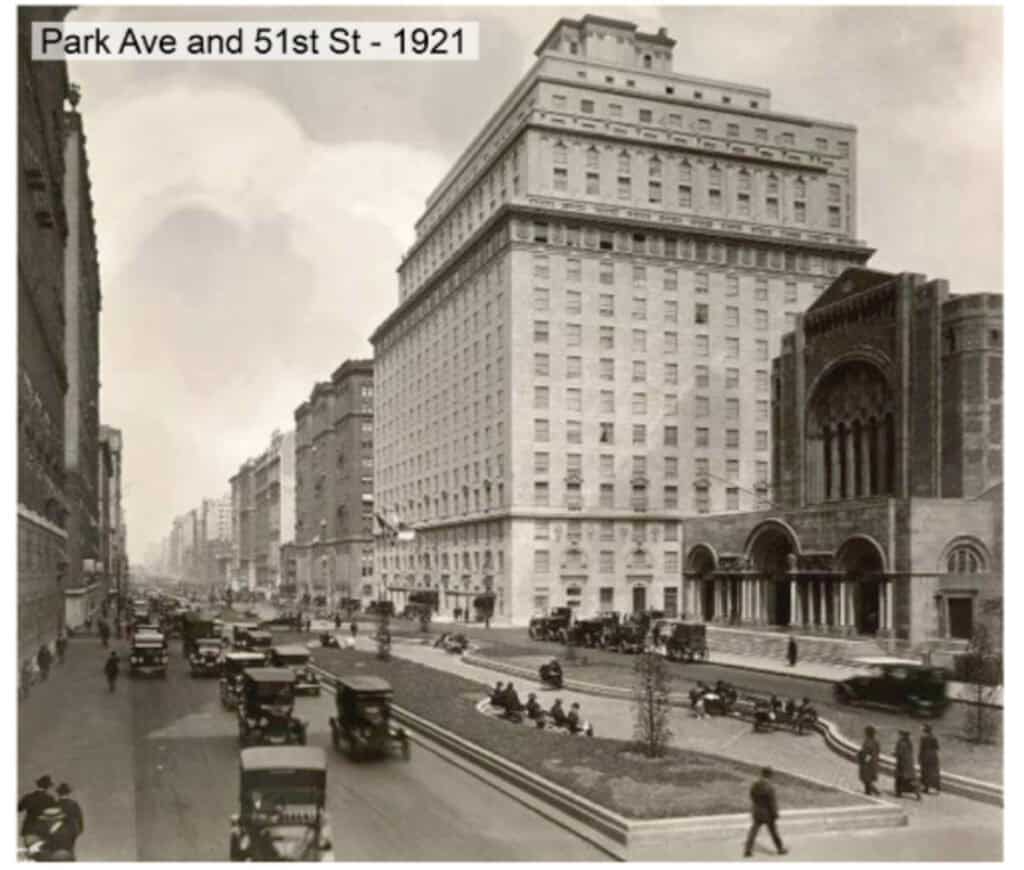
- 1831: The street is built and named Fourth Avenue.
- 1888: Planters are installed on the medians between 34th and 40th Streets, and the street is renamed Park Avenue. More planted medians follow in later years.
- Late 1920s: The wide, landscaped medians are narrowed to make room for more car traffic, which gives the avenue much of its current car-focused shape.
- 2007: DOT and Metro-North agree to add walk/don’t-walk pedestrian signals along a 10-block stretch that didn’t have them.
- 2021: Construction begins on 270 Park Avenue, continuing earlier MTA work to rehabilitate the Grand Central train shed.
The avenue got its name from its green medians and then lost most of that green to cars. The new plan would restore a good share of it.
Park Avenue Redesign Timeline
Here is how the project has progressed so far and what comes next:
- 2020: Early DOT outreach helps shape the call for design proposals.
- 2025: DOT begins community engagement through surveys, tabling and workshops. Landscape architecture firm Starr Whitehouse is selected to lead the design, working with Thornton Tomasetti and TYLin.
- December 2025 – January 2026: The project is presented to the East Midtown Governing Group and to Manhattan Community Boards.
- February 9, 2026: Public workshop.
- April 2026: The city releases two initial design concepts.
- Spring 2026: Community board meetings and a public survey gather feedback.
- September 17, 2026: The updated design with the protected bike lane is unveiled.
- Next: DOT will work with the MTA to move forward first on the blocks from 46th to 50th Street and from 50th to 53rd Street, in step with the train shed work.
How long will it take?
The redesign is expected to take about five years to complete. The MTA is still finalizing the schedule for the train shed reconstruction, so exact construction dates depend on that work.
What Supporters and Critics Are Saying
The plan has broad support from local officials.
Manhattan Borough President Brad Hoylman-Sigal, Congressman Jerrold Nadler and Community Board 6 Chair Sandra McKee all praised the updated design.
The head of the safe-streets group “Transportation Alternatives” called it “a major step forward,” saying the extra lane conversion leaves enough room for both walkers and cyclists.
Still, some bike advocates say the city should have gone further, with bike lanes on both sides of the avenue, fewer car lanes, and fewer intersections cutting through the new green space.
At the same time, the NYC E-Vehicle Safety Alliance is worried that more cyclists and e-bike riders next to a busy pedestrian median will create safety risks and add to congestion.
The Bottom Line on the New Park Avenue
The Park Avenue redesign pairs an unavoidable infrastructure project (underground) with an opportunity to rethink one of New York’s most famous streets.
Drivers will lose lanes, especially southbound, while pedestrians get a wider green median and cyclists get a dedicated, protected route through Midtown East.
With construction expected to take about five years and tied to the MTA’s train shed schedule, this is a long-term change, but it’s one that could put the “park” back in Park Avenue for the first time in nearly a century.
It’s likely to become another draw for tourists and city dwellers in the years to come!