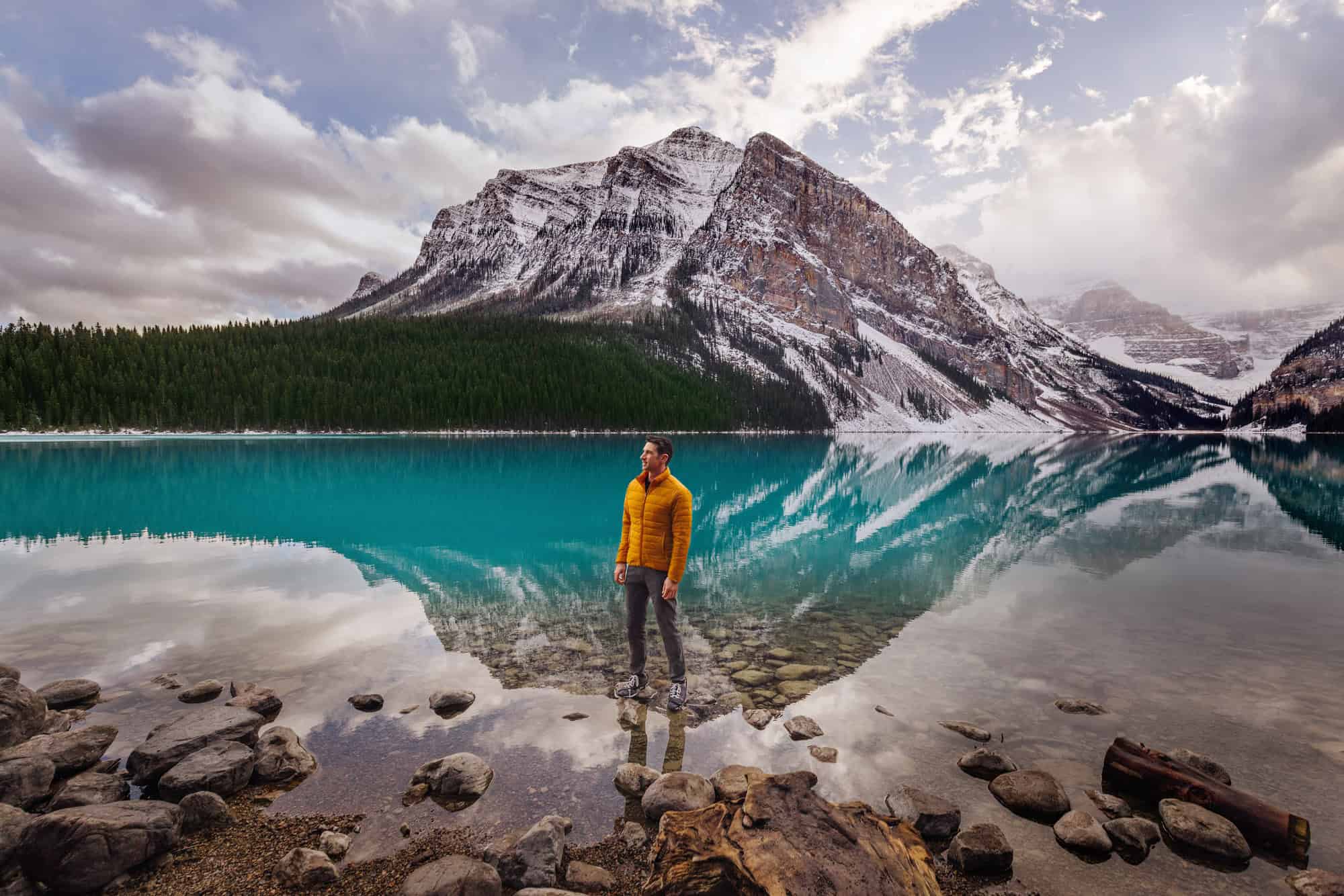
Lake Louise & The Big Beehive Hike: What to Know Before You Go

Lake Louise is one of the most iconic places in Banff National Park. You’ll have your breath taken away by both the views and the chill in the air!
For more than half the year, this valley is locked in snow and ice. Winters are long and harsh, while summers are short and cool.
Key Info on Lake Louise:
- Elevation: 5,676 feet (1,731 m) above sea level
- Millions visit the turquoise water each year
- It’s home to one of Banff’s favorite hikes: the Big Beehive
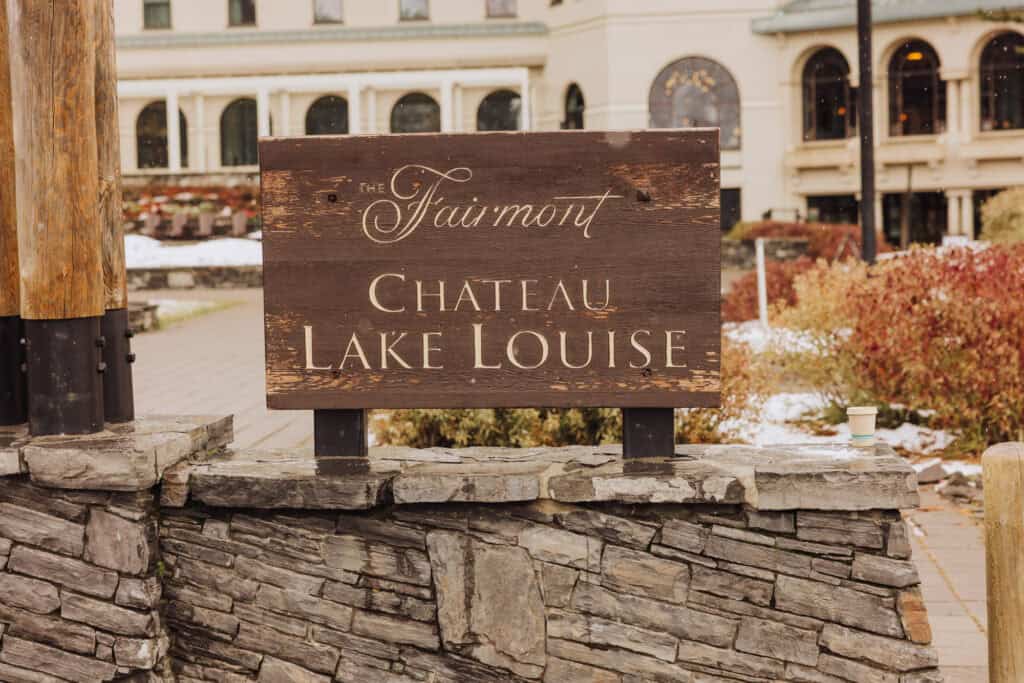
- You’ll park in lots above the iconic Fairmont Chateau Lake Louise Hotel
Stay at the Chateau Lake Louise
The Chateau Lake Louise is an amazing property with an interesting history. Staying here, even for a night, will be a highlight of your trip to Banff!
➡️ Click to See Rates for Chateau Lake Louise
Or, you can plug your dates into this interactive map to check out the rates around the area.
When it comes to renting a car, from either Edmonton or Calgary, I usually use Discover Cars. Their search tool includes big international brands and also locally-owned rental companies.
Crowds, Parking & Shuttle to Lake Louise
Lake Louise is busiest from 10:00am to 5:00pm in the warm summer months: July, August, and early September.
Expect long lines at the lakeshore, and along the Lake Agnes and Big Beehive trails during peak months.
Even in the winter, the shoreline is full of people snapping selfies in front of the turquoise lake.
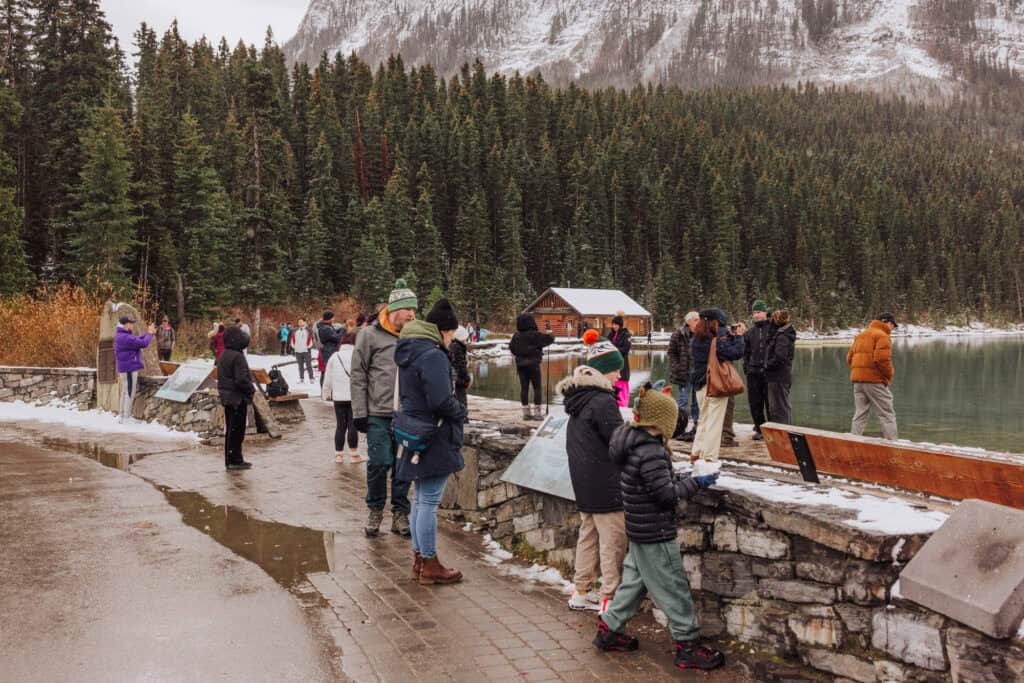
Parking at the lakeshore often fills by sunrise! Plus, the cost per day to park on-site is about $40 CAD.
To get around the crowding and hassle of finding a spot, consider:
- Using the Parks Canada shuttle from Banff or the park-and-ride.
- Sunrise or late-evening visits are the quietest times.
The Banff – Lake Louise Shuttles
Shuttles from Banff depart daily from May to October, with drop-off at the Lake Louise Waterfront.
Reservations are required and open in spring at the Parks Canada reservation site.
Reservations open in the spring for the shuttles, which begin mid-May.
If you don’t succeed at first, 60% of tickets are released at 8:00am MT two days before, so check back then for more availability.
The Parks Canada reservation site is relatively straightforward and easy to use.
The Big Beehive Hike: A Complete Guide
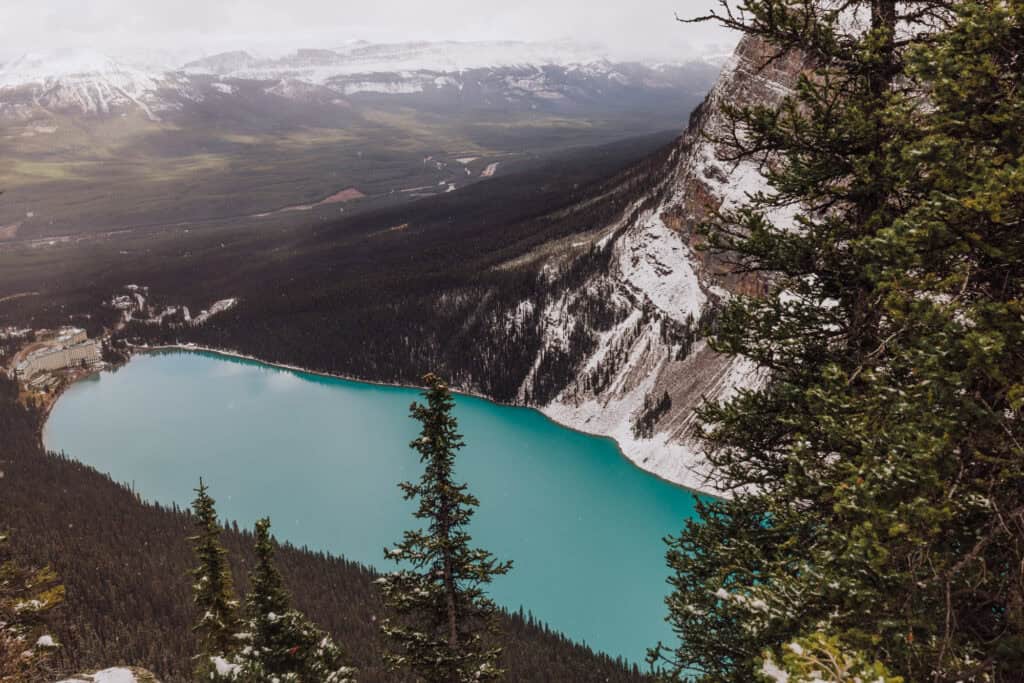
The Big Beehive is one of the best hikes in Banff National Park, offering a panoramic view straight down to Lake Louise and across to the Victoria Glacier.
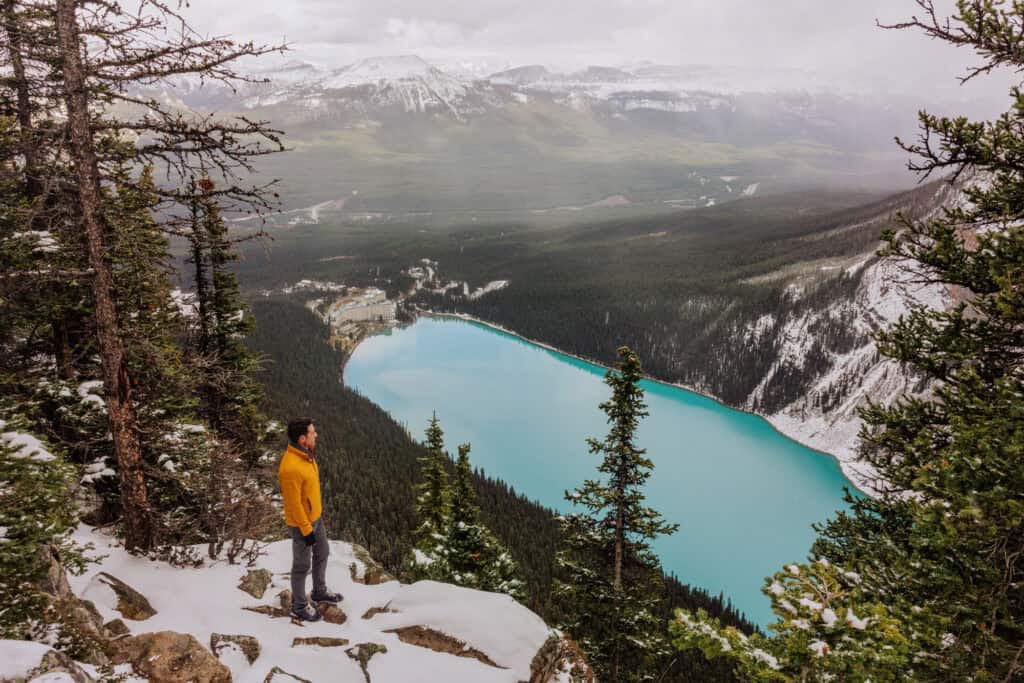
The climb is serious, but the payoff is worth every switchback. That’s what I kept telling myself the last time I trudged up on a snowy October day!
The Basics on the Big Beehive:
- Distance: 6.6 miles (10.5 km) round-trip
- Elevation gain: 1,600 feet
- Difficulty: Challenging (especially the final climb up switchbacks)
- Trailhead: Lake Louise lakeshore
- My step count: 8,000 steps each way
- Time needed: 3 to 5 hours, depending on rest stops and time enjoying the view
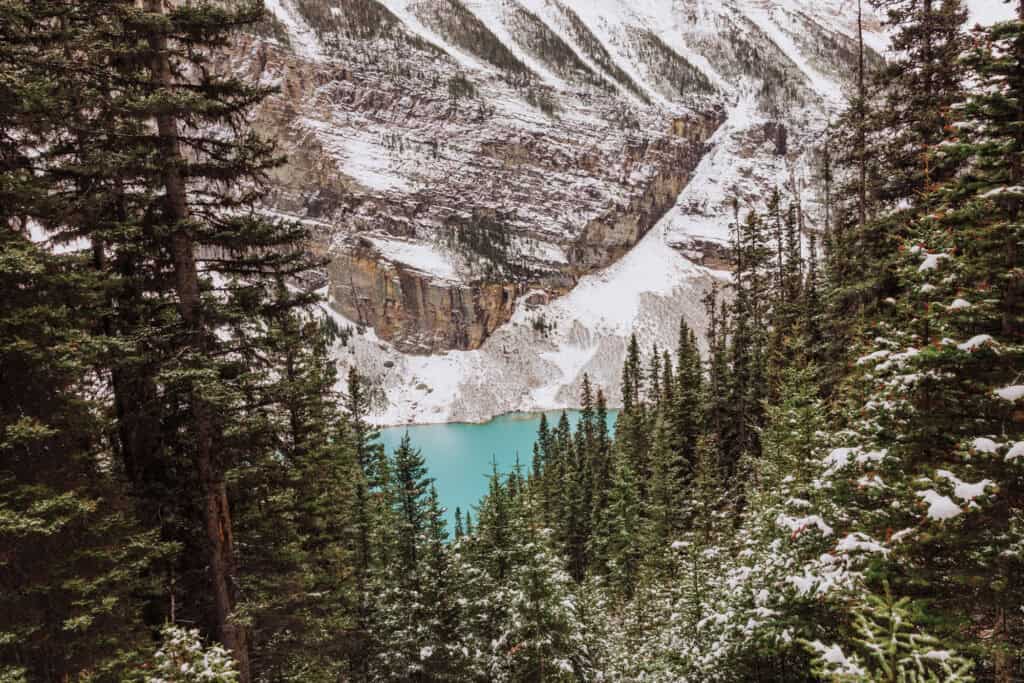
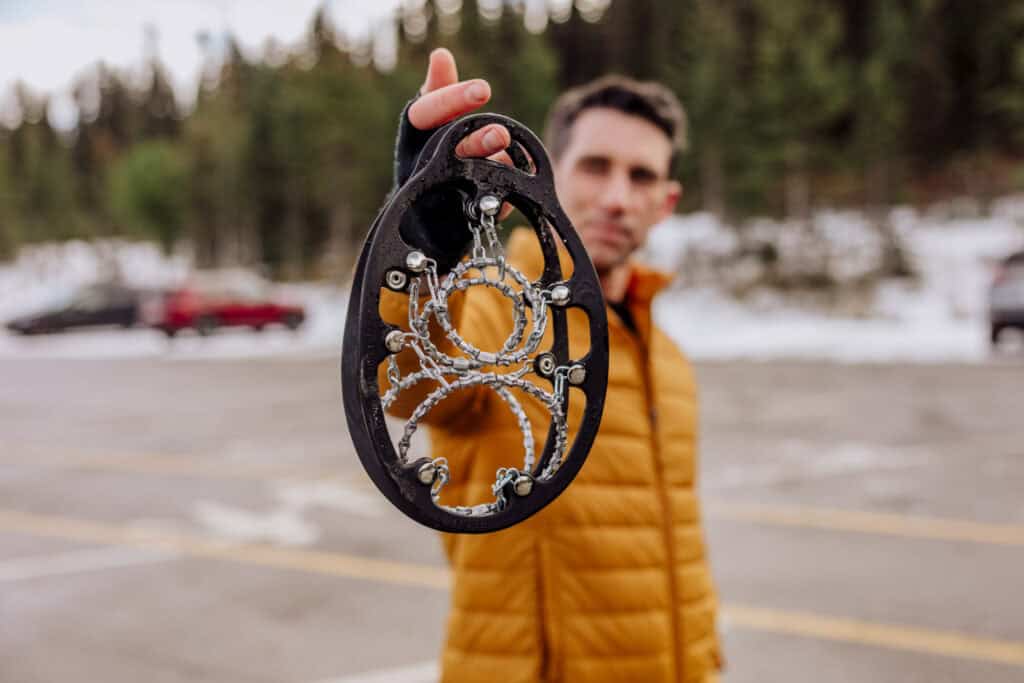
Bring food (you’ll be hungry at the top) and don’t forget water, even if it’s cold out. If it’s remotely snowy, bring crampons (metal spikes for your shoes).
Hiking Trail Overview
You can break the Big Beehive hike up into four parts:
- the initial climb through the forest from the lake…
- the level walk along Lake Agnes…
- the climb to the peak…
- and crossing the saddle to the summit.
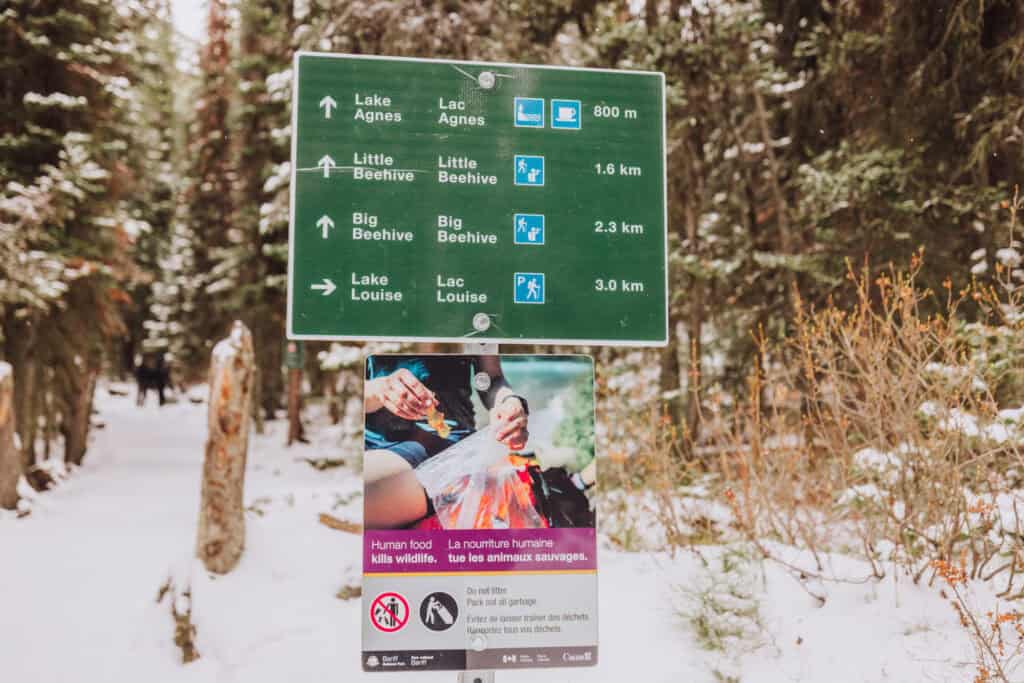
1. Lake Louise to Lake Agnes
The route begins with a steady climb through spruce and fir forest to Mirror Lake.
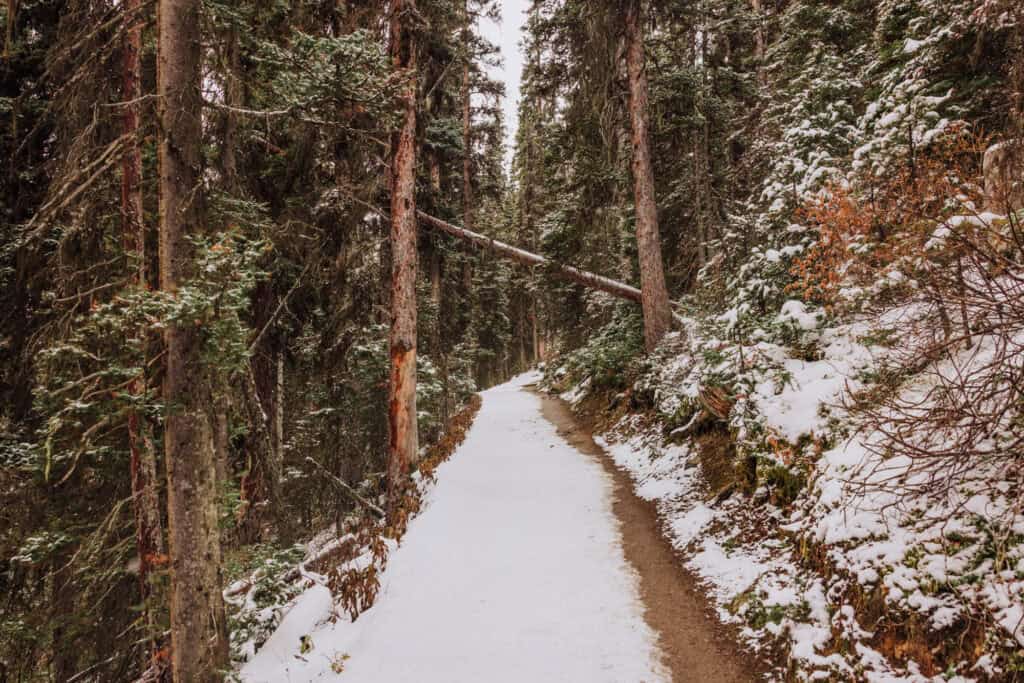
This section is shaded, busy, and steep in spots. I was last there in October, after an early snowfall.
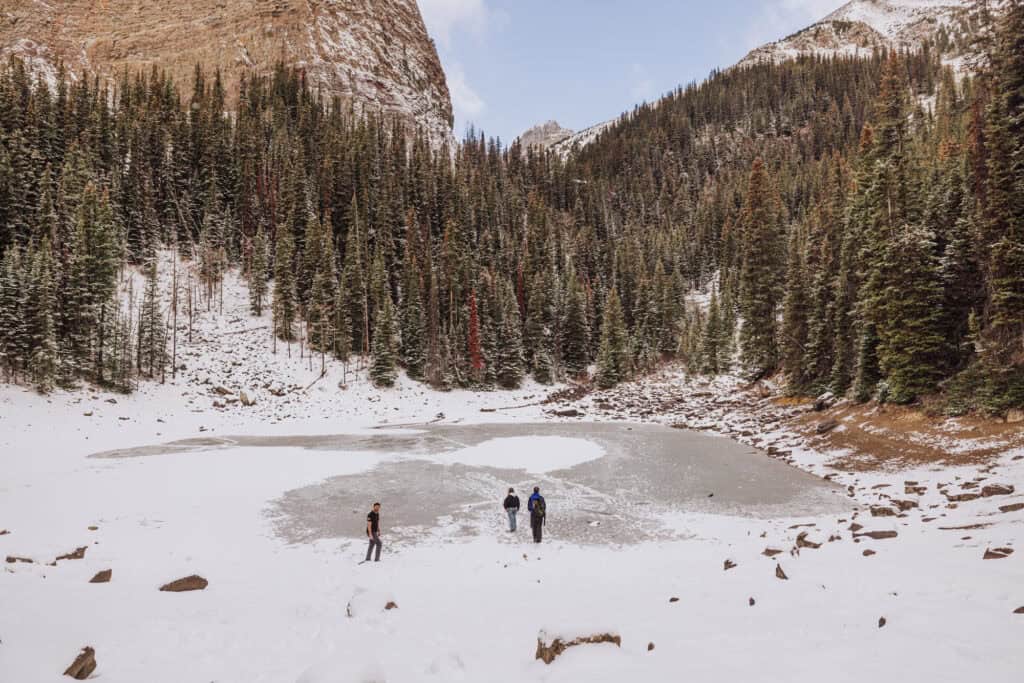
From Mirror Lake, you can go to Lake Agnes (and the Big Beehive) or divert to the Plain of the Six Glaciers Trail. Your options are clearly marked.
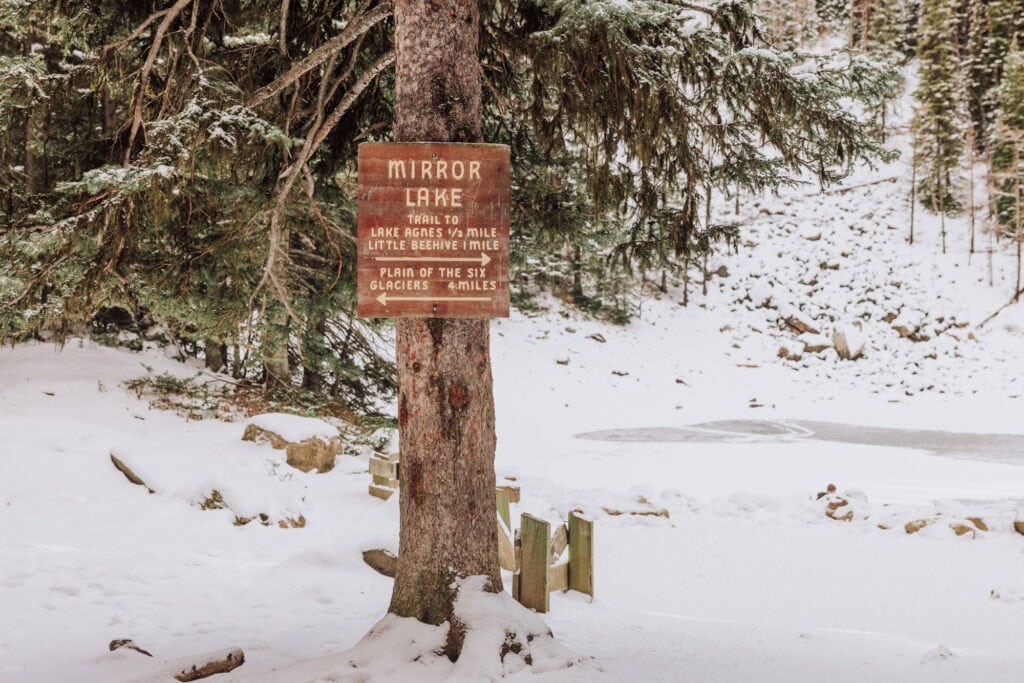
Arriving at Lake Agnes, you’ll climb a set of steps to a welcome sight.
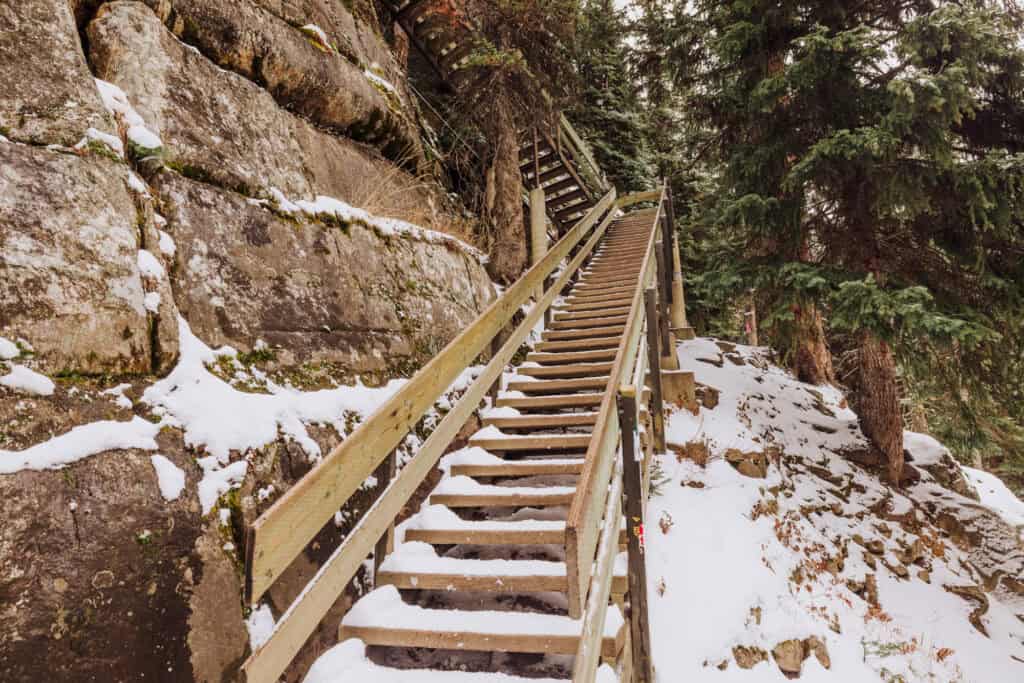
Climbing the steps, you’ll arrive at the historic tea house.
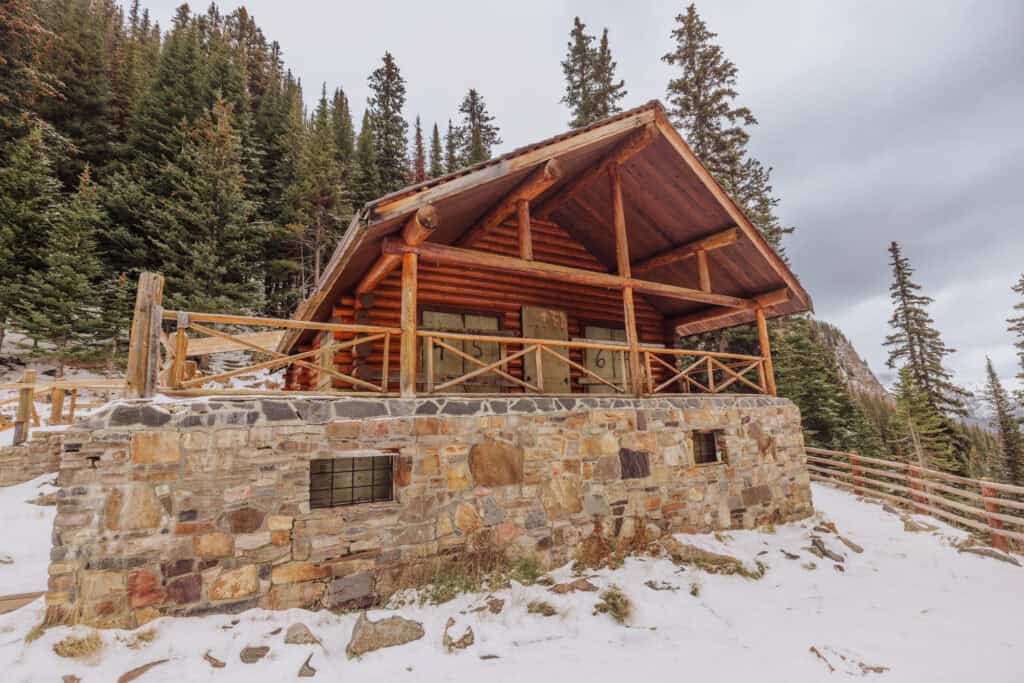
The Lake Agnes Tea House is only open for a short time each year: usually June through the first week of October. Bring cash! We just missed it by a few days.
2. Lake Agnes
From Lake Agnes, you can take the “Little Beehive” trail, or continue on to the “Big Beehive.”
We’re heading to the Big Beehive, walking along the right side of Lake Agnes, where the trail is mostly level, without an incline.
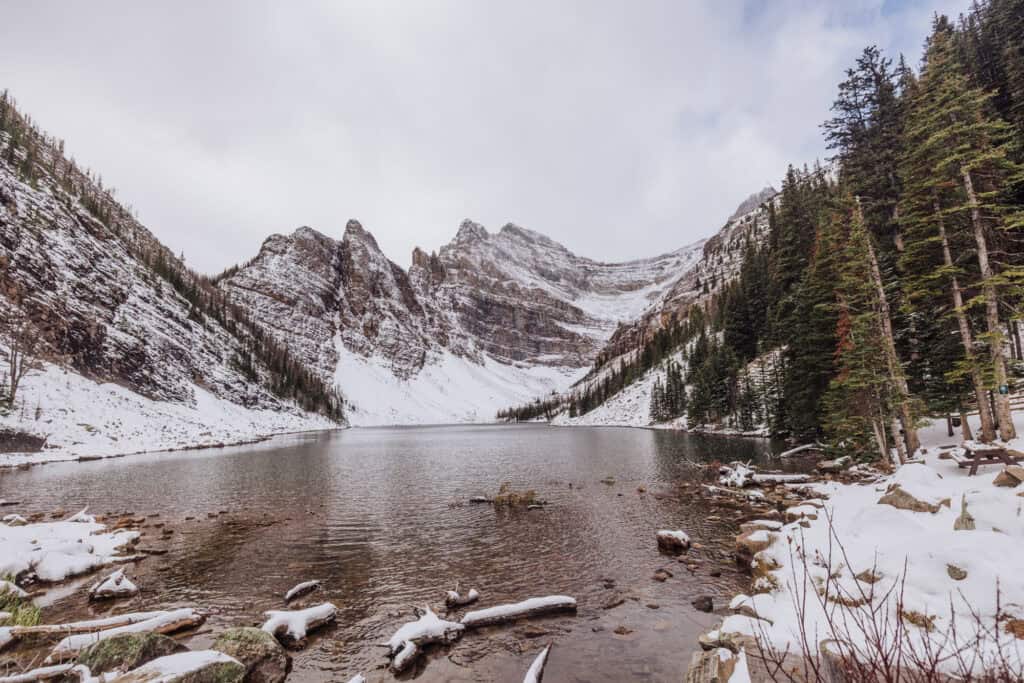
From the lake, you can look up and see the “beehive.” Somehow, we’re heading here:
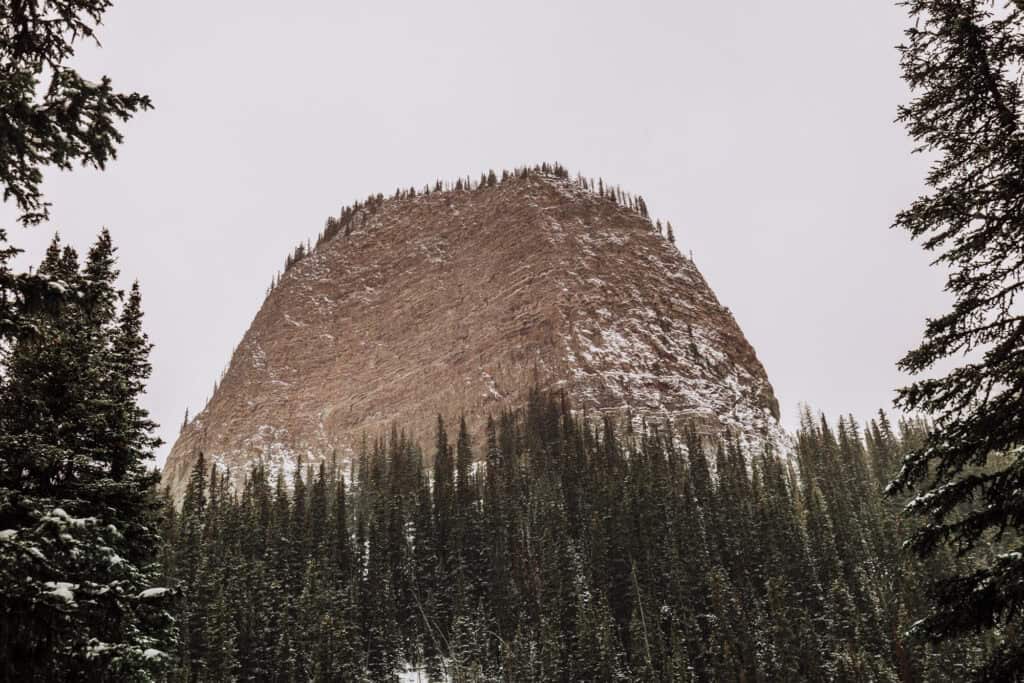
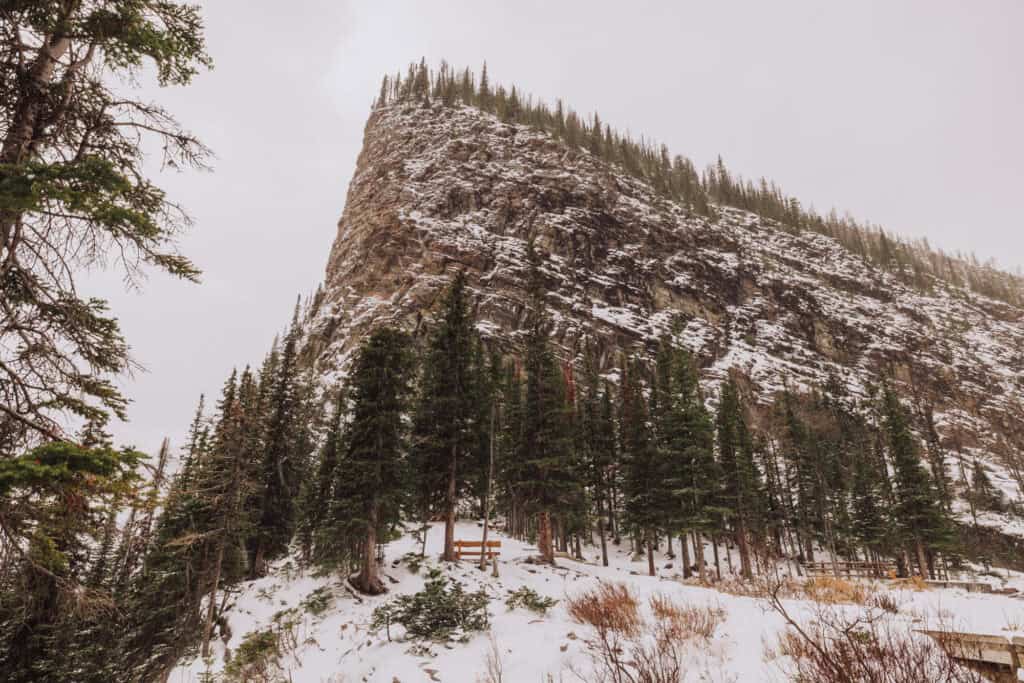
Hiking to the other side of the lake brings this view (below) and also brings the end of the “easy part” of the Big Beehive hike.
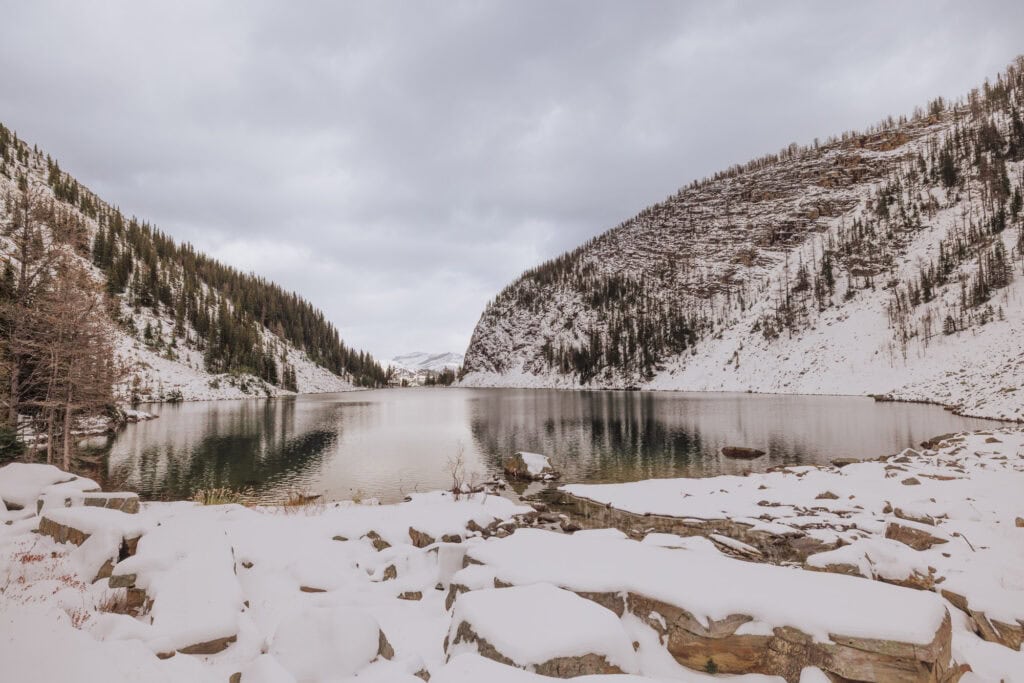
3. The Beehive’s Switchbacks
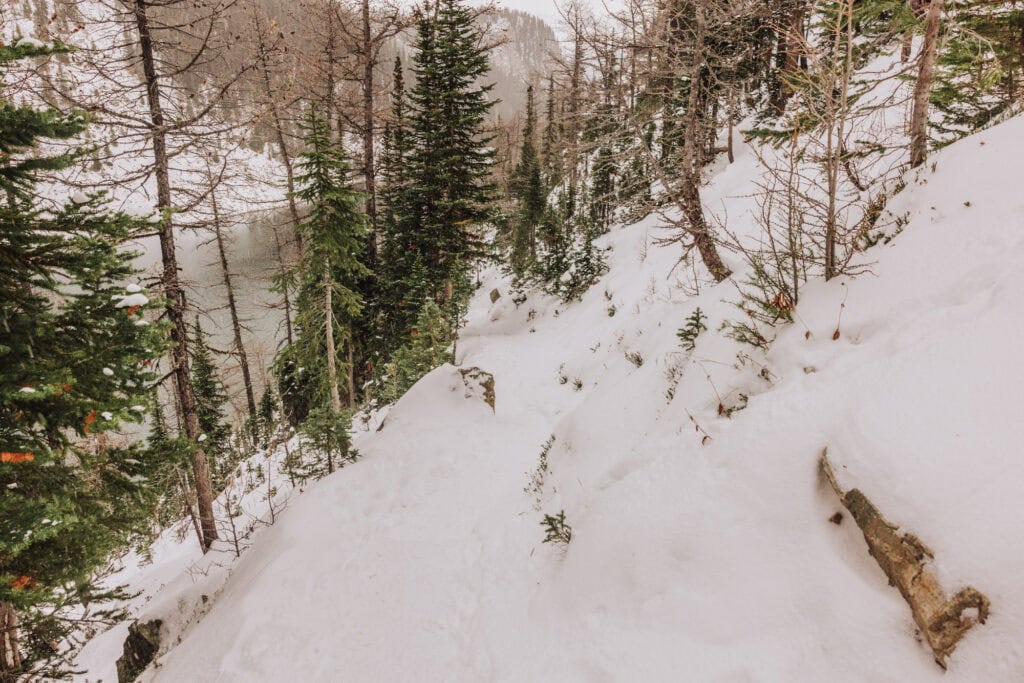
This is the toughest part of the hike: steep, exposed, and often icy into June. I lost count of the switchbacks, but they scale the side of the mountain all the way to the summit. They’re also hard to capture in a photo.
4. Big Beehive Summit
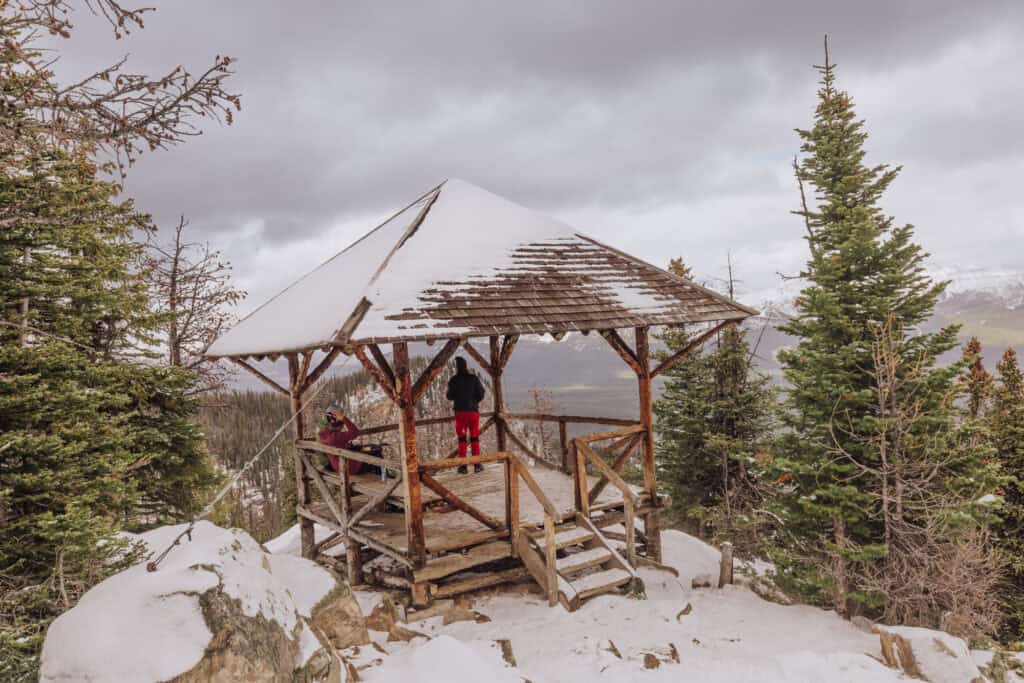
At the top, the terrain opens to a wide, flat summit area with fencing near the cliffs.
There’s also a covered lookout viewpoint with benches.
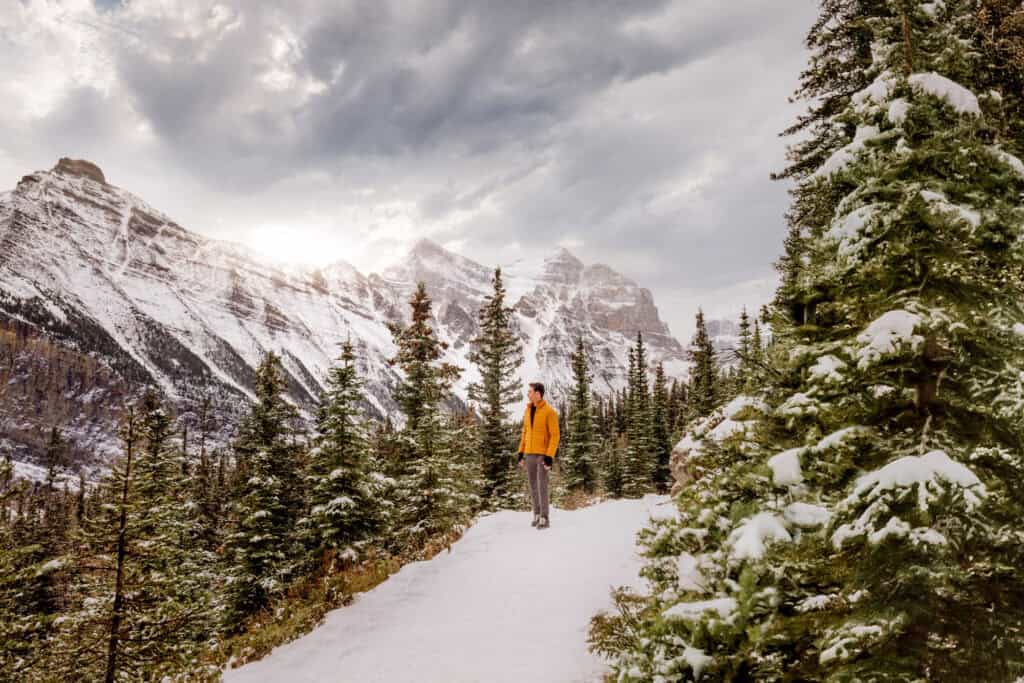
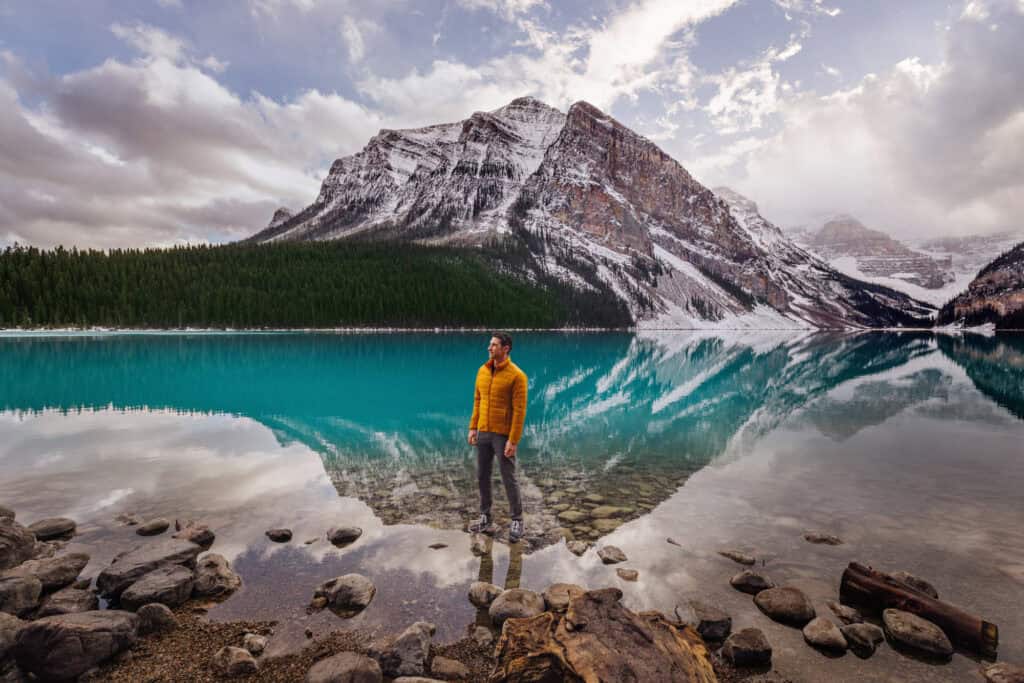
The view down to Lake Louise is one of the iconic images of Banff: the turquoise water framed by the Chateau and backed by Mount Victoria.
Why Lake Louise Is So Blue
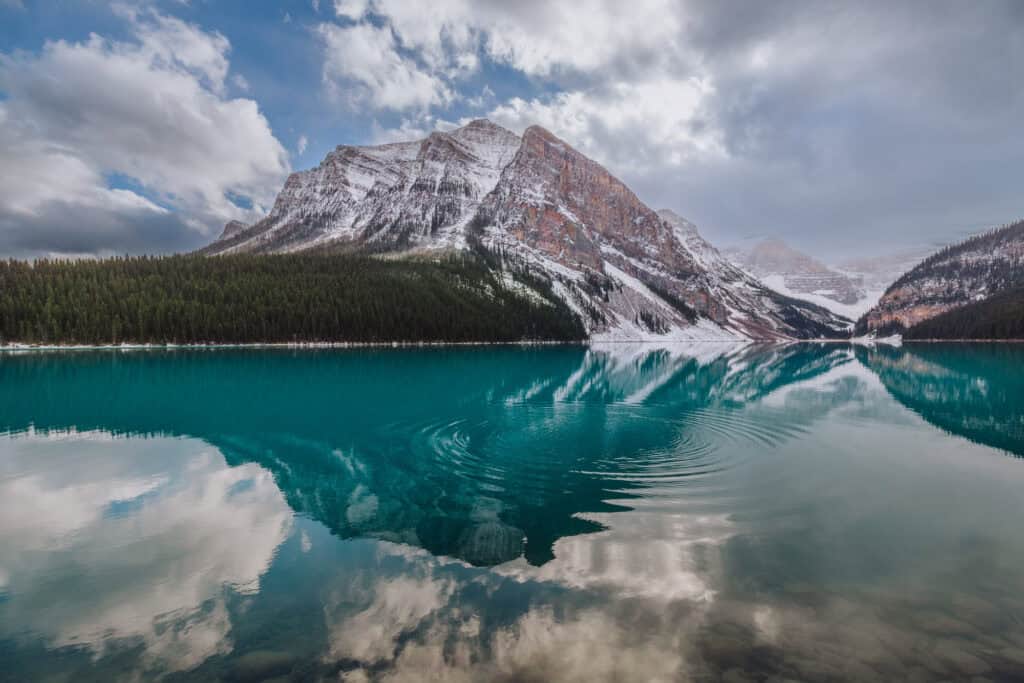
Lake Louise owes its color (and its temperature) to the six glaciers that feed it.
As the glaciers grind across bedrock, they create a fine powder called rock flour. When meltwater carries this powder into the lake, the particles scatter sunlight in a way that reflects back the bright turquoise color everyone comes to photograph.
Even in midsummer, the lake stays below 50°F (10°C). From November through June, the water freezes, and the ice can reach more than three feet thick in mid-winter!
By the way, if you’d like to hike to an actual glacier, check out the Toe of the Athabasca Glacier trail north of Lake Louise.
Wildlife: Grizzlies, Goats & Staying Safe
The Lake Louise area is prime habitat for grizzly bears, mountain goats, wolverines, lynx, and smaller mammals (like squirrels).
This valley supports one of the highest concentrations of female grizzlies in North America, making responsible travel essential:
- Stay on marked trails
- Never approach wildlife for photos
- Carry bear spray from May through October
A Quick History of the Chateau Lake Louise
Lake Louise grew from a single log chalet built by the Canadian Pacific Railway in 1890.
After completing the transcontinental rail line, the CPR began developing destination hotels in the Rockies for wealthy travelers. The original chalet grew, burned, and was rebuilt several times, eventually evolving into today’s Chateau Lake Louise.
The area officially became part of Canada’s first national park in 1902, cementing its role as a protected landscape.
➡️ Click Here to Book the Chateau
Recap on Hiking Big Beehive
- Start early to avoid crowds.
- Consider taking the shuttle from Banff.
- Bring water: there are no refill points after Lake Agnes.
- Bring food: you’ll be hungry!
- In October, November, April, and May, bring spikes (crampons).
- Trekking poles can help on the steep descent.
- Carry bear spray.
- Check trail reports for any closures or wildlife warnings.
Other Hikes to Consider
Big Beehive might be the most strenuous, but a few other hikes are enjoyable and lead to beautiful viewpoints in Banff and Jasper. Peyto Lake is another option, if you’re looking for the iconic turquoise water.
- Athabasca Falls: This is closer to Jasper, and an easy, accessible option for families.
- Pyramid Lake: The lake, right outside of Jasper, has a trail system for hiking and biking.
- Mistaya Canyon: This is one of the prettiest viewpoints on the Icefields Parkway.
- Sunwapta Falls: This is easy and accessible.
