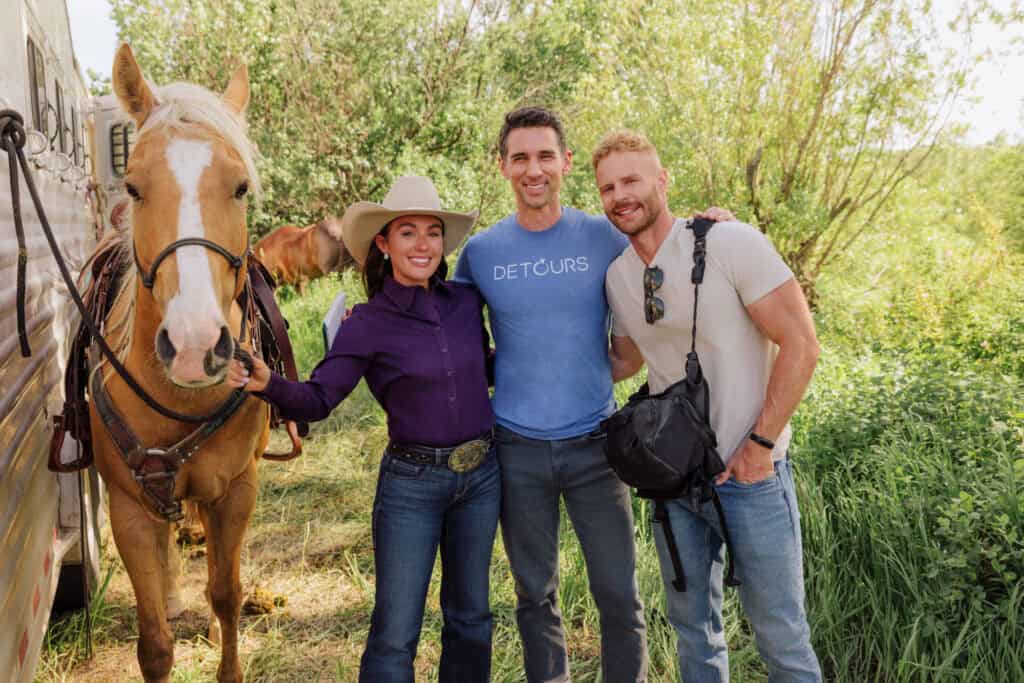
Visit Belt, Montana: the History, Craft Brews, and Pro Rodeo
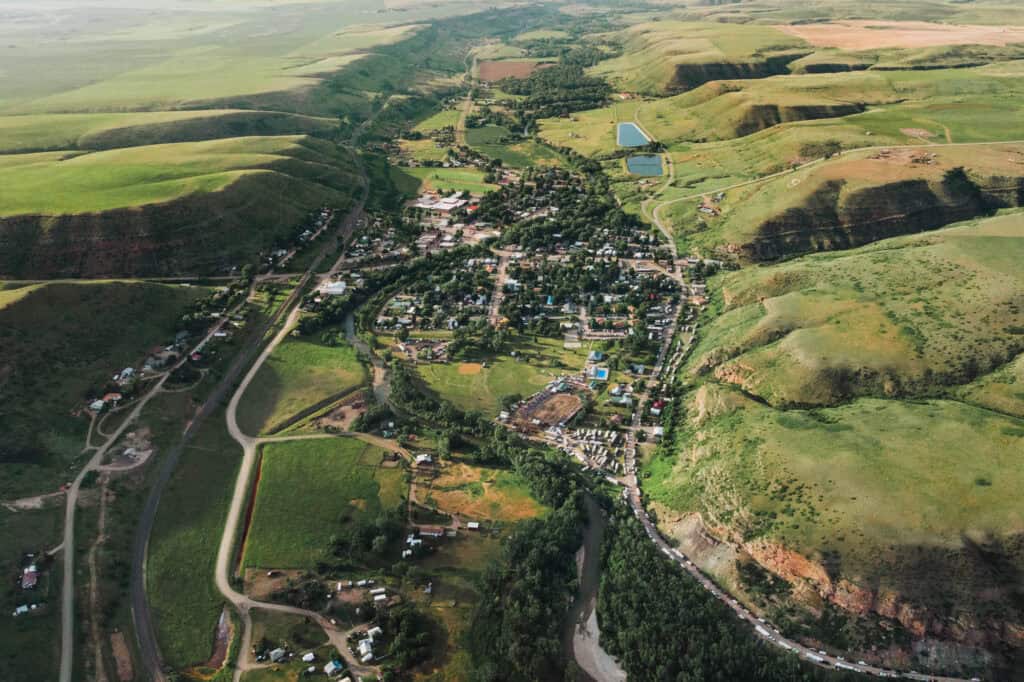
I’ve been visiting the small town of Belt, Montana, for the last 20+ years. It reminds me of a lot of small, tight-knit towns, with pride in the local schools, its own library, and a town swimming pool.
Belt has a few extras that draw people back, too, like a revived historic theater, a well-known brewery, and an annual rodeo that draws a big crowd each summer.
Key info on Belt:
- 20 miles east of Great Falls, MT, in Cascade County
- Population ~550 (it peaked at over 1,000 in 1910)
- Once known as “Black Diamond City,” “Little Pittsburgh,” and “Coal Banks” for its coal-mining past
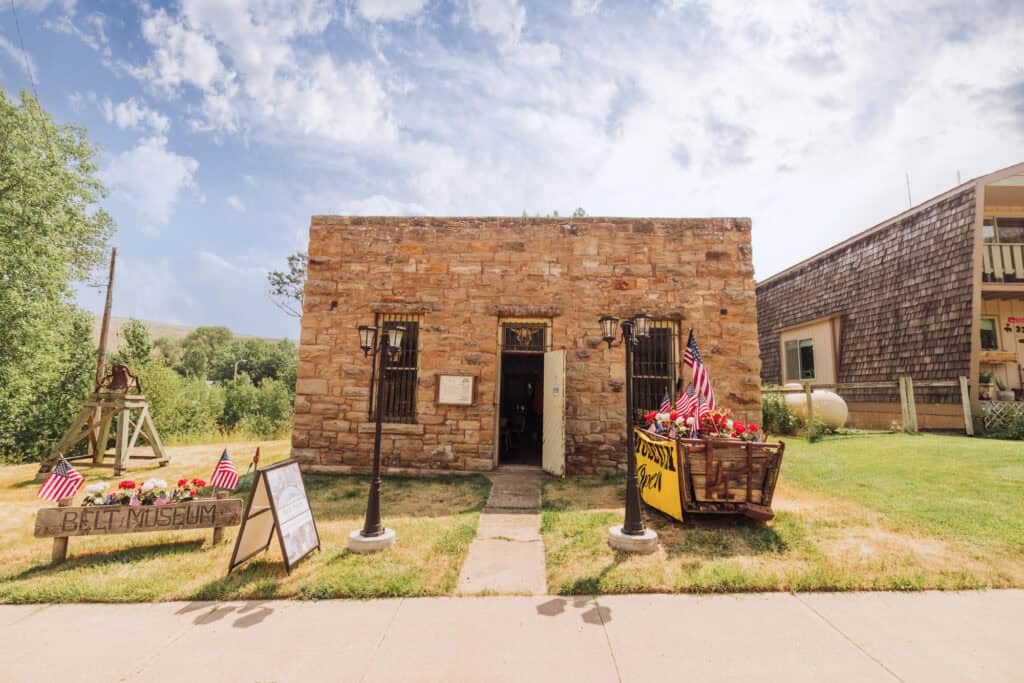
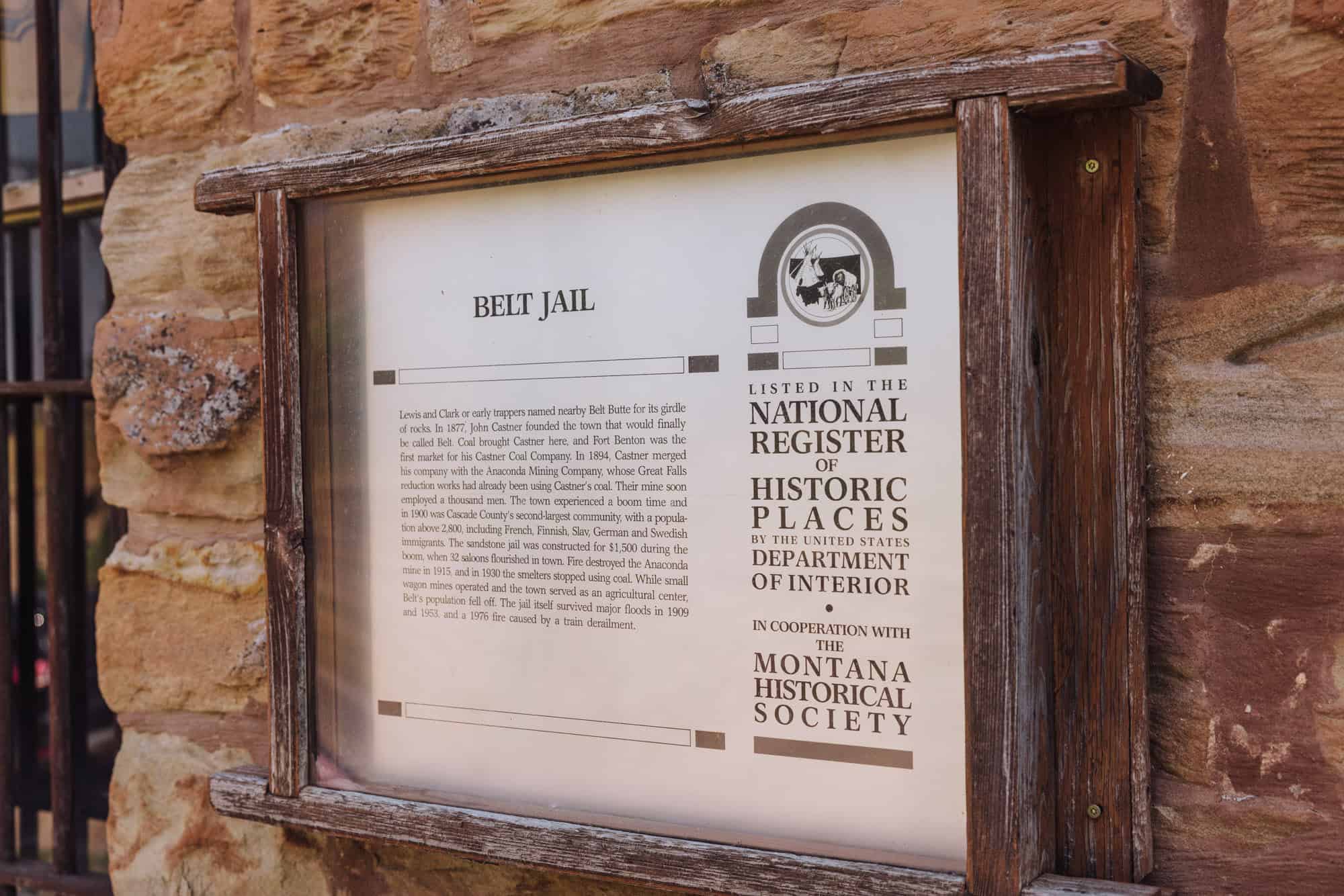
- The old 1890s jail is now a museum
- Home to an annual PRCA rodeo in June
- The Highwood and Little Belt Mountains are nearby
Watch: Our Video on Belt, MT
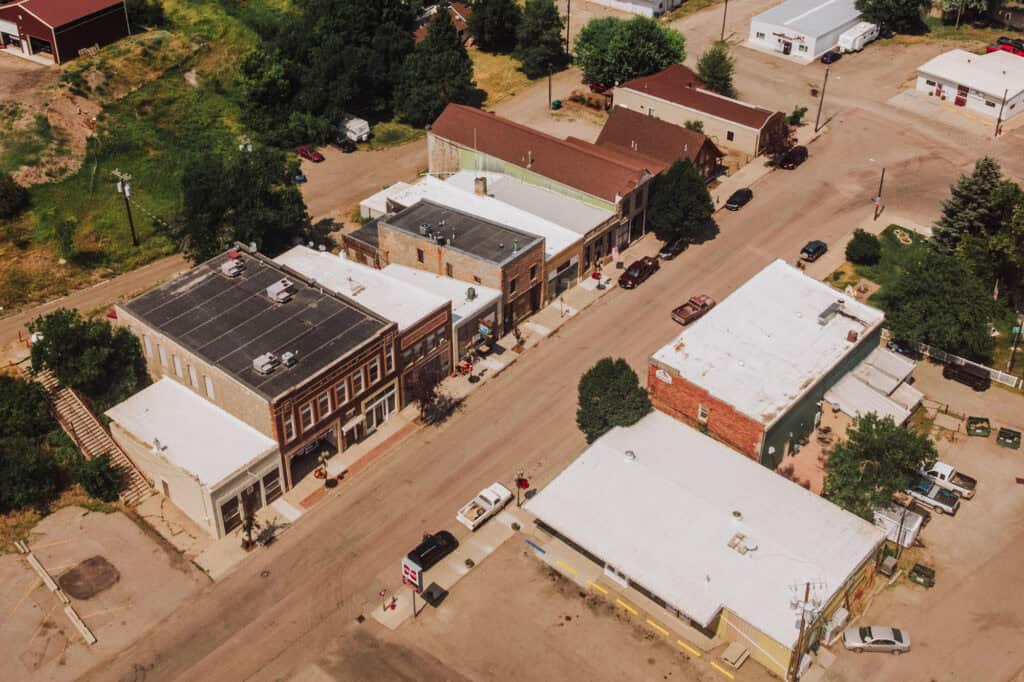
Belt’s Main Street: Castner Street
Castner Street is Belt’s historic main drag and the main street for businesses in town.
These days, it mixes small-town services with a growing craft-beer draw. The Belt Commercial Historic District, which runs along Castner Street, dates to 1896 and is listed on the National Register of Historic Places.
I’ll get more into that down below, but wanted to point out some of the highlights up top:
- Harvest Moon Brewing Company: Craft brewery with a small tasting room, known for Beltian White, Charlie Russell Red, and Pig’s Ass Porter.
- Harvest Moon Saloon: The saloon and restaurant down the street, part of the brewery.
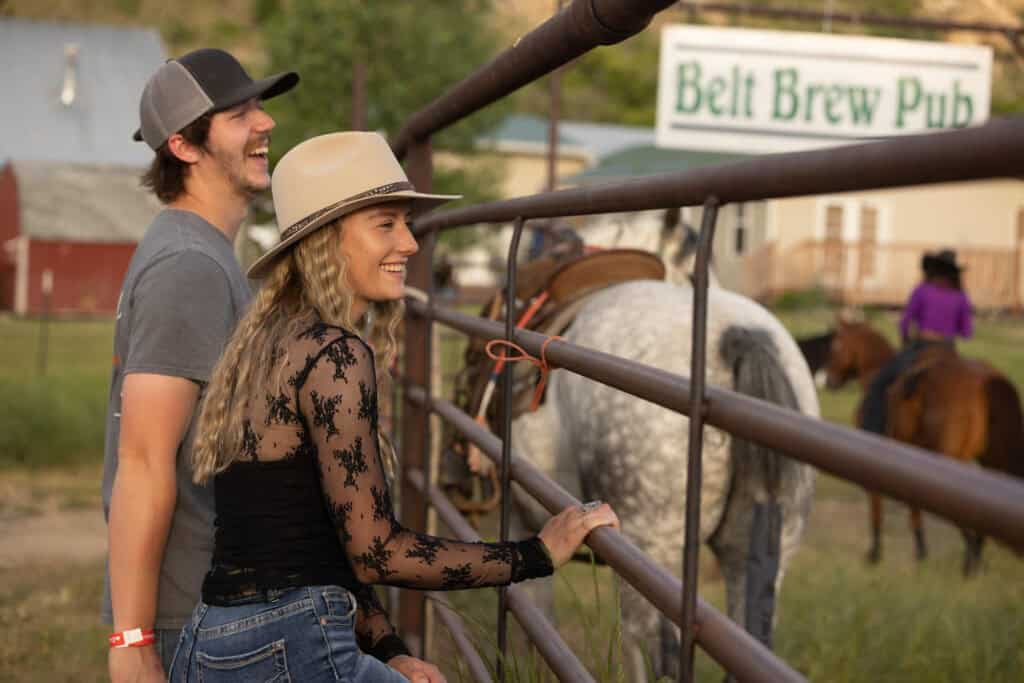
- Belt Creek Brew Pub: Housed in a renovated historic building (once a Chevy dealership), with an outdoor patio overlooking Belt Creek.
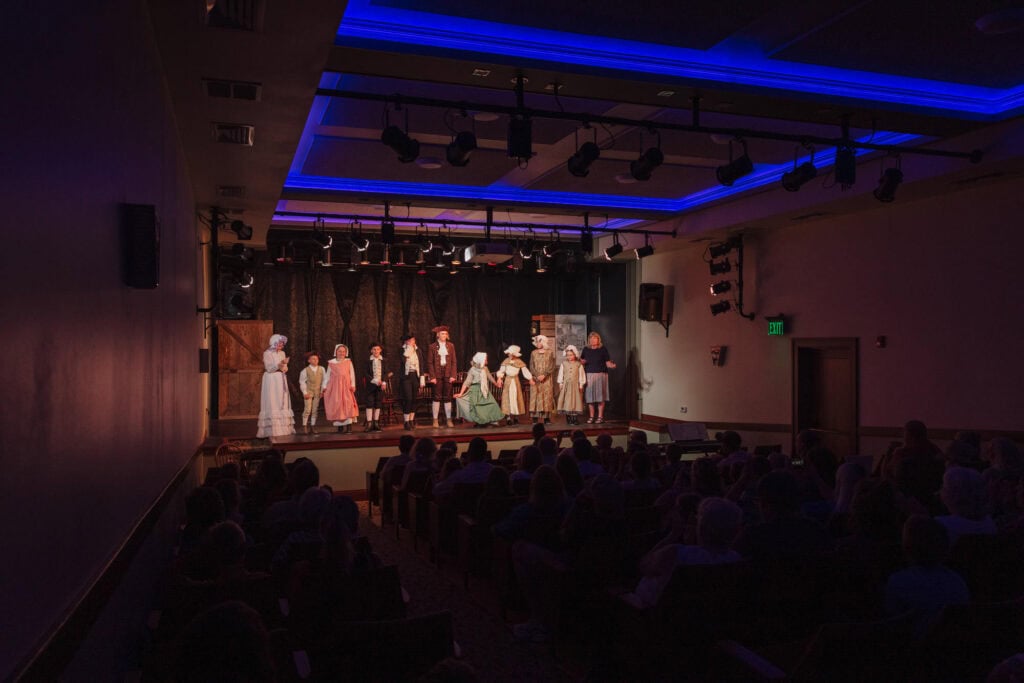
- Belt Theater (Belt Performing Arts Center): Historic theater hosting youth and professional shows, part of the renovated downtown block.
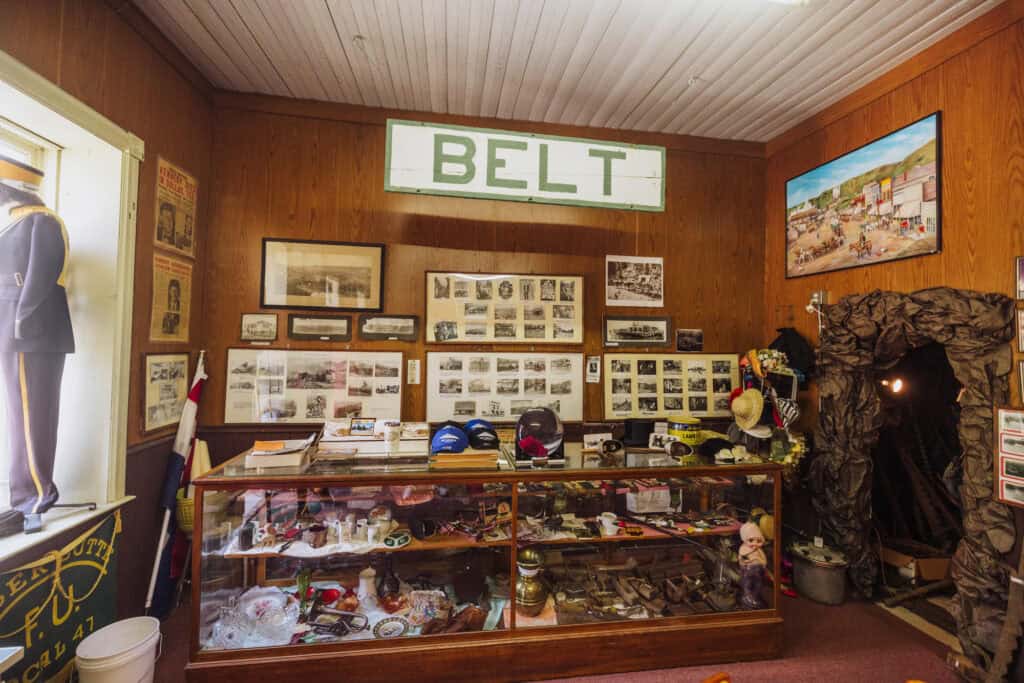
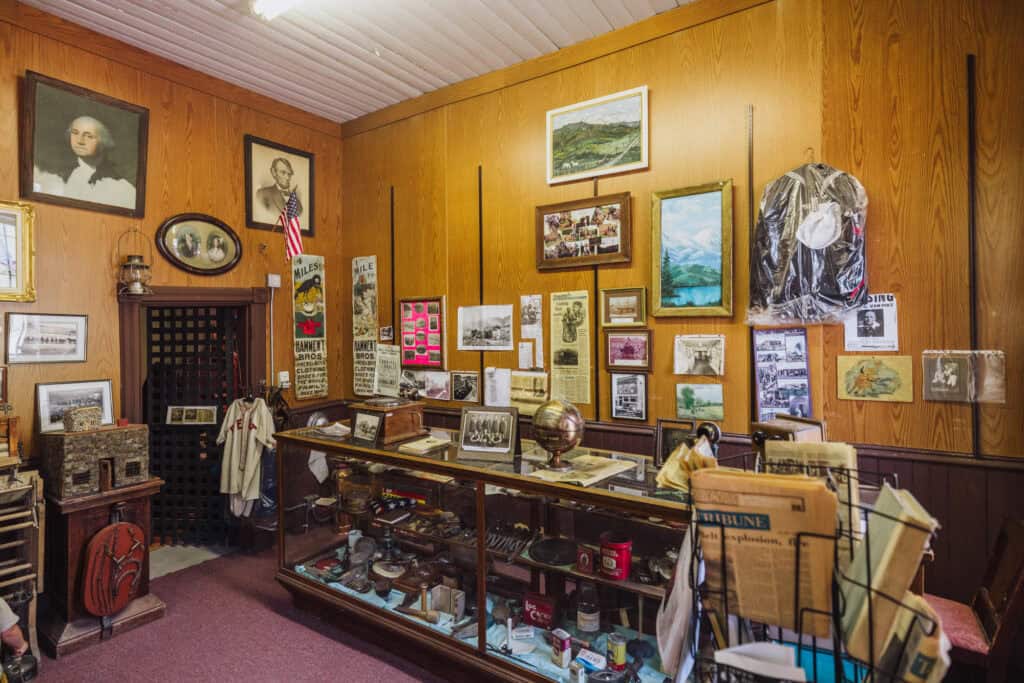
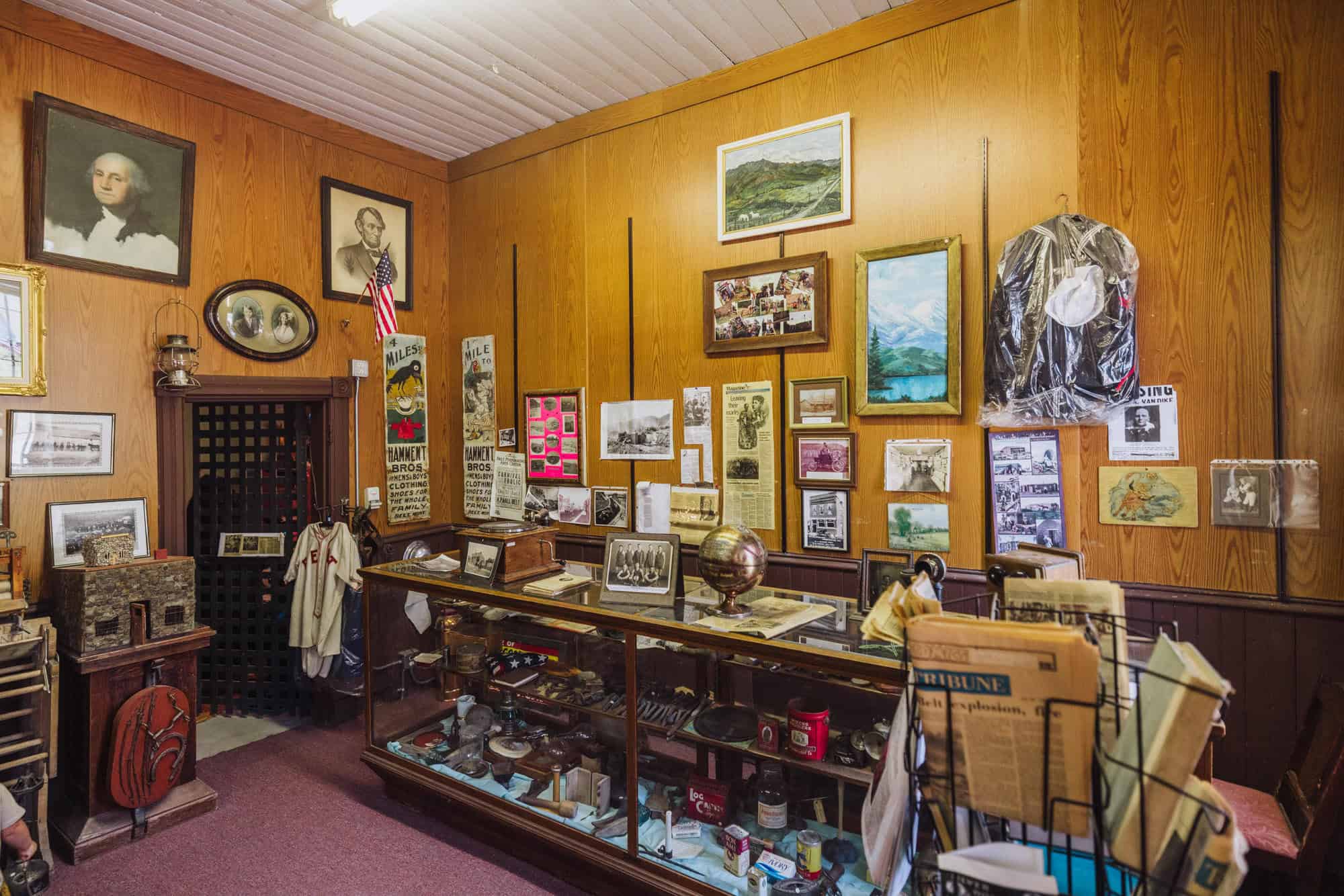
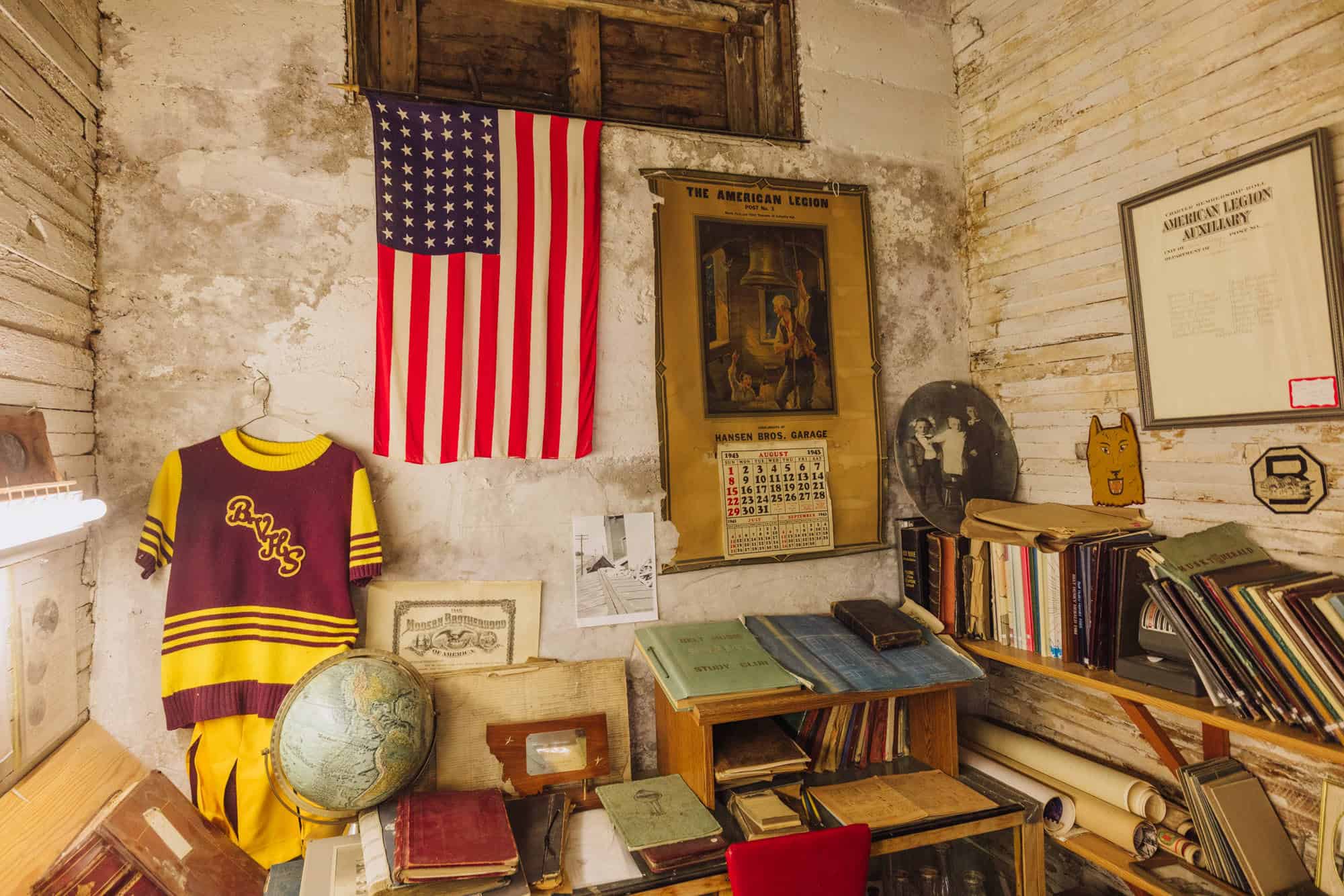
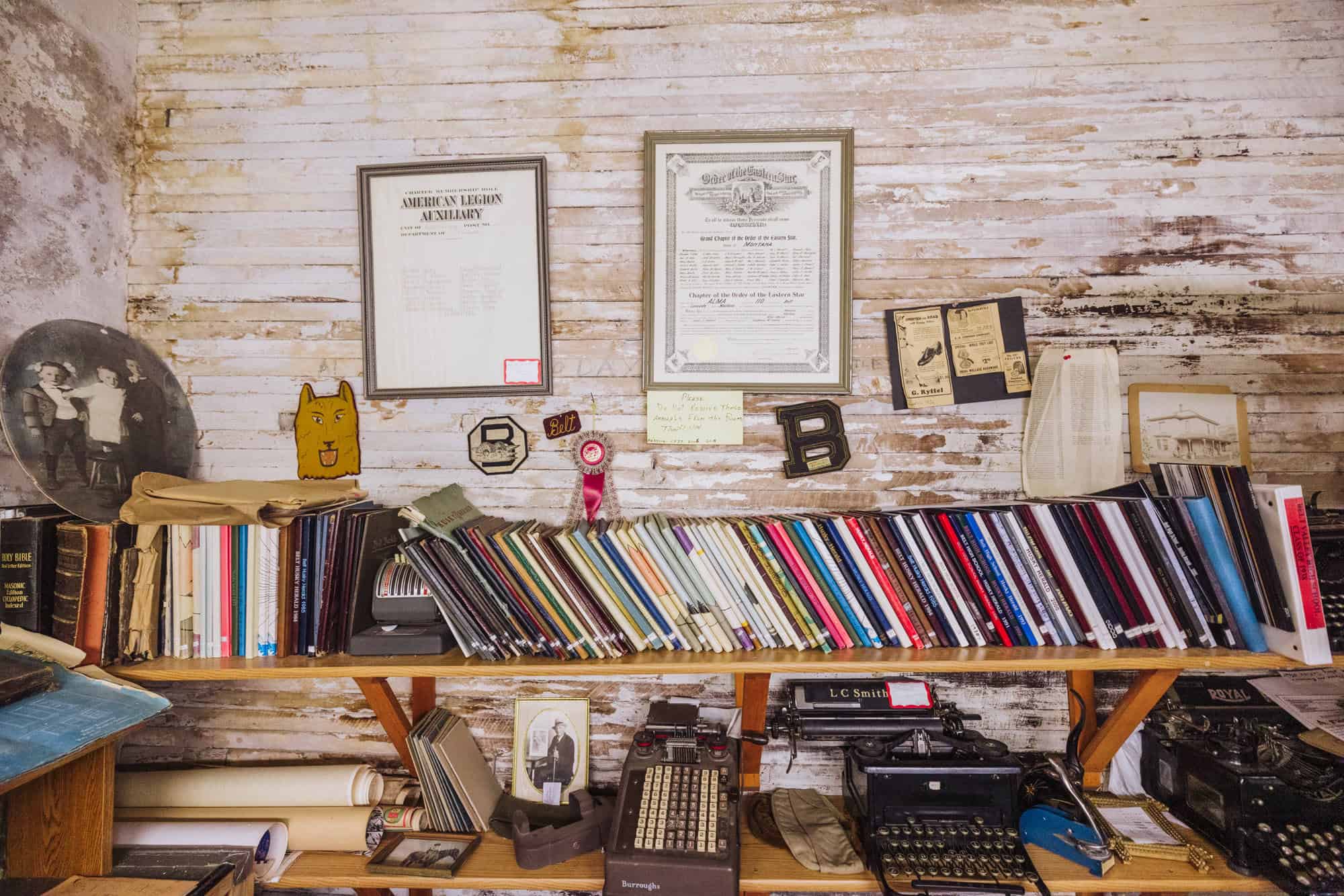
- Belt Museum: Housed in the old 1890s town jail, with exhibits on the coal-mining era, a jail cell, and local art.
- Belt Mercantile & Art Gallery: A gift shop and art gallery.
The PRCA Belt Rodeo
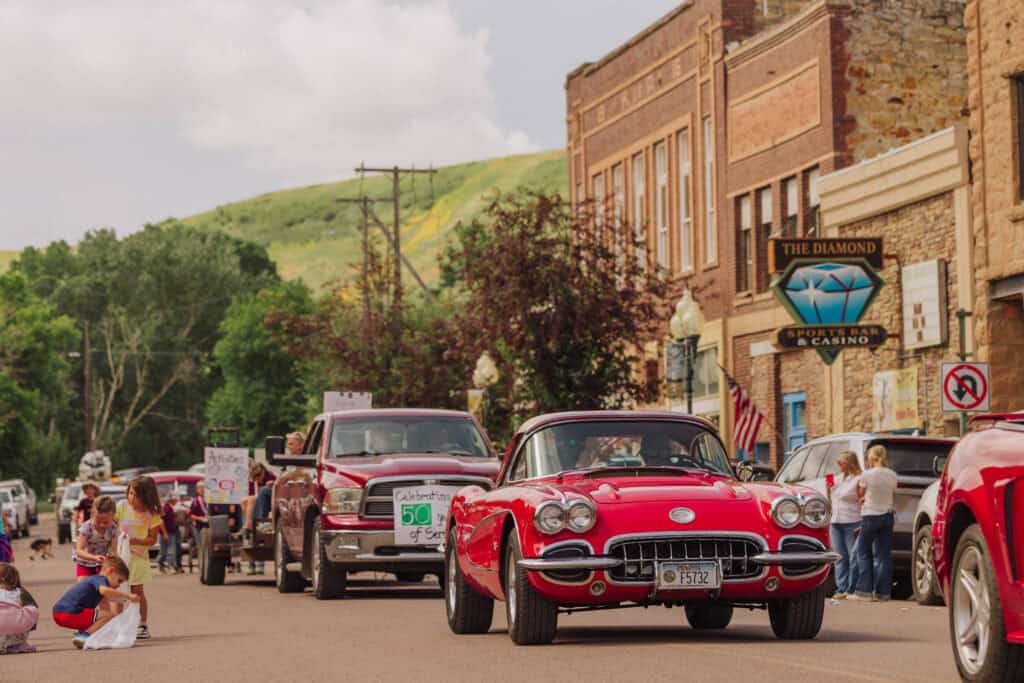
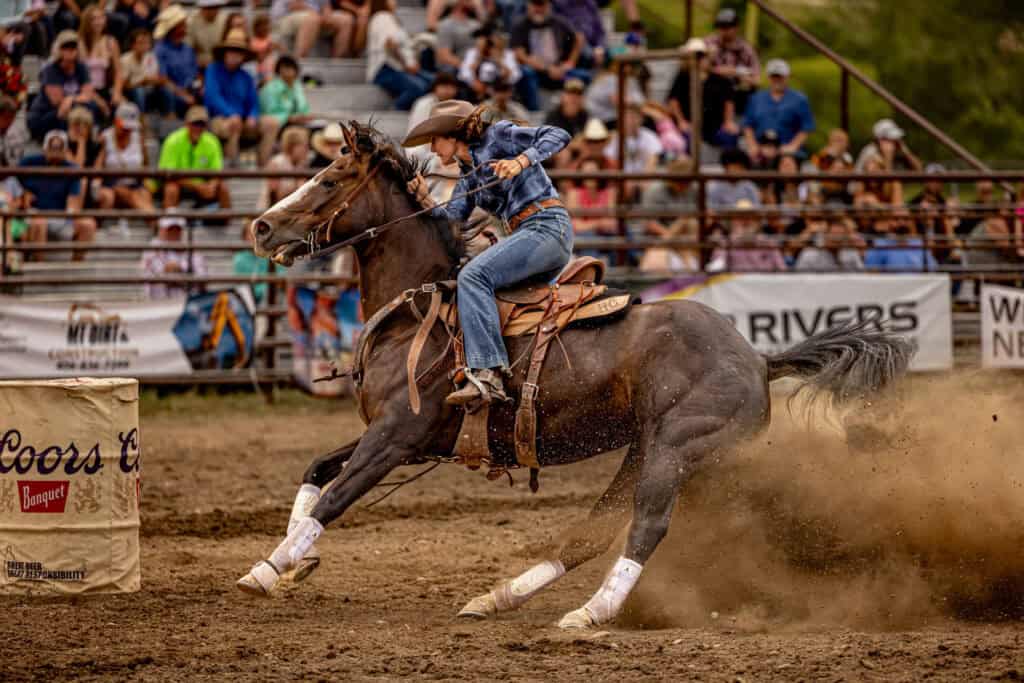
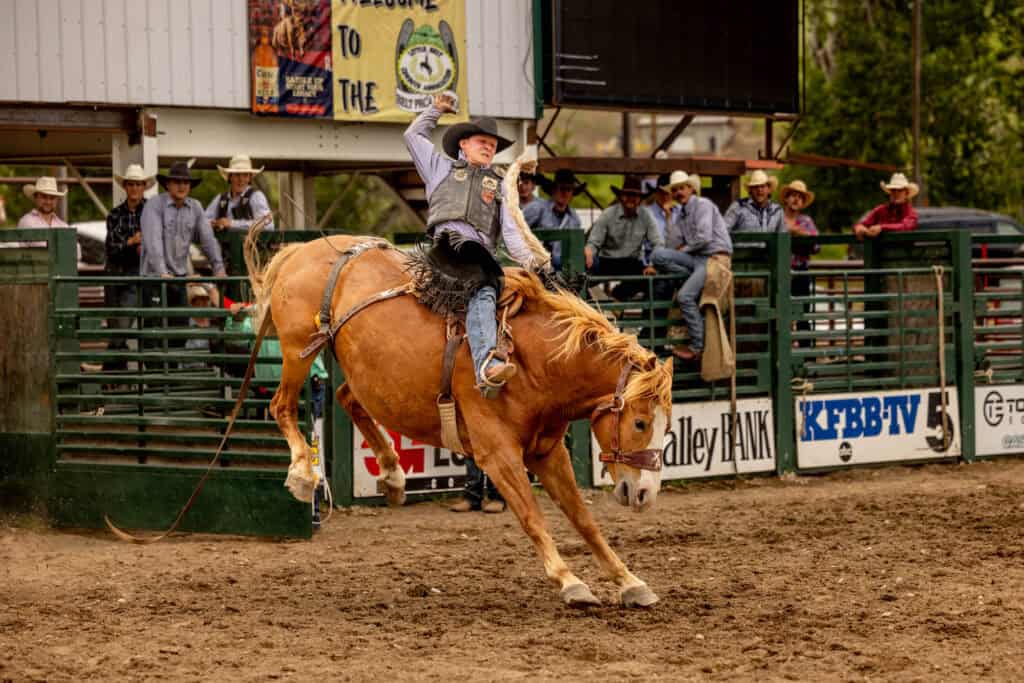
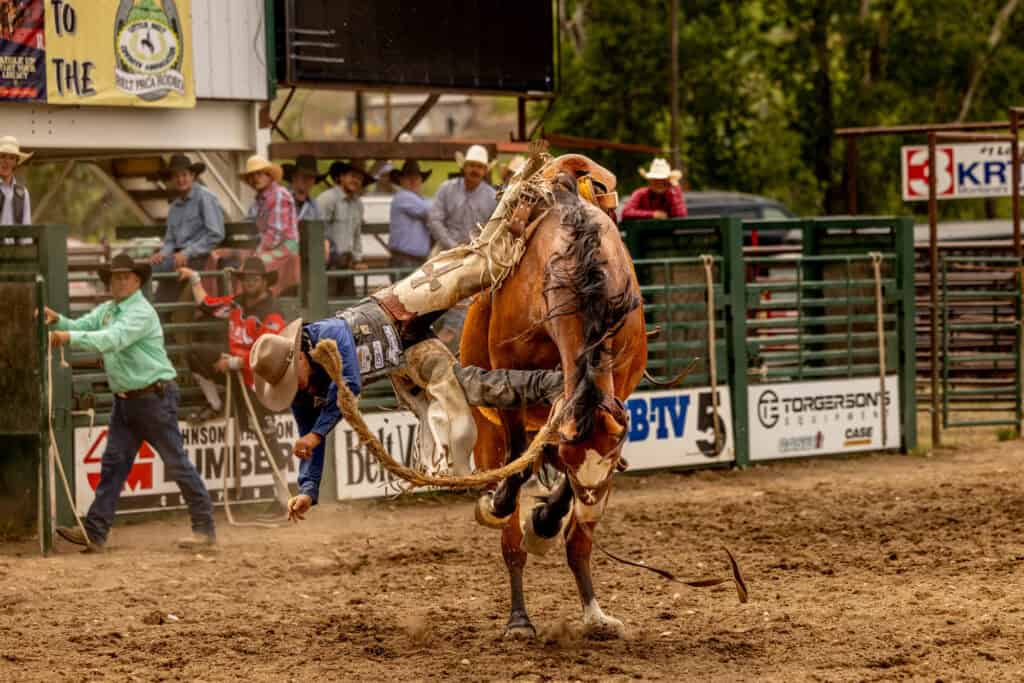
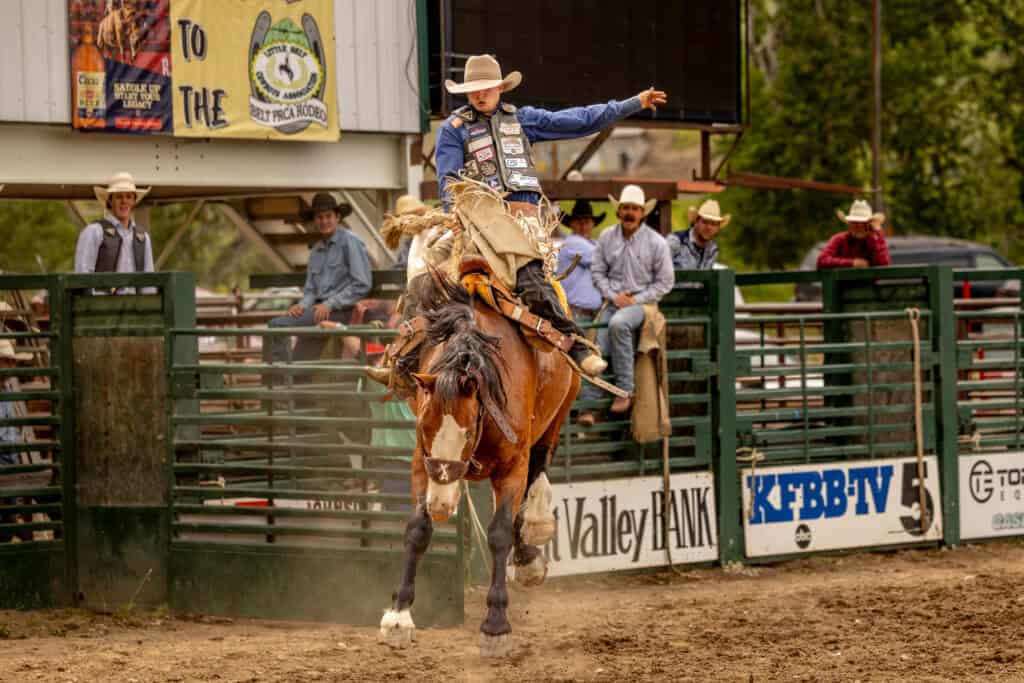
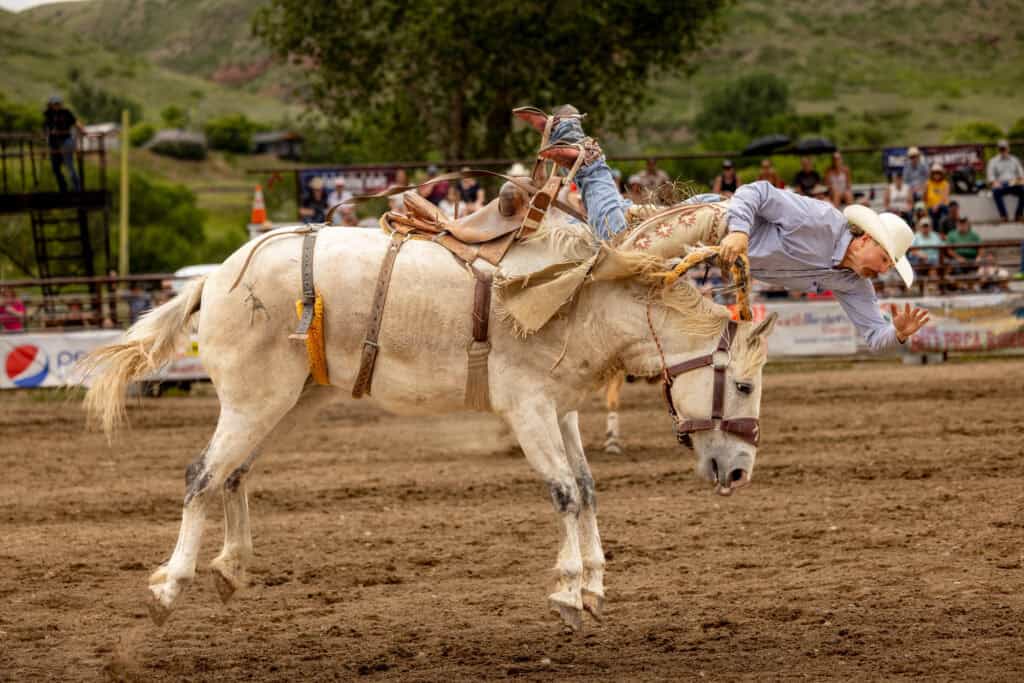
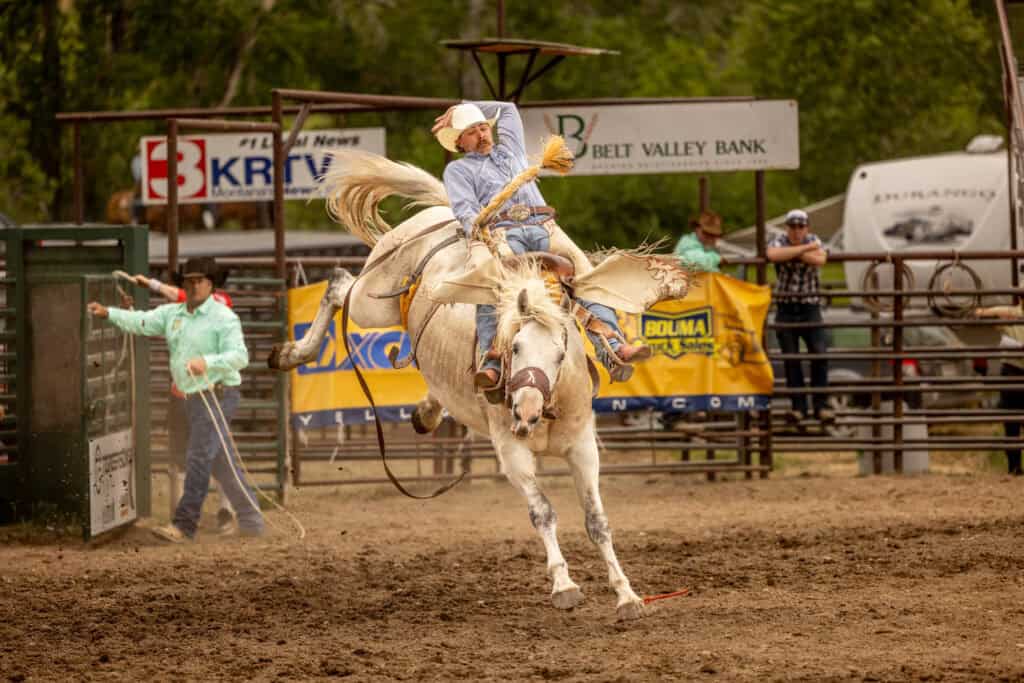
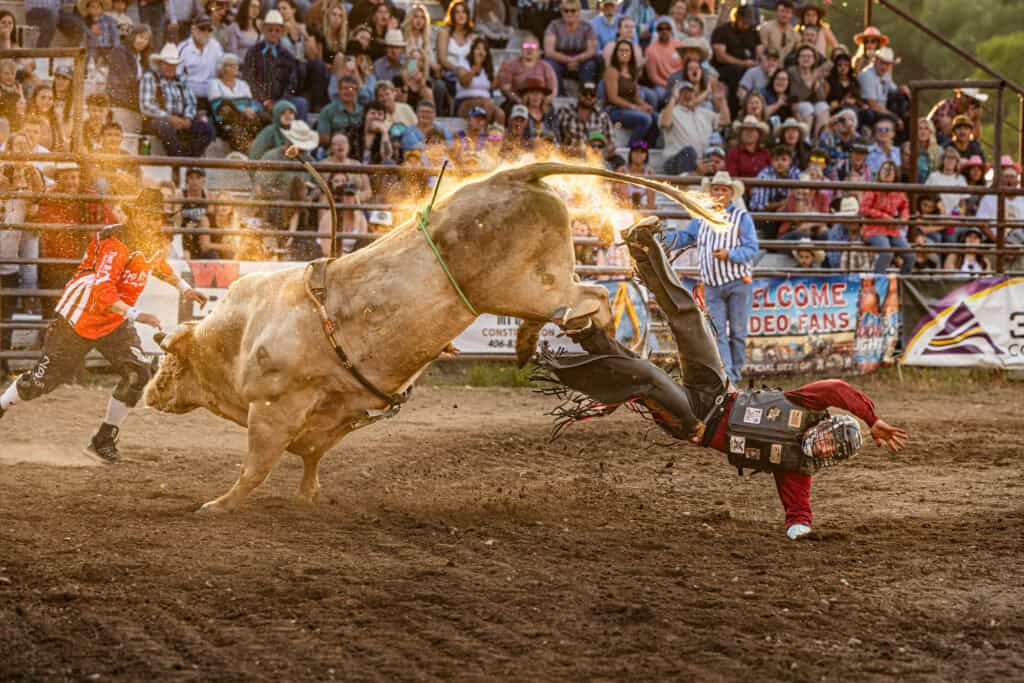
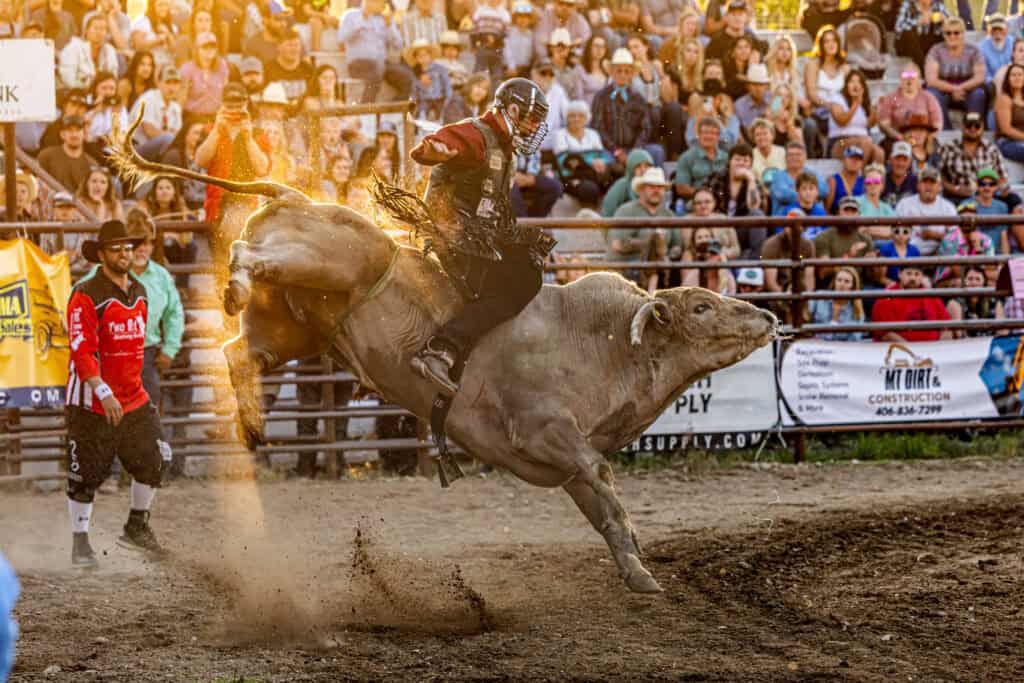
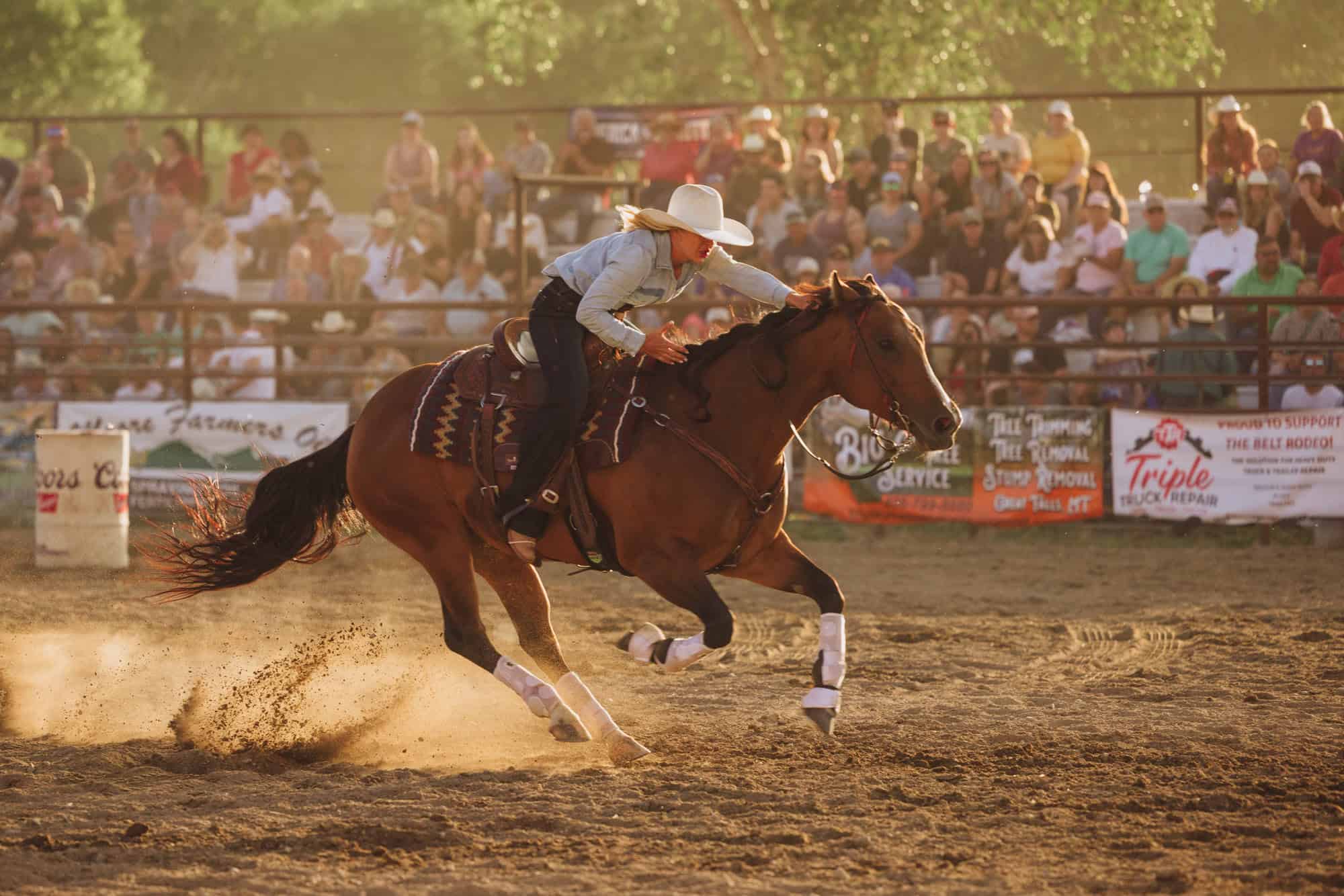
Every Father’s Day weekend, Belt’s population quintuples as rodeo fans pour in from across Montana and beyond for the PRCA Belt Rodeo.
They line the streets for a parade, pack the local bars at night, and fill the rodeo grounds that sit empty much of the year.
A tradition born at a bar
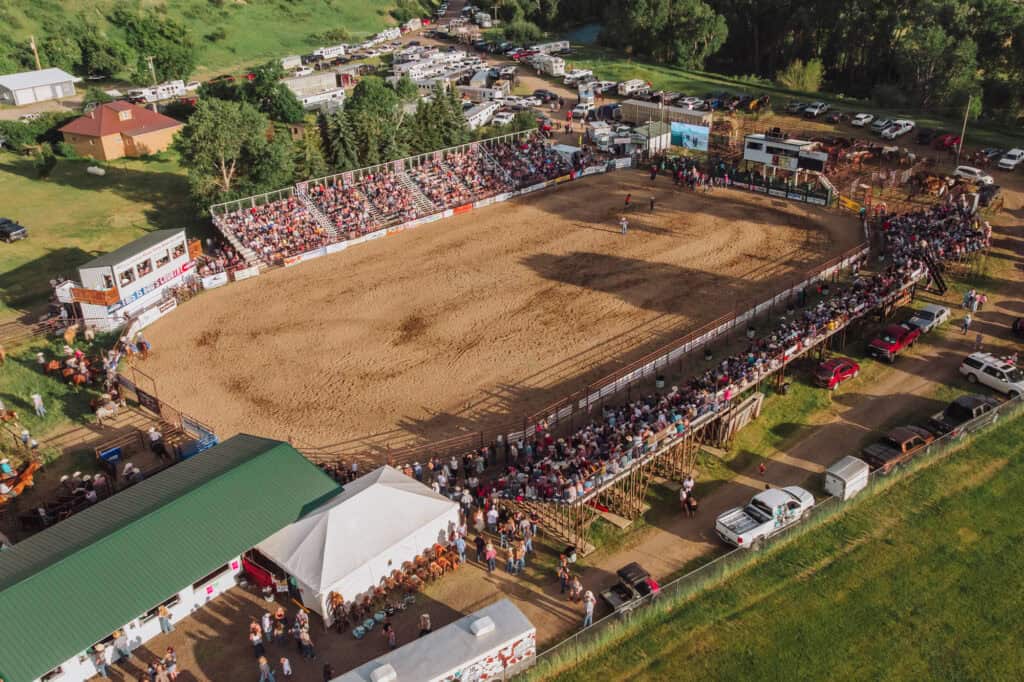
Fittingly, the Belt Rodeo started with a conversation over drinks. In 1955, a group of young ranchers from the Little Belt community in the Highwood Mountains started talking about building a roping arena.
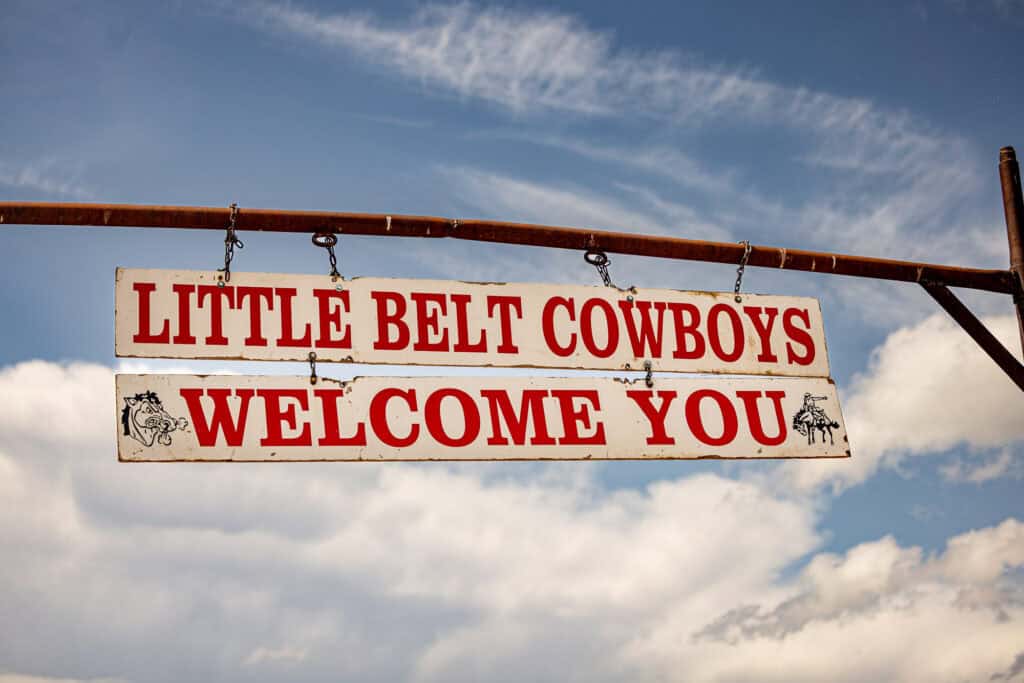
Their talk turned quickly into action, and the Little Belt Riding and Roping Club was born.
Rather than building the arena toward the mountains, they decided to build down in the valley where Belt sits, so the surrounding community could easily take part. The cowboys cut, stripped, and trucked poles down from the mountains themselves to build a rough first version of the arena.
For the first several years, ranchers showed up with their own horses and stock just to compete among themselves.
Turning pro
In 1961, the club made the leap from amateur rodeo to professional, and over the decades it built a reputation as one of the best rodeos in the state.
Pushing 70 years!
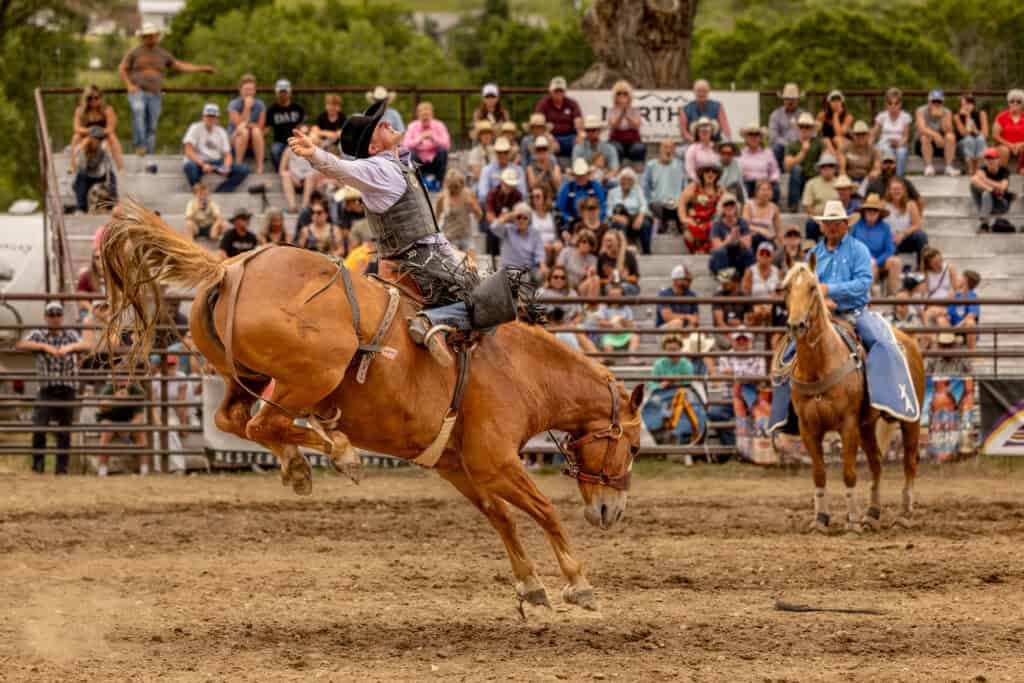
The Belt Rodeo kicks off the Montana rodeo circuit each summer as its very first stop.
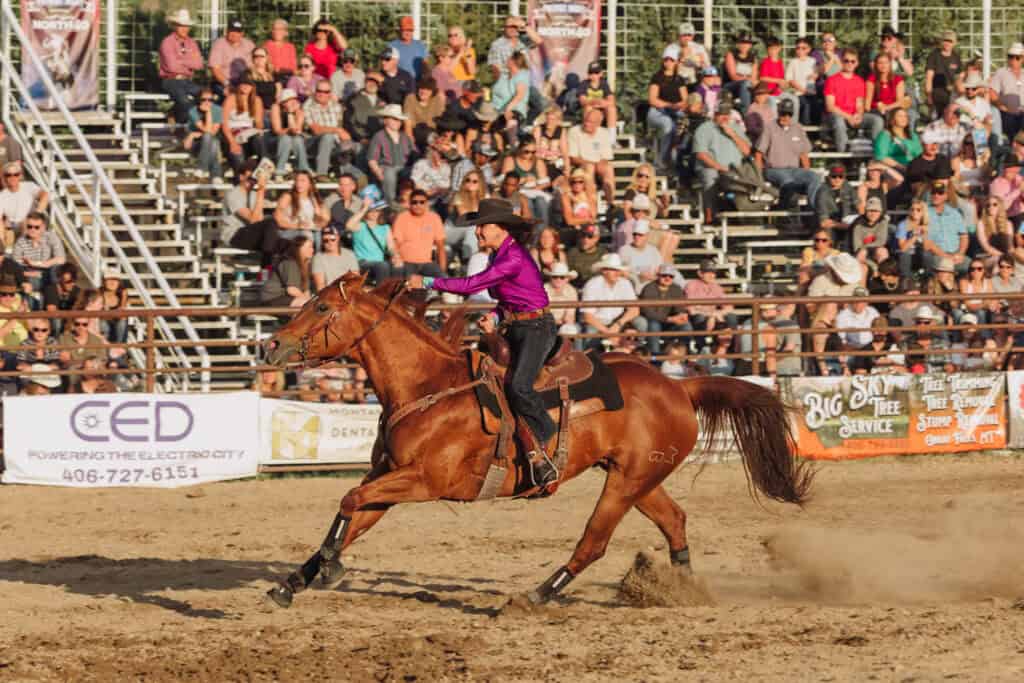
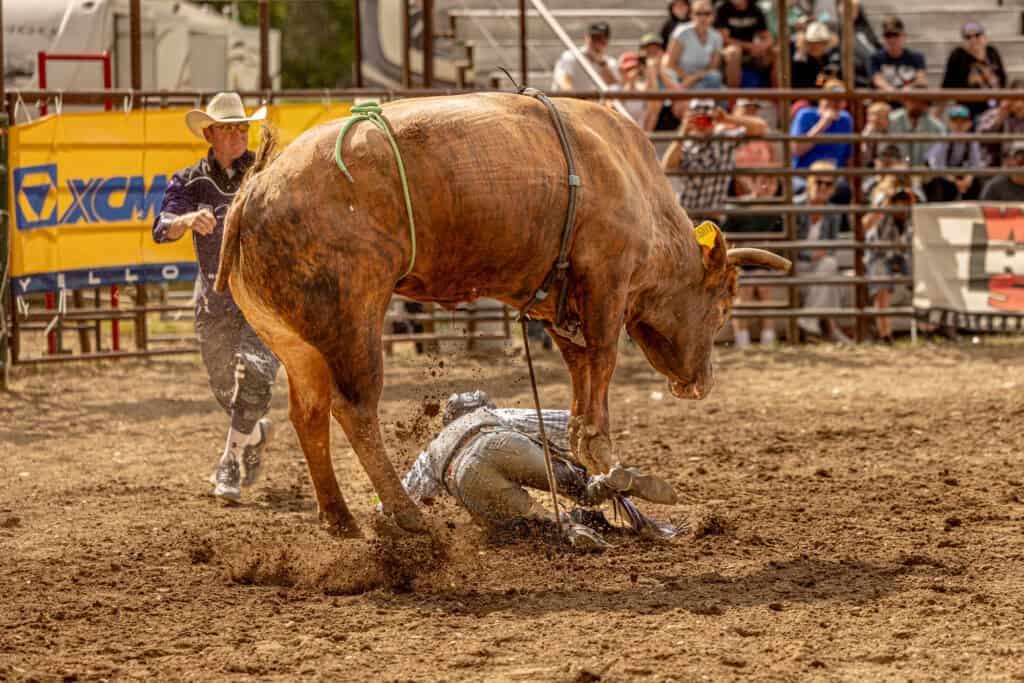
Competitors go head-to-head in eight events:
- Bareback Riding
- Saddle Bronc Riding
- Steer Wrestling
- Breakaway Roping
- Team Roping
- Tie Down Roping
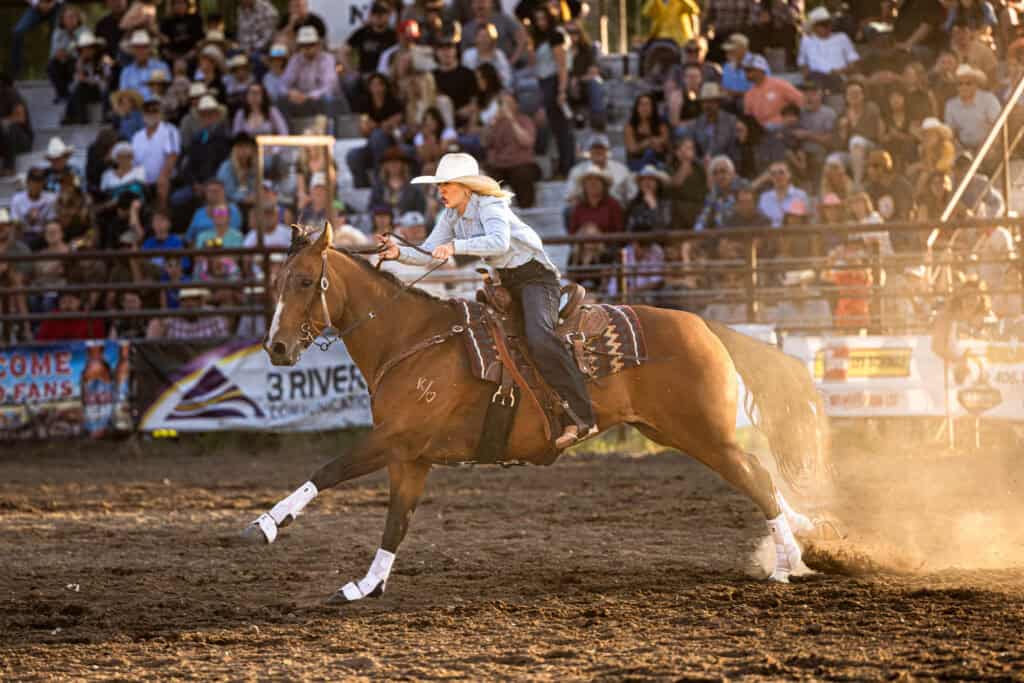
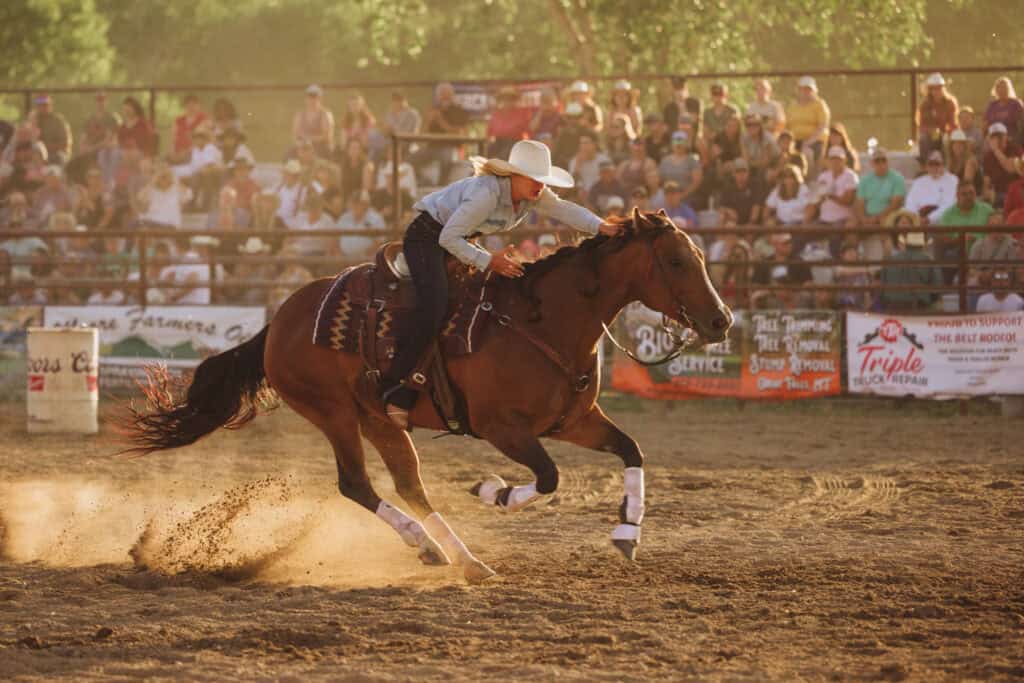
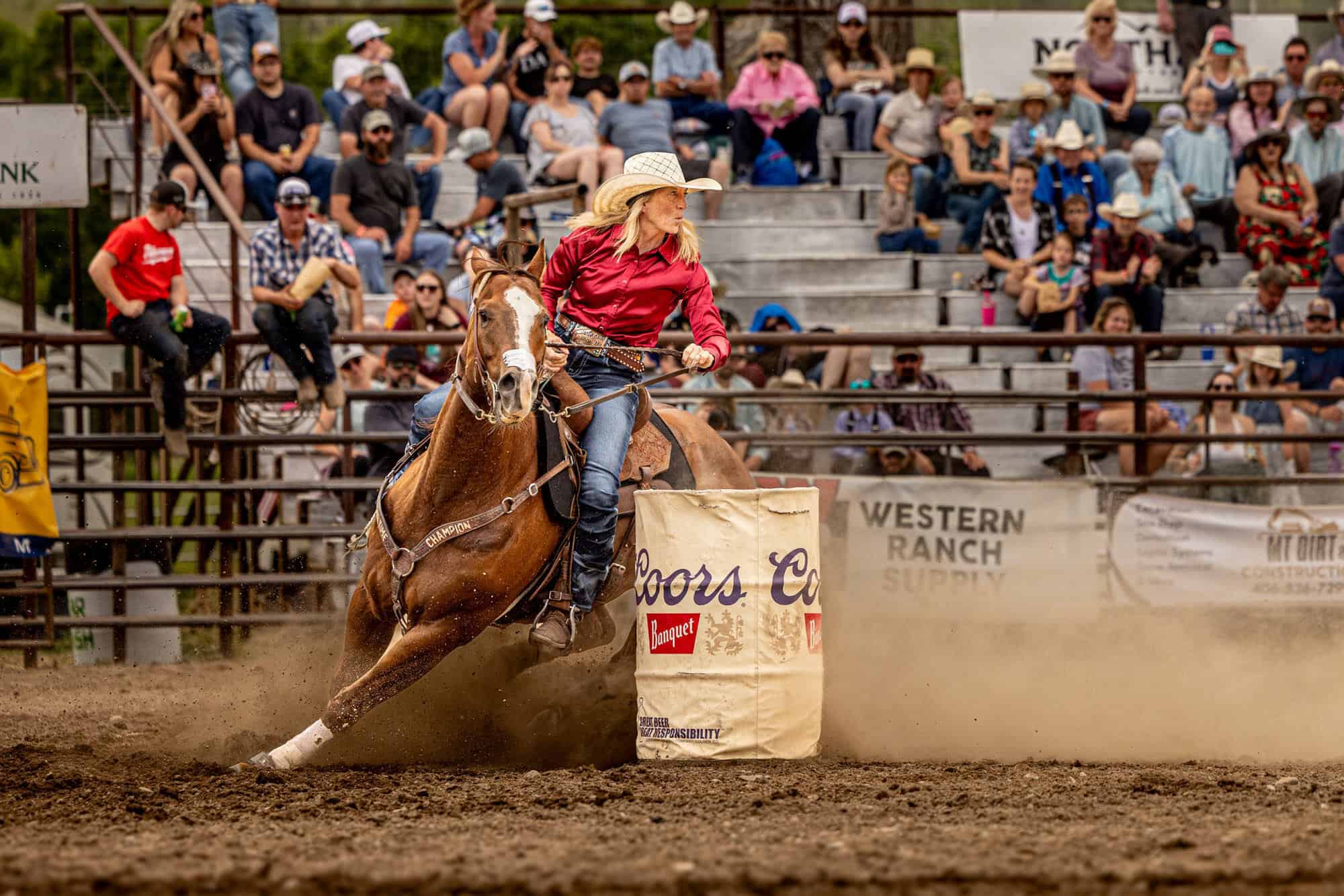
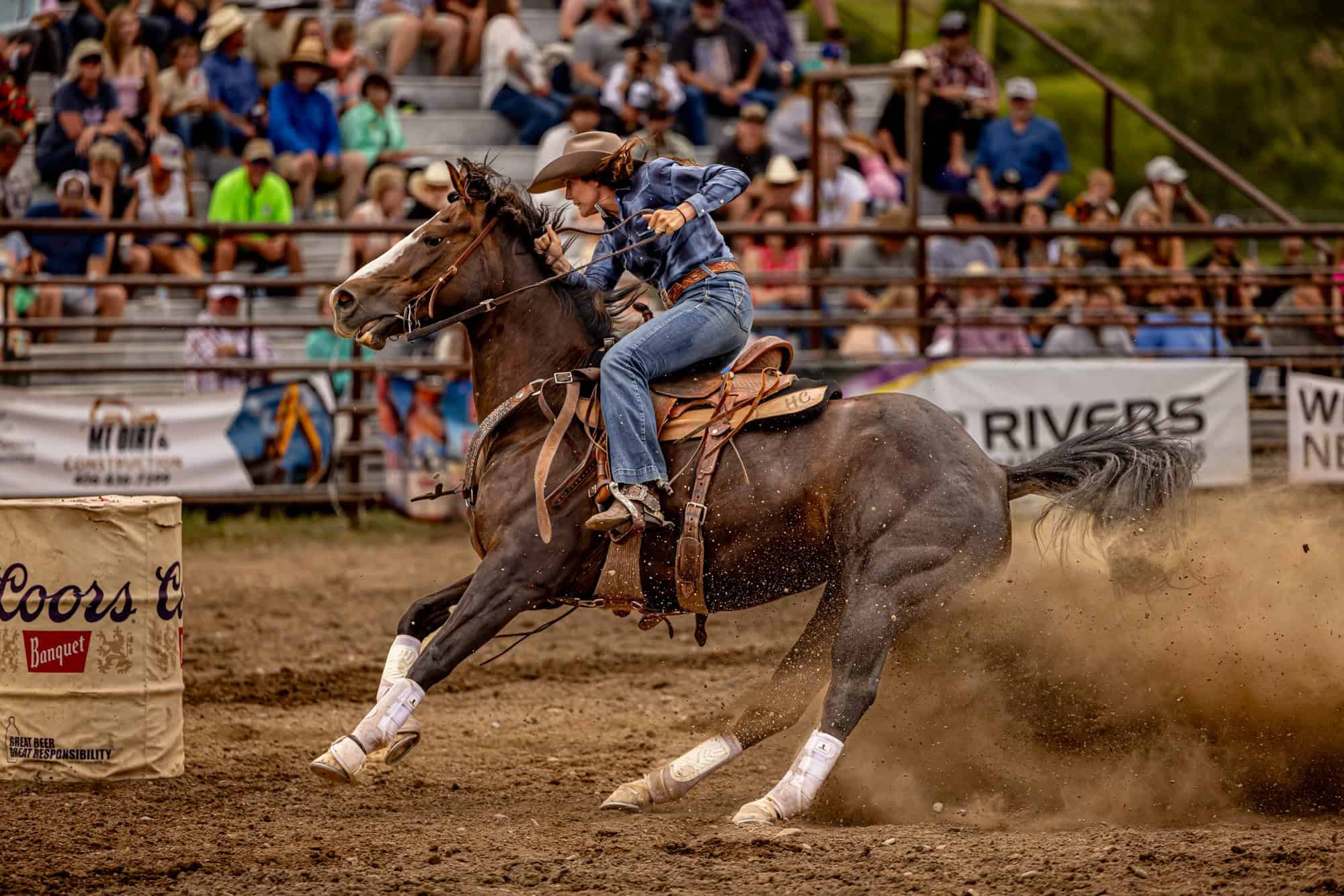
- Barrel Racing
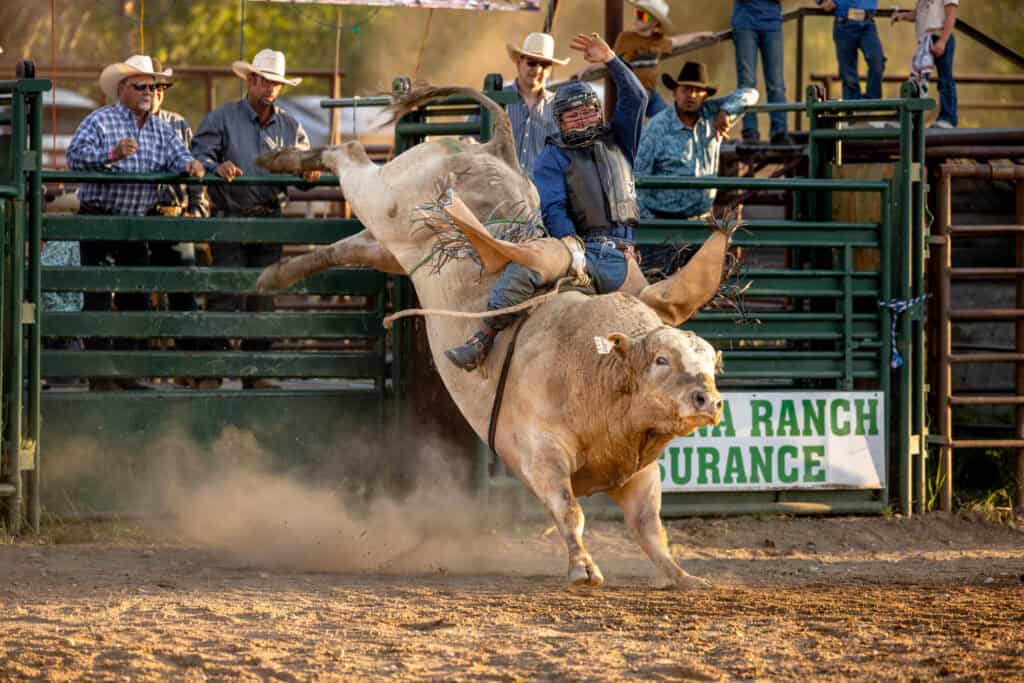
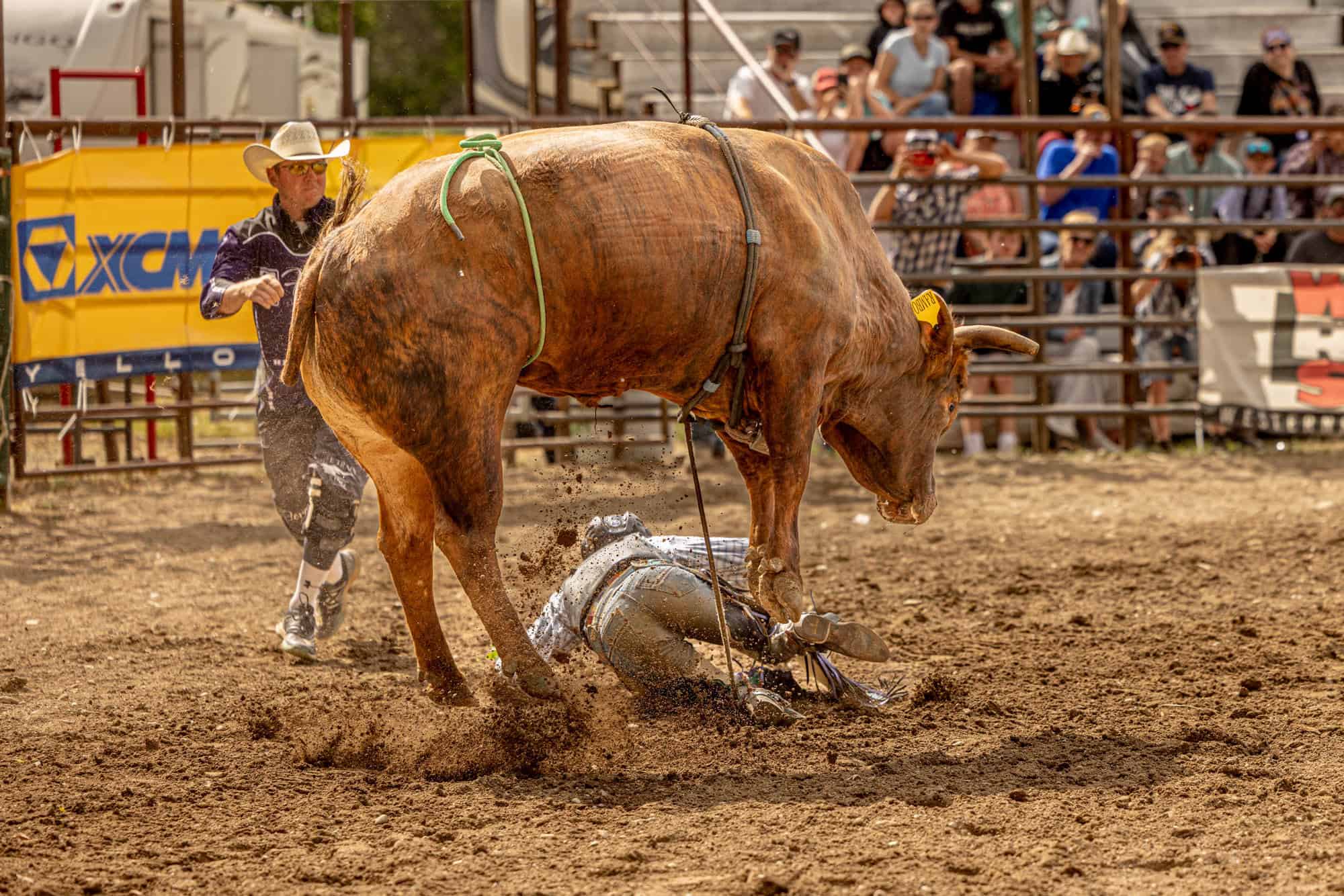
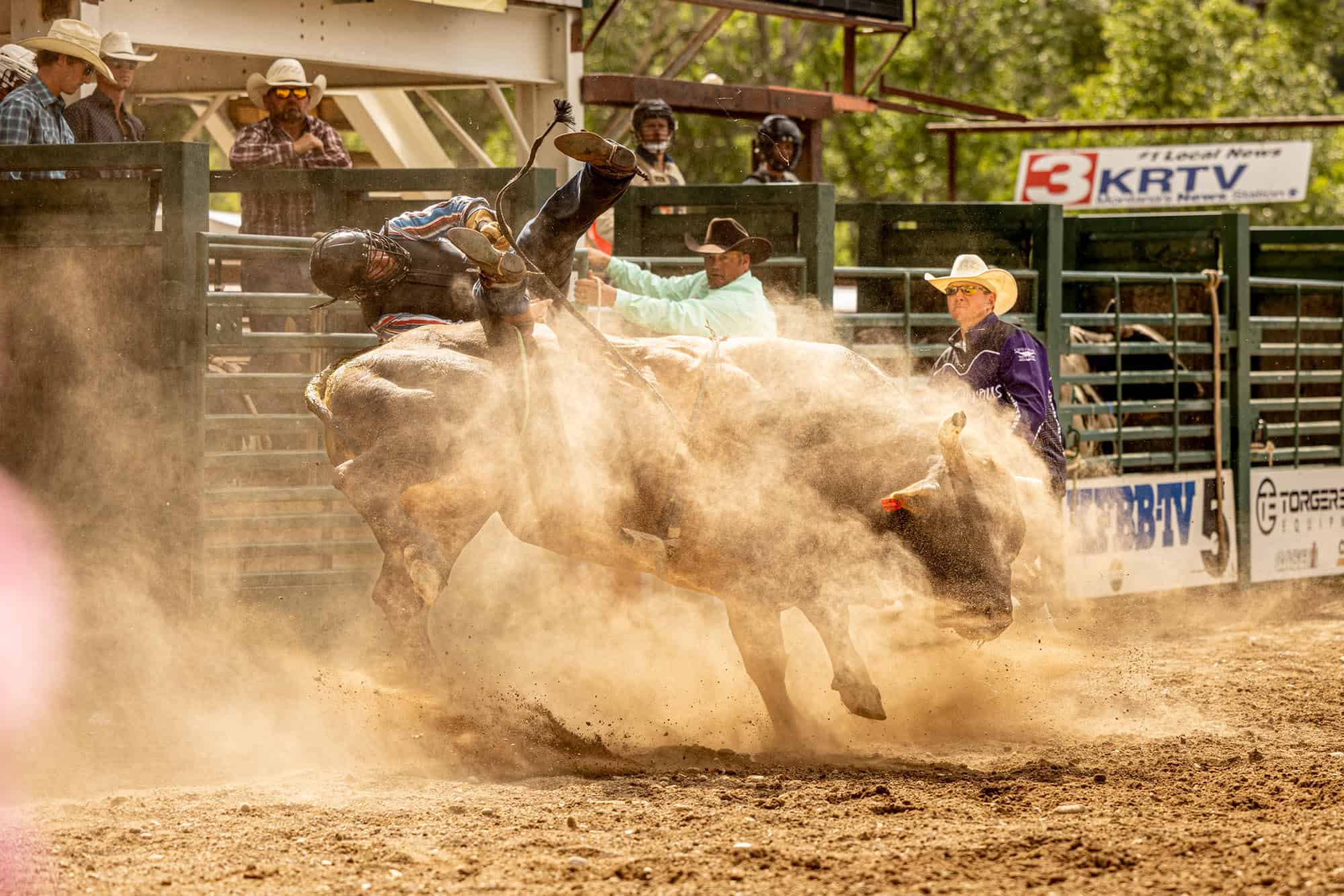
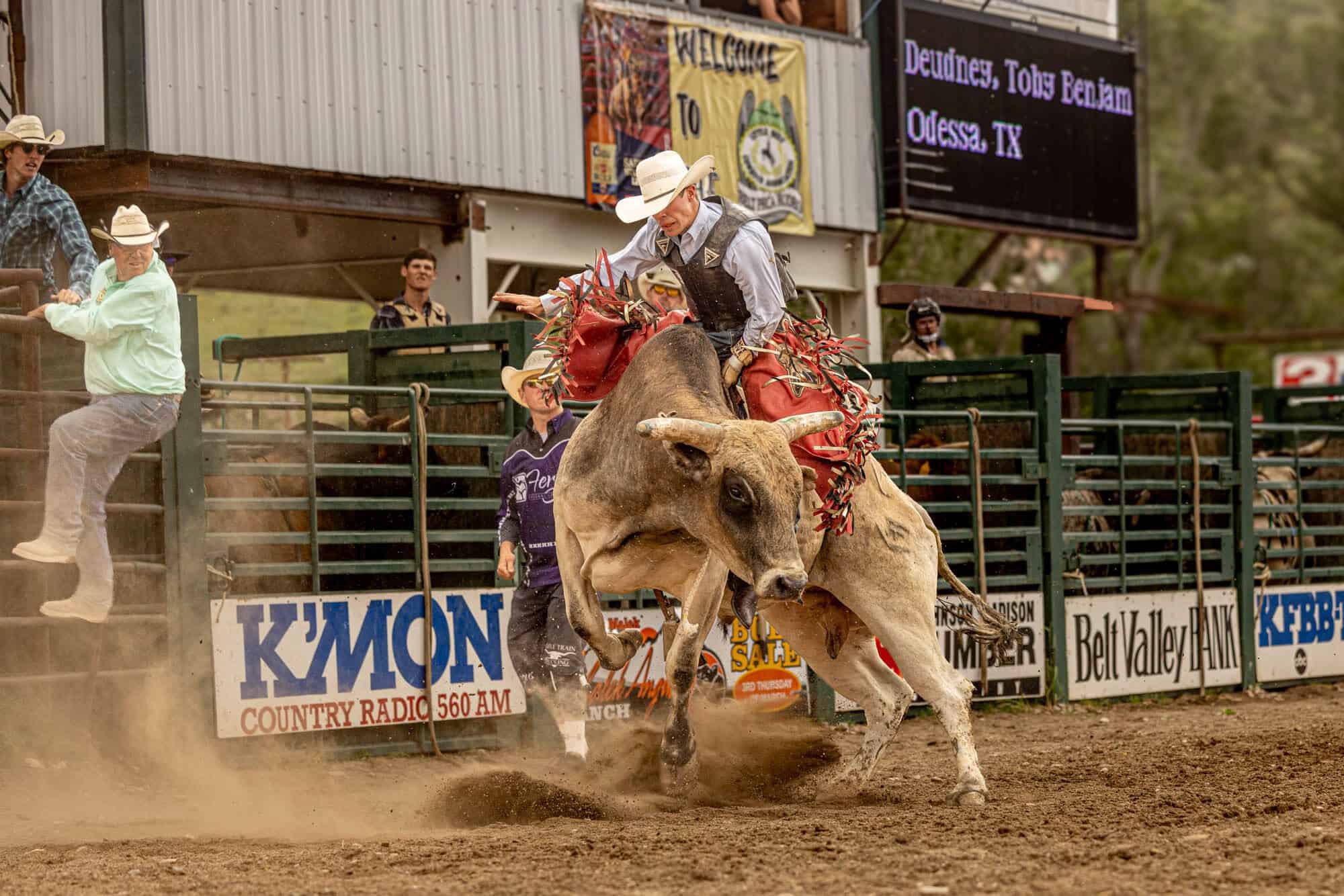
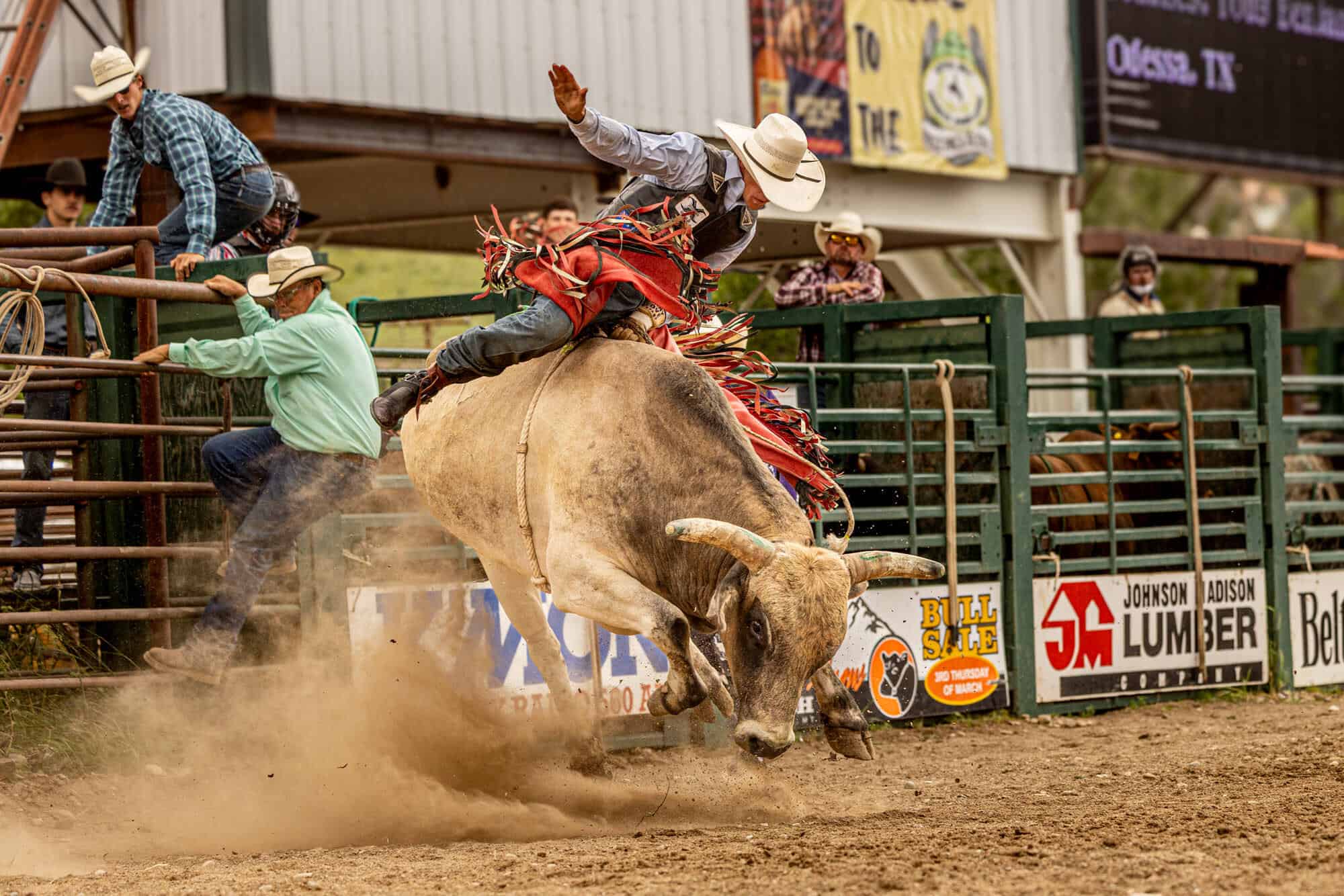
- Bull Riding
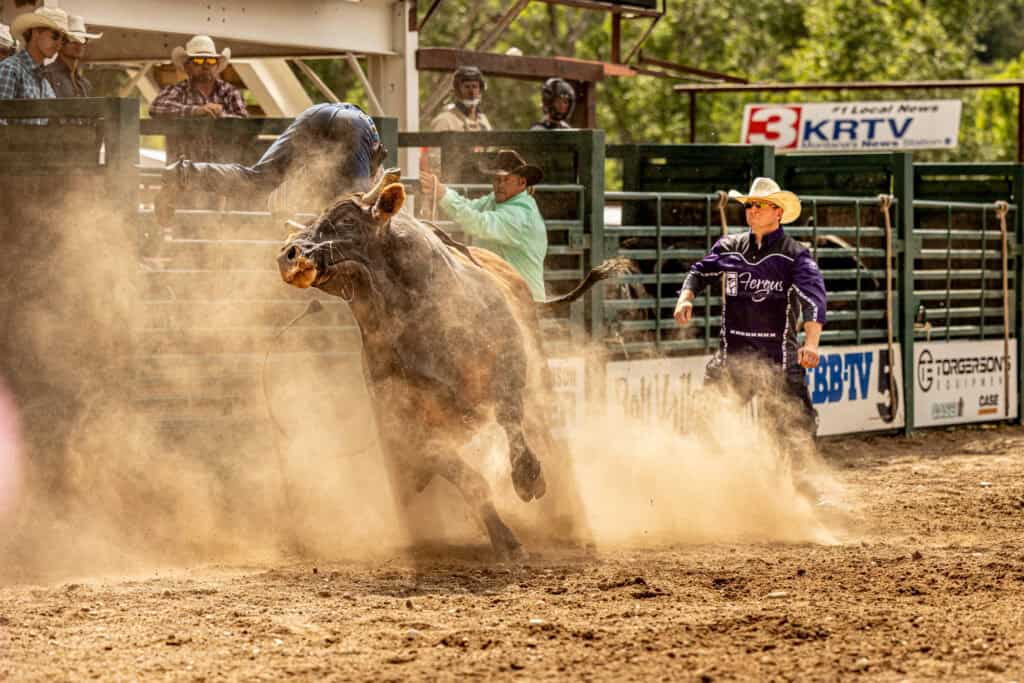
The next generation.
Kids get their own moment in the spotlight with Mutton Busting.
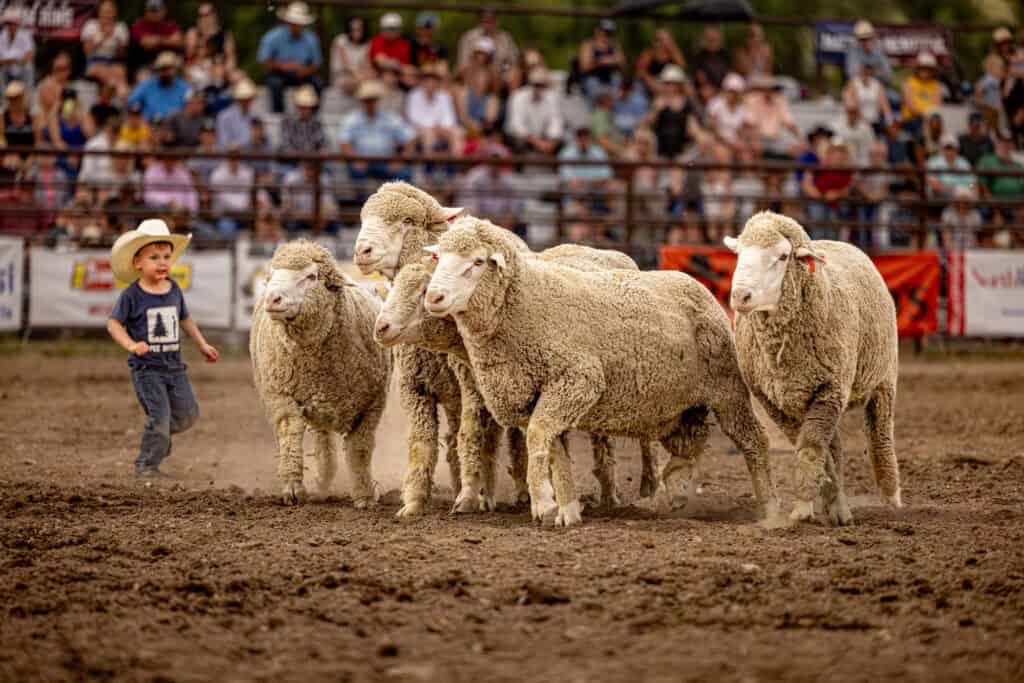
Contestants under 50 pounds (no age limit!) try to ride sheep during both Saturday and Sunday performances.
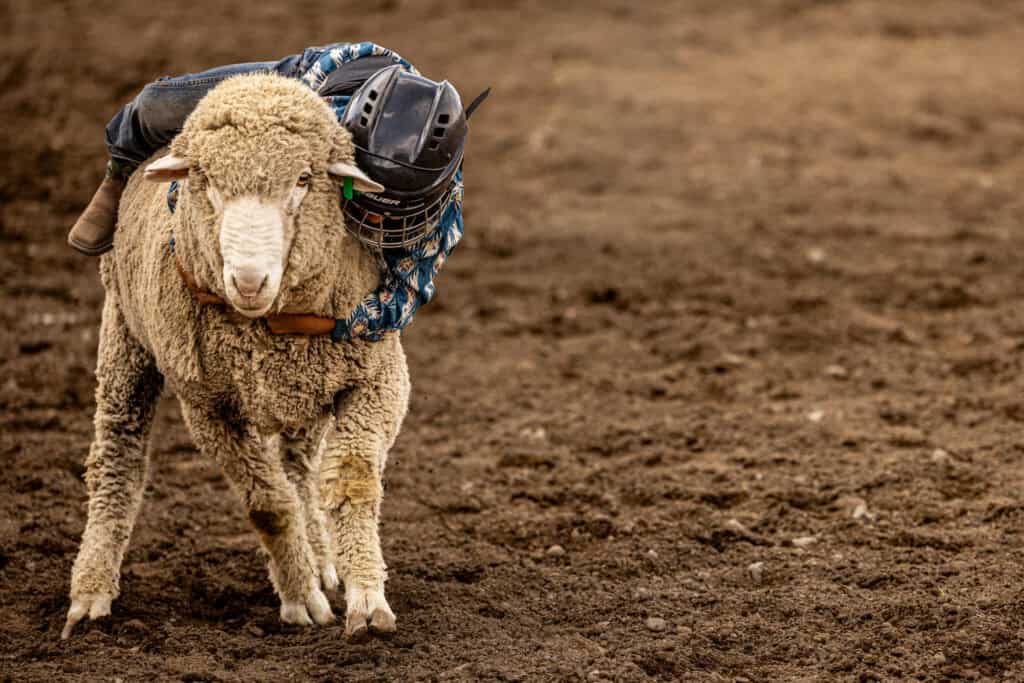
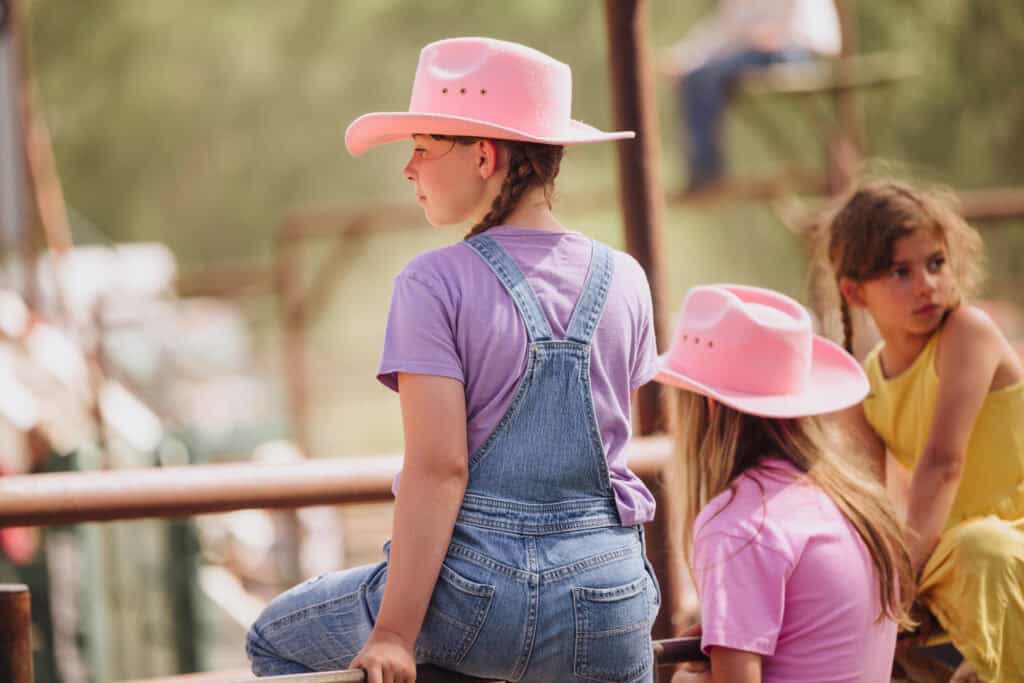
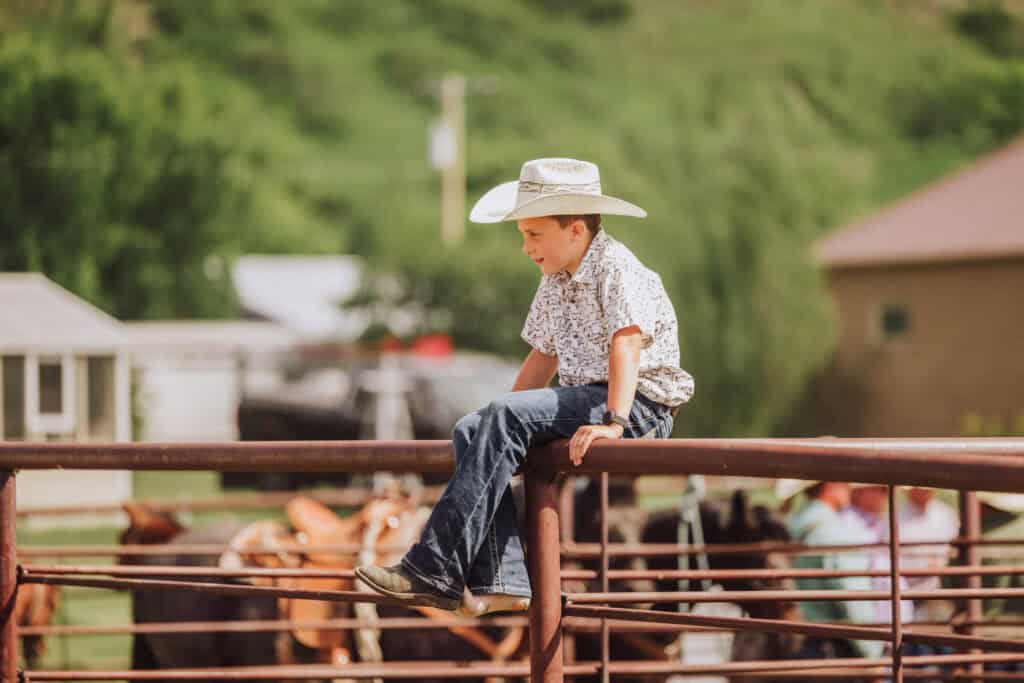
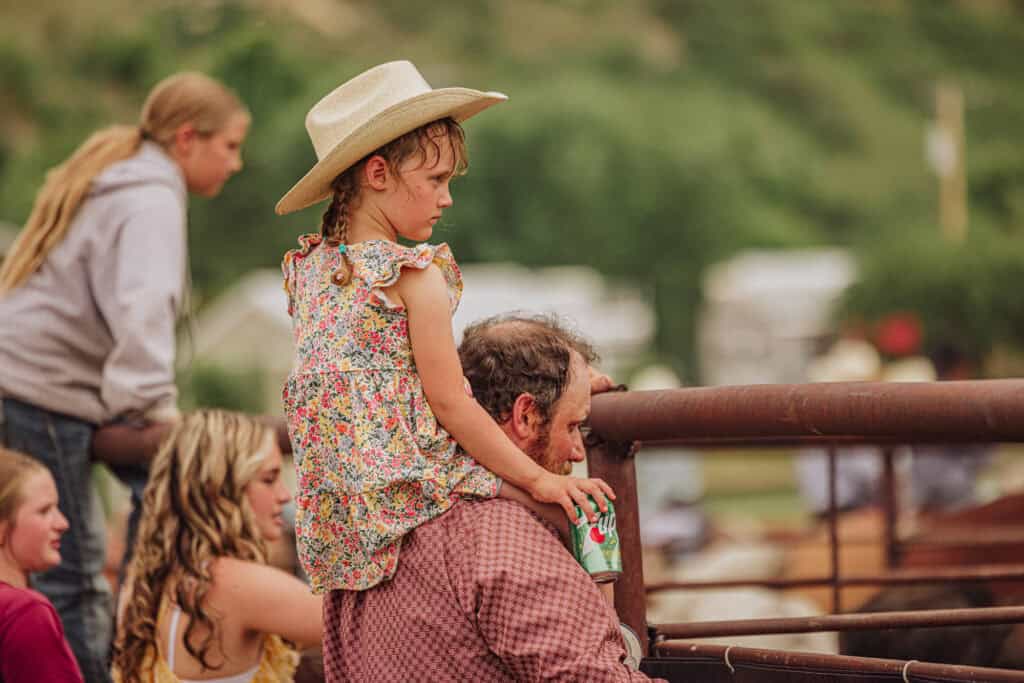
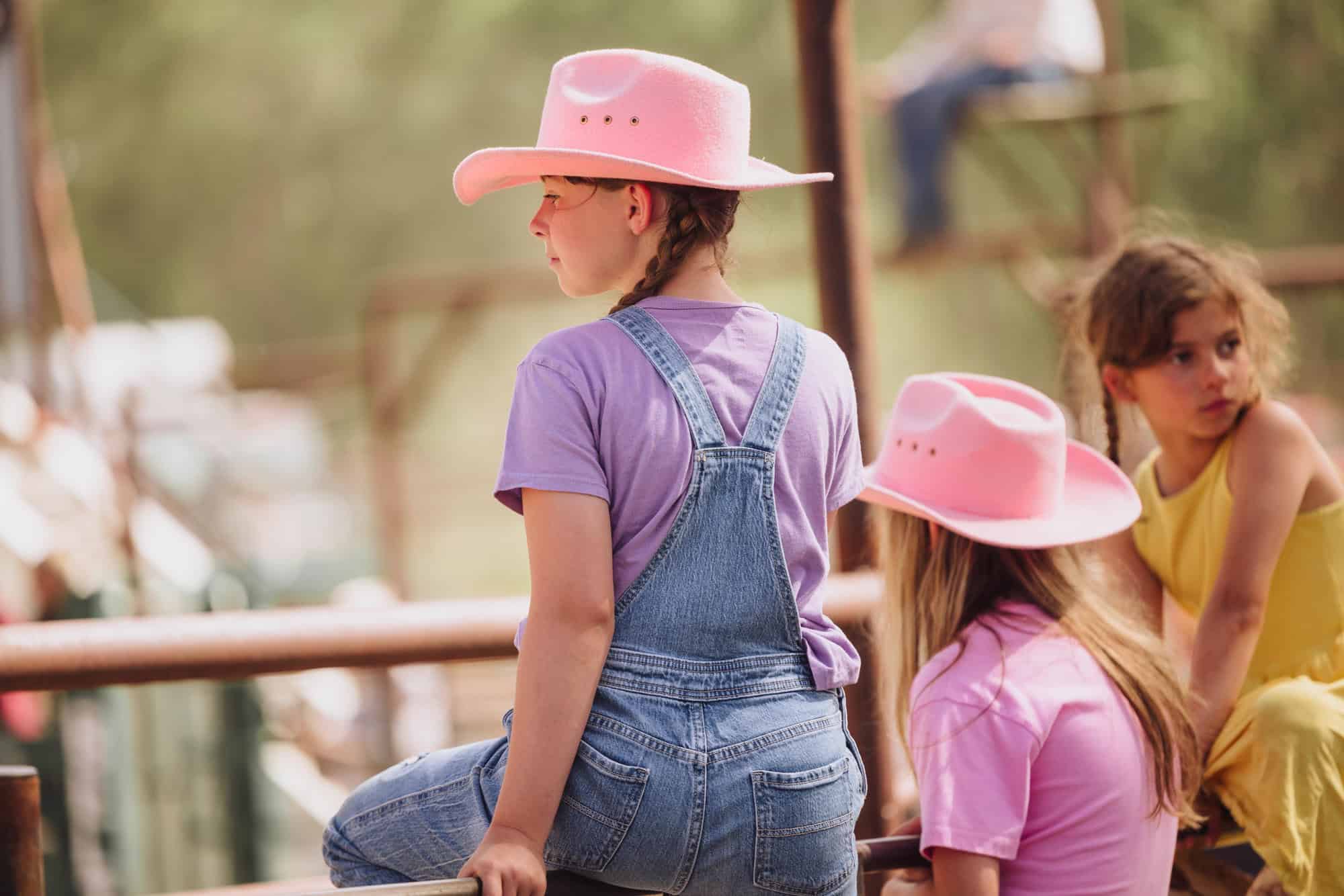
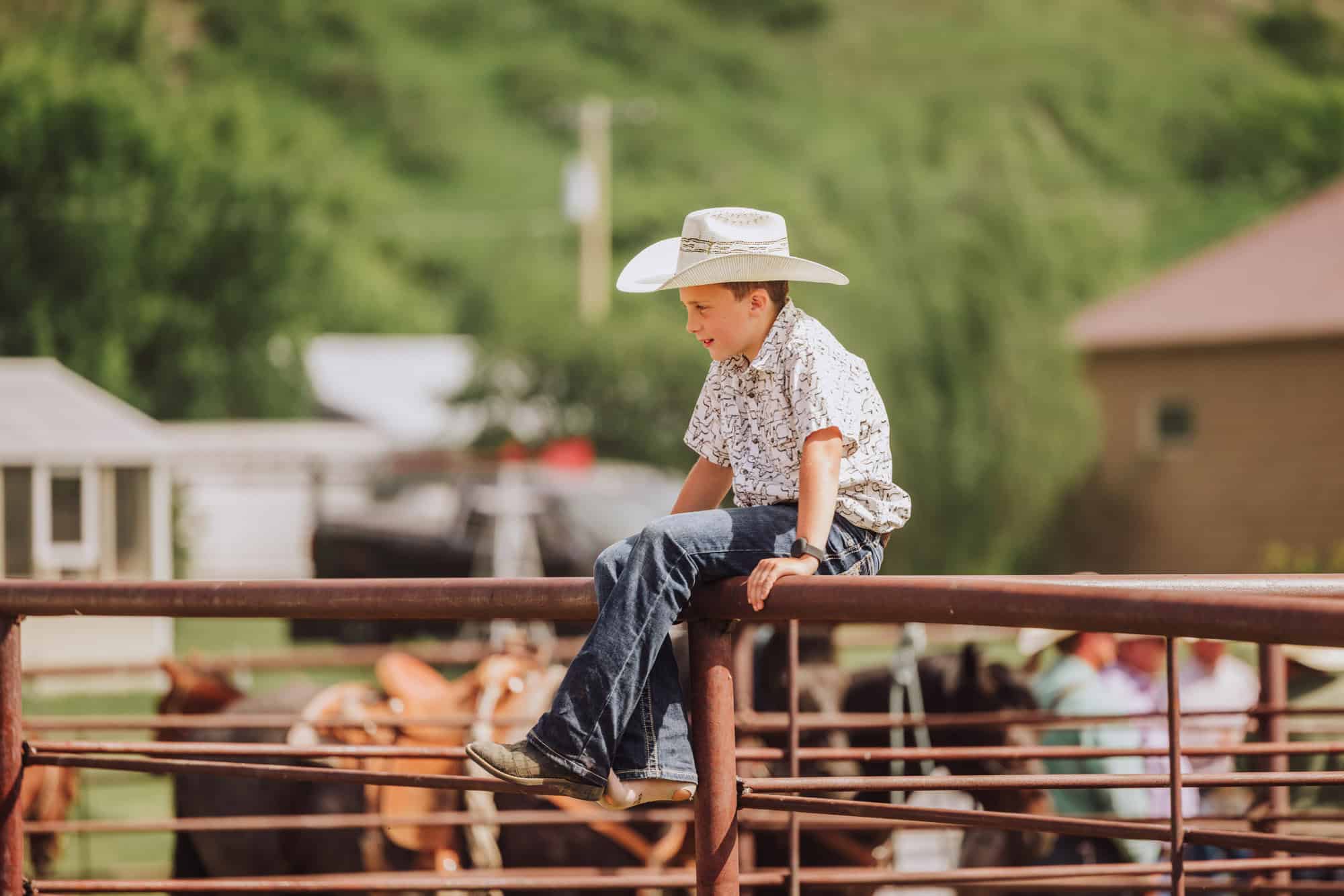
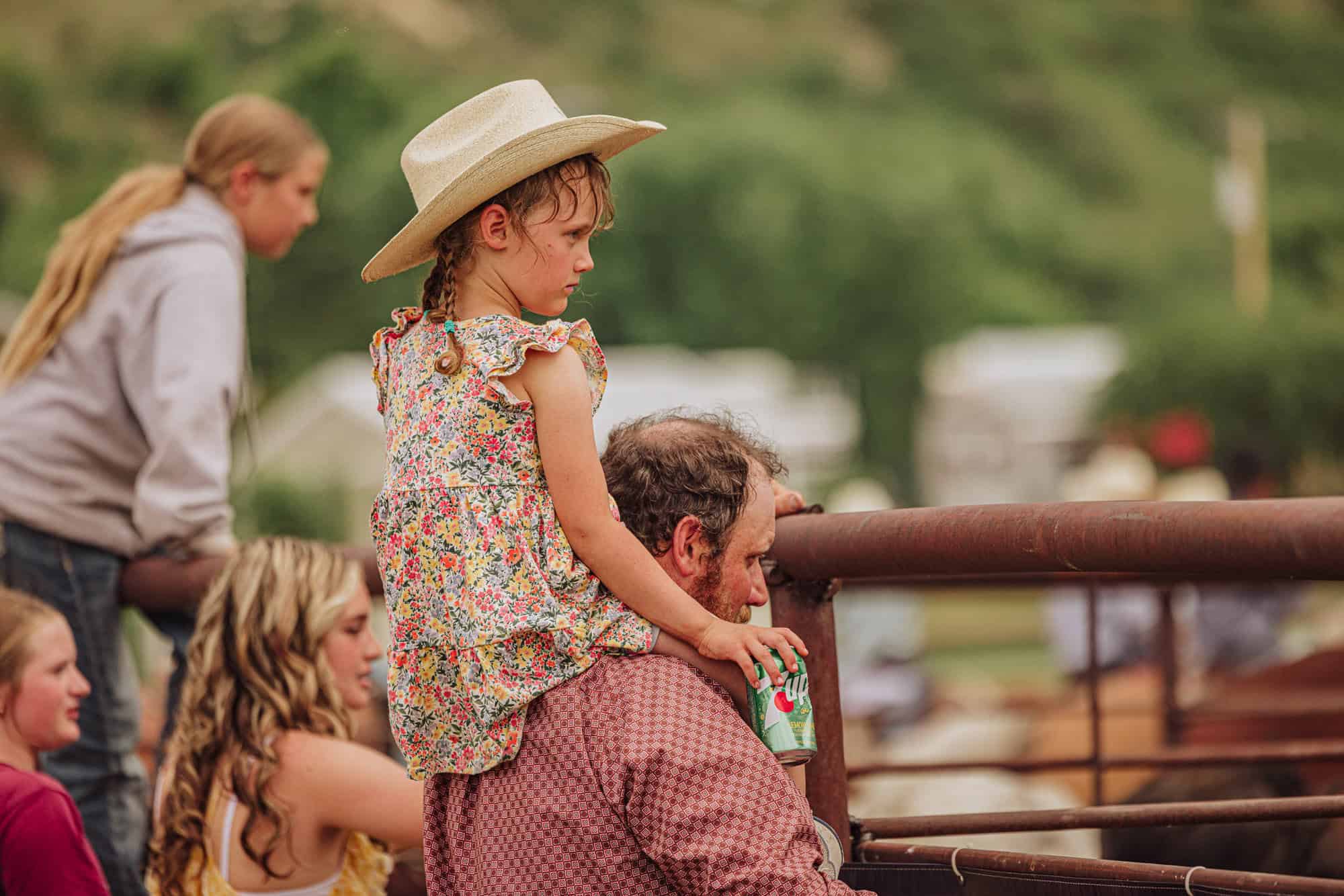
Speaking of the next generation, the rodeo grounds are full of young cowboys and cowgirls enjoying the action and waiting for their turns in the ring.
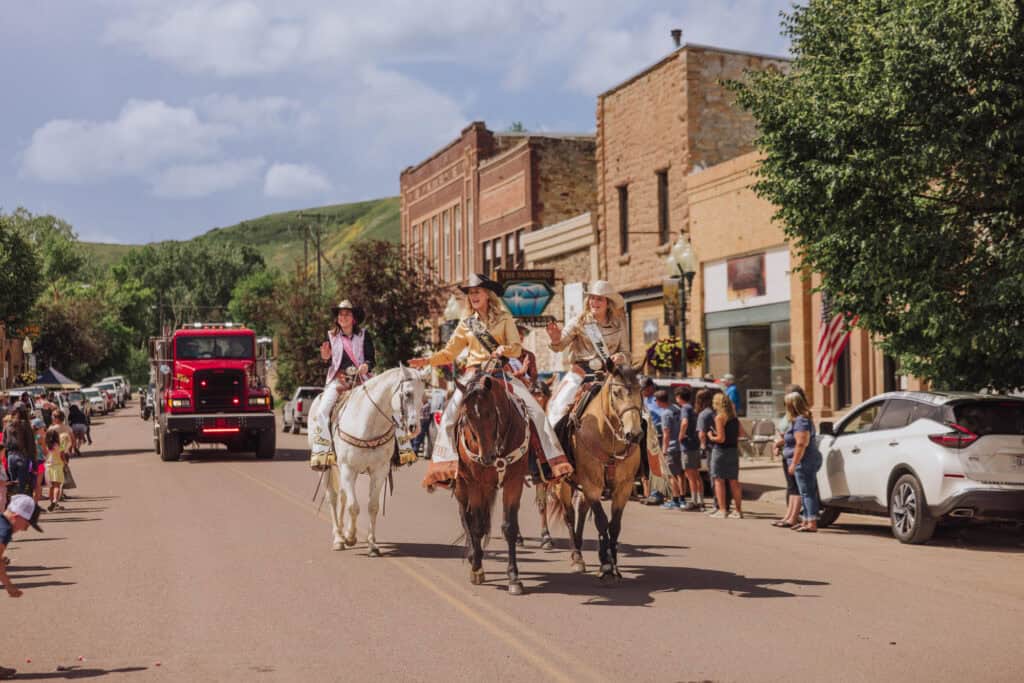
The Rodeo Parade
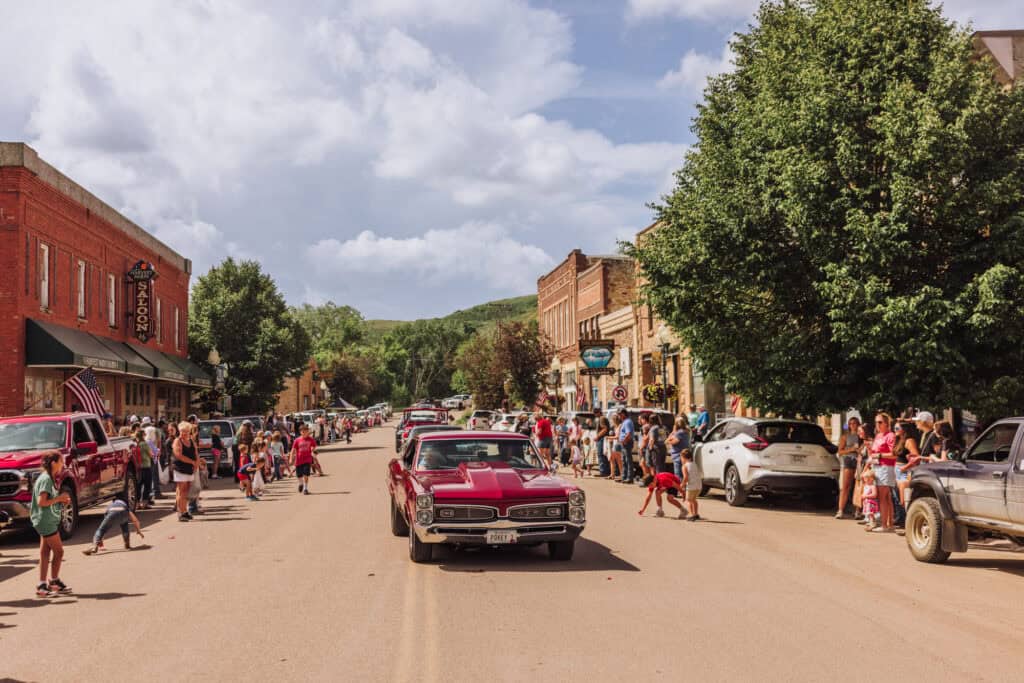
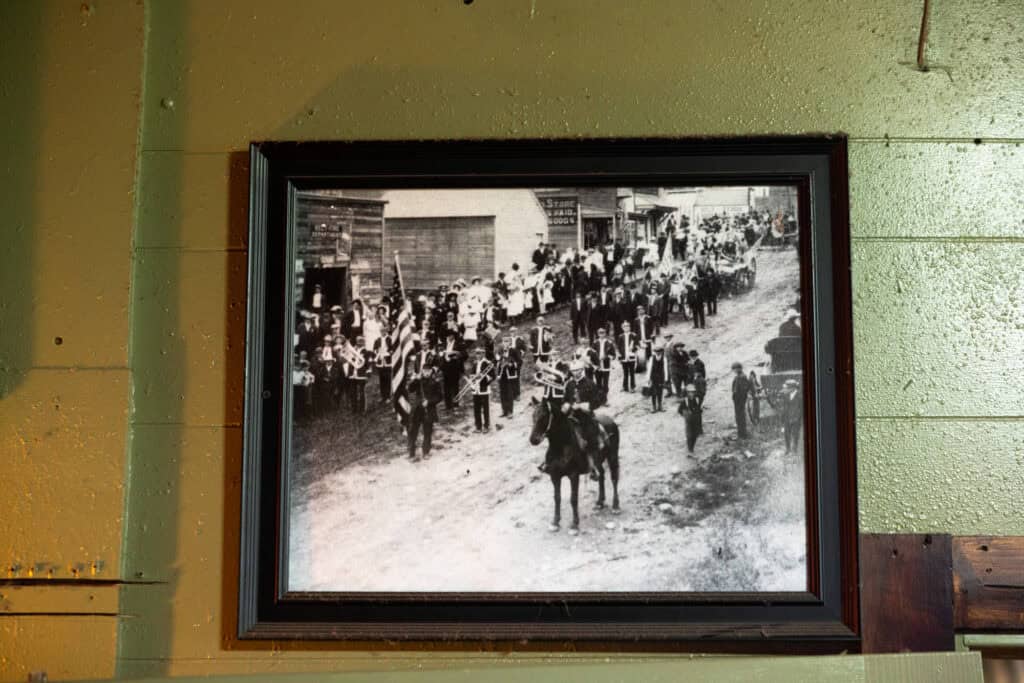
Sunday kicks off with a Hometown Parade through downtown Belt, ahead of the afternoon’s rodeo events.
The people who keep the rodeo running
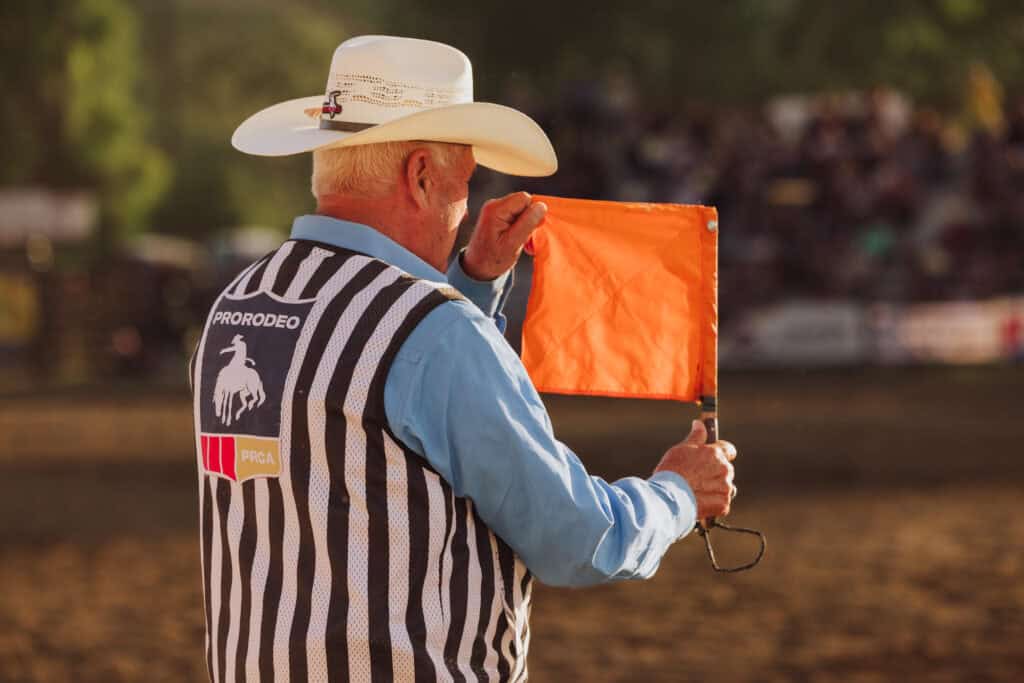
What makes the Belt Rodeo special isn’t just the action in the arena; it’s how deeply woven the event is into the town itself.
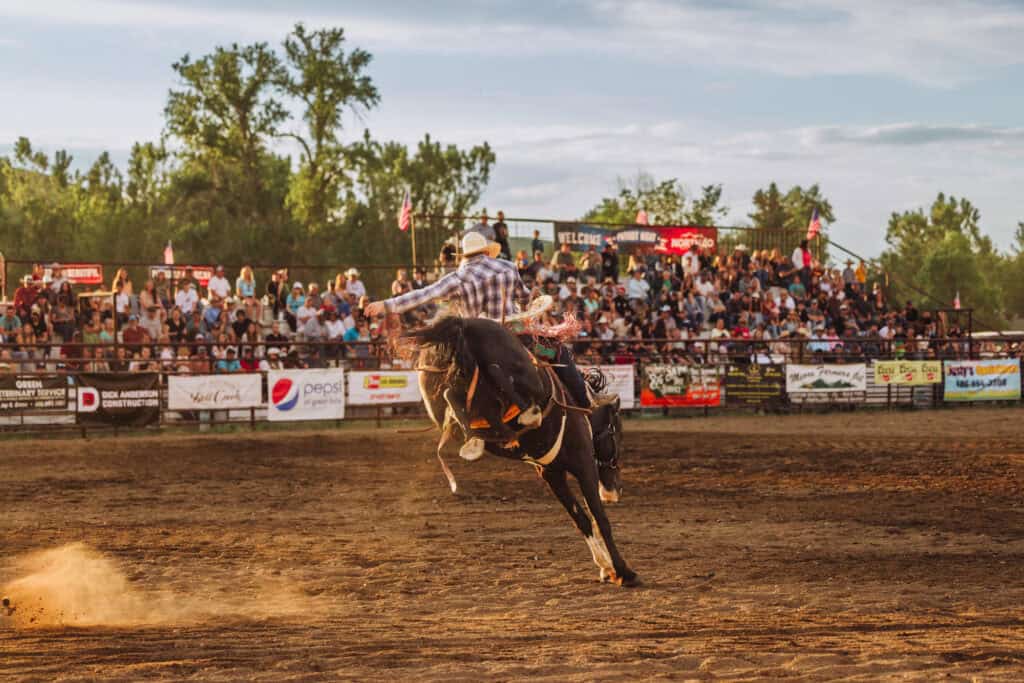
Some of the original 1955 ranchers are still familiar faces around Belt, now watching their kids and grandkids carry on the tradition.
We found people returning to Belt for the annual event from around the country, including Lynn
Wolstenholme, who grew up at a ranch nearby and remembers coming to the early days of the Belt Rodeo.
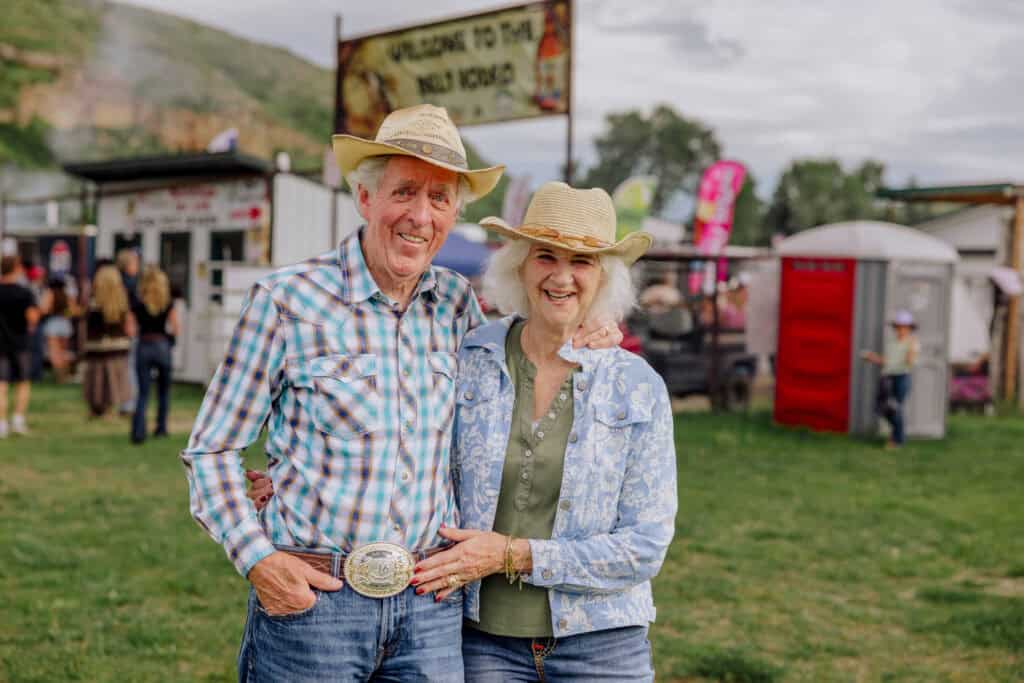
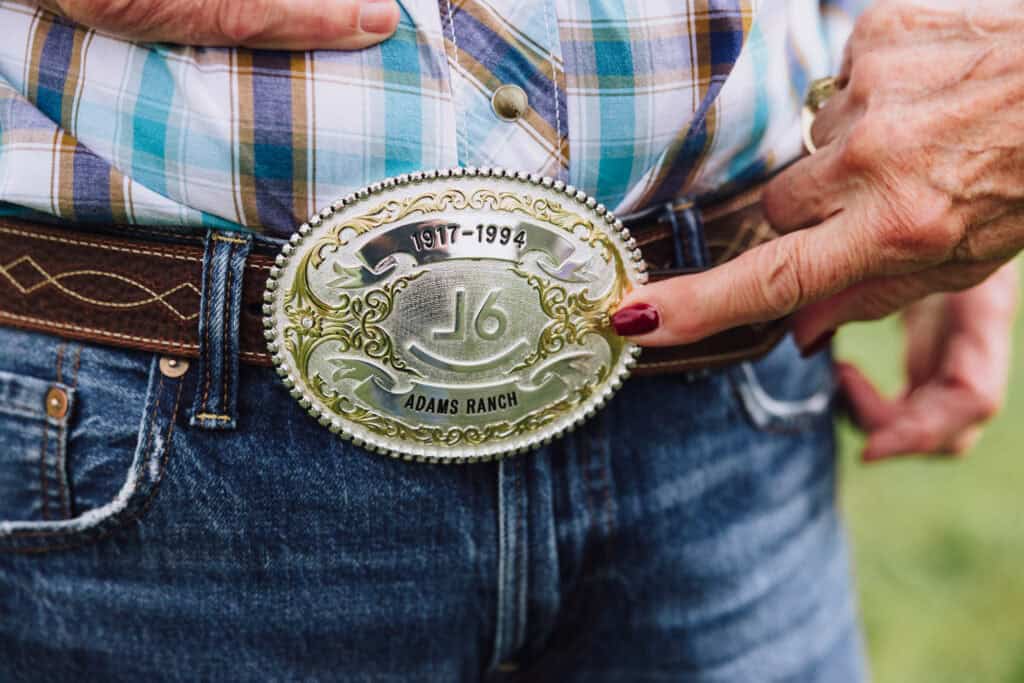
Her husband, Phillip, who’s from the UK, gets a kick out of their visits back to Belt, too. He proudly sports the buckle bearing the name of his late father-in-law’s ranch.
More PRCA Belt Rodeo Photos
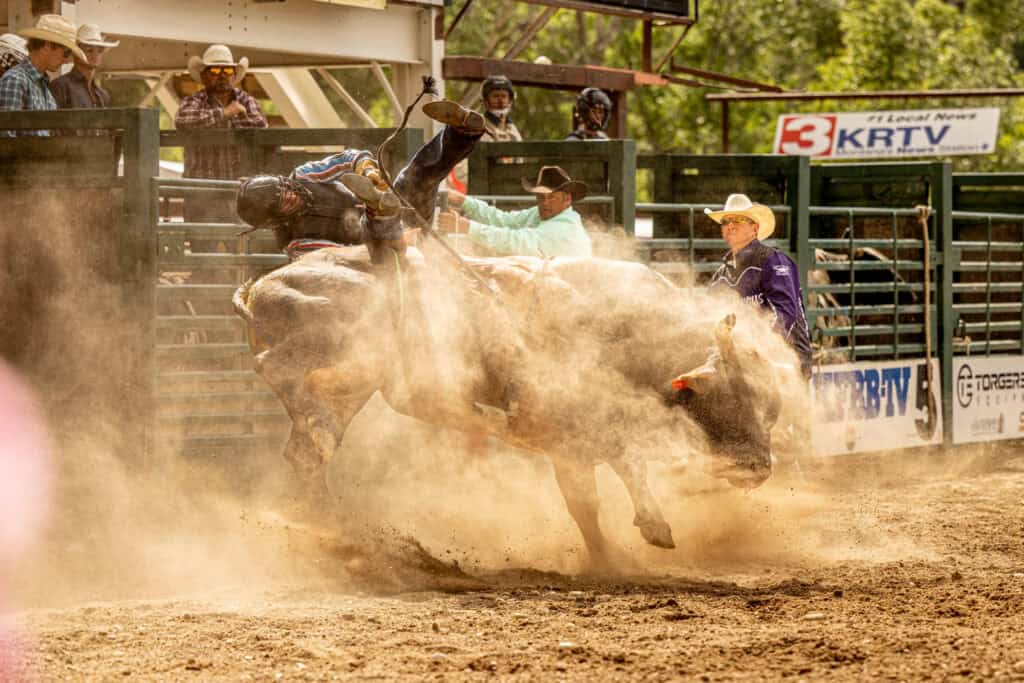
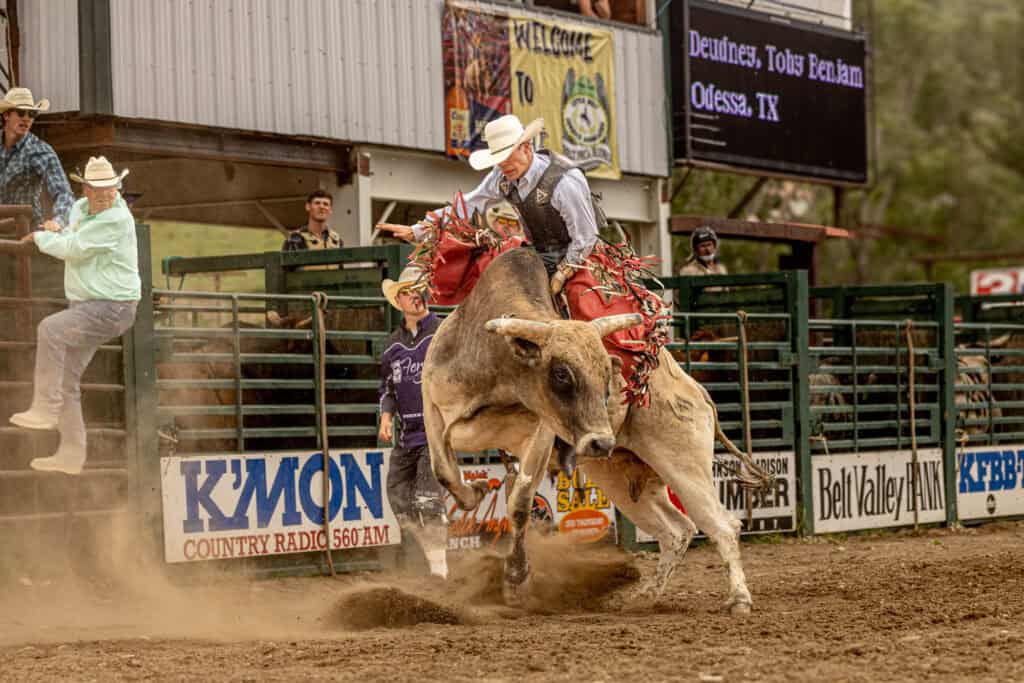
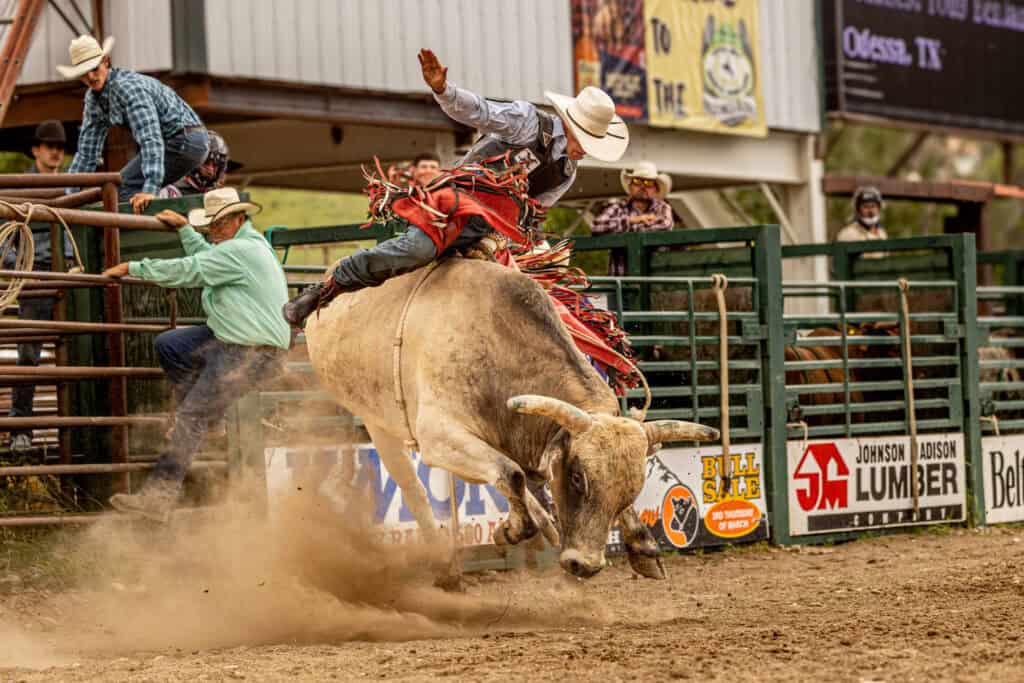
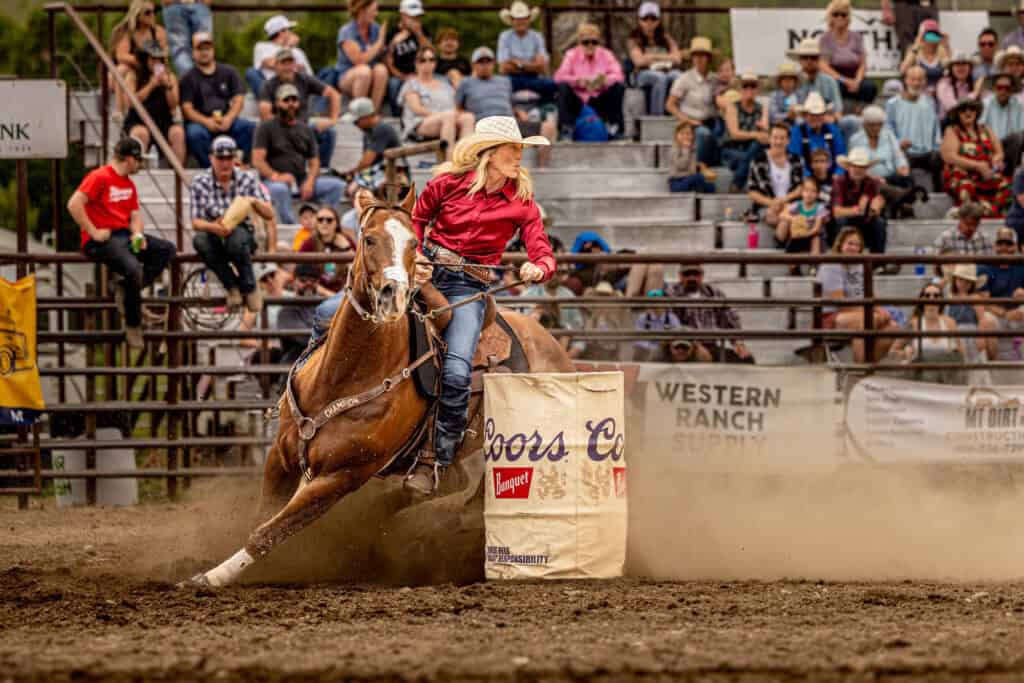
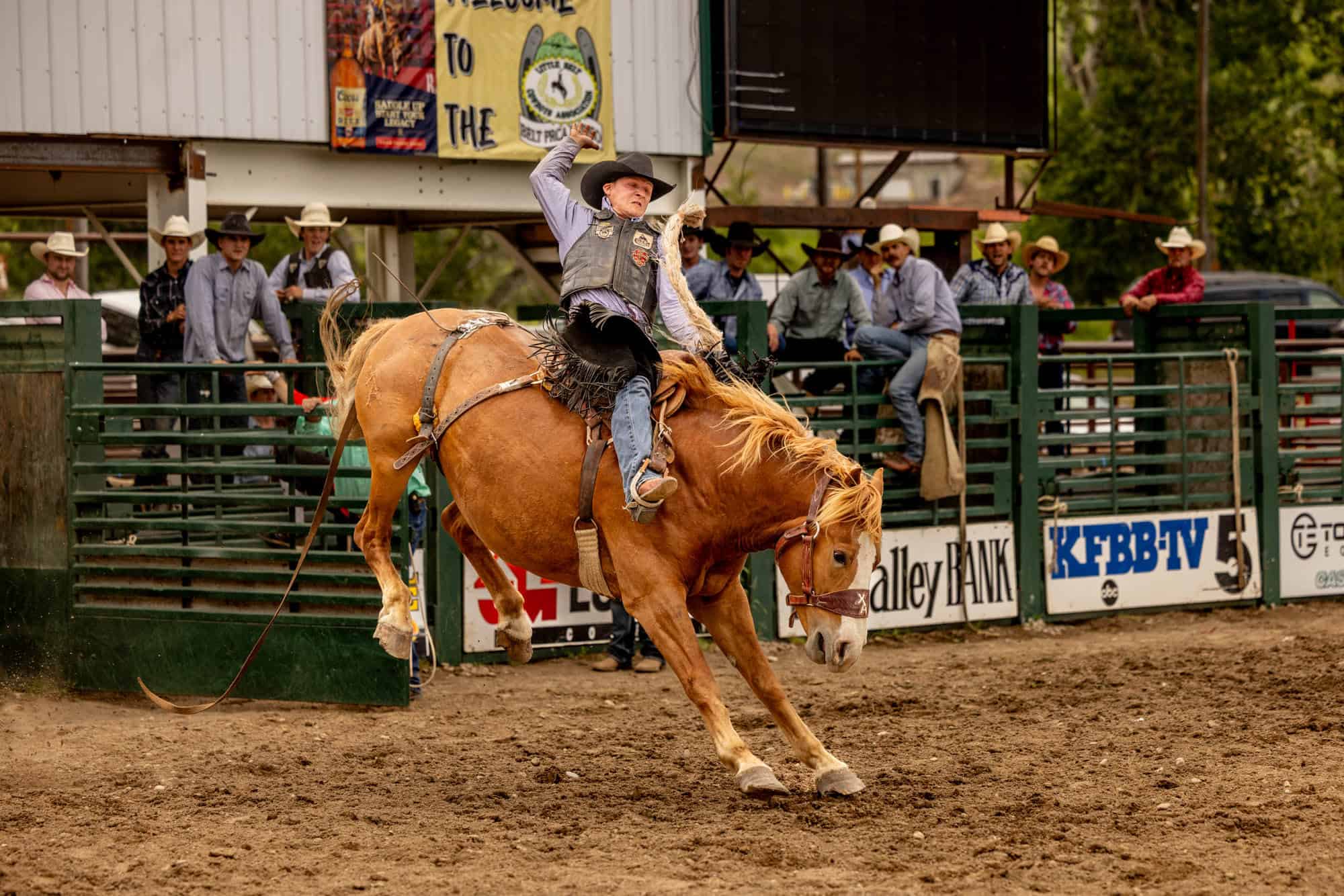
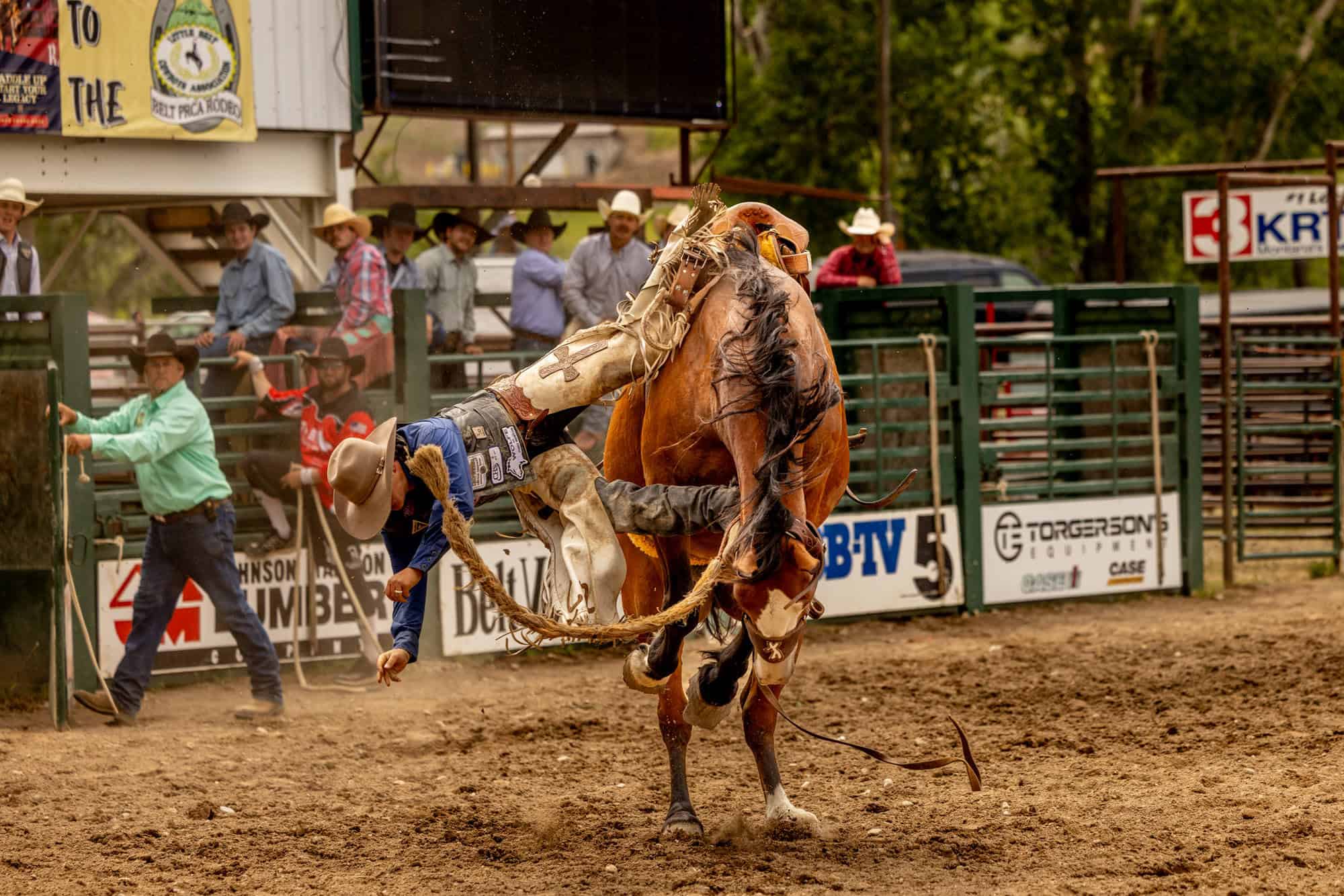
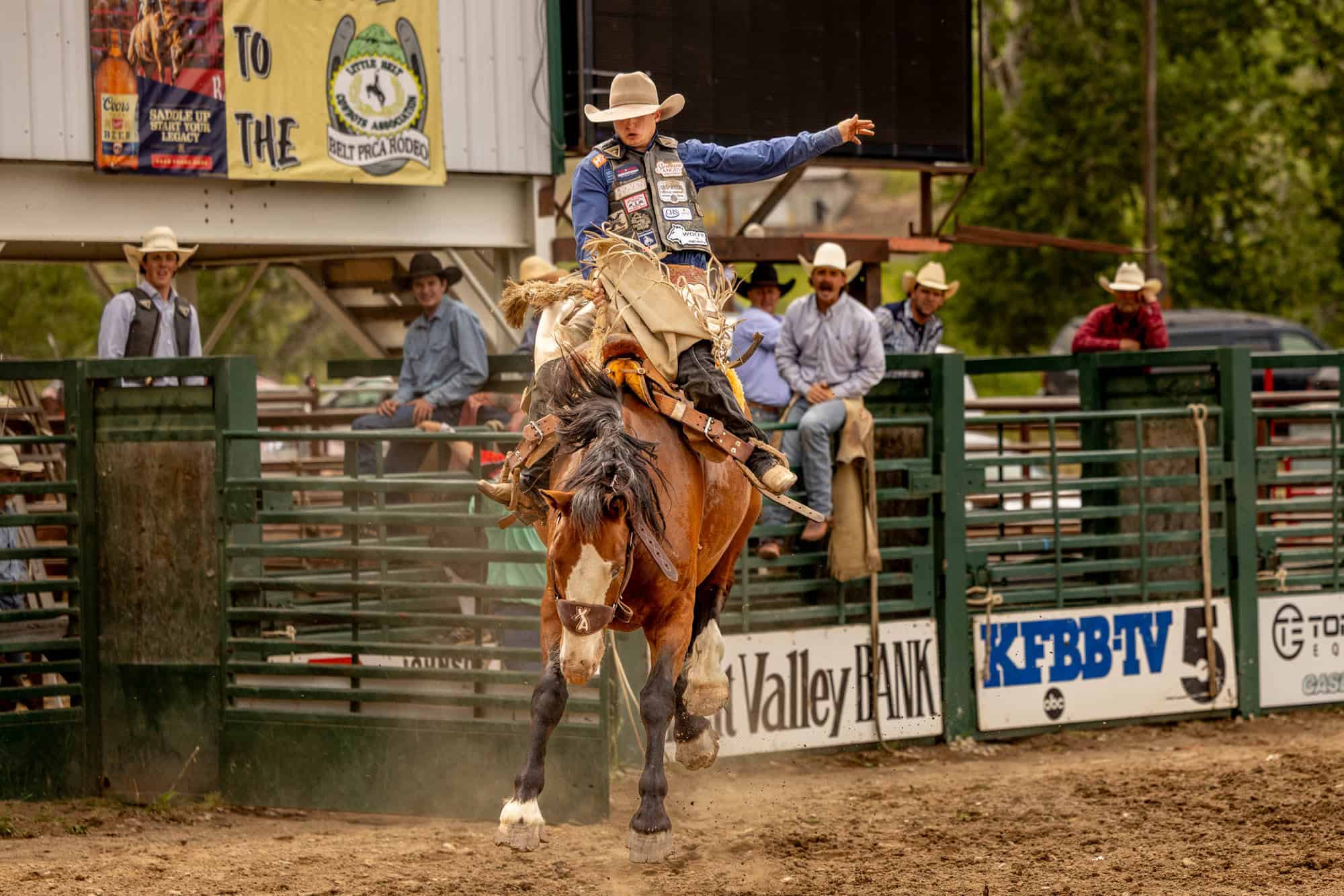
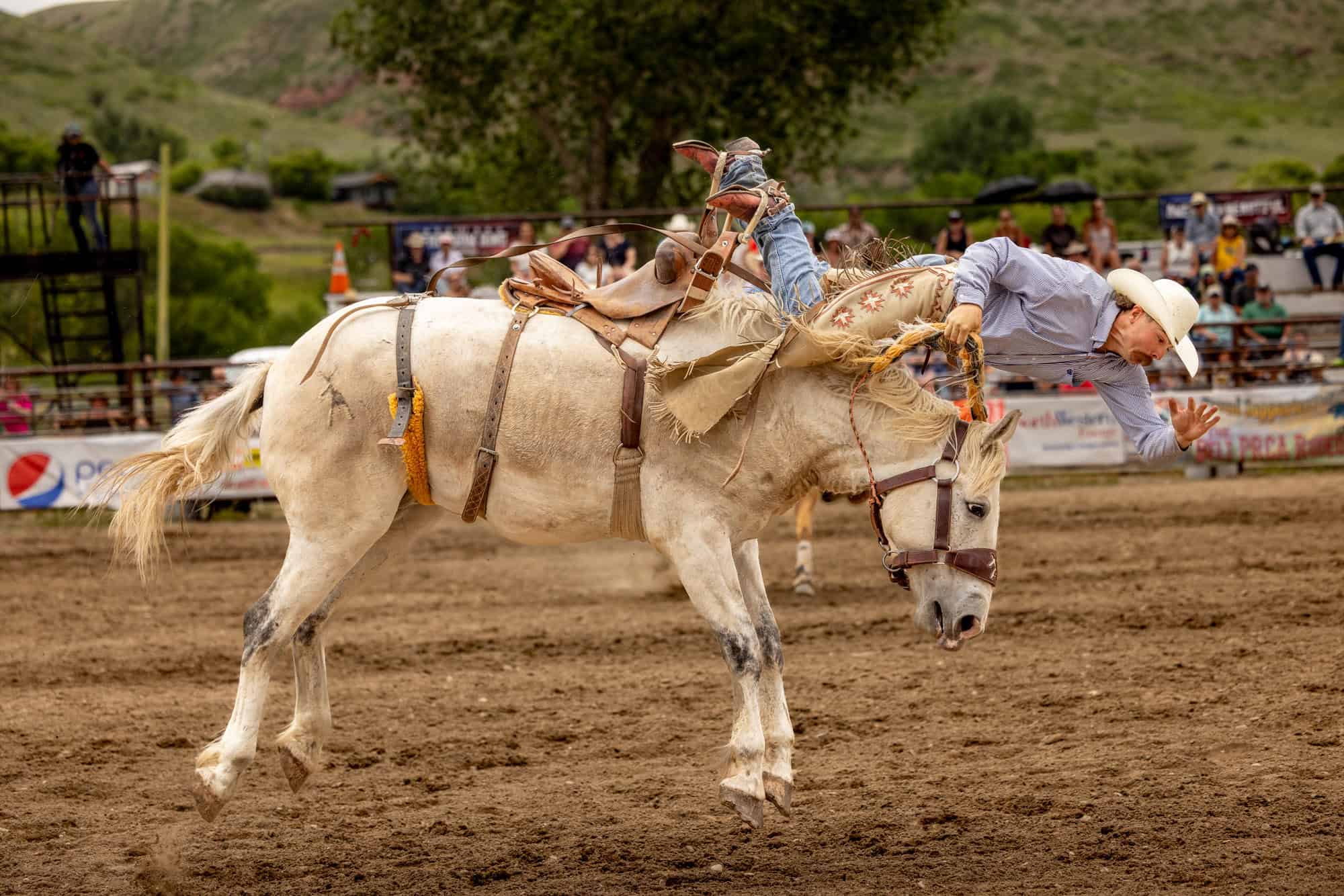
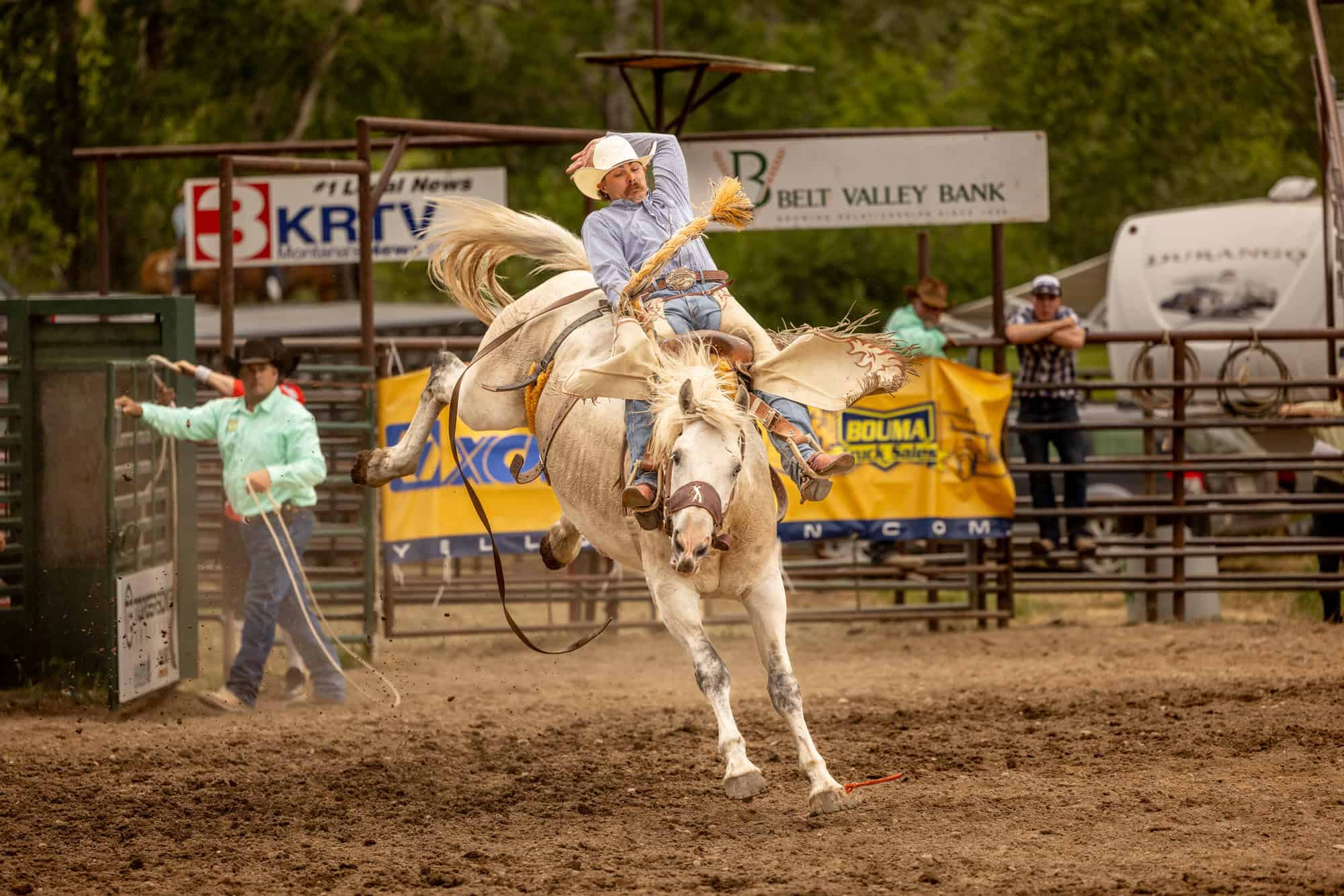
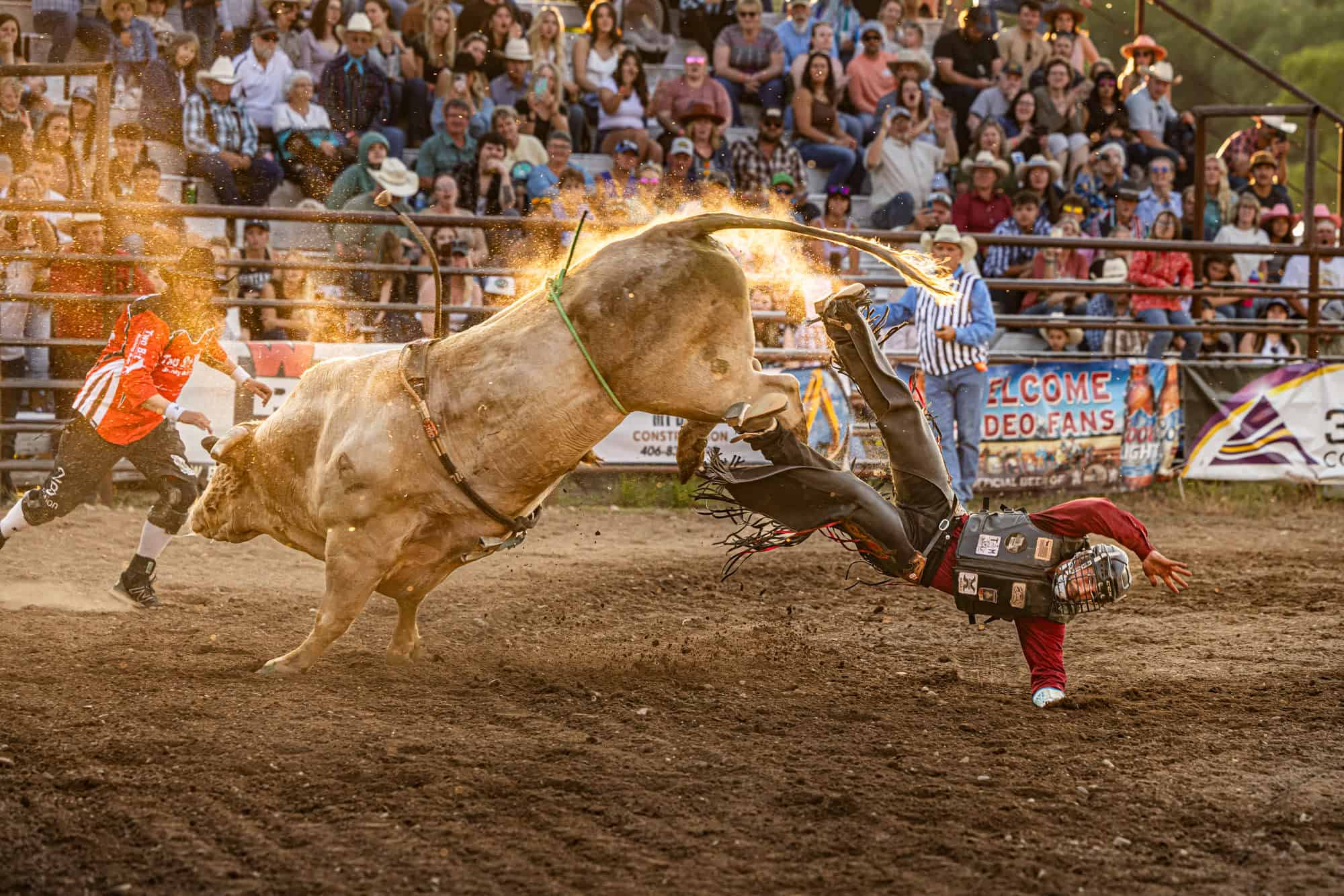
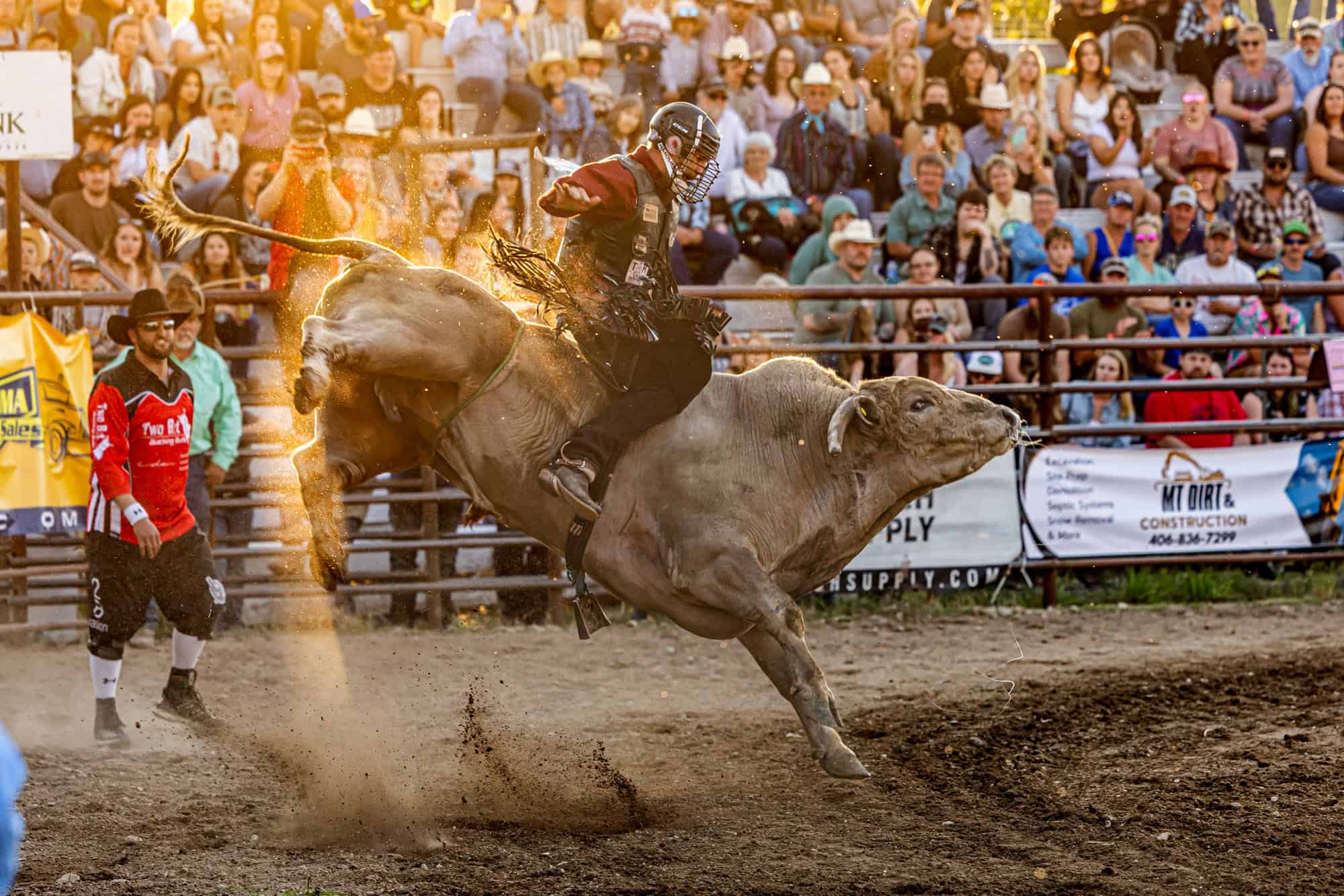
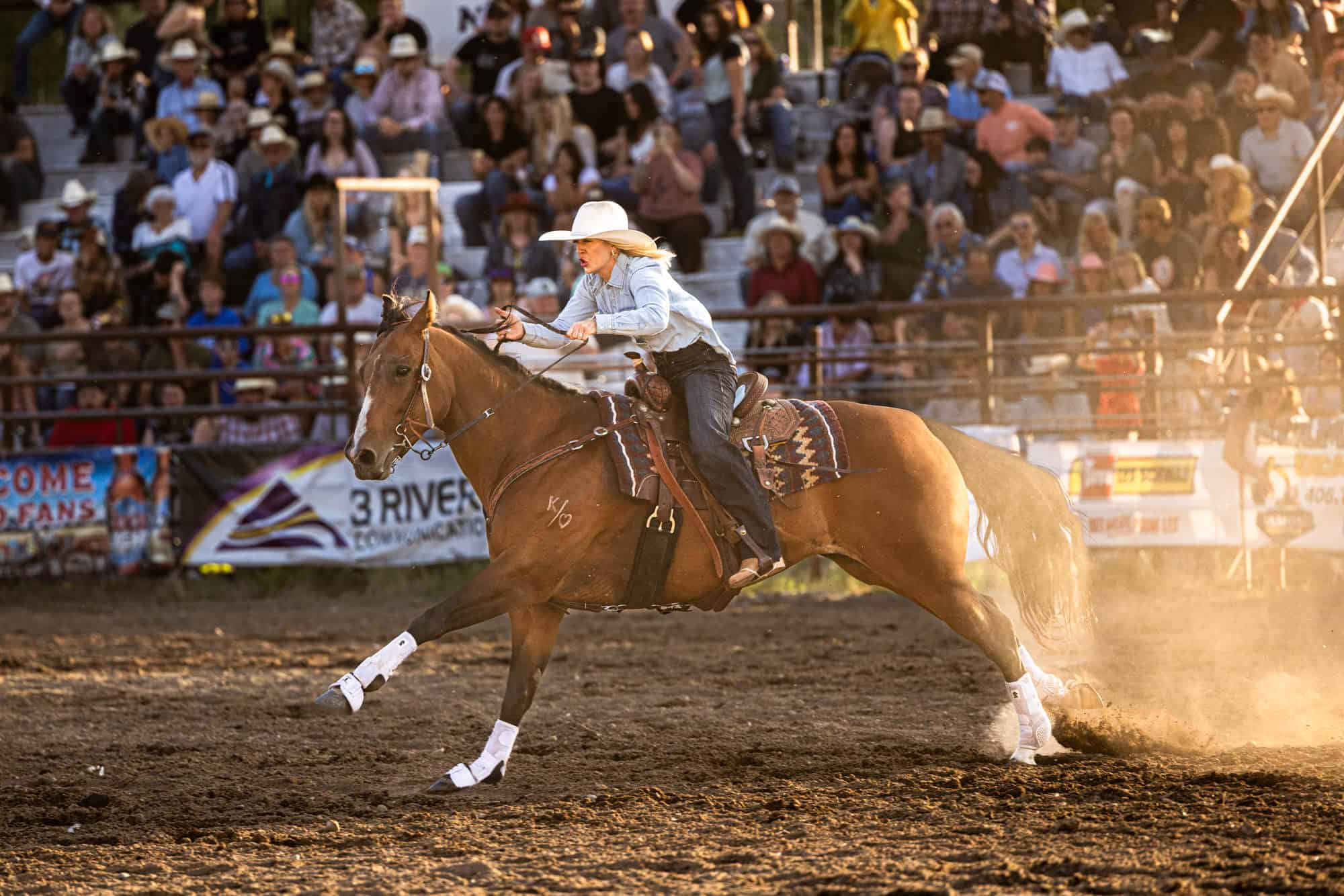
Watch: Our Video on the Belt Rodeo
Harvest Moon Brewing Company
The idea for the brewery was born in 1996, with the name chosen to reflect west-central Montana’s agricultural heritage. Harvest Moon set up shop in Belt, and the first batches hit the market in late 1997.
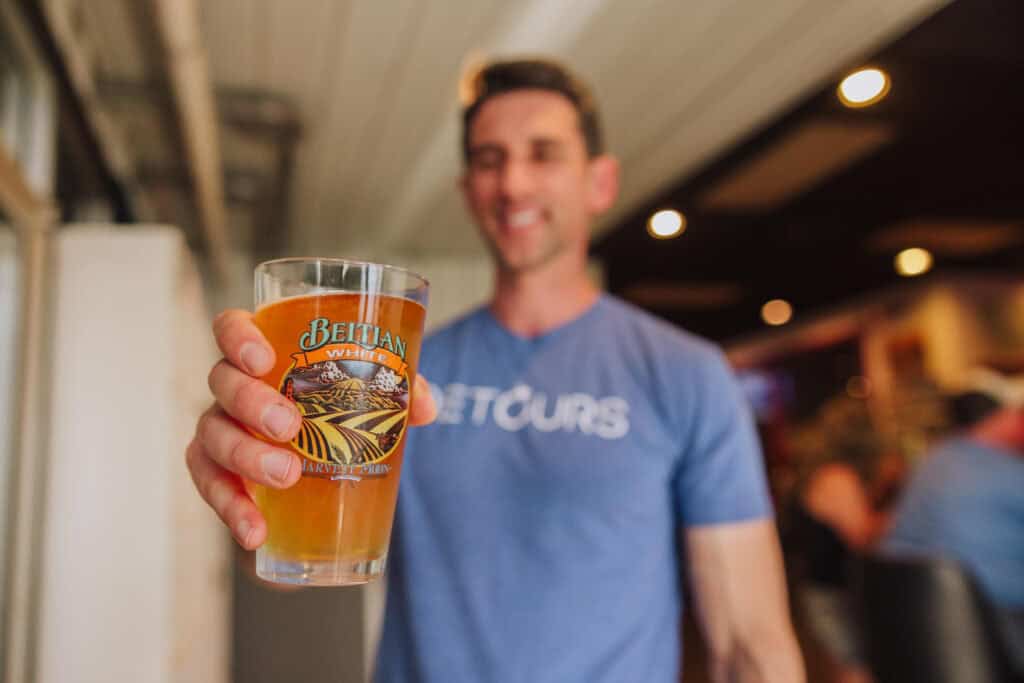
The barley is grown and malted just a few miles from the brewery, while malted wheat (for the Beltian White) and hops are sourced from the Pacific Northwest.
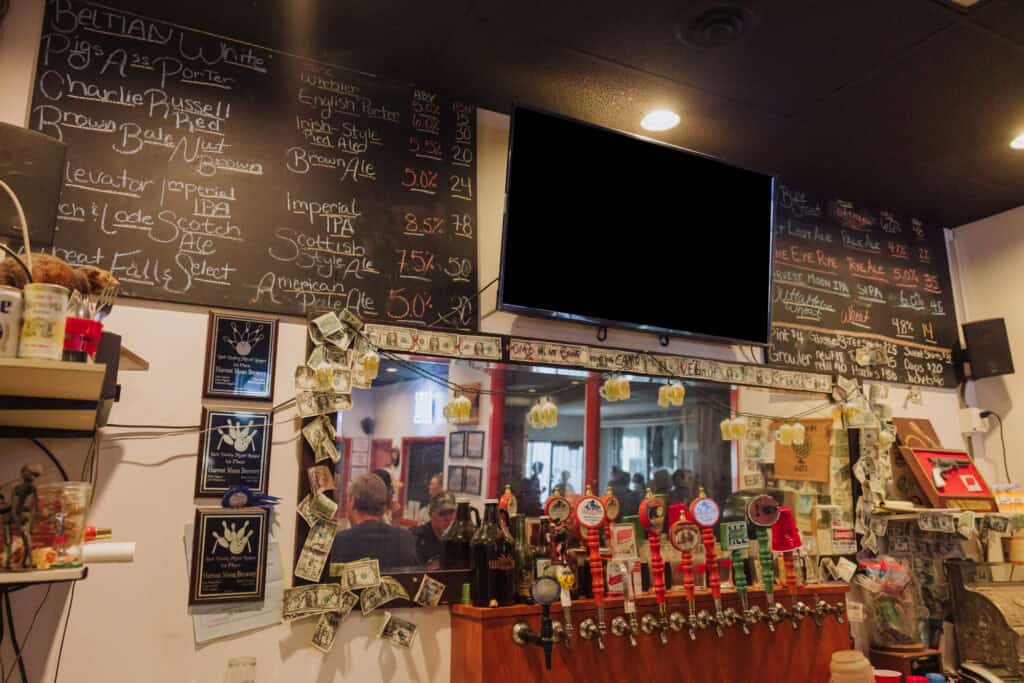
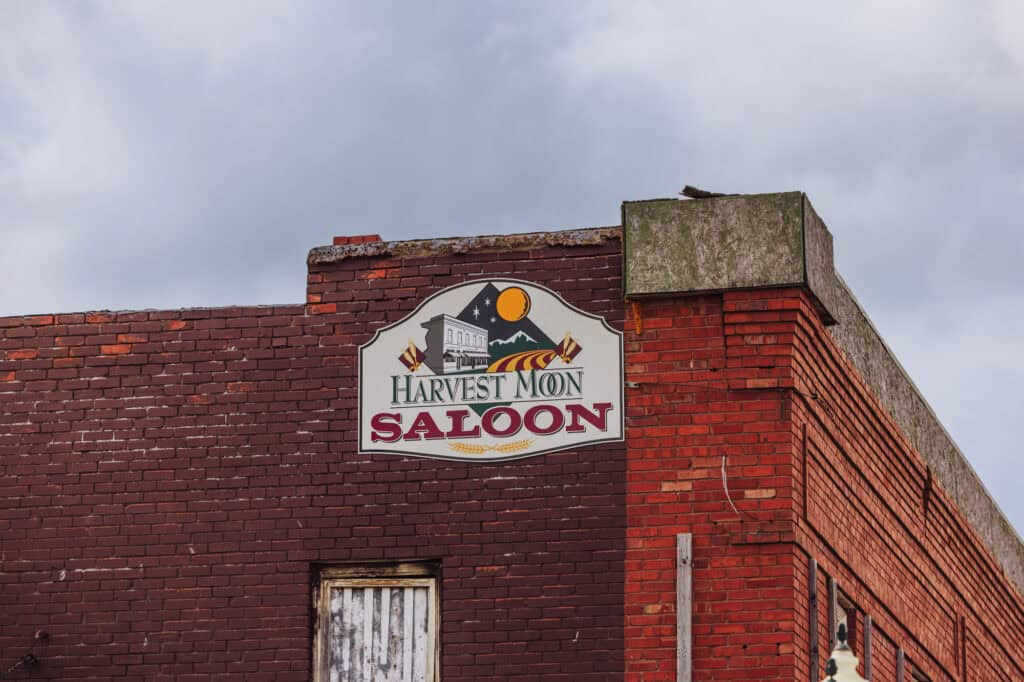
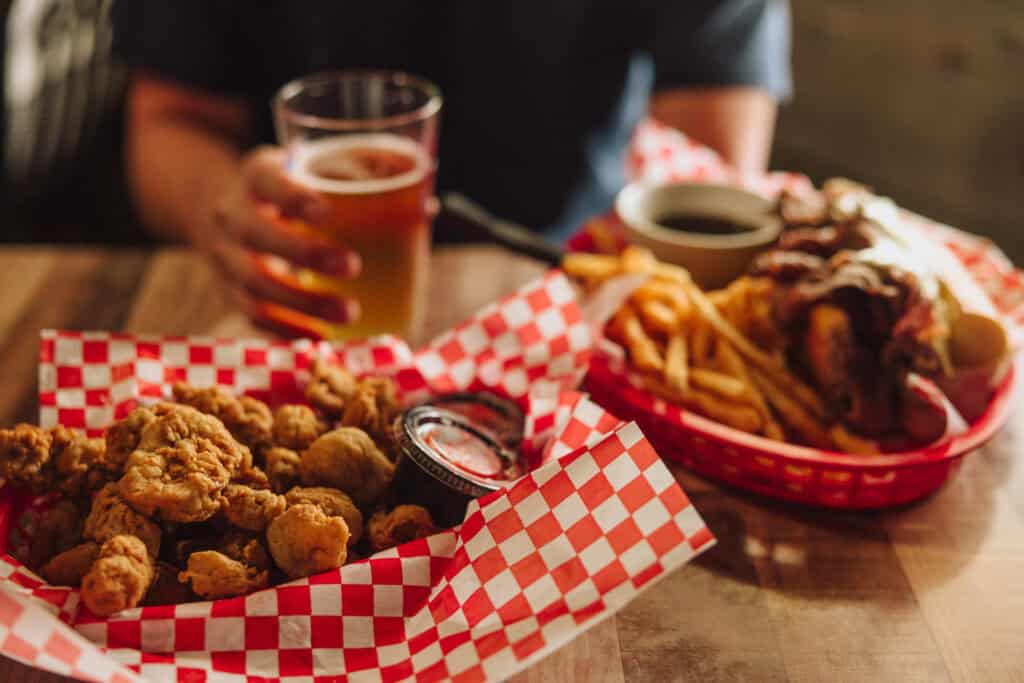
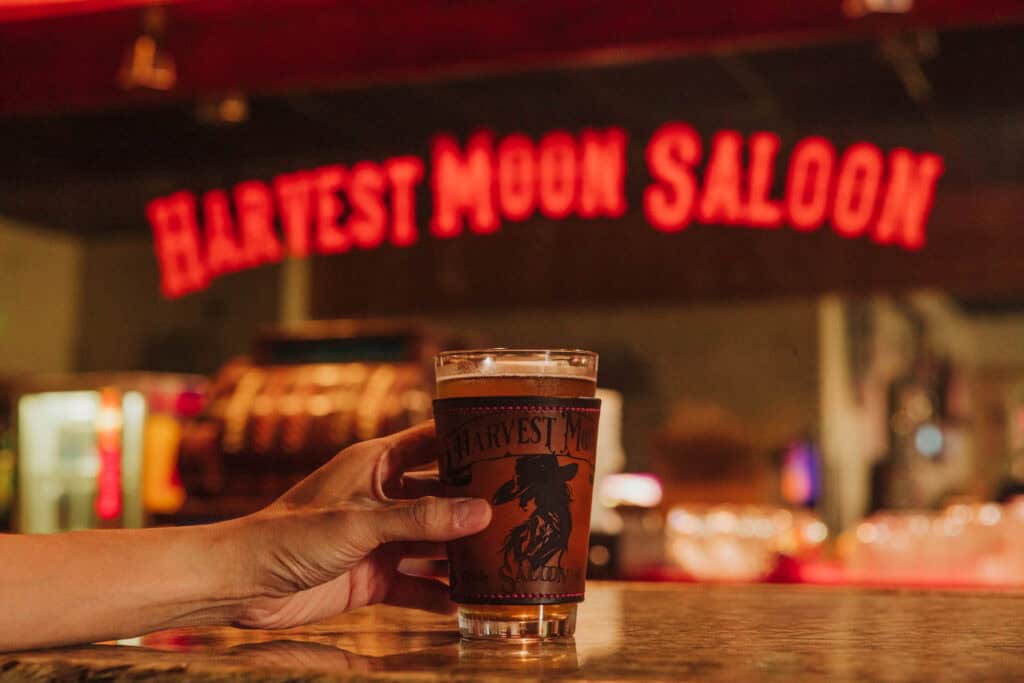
The Harvest Moon Saloon is a favorite restaurant in town, right on Castner Street.
The flagship beers
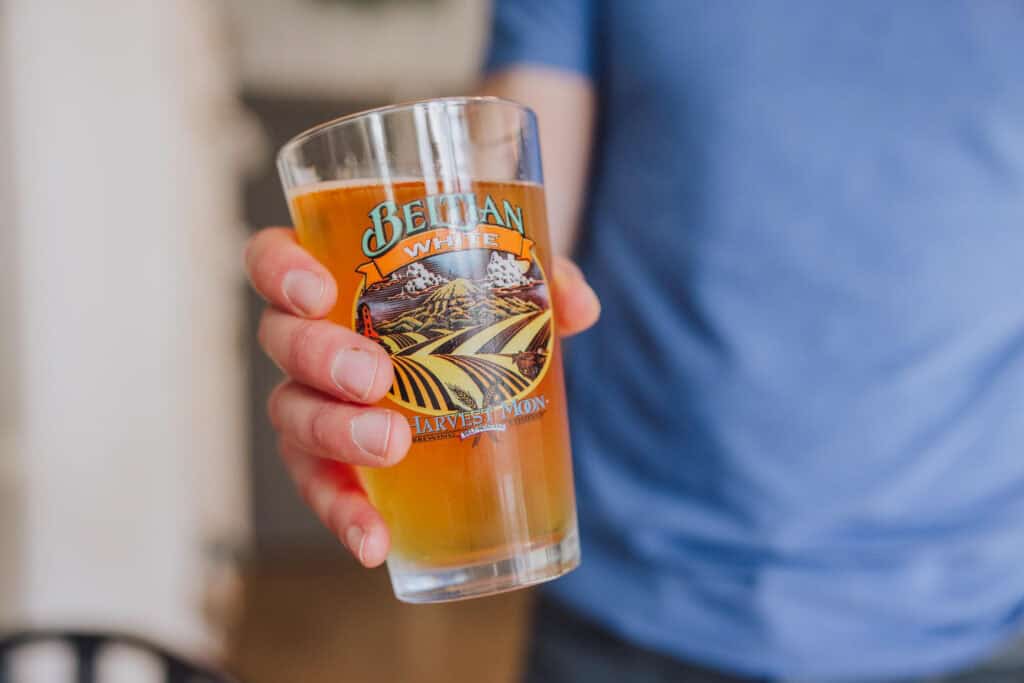
- Beltian White: A Belgian-style wheat ale brewed, finished an orange slice.
- Pig’s Ass Porter: An award-winning dark ale with a great backstory: after brewing the first batches, the brewery gave its spent grain to a local hog farmer to fatten his pigs (hence the name).
- Charlie Russell Red: An amber-hued ale, named for the famous Montana cowboy artist.
The Tap Room
Harvest Moon’s tap room is up the street from the Saloon (right at the brewery itself), and it’s open Thursday through Sunday, 1–8pm.
The Belt Creek Brew Pub
When I lived in Great Falls 20+ years ago, we used to make the trip to Belt just to fill our custom growlers from the Beltian White tap at the Belt Creek Brew Pub.
It’s a favorite memory of mine, and my glass beer keg (of sorts) is still with me.
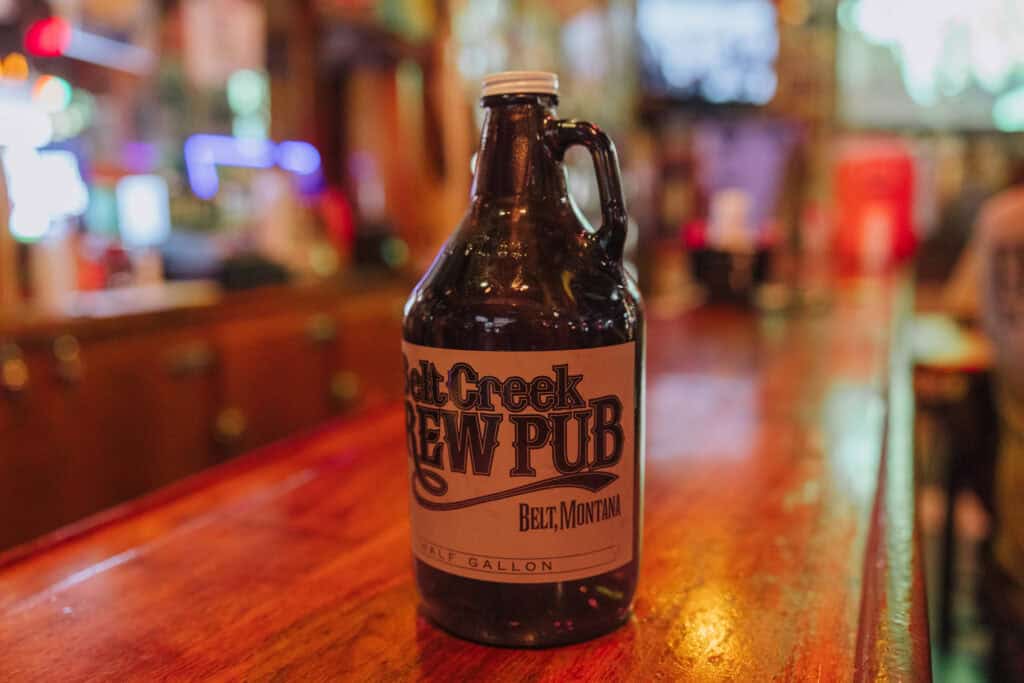
Returning to visit years later, I found out the interesting story behind the bar.
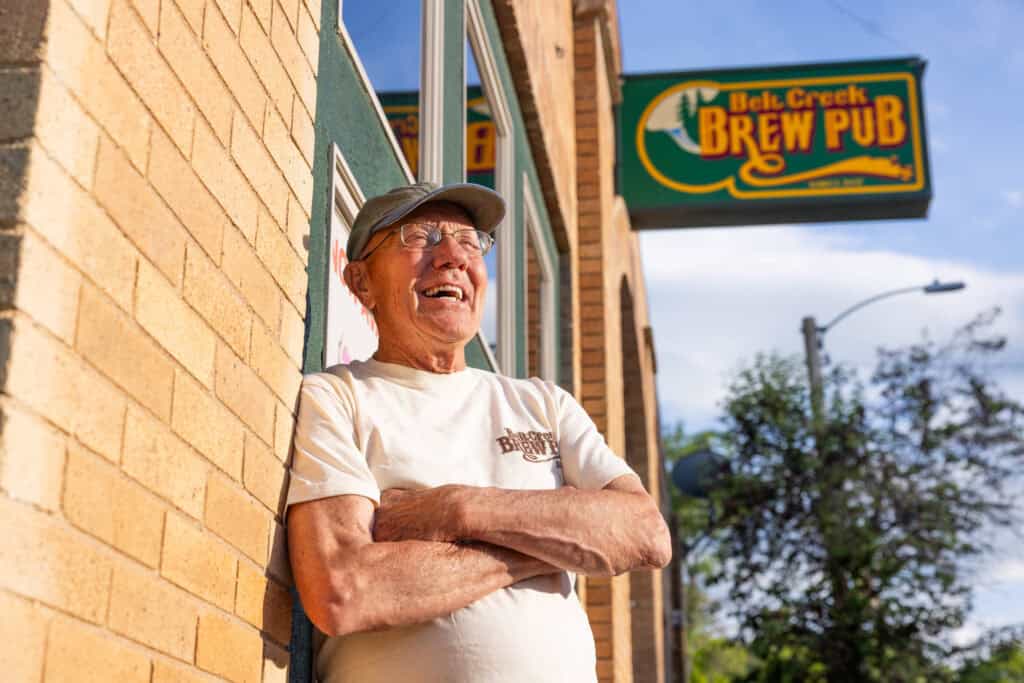
Owner Jerry Stinson spent years in the food brokerage business before small local markets were squeezed out by big-box chains like Costco and Walmart.
At the age of 51, he found himself out of a job.
After a stretch mowing lawns, Jerry and his brother saw potential in an abandoned Chevy dealership on Castner Street, built in 1913. They bought it, just intending to use it for storage.
That changed when Harvest Moon Brewing Company, up the road, outgrew its own space and asked to rent room in the old dealership.
Around the same time, a state beer and wine license happened to become available, along with permits for 20 gaming machines, and the pieces fell into place.
The Belt Creek Brew Pub opened its doors in 1997, just before that year’s Belt Rodeo.
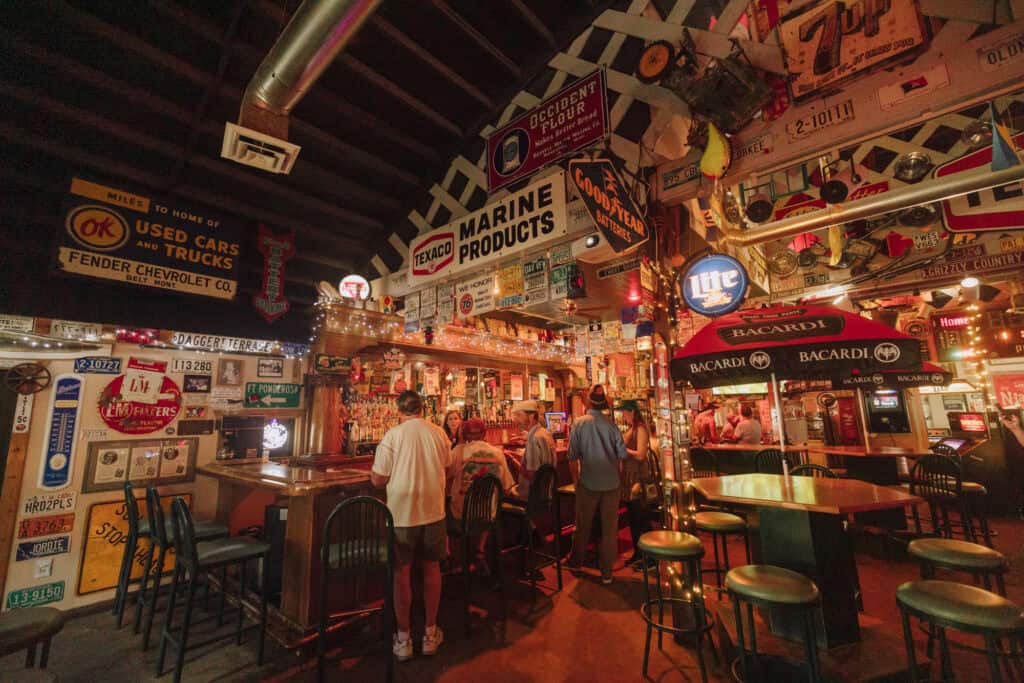
Jerry ran it until he turned 65, then passed the business on to his son.
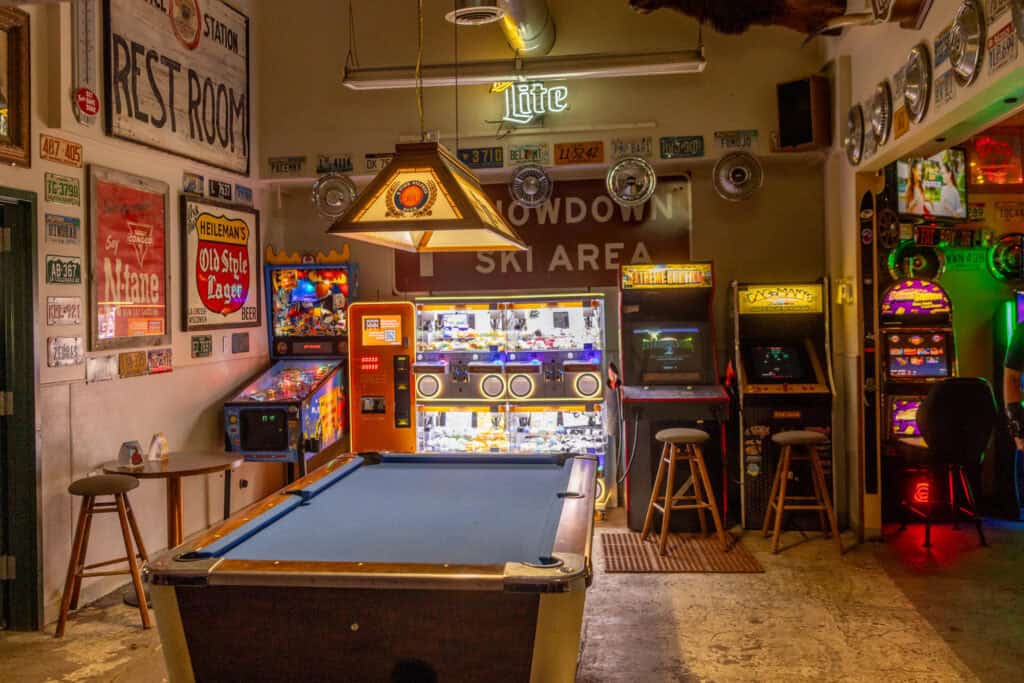
It’s full of Montana memorabilia, and has a great patio out back, right on Belt Creek.
The Belt Performing Arts Center
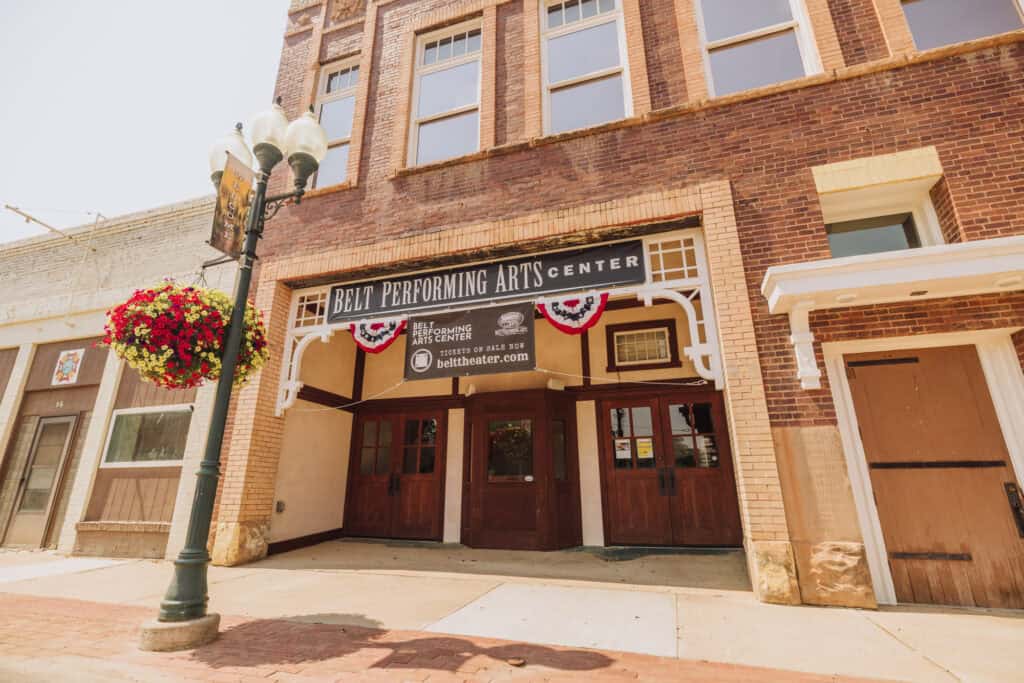
The building on Castner Street was constructed in 1916 as a Knights of Pythias castle, serving as the entertainment hub of its era with a 120-seat silent movie theater, vaudeville stage, billiard parlor, ballroom, and food prep area.
The Masons later used it as a lodge until the early 1990s, and then gave it to the Belt Theater Company to preserve the building.
years of renovations
The building’s total overhaul has been paid for through grants, donations, and fundraisers, mostly from local supporters:
- A state grant funded a new roof, and major construction began in 2016.
- An inspection turned up minor asbestos issues and required the building to be earthquake-proofed.
- Wiring and plumbing were fully modernized while the original wood trim was preserved.
- Handicap accessibility was added, including an elevator fully funded by a single benefactor.
- Backstage areas got an upgrade with two dressing rooms and a dedicated bathroom/shower.
- All new seating was required, since the original seats (18 inches armrest-to-armrest) didn’t meet the modern 22-inch standard.
- A second-floor special events/reception hall with a food prep area was added for weddings, reunions, and similar gatherings.
Once complete, the building was renamed the Belt Performing Arts Center, with plans for a theater manager to book dinner theater, plays, music, and an open-mic night called “Belted Out,” plus a focus on engaging local youth in the arts.
The Belt Museum (Old Town Jail)
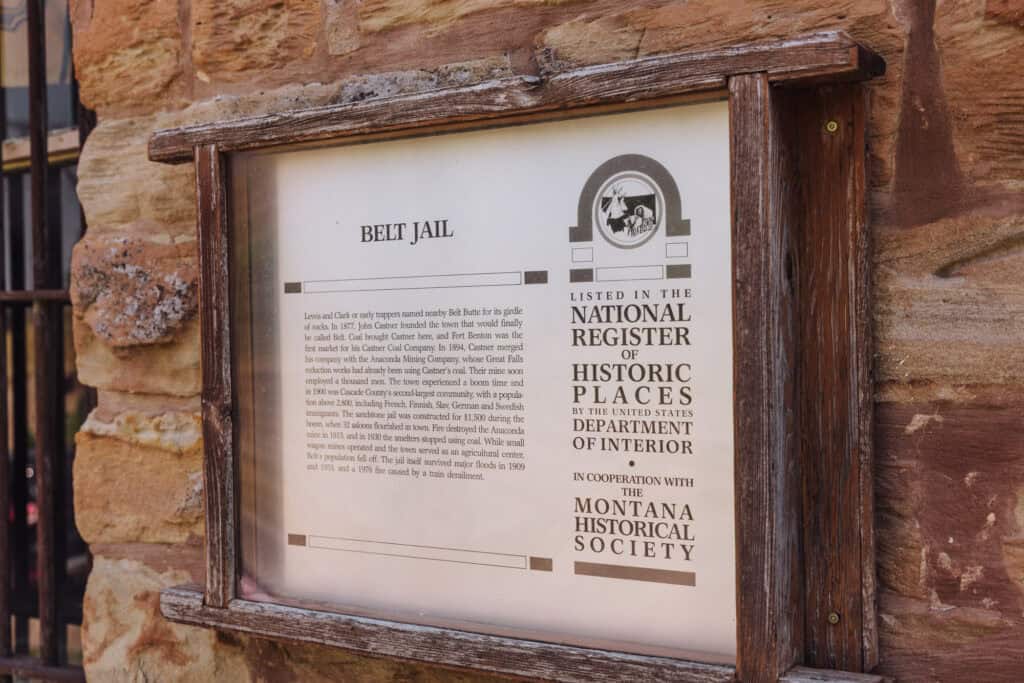
The jail went up in the mid-1890s, at the height of Belt’s coal-fueled growth, and remains a designated historic building. It’s a fitting link to the town’s rough-and-tumble coal camp days.
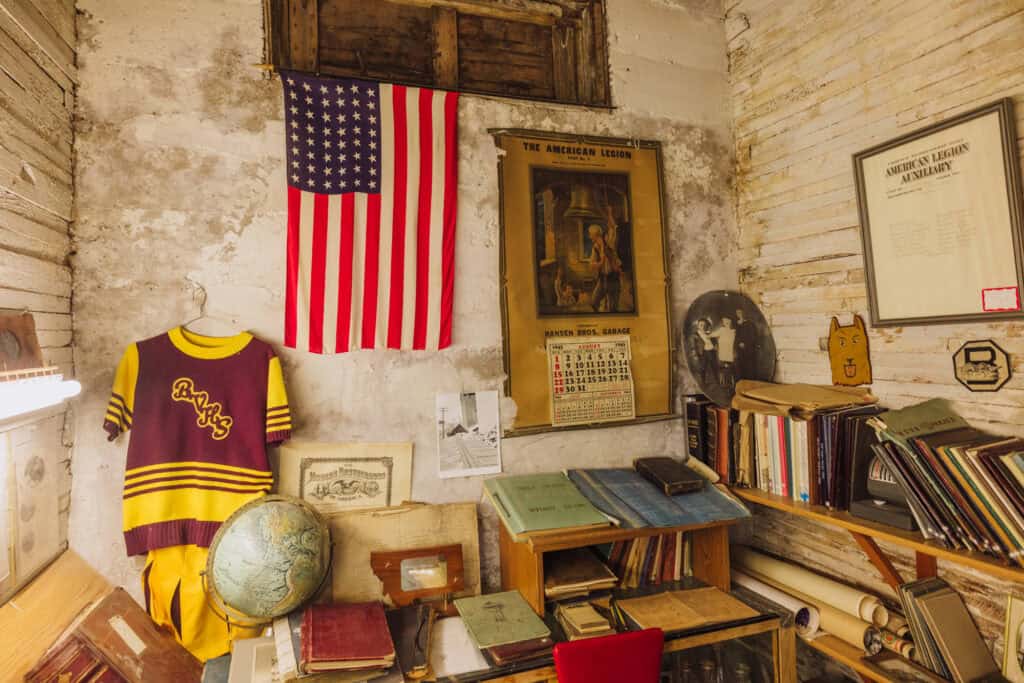
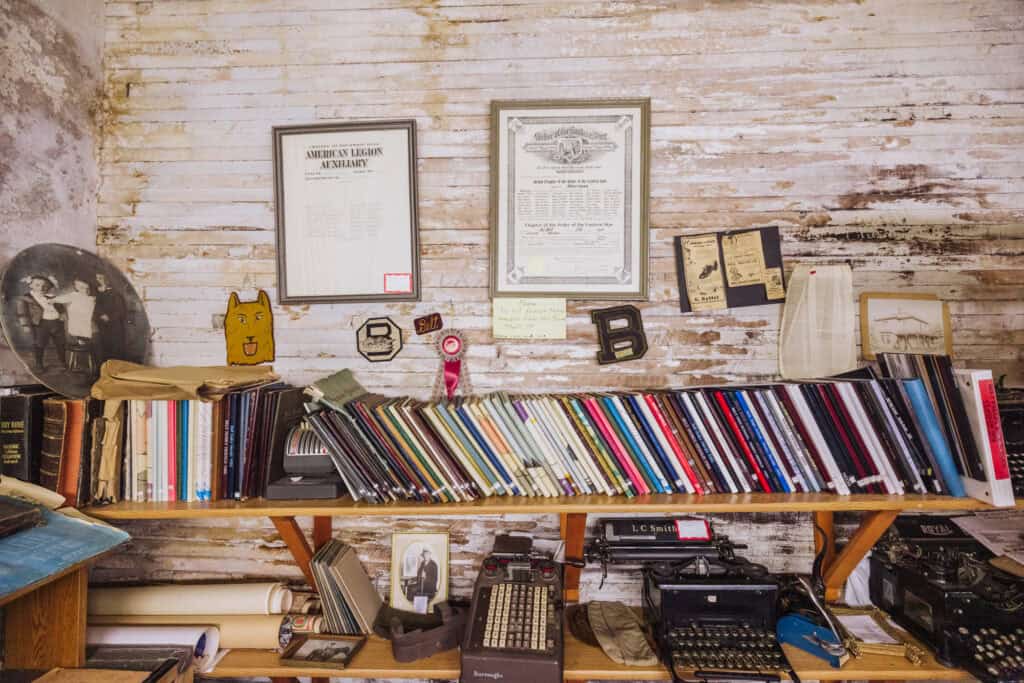
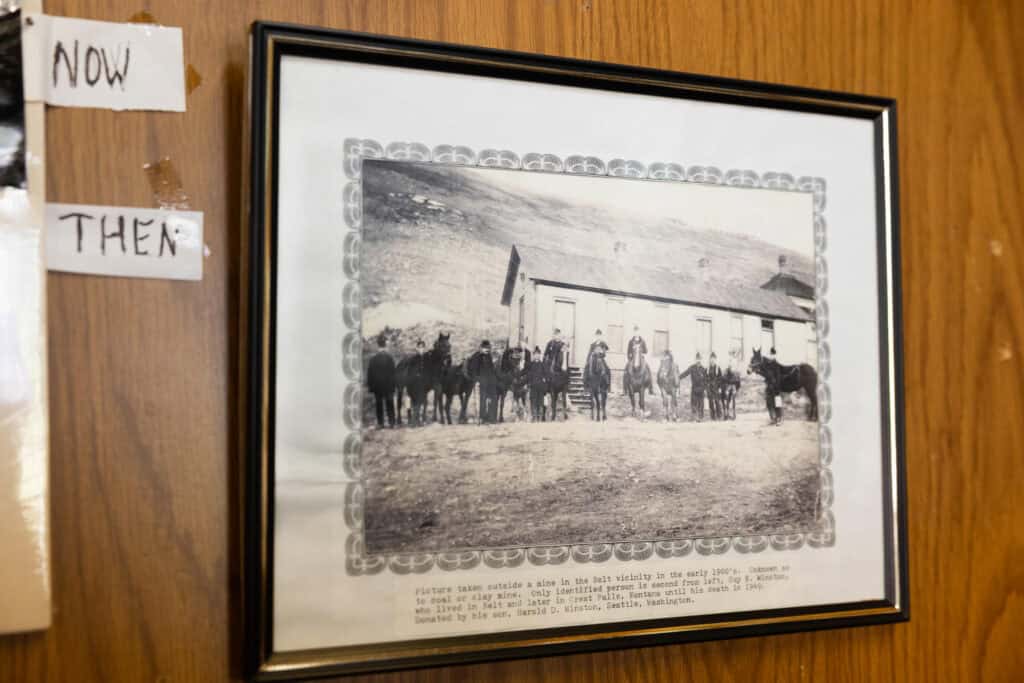
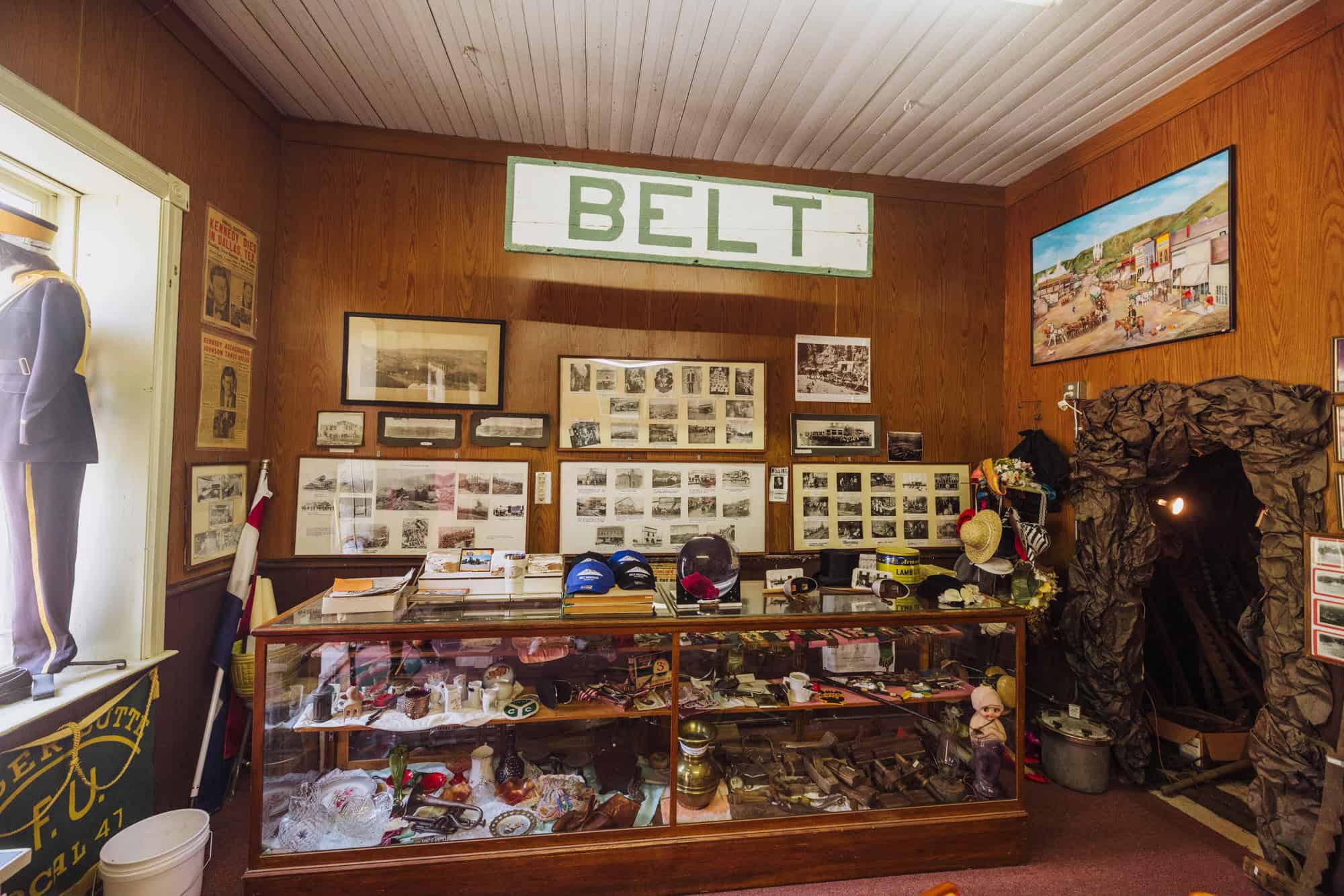
Today it houses the town museum, with exhibits on the coal-mining era, a jail cell, and local art.
A story straight from the jail’s early days
The local paper, the Belt Valley Times, captured just how wild things could get in boomtown Belt.
An April 1895 issue reported that Deputy Sheriff McLeod White was shot during a drunken quarrel. A man named Bill Hall pulled a gun on his boss, and then turned it on the deputy as he tried to intervene.
The bullet struck White in the neck and lodged near a lung.
The town constable managed to arrest and disarm Hall before an angry crowd could lynch him on the spot, quickly moving him to a stable for safekeeping, and then to Great Falls in the middle of the night to avoid mob justice.
White survived his wound, and Hall pleaded guilty to assault with a deadly weapon.
It’s a reminder that Belt’s charming, quiet Main Street was once home to saloons, gunfights, and near-lynchings during its coal-boom heyday.
A Brief History of Belt
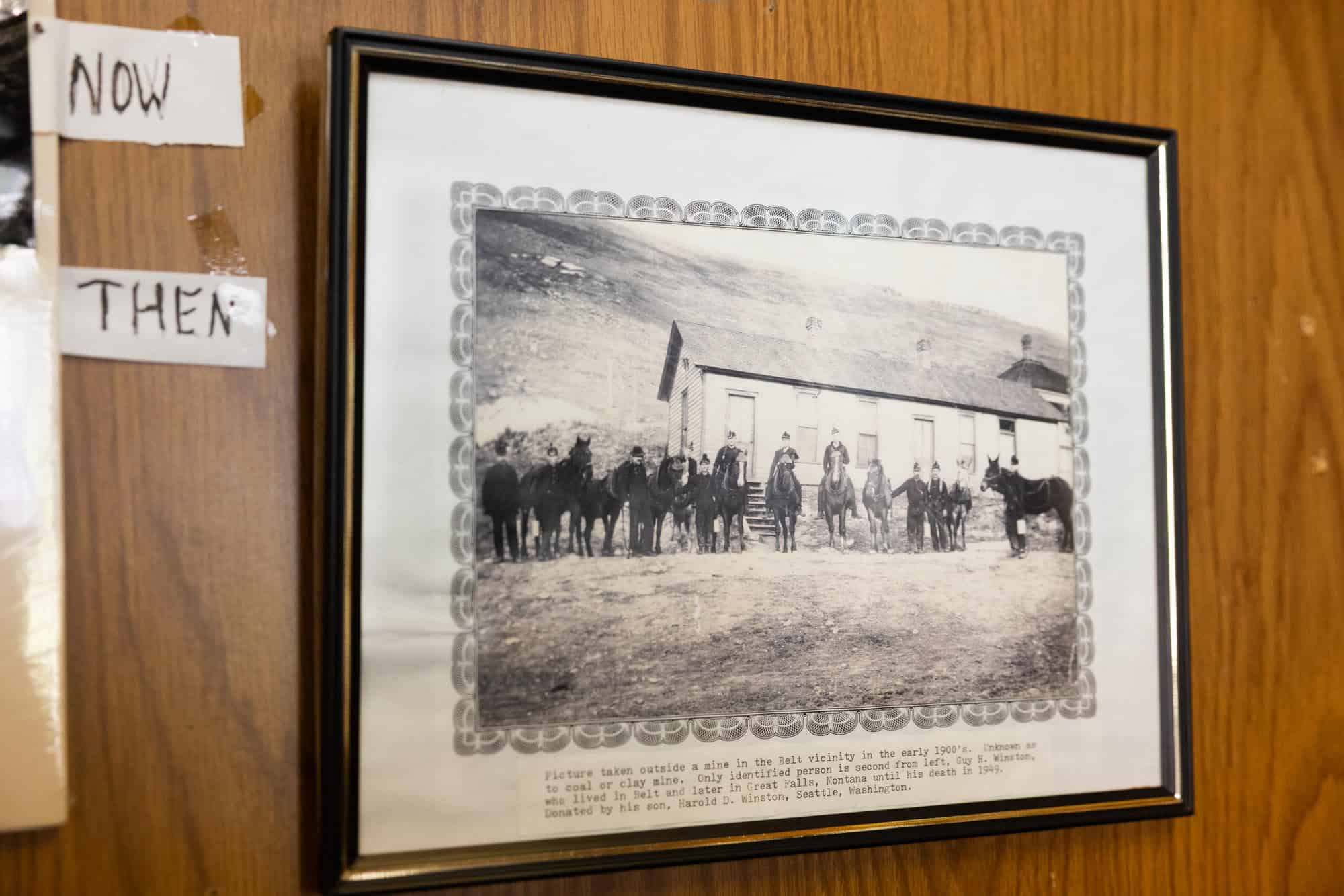
Belt’s story starts with coal, which gave the town the nickname of “Black Diamond City.”
Pennsylvania native John Castner discovered rich coal deposits along Belt Creek in 1870, and within a few years he and Fort Benton trader T.C. Power opened Montana’s first commercial coal mine there.
In the late 1870s, Castner developed the mine while he and John Millard platted the town, originally called Castner, in 1885. His wife, Mattie Castner was one of Montana’s early African-American businesswomen.
Between 1891 and 1893, Belt supplied coal for the large smelting operation in Great Falls, and the Boston and Montana Mining Company began operations in 1893, using largely imported Finnish and Slavic workers who helped construct buildings and supply coal to the smelter. The coal camp boomed into a town of about 4,000 people for a short time in the late 1890s, supporting as many as 30 saloons at its peak (likely a major reason the town needed its own jail)!
The Name “Belt”
Belt is named for the mountain range and creek, which take their name from a nearby butte with a prominent dark band. The Blackfeet were the first to note that the dark strata looked like a belt, or girdle.
From Boom to Bust
The good times didn’t last. Fire destroyed the Anaconda mine in 1915, and the population began dropping in the 1920s as the coal boom faded. The final blow came around 1930, when the Great Falls smelters switched from coal to natural gas entirely, sharply reducing demand for Belt’s coal.
Ag & Ranching
As agriculture and ranching gradually became the economic backbone of the area in the early 1900s, the old mining-camp buildings gave way to more substantial stone and brick storefronts, many of which remain today.
The Belt Commercial Historic District
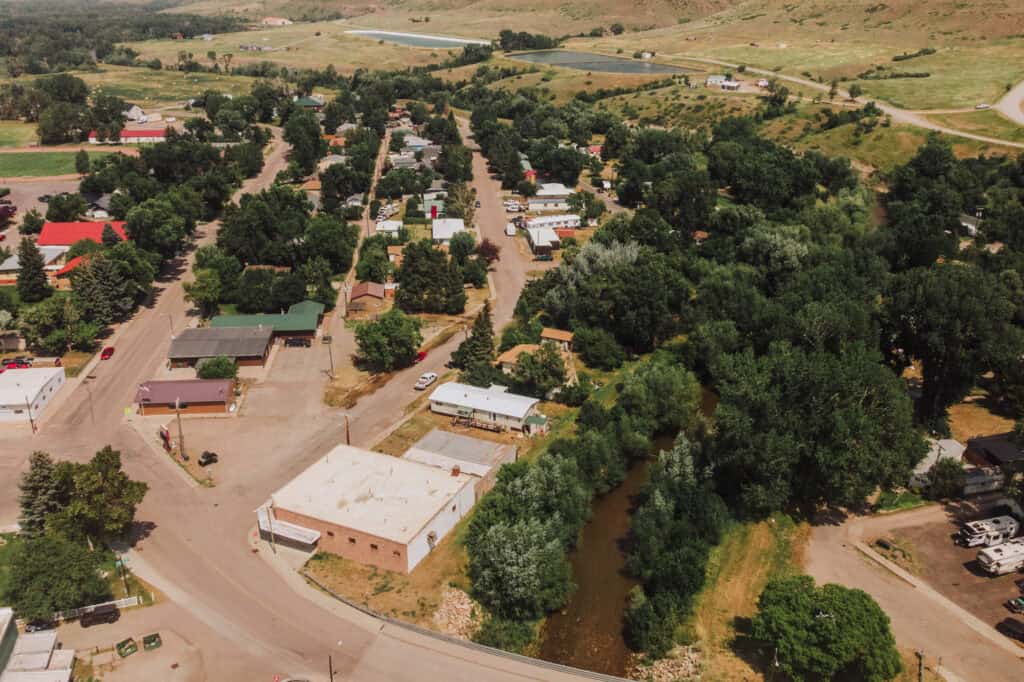
The Belt Commercial Historic District covers a compact, two-block stretch of Castner Street and Bridge Street, comprising 17 buildings and 2 structures.
It reflects three key periods of the town’s development: its origin as a mining camp turning into a permanent town in the late 1890s, a boom of masonry construction from 1906–1920 (the Homestead Boom era), and a modest post–WWII resurgence.
Individual sites, as Listed on the National Register:
- Belt Jail (37 Castner, c. 1896) Small sandstone jail, individually NR-listed in 1980; now serves as the town museum.
- Welcome to Belt Garage (49 Castner) Modest wood-framed building moved to this site in 1993; replaced earlier millinery/office buildings.
- Prather’s Billiard Parlor (55 Castner, c. 1905) Wood-frame former saloon with a shed roof mimicking a false front; last of its architectural tradition in the district.
- Pioneer Garage (57 Castner, 1917) Brick-and-sandstone former auto repair garage built by a Swedish stonemason; “PIONEER” spelled out in raised brick. Currently Belt Crew Brew Pub.
- Belt Valley Grocery (65 Castner, c. 1984) Modern metal-framed grocery store; considered the district’s most visually intrusive building.
- Clergy Block/Hotel Waldo (Castner, 1913) Two-story brick anchor building replacing the original Castner stage station/hotel; once held a hotel, bank, and shops.
- Manchester’s Emporium (56 Castner, c. 1920) Simple one-story brick commercial building with a decorative cornice.
- Pythian Castle (58 Castner, 1916) Stone-and-brick fraternal hall/theater with decorative blond brick, Knights of Pythias terra cotta shields, and an ornate storefront.
- Black Diamond Cafe (64 Castner, 1919) —Two-story stone-and-brick building stylistically paired with the Pythian Castle next door.
- Hane Building (64½ Castner, c. 1899) One of the oldest buildings in town, but heavily altered with vinyl siding, now the “Black Diamond Supper Club.”.
- Oriental Saloon (66 Castner, 1906) The only building built entirely of rough sandstone during the 1906–1920 boom.
- New Drug Company (68 Castner, 1916) Simple blond-brick Western Commercial storefront.
- Farmers & Miners State Bank (70 Castner, 1919) —The district’s only Neoclassical building, with pilasters, a carved frieze, and pedimented entry; the town’s most prominent bank.
- Belt Hardware Company (72 Castner, 1896) Ornate two-story sandstone building with pressed-metal cornice and lettering advertising harness, farm implements, and vehicles; a key anchor of early Belt.
- Belt Creek Cafe (76 Castner, c. 1945) Concrete-block cafe building with a false front, but too altered to retain integrity.
- Cinker Building (78 Castner, c. 1946) Combined commercial/residential building on the former site of a tinsmith shop, representing postwar economic growth.
- G. Ryffel & Sons Department Store (23 Bridge Street, 1947) Concrete-block department store with a canted corner entry, marking Belt’s post-WWII building material shift.
- Belt Street Bridge (1923) A riveted Warren pony truss bridge, 93 feet long, spanning Belt Creek.
- Stone Retaining Wall (Castner Street, 1930) A 540-foot sandstone wall built to support the widening of Highway 89 through town.
Wrap: For me…
…visiting Belt always brings back a rush of memories!
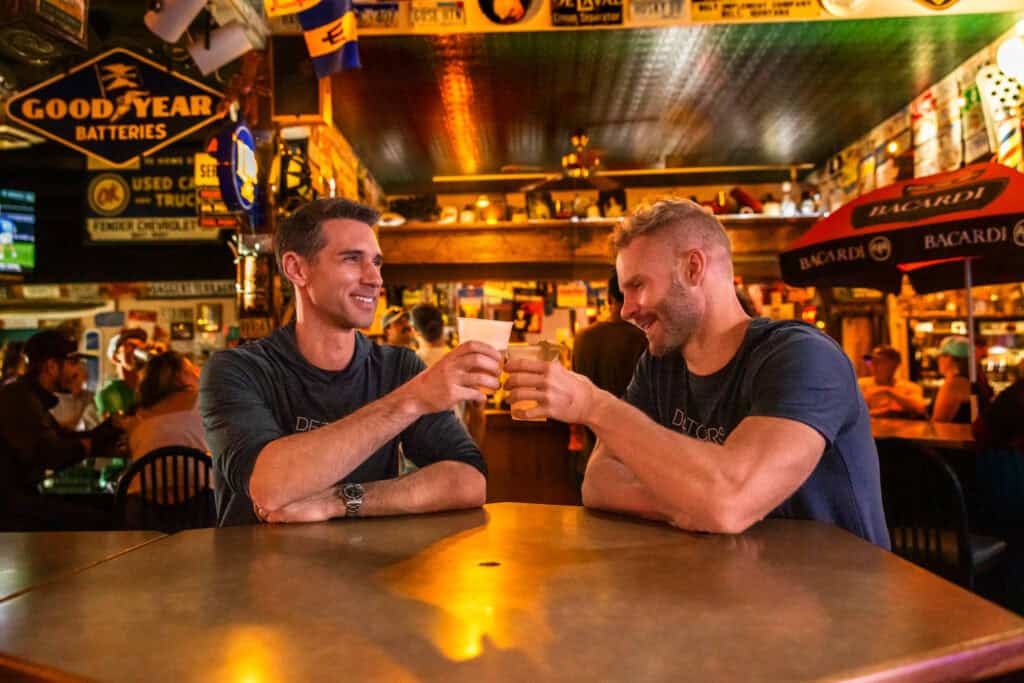
Having a Beltian White from the tap in the Belt Creek Brew Pub with photographers Matt Ehnes and George Masin was a great way to end our visit.
This trip, we had the added bonus of spending time with Taylour Watson, who became a rodeo champion as a teenager, and travels around the state on the rodeo circuit.
For an outsider, it was fascinating to hear how much time and effort (and resources) go into riding and racing… and to have her explain what makes the Belt Rodeo special.