Visiting Athabasca Falls in Jasper National Park

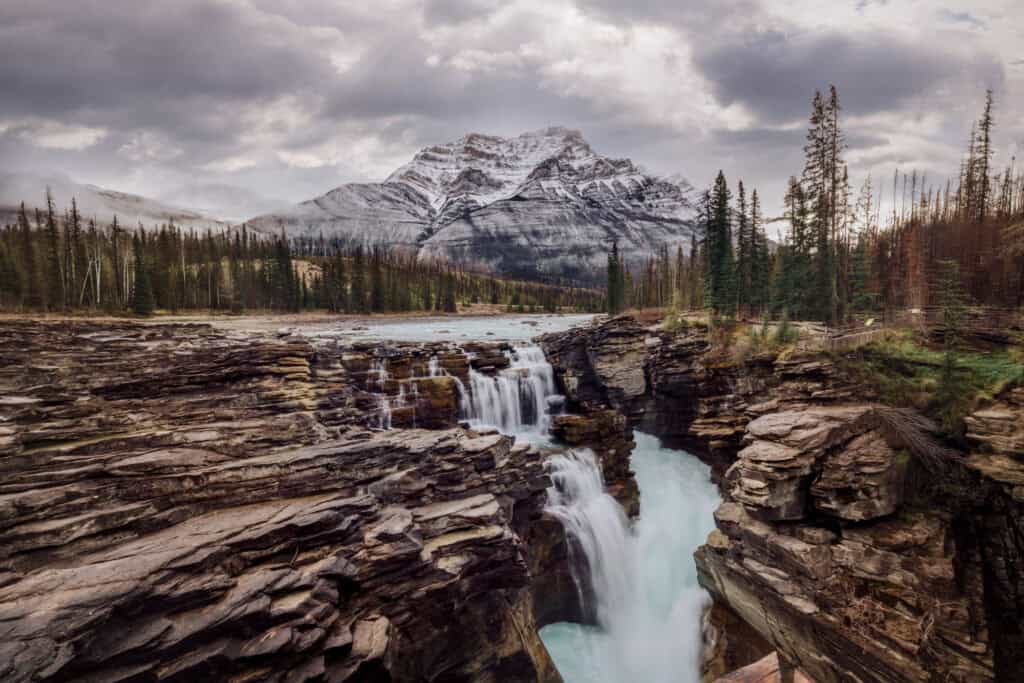
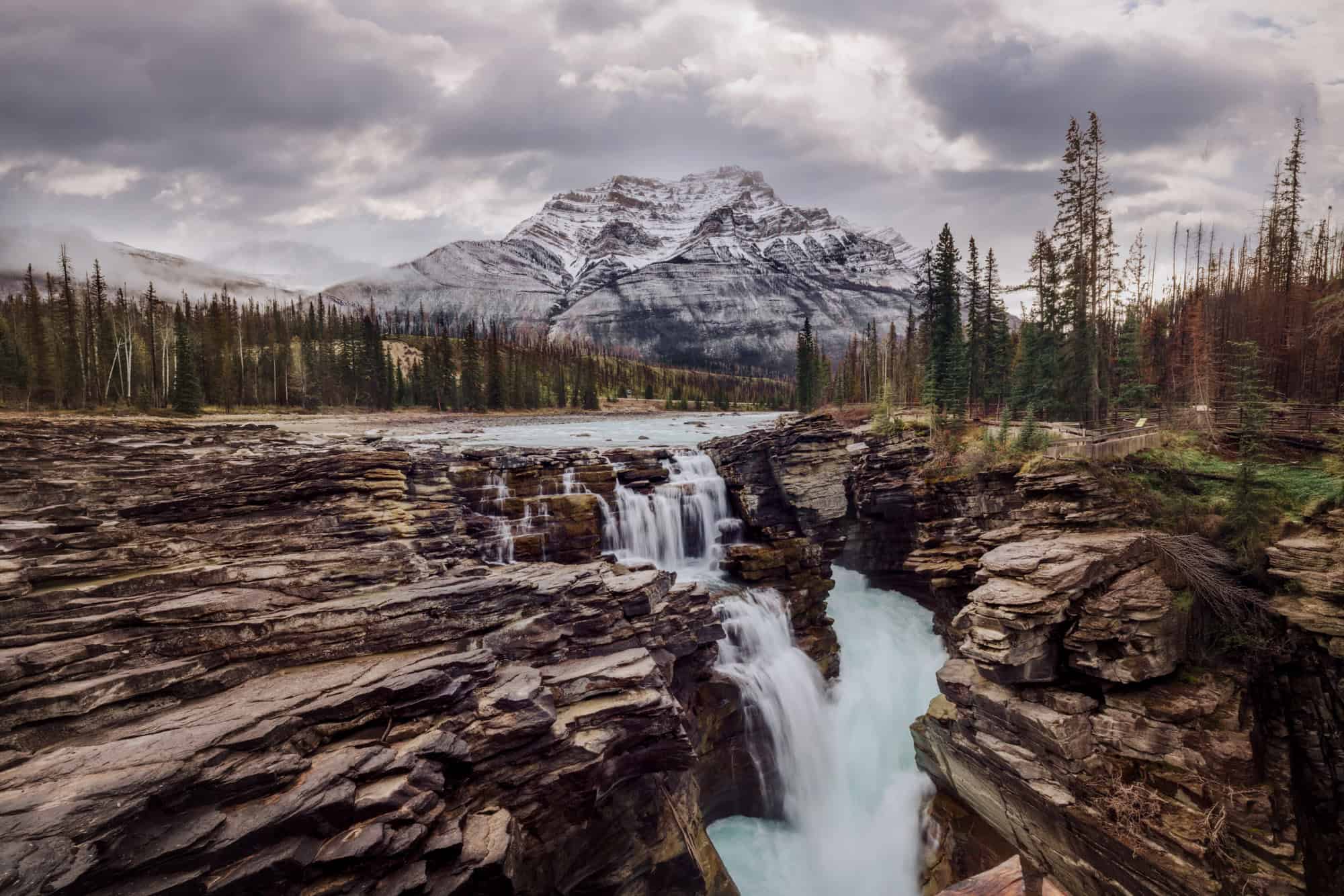
I’ve found few places in Jasper National Park that capture raw natural power like Athabasca Falls!
When the Icefields Parkway was completed in 1940, Athabasca Falls became one of the most popular stops along the route. It remains a must-see for travelers between Jasper and Banff.
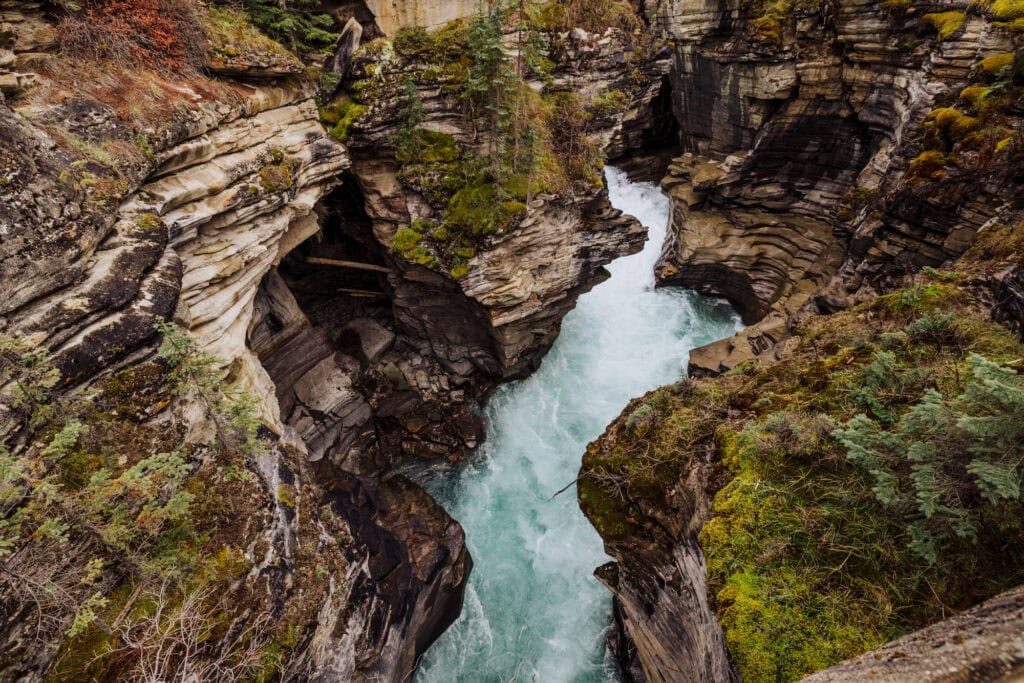
Just a short drive south of the town of Jasper, this roaring waterfall plunges into a deep, narrow canyon. It’s easy to get to, and accessible to all..
The falls are the result of thousands of years of glacial movement and the force of water carving through stone.
Even though Athabasca Falls isn’t the tallest waterfall in the Canadian Rockies, it’s certainly one of the most dramatic … and one of Jasper’s easiest natural wonders to reach.
Basic Info on Athabasca:
- No fee to enter, aside from park entry
- 19 miles south of Jasper
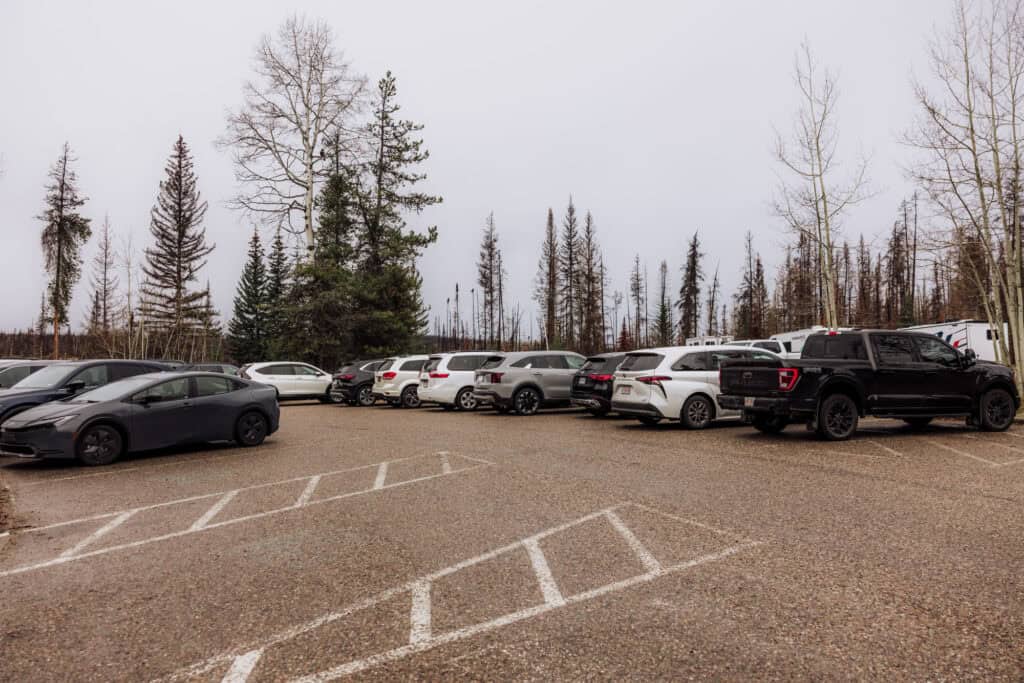
- Large parking lot
- Plan to spend 30 minutes here
Getting to Athabasca Falls
Athabasca Falls is located 19 miles (30 km) south of Jasper, along the Icefields Parkway (Highway 93). The drive takes about 25 minutes.
The turnoff for Athabasca Falls is clearly marked on your right. A large parking lot, restrooms, and picnic tables are available near the trailhead. I saw a huge family reunion taking place there, so there’s definitely plenty of room for parking and gathering.
If you’re continuing from Jasper down toward the Columbia Icefield or Banff National Park, Athabasca Falls makes a perfect first stop on your journey.
Why There’s a Waterfall Here
During the last Ice Age, as the Athabasca Valley Glacier crept forward, it scraped across the landscape, shearing off huge chunks of rock and leaving behind steep cliffs.
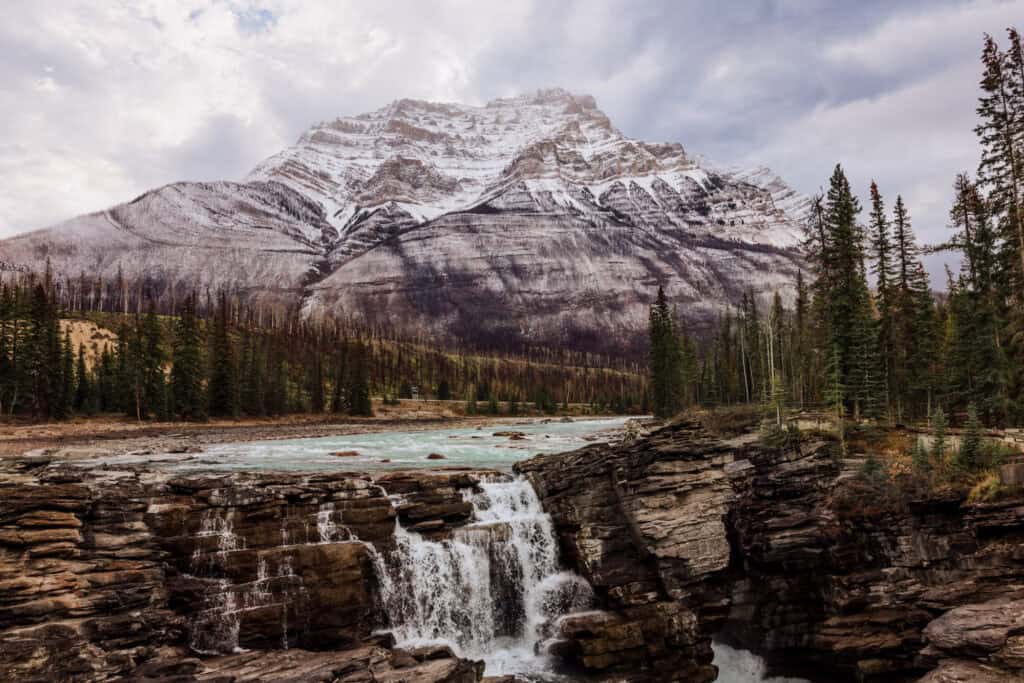
The waterfall formed where the river drops off into an area gouged out by a glacier.
A stream flowing beneath the glacier began carving the early canyon, and when the glacier retreated, the Athabasca River took over. Even today, the river continues to deepen the canyon, cutting away just a few millimeters of rock each year.
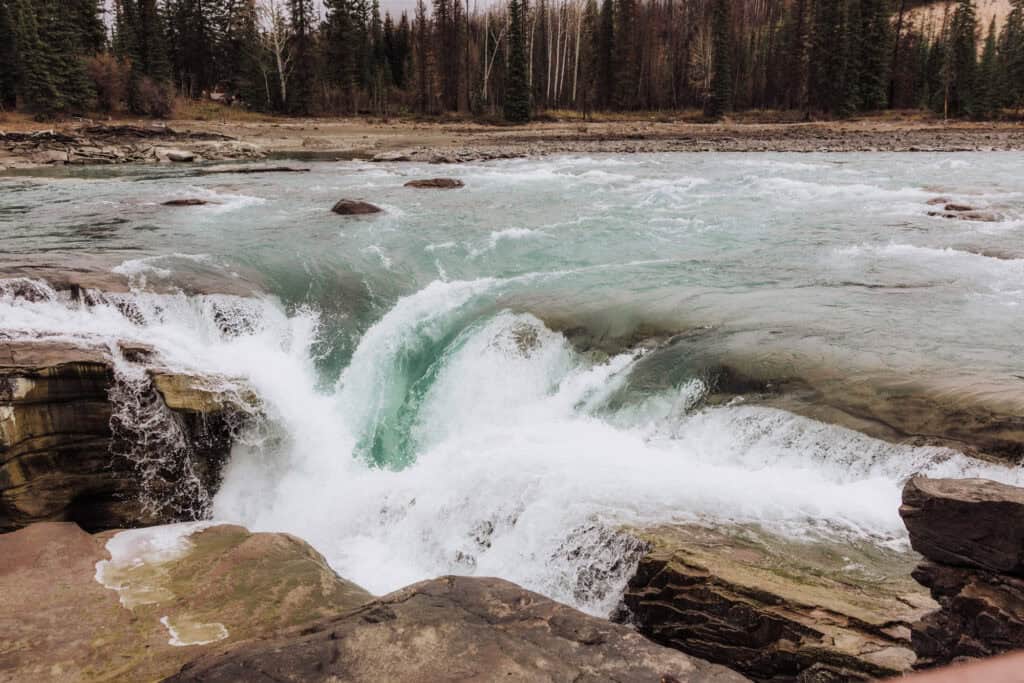
Exploring the Canyon
Most visitors spend about 30 minutes exploring Athabasca Falls, though you could easily linger longer. The trails and viewpoints are short, paved, and accessible … so again: great for all ages and abilities.
Parking stresses me out, especially during busy times of the year, but as I mentioned: there are large lots near the falls.
A short 5-minute walk leads to viewpoints over the Athabasca Falls canyon.
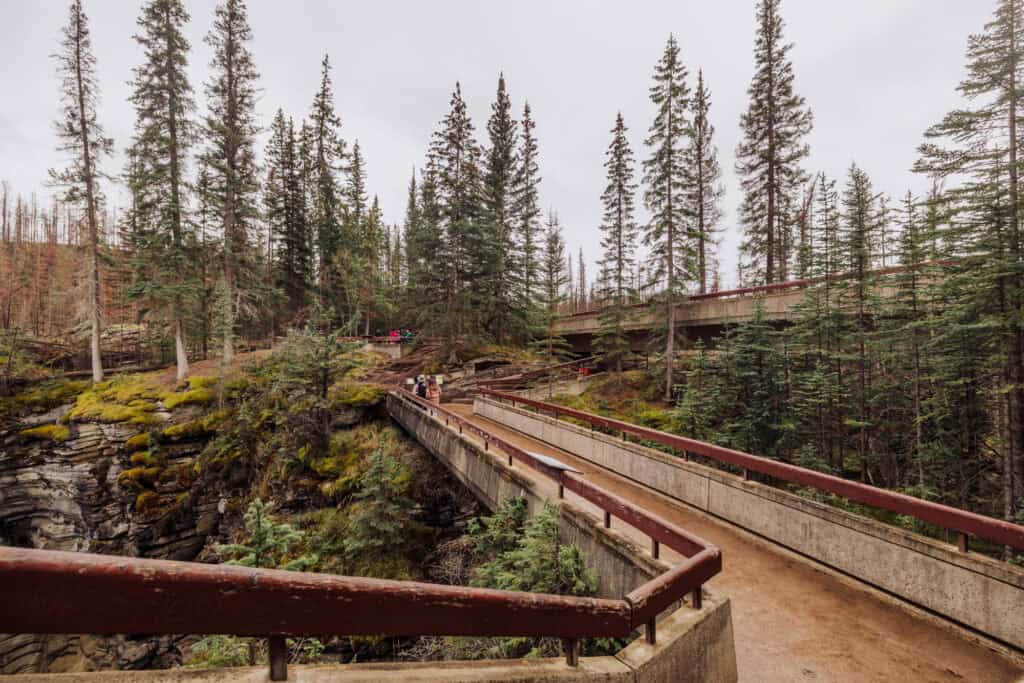
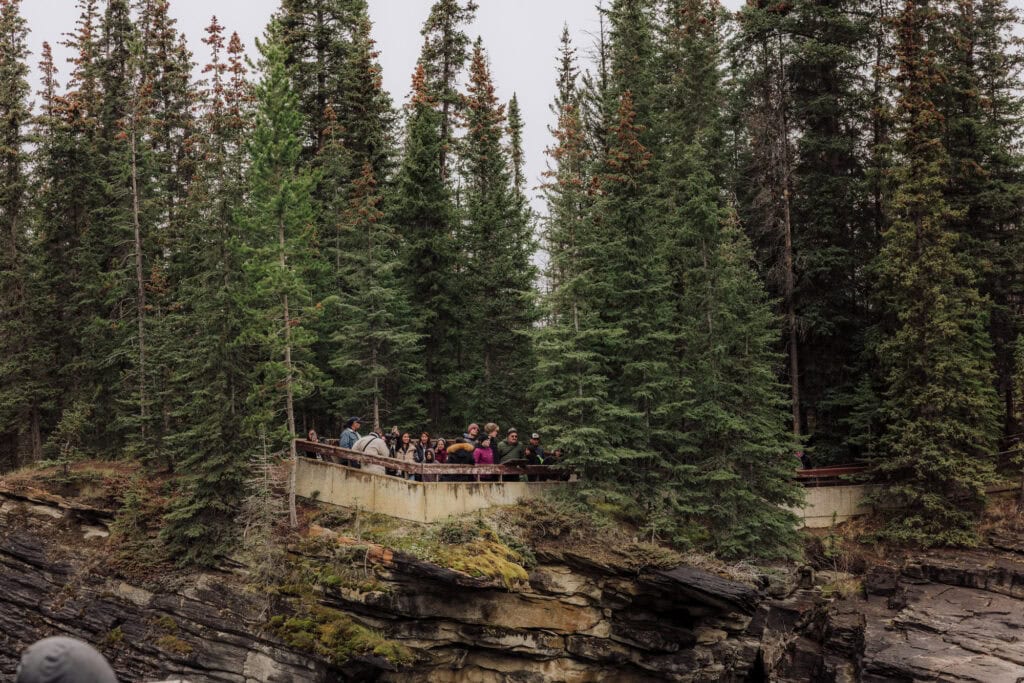
There are several viewpoints, so on crowded days, people can still spread out.
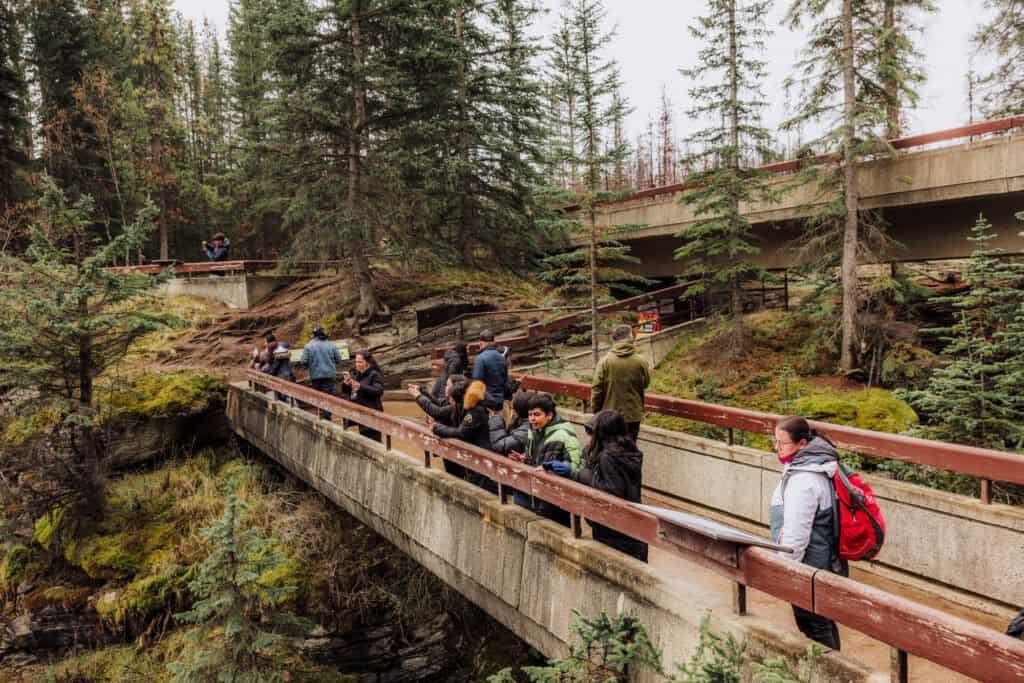
You can also take a set of stairs down a path, surrounded by rock walls, toward the edge of the water, which is calmer beyond the falls.
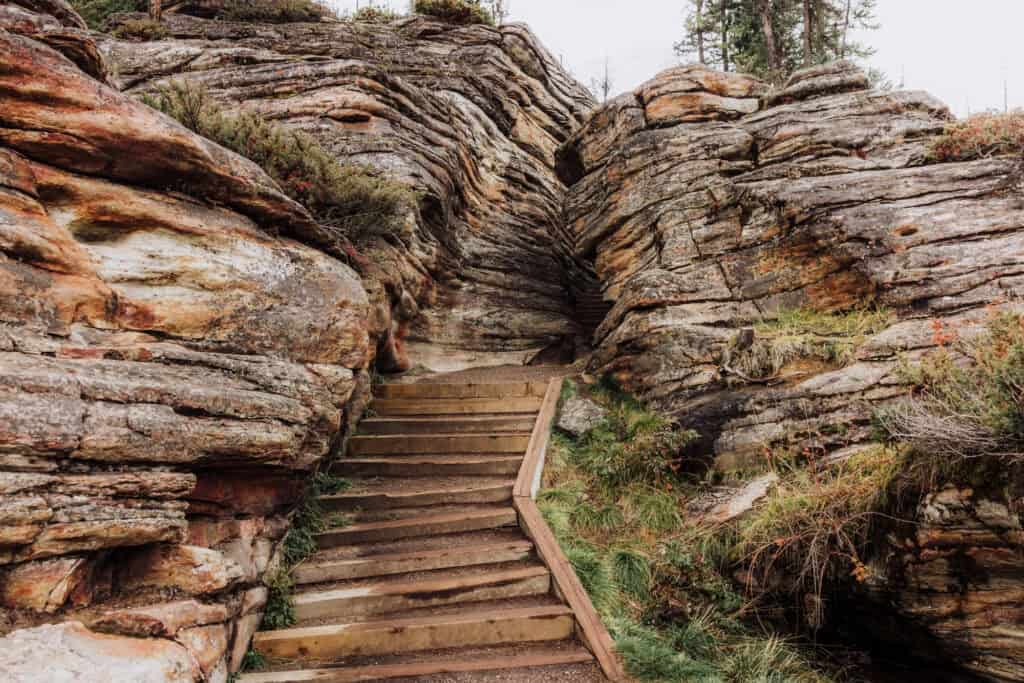
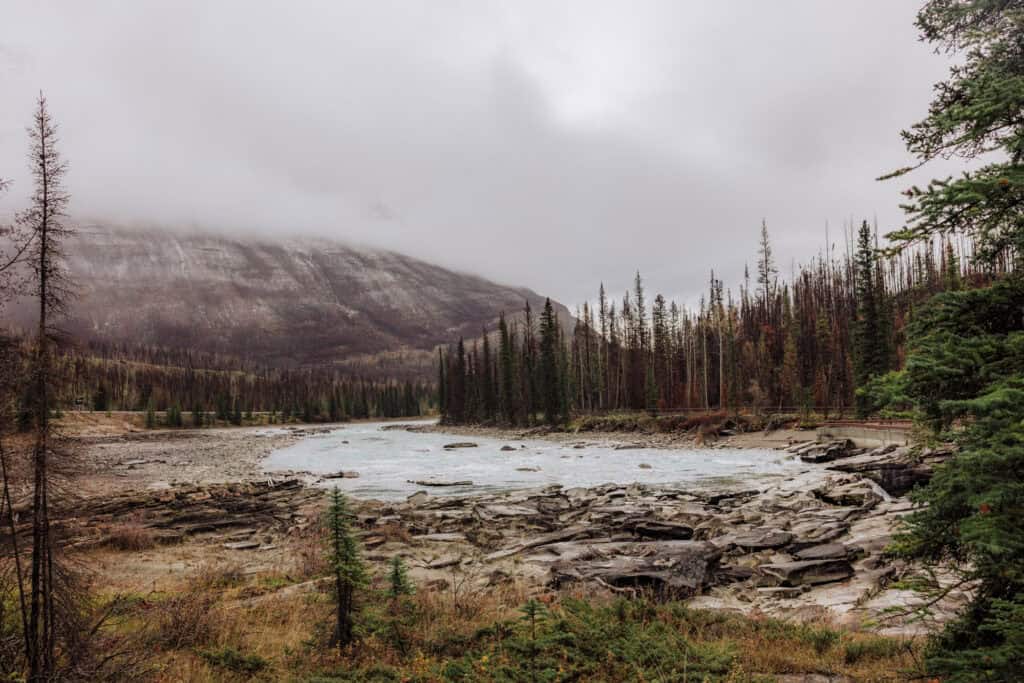
A wildfire came through Jasper in 2024, damaging the surrounding forest. It’ll take a generation to grow back. You’ll see how close the flames came to Athabasca Falls.
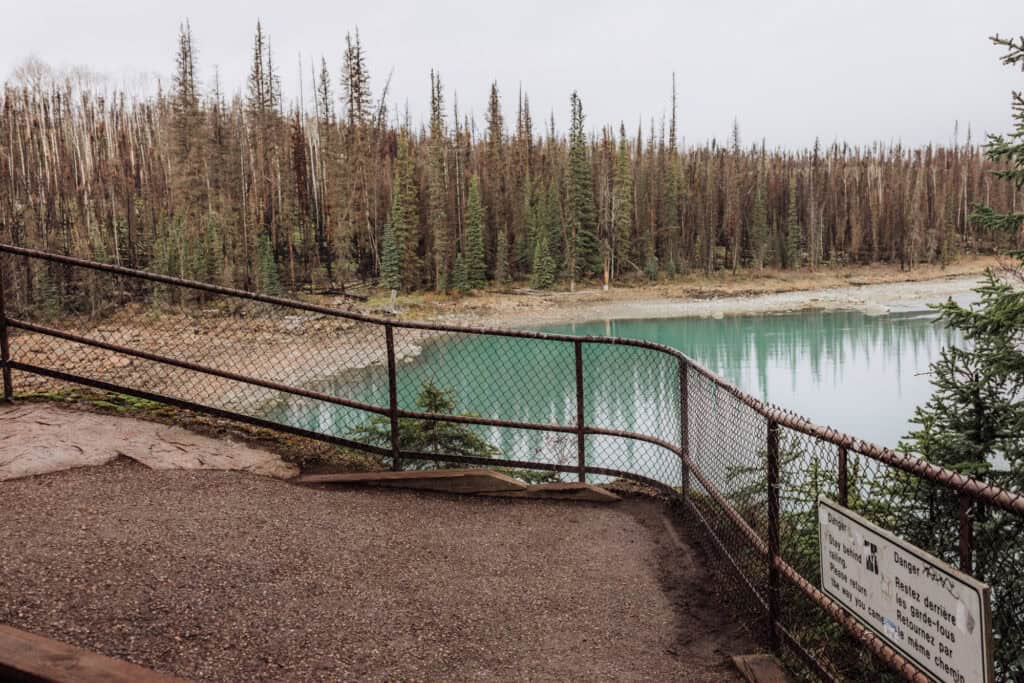
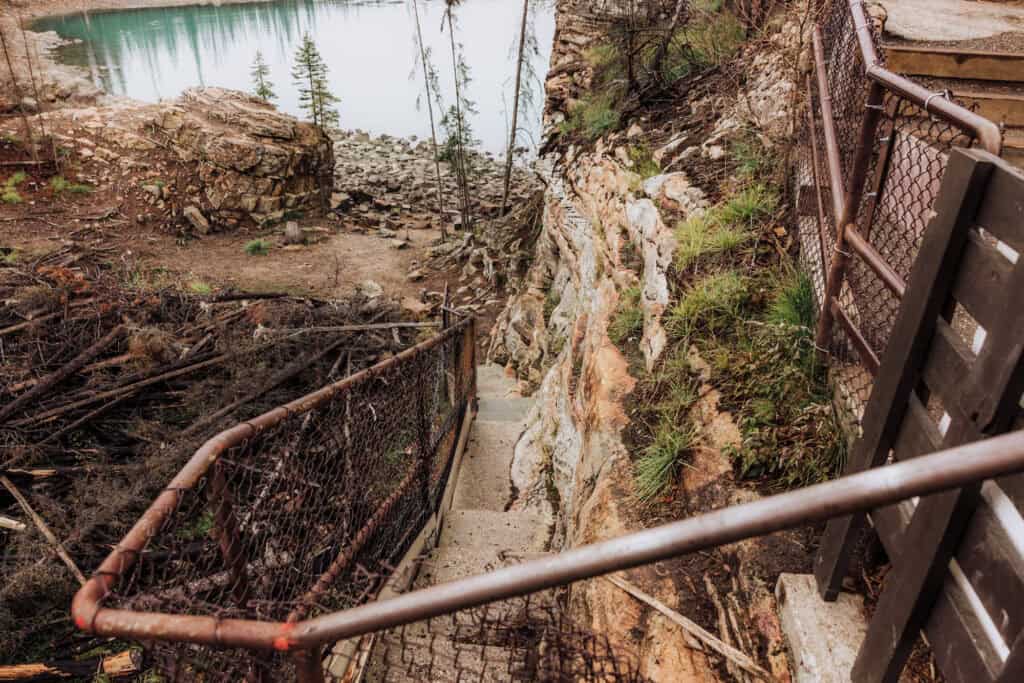
The steps down to the water are likely to be blocked off for a while longer.
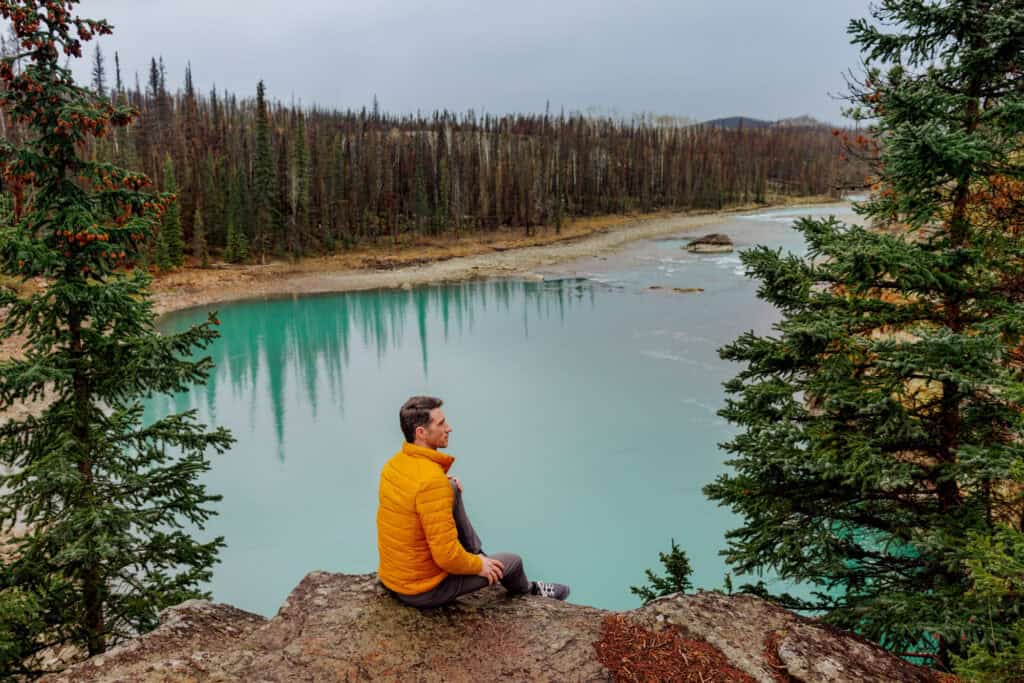
In the meantime, you’ll still have a view of the turquoise water below.
Nature’s Artwork: The Potholes
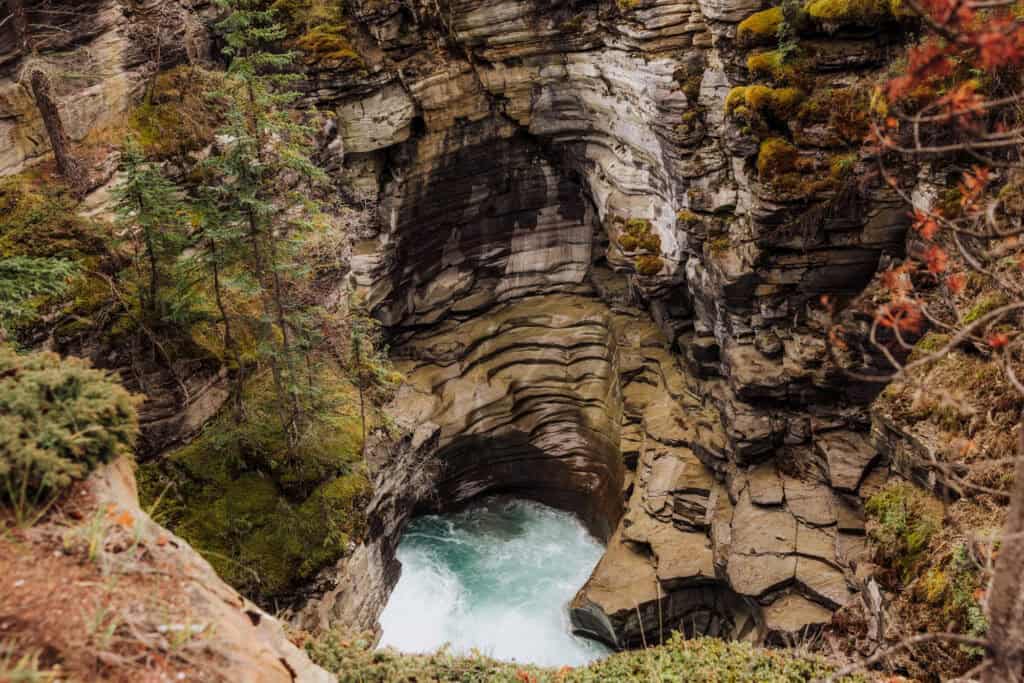
Look closely at the canyon walls and you’ll see round holes carved into the rock. These potholes were created by sand, gravel, and silt trapped and spun by the river’s current, drilling into the quartzite over thousands of years.
Some potholes still form today, while others are now “suspended” high above the canyon floor. They’re a reminder that the river once flowed much higher than it does now.
Stay Safe at the Falls
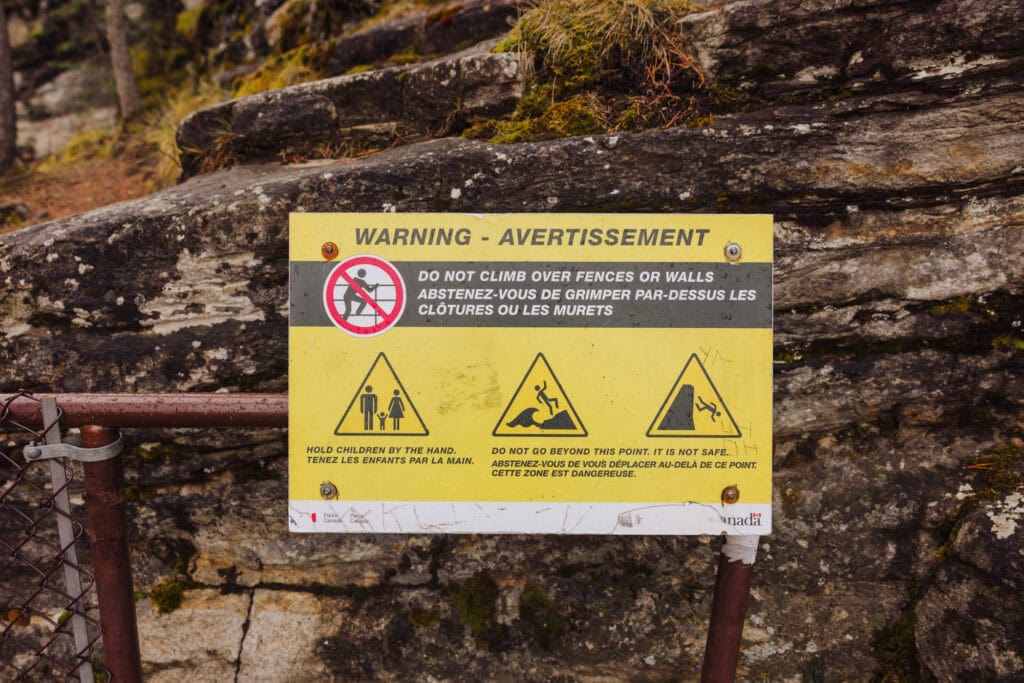
Every couple of years, tragedy strikes here, as people lose their footing. The rock surrounding the falls stays slick year-round, coated in a fine mist that’s as slippery as ice.
If you fall into the river, the outcome is almost always fatal. The water is glacial-cold, swift, and deep. Within minutes, hypothermia takes over, and once swept into the current, there’s no chance of climbing out before the falls.
The Athabasca River: From Icefields to Ocean
The Athabasca River begins at the Columbia Icefield, flowing north all the way to the Arctic Ocean. Along the 3,800 miles, it passes through Lake Athabasca, Great Slave Lake, and the Mackenzie River before reaching the sea.
Because of its ecological and cultural significance, the portion of the river within Jasper National Park was designated a Canadian Heritage River in 1989.
For thousands of years, Indigenous groups used the Athabasca Valley as a travel and trade route, crossing high mountain passes on foot. Later, European explorers and fur traders followed those same paths through Athabasca Pass, bypassing the falls themselves.
Weather & Best Time to Visit
Athabasca Falls is open year-round, and each season offers a completely different experience:
- Spring (April and May): Melting snow makes the falls more powerful. Temperatures range from 40 – 60°F.
- Summer (June through August): Warm weather and long daylight hours make this the busiest season. Expect crowds by midday. Even with the large lot, it’s best to visit early morning or late evening.
- Autumn (September and October): Daily high temperatures drop from the 60s in September to the 40s°F in late October. Fall foliage makes for great photography. Early snow usually falls in October in Jasper.
- Winter (November through March): November starts the long winter in Jasper. The falls partially freeze, but the short walk from the parking lot makes Athabasca one of Jasper’s easiest winter adventures.
Final Thoughts on Visiting
Athabasca Falls is one of Jasper National Park’s most awe-inspiring stops. Not because of its height, but because of its sheer power and accessibility. It’s a place where you can stand just feet away from a force of nature that’s been shaping the Rockies for thousands of years.
Sunwapta Falls is another similar, accessible spot along the highway in Jasper. I’d also recommend Mistaya Canyon. Plus, if you’re staying right in Jasper, Pyramid Lake is closest to town.
If you’re enamoured by the turquoise water at Athabasca, consider traveling south to Banff and hiking the Big Beehive at Lake Louise! Peyto Lake is also another option, with an easier hike.
A few final thoughts:
- Go early or late: Sunrise and sunset offer the best light and smallest crowds.
- Wear sturdy shoes: Even the paved paths can be slick from mist.
- Bring layers: The spray cools the air, even on warm days.
- Visit even in winter: You can see frozen blue ice curtains and icy bridges of snow.
- Stay safe: Never cross railings or climb over fences for photos.