Things to Do in Luang Prabang: A UNESCO City in Laos

Tourism is on the rise in Laos, and particularly in Luang Prabang.
I loved our time there, and found plenty of things to do in the city, before moving farther down the Mekong River in Laos.
It’s a very safe place, and you’ll be surrounded by natural beauty, history, and culture.
Luang Prabang has seen a surge in post-pandemic tourism, with annual visitors now topping 2 million. Most are from China, but people from Europe, Australia, and the United States are putting Luang Prabang on their lists.
Staying in Luang Prabang
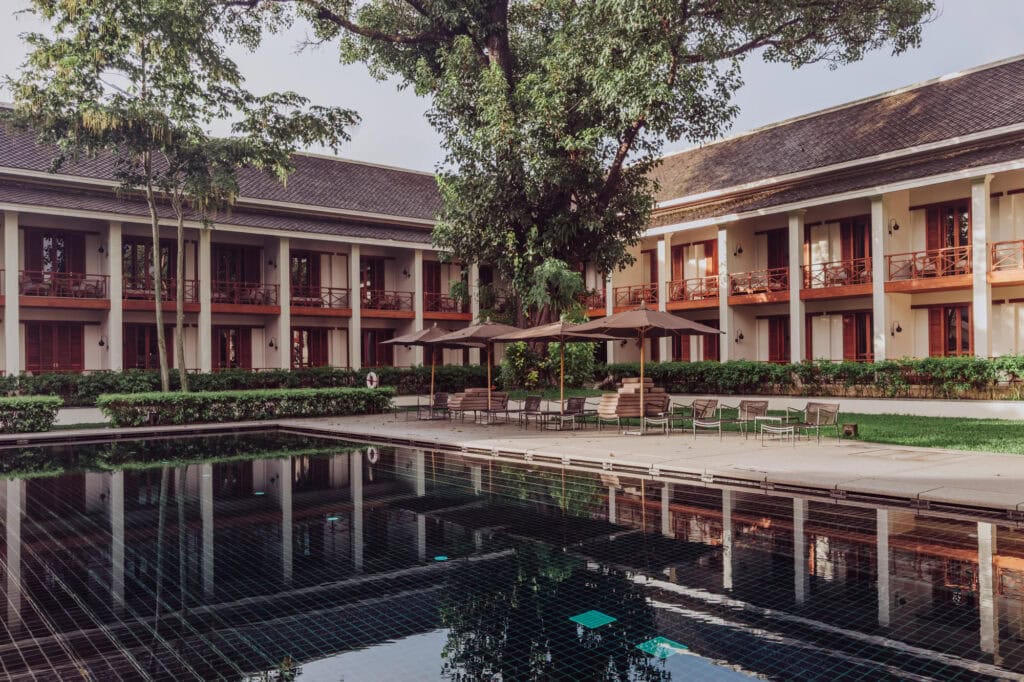
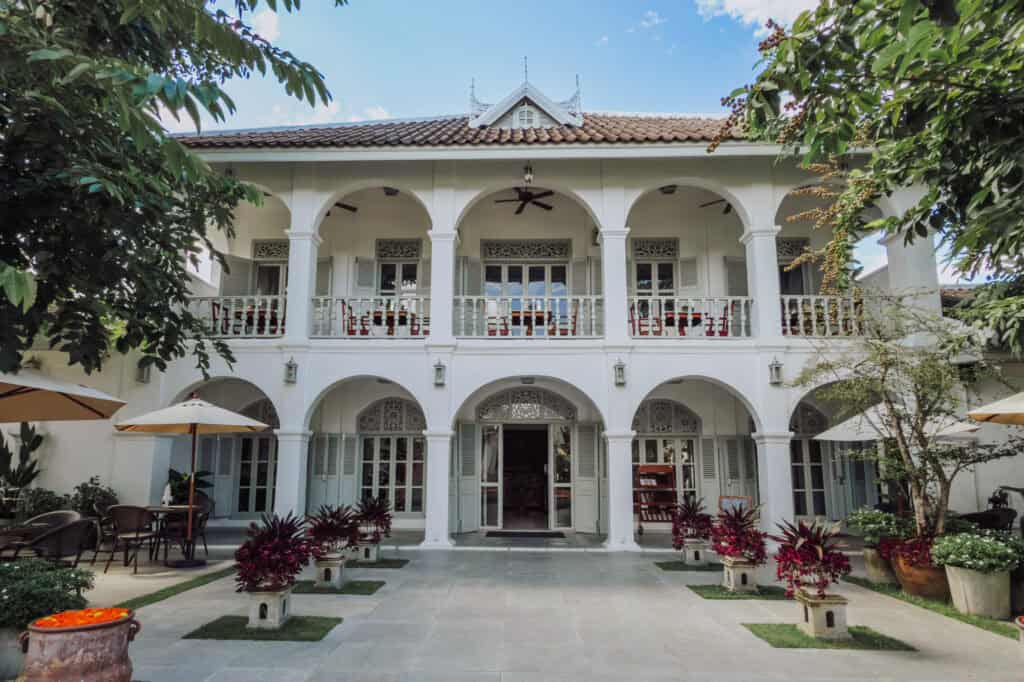
Let me give a plug to the Avani, which his right off the main street. It’s a relatively new, beautiful resort with modern rooms, a gorgeous pool and courtyard, and an excellent staff.
The location is key! You’ll be able to walk anywhere in town from here.
I’ve centered this interactive map on Avani, so you can plug your dates in and get the best prices on Avani and the surrounding resorts and rentals.
The Best Tours In & Around Luang Prabang
Luang Prabang is a great hub for day trips. These are two of the best, which have excellent reviews:
➡️ Click to Book: Mekong River Cruise
➡️ Click to Book: Private Driver to Waterfalls & Caves
Flying Into Luang Prabang’s Airport
The city has a small airport a few miles from the city center, which is pretty efficient to use. A taxi into town will cost about $10 to $15.
Hubs like Hanoi and Bangkok have daily flights to Luang Prabang.
You can apply for an eVisa before your trip, or wait in line to get a “visa on arrival” in Luang Prabang.
Video: Things to Do in Luang Prabang
Restaurants in the City
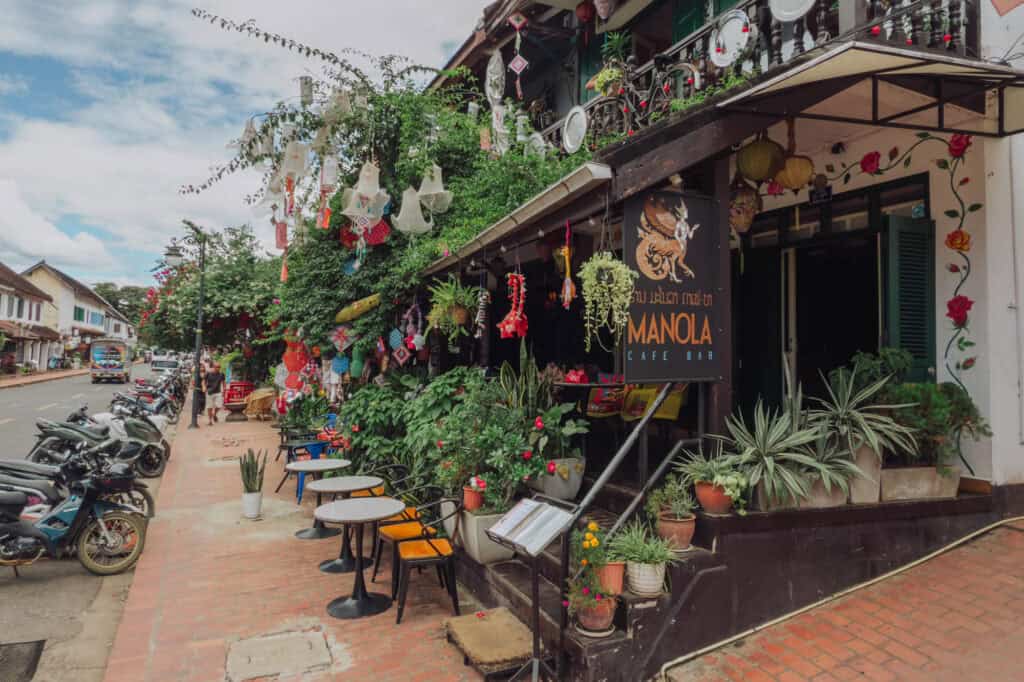
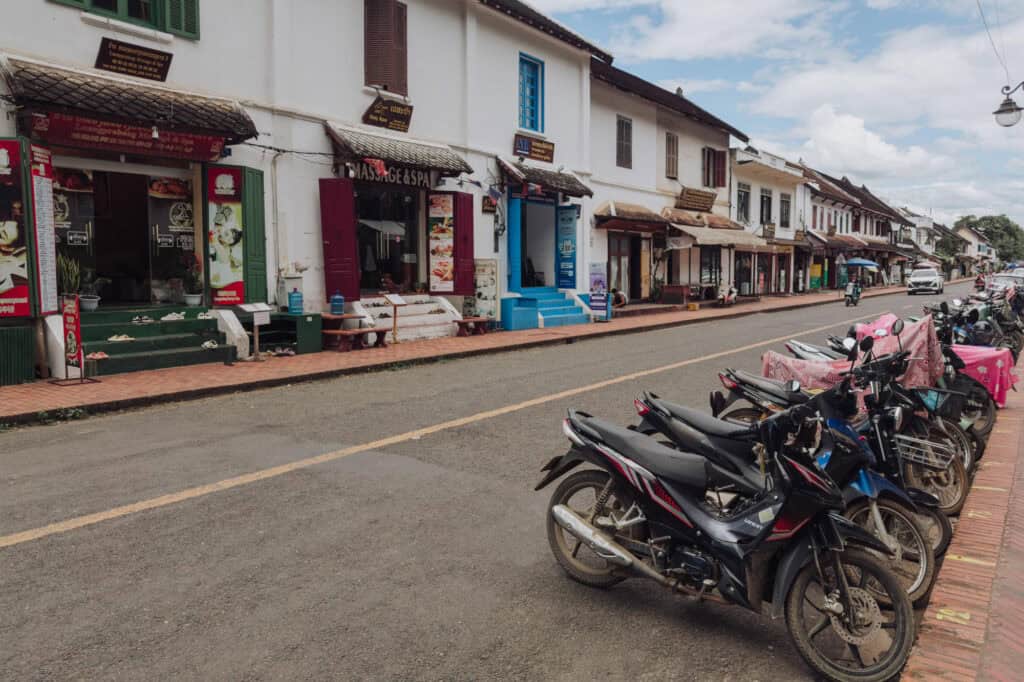
The main street is lined with countless restaurants. Most are Asian, but there are a few French, Italian, and American spots along the way.
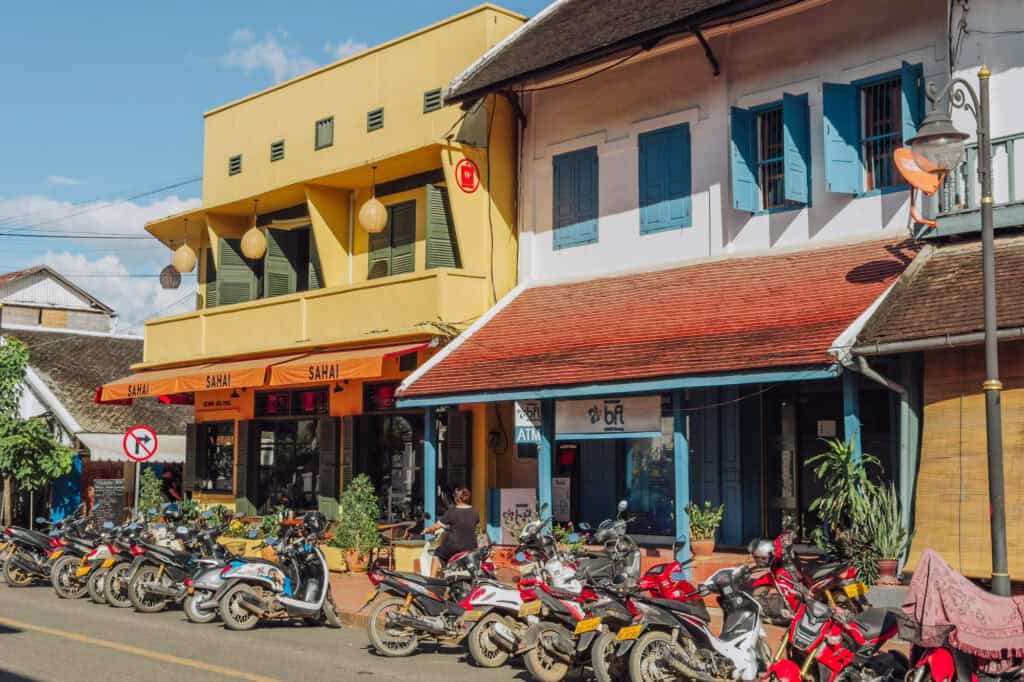
Happy Hours
Many of the cafes offer great happy hour deals, like dollar beers and 2-for-1 specials.
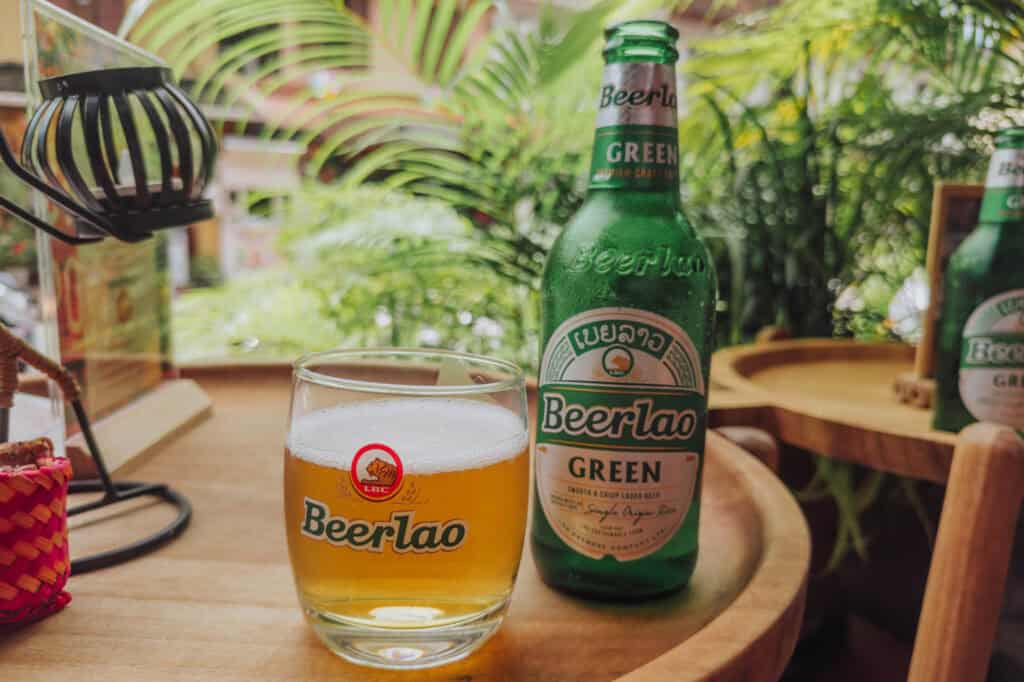
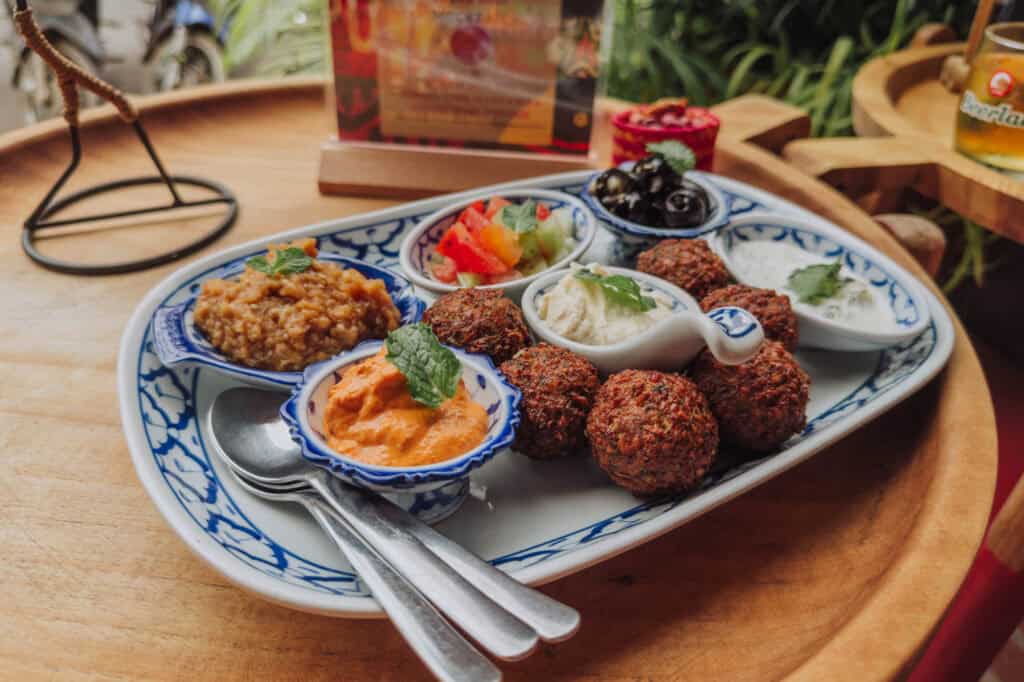
I especially liked Yuni Yupoun’s specials. They have $4 glasses of wine, dollar beers, and delicious snacks.
It’s a nearly one-mile stretch, lined mostly with restaurant options. Plus, there are more on the surrounding streets, so it’s worth walking around.
Sai Bat Ceremony with the Monks
The Sai Bat ceremony, also known as Tak Bat, is a longstanding tradition in the Buddhist culture. In Luang Prabang, you’ll hear it referred to as “Morning Alms.”
Devotees and tourists alike line up to make offerings to Buddhist monks at dawn.
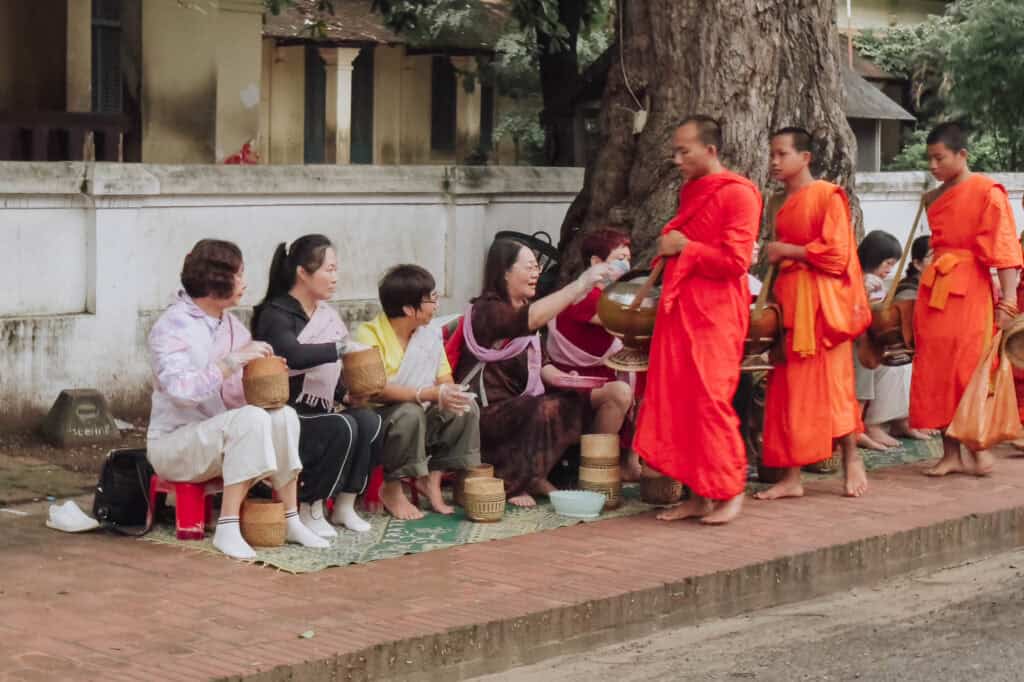
Literally hundreds of monks (young and old) appear at dawn, walking the main street in a line, collecting offerings from people. It’s mostly sticky rice.
The ritual dates back centuries in Lao Buddhist history, and also takes place in other cities around Laos and Thailand. It’s an act of respect for the monks, and represents the mutual dependence between the community.
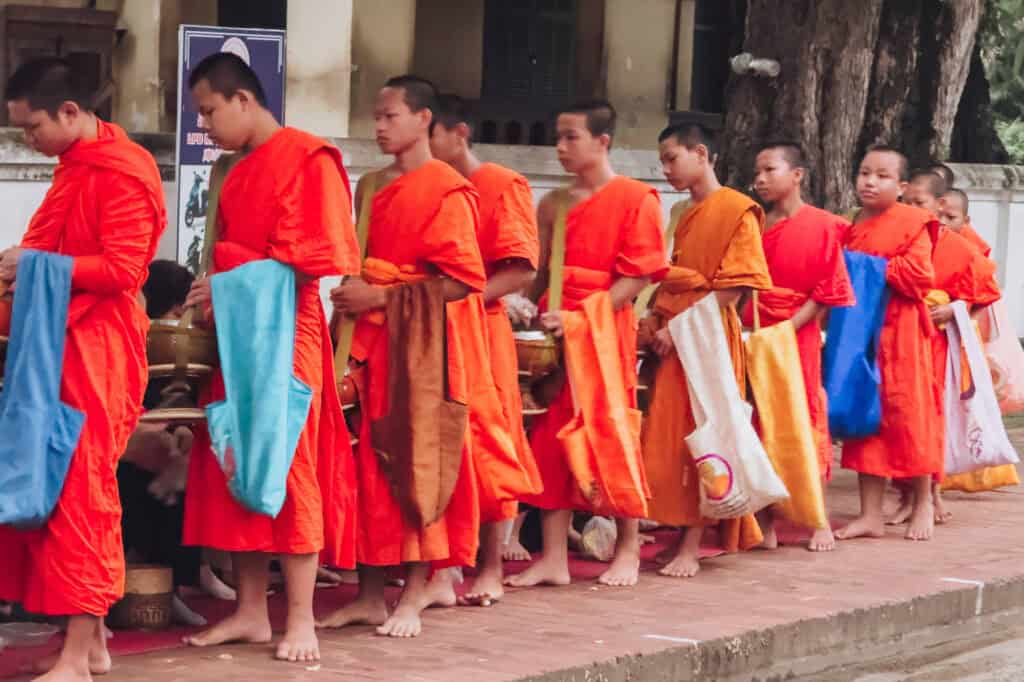
The ceremony has become a cultural attraction for visitors to Luang Prabang, which has led to a few complaints about noise and cellphones getting in the way of a meditative tradition.
What to Know About Morning Alms
- Gather before dawn on the main street.
- Small plastic chairs will be set up. You’re welcome to choose one.
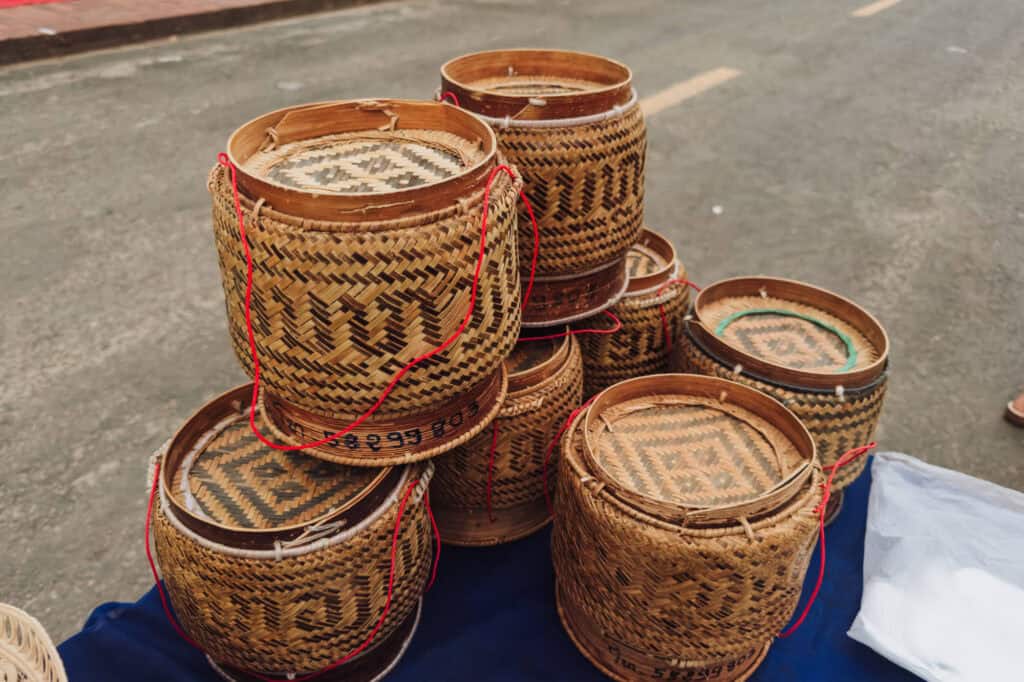
- You buy a container of steamed rice for 25,000kip, or about one dollar (photo below)
- As monks walk by, place a small amount of rice into each basket.
- There’s no talking and no interaction.
- Some people put money and vegetables in, too.
Photography
If you don’t want to take part, you’re welcome to observe. Photography is fine, but keep a distance.
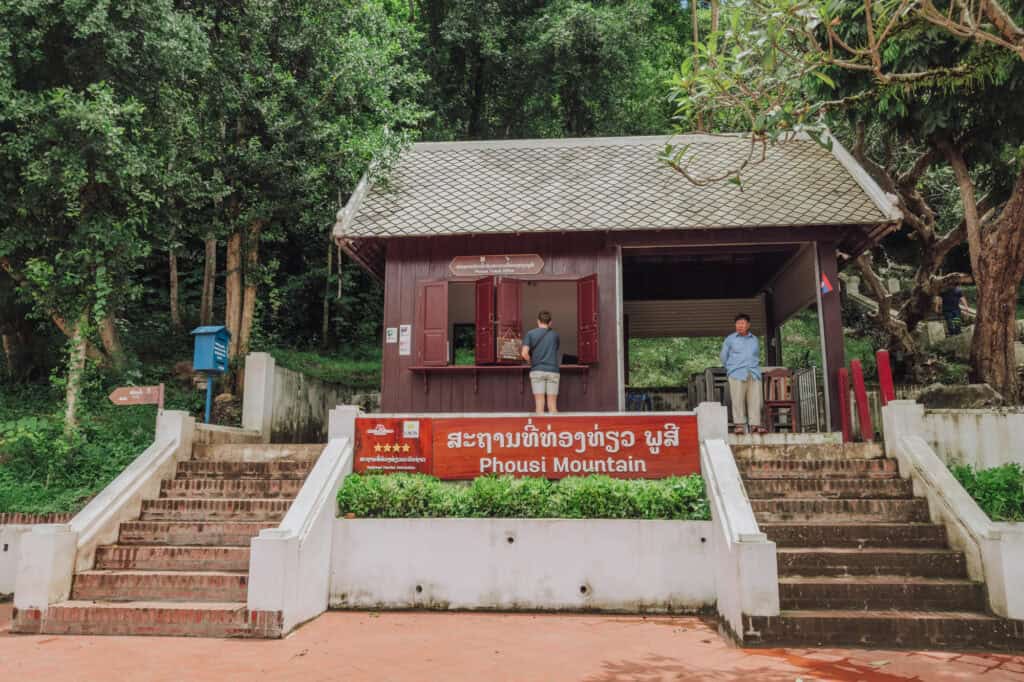
Climb Phousi Hill
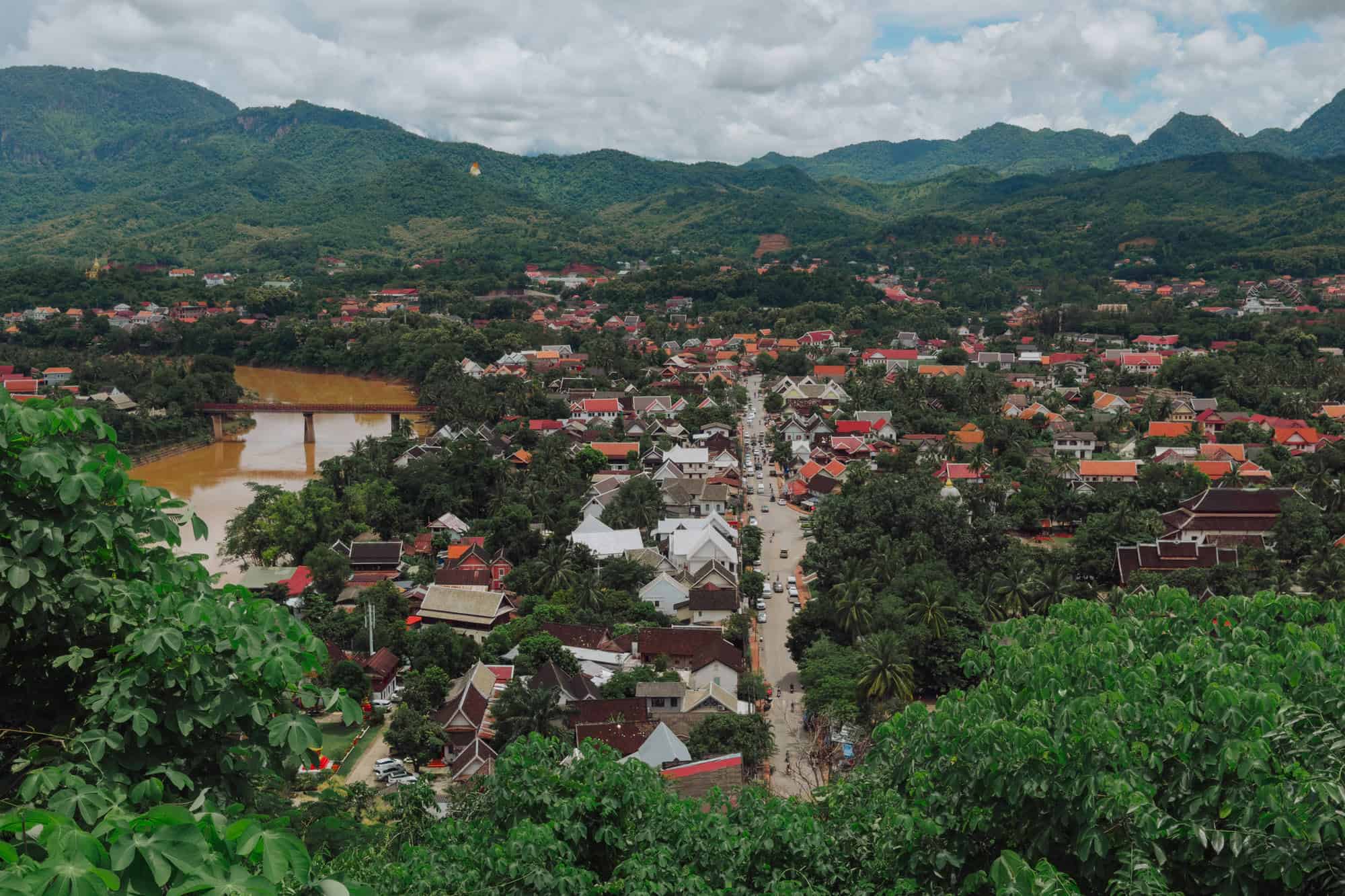
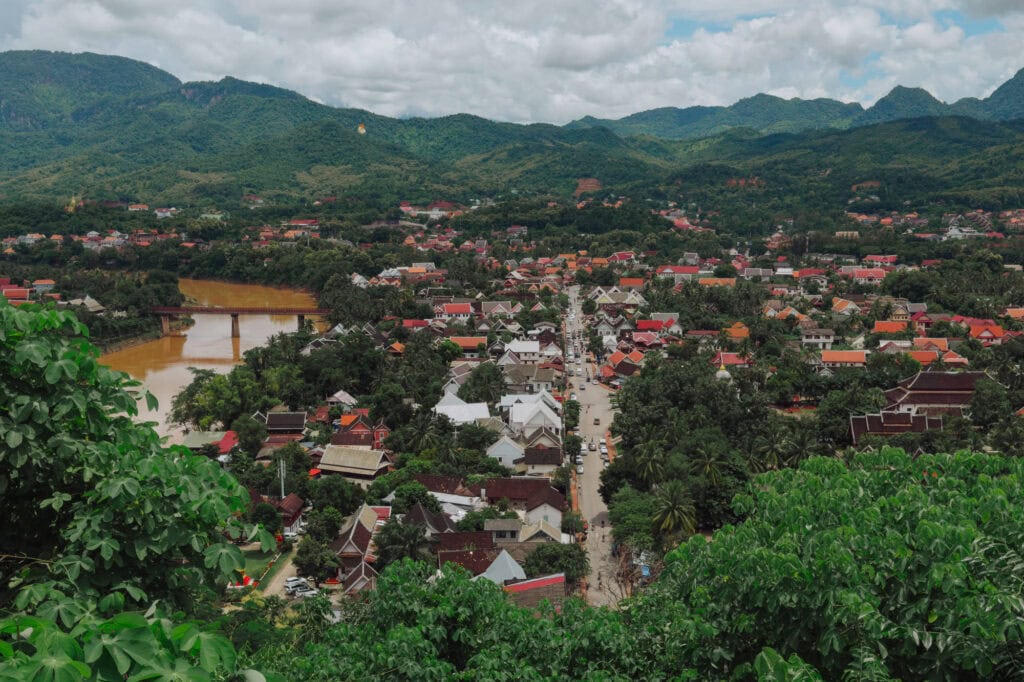
Mount Phousi (or Phusi) is in the center of Luang Prabang. The Chomsi Stupa (spiritual statue on top) is known as the city pillar.
Chomsi Stupa was built in 1804. The hike up provides sweeping 360-degree views of the city, the Mekong River, and the surrounding countryside.
Two Key Things:
- The cost is 30,000 kip (a dollar or two).
- It’s 500 steps to the top.
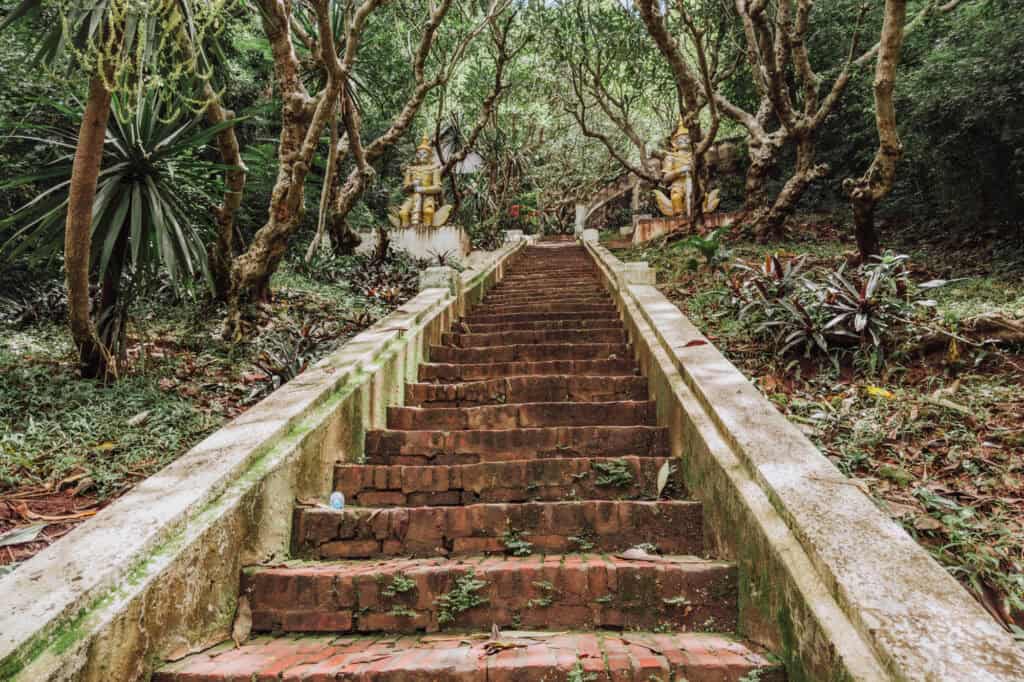
The entrance is located across from the National Museum.
Years ago, a gong at the peak was hit every hour to tell the time. It was also used to alert people in the city to emergencies, like fires or floods.
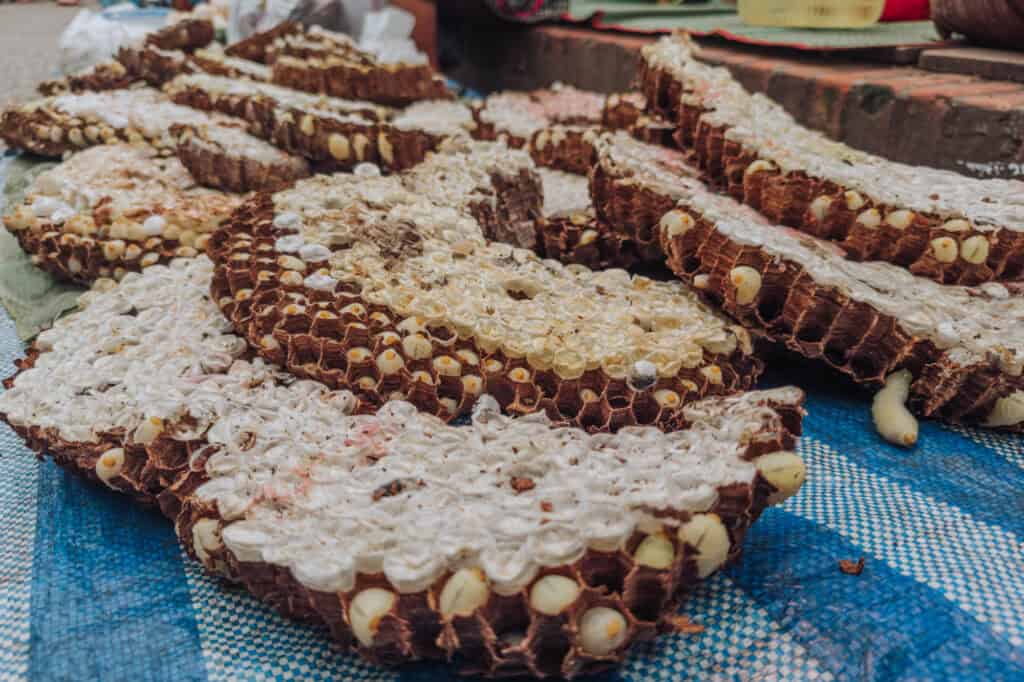
The Morning Market
The morning market in Luang Prabang is a wet market, primarily geared toward local people in the city. It’s their open-air grocery store, where they buy their meats and vegetables.
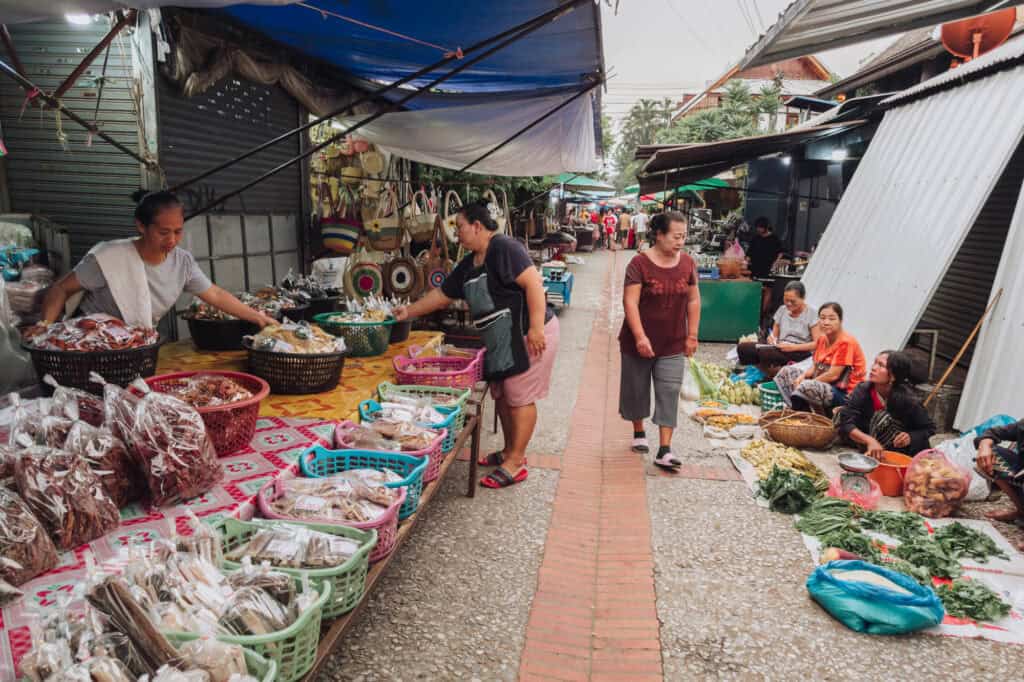
Staff from the local hotels also shop at the morning market, which spans several streets and alleys. It opens after dawn, and is bustling!
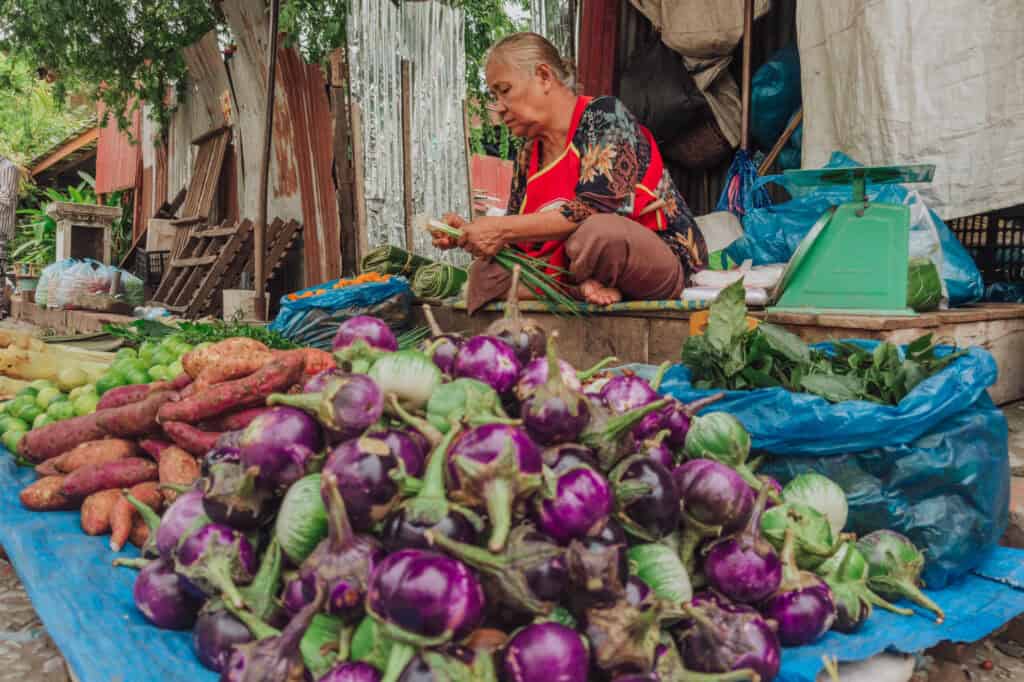
For tourists, they also sell souvenirs, crafts, and textiles.
It’s definitely unique from our perspective. I’d never seen some of the fish they were selling. The small birds in cages were foreign to me, as were many of the exotic fruits and vegetables. Well, exotic to me, but common to them!
You can even buy your own silk worms!
The Night Market
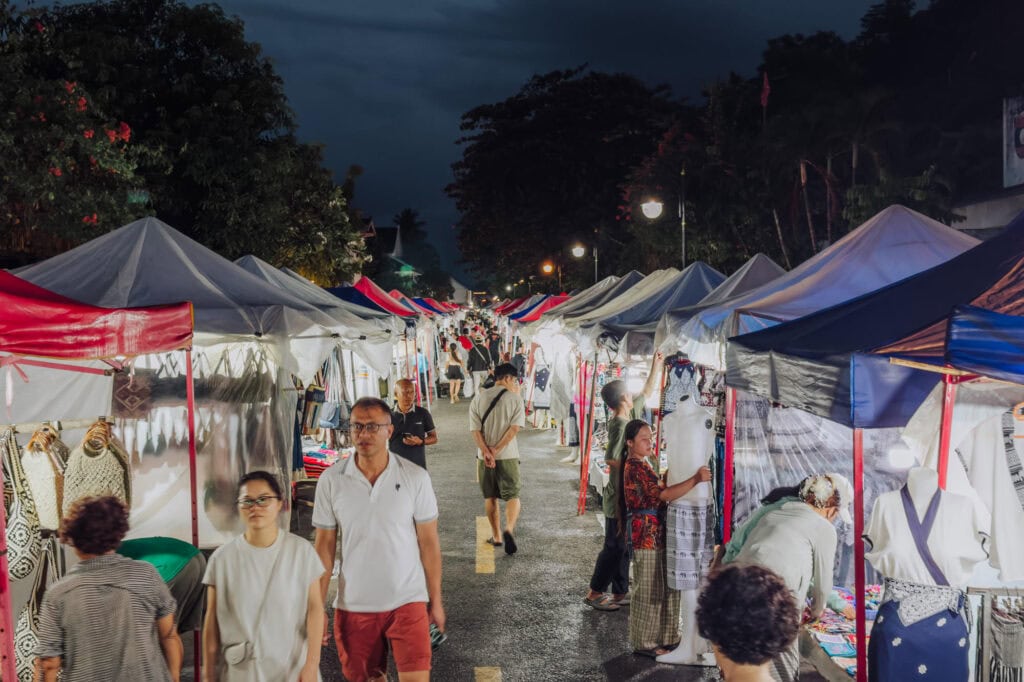
Each night at dusk, the main street closes to traffic, and dozens of sellers set up tents and booths for the open-air market.
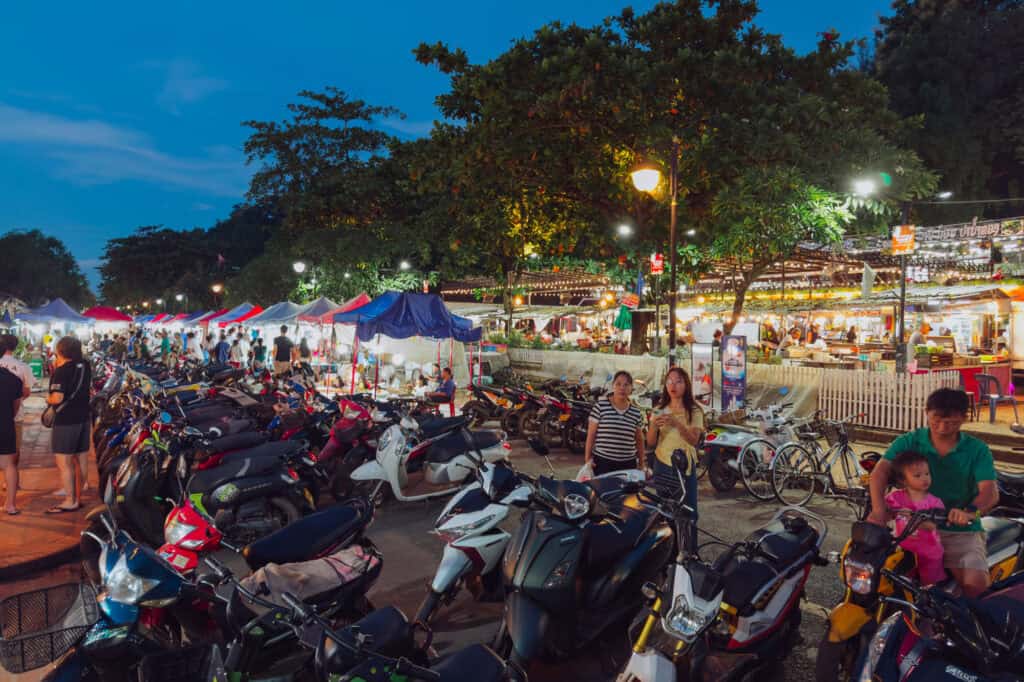
They sell everything from food to clothing to art. While it seems touristy, much of the clientele is from the city itself.
Adjacent to it is a large food market.
The National Museum
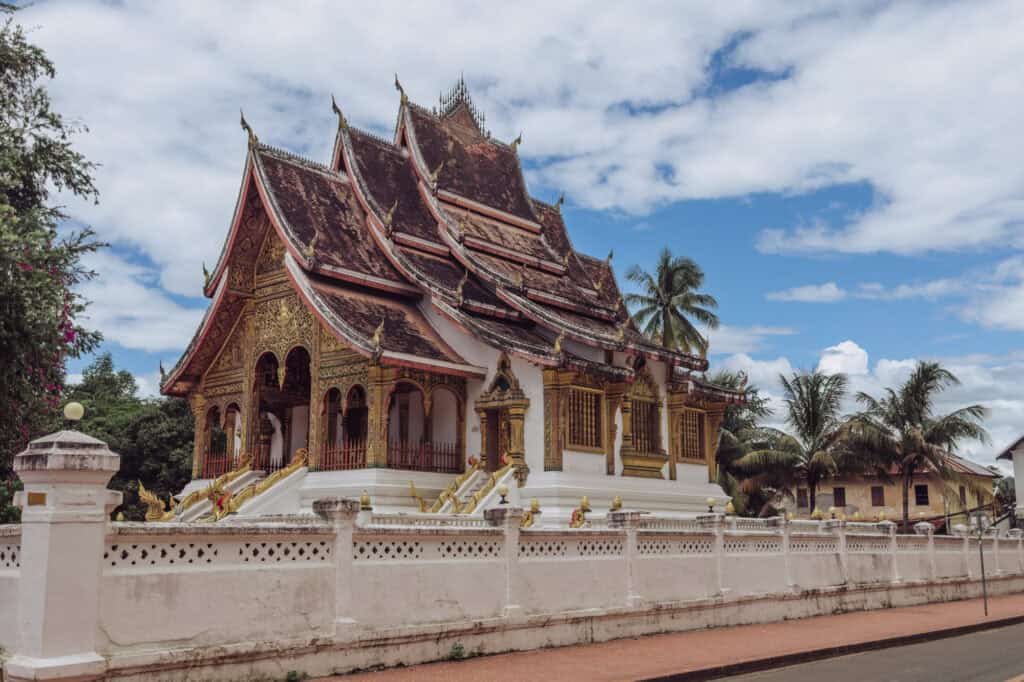
The National Museum is an old palace right in the heart of the city, which is open to the public. The entrance fee is a few dollars.
The grounds are fairly expansive, but I found myself wanting more information and exhibits to teach me more about history.
The temple is beautiful, and it’s interesting to see some of the cars the old kings drove. Photography is limited.
It’s worth a stop to learn about Laotian history, but don’t plan to spend a large part of your day here.
Spas & Massages
The deals on massages in Luang Prabang are unbelievable!
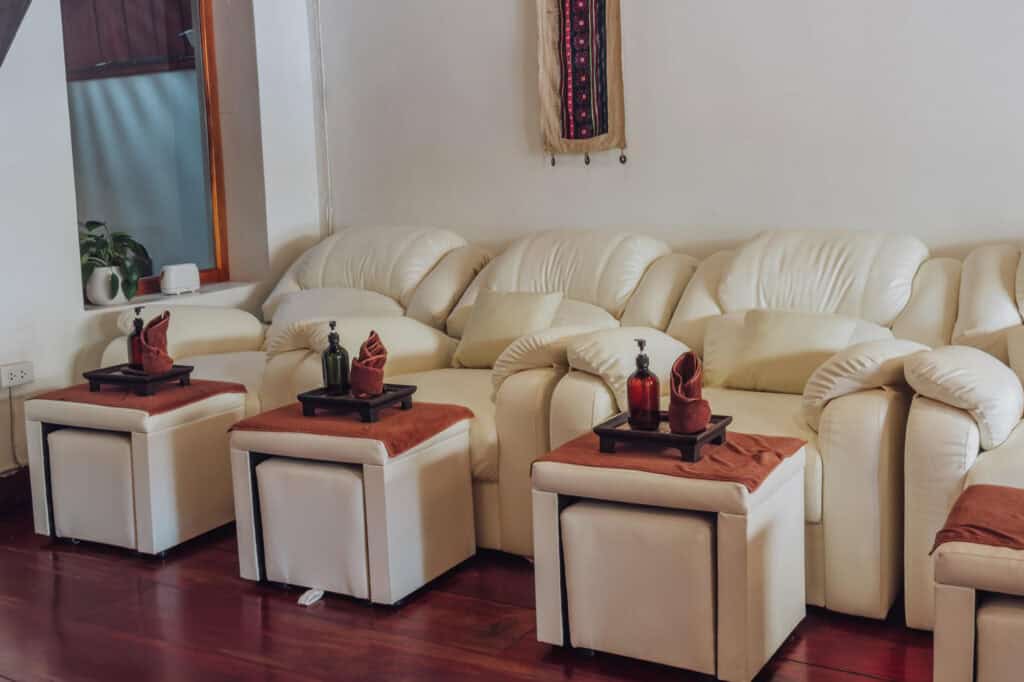
I’d recommend Nalin Massage & Spa on the main street.
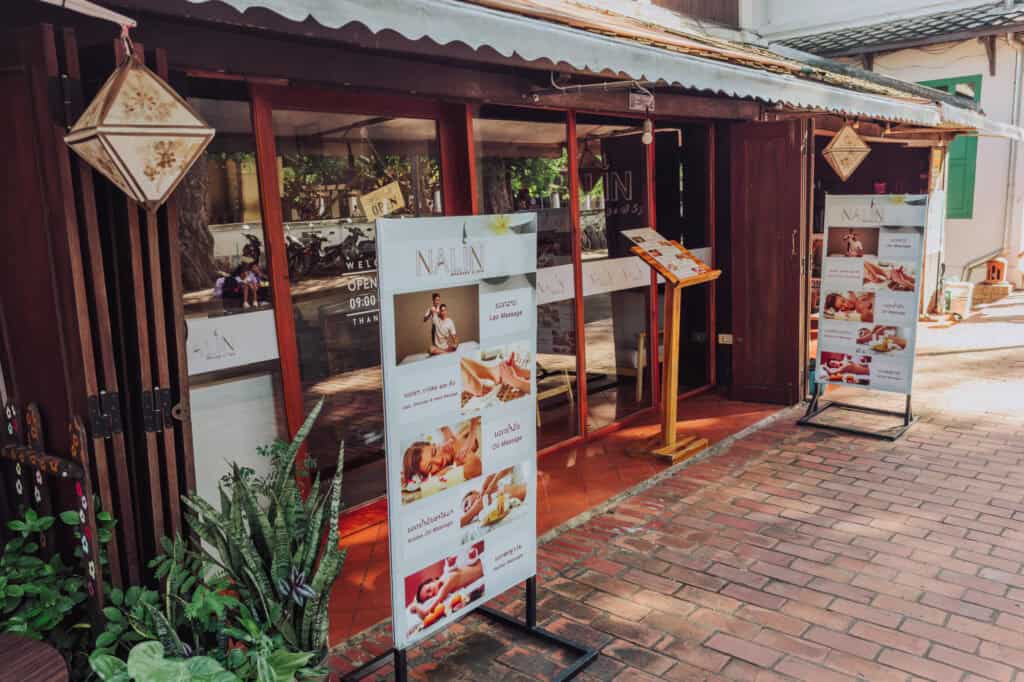
For one, they offer a full hour foot massage for $6! I should’ve gone back daily!
Shopping in Luang Prabang
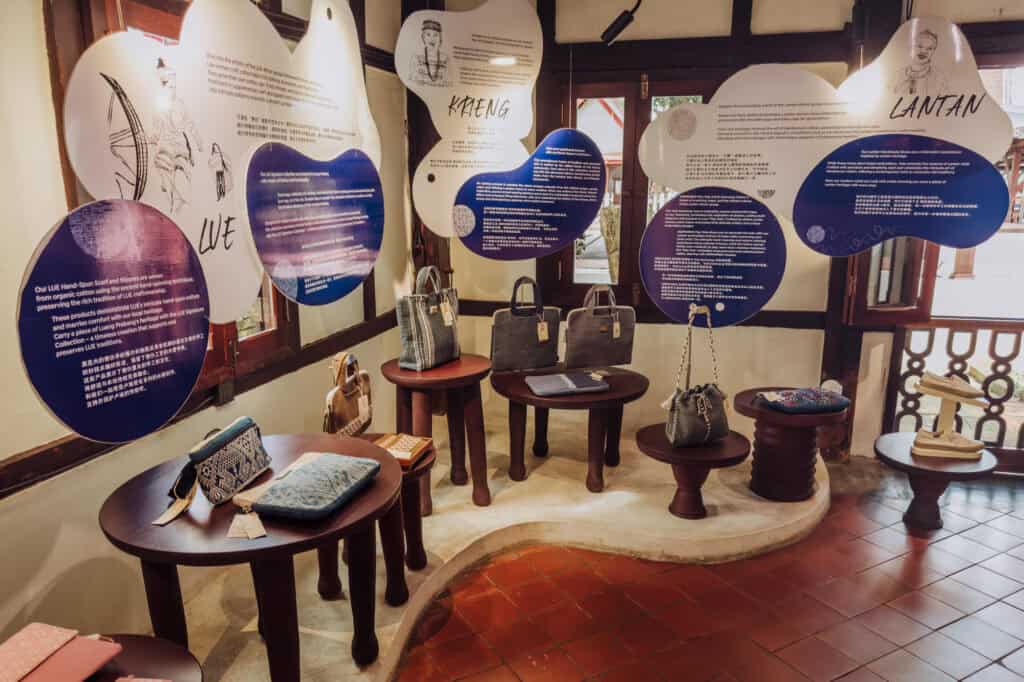
The main street in the city, along with the side streets, are full of local shops. Many of them support children’s or women’s causes in Laos. It’s easy to find shops selling locally-made textiles and crafts.
One of them is called “Her Works.” Here’s part of their mission statement:
Our products encourage ethical living with the use of sustainable, environmentally friendly, and natural materials and processes. Each of your purchases plays a part in improving the livelihood of our skillful partners from different ethnic groups. Most importantly, their precious art and traditions could be kept alive and passed on to future generations.
Kuang Si Waterfall: Day Trip from Luang Prabang
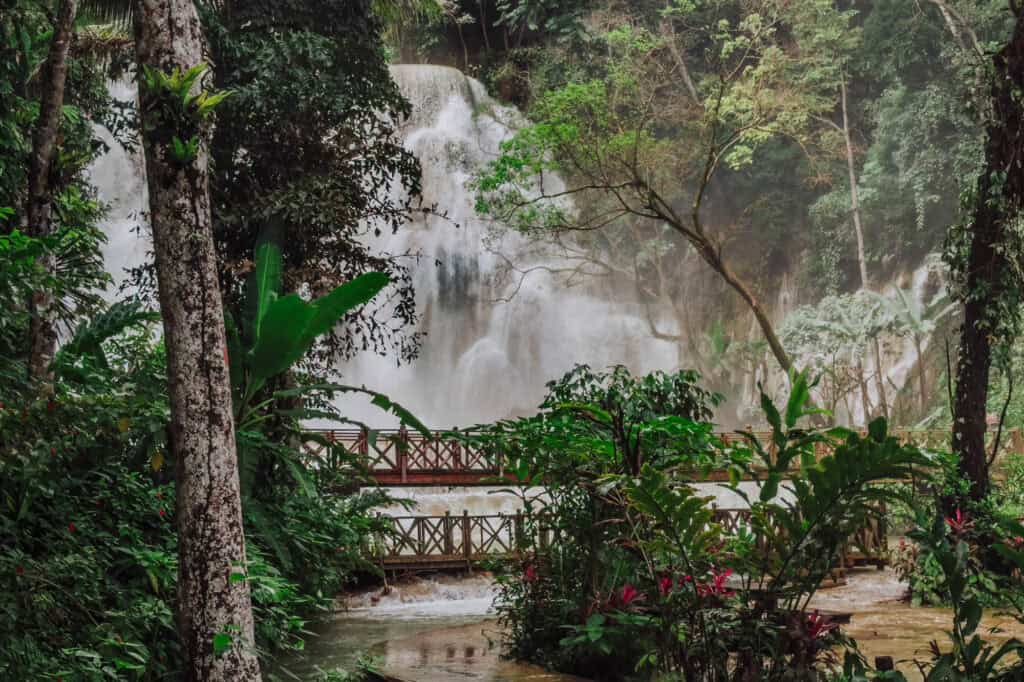
The Kuang Si waterfall is a famous (and at times crowded) spot about an hour from Luang Prabang. It’s both a hiking and swimming destination, famous for its clear water in certain months of the year.
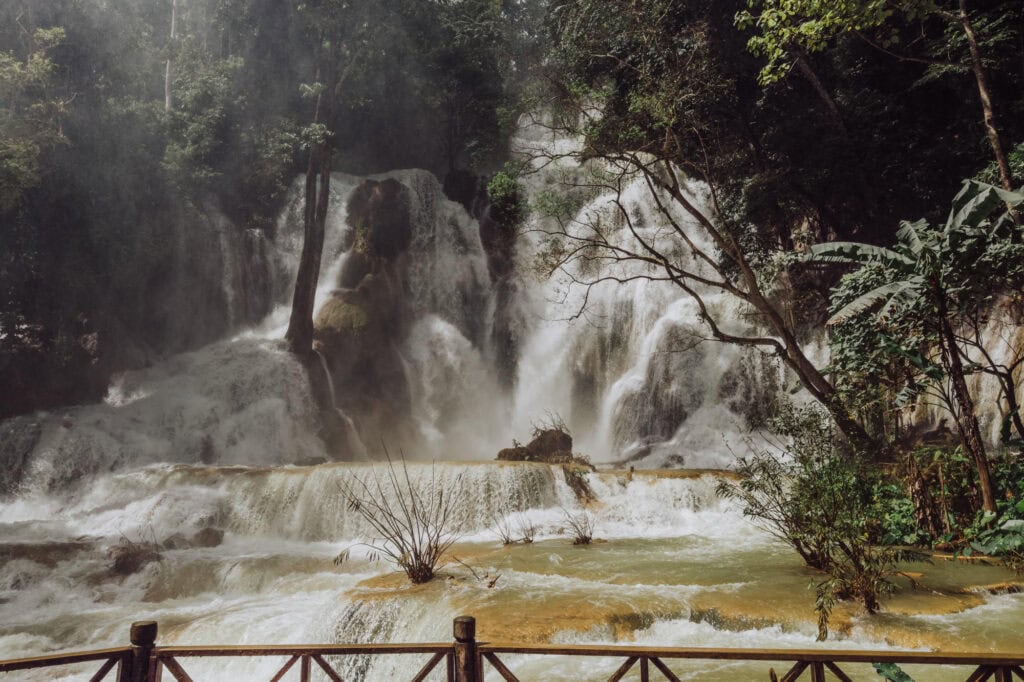
The distance isn’t far, but the roads can be bumpy and rough, so the drive will take an hour.
Some Key Info:
- The cost is 60,000 Kip for foreigners (less than $5).
- GET THERE EARLY, before the crowd.
- The hike itself is quick, and will take 15 minutes.
- You’ll pass a bear sanctuary along the way.
- Bring a towel if you want to swim.
What to Expect
Again, I’d arrive as soon as the area opens, between 8:00am and 9:00am. Arriving later in the morning, you’ll be surrounded by huge crowds, especially when the weather is nice.
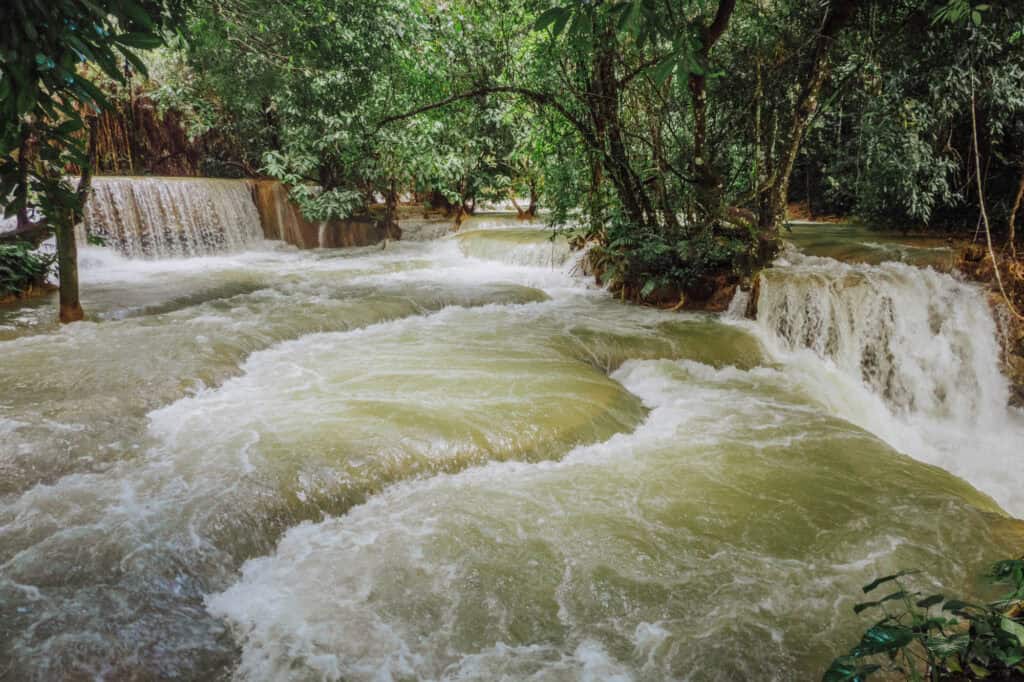
The water is clear and blue in the dry season (October through April).
It’ll likely be brown during the rainier months. It’s still worth a visit, but the current will likely be too strong to swim.
The Bear Sanctuary
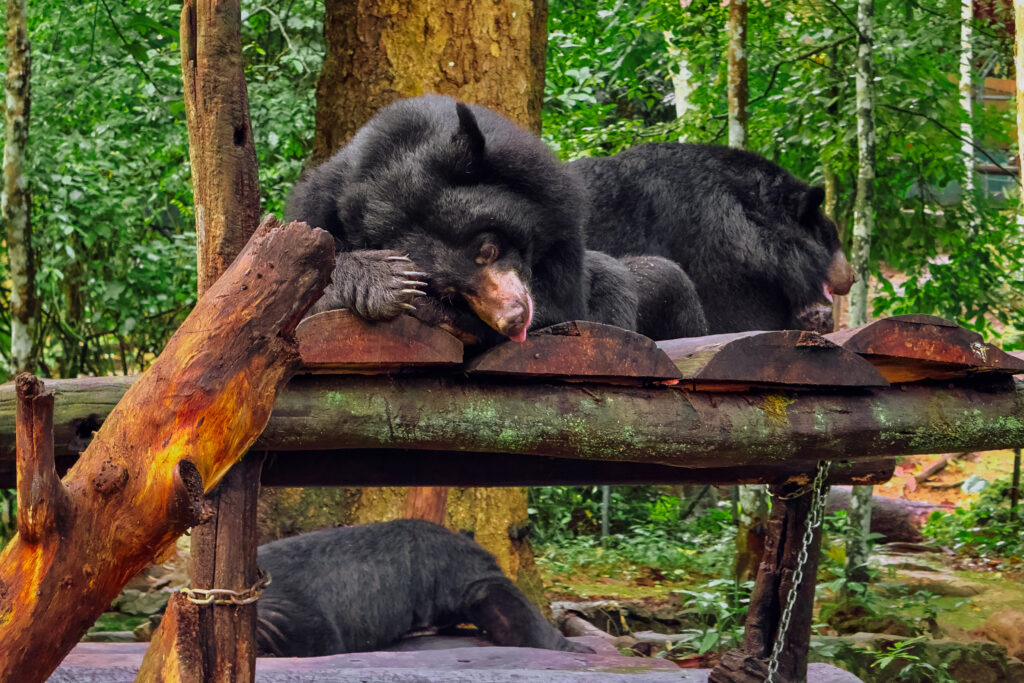
On the hike up to the waterfall, you’ll walk by a group of Asiatic black bears, also called moon bears. The bears at the sanctuary were rescued from poachers, and will live out their years lounging around in the forest here.
Avoid the Luang Prabang Elephant Center
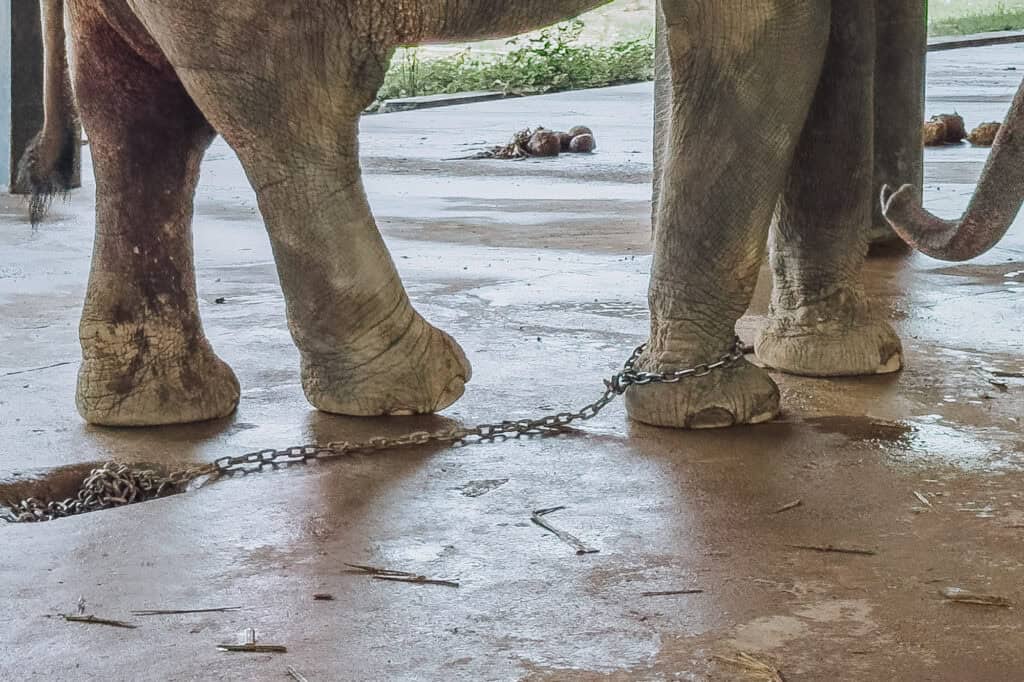
We stopped to see the situation, which has terrible reviews. Tourists can pay $5 to feed a few elephants who are literally chained into the concrete. They lift their trunks over a barrier to grab bananas and pumpkins from your buckets.
The owners say the elephants get to roam the fields all afternoon and night, but it was unsettling to see such a massive animal chained.
Why UNESCO Made Luang Prabang a World Heritage Site
Luang Prabang became a UNESCO World Heritage Site in 1995, as Laos became the target of a surge in public and private investment from overseas. The goal was to protect the culture in places like Luang Prabang from being wiped away in the name of development.
UNESCO recognized Luang Prabang based on several specific criteria that highlighted its unique architectural and cultural significance.
The city is recognized for blending traditional Lao architecture, European colonial buildings, and over 30 Buddhist temples. The protected area encompasses 33 of its 58 villages, where daily rituals like the morning “Alms Giving” continue.
Remember the Rainy Season in Laos
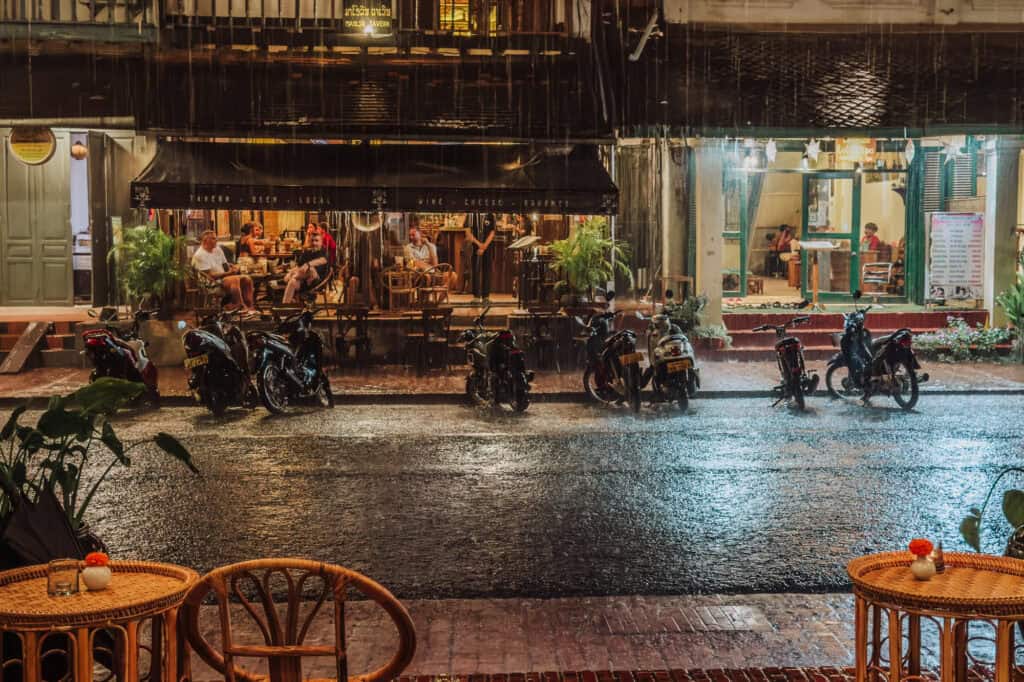
Remember: the rainy season runs from April into September. Each day won’t be a total washout, but you should expect periodic heavy downpours.
The same is true across Southeast Asia. Typhoons can hit from July into October.
Wrap: Why Luang Prabang is Worth Visiting
Luang Prabang is full of charm and culture. It’s easy to get around, and full of very friendly people who are eager to help make your trip enjoyable.
I loved the shops, the natural beauty, and the opportunity to relax at both the hotel pool and the spas in town. For me, it was the perfect mix of adventure and relaxation!