Mexico’s Sargassum Crisis: Inside the Worst Seaweed Season on Record
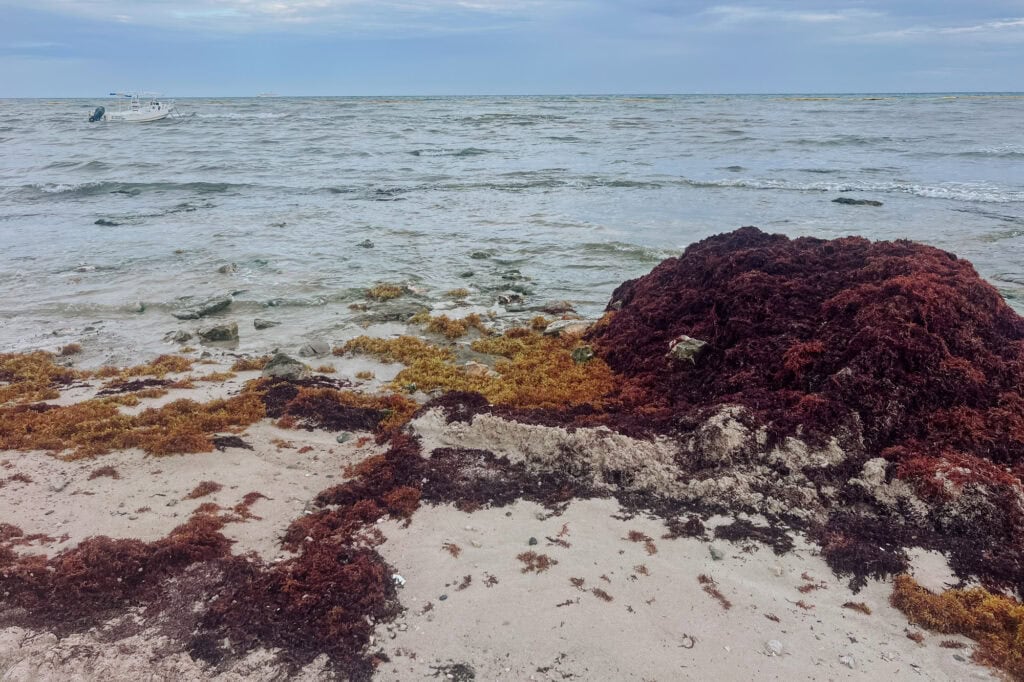
Mexico’s Caribbean coastline is in the middle of its most difficult sargassum season on record.
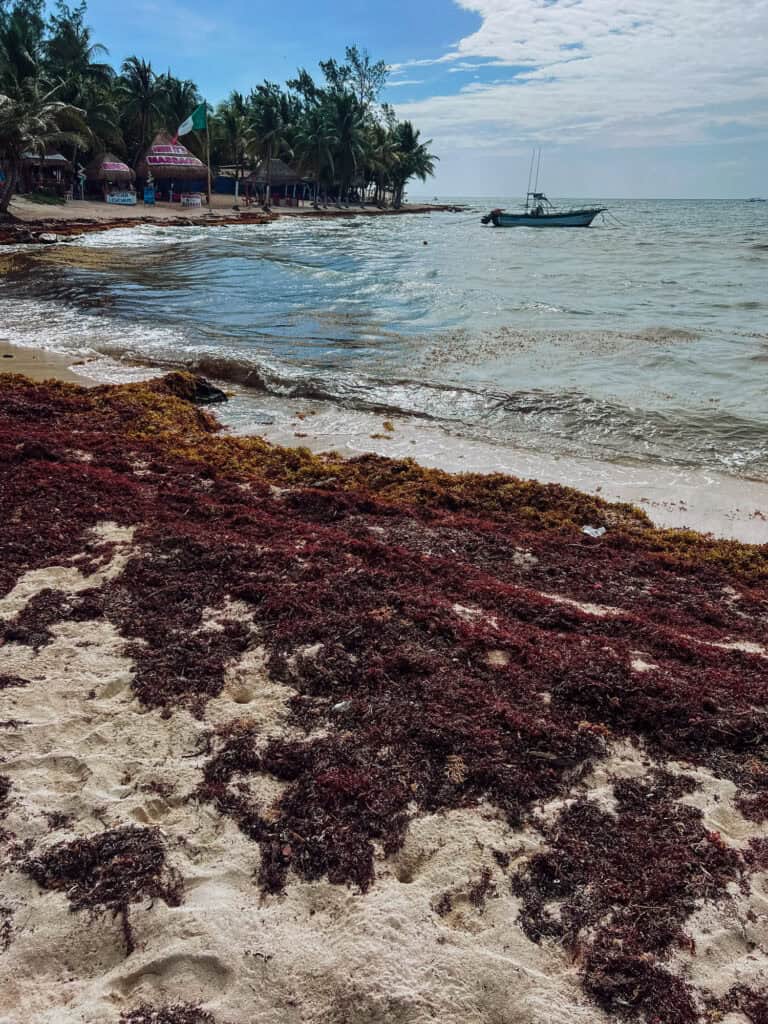
Across Quintana Roo, the state that’s home to Cancun, Playa del Carmen, Tulum, etc., white sand beaches are dealing with unprecedented volumes of the stinky, floating brown seaweed.
The invasion is reshaping daily beach maintenance and tourism, and it’s now driving a much larger government response.
How Bad Is Mexico’s Sargassum Problem?
The numbers tell the story.
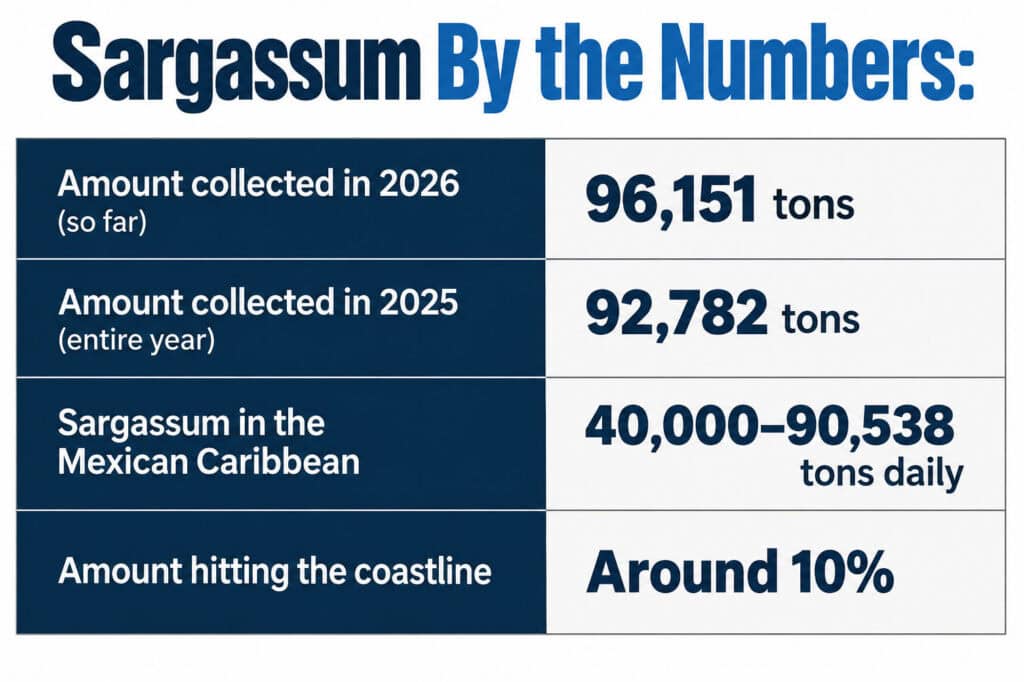
The amount of the brown seaweed this year is 27-times the historic average!
By the end of July, 2026, authorities had collected nearly 100,000 tons of sargassum from Quintana Roo’s coastline.
Midyear, the tonnage had already surpassed *all* of the sargassum removed during the 12 months of 2025.
Mexican officials describe 2025 and 2026 as the two biggest sargassum collection years on record.
The Worst Hit Beaches in Mexico
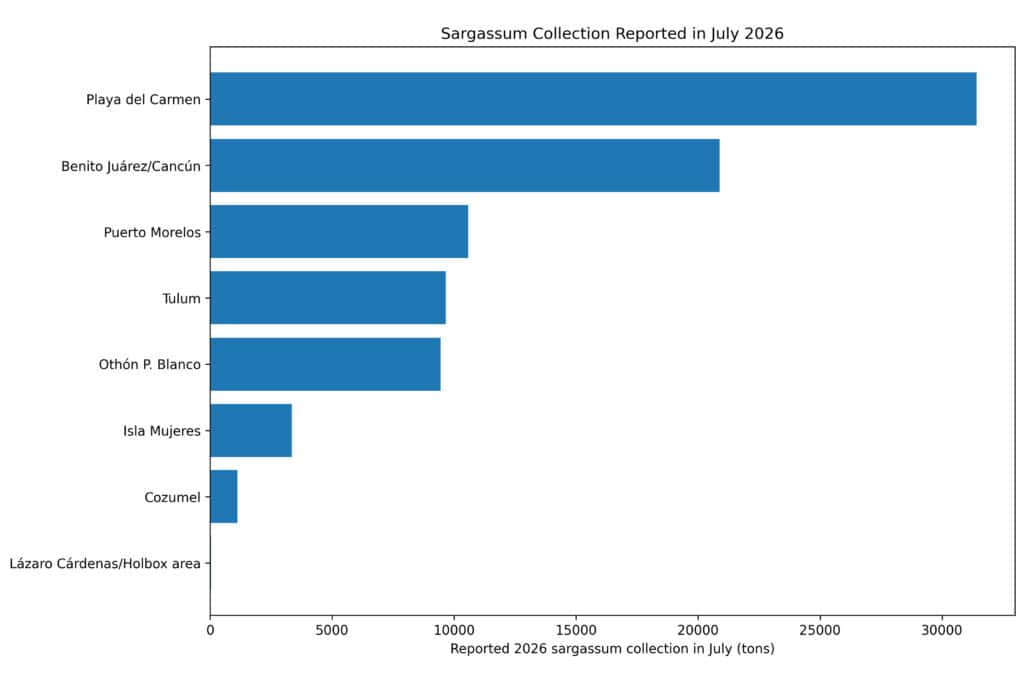
Not every destination is affected equally by the mounds of sargassum washing up.
Isla Mujeres, for instance, has seen a comparatively mild season, with around 3,400 tons of the brown seaweed collected.
That’s far below the totals reported in Playa del Carmen, Benito Juárez, and Puerto Morelos.
Cozumel and other islands have likewise fared better than the hardest-hit mainland stretches.
This means: the crisis isn’t uniform across the Mexican Caribbean, even as headlines treat it as a single coastwide event.
Why Mexico is Inundated With Sargassum
Mexico’s environmental authority, SEMARNAT, admits: sargassum has grown from an occasional nuisance into a persistent, ongoing phenomenon.
On any given day, the agency estimates that somewhere between 40,000 and 90,000 tons of sargassum is floating around the Mexican Caribbean.
Roughly 10% of that volume reaches Mexico’s shores.
Winds and currents constantly shift how much sargassum actually makes landfall on any given day or week, which is why the problem is so hard to plan around.
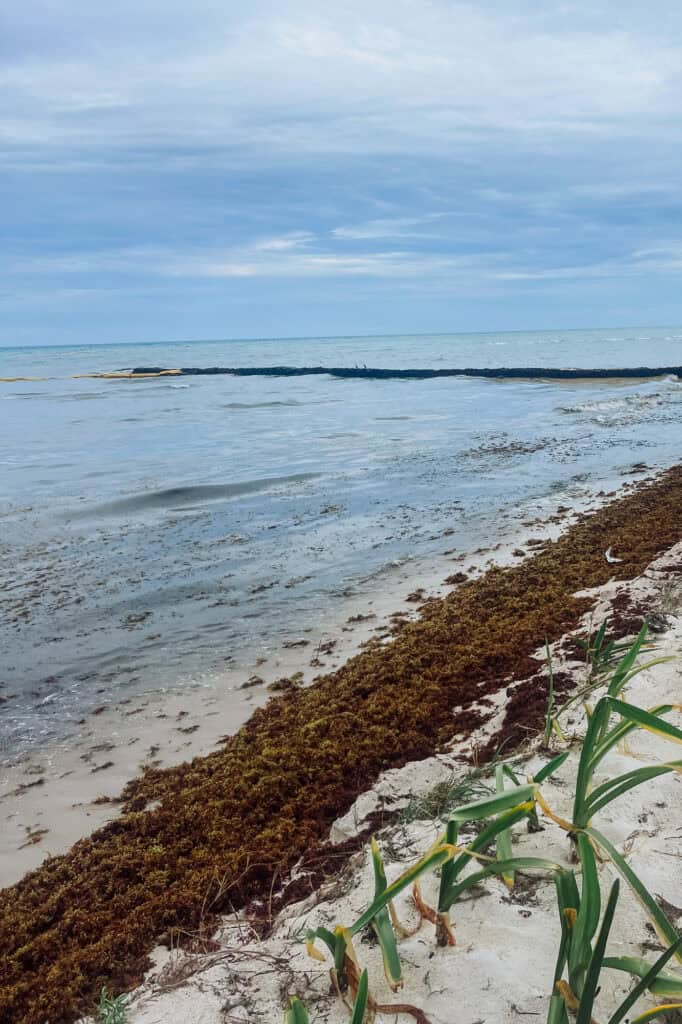
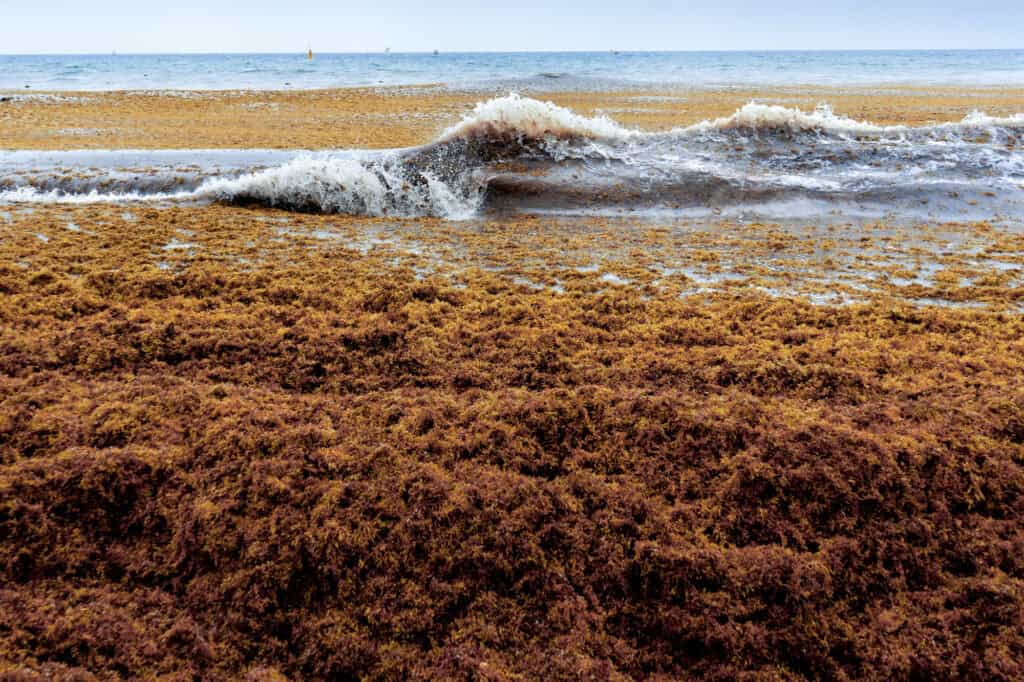
The seaweed piles up and starts to decompose, turning beaches known for powder-white sand into brown algae mats.
In addition to the unsightly looks, as the material breaks down, it releases a distinctly unpleasant odor.
What’s Driving the Record Sargassum
There are a variety of factors at play:
Nutrient Runoff
Sargassum needs nutrients to grow, and there’s more of it in the ocean now. It’s mainly from Amazon River discharge, carrying agricultural fertilizer runoff from deforested land in Brazil.
Warming Water
Warmer ocean temperatures always promote algae growth, and rising air and ocean temperatures affect ocean currents and add more nutrients to the water.
So warming isn’t just making the water more hospitable to sargassum directly. It’s also altering the current and wind patterns that determine where blooms end up.
Shifting winds and currents
Strong easterly trade winds have been pushing sargassum patches west into the Caribbean earlier in the year than usual.
This year marks the first time scientists have observed sargassum reproducing in large quantities directly in the Caribbean and Gulf of Mexico, rather than just drifting in from elsewhere.
A University of Miami study traced the blooms’ origin to West Africa, but the 2025 bloom was so large that it never fully dissipated and effectively seeded a new, local bloom.
That self-sustaining pattern is part of why 2026 is on track to be the worst year on record.
Mexico’s Response: A Full-Scale Marine Operation
Rather than simply raking beaches after the fact, Mexico is now going on the offense.
The government built out an offshore defense system aimed at intercepting sargassum before it ever reaches the sand.
By late July, the Mexican Navy had deployed:
- 11 coastal sargassum collection vessels
- 1 ocean-going vessel
- 1 amphibious collector
- 18 smaller support boats
- 50,000 feet of containment barriers strung across the affected coastal zone
Detection is just as important as collection.
Quintana Roo’s monitoring center draws on satellite imagery, alongside data on ocean currents, sea temperatures, and wind patterns to forecast where sargassum concentrations are heading next.
The plan is:
- Spot the seaweed early
- Track its trajectory
- Get collection equipment in place to intercept it before it makes it to the beach
A Much Bigger Investment Is Coming
Mexico’s federal government knows the economic importance of Quintana Roo’s beaches.

The government committed an initial $45 million to expand offshore collection capacity.
The program includes:
- Additional ocean-going and semi-ocean-going collection vessels
- More tugboats
- More containment barriers
- Upgraded monitoring technology
- Roughly 30 miles of new coastal containment barriers, concentrated around Playa del Carmen, Cancún, Tulum, Puerto Morelos, and Mahahual
The scale of that investment signals a shift in how Mexico thinks about sargassum. It’s no longer being managed as a seasonal cleanup. It’s being built into the state’s permanent coastal infrastructure, on par with hurricane preparedness or erosion control.
Sargassum’s Tourism Toll
It’s unclear how much of a direct impact the sargassum scourge is having on Mexico’s tourism.
Average hotel occupancy across Quintana Roo’s main destinations fell below 60% in July, which is weak for a busy summer month.
Quintana Roo’s tourism brand is built almost entirely around turquoise water and white sand.
So even isolated images of brown surf or heavy machinery clearing beaches can shape negative perception.
What This Means Going Forward
Cancun, Playa del Carmen, Tulum, and Puerto Morelos remain the destinations facing the heaviest sargassum impact, while Cozumel and Isla Mujeres illustrate just how much conditions can vary within the same stretch of coastline.
What’s changed is Mexico’s posture, with the naval deployment, satellite-driven monitoring, and millions of dollars invested in expanding offshore collection capacity.
The real test will be whether that infrastructure can keep pace with a problem that’s proven, so far, to be getting bigger each year.