Pakou (Pak Ou) Cave: The “Thousand Buddhas Cave”

Visiting the Pakou (or Pak Ou) Caves, you’ll immediately see how it earned the nickname “Thousand Buddha Cave.”
It’s part natural wonder, and part religious experience. It makes for a good half-day trip from Luang Prabang.
Key Info on the Pakou Cave
- Also called Tham Ting or the Buddha Cave
- Divided into two caves: Upper & Lower
- Arrive by boat or vehicle
- Named a UNESCO site in 1995
- The cost is 30,000 Kip (a dollar or two)
- Bring cash for offerings and incense
Tour Pakou Cave From Luang Prabang
If you’re unfamiliar with the area, like me, the best way to visit the cave is to take a tour from Luang Prabang, Laos. Some of them will combine a tour to the cave with a stop at the Kuang Si Waterfall.
➡️ Click to Book: Pakou Cave Tour
How to Get to Pakou Cave
The cave is close to Luang Prabang, about a 25-kilometer drive. It’ll take 45 minutes by car or van.
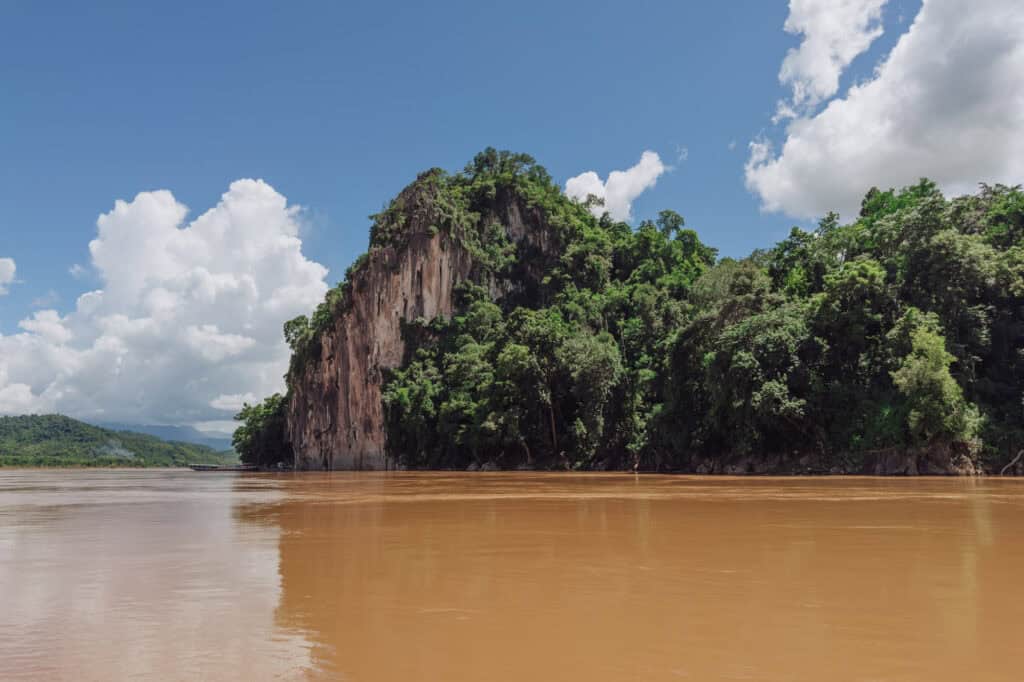
The other option is to take a boat down the Mekong River. The ride will take about 90 minutes from Luang Prabang.
Map of the Cave
This map shows the rural area outside Luang Prabang where you’ll find the Pakou Cave:
The History of the “Thousand Buddha” Cave
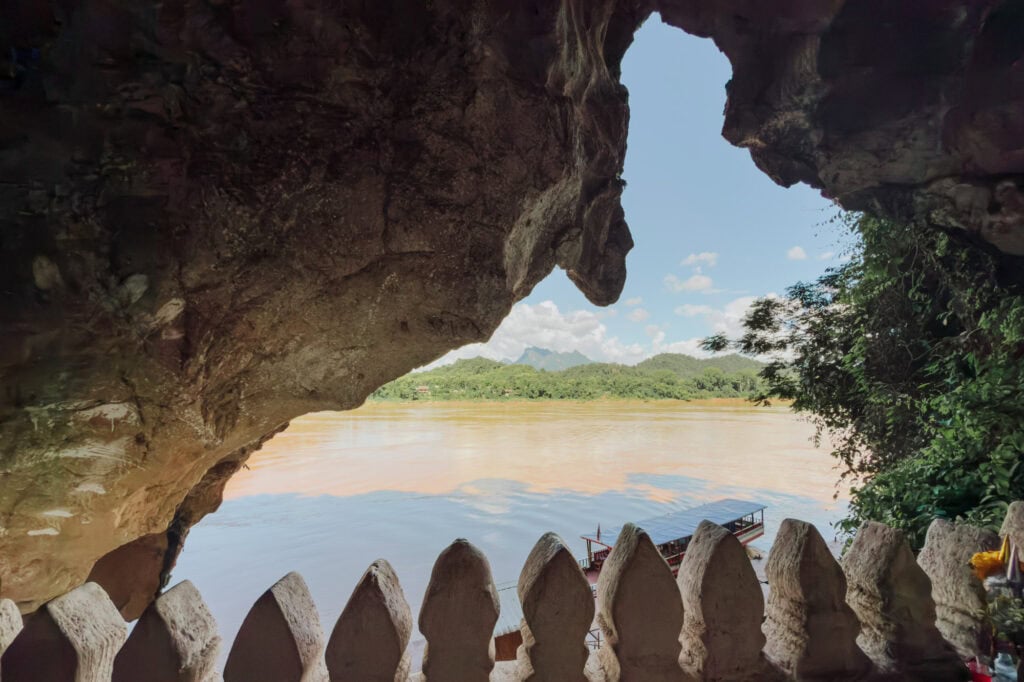
This natural cave is carved into a mountain cliff on the Mekong River, across from the village of Pak Ou (Pakou).
It’s divided into an upper and lower cave, linked by stone steps.
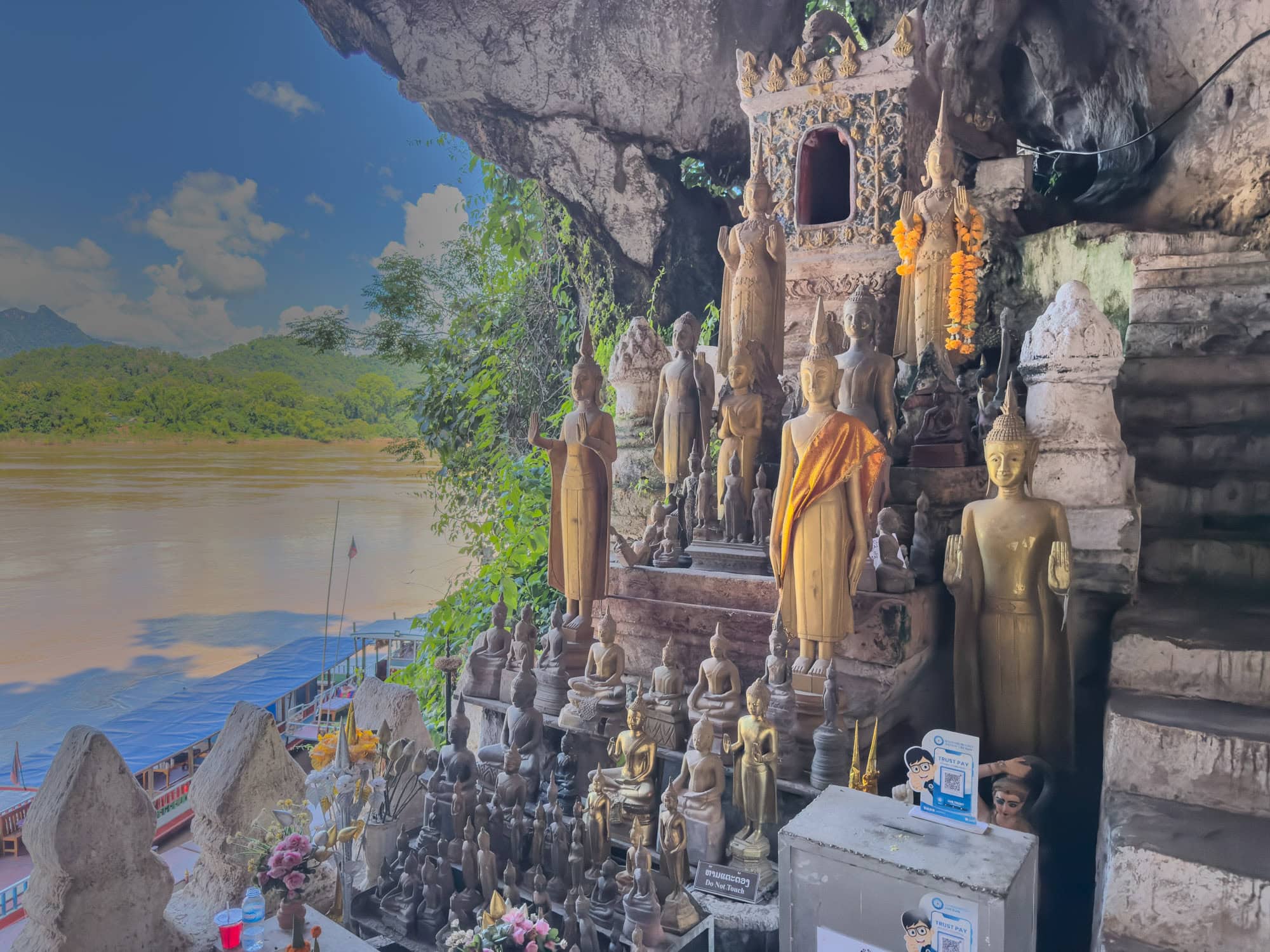
Inside, you’ll find more than 4,000 sculptures of Buddha, which are made from metal and wood.

People here believe the cave was once the home of an ancient Buddha.
In the 15th century, Buddhism was adopted by King Chao Phothisarath, of the Lao Royal family. Every year, the king and the people of Luang Prabang made a pilgrimage to the caves as part of the New Year religious observances.
Artisans were commissioned by the Royal family to prepare sculptures to place inside the cave for worshipers.
For the most part, they were carved from wood or molded from a tree resin, then coated with red or black lacquer and covered with gold leaf.
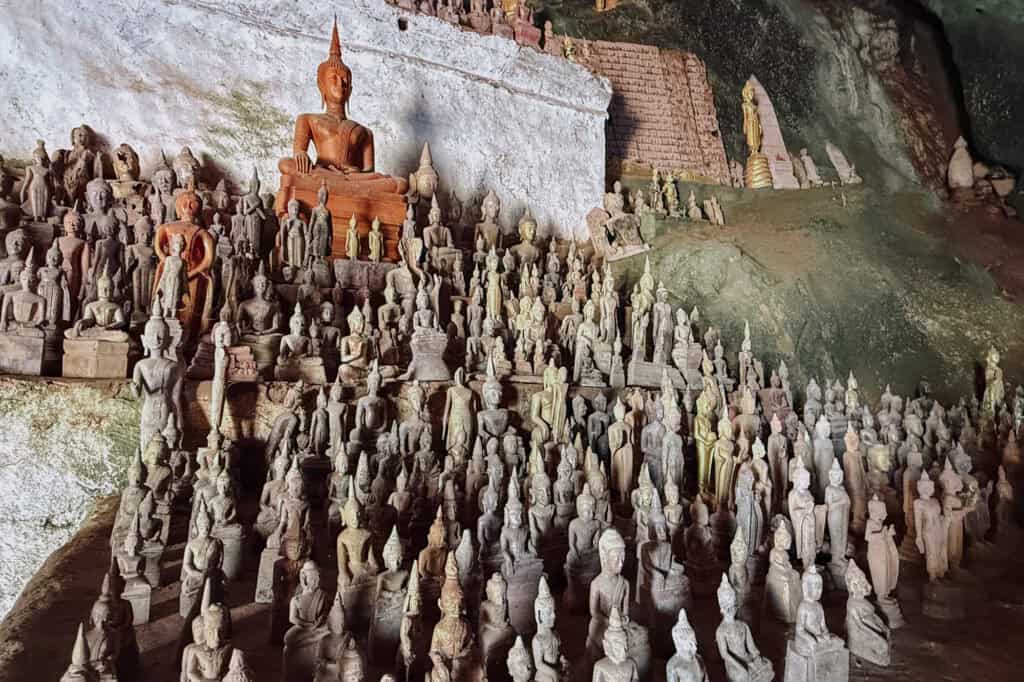
The Lower Cave
The mouth of the lower cave is a prominent landmark, visible from the Mekong River.
From the shore, paved pathways lead up to the cave, which is home to approximately 2,500 Buddha statues and sculptures.
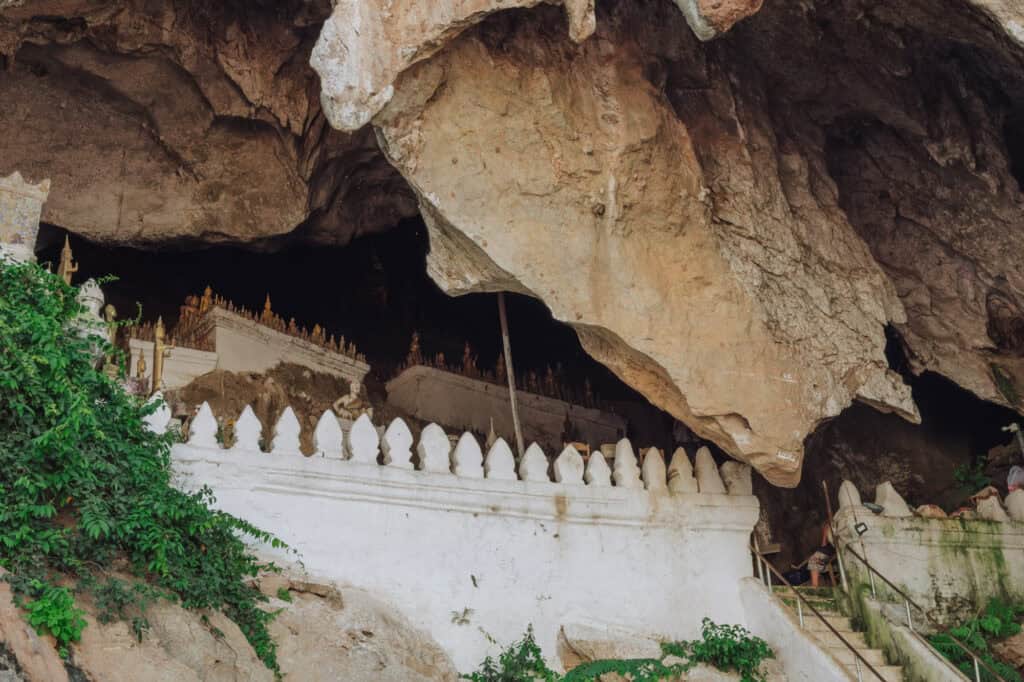
Lion figures guard the entry, while a Ramayana sculpture of a ‘hermit’ associated with forest medicines sits above the lower entry platform.
A focal point for visitors is the altar closest to the entry with offerings of flowers, incense, and candles.
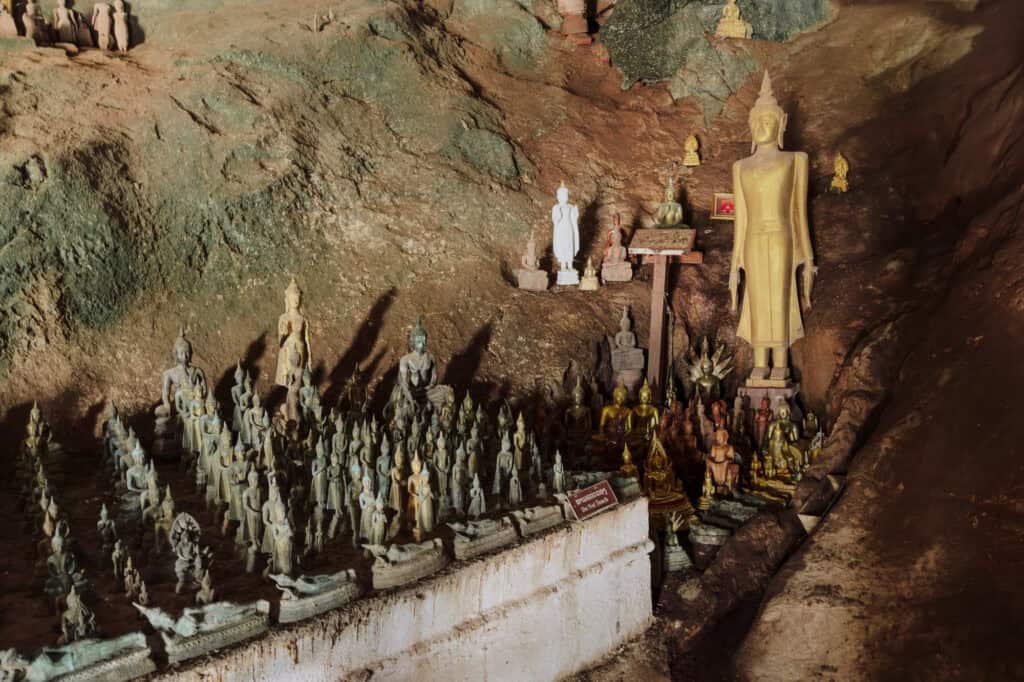
The Upper Cave
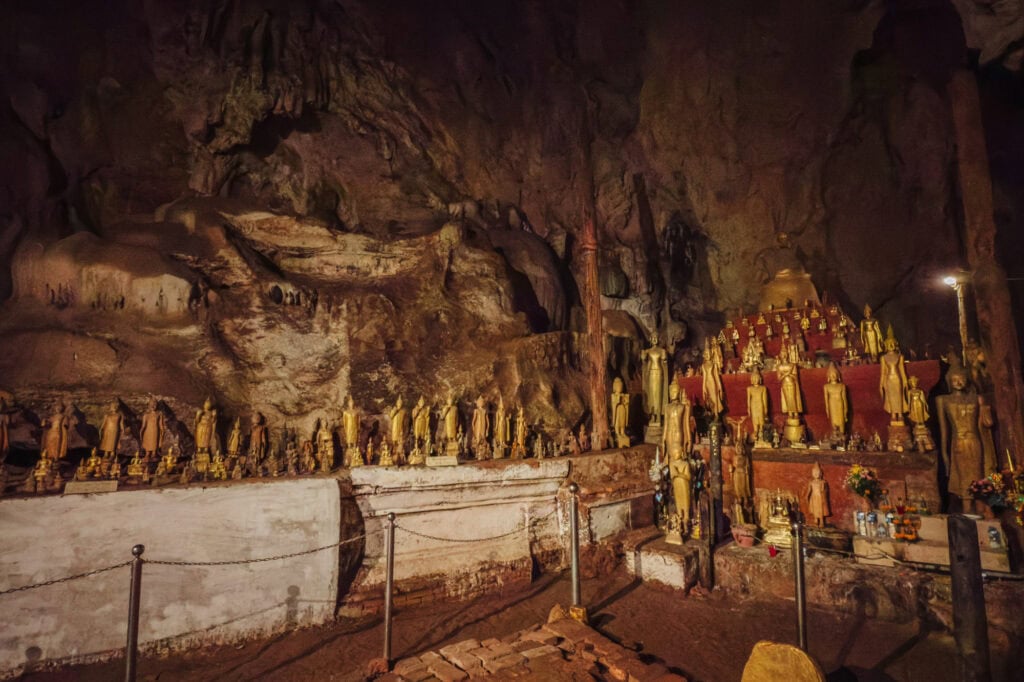
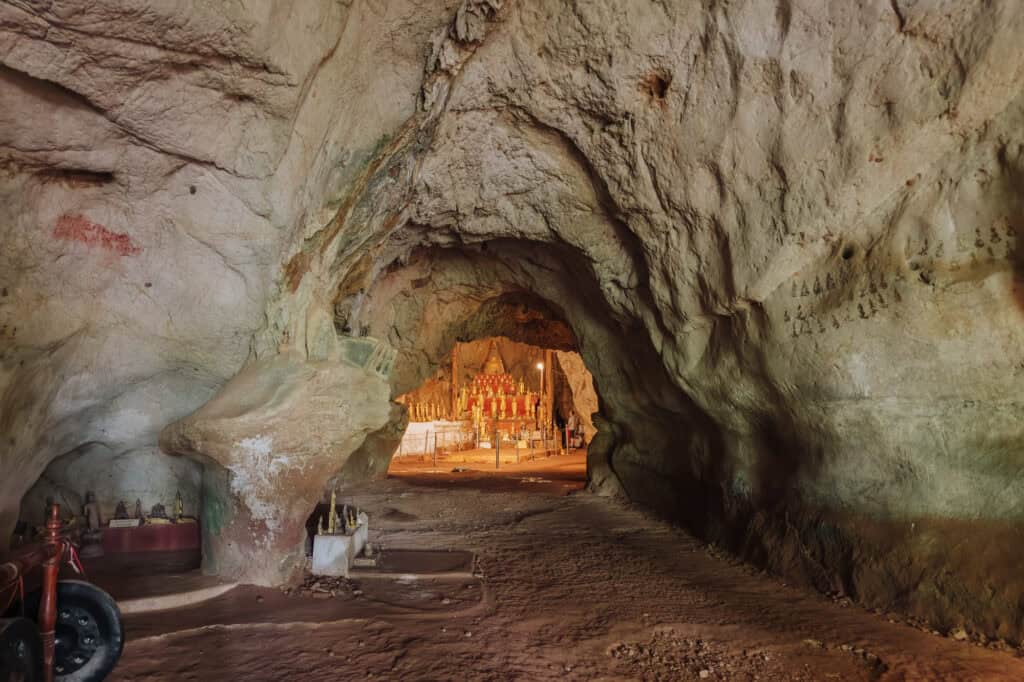
You’ll climb nearly 300 stone steps to the entrance of the upper cave. This one extends 50+ meters into the stone mountainside.
There are altars and another 1,500 Buddha statues inside.
Further into the cave, you’ll find groups of sculptures.
For 100,000 Kip (about $5), you can buy incense at the entry to burn inside.
Wrap: Is Pakou Cave Worth Visiting?
These caves are one of the most treasured religious symbols of Luang Prabang Province, and among the region’s top attractions.
The boat ride to get there is scenic, giving you a slice of Laotian life along the Mekong River. If you have extra time in the area, I’d recommend continuing farther down the river for a night at the Mekong Elephant Park sanctuary.
The combination of a relaxing boat ride, impressive limestone cliffs, and the fascination of hundreds of Buddha statues makes it definitely worth the day trip (actually a half-day trip).
Getting to the area is easier than ever, with easy flights from Hanoi, Bangkok, and other cities into Luang Prabang’s airport. It’s a UNESCO site, where the architecture of the buildings and hotels in town (like the Avani+) are preserved.
Video: Pakou Caves
More on Luang Prabang
Check out my other posts on Laos: