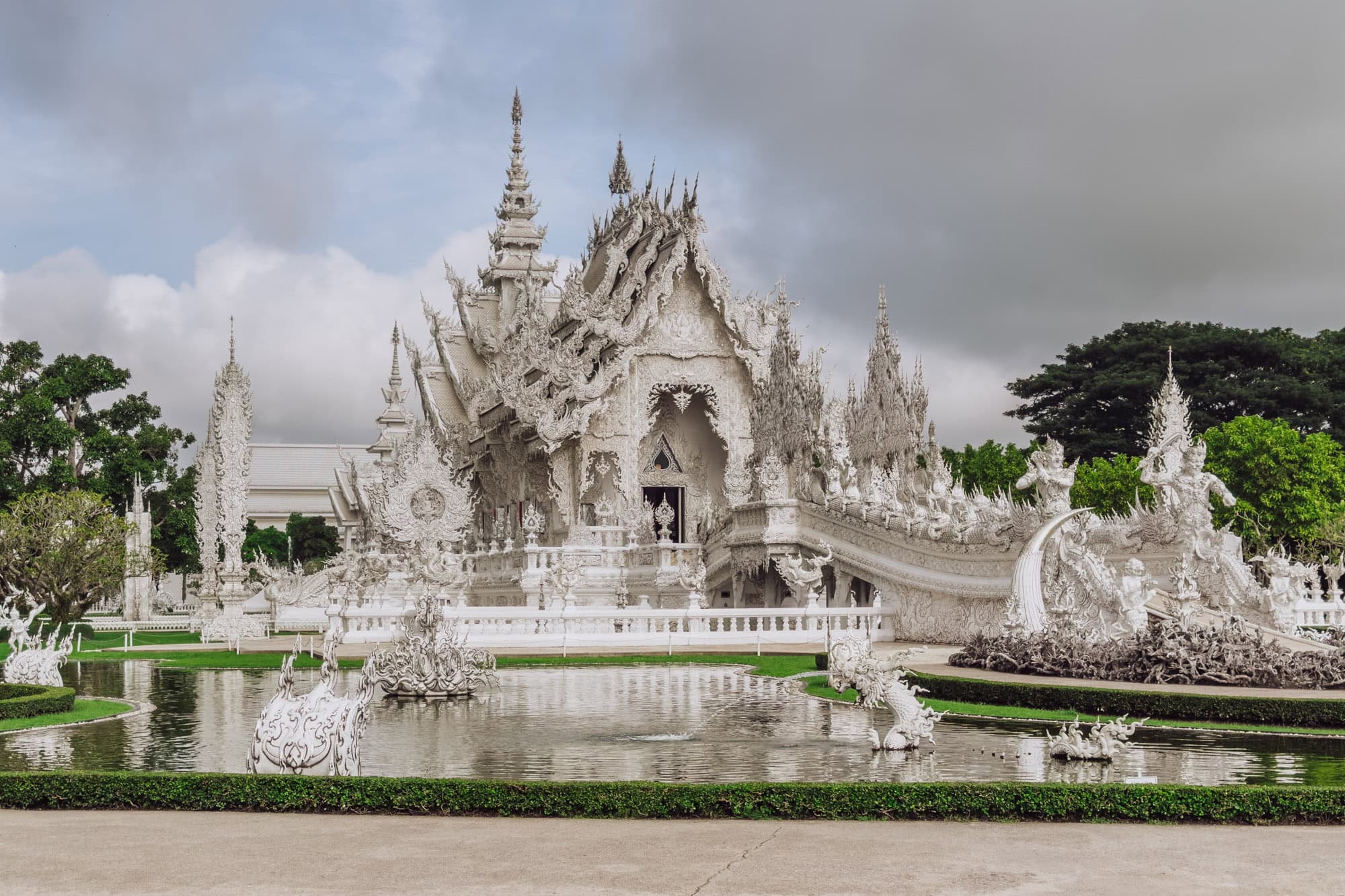
Visiting Wat Rong Khun: Chiang Rai’s White Temple

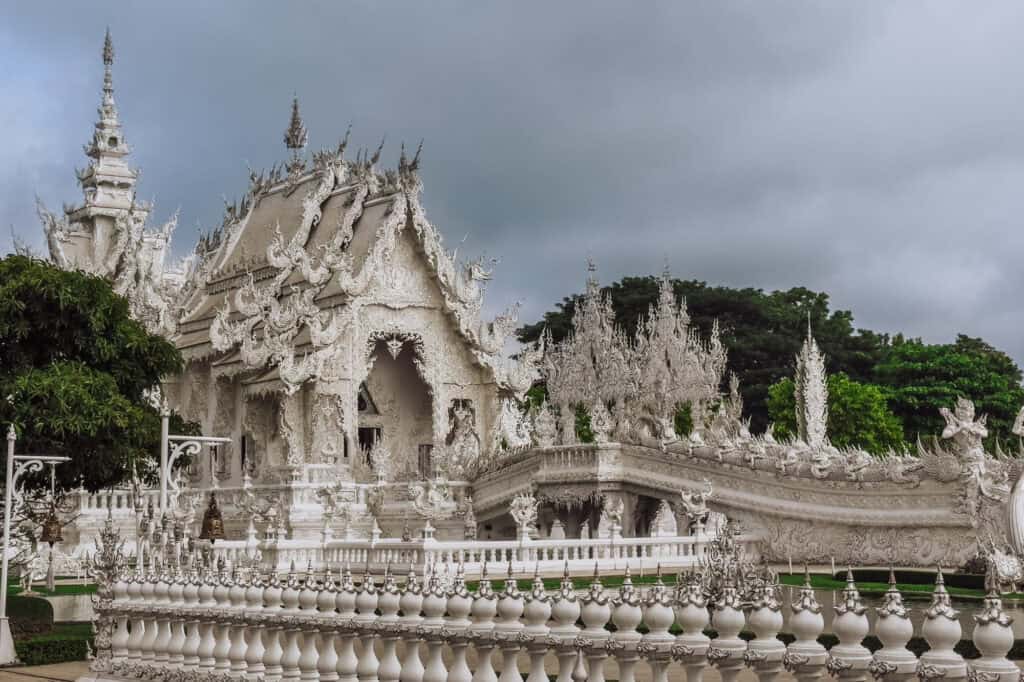
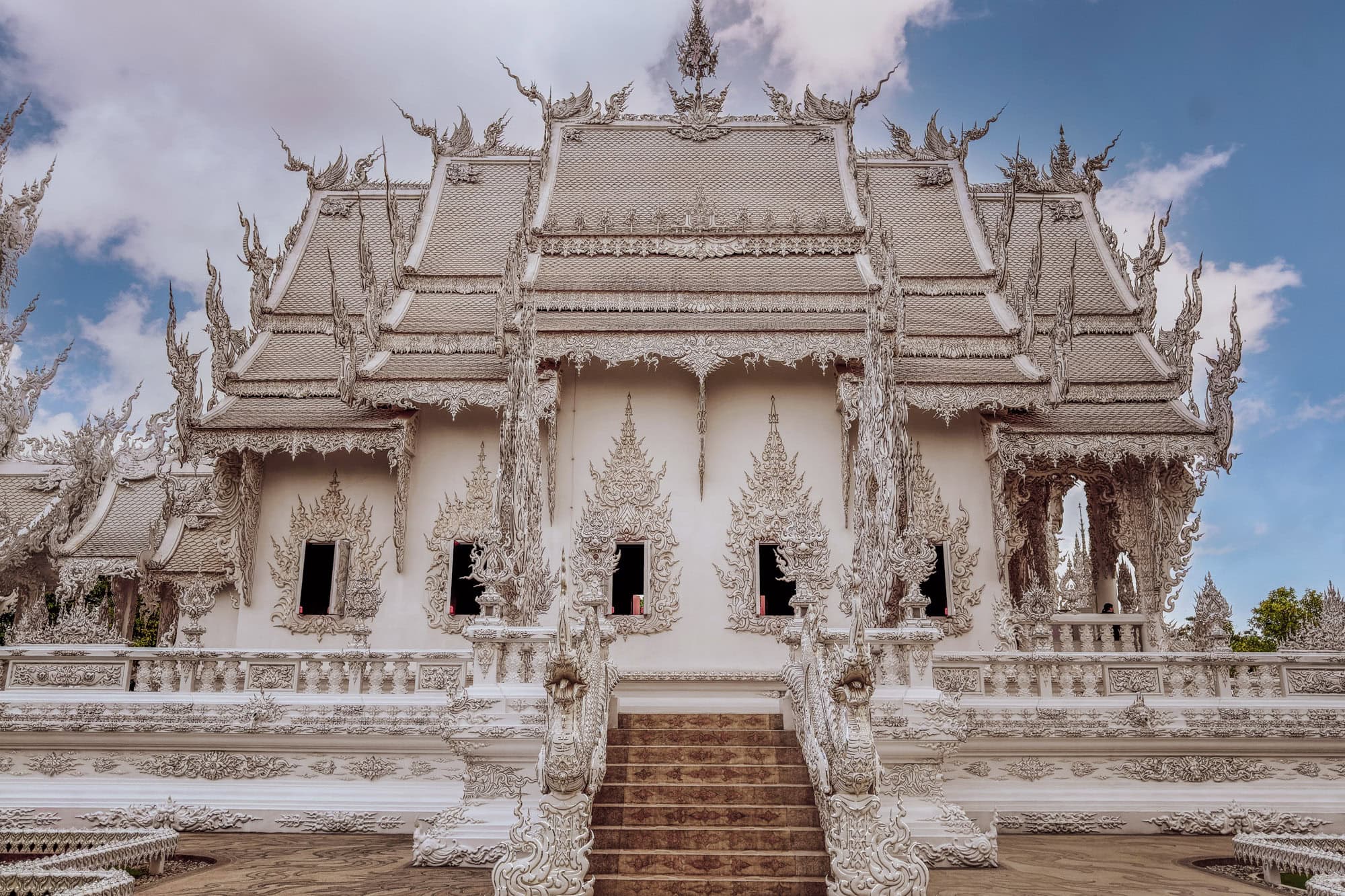
It’s not for me to judge a religious site, but people visiting Wat Rong Khun, known as the White Temple, in Chiang Rai should know: it’s more of a modern-day attraction than a piece of Buddhist history.
The White Temple is certainly visually stunning, but unless you’re going to pray or have more of an experience, you can really see the site in an hour.
Key Info on Visiting
- It’s just outside Chiang Rai in Northern Thailand.
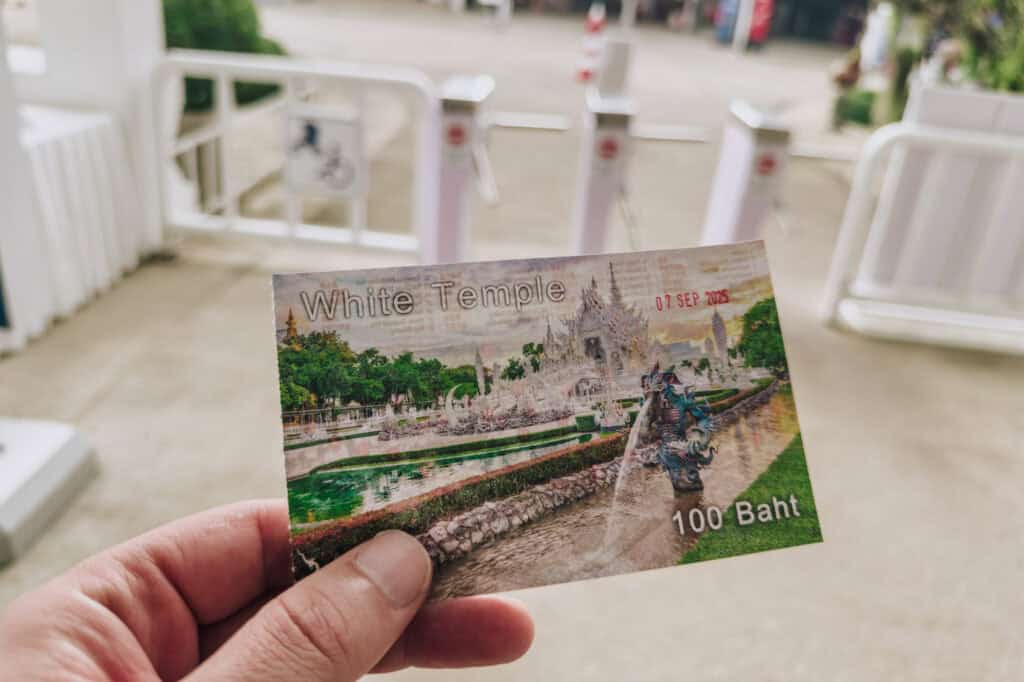
- The cost is $3 (100 THB).
- Cover your knees (and shoulders).
- Get there early, before the crowds!
Tours of the White Temple
You can hire a driver in Chiang Rai, or go with more of a tour guide. This is a great option, to have a guide take you to a few temples around the city:
Wat Rong Khun Location
The temple is about 13 kilometers south of Chiang Rai’s city center, making it an easy half-day trip.
Entry Costs & Rules at the White Temple
Entry to the Wat Rong Khun complex is free for Thai citizens.
Foreign visitors pay 100 THB, or about $3 USD. There’s a ticket office right at the entrance.
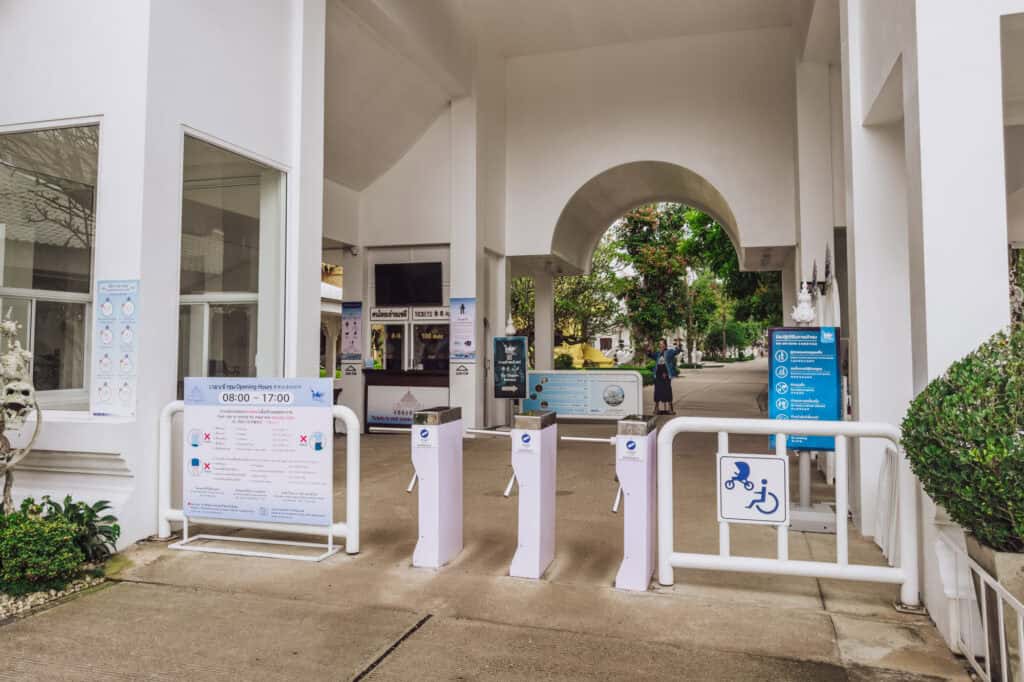
The fee helps fund maintenance and the ongoing expansion of the White Temple.
Additional donations are welcome, but founder Ajarn Chalermchai Kositpipat famously refused outside financial backing when construction began, ensuring the temple remained his personal gift to Buddhism and to Thailand.
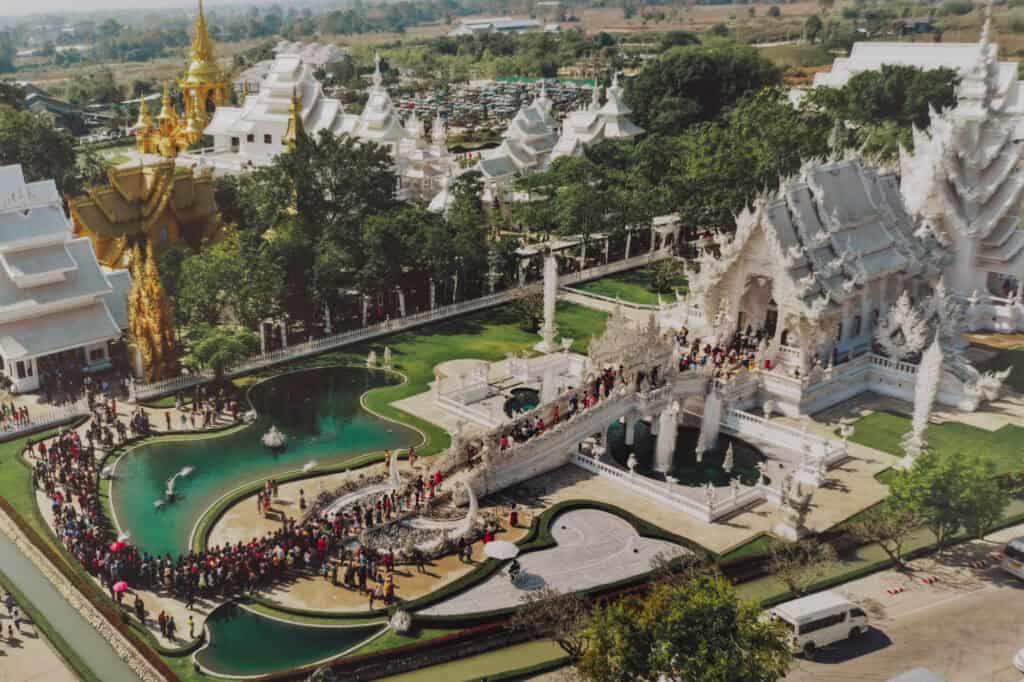
This is a photo of the opening, with a huge crowd lined up to walk through.
Photography
Photography is allowed everywhere on site, except inside the main Buddha relics tower or chapel.
Clothing
The rules are stricter for women. In general, dress modestly. I put on pants, because my shorts didn’t quite cover my knees.
Symbolism at the White Temple
Wat Rong Khun is full of symbolism, some of which I was able to figure out on my own. For most of it, I needed to do some research!
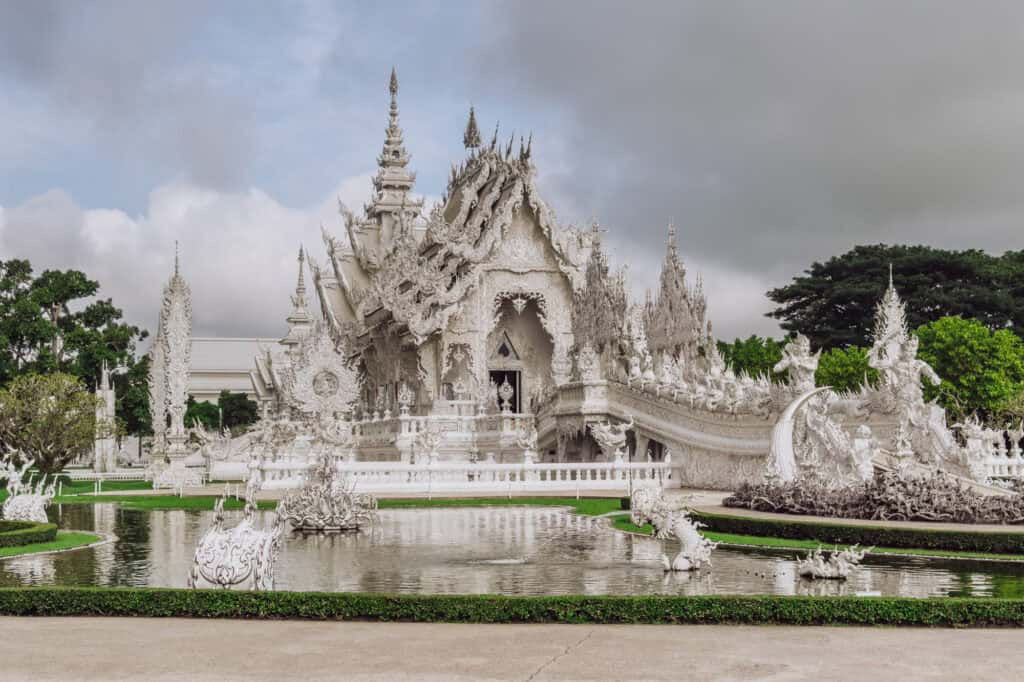
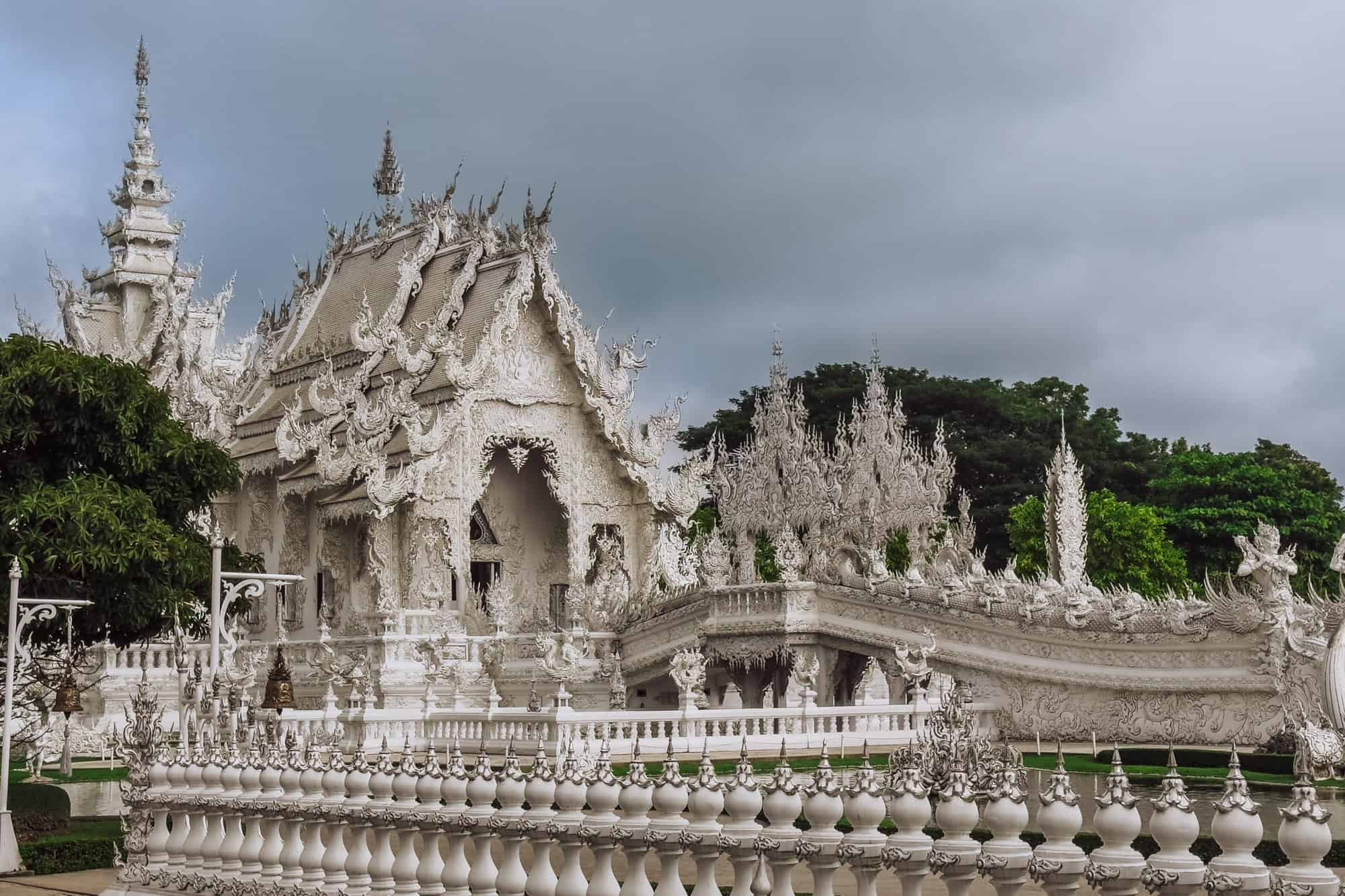
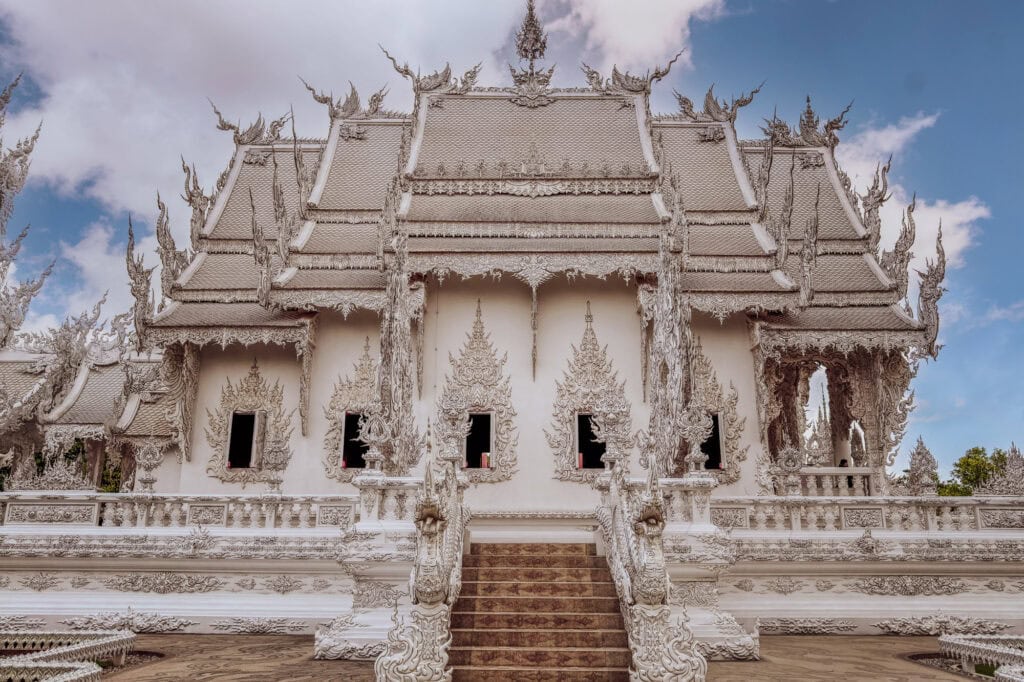
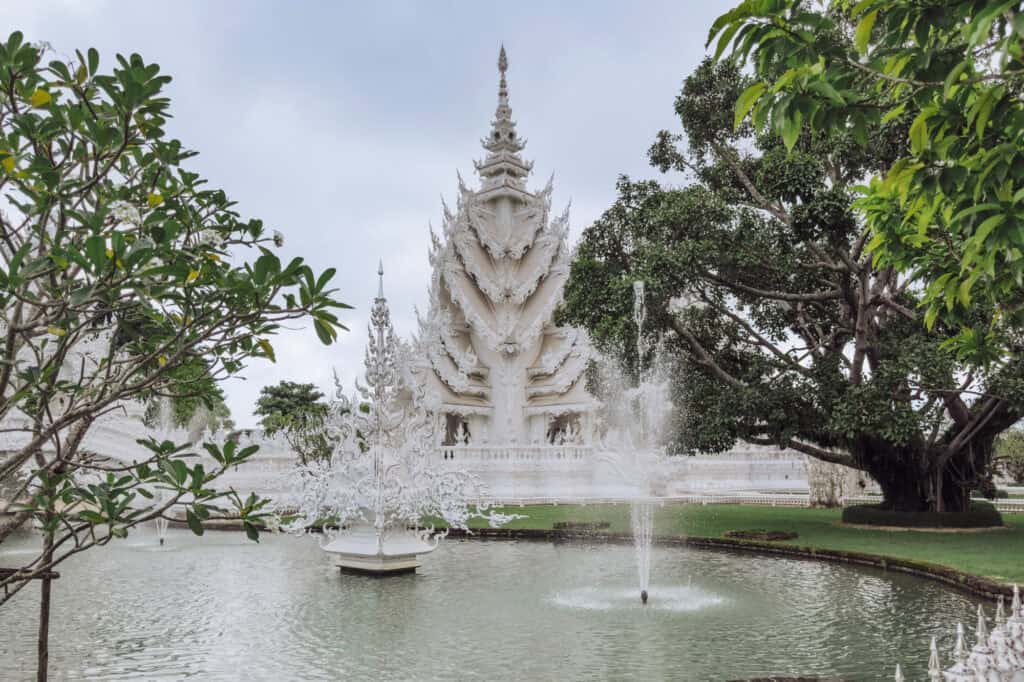
The white façade is striking and sparkling, unlike any other temple in Thailand. The white color symbolizes the purity of the Buddha, while tiny mirror mosaics reflect light, representing his wisdom shining across the universe.
Some of the Symbols
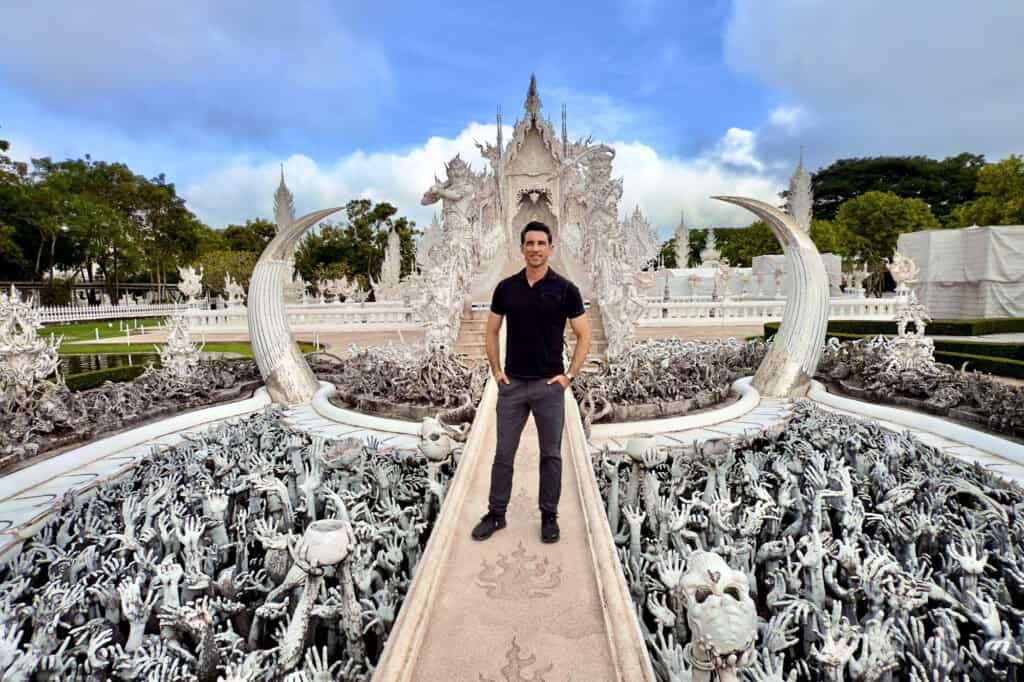
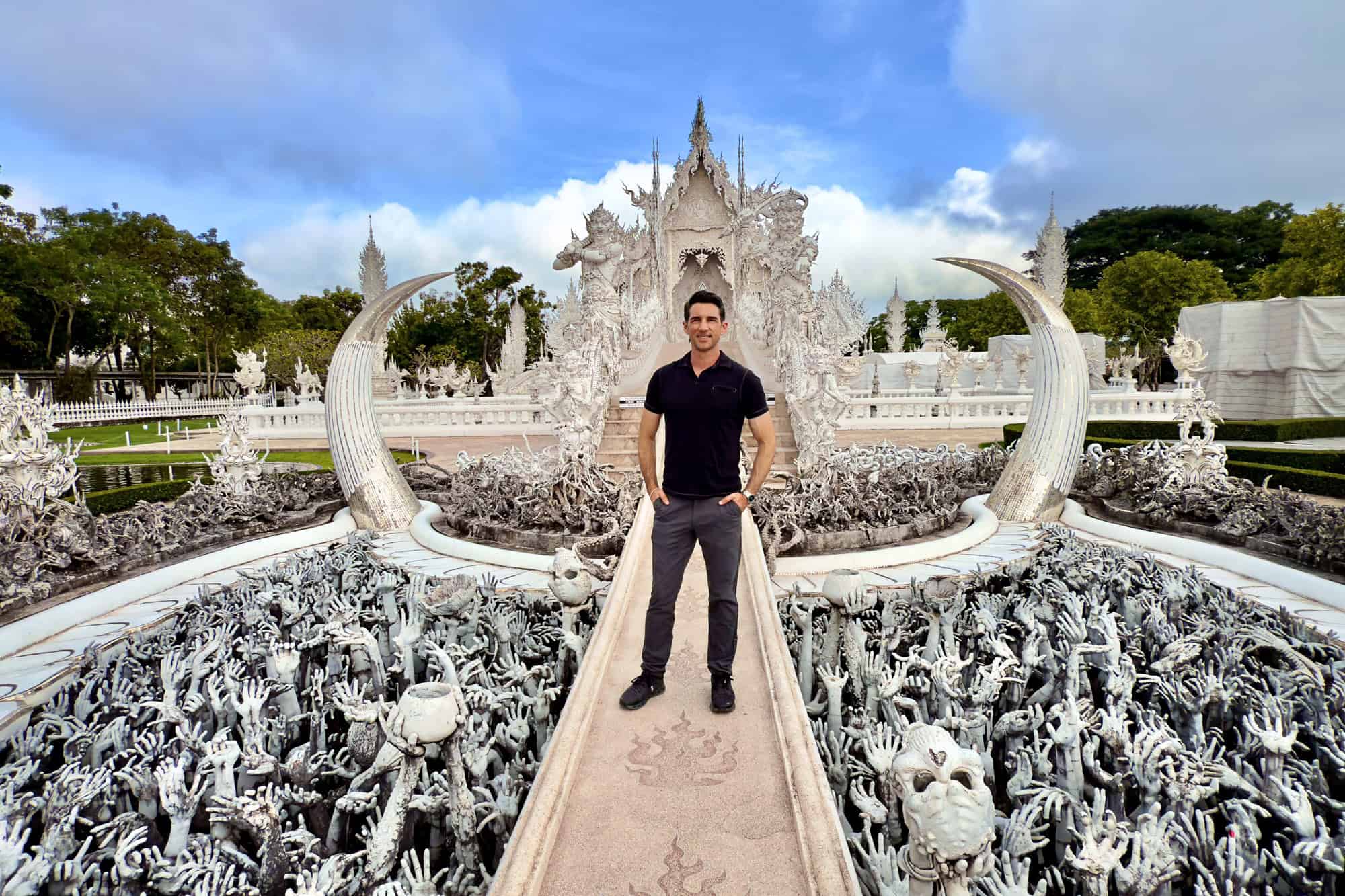
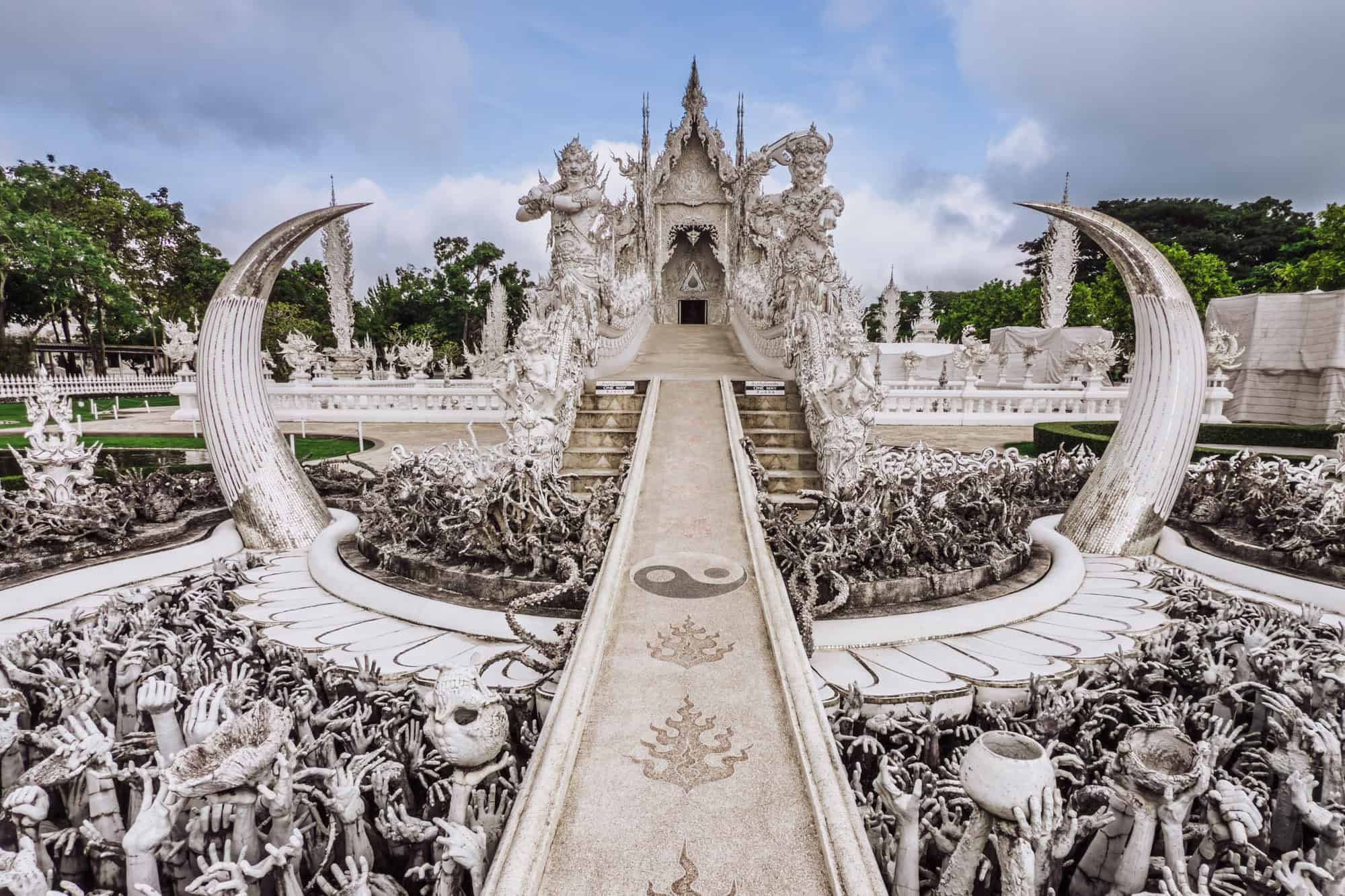
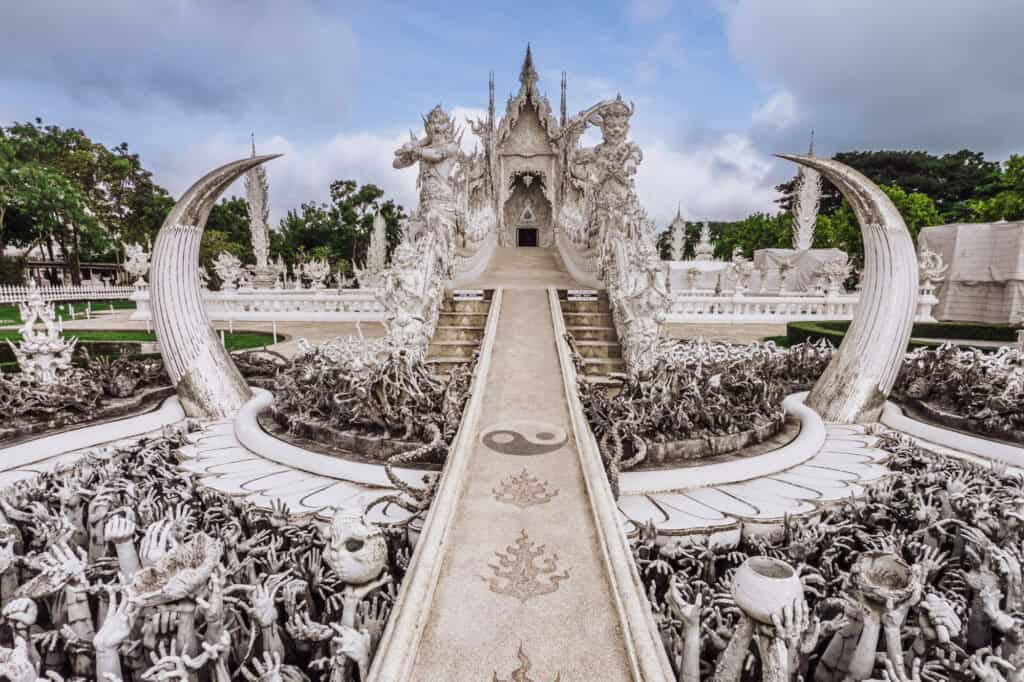
- The bridge leading to the main chapel represents the path from the cycle of birth and death (samsara) toward enlightenment.
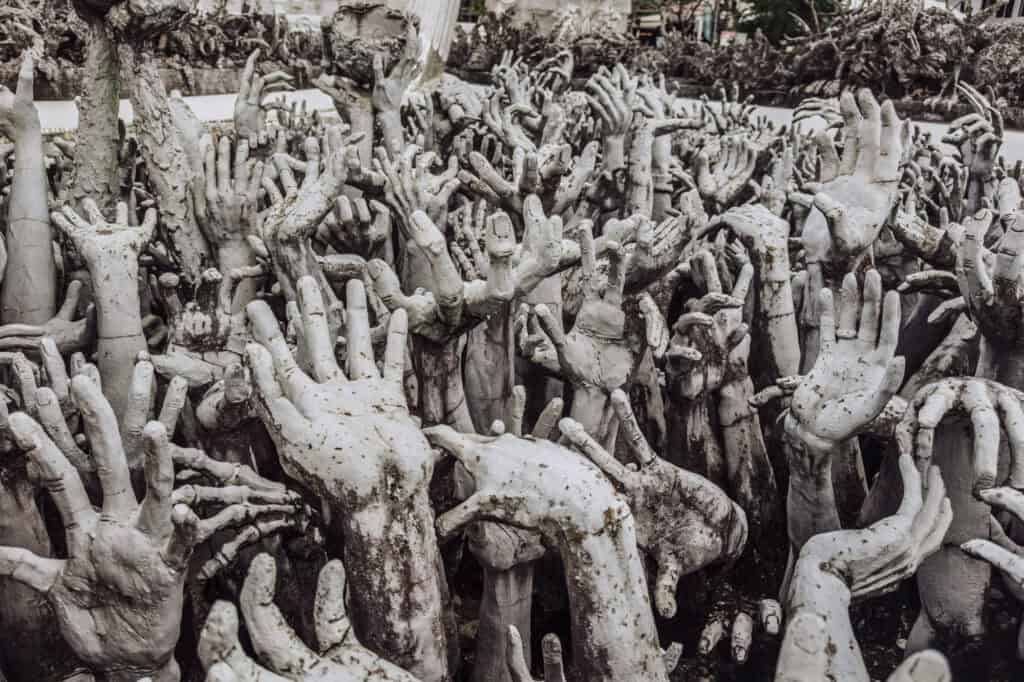
- Below it, a pit of outstretched hands symbolizes human suffering and hell (photo below). Visitors must mentally “let go” of their earthly desires to move forward.
- The ridge of the bridge represents the 16 causes of sorrow, while the middle of the span symbolizes Mount Sumeru, home of the gods.
- Lotus flowers surrounding the hall represent the 16 levels of Brahma, while four larger lotuses honor four noble Buddhist saints.
- Stairs leading to the chapel represent impermanence, suffering, and non-self — the three marks of existence in Buddhism.
The Prayer Leaves: Incorporate Your Own Wishes
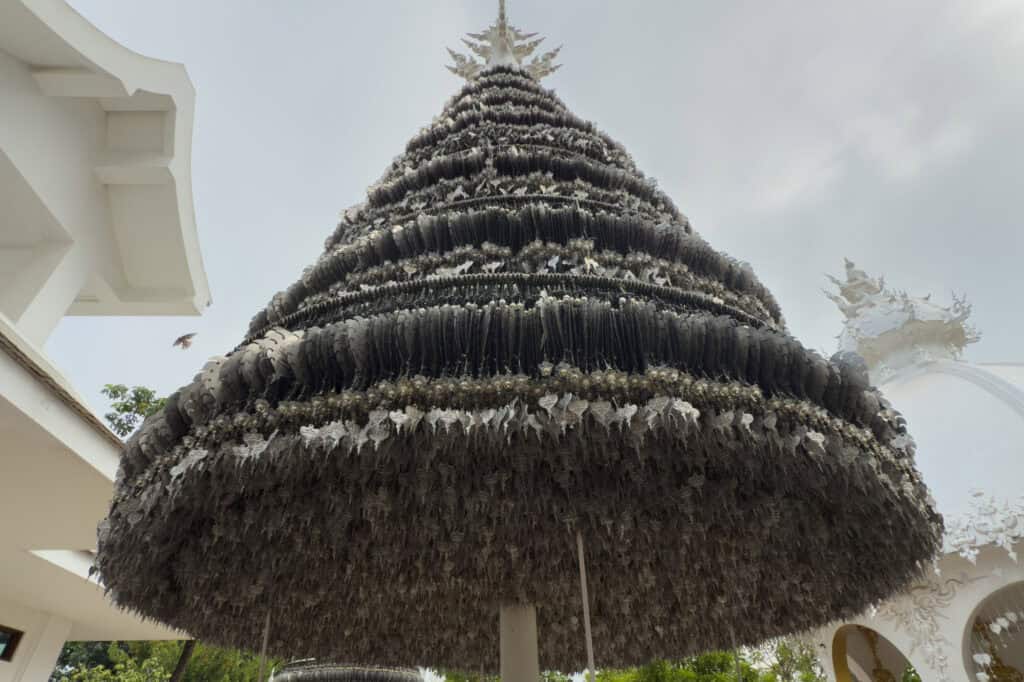
You’ll find “Bodhi prayer trees” on the grounds of Wat Rong Khun, full of the wishes of other visitors.
At a kiosk on site, you can buy a silver leaf, write your wishes on it, and have it incorporated into the structures.
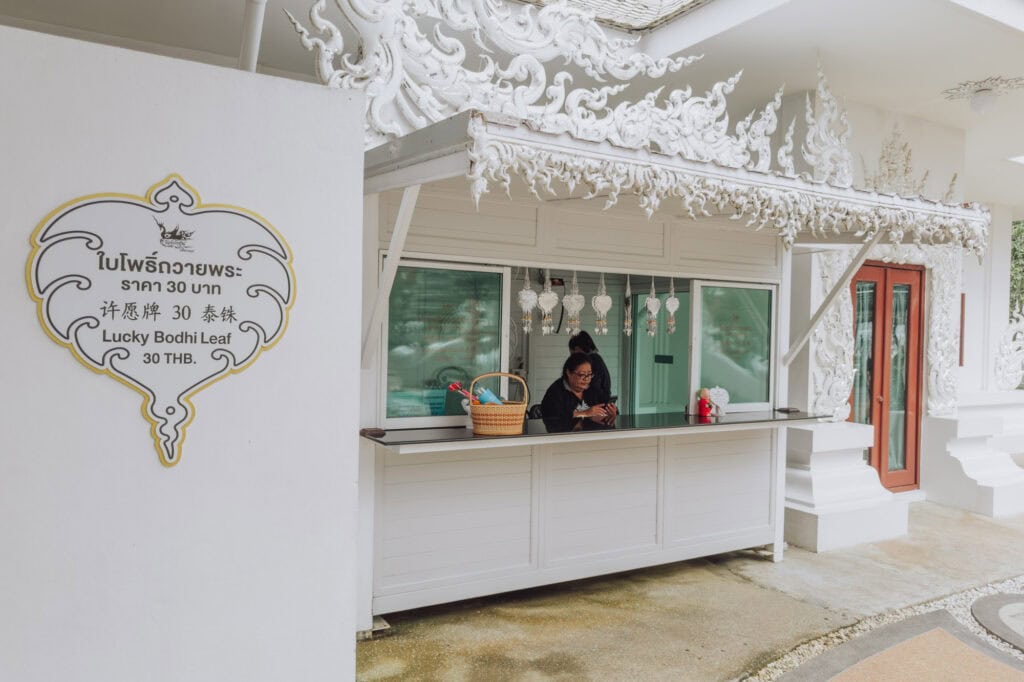
While most of the complex is white, the leaves resemble chimes, lining the ceiling of a walkway by the main temple structures.
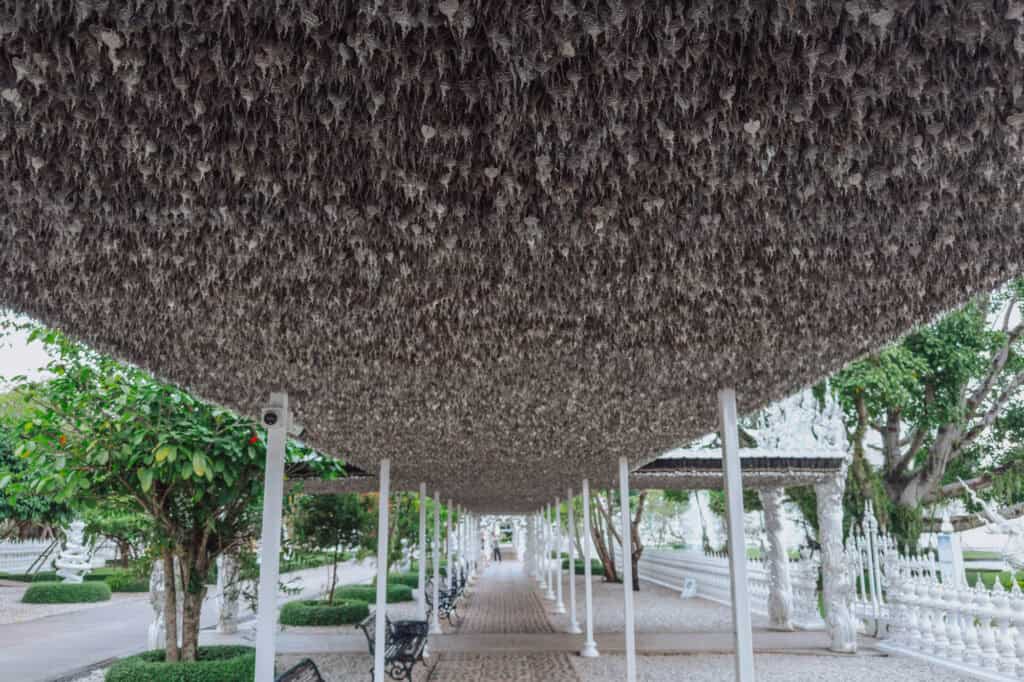
The leaves are also hung to create circular trees.
The Cave at Wat Rong Khun
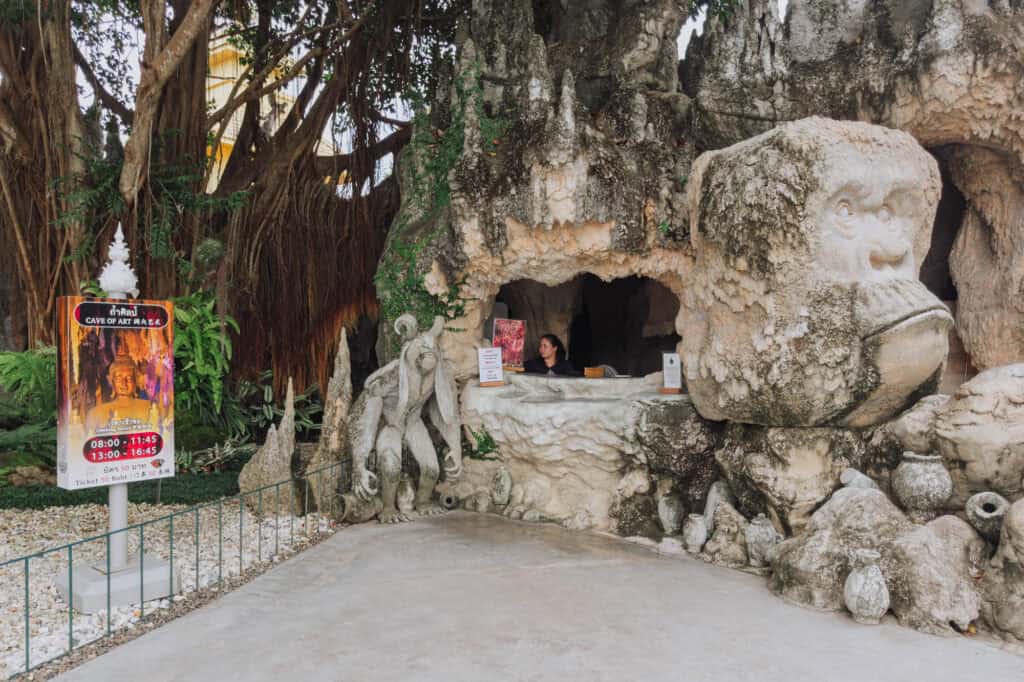
The oddest part of a visit to the White Temple is a manmade cave with a Buddha and other relics inside.
Without trying to offend anyone, to me it resembled the old Rainforest Cafes, complete with a dry ice fog machine.
It’s an extra few dollars to go inside.
The Gold Temple
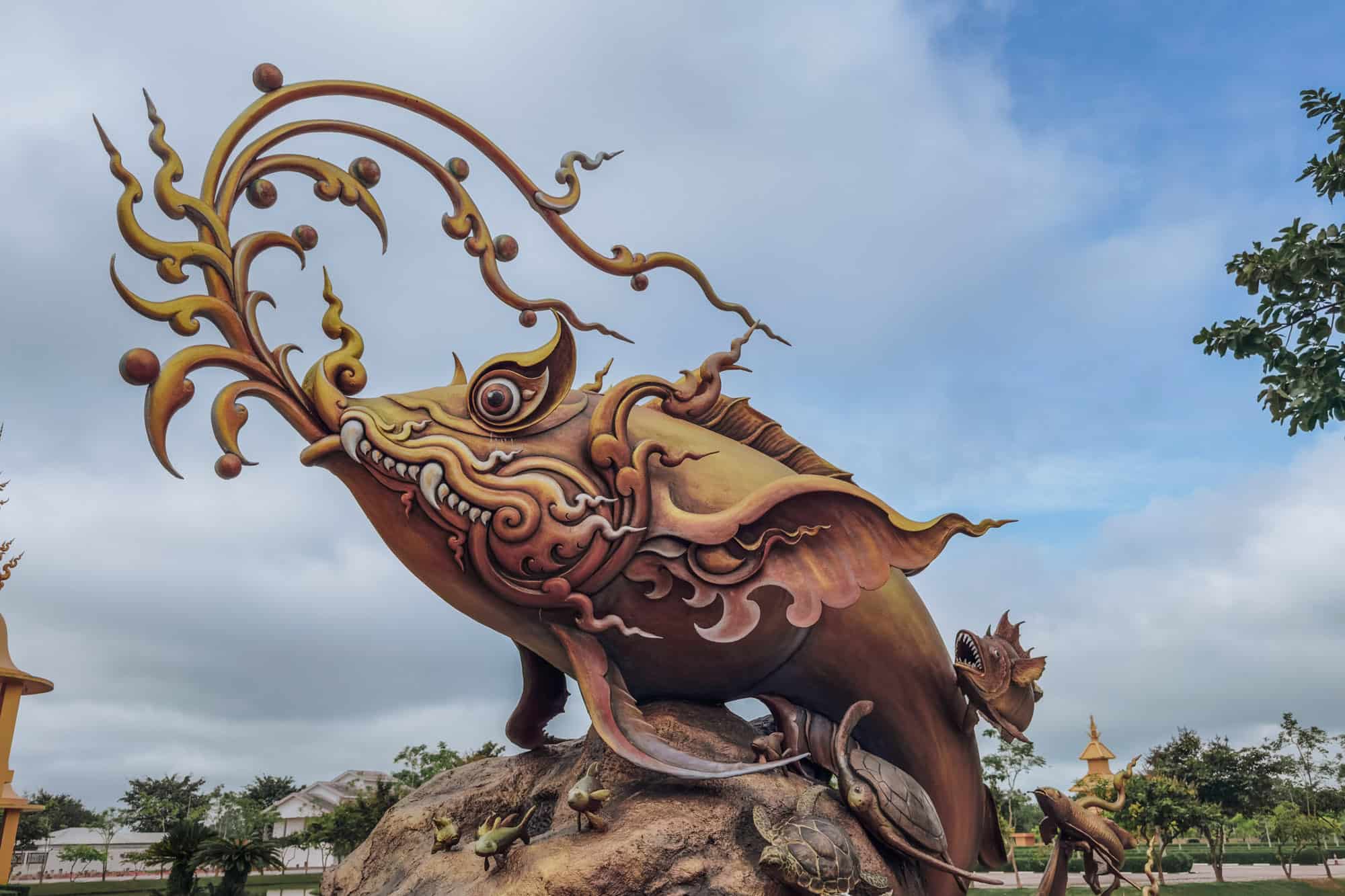
Across the property, you can also visit a gleaming golden temple.
It’s known as the Ganesha Exhibition Hall.
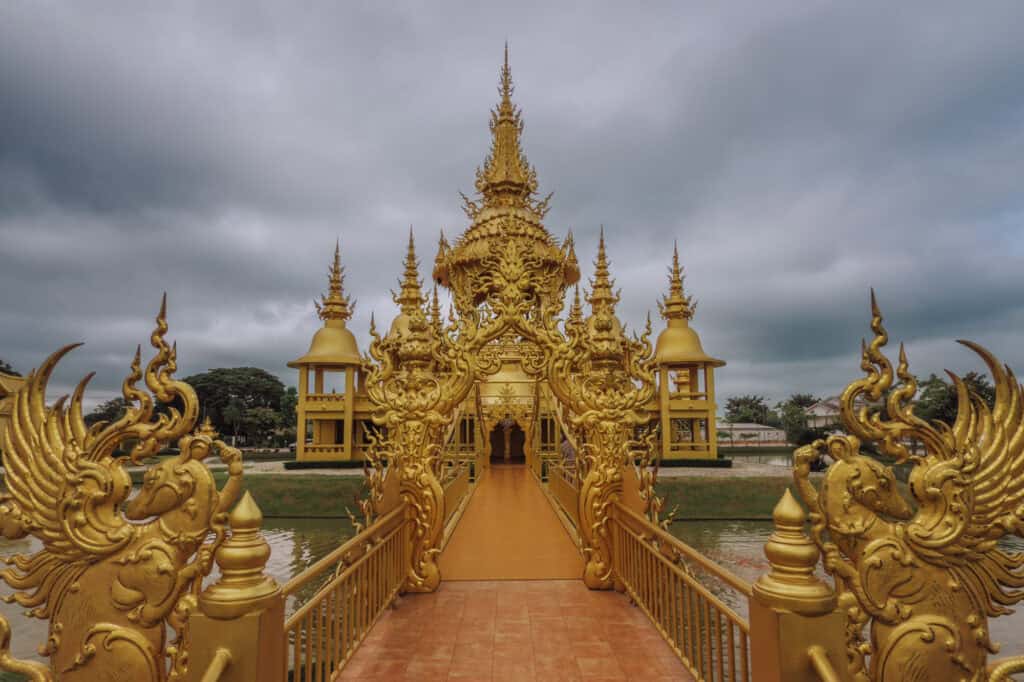
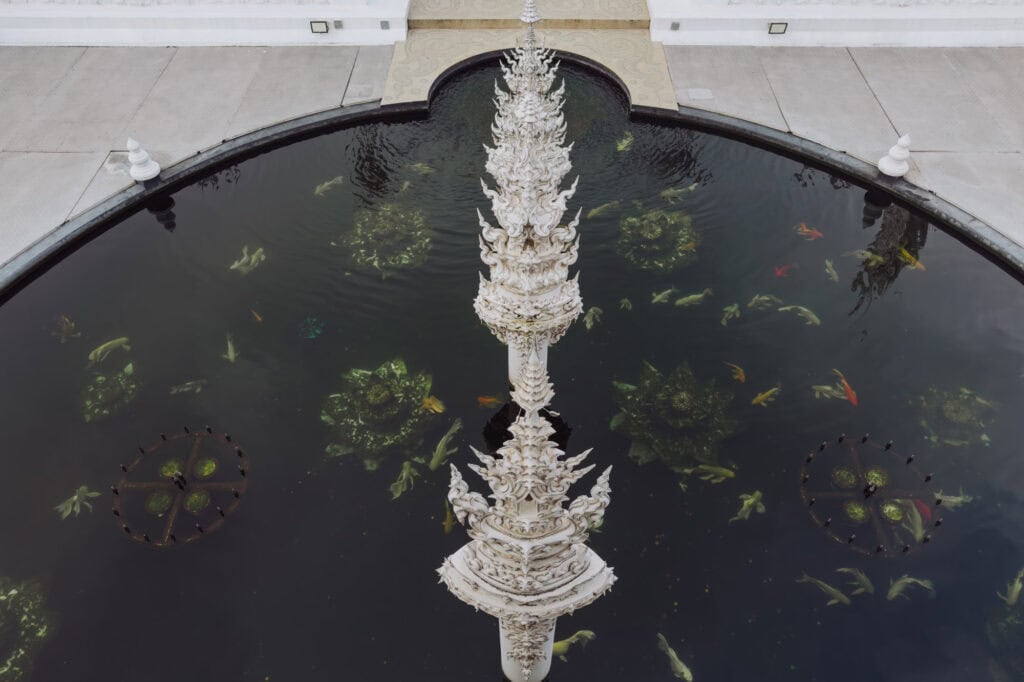
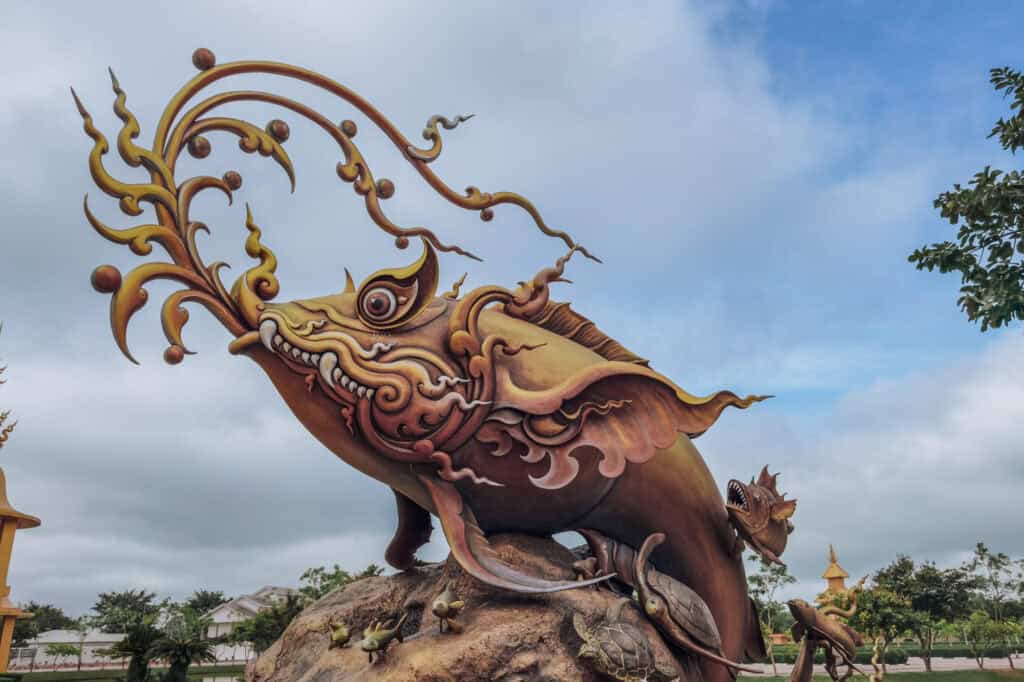
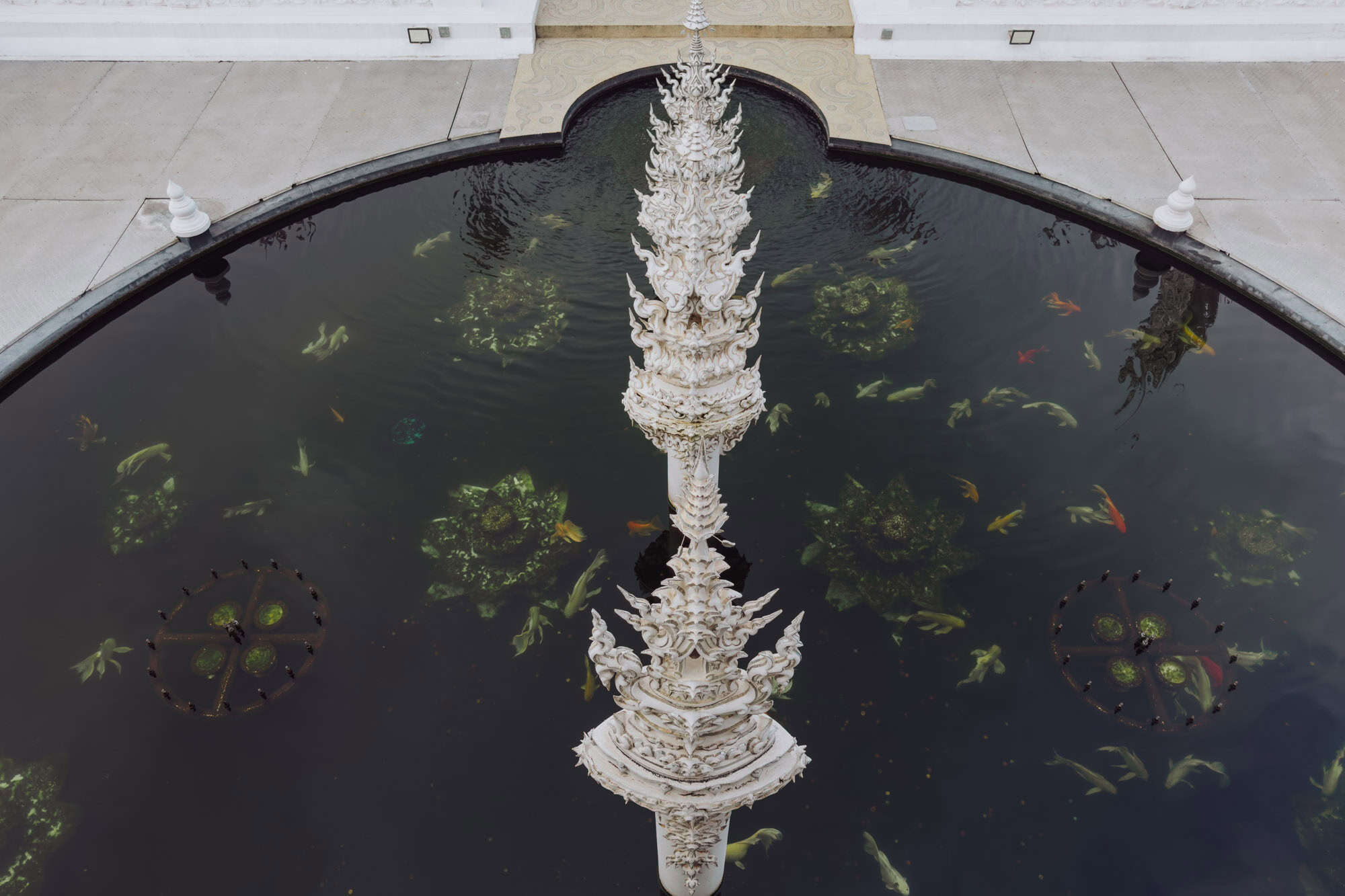
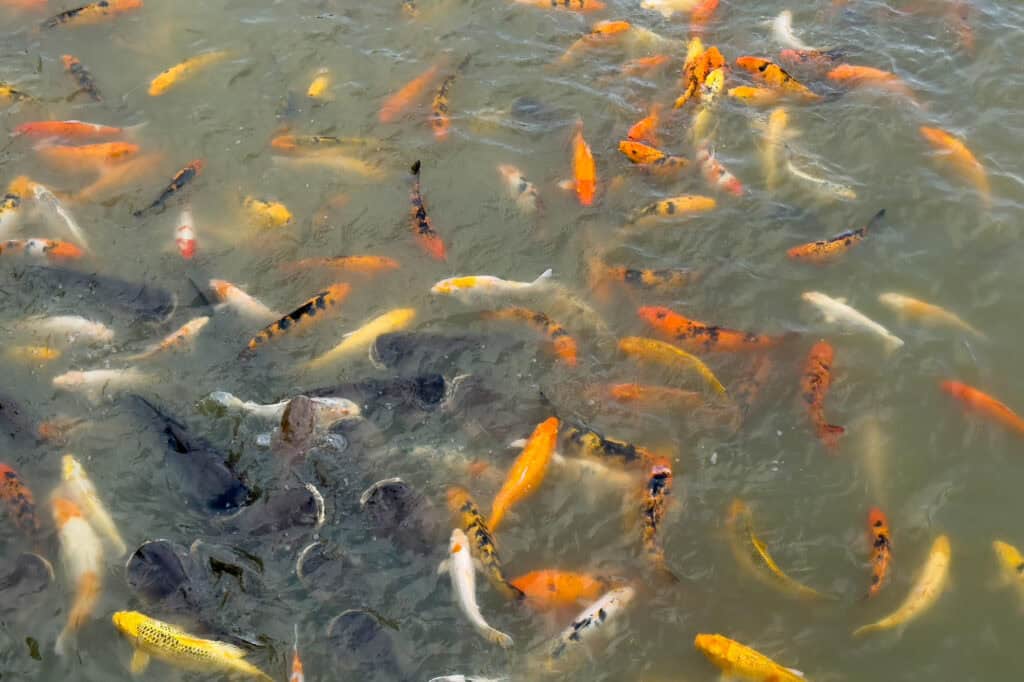
The Gold Temple is surrounded by ponds that are full of some of the biggest koi I’ve ever seen!
Video: Temples in Chiang Rai
The Temple’s History Construction
Wat Rong Khun’s story begins long before it became an international icon. The original temple was established in the late 1800s in Rong Khun Village, on the banks of the Lao River. Over the decades, the site relocated multiple times due to erosion, flooding, and disrepair.
By the 1990s, the old chapel had fallen into ruin. It was occupied by bats and unusable for worship. In 1995, the decision was made to demolish it, but financial challenges stood in the way of the project.
That’s when Chalermchai Kositpipat, a Chiang Rai–born artist, stepped in. In 1997, at age 42, he pledged to rebuild Wat Rong Khun with his own money, refusing government or corporate funding. His goal was to create “a work of art for the nation,” combining Buddhist devotion, Thai identity, and his admiration for King Rama IX.
Chalermchai expanded the temple grounds from 2 acres to 32 acres, planning not only the iconic white chapel but also a crematorium, art gallery, meditation halls, exhibition spaces, and landscaped grounds.
Today, construction continues. Chalermchai considers the site a life-long project, which will take decades, if not generations, to complete.
What Visitors Can Expect
Visitors to Wat Rong Khun should prepare for a temple experience unlike any other in Thailand. The bright white complex shines brilliantly against the sky, and nearly every element — from the bridge of rebirth to the murals inside the ubosot (chapel) — carries symbolic meaning tied to Buddhist teachings.
Expect to spend at least one to two hours exploring the grounds. Beyond the main chapel, there are art galleries, golden buildings symbolizing worldly desires, and intricate sculptures blending mythology with modern references. The site also includes practical facilities such as souvenir shops, a multipurpose reception building, and parking for large tour groups.
Speaking of groups, my final piece of advice is to get there early! The temple usually opens at 8:00am. If you’re looking to take photos or looking for a tranquil experience, I’d be first in line at 8, to beat the crowds that begin showing up by 10!