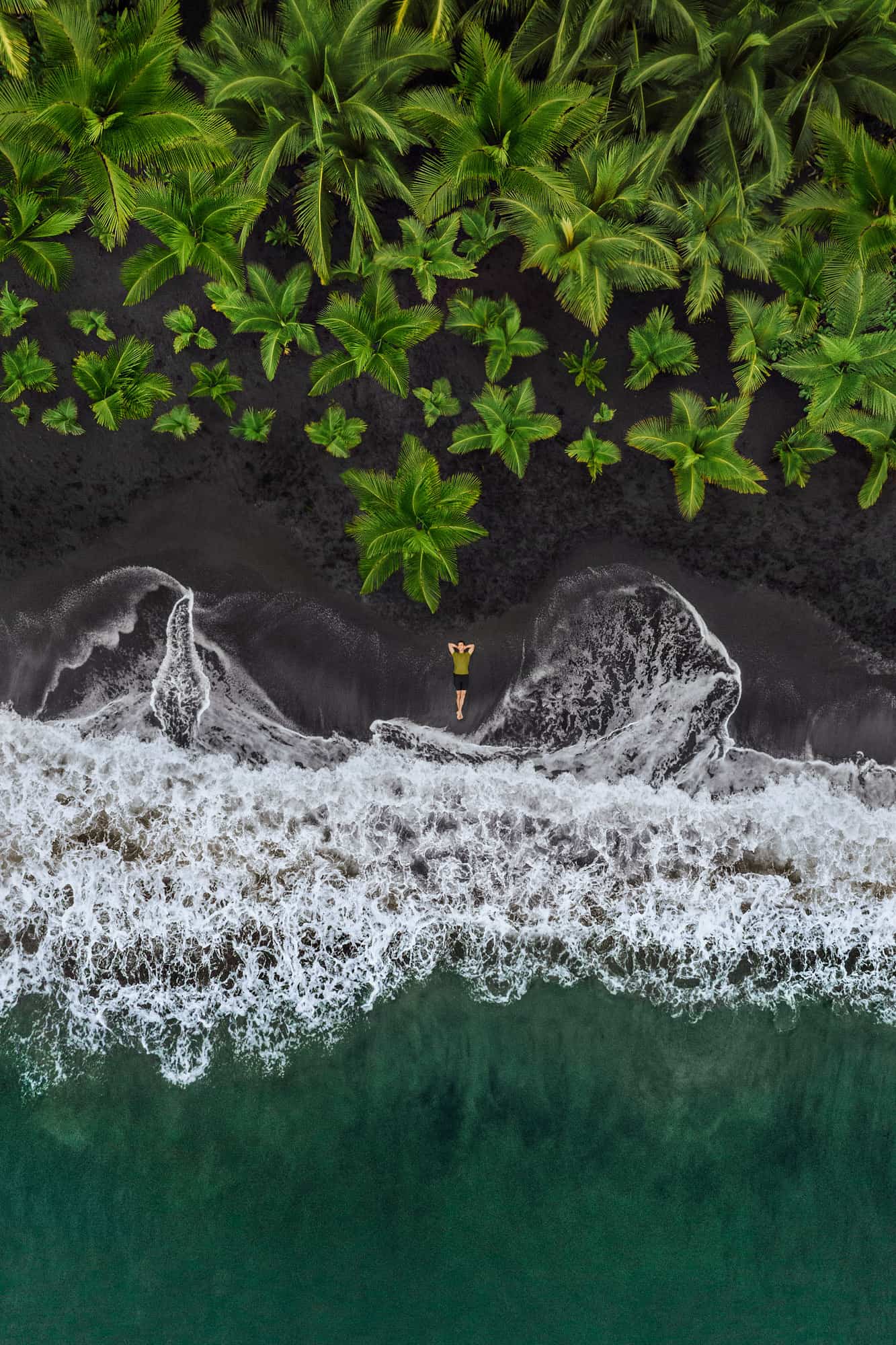
Costa Rica’s Best Black Sand Beach: Playa Negra

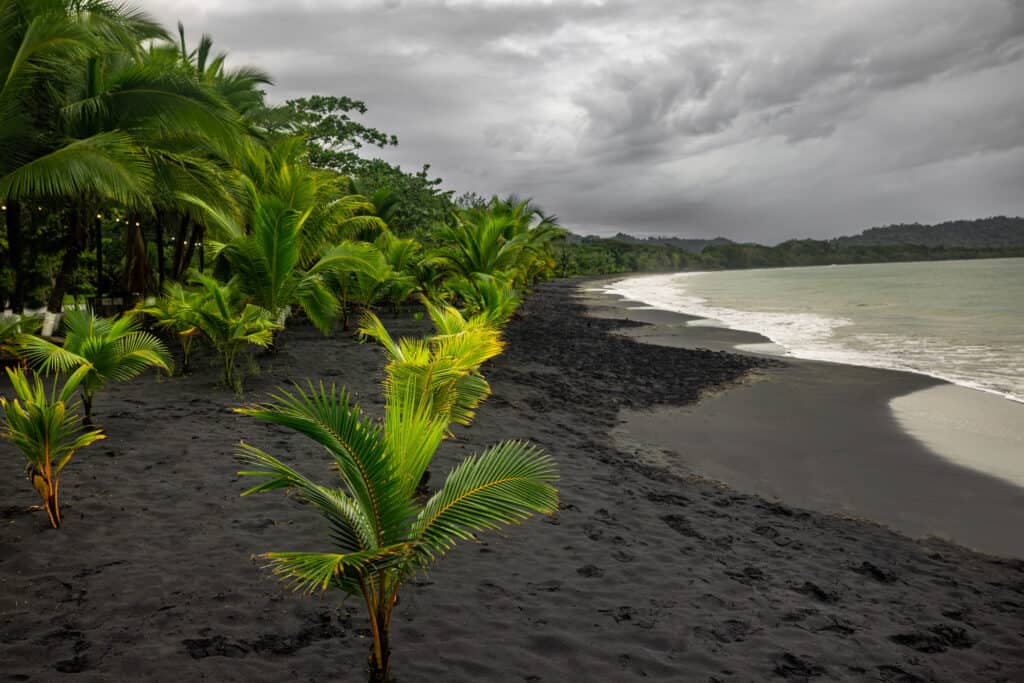
Puerto Viejo’s beaches are some of the best on Costa Rica’s Caribbean Coast! It’s an easy drive from San Jose’s airport.
Within just a few miles of coastline, you’ll experience a diverse series of beaches, wildlife, and coastal experiences.
The water temperature along the beaches in the Puerto Viejo area is always in the upper 70s or lower 80s (Fahrenheit). Even if you’re spending just 5 days in Costa Rica, it’s worth the drive over to the Puerto Viejo area!
While you could rely on public transportation or a personal driver, the best way to get around to see the beaches and other natural beauty is by renting a car and driving around Costa Rica.
➡️ Click to Search Costa Rica Car Rentals
Where to Stay Near Playa Negra
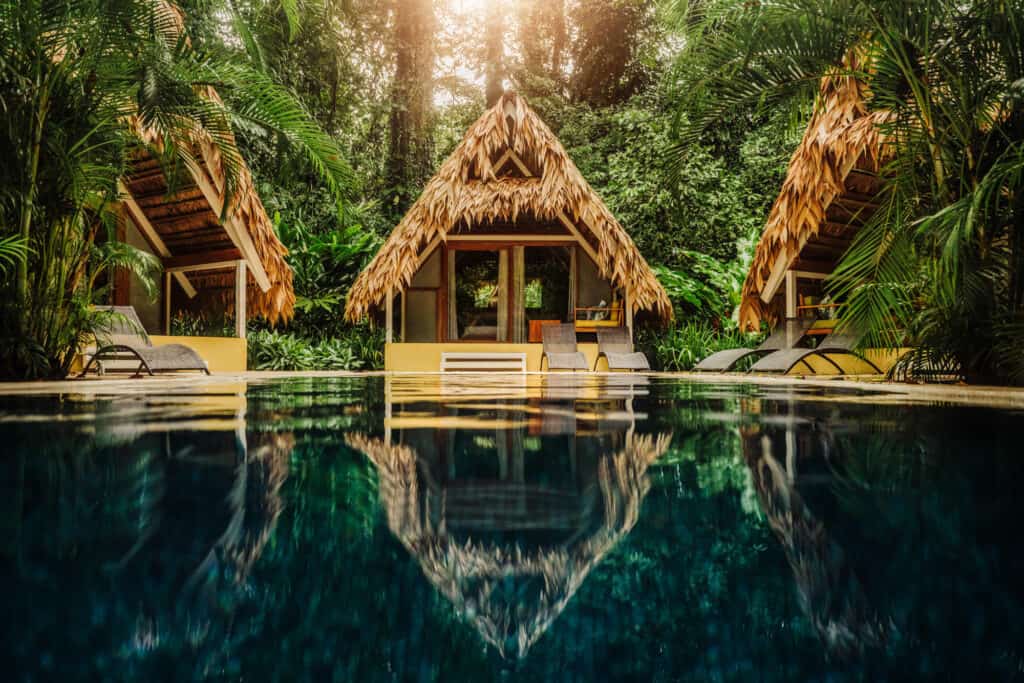
I’d suggest one of the eco-frieindly hotels in Puerto Viejo, like Shawandha (photo below) or Aguas Claras.
You can plug your dates into this interactive map to see rates for hotels:
Visiting Costa Rica’s Black Sand Beach
Playa Negra is a unique stretch of black sand beach, right along the main highway outside Puerto Viejo.
It stretches north of the city itself, and is usually less crowded.
It’s just a short walk or bike ride from Puerto Viejo, where you’ll find cafes, bars, and reggae-infused nightlife.
Parking is free, along the road adjacent to the beach.
Why is the sand black?
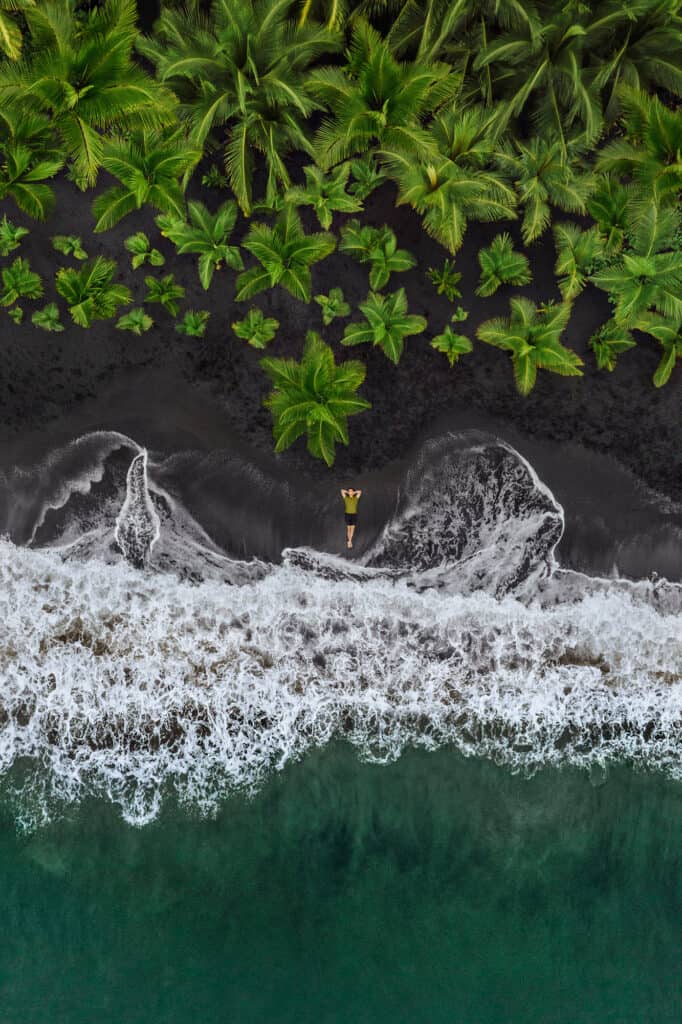
The dark sand is due to volcanic minerals in the area. The charcoal color creates a stunning visual, set against the blue water and the bright green palm trees.
The sand is rich in iron, magnetite, and basalt, giving. You might even notice that the sand is slightly magnetic if you bring a magnet!
Unlike some other black sand beaches in Costa Rica (like Playa Hermosa near Jacó), Playa Negra in Puerto Viejo is not directly near an active volcano. Instead, the sand was deposited over thousands of years from volcanic rock eroded inland.
The Crowd
Compared to nearby beaches in Puerto Viejo, like Playa Cocles and Punta Uva, Playa Negra tends to have fewer tourists.
Playa Negra: Map & Location
You can click on this map to get a better sense of the beach’s location.
Warnings at the Beach
The beach is narrower, so there’s less room. Plus, the traffic noise might bother people.
The Caribbean coast can have strong rip currents, especially during certain tides. Lifeguards are not present, so it’s best to stay near other beachgoers and avoid swimming alone.
The waves can be unpredictable, but parts of the beach are good for swimming and beginner surfing.
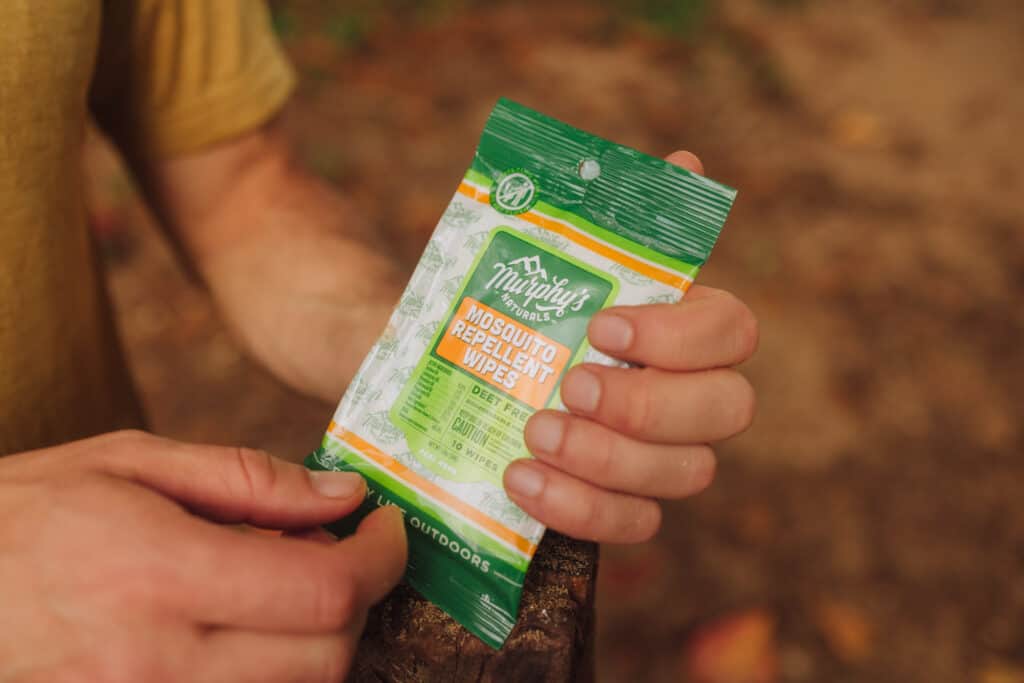
Playa Negra is surrounded by lush jungle, so mosquitoes and sandflies can be an issue—bring insect repellent.
Wildlife You’ll See Nearby
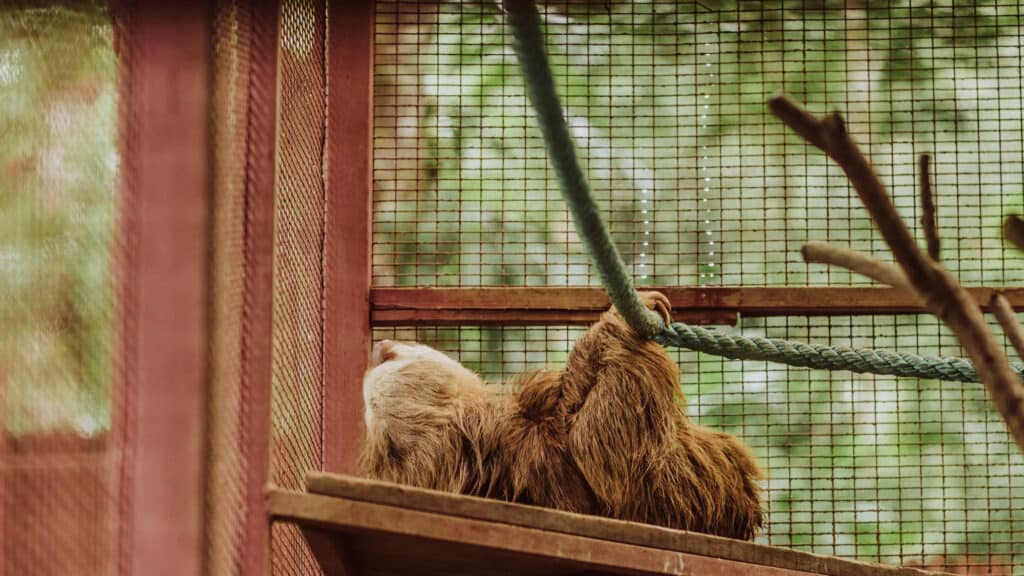
Despite the beach’s proximity to the road, Playa Negra is surrounded by lush jungle, so it’s common to spot howler monkeys, sloths, and exotic birds.
Down the road, if you’re looking to see sloths and other wildlife, check out the Jaguar Rescue Center!
There are no jaguars, but you’ll find sloths and other native animals (many of them injured) now living at the sanctuary.
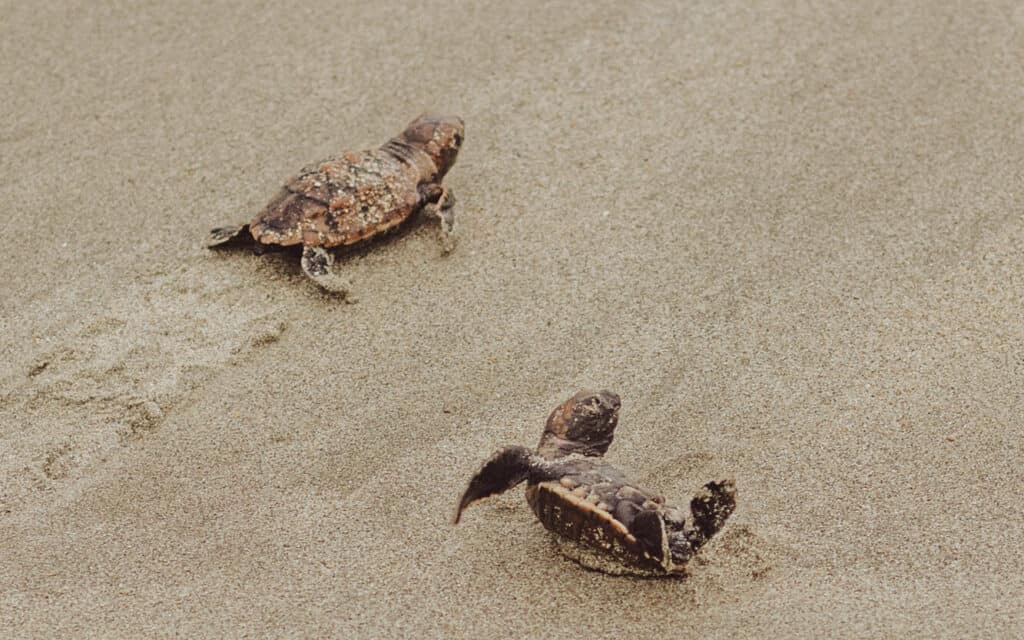
If you’re lucky, you might get to see sea turtles, or even the release of babies at Cahuita National Park!
Other Beaches Nearby
Playa Negra is surrounded by more beach options for you to enjoy the Pacific Coast of Costa Rica.
Each of these beaches has a different personality, so it depends on what kind of experience you’re looking for!
Playa Cocles (10 minutes south)
- One of the best surfing beaches in the area
- Golden sand and stronger waves, not ideal for swimming
- Sadly, this is where actor Malcolm Jamal Warner drowned while swimming with his daughter. He was pulled out by a strong current.
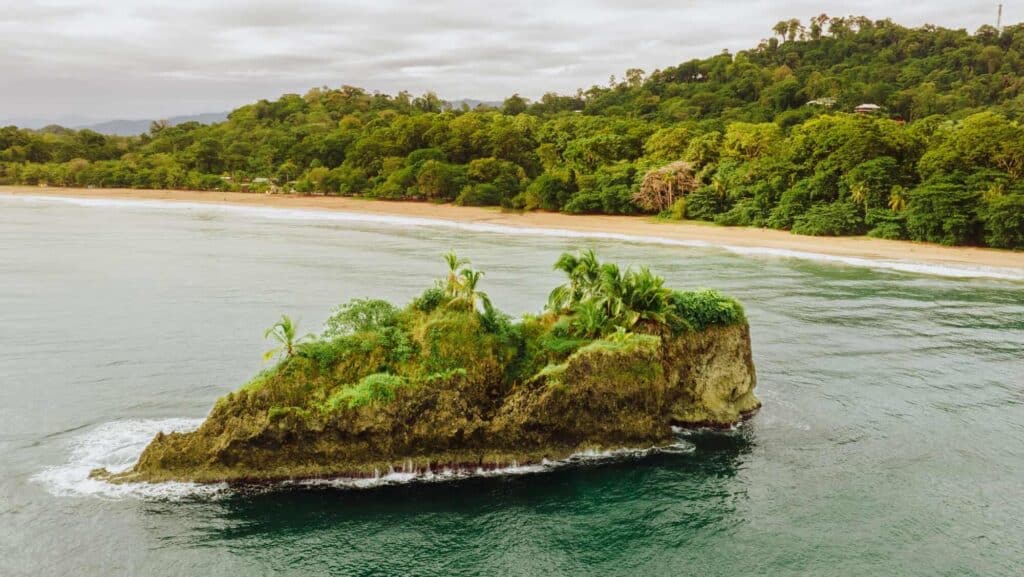
Playa Chiquita (15 minutes south)
- More secluded and quiet
- Small tide pools and clear water for snorkeling
- Surrounded by jungle, often see wildlife like monkeys and sloths
Punta Uva (20 minutes south)
- One of the most beautiful beaches on Costa Rica’s Caribbean coast
- Calm turquoise waters, perfect for swimming & kayaking
- Lush jungle backdrop, great for spotting wildlife
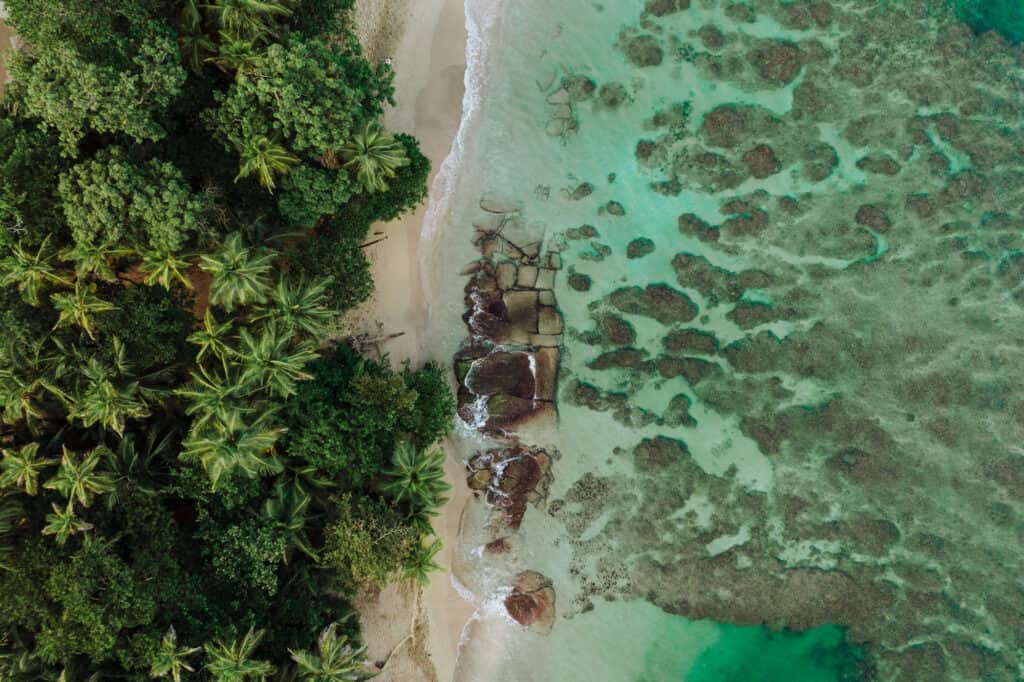
Manzanillo Beach (30 minutes south)
- Located inside Gandoca-Manzanillo Wildlife Refuge
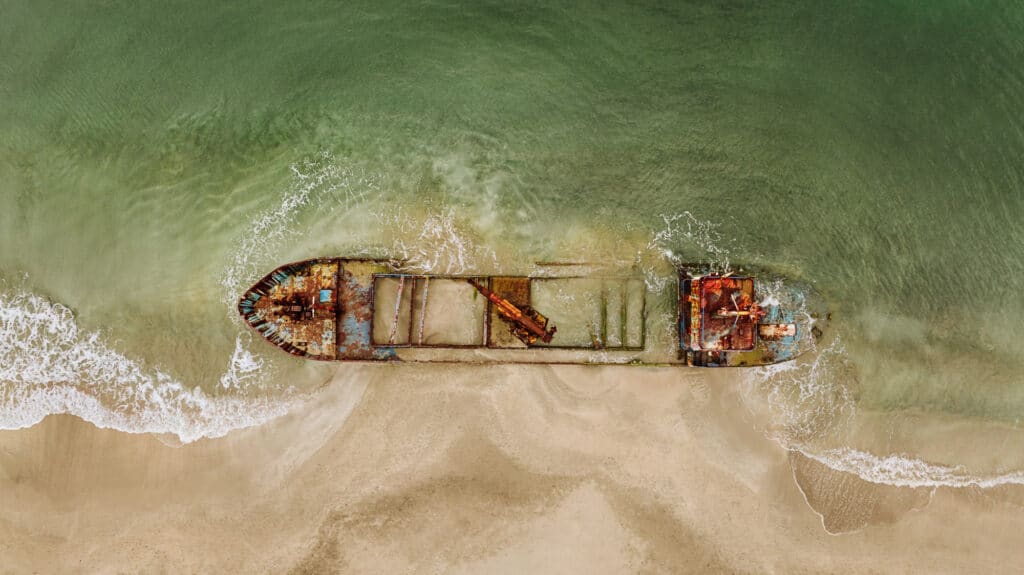
- Home of Costa Rica’s famous shipwreck
The Best Time to Visit
The Caribbean coast of Costa Rica has a different weather pattern than the Pacific side.
The best time to visit Puerto Viejo on Costa Rica’s Pacific side is during the dry season, which runs from December to April.
You’ll still have rain showers, but also a lot of sunshine, and warm temperatures.
Personally, I’ll recommend visiting Costa Rica in November or December.

Final Thoughts on Play Negra
Costa Rica’s black sand beach isn’t reason enough to visit Puerto Viejo, but it’s definitely worth a stop when you’re exploring the area.
I loved seeing how diverse the beaches on this stretch of the coast are, from the black sand to the pristine clear water, to the rough surf. The hotels are great, the food is delicious, and the wildlife is abundant.
Again, definitely plan on renting a car from the San Jose airport and driving yourself around. Plus, don’t miss the waterfalls, volcanoes, and Costa Rican coffee farms that are along the way!
