The 30 Best Mountain Towns in Montana Ranked
Everyone knows Whitefish, Big Sky, and Bozeman. They’re on this list, and they’ve earned their fame.
But some of my favorite Montana memories come from the towns most people drive right through: the ones with one bar or diner, a local shop or two, and a clear view of the mountains.
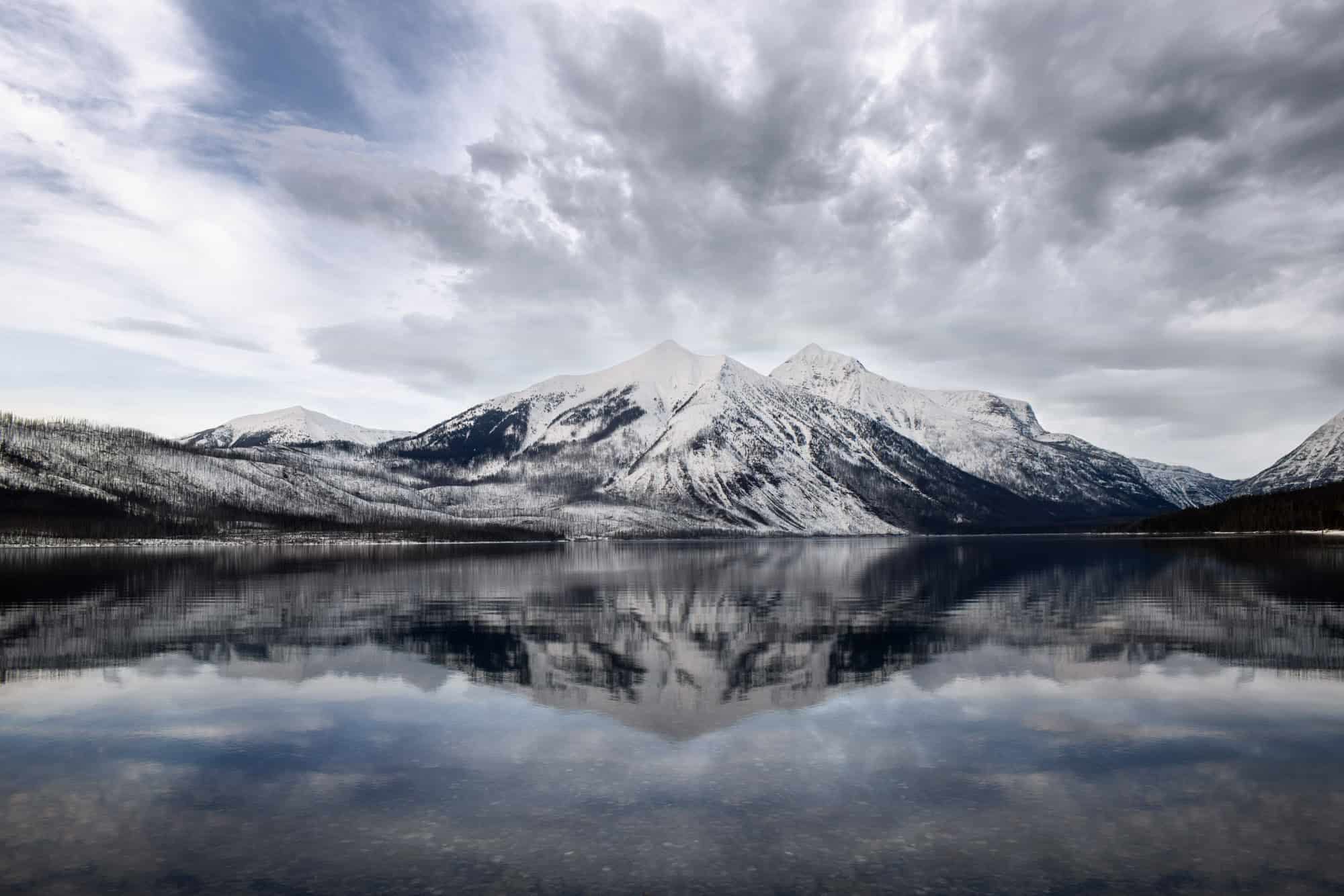
Here are the 30 best mountain towns in Montana, counting down to my favorite:
30. Whitefish
Whitefish is the Montana mountain town most people picture first, and the ski resort is a big reason why. Whitefish Mountain Resort covers about 3,000 acres on Big Mountain, and averages roughly 300 inches of snow a year.
It’s also about 35 minutes from the west entrance of Glacier National Park, with Whitefish Lake at the edge of town and an Amtrak station right downtown. That’s a tough combination to beat.
So why is it at the bottom of this list?
Whitefish isn’t a secret anymore. Prices have climbed, the summer traffic on Central Avenue is real, and in July and August it can feel more like a destination than a community.
You should absolutely visit Whitefish at least once. Ride the chairlift to the summit in the summer for views into Glacier, then spend the evening at City Beach. Just know the towns higher on this list offer something Whitefish has largely outgrown: some peace and quiet.
Where To Stay
- The Firebrand Hotel
- Grouse Mountain Lodge
29. Red Lodge
Red Lodge has one of the best front doors of any town in America: the Beartooth Highway.
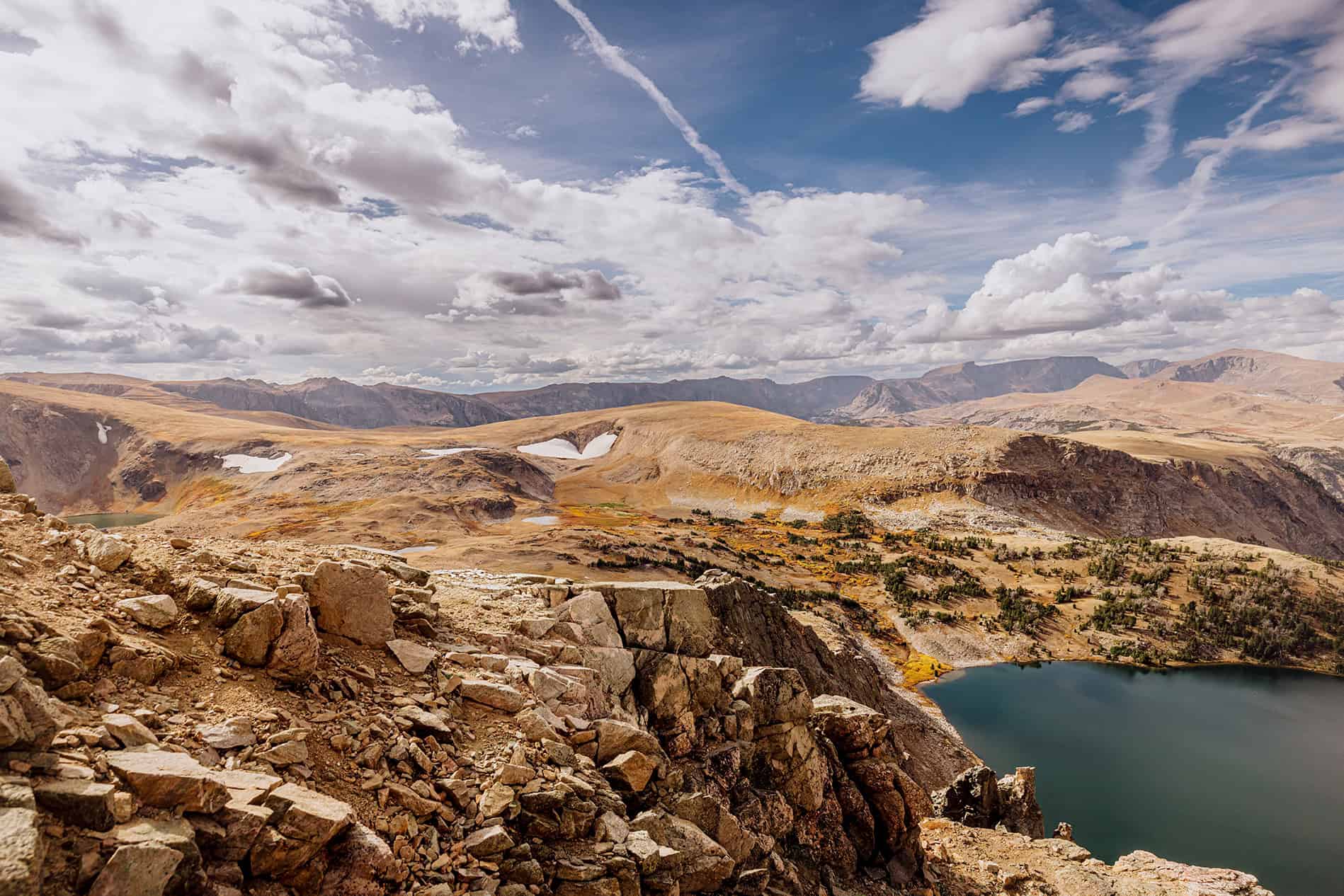
The 68-mile road starts at the edge of town, climbs to nearly 11,000 feet at Beartooth Pass, and ends at the northeast entrance of Yellowstone National Park. It’s typically open from Memorial Day weekend into mid-October, but it’s entirely weather-dependent.
The town itself is an old coal-mining community of about 2,300 people. Broadway Avenue is lined with brick buildings from the mining days, now home to candy shops, saloons, and gear stores.
In winter, Red Lodge Mountain is the draw. It’s a laid-back, affordable ski hill without the lift lines (or the price tag) you’ll find at Montana’s bigger resorts.
Red Lodge gets busy when the highway is open, which is why it lands down here. But time it right, in June or September, and it’s hard to beat.
28. Big Sky
Big Sky is home to some of the best skiing in America. The resort covers more than 5,800 acres, and the tram runs to the top of Lone Peak at 11,166 feet.
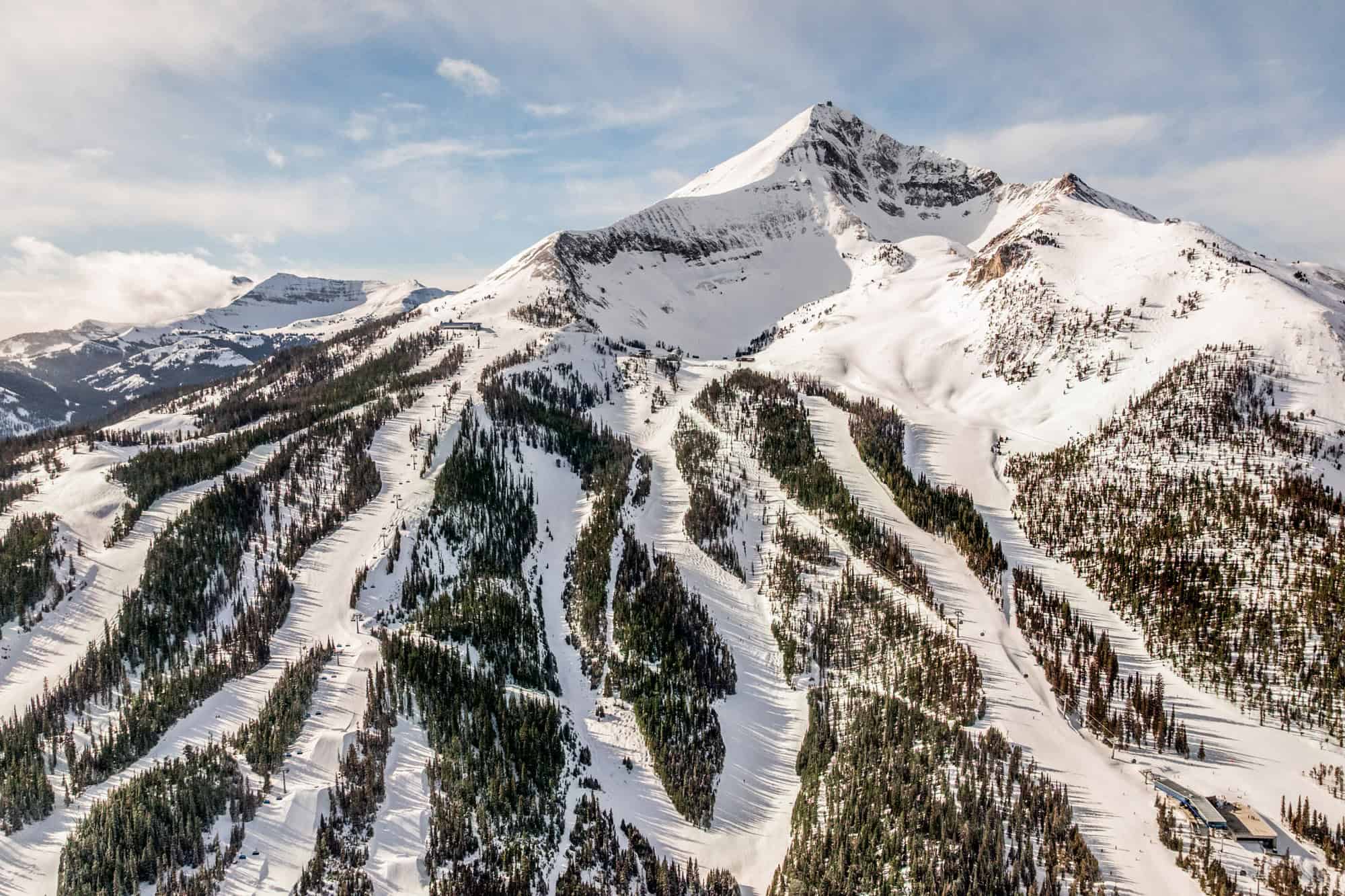
It’s also the newest town on this list.
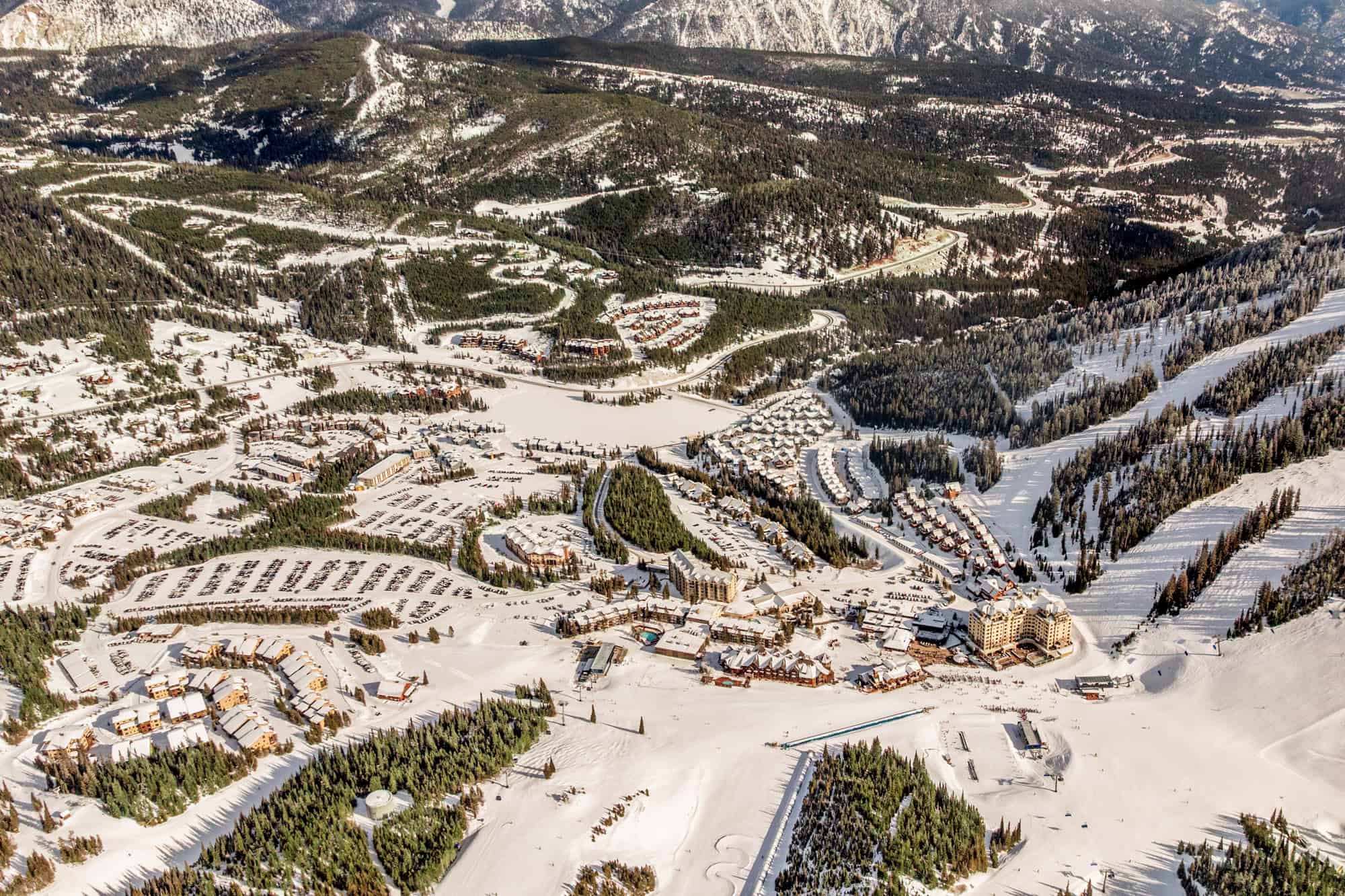
Legendary NBC news anchor Chet Huntley founded the resort in the early 1970s, so there’s no historic main street or mining-era saloon. Big Sky was built as a resort, and that’s how it feels.
It’s also one of the most expensive places in Montana, in any season.
Still, the setting is incredible. In the summer, the easy hike to Ousel Falls is worth an hour of your day. For something longer, the Beehive Basin Trail is a gorgeous 7-mile hike with a mild incline, and it’s one of our hidden gems between Glacier and Yellowstone. The Gallatin River is famous for both whitewater rafting and fly fishing, and the west entrance of Yellowstone is less than an hour south.
Big Sky is a world-class ski trip. As a town, though, it doesn’t have the character of the places higher on this list.
27. Livingston
Livingston was the original gateway to Yellowstone.
In the late 1800s, the Northern Pacific Railroad dropped tourists here before they headed south to the park.
The restored 1902 depot is now a museum, and the downtown still looks like a Western movie set: neon signs, brick storefronts, and old hotels.
The Yellowstone River runs right past town and into Paradise Valley, which absolutely lives up to its name.
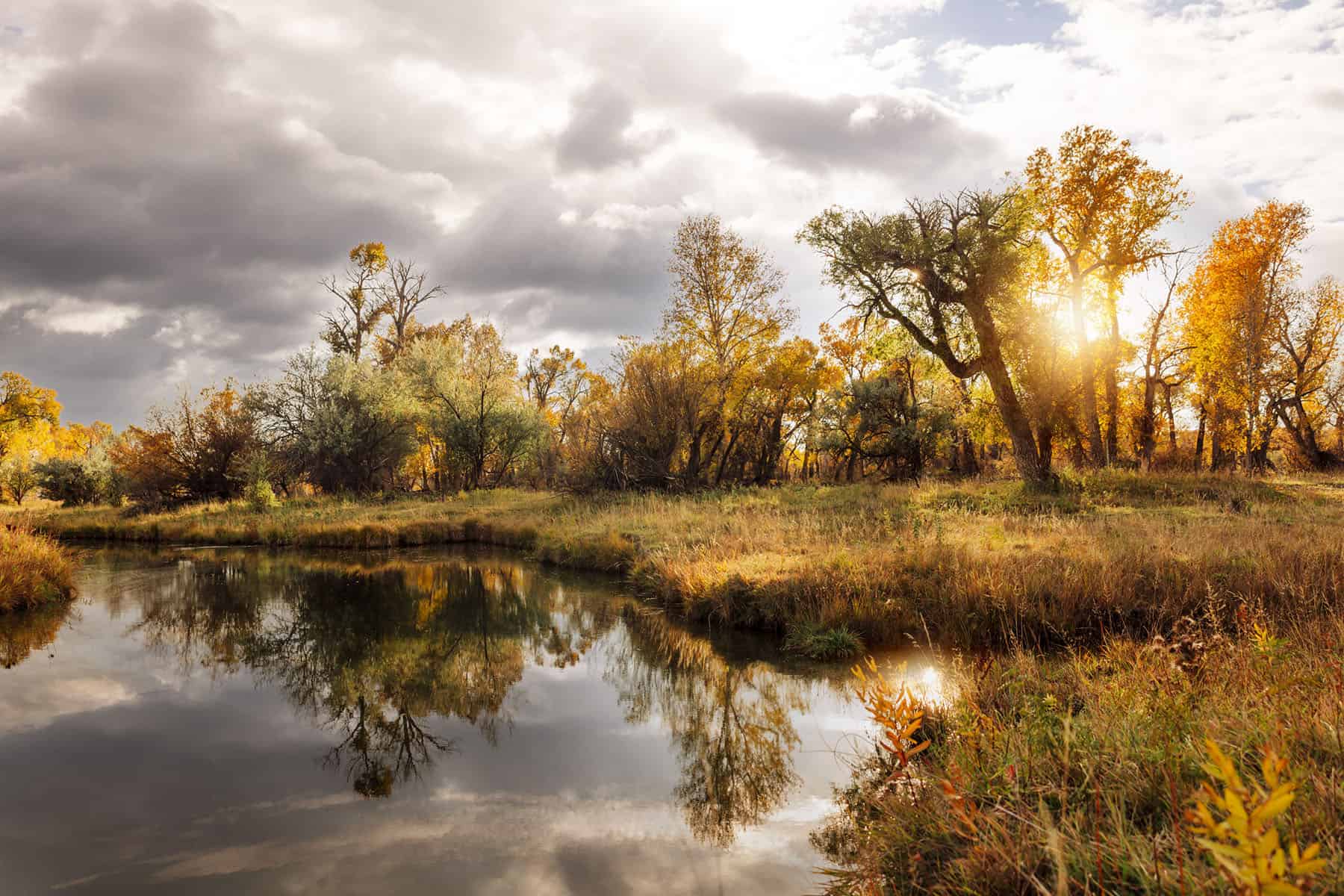
The Absaroka Range lines one side of the valley, and the Gallatin Range lines the other. From Livingston, it’s about 55 miles to the park’s north entrance in Gardiner.
Livingston has drawn writers, artists, and fly fishers for decades, so the restaurants and galleries are better than you’d expect for a town of about 8,000 people. The Fainting Goat is an Irish pub with live music and a kitchen that’s open late. And Chico Hot Springs, established in 1900, is a short drive down the valley.
A note: it’s one of the windiest towns in Montana. Hold on to your hat!
26. Seeley Lake
Seeley Lake sits along Highway 83 between the Swan Range and the Mission Mountains, in the middle of a chain of lakes.
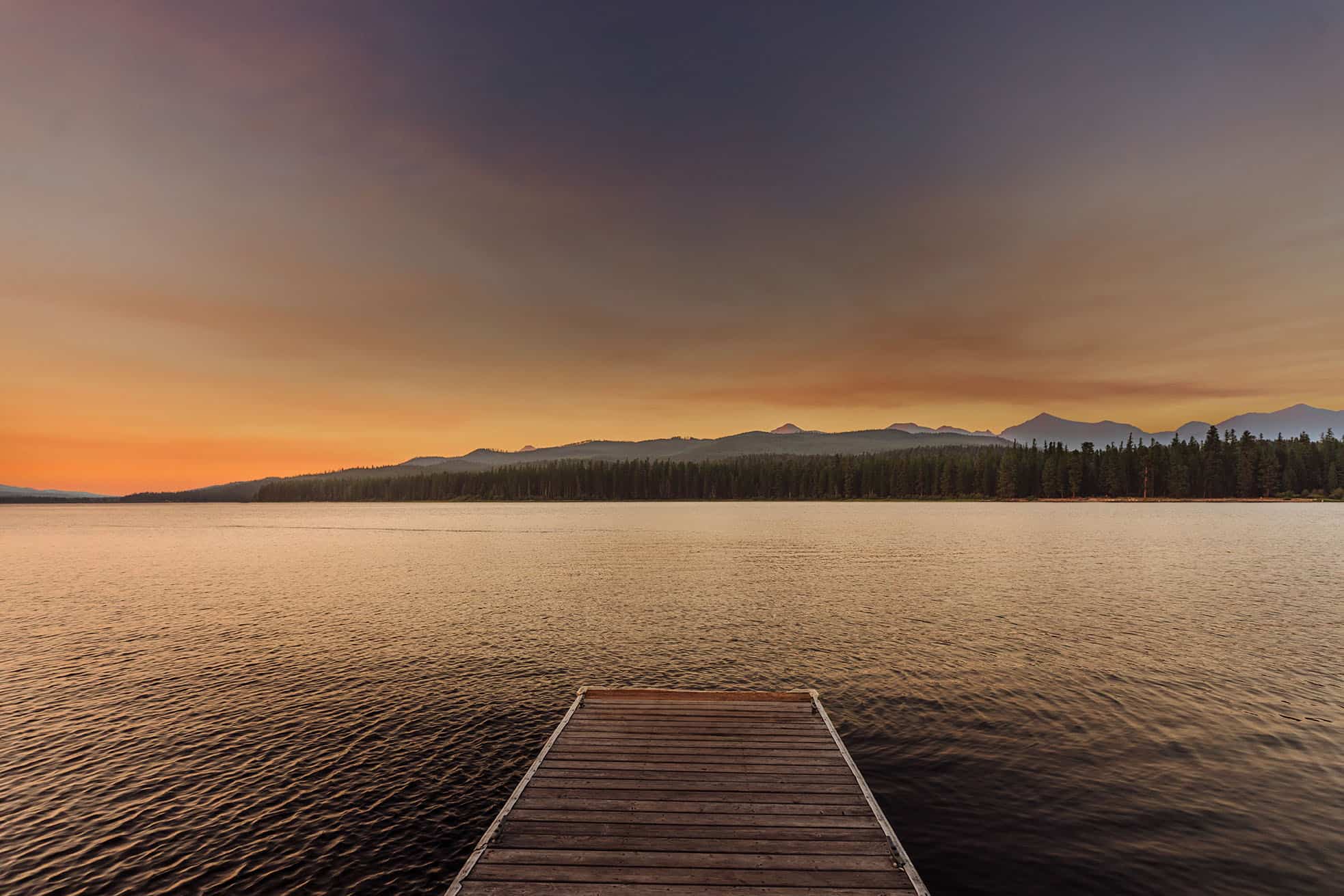
There’s no ski resort here. and no other big attraction pulling you in. Instead, it’s a lake town of fewer than 2,000 people, where the days revolve around boats, trails, and campfires.
Things To Do In Seeley Lake
- Paddle the Clearwater Canoe Trail: An easy, 3.5-mile float down a quiet stretch of the Clearwater River, ending at the lake.
- Find “Gus”: The largest known western larch in the country is in the Girard Grove, and it’s roughly 1,000 years old.
- Visit in October: The larch trees turn gold before dropping their needles, which makes this one of the best fall drives in Montana.
- Hike to Morrell Falls: It’s about 5.5 miles round-trip to a 90-foot waterfall.
- Come back in winter: Seeley Lake is a hub for snowmobiling and cross-country skiing, with hundreds of miles of groomed trails.
25. Lincoln
Lincoln is a small town of about 1,000 people along Highway 200, between Great Falls and Missoula. Most people only see it through their windshield, and that’s a mistake.
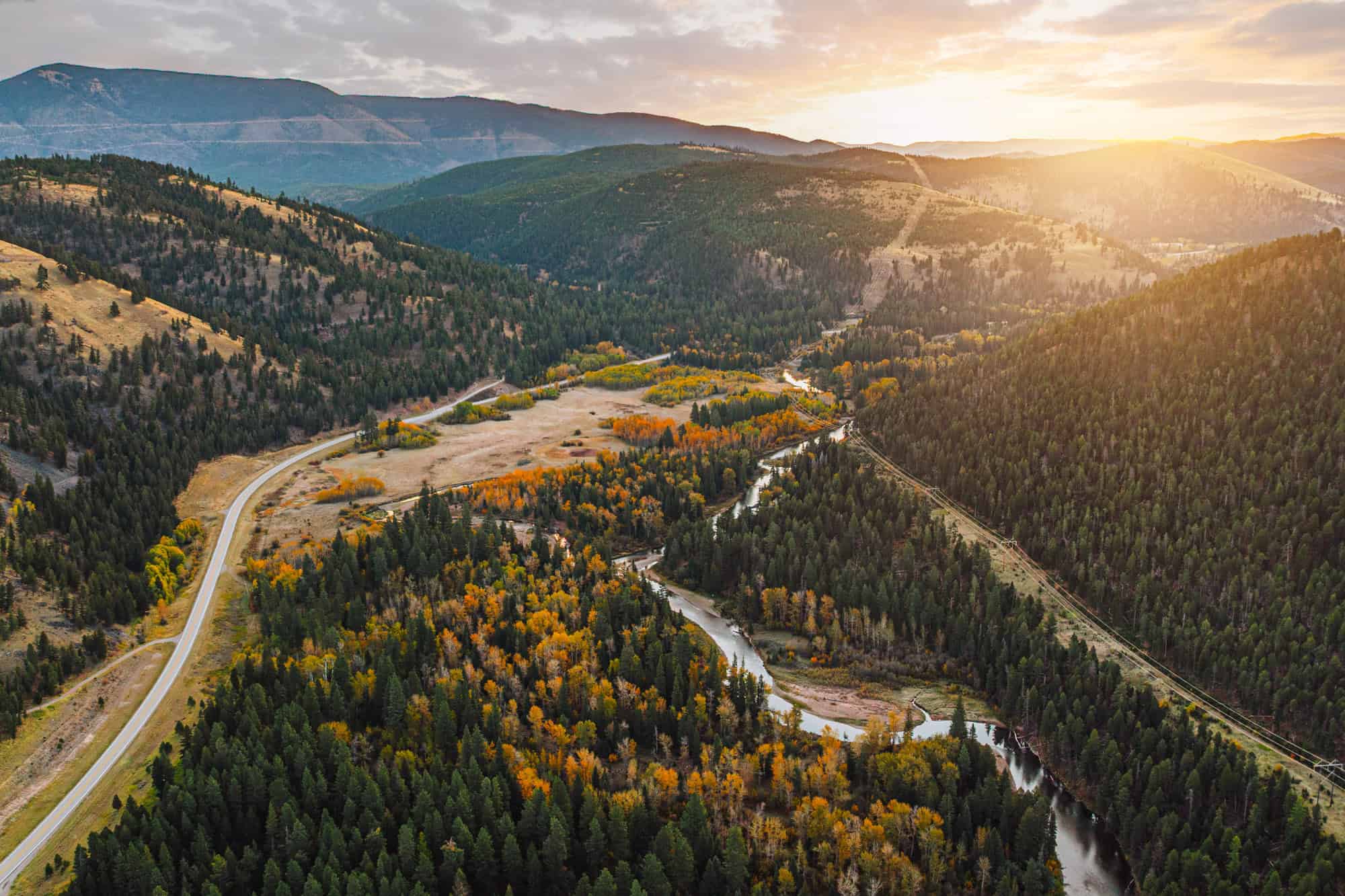
The Blackfoot River runs along the edge of town, and the Continental Divide Trail crosses the highway just to the east at Rogers Pass. That pass also holds the record for the coldest temperature in the lower 48: 70 degrees below zero in January of 1954!
The most surprising stop in Lincoln is Blackfoot Pathways: Sculpture in the Wild. Artists from around the world have built massive installations in a ponderosa pine forest, using materials tied to the area’s logging and mining history. It’s free to walk through.
Lincoln is also a gateway to the Scapegoat Wilderness, and it’s a big snowmobiling town once the snow flies.
24. Columbia Falls
Columbia Falls is the town people in the Flathead Valley move to when Whitefish gets too expensive. Many of them end up liking it better anyway.
It’s closer to Glacier National Park than Whitefish, about 20 minutes from the west entrance, and the lodging and restaurants cost noticeably less.
The Flathead River runs along the edge of town, and the downtown along Nucleus Avenue has come a long way, with breweries, coffee shops, and locally-owned restaurants.
There’s nothing fancy about Columbia Falls, and that’s part of the appeal. It’s a working town that happens to sit at the doorstep of one of the most beautiful national parks in the country.
23. West Glacier
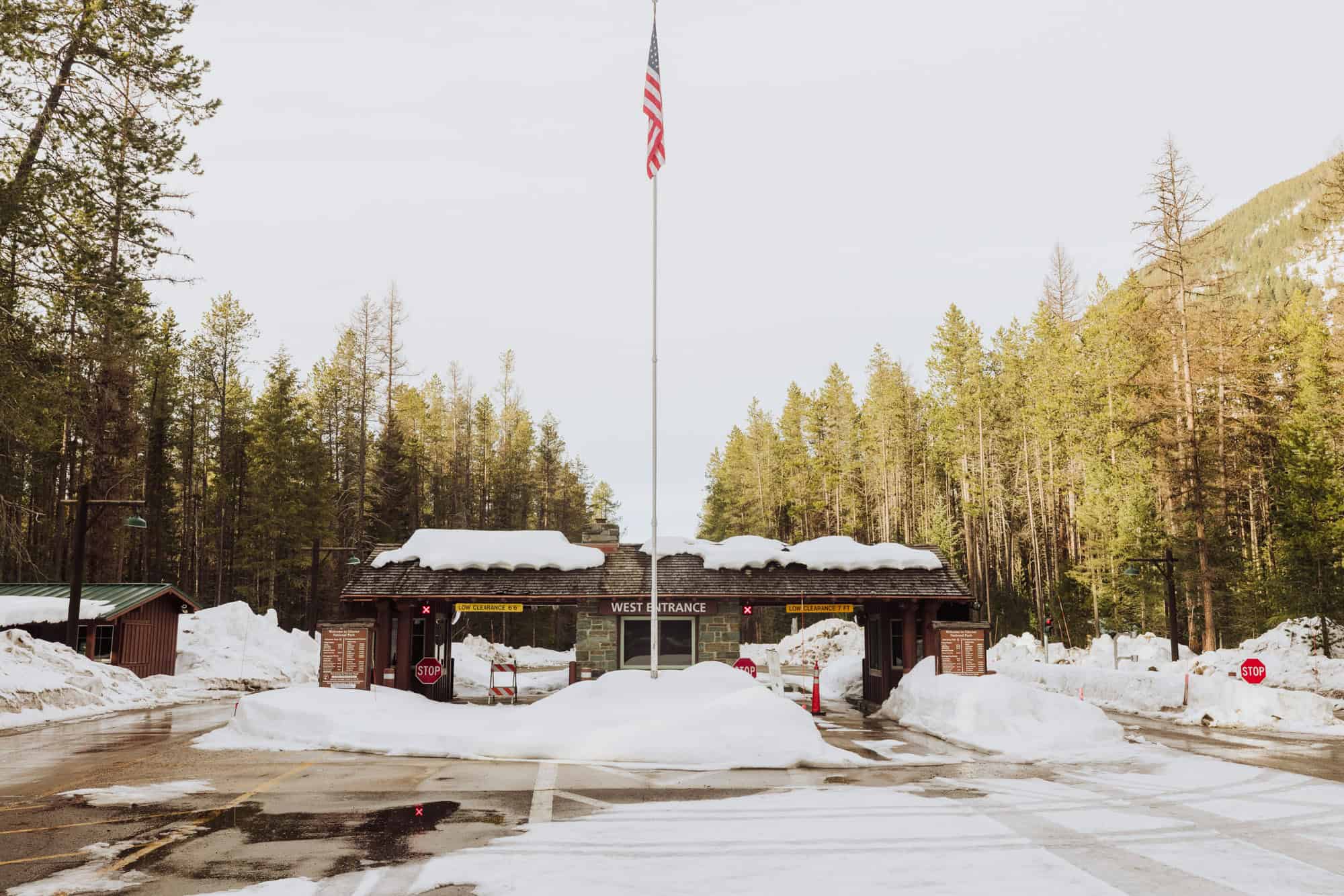
West Glacier is barely a town. It’s a small cluster of lodges, outfitters, and gift shops at the west entrance of Glacier National Park.
It earns a spot here almost entirely on location. Cross the bridge over the Middle Fork of the Flathead River, and you’re at Apgar Village and Lake McDonald within a few minutes. The Going-to-the-Sun Road starts here, too.
The Middle Fork is also the place to go whitewater rafting. Several outfitters run trips right out of town.
You can even arrive by train. Amtrak stops across the street from the Belton Chalet, a railroad hotel built in 1910.
A few things to note:
- West Glacier is packed from late June through August.
- Much of the town shuts down in the winter.
- Glacier dropped its vehicle reservation system for 2026, but the rules have changed several times in recent years. Check with the park before you go, and read up on the other big changes to national parks in 2026.
22. St. Mary
St. Mary is the east entrance to Glacier National Park, and the eastern end of the Going-to-the-Sun Road.
Like West Glacier, it’s barely a town: a few lodges, gas pumps, and cafes at a highway junction on the Blackfeet Indian Reservation. But the setting is hard to beat. The plains run straight into the mountains here, with no foothills in between.
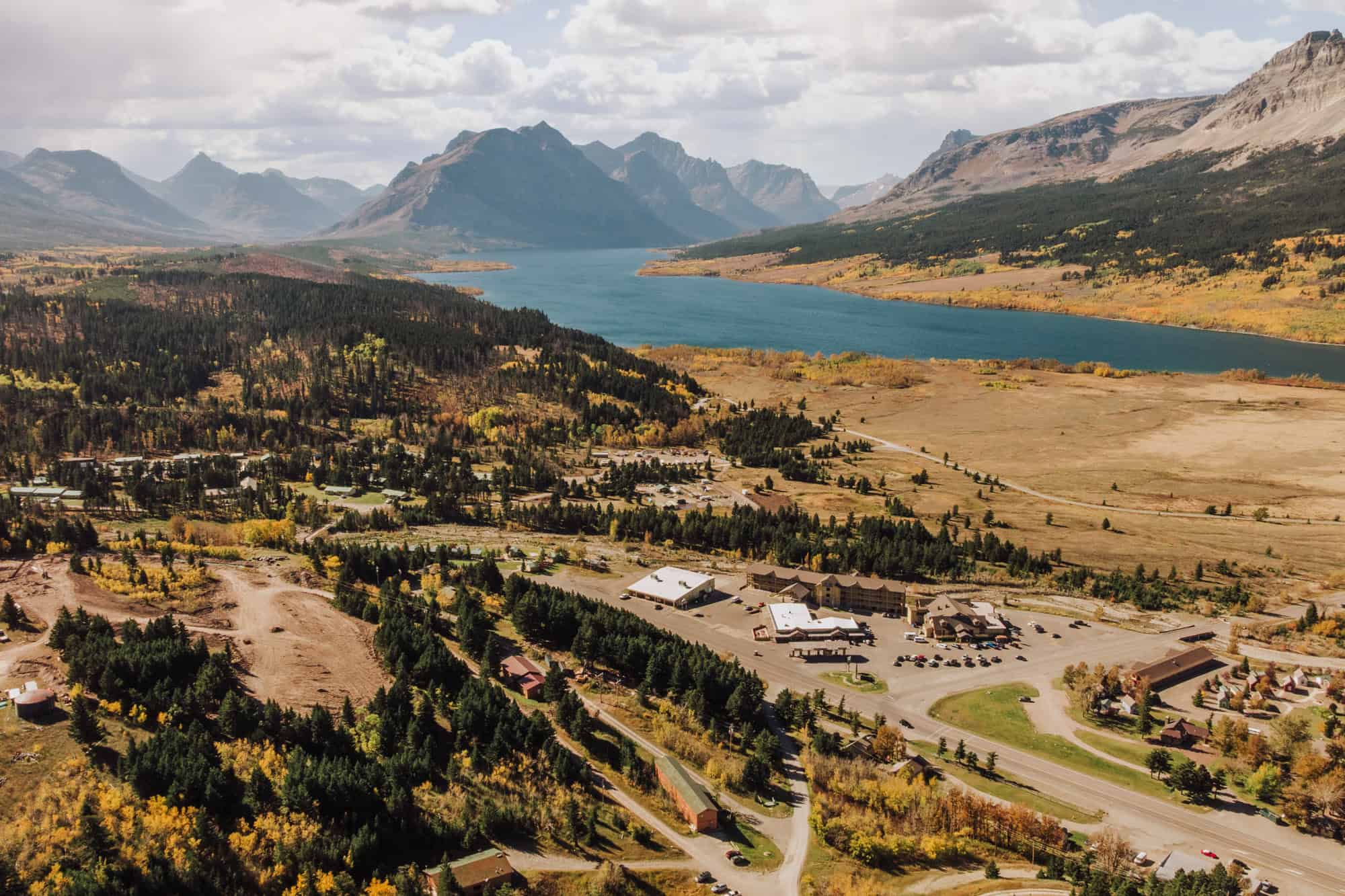
St. Mary Lake stretches nearly 10 miles into the park. A few miles up the road, you’ll reach the overlook for Wild Goose Island, one of the most photographed spots in Montana. (You may recognize it from the opening scene of The Shining.)
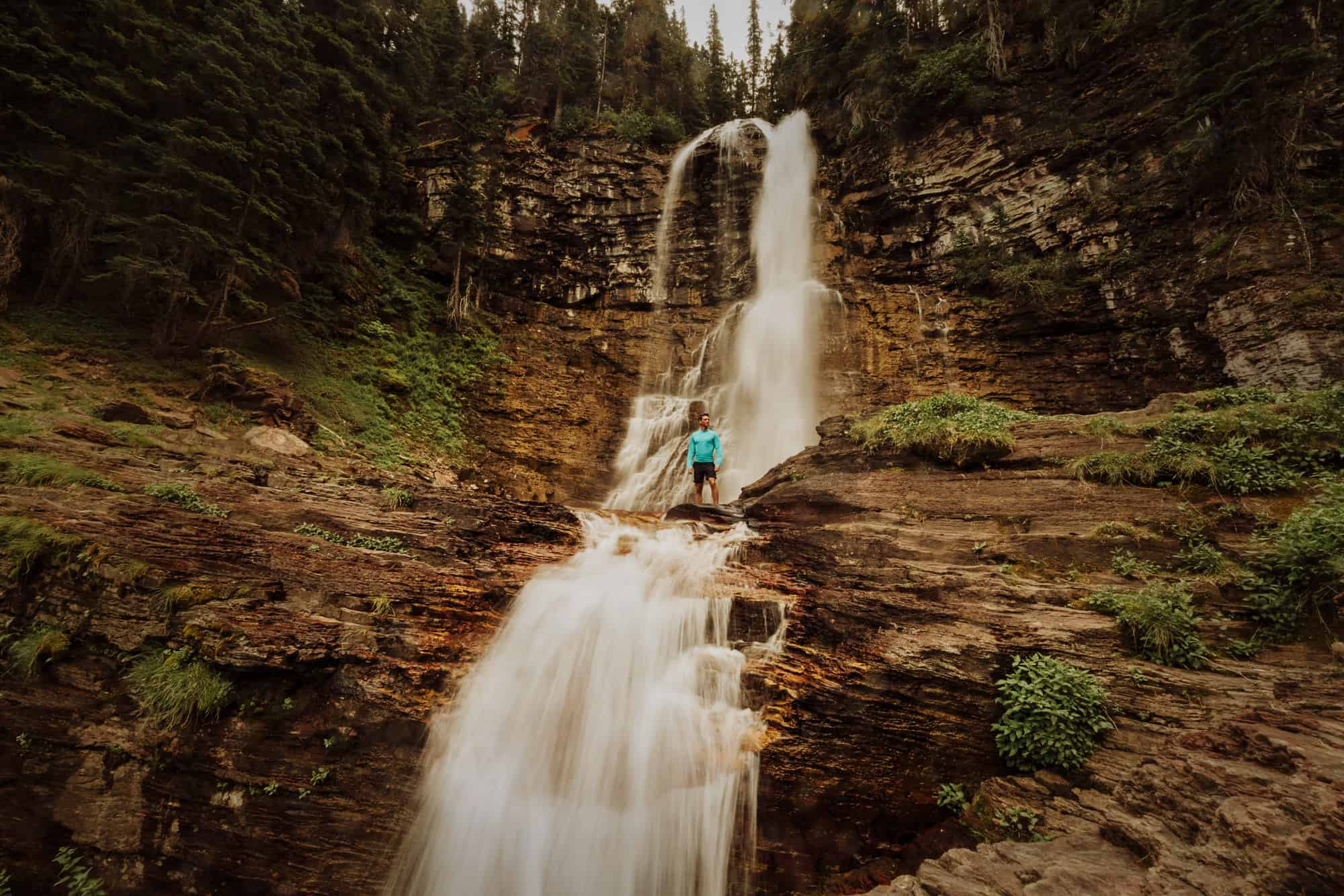
From town, it’s 18 miles up to Logan Pass. Along the way, the trail to St. Mary Falls and Virginia Falls is one of the best short hikes in the park.
A few things to note:
- St. Mary is highly seasonal. Most businesses are only open from about June through September.
- It’s often windy. Bring a jacket, even in July!
- If you’re driving south toward Great Falls, there are plenty of hidden gems between Glacier and Yellowstone along Highway 89.
21. Babb
Babb is a tiny community of about 130 people, nine miles north of St. Mary on Highway 89.
Blink, and you’ll miss it!
Babb earns a spot here for one reason: it’s the gateway to Many Glacier, which a lot of people (myself included) consider the most beautiful corner of Glacier National Park.
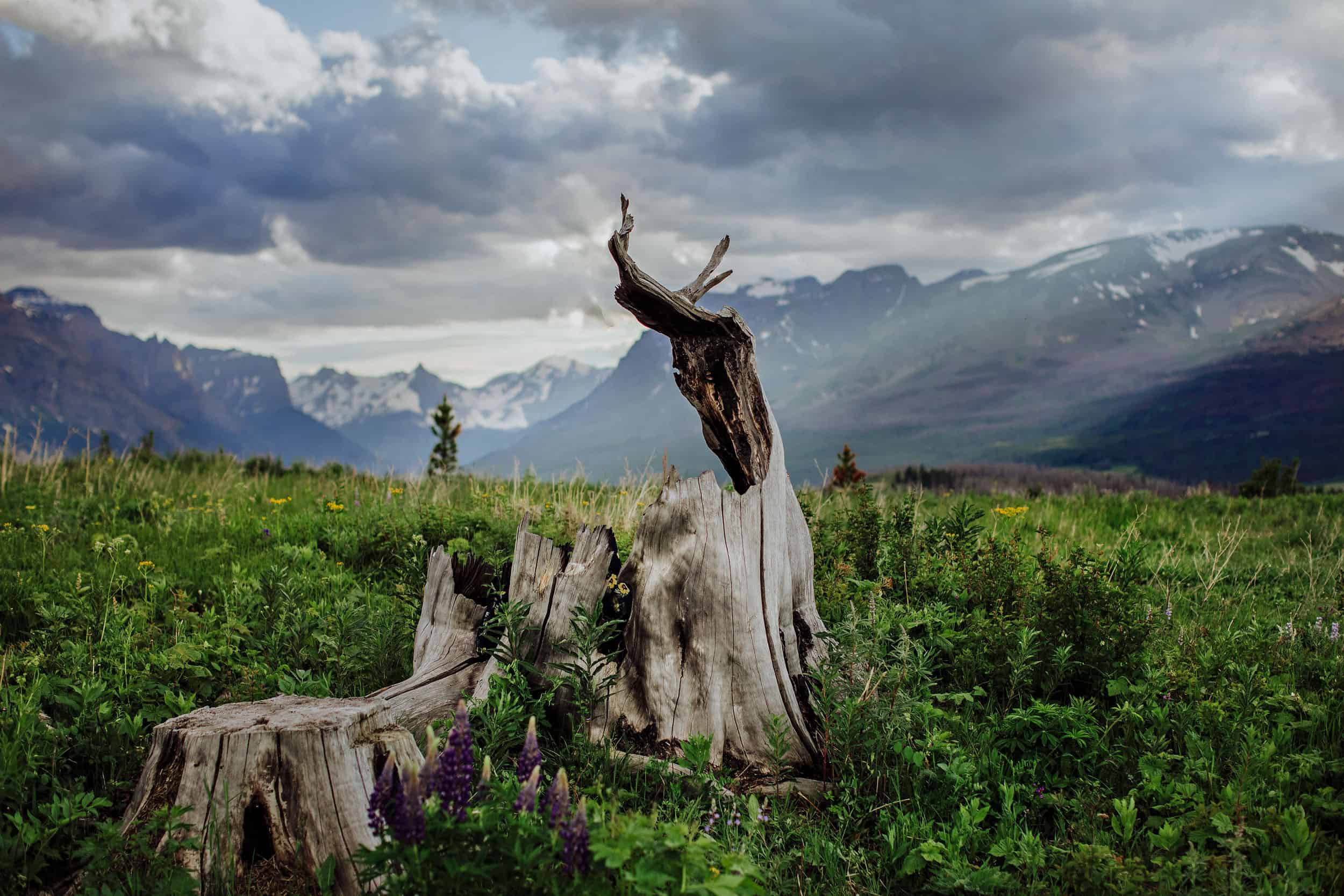
Turn west at Babb, and in about 20 minutes you’ll reach Swiftcurrent Lake and the Many Glacier Hotel, built by the Great Northern Railway in 1915. The trails to Grinnell Glacier and Iceberg Lake start here, and it’s one of the best places in the park to spot grizzlies, moose, and bighorn sheep.
Back on the highway, look for the Two Sisters Cafe between Babb and St. Mary. You can’t miss it: it’s the brightly-painted building with a line out the door. It’s open from June through September.
A note: the long-running construction project in Many Glacier wrapped up in 2026, so the valley is fully open again. Still, the parking lots fill by mid-morning in July and August. Go early!
20. East Glacier Park
If West Glacier is the busy front door to Glacier National Park, East Glacier Park is the quiet side entrance.
The village sits on the Blackfeet Indian Reservation, at the southeast corner of the park. It’s small, a little rough around the edges, and far less crowded than the west side.
The centerpiece is Glacier Park Lodge, built by the Great Northern Railway in 1913. Walk into the lobby even if you’re not staying there. It’s held up by massive Douglas fir logs, each more than 40 feet tall, with the bark still on.
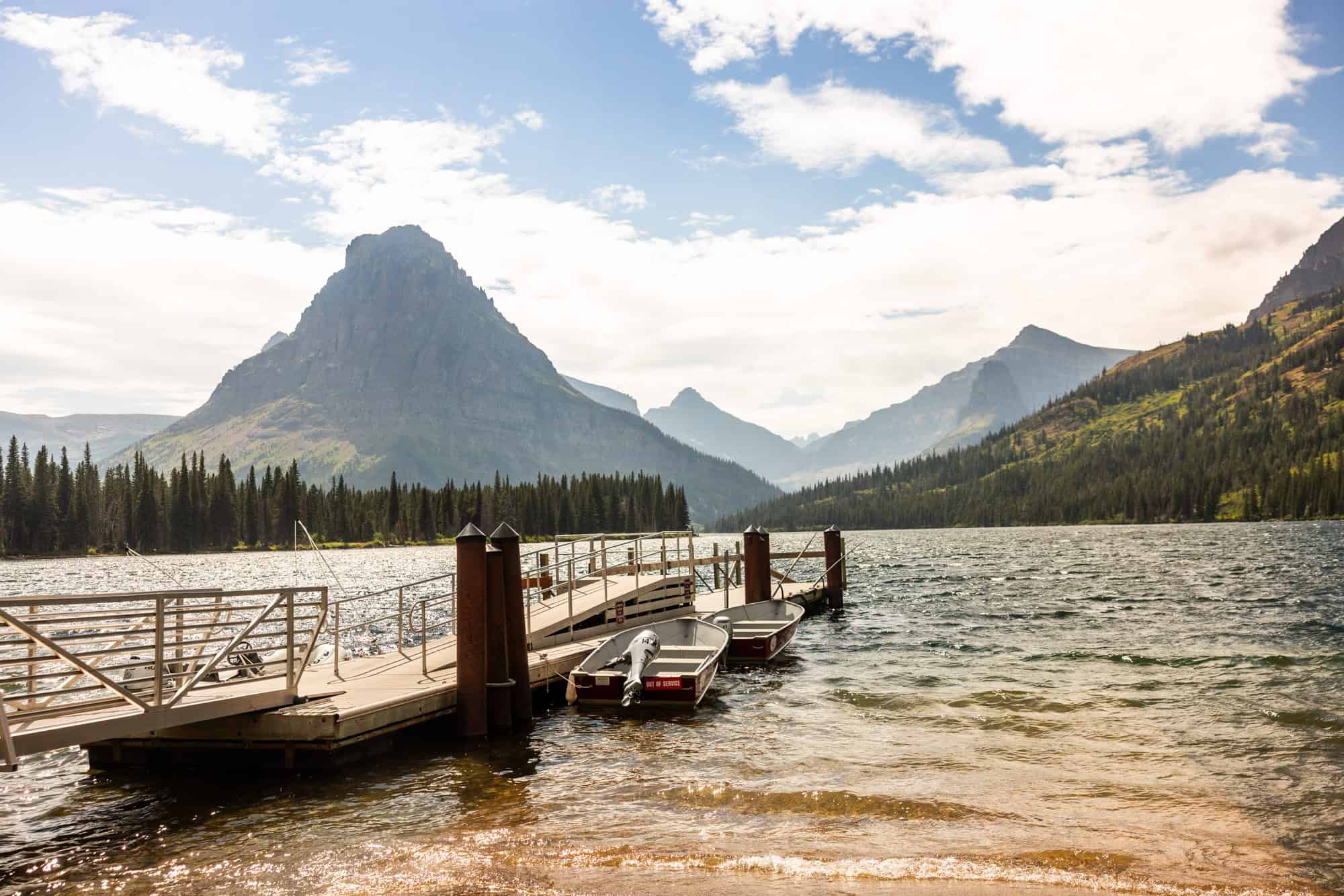
The Two Medicine area of the park is about 20 minutes away. It has the same kind of jagged peaks and blue lakes as the more famous parts of Glacier, with a fraction of the visitors. The short walk to Running Eagle Falls is great for families, and the Two Medicine shoreline is a favorite spot for a Glacier elopement or wedding.
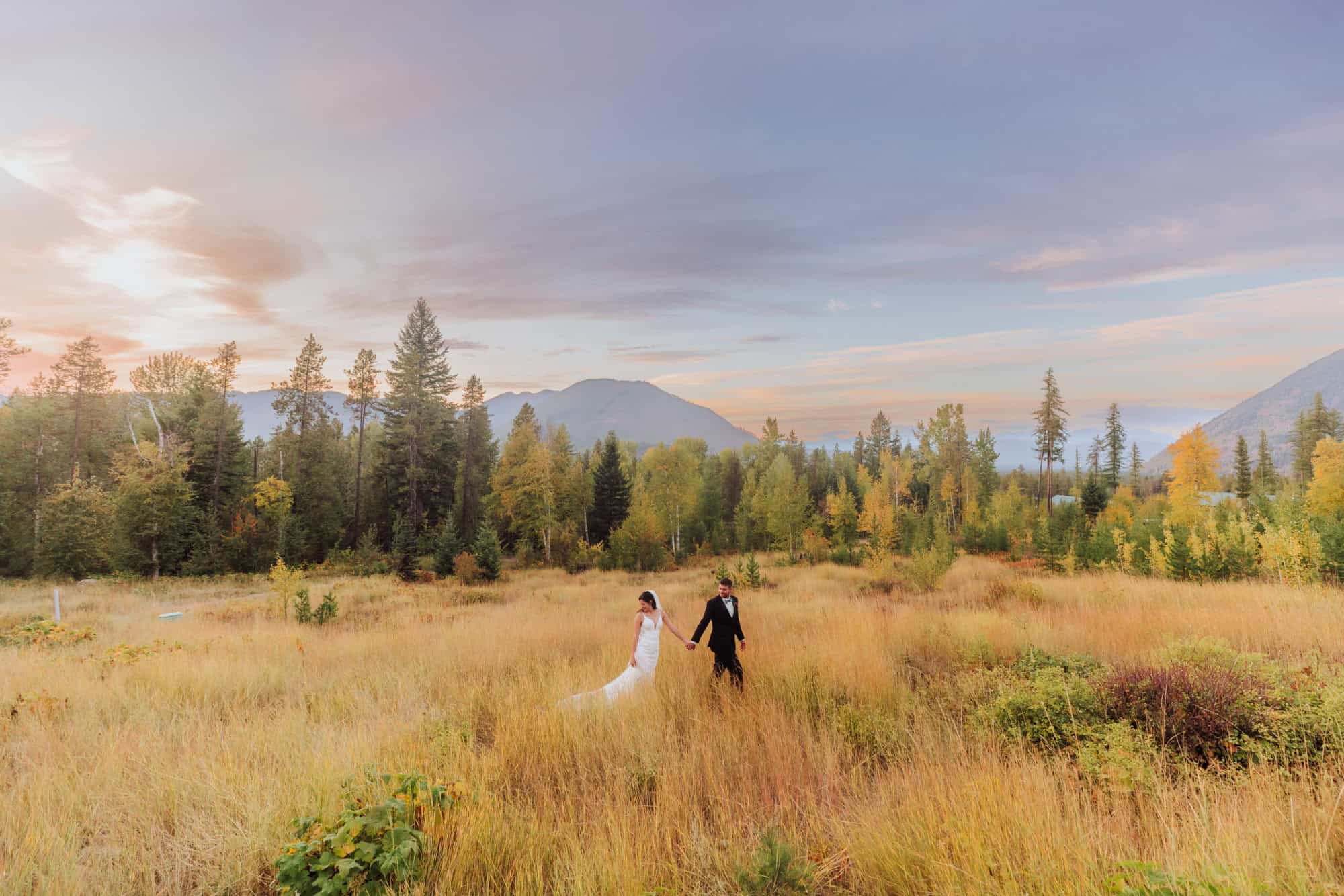
The east side is highly seasonal. Most of the lodging and restaurants are only open from about late May through September.
19. Polebridge
Polebridge is as off-the-grid as a Montana town gets. There’s no electricity (the handful of businesses run on solar panels and backup generators), no cell service, and the road in is mostly gravel.
It sits along the North Fork of the Flathead River, about 30 miles north of Columbia Falls, just outside the quiet northwest corner of Glacier National Park.
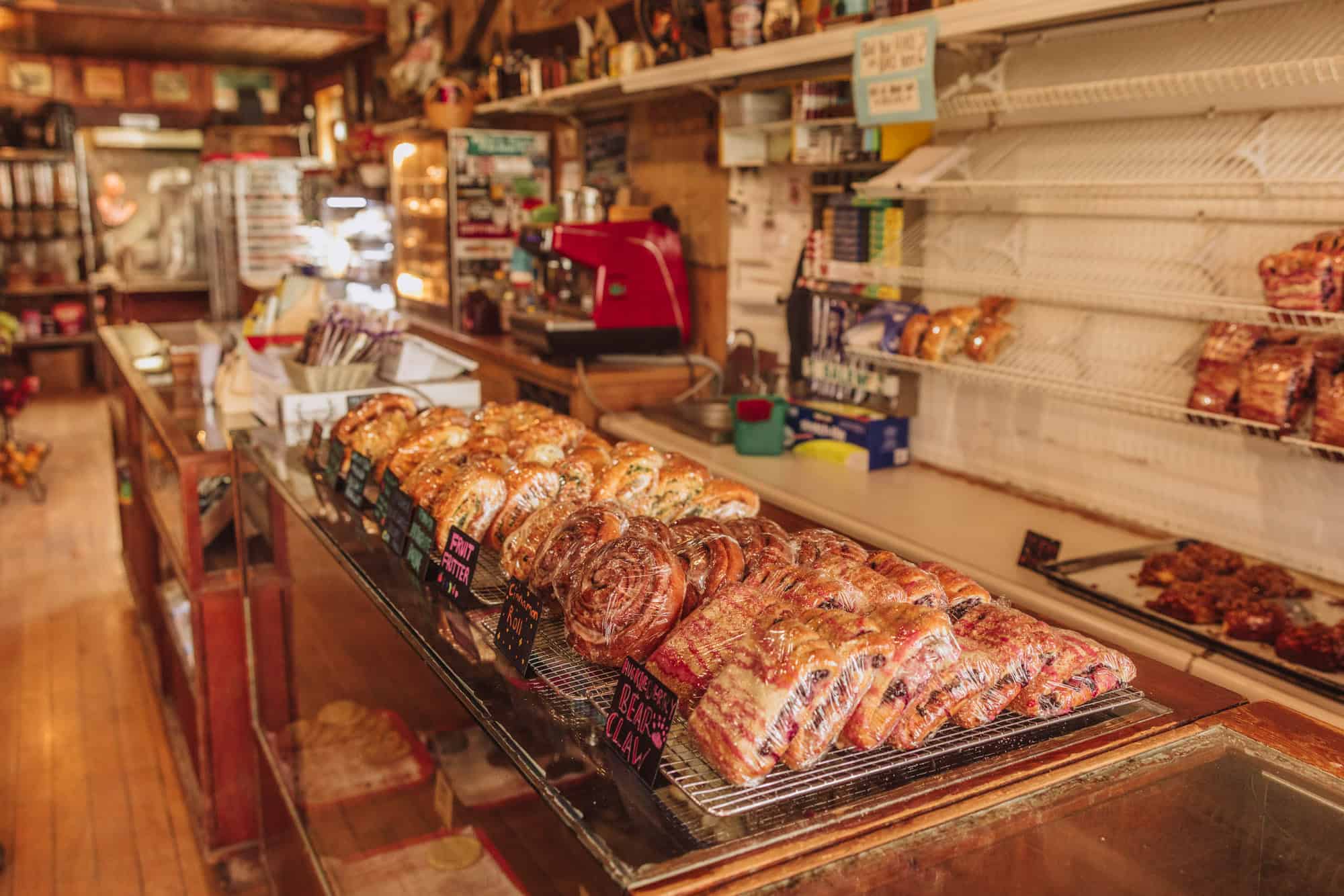
The heart of town is the Polebridge Mercantile and Bakery, built in 1914. People make the dusty drive just for the famous huckleberry bear claws, and the bakers turn out hundreds of them every summer day. Get one (or three).
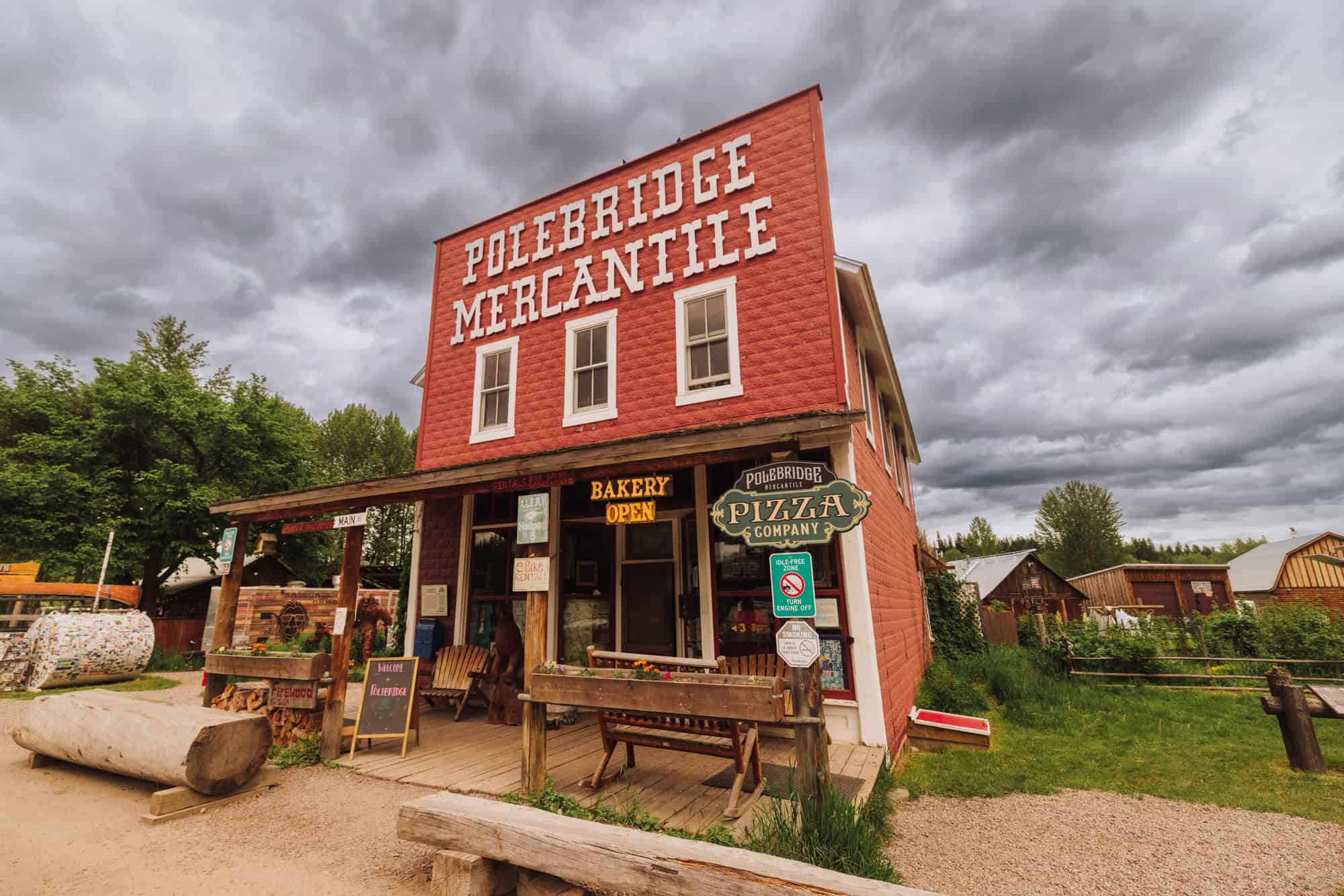
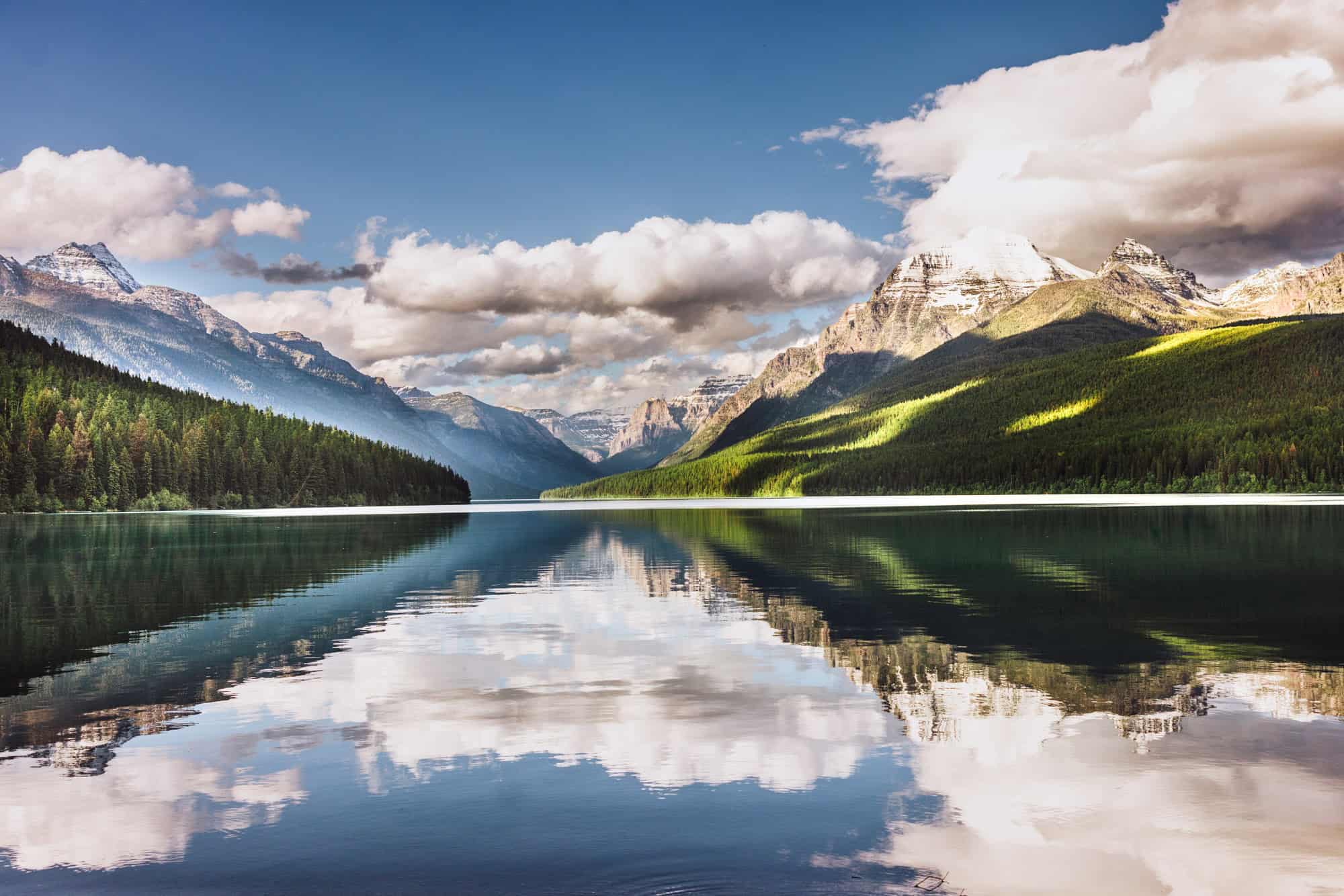
Polebridge is also the closest town to Bowman Lake, which is a true hidden gem. For me, it’s the best alternative to the overly crowded Lake McDonald area. It’s about six miles past the park entrance, up a narrow, bumpy dirt road, and that road is exactly what keeps the crowds away.
Check out this view:
A few things to note:
- Fill up your gas tank in Columbia Falls. There are no gas stations up here.
- Bring cash, just in case.
- Vehicles over 21 feet and trailers aren’t allowed on the road to Bowman Lake.
- The Mercantile’s hours are limited outside of summer, so check before you go.
18. Neihart
Neihart might be the smallest town on this list, with a population of around 40 people.
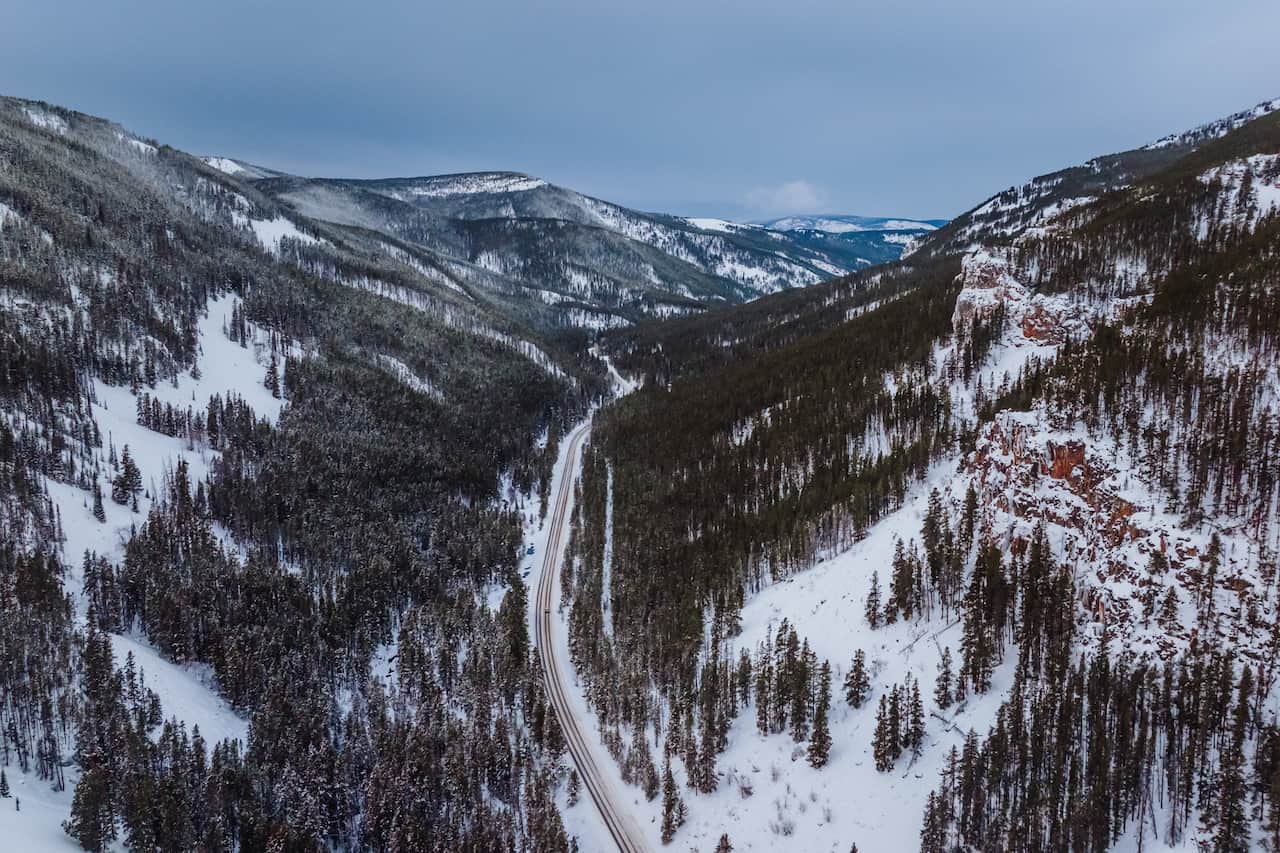
It’s an old silver-mining camp from the 1880s, tucked into the Little Belt Mountains along Highway 89, about an hour south of Great Falls. The road through town is the Kings Hill Scenic Byway, and it’s a beautiful drive in any season.
The main draw is just up the hill: Showdown Montana, the state’s oldest continuously operating ski area. People first skied here in 1936, and the mountain marked 90 years in 2026.
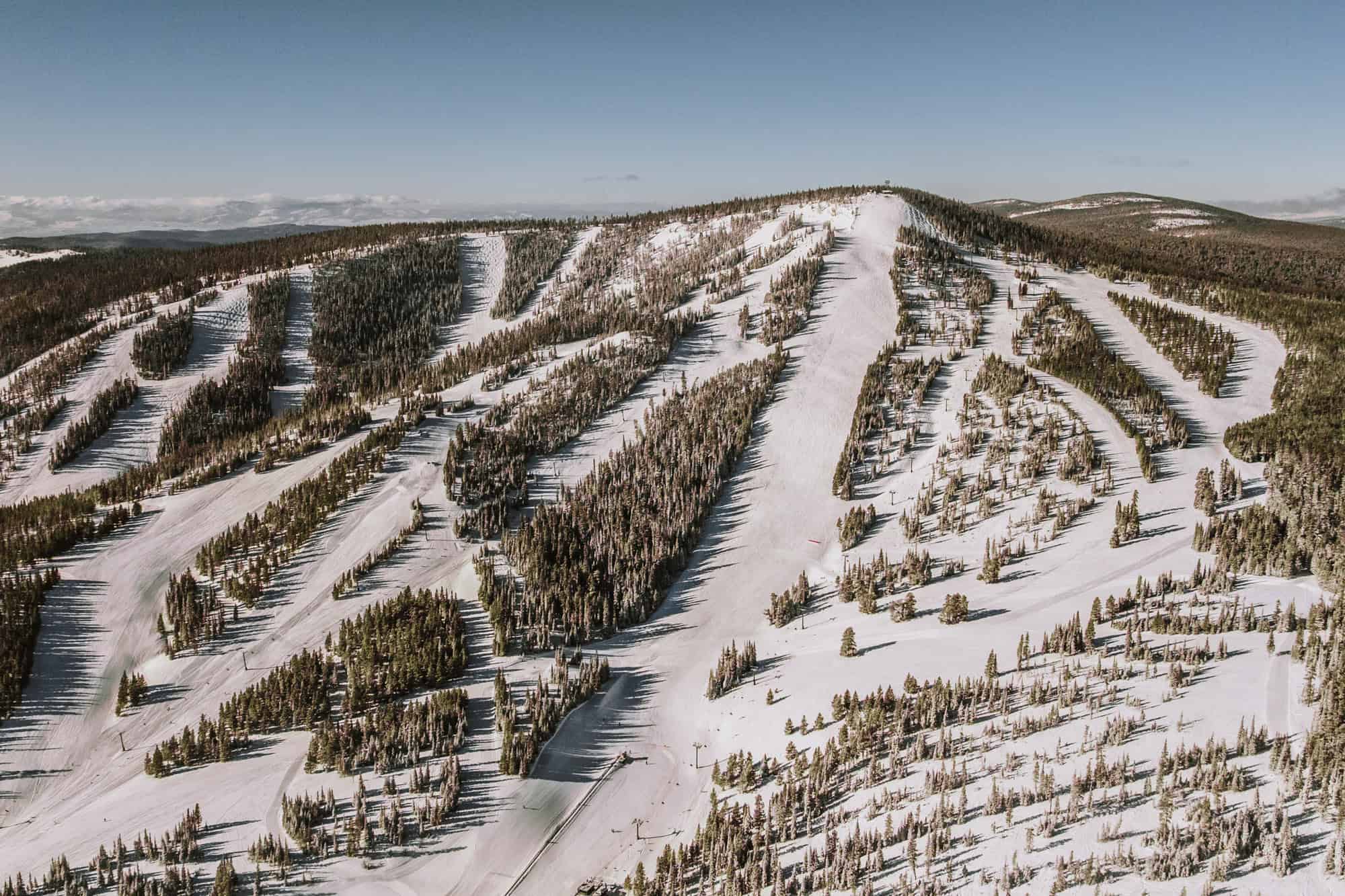
It’s been in the same family for more than 50 years, and today it’s run by a mother-daughter duo, Katie and Avery. Think: 640 acres, about 20 feet of all-natural snow each year, $70 lift tickets, and locals who all seem to know each other.
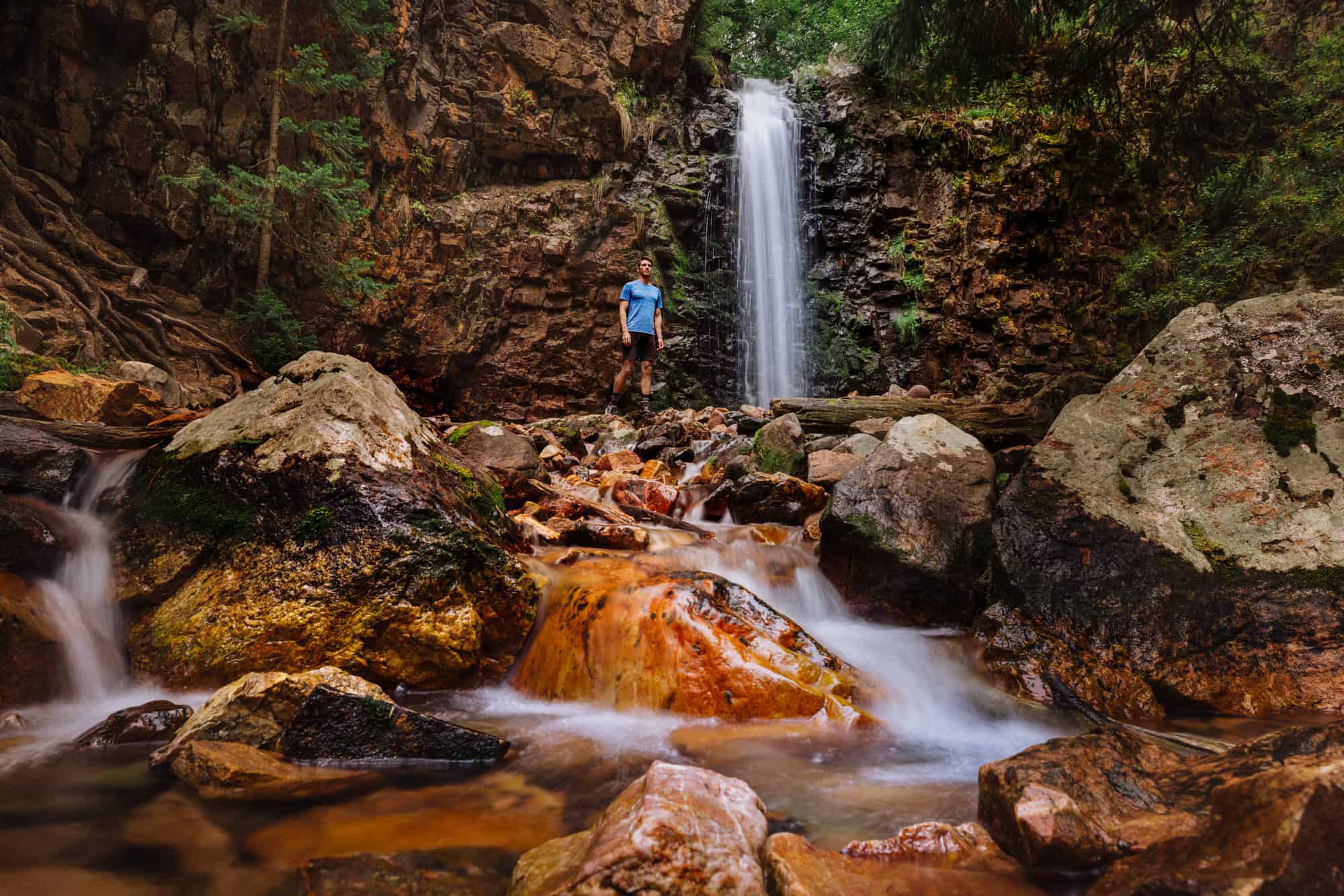
In the summer, stop at Memorial Falls. It’s a short, family-friendly waterfall hike just south of town, with hand railings to help you up the steeper spots. Then grab a burger at Bob’s Bar in Neihart on the way back.
There’s not a lot to do in Neihart itself, and that’s the point!
17. Virginia City
Virginia City is the best-preserved gold rush town in Montana.
Prospectors struck gold in Alder Gulch in 1863, and within a year thousands of people were living here. Virginia City even served as Montana’s territorial capital for a decade.
Then the gold ran out, and nobody bothered to tear anything down. Today, about 200 people live in Virginia City, surrounded by more than a hundred original buildings and wooden boardwalks.
You can ride the Alder Gulch Short Line train a mile and a half to Nevada City, catch a show at the Opera House, and walk up to Boot Hill for a view over the whole gulch.
It’s touristy in the summer, but the history is real. A note on timing: most of the town is only open from Memorial Day into September.
16. Libby
Libby is in the far northwest corner of Montana, and a lot of people (including a lot of Montanans) have never made the drive. It’s worth it.
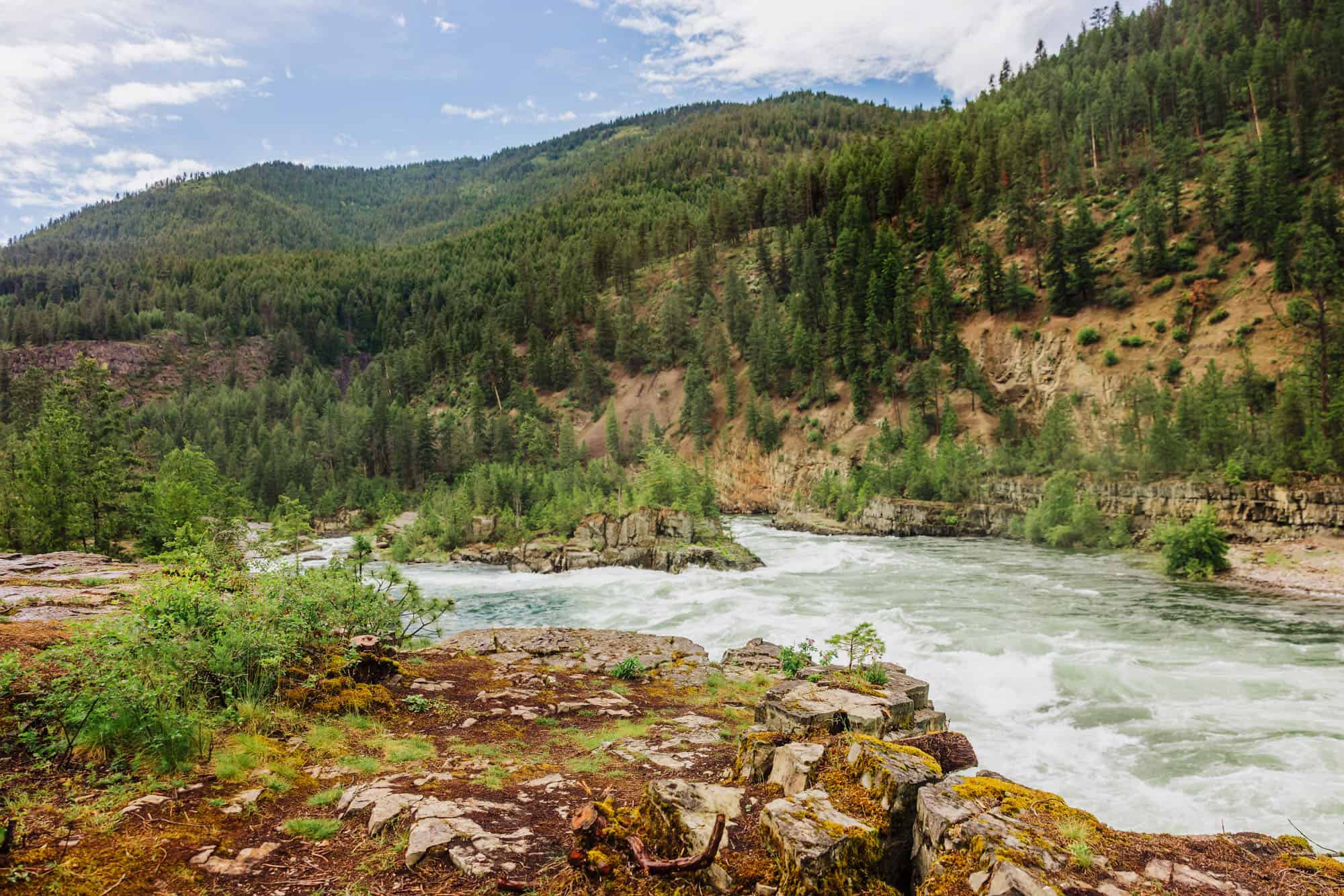
The Kootenai River runs right through town, and Kootenai Falls is about 15 minutes west.
It’s one of the largest undammed waterfalls in the Northwest, and a swinging bridge crosses the river just downstream. You may recognize it from The River Wild and The Revenant.
South of town, the Cabinet Mountains Wilderness has alpine lakes and trails you’ll largely have to yourself. The Ross Creek Cedars are another must-see: a grove of giant western red cedars, some more than 500 years old.
To the north, Lake Koocanusa stretches 90 miles and crosses into Canada.
Libby is a former logging and mining town of about 2,800 people. It isn’t polished, and there’s no resort crowd. That’s exactly why it ranks this high.
Quick List: What To Pack For Montana
- Layers, even in July (mornings in the mountains can start in the 40s)
- A waterproof shell
- Hiking boots
- Bear spray, and know how to use it
- Sunscreen and bug spray
- Offline maps, since cell service is unreliable or nonexistent near many of these towns
15. Bozeman
I get it. Bozeman is one of the fastest-growing places in the country, and the prices show it.
Bozeman is the biggest town on this list, by far. It’s a growing city (which actually feels like a city) with close to 60,000 people. Many Montanans will tell you it’s not really a “mountain town” anymore at all.
But it makes this list because nothing else in Montana gives you this much within an hour’s drive. Bridger Bowl is 20 minutes from downtown. Hyalite Canyon has waterfalls, a reservoir, and ice climbing. Big Sky is an hour south, and Yellowstone’s north entrance is about 80 minutes away.
Main Street is lively and walkable, and Montana State University gives the town a college energy.
Don’t skip the Museum of the Rockies. It has one of the best dinosaur fossil collections in the world, and it’s a stop on the Montana Dinosaur Trail.
Bozeman is also the easiest town on this list to reach, with the busiest airport in the state.
14. Hamilton
Hamilton is the heart of the Bitterroot Valley, about an hour south of Missoula on Highway 93. The Bitterroot Mountains line the west side of the valley like a wall, and the Sapphire Mountains roll along the east.
It’s a real town of about 4,700 people, with a walkable Main Street, locally-owned shops, and a couple of breweries. Bitter Root Brewing has been pouring here since 1998, which makes it one of the oldest in the state.
Hamilton exists because of copper king Marcus Daly, who founded the town in 1890 to supply timber for his mines, and built his summer estate here. Today, you can tour the Daly Mansion: 24,000 square feet, with 25 bedrooms and 15 bathrooms.
The trailheads start just minutes from downtown:
- Blodgett Canyon Overlook: About 3 miles round-trip, to a view of sheer granite canyon walls.
- Lake Como: South of town, with a sandy swimming beach and a trail around the lake.
- Skalkaho Falls: A 150-foot waterfall that tumbles down right beside the Skalkaho Highway, east of town. The road is seasonal, and usually opens around Memorial Day.
- The Bitterroot River: It runs right past town, and it’s a favorite for fly fishing and floating.
South of town, Trapper Peak is the highest point in the Bitterroot Range at 10,157 feet.
The Bitterroot Valley is growing fast, but Hamilton still feels like a town first.
13. Bigfork
Bigfork sits on the northeast shore of Flathead Lake, the largest natural freshwater lake in the western United States.
The village is tiny and charming. Electric Avenue is just a few blocks long, lined with art galleries, restaurants, and the Bigfork Summer Playhouse, which has been putting on shows since 1960.
The Swan River tumbles into the lake right at the edge of town. That stretch is called the “Wild Mile,” and kayakers race down it every spring. There’s a flat trail alongside it for the rest of us.
For hikers, the Jewel Basin is a short drive away, with more than two dozen alpine lakes.
If you visit in late July, look for the roadside stands selling Flathead cherries!
12. Superior
Superior is one of those towns you pass on Interstate 90 without a second thought. It’s about an hour west of Missoula, in a narrow valley along the Clark Fork River.
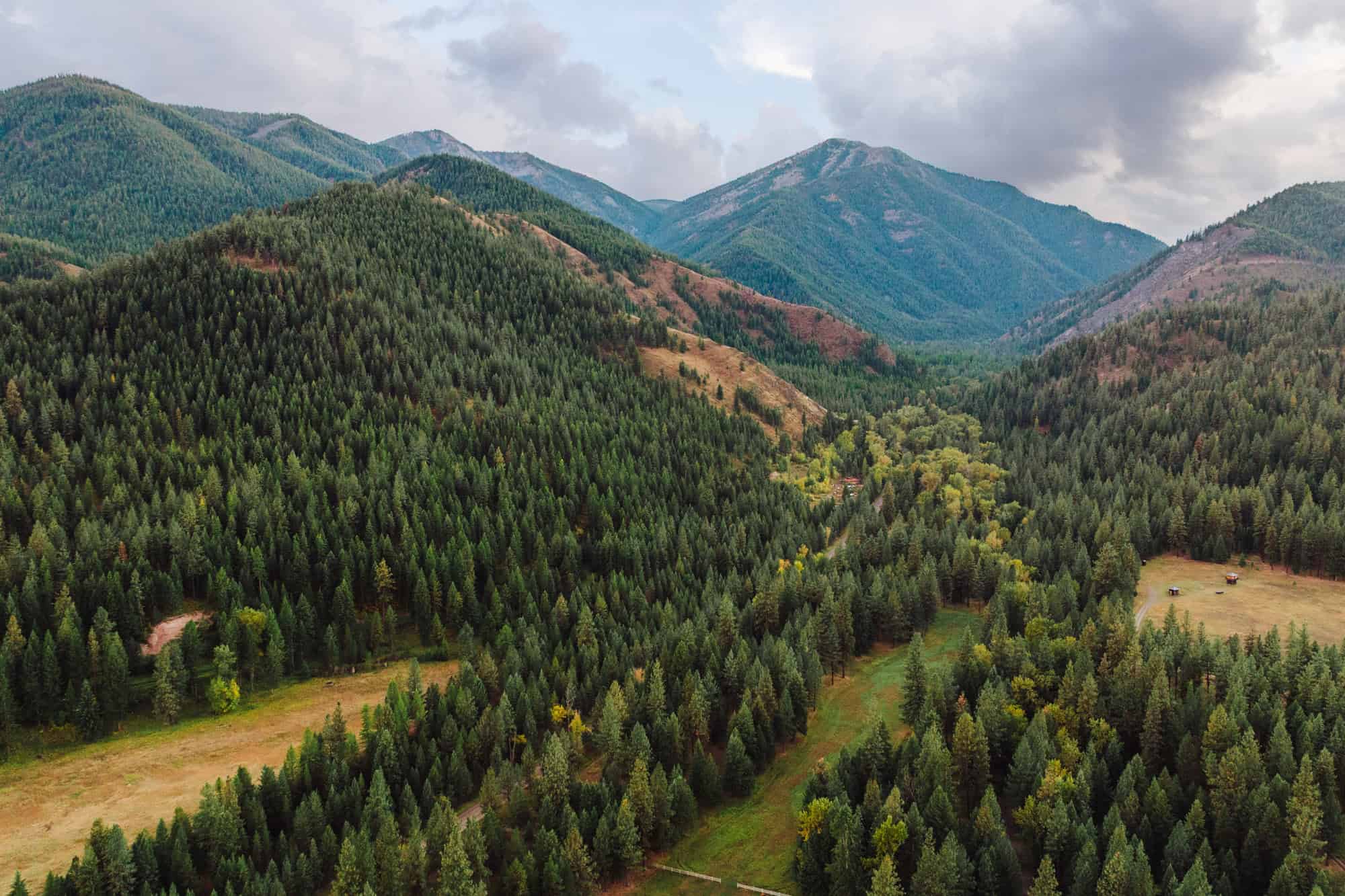
Fewer than 1,000 people live here, and the mountains of the Lolo National Forest rise up on both sides of town.
Superior got its start with a gold rush on nearby Cedar Creek in 1869. Today, the draw is everything outdoors:
- Whitewater rafting through the Alberton Gorge, just upriver
- Fishing and floating the Clark Fork
- Hiking to alpine lakes near the Idaho border
- Biking the Route of the Hiawatha, a rail-trail with tunnels and trestles, under an hour west
There are no crowds and no resort prices. If you’re driving across western Montana, this is a great place to break up the trip.
11. Alberton
Alberton is a town of about 450 people along the Clark Fork River, roughly 30 miles west of Missoula on Interstate 90. Most people know it from the billboard on the highway.
That billboard is for the Montana Valley Book Store, and it’s worth the exit. The store has been here since the 1970s, inside a 1910 building that used to be a butcher’s shop. It’s home to more than 100,000 used books, many of them rare or out of print, and it’s open every day of the year.
Alberton got its start as a railroad town. The Milwaukee Road made it a division point on its line to the coast, and named it for the railroad’s president, Albert Earling. The old depot is still standing downtown, and today it’s the community center.
Then there’s the river. Just west of town, the Clark Fork squeezes into the Alberton Gorge, which is the best-known stretch of whitewater in western Montana:
- The rapids: A full-day trip runs four to six Class III and IV rapids, with names like Tumbleweed and Fang.
- The season: Late June through early August is the best time to go.
- The outfitters: Several rafting companies run guided trips from Missoula and the towns along I-90.
A couple more stops nearby:
- Natural Pier Bridge: A steel bridge from 1917, a mile west of town. One of its piers is anchored to a rock outcrop in the middle of the river.
- Fish Creek State Park: One of the largest state parks in Montana is 12 miles west of town. Look for the “Big Pine,” a ponderosa nearly 200 feet tall and one of the largest in the country.
Alberton is the kind of place you plan to stop for 20 minutes, and end up staying for the afternoon.
10. Havre
This is where the list turns to Central Montana, and the towns I’d send you to first.
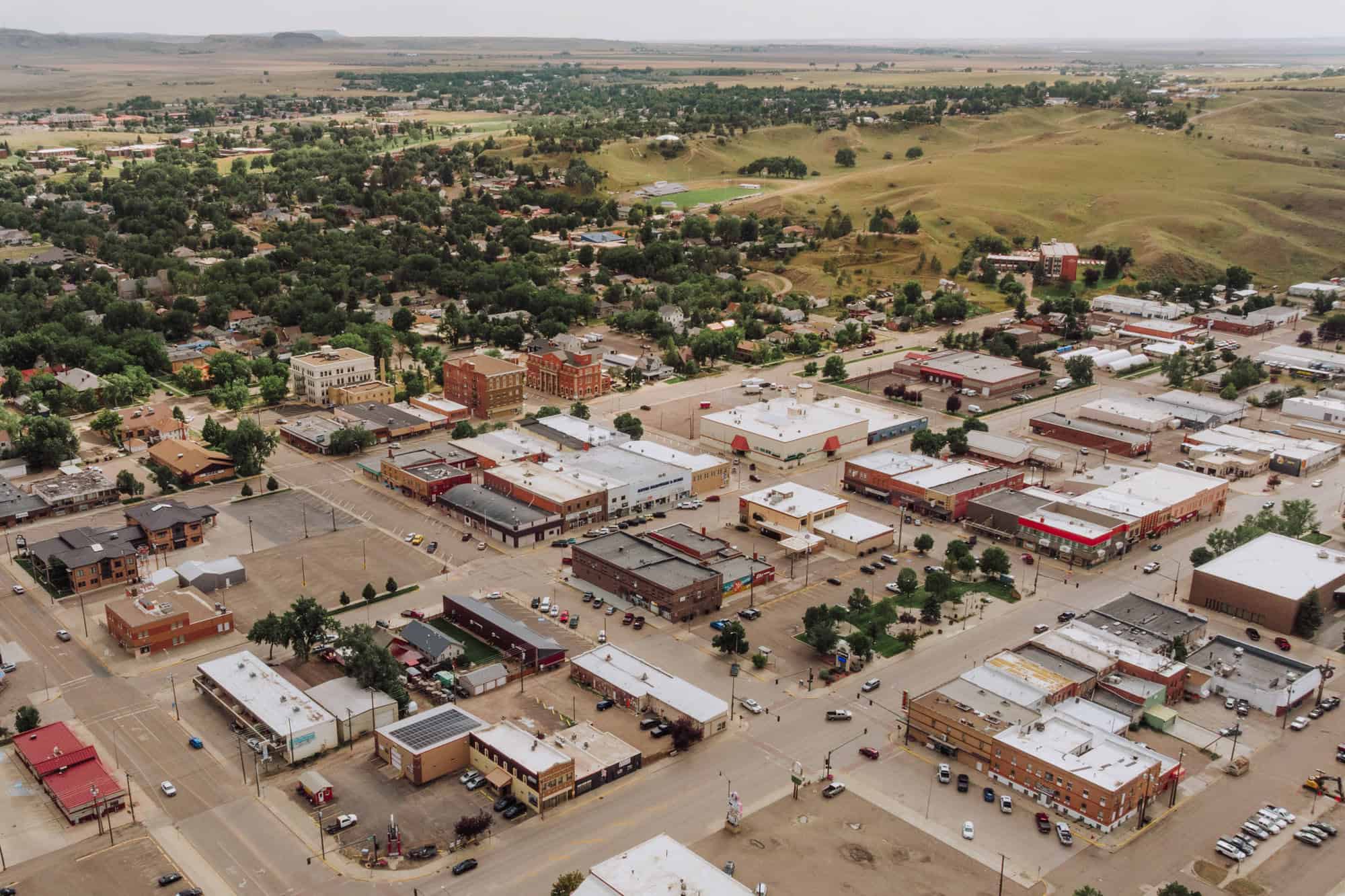
Havre isn’t what most people picture when they think of a Montana mountain town. It’s a railroad town on the plains, 115 miles northeast of Great Falls.
But drive 15 miles south, and the Bears Paw Mountains rise right up out of the prairie. Havre is the gateway, and that earns it a spot on this list.
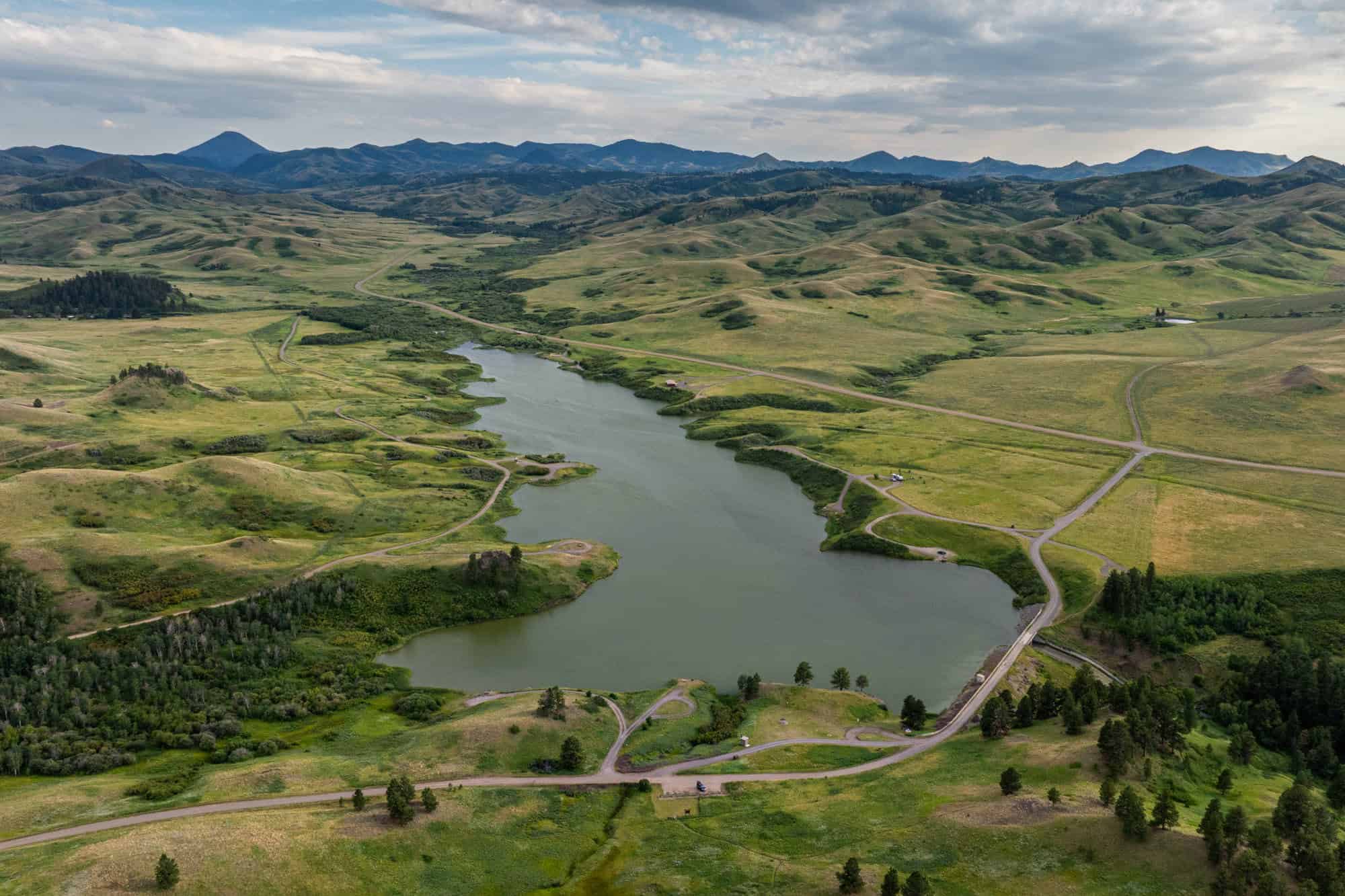
When I lived in Montana, I only made it here a handful of times, and it was always for a work assignment. I really was unaware of all the hiking, camping, and fishing options around town:
- Beaver Creek Park: The largest county park in the country stretches 17 miles through the Bears Paws. You’ll need a $15 day permit.
- Bearpaw Lake: It’s stocked with trout, bass, pike, and walleye, with two hiking loops from the Rotary Canyon Trailhead. In June, the fields are full of wildflowers.
- Bullhook Butte: A 1.8-mile loop just 5 miles outside of town, named for Havre’s original name: Bullhook Bottoms.
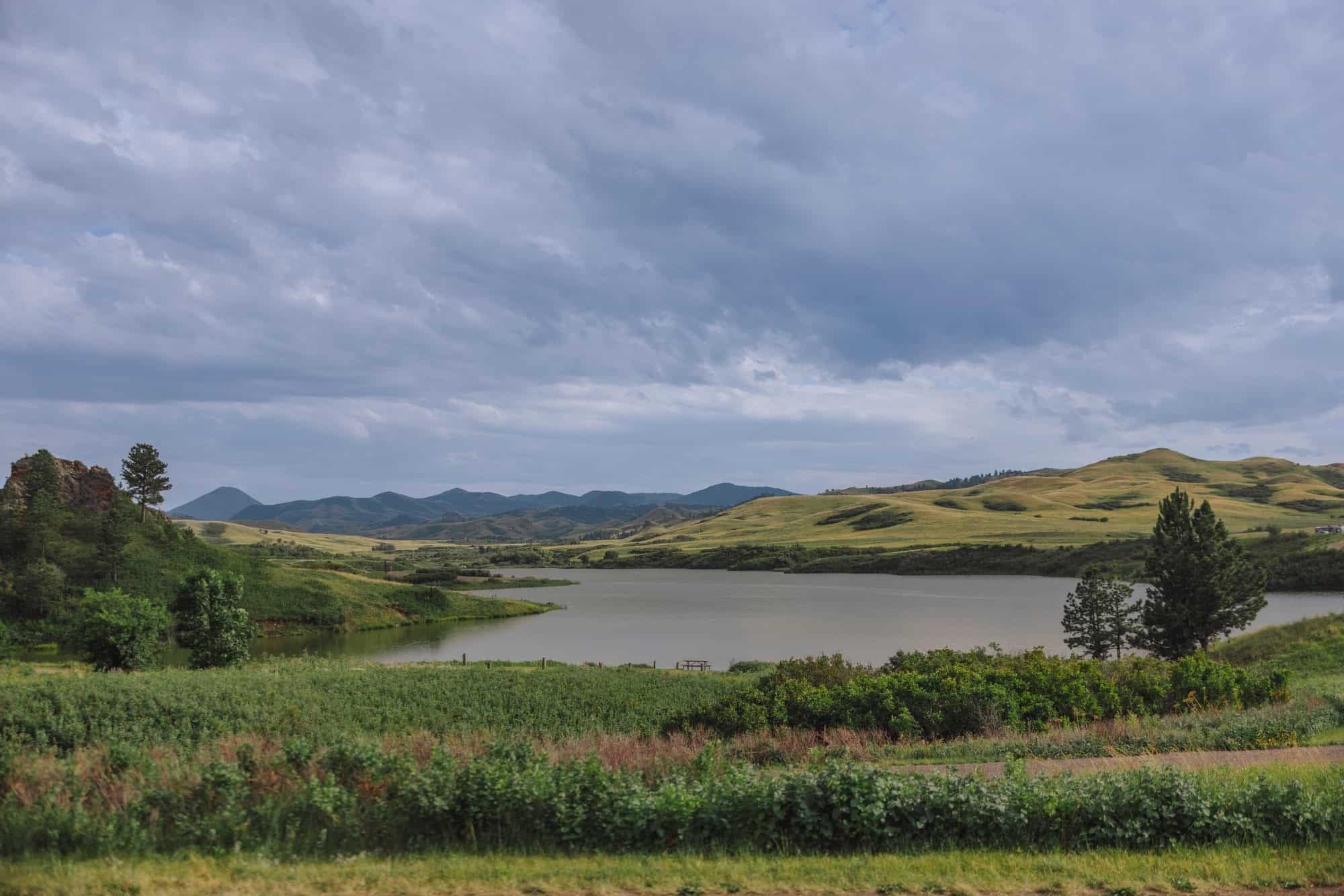
For me, there’s nothing more awesome than the views in Glacier National Park. But those views come with crowds, permits, and more of an overall hassle. Judging by the very few people we saw on the trails here, the Bears Paw Mountains are where you go for peace and quiet!
Back in town, start underground. After a fire leveled downtown in 1904, shop owners moved their businesses into their basements and linked them with passageways. The “Havre Beneath the Streets” tour walks you through the old saloon, bordello, meat market, drug store, and a Chinese laundry with an opium den. I was skeptical, and I was wrong. It really over-delivers!
A few more stops:
- Wahkpa Chu’gn Buffalo Jump: A bison jump site right in town, used for around 2,000 years. Tours run on summer mornings.
- Fort Assinniboine: Once one of the largest forts in the country, established in 1879.
- Triple Dog Brewing: Havre’s hometown brewery has a dozen beers on tap. The Fresno Wheat is the most popular.
- The Palace Bar: Home to what they say is the oldest back bar in Montana, carved in 1903.
It’s a good day trip from Great Falls, and a great overnight stop on a road trip through Montana.
9. Highwood
Highwood is a tiny ranching community of fewer than 200 people, about 30 miles east of Great Falls. Behind it are the Highwood Mountains, an “island range” that rises straight up out of the wheat fields.
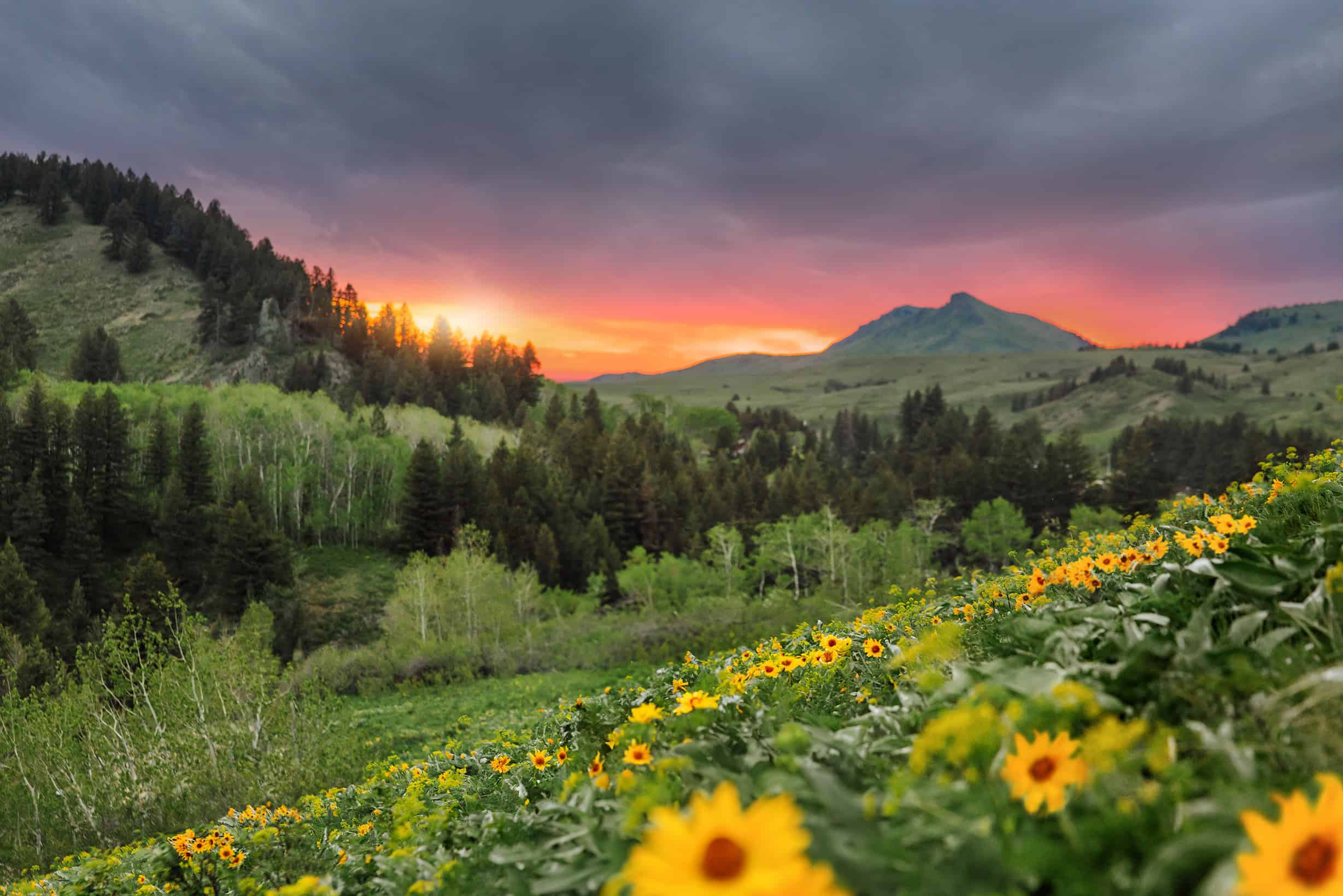
Highwood Baldy, the tallest peak, tops out at about 7,670 feet. Most of the trails start at the Thain Creek Campground, which is an easy 40-mile drive from Great Falls (cars might make it, but it’s easier in a truck or SUV). The trails wind through meadows and forest, and you may not see another person all day. It’s one of our favorite hikes near Great Falls.
There are no hotels or tourist attractions in Highwood. It’s simply a beautiful, quiet corner of Montana, and an easy day trip for anyone looking for things to do in Great Falls.
8. Craig
Craig might be the most famous town of 39 people in Montana. If you fly fish, you already know why.
It sits right on the banks of the Missouri River, just off I-15, about halfway between Great Falls and Helena. The whole town is a few blocks long, and most of it exists for one reason: trout.
The stretch of river below Holter Dam is considered world-class. The dam keeps the water cold, clear, and steady all year, which creates an incredibly dense trout population. In good years, surveys have counted more than 6,000 trout per mile. Near Craig, biologists have found 20,000 bugs per square meter of riverbed, which is a feast for the fish!
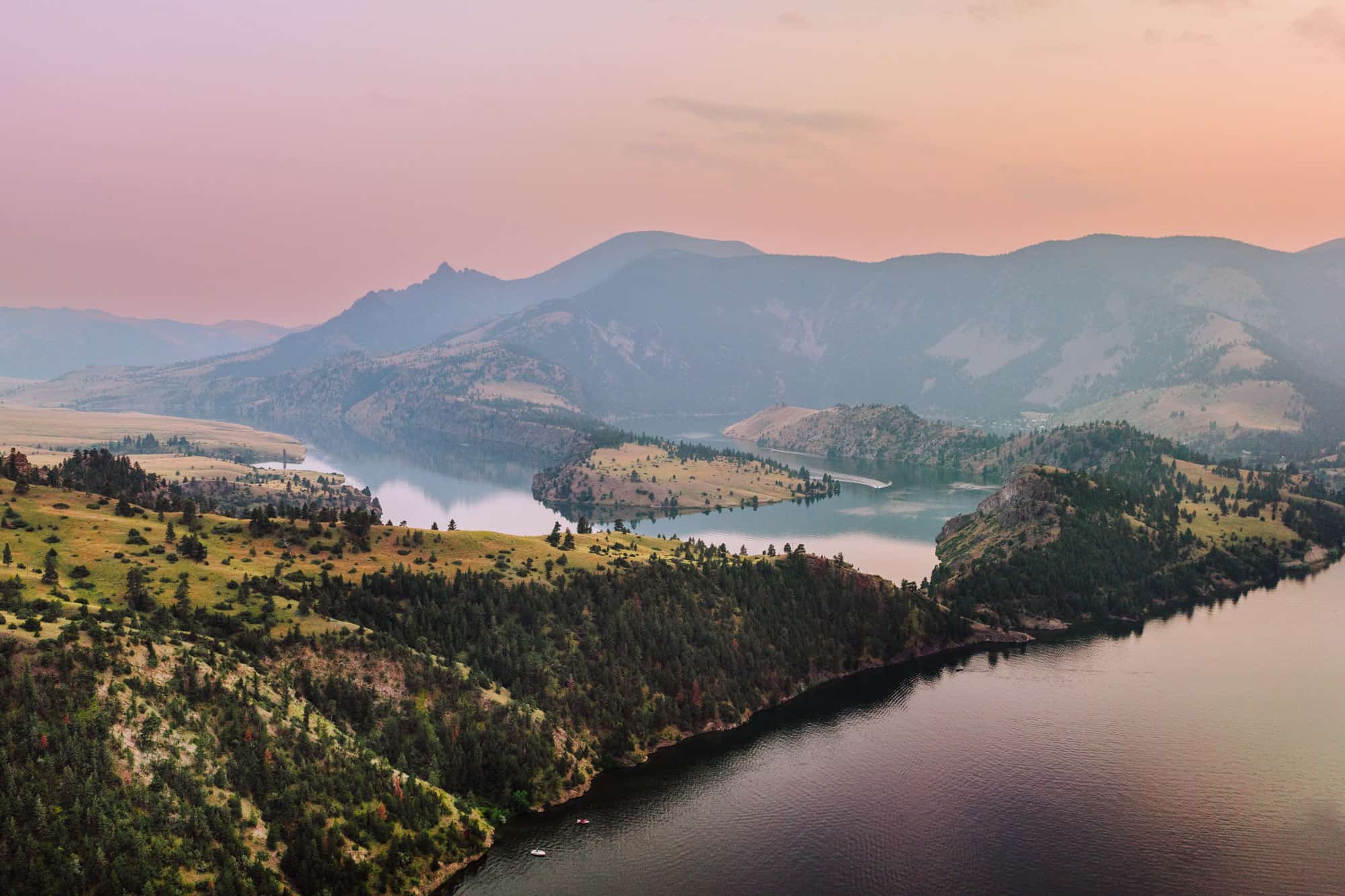
You’ll find several fly shops in town, staffed with friendly local experts who’ve fished the Missouri for years. They’ll set you up with a guide, a drift boat, or just some advice on which flies to use.
You don’t need a fly rod to enjoy the area, though. A few miles upriver, Holter Dam holds back Holter Lake, which winds through steep, rocky canyon walls.
Check out this view:
There’s a lot to do on and around the lake:
- Boating and swimming: The campgrounds along the shore have boat ramps and swim beaches.
- Hiking: The trail from Juniper Bay to Log Gulch runs about 4 miles along the eastern shore, in an area better known for boating than hiking.
- Gates of the Mountains: At the far end of the lake, guided boat tours run through the dramatic limestone gorge Meriwether Lewis named in 1805.
- Camping: Log Gulch is the largest campground, and it’s reservation-only.
A few things to note:
- Craig is tiny. There are a couple of places to eat and drink, but not much else.
- You’ll need a Montana State fishing license.
- Lodging in town is limited and caters to anglers, so book early in the summer. We have a separate post on places to stay while fishing the Missouri River.
7. Belt
I’ve been visiting Belt for 20+ years. It’s a former coal-mining town of about 500 people, tucked into a small valley along Belt Creek.
It’s 20 miles (about 30 minutes) east of Great Falls, and you can’t see it from the highway until you drop down the hill.
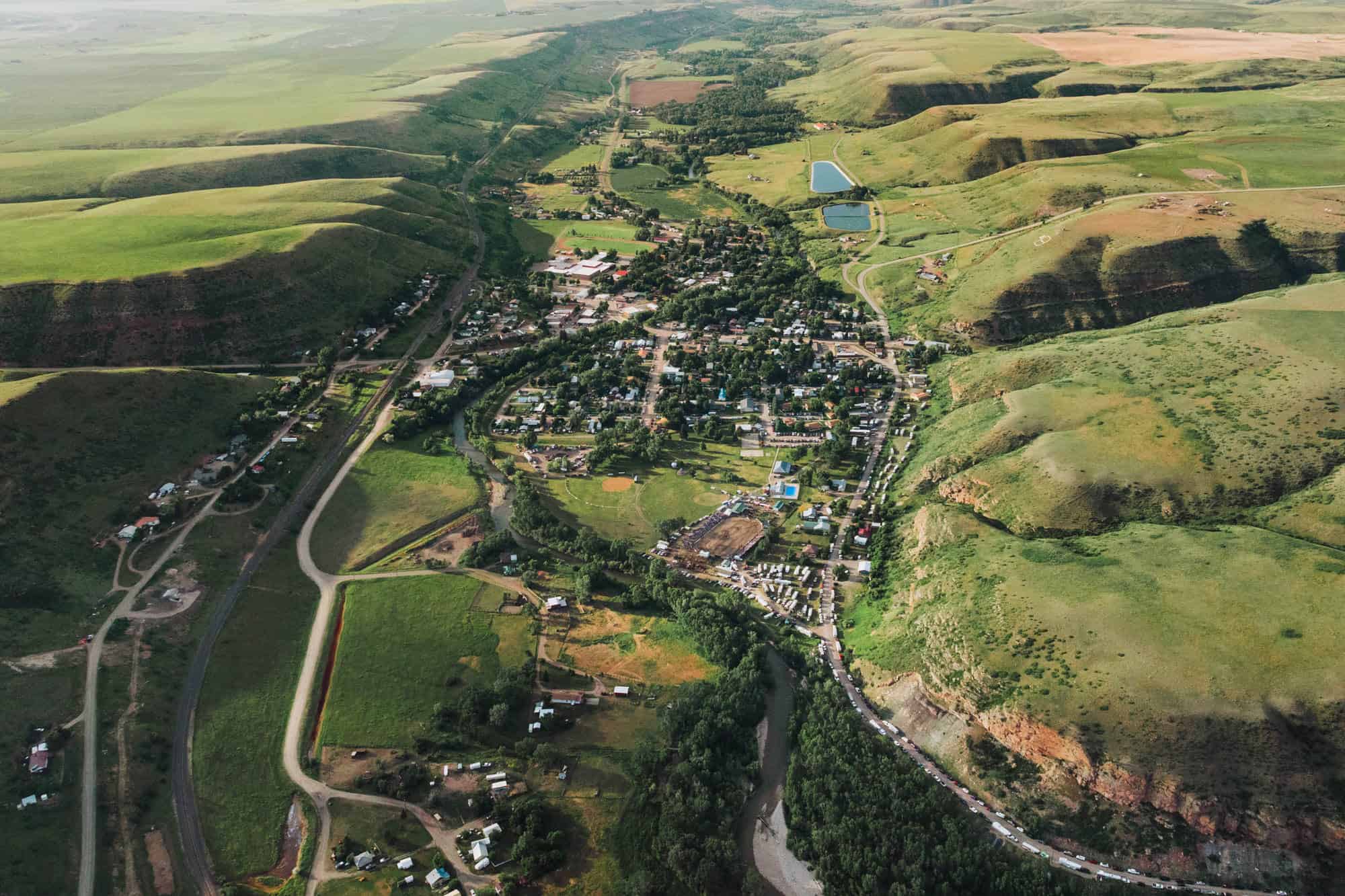
Belt was home to Montana’s first commercial coal mine, and it was once known as “Black Diamond City.” For a short time in the late 1890s, about 4,000 people lived here, with as many as 30 saloons!
Castner Street, the historic main drag, is home to Harvest Moon Brewing, one of the best-known small breweries in the state. Order a Beltian White!
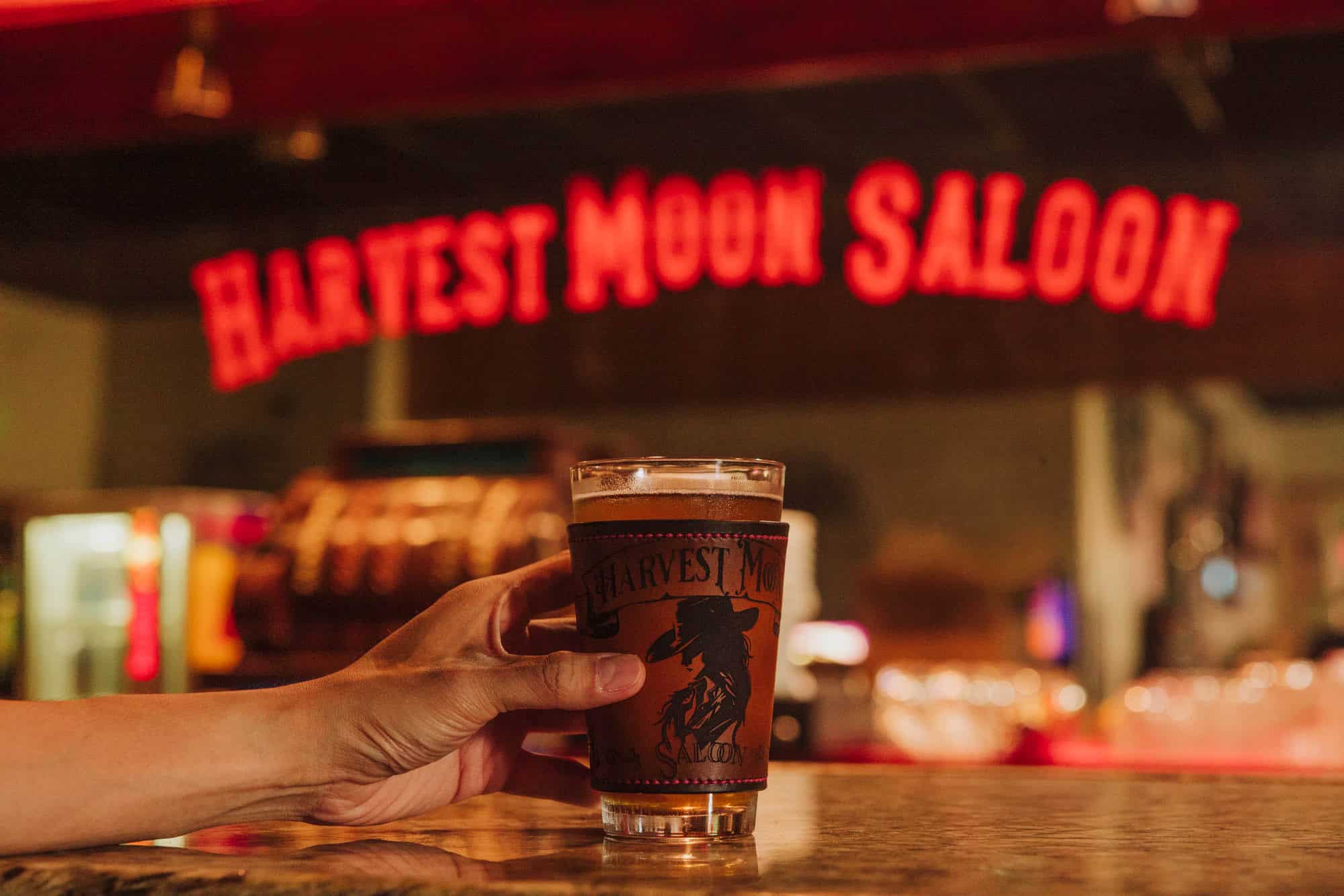
Down the street, the Belt Creek Brew Pub has a great patio right on the creek. When I lived in Great Falls, we used to make the trip just to fill our growlers here. (Mine is 20+ years old, and I still have it.)
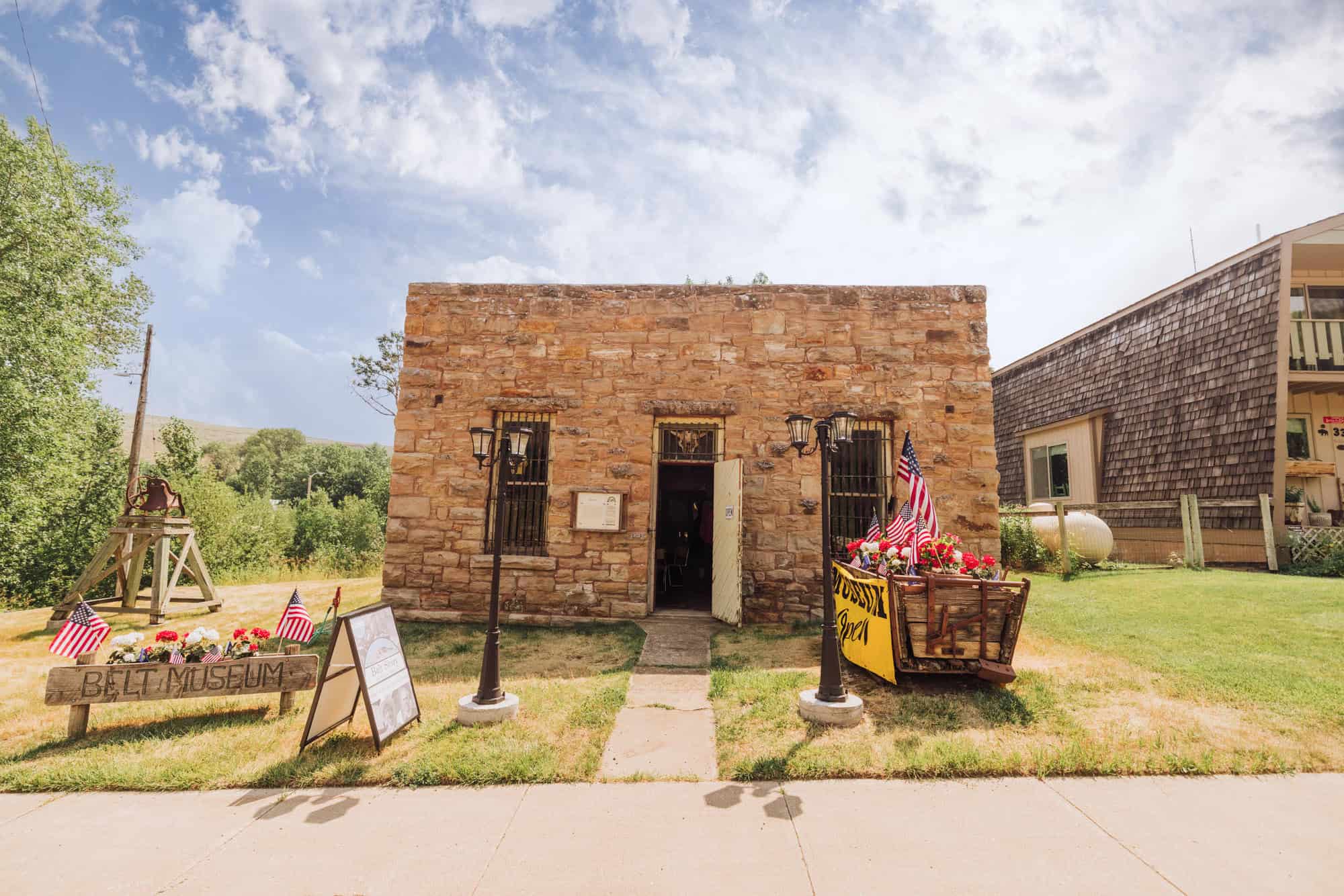
You’ll also find a museum inside the old 1890s town jail, and a restored 1916 theater.
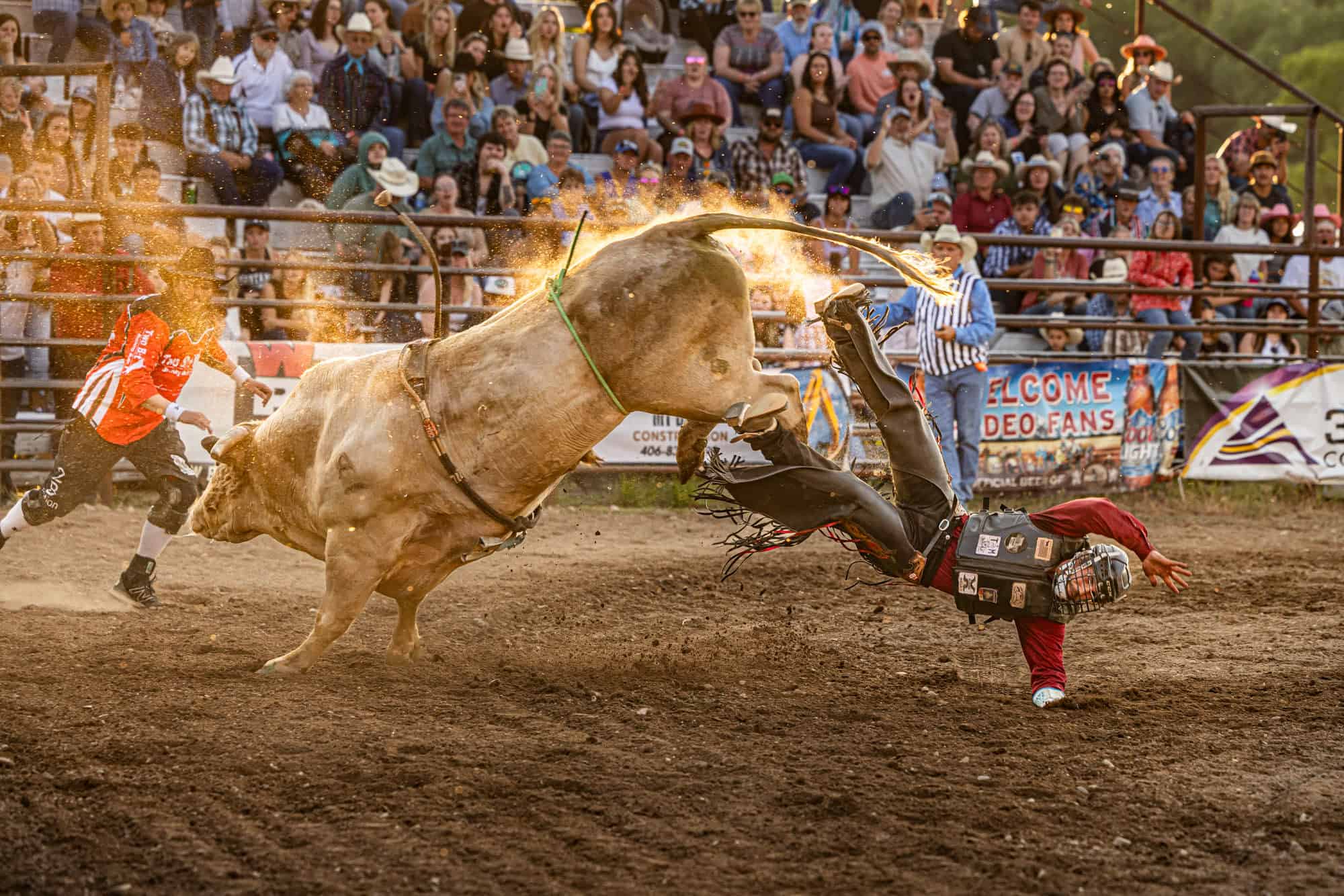
Then there’s the PRCA Belt Rodeo. Every Father’s Day weekend, the town’s population quintuples as rodeo fans pour in from across Montana and beyond. It started in 1955 with a group of young ranchers talking over drinks, turned pro in 1961. Today, it’s the very first stop on Montana’s summer rodeo circuit.
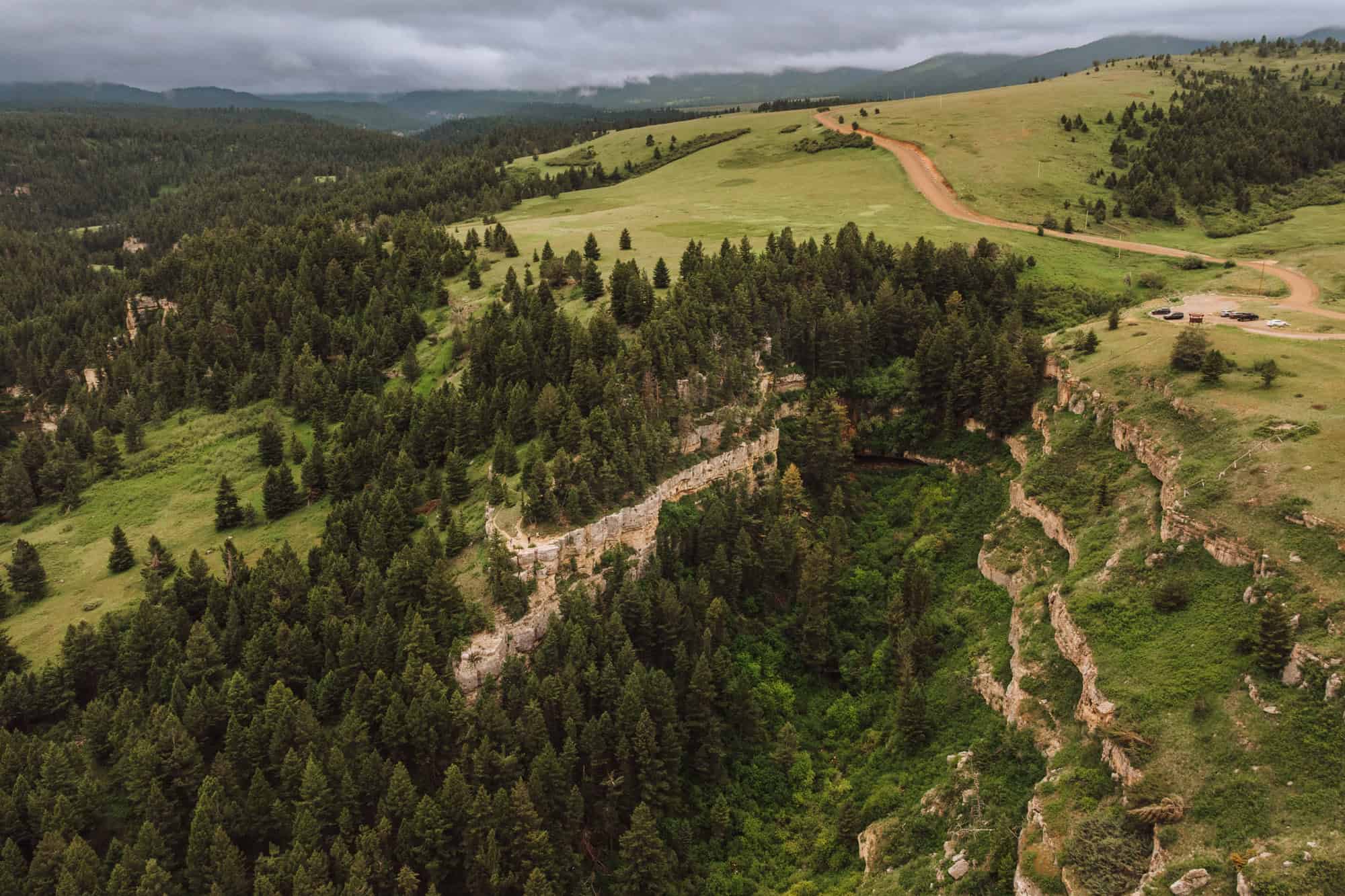
Belt is also the closest town to Sluice Boxes State Park, where Belt Creek has carved a rugged limestone canyon. There are two very different ways to see it:
- a lower trail that hugs the creek (and doubles as a summer swimming hole)
- an overlook trail along the ridge, with sweeping canyon views
From here, Highway 89 keeps climbing south into the Little Belt Mountains. Belt is a perfect first stop on that drive.
6. Augusta
Augusta is a true cowboy town of about 300 people, sitting right where the plains run into the Rocky Mountain Front.
Main Street is only a few blocks long, with old saloons, a general store, and locally-owned shops. Nothing here is staged for tourists.
The mountains start just west of town. A gravel road leads into Sun River Canyon and up to Gibson Reservoir, which is one of the most popular gateways into the Bob Marshall Wilderness. The Scapegoat Wilderness is to the southwest.
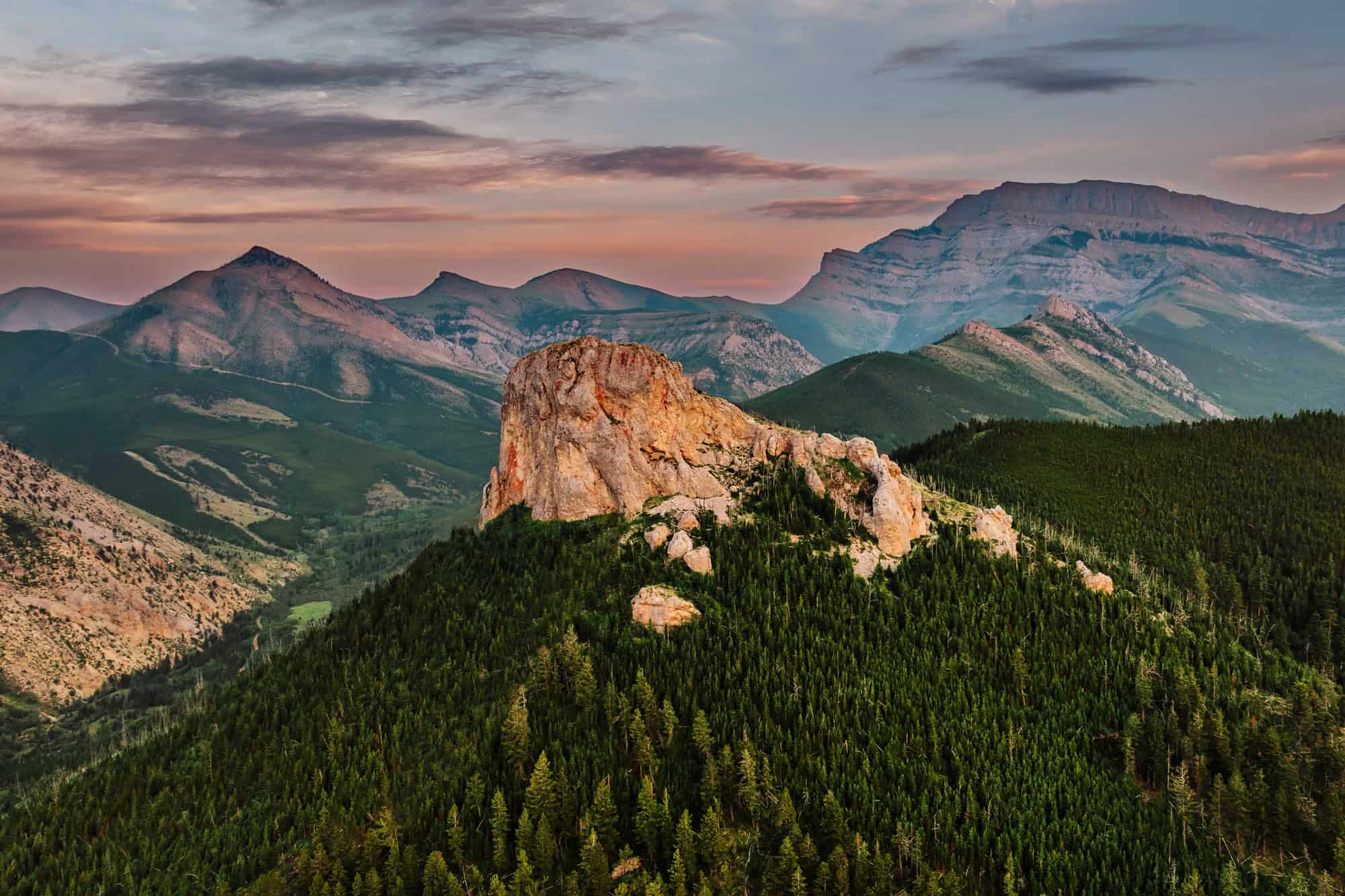
You don’t need a multi-day trip to get a taste of it. Devil’s Glen is a 6-mile out-and-back through striking rock formations and towering cliffs, and it’s one of our easy day hikes in the Bob Marshall Wilderness.
If you can, time your visit for the last Sunday of June. The Augusta American Legion Rodeo has been running since 1936, and it bills itself as the “wildest one-day show on earth.” The town’s population multiplies many times over for the weekend!
5. Choteau
Choteau is the unofficial capital of the Rocky Mountain Front. It’s about an hour northwest of Great Falls, with around 1,700 people and a classic courthouse at the end of Main Avenue.
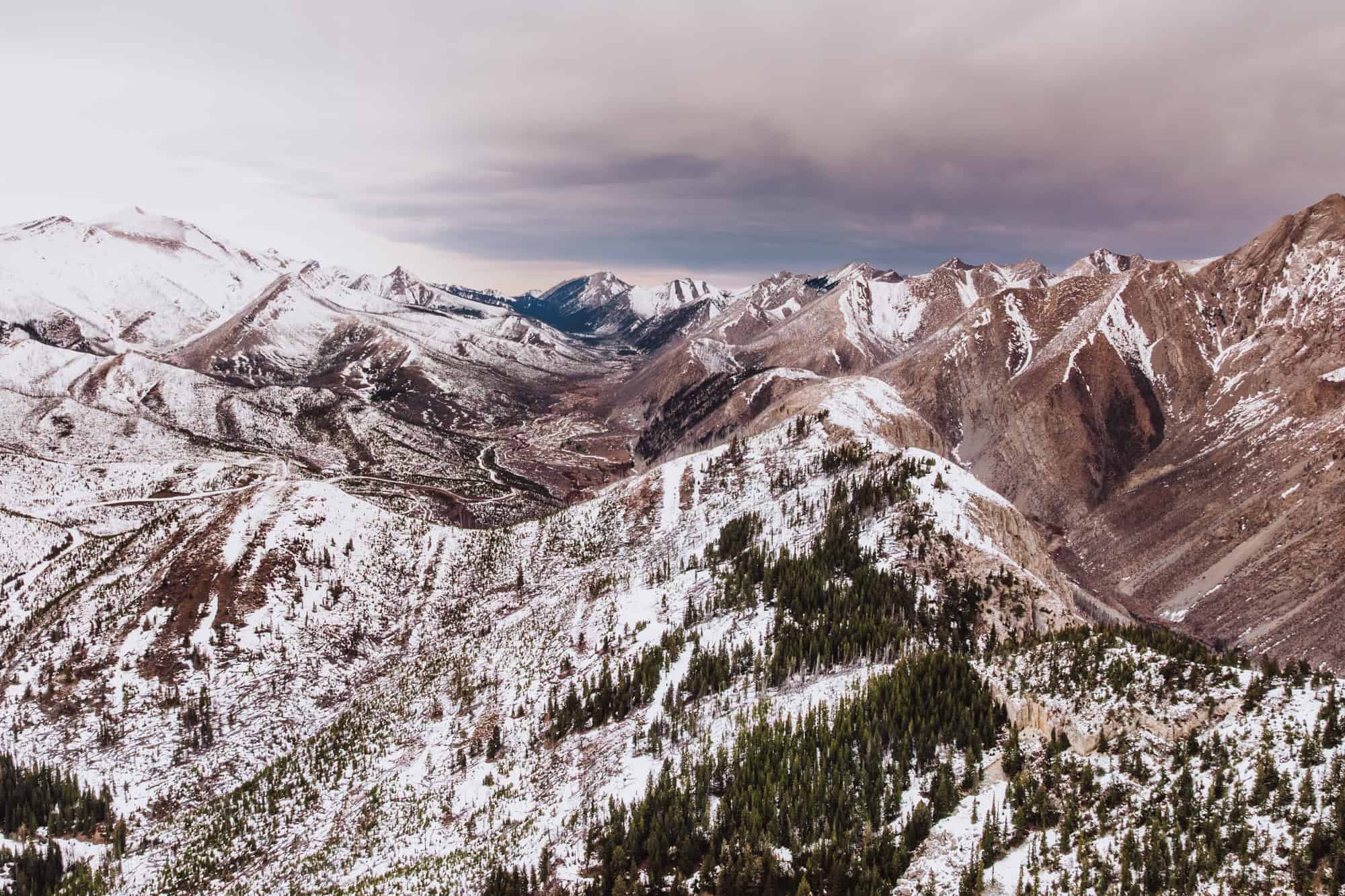
It’s also one of the most important spots in the world for dinosaur research. In 1978, paleontologist Dr. Jack Horner found fossilized nests, eggs, and baby dinosaurs at Egg Mountain, just outside of town. It was the first hard evidence that some dinosaurs cared for their young.
You can learn the story at the Old Trail Museum, which is a stop on the Montana Dinosaur Trail.
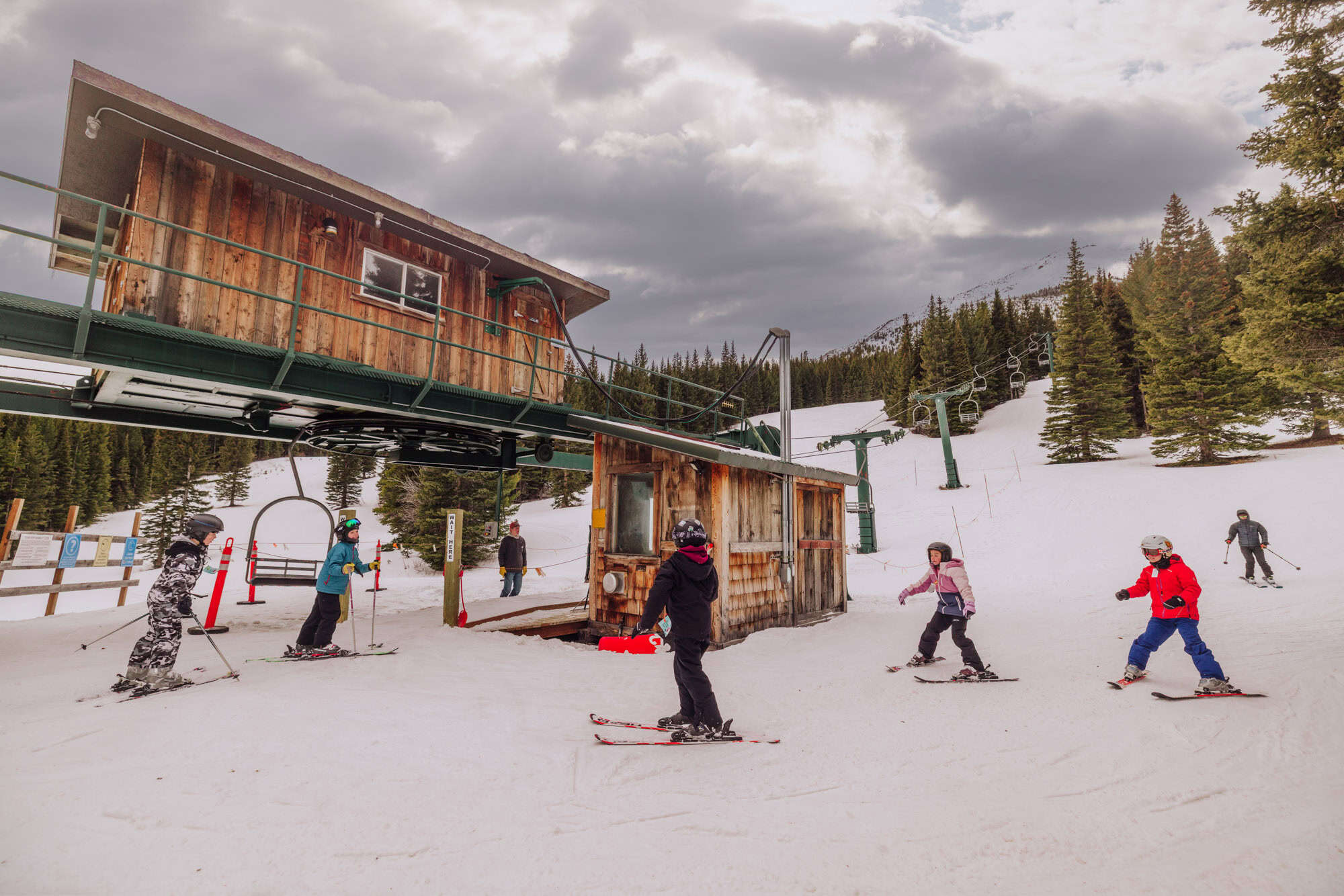
In the winter, locals head up to Teton Pass, about 30 miles from town. It’s a community ski area that closed for a few seasons, until a Choteau local who worked there as a teenager bought it and brought it back. He even plows the road himself! Part of the charm: it’s totally off the grid.
And in March, drive a few miles south to Freezout Lake. Tens of thousands of snow geese stop here on their migration north, and watching them lift off at sunrise is one of the great wildlife sights in Montana.
4. Bynum
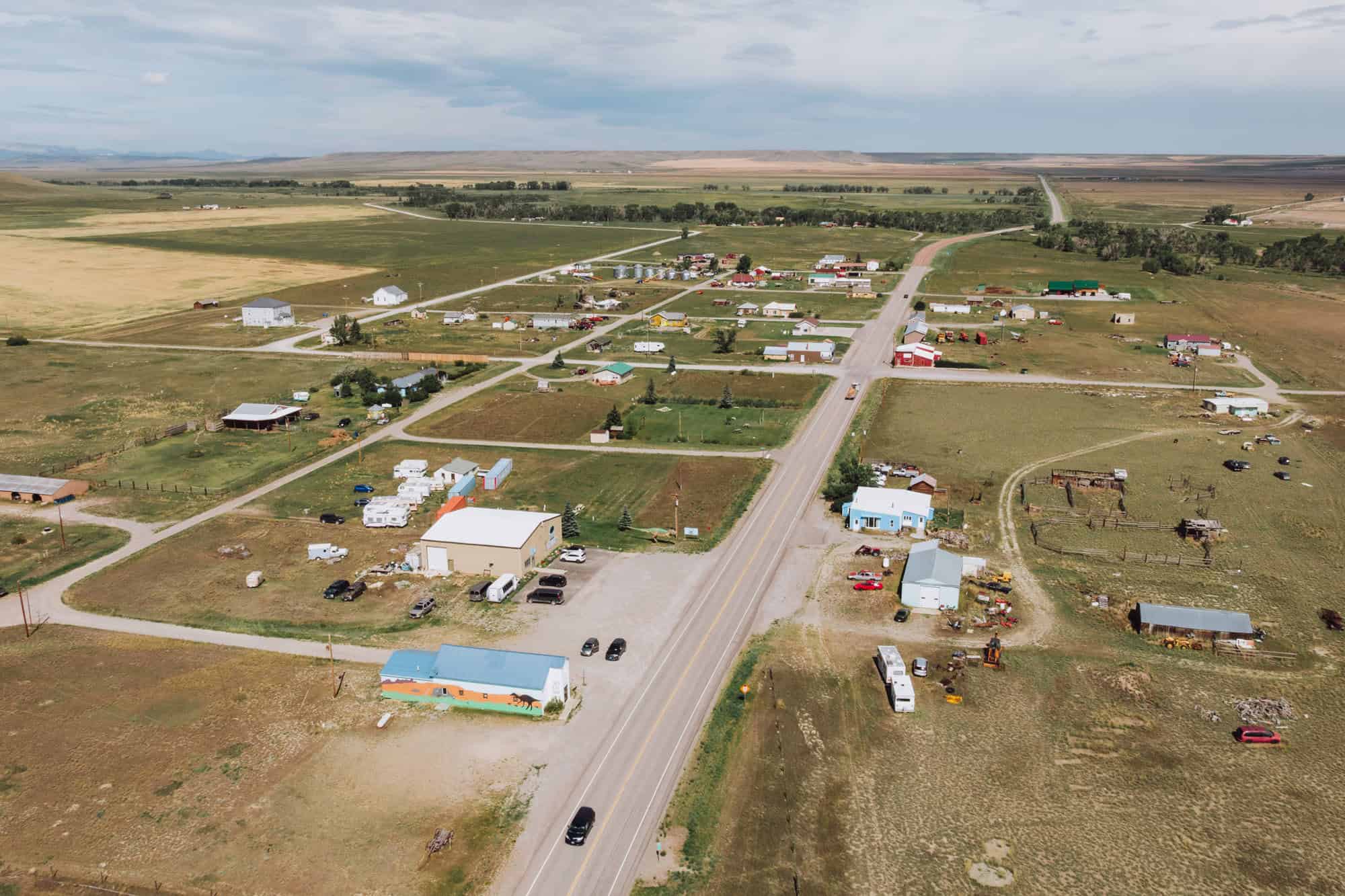
Bynum has a population of about 30 people, and one very big resident.
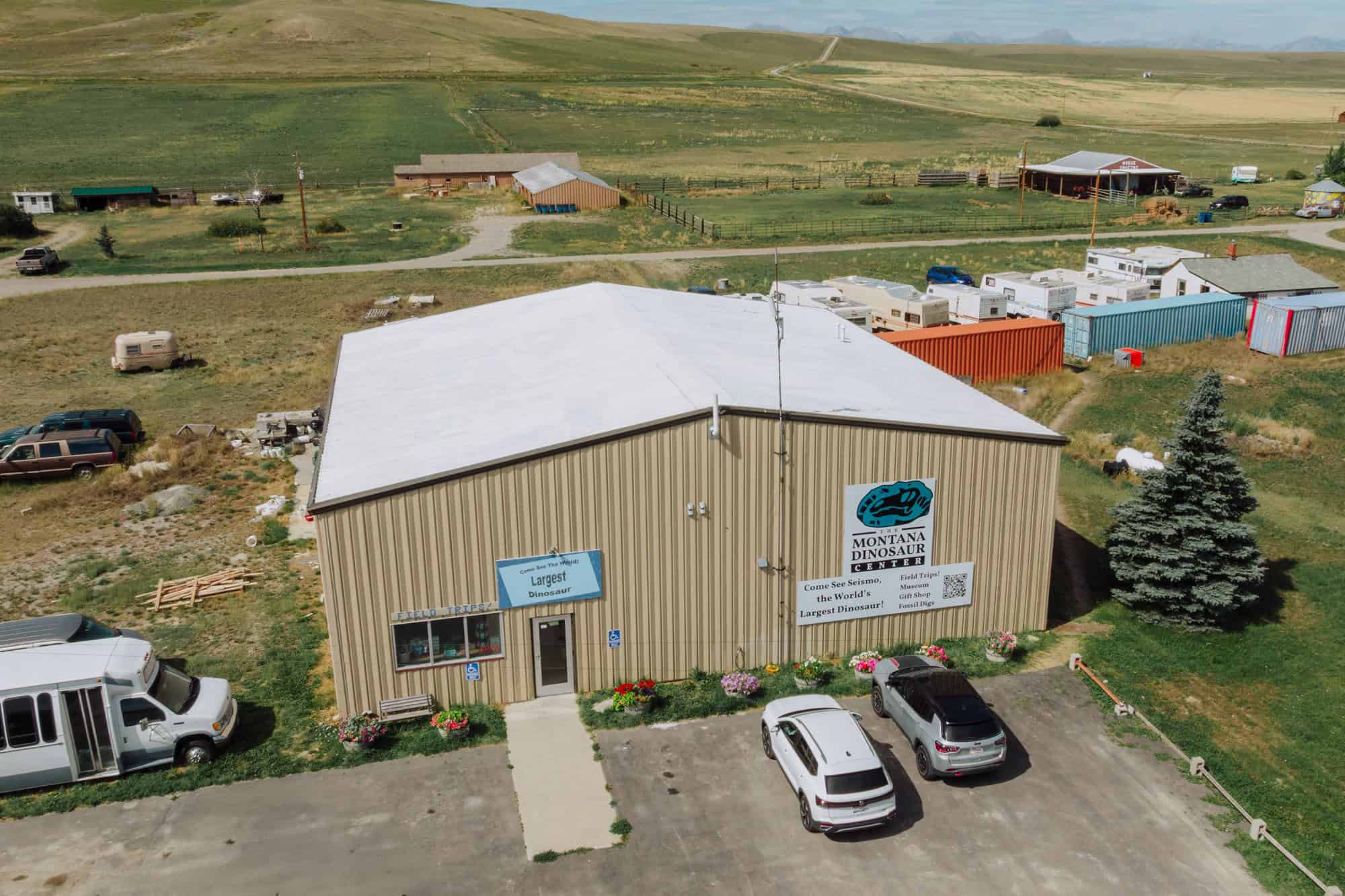
His name is Seismo. He’s a 137-foot-long Seismosaurus skeleton model, and he holds a Guinness World Record. He’s so large, his tail has to loop around the room to fit inside the building.
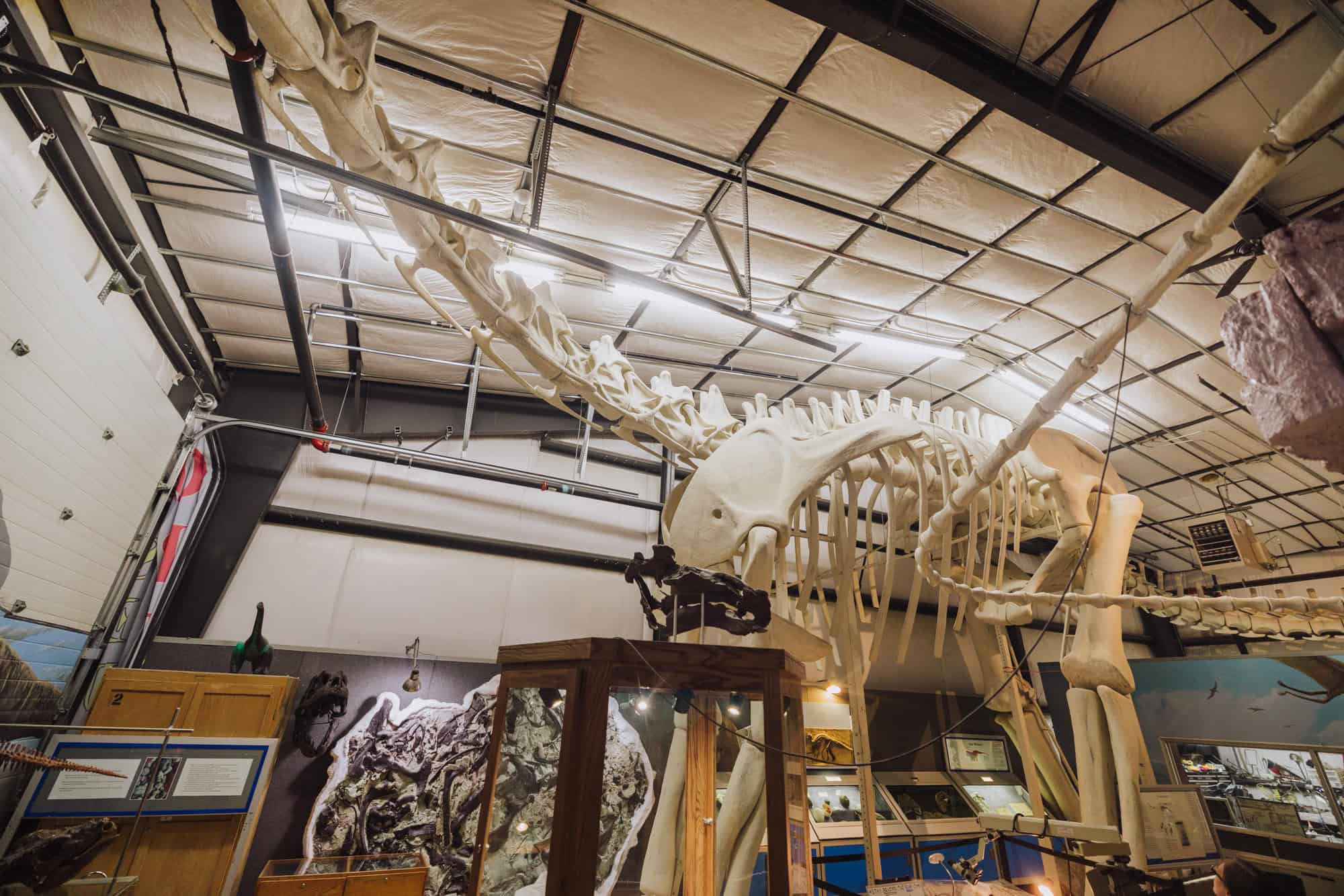
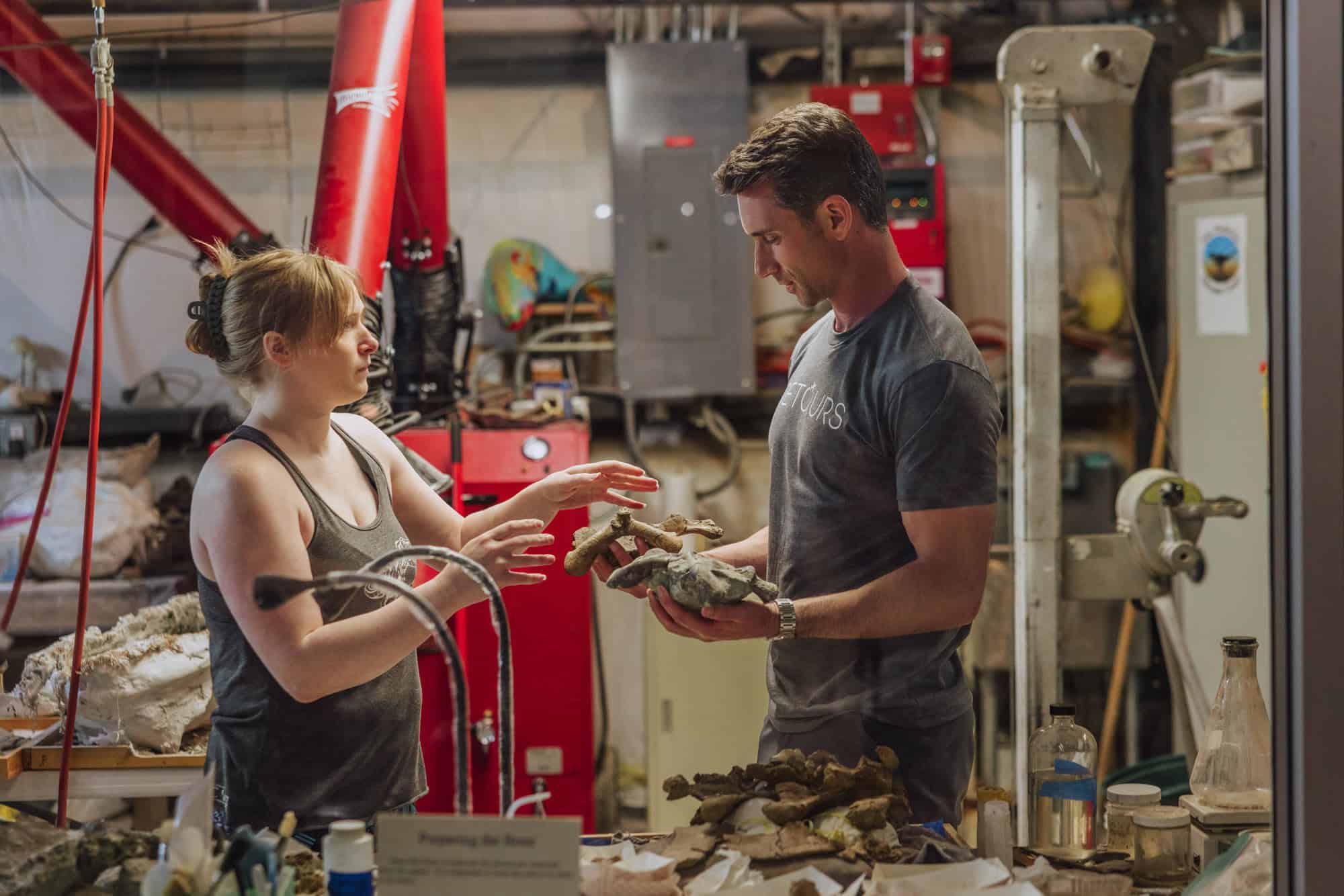
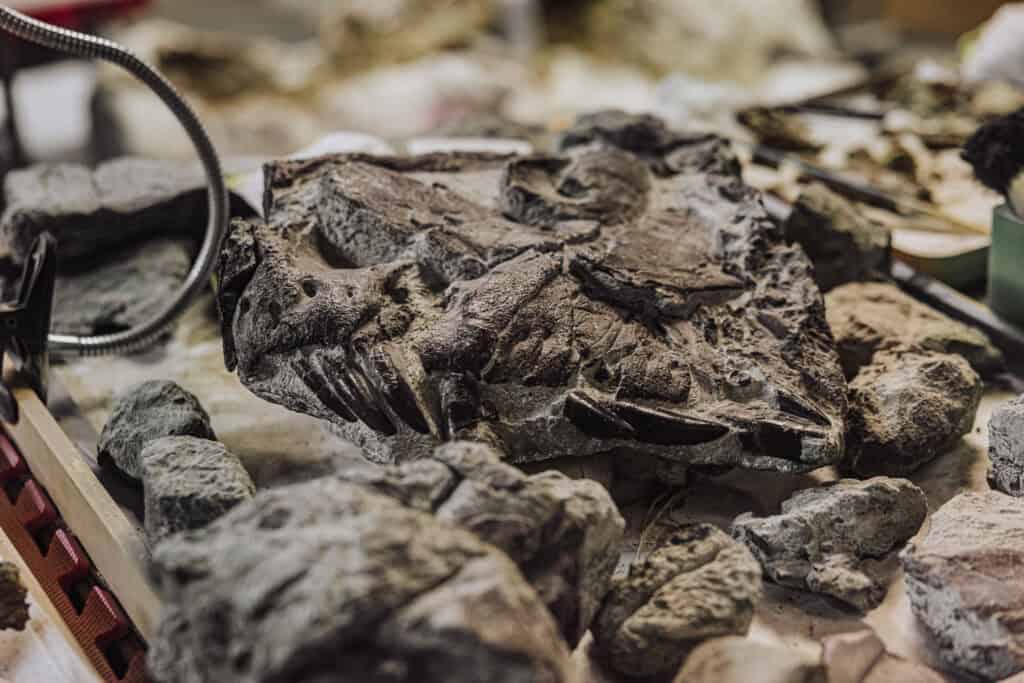
Seismo lives at the Montana Dinosaur Center, which I mistakenly called a museum on my first visit. It’s so much more! It’s a nonprofit research institute, staffed by paleontologists who spend their summers at dig sites in the nearby Two Medicine Formation.
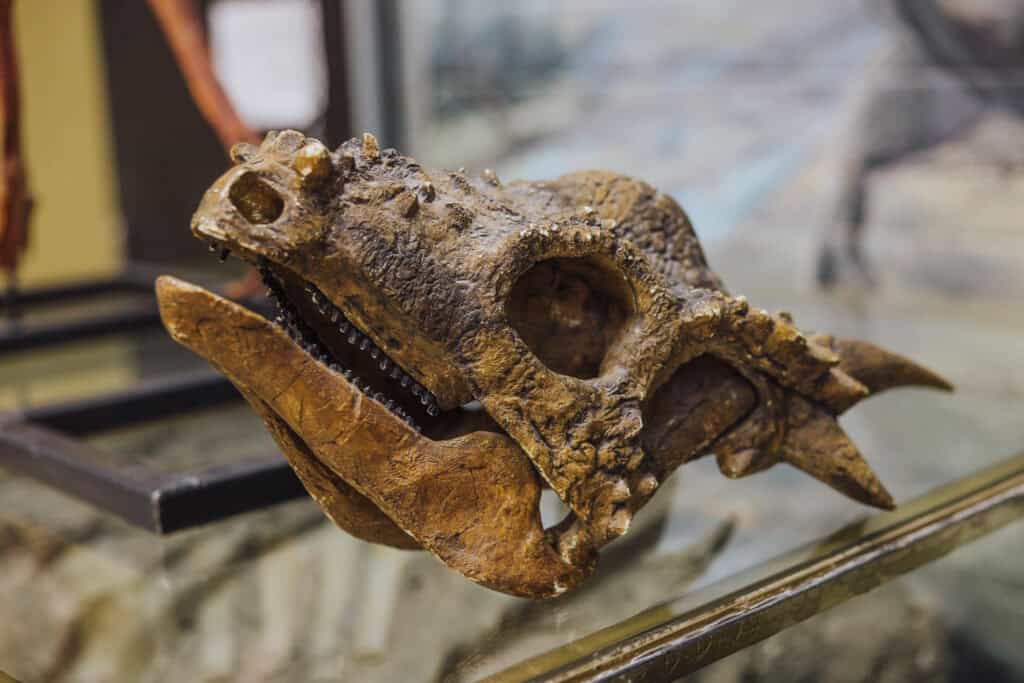
You can watch them chip away at 75-million-year-old dinosaur eggs in the lab. They even let me hold part of a Tyrannosaur’s face.
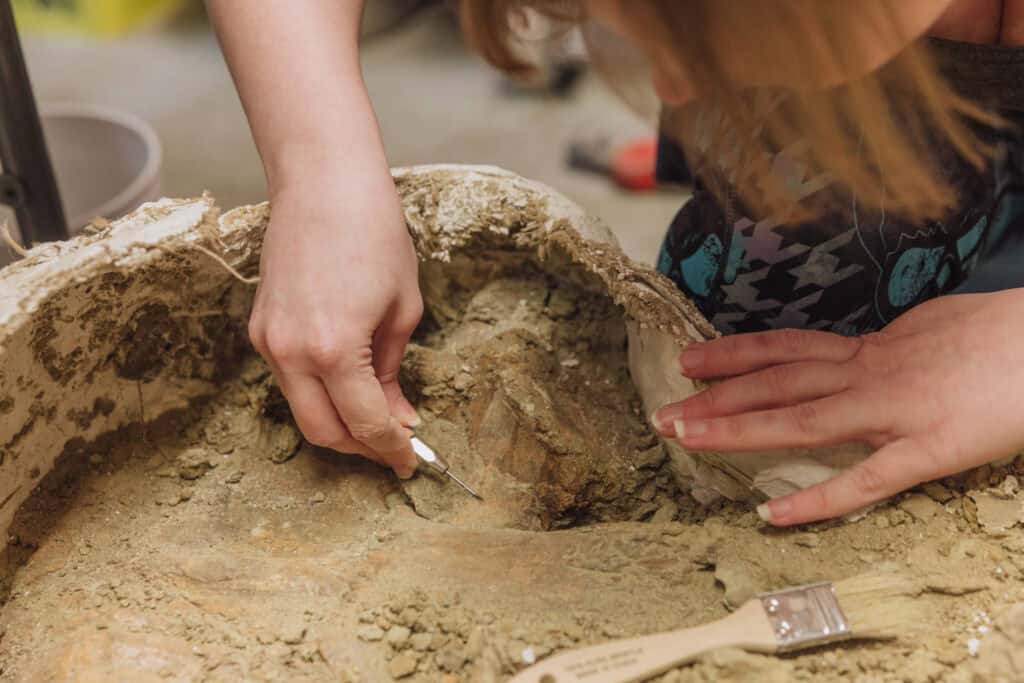
Better yet, you can join them in the field:
- Half-day tour: See bones at an active dig site. There’s no age minimum, so it’s great for families.
- Full-day dig: Learn the basics of field paleontology, then dig up fossils yourself.
Across the parking lot, the Trex Agate Shop has been run by the same family since 1937.
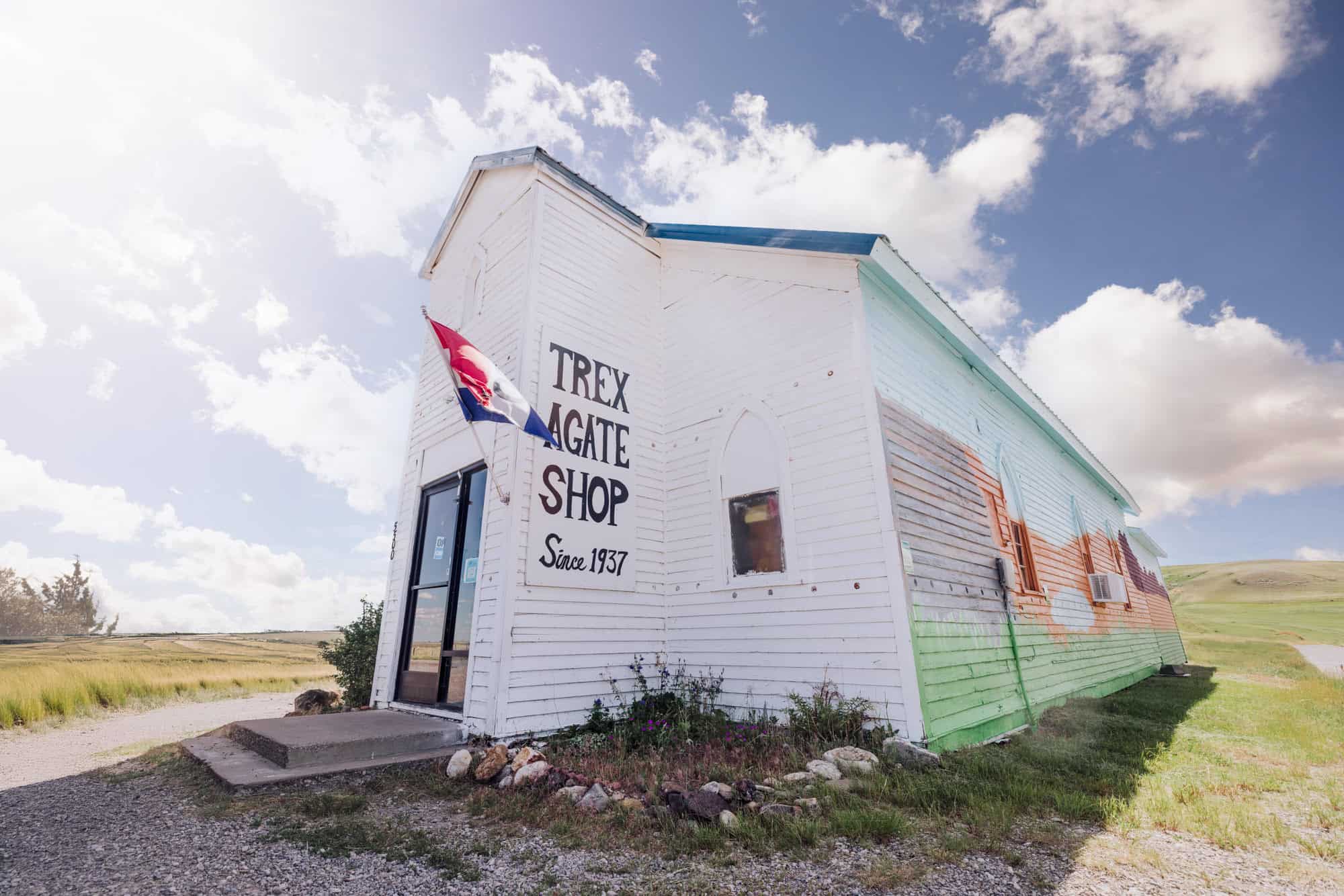
Bynum is along Highway 89, halfway between Great Falls and Glacier’s east entrance. The Dinosaur Center is open roughly from Memorial Day to Labor Day, and by appointment the rest of the year.
3. Dupuyer
Dupuyer is a small town on the backroads of Montana, with a clear view of the eastern front of the Rocky Mountains.
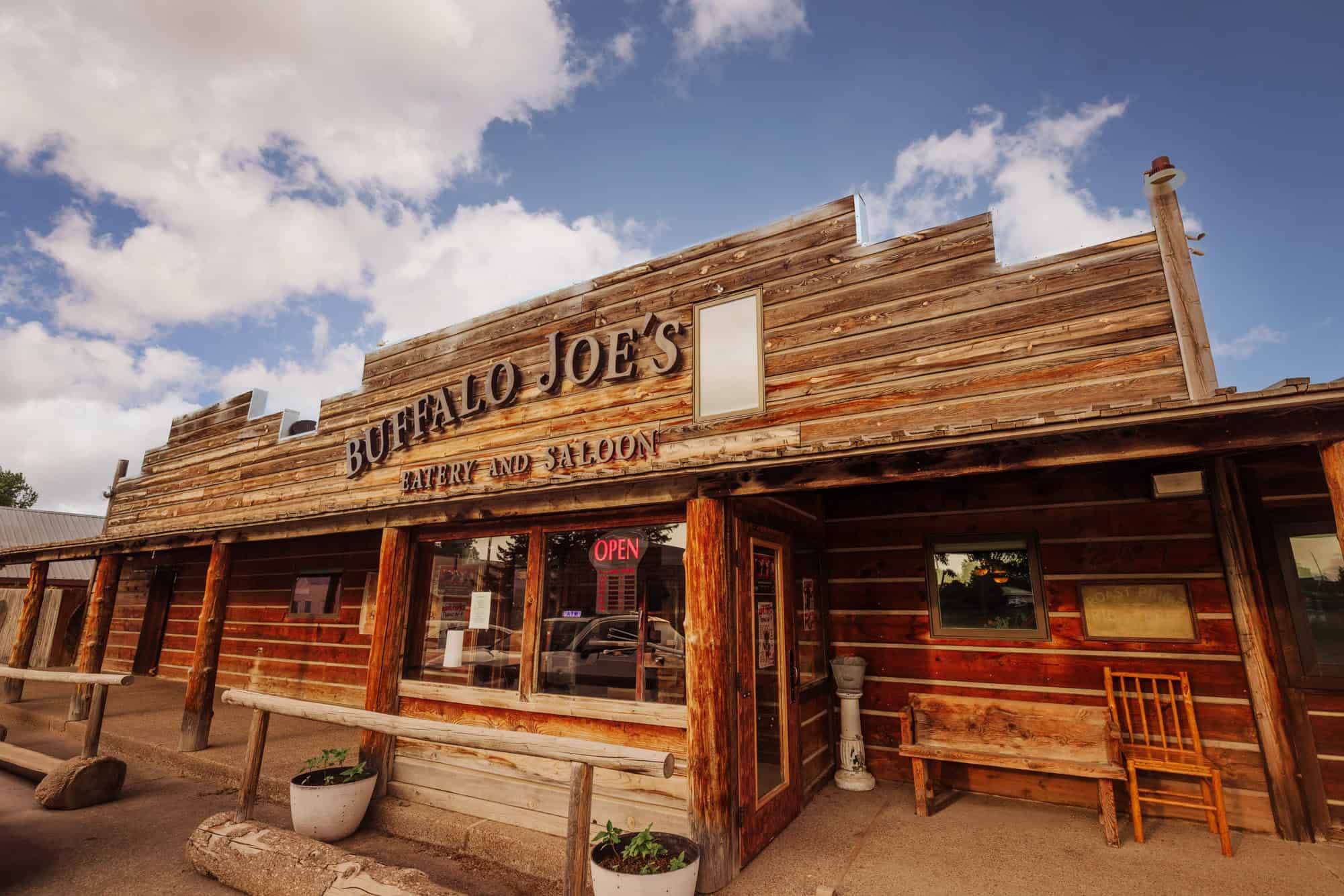
It’s a “one bar town,” and that bar is worth the drive.
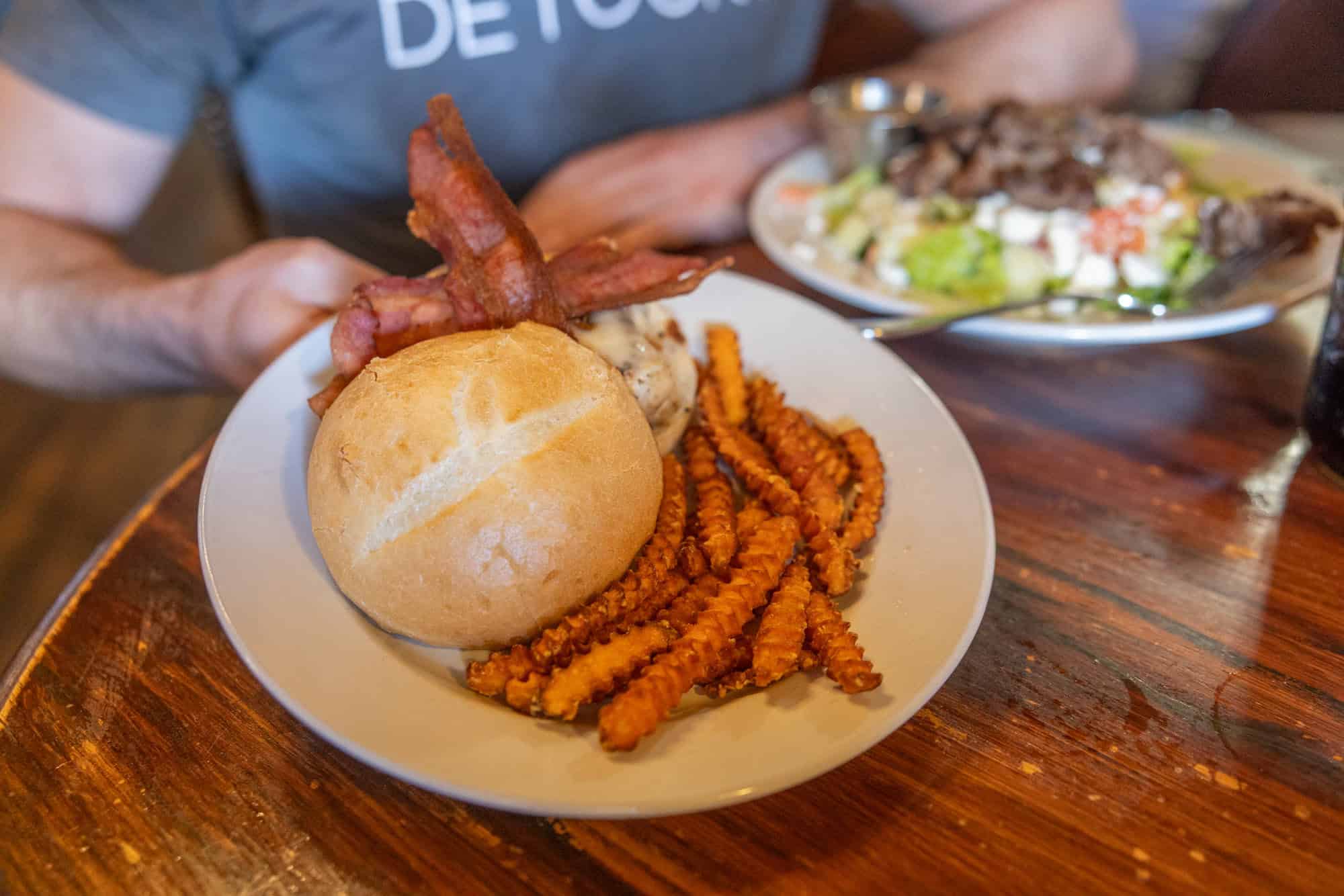
Buffalo Joe’s is an Old West-style saloon with generous steaks, local beer on tap, and friendly service. (Fun fact: “Dupuyer” comes from a French term for the back fat of a buffalo, which is how the bar got its name.)
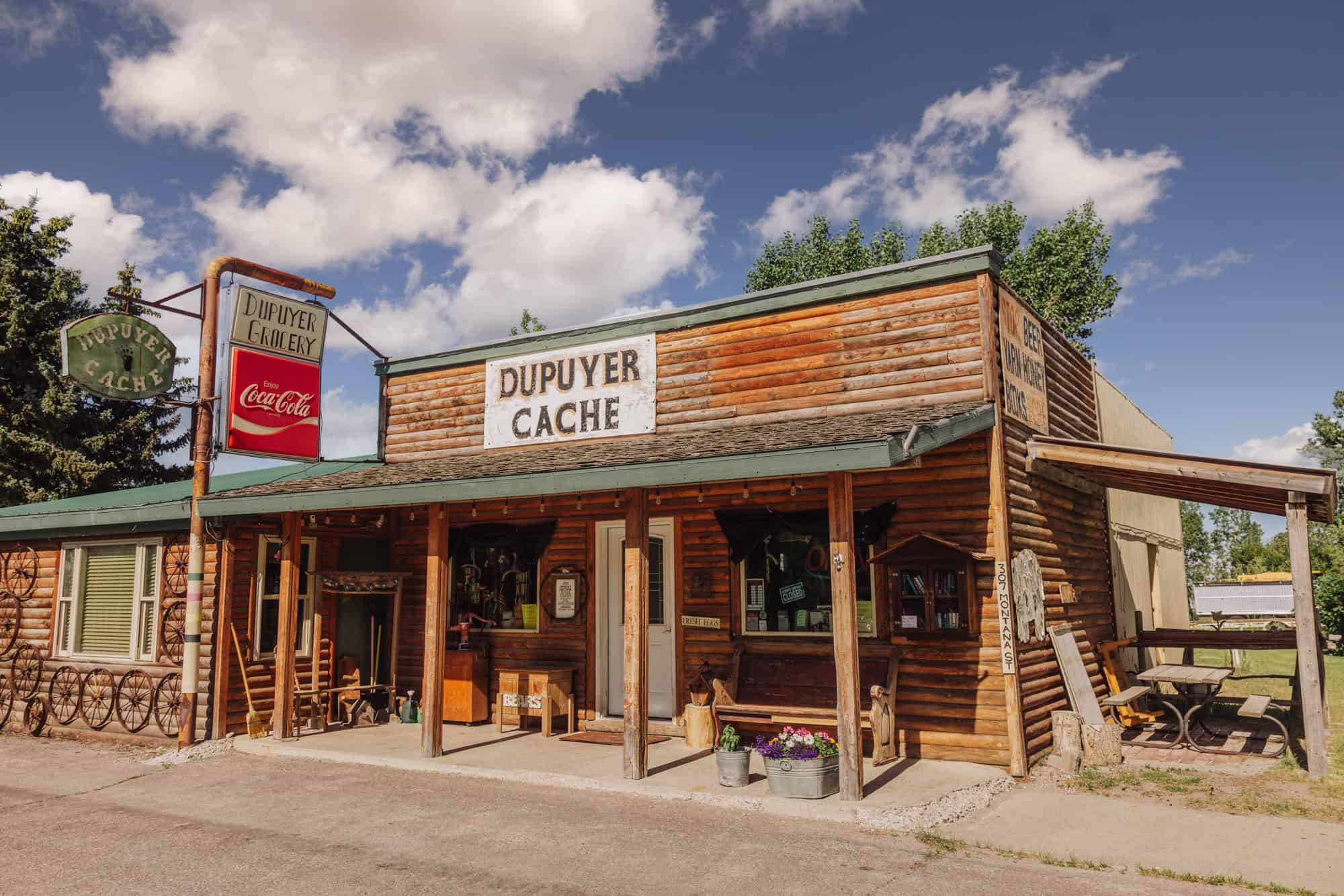
Next door, the Dupuyer Cache sells Montana-made gifts, wool yarn, photography, and western art.
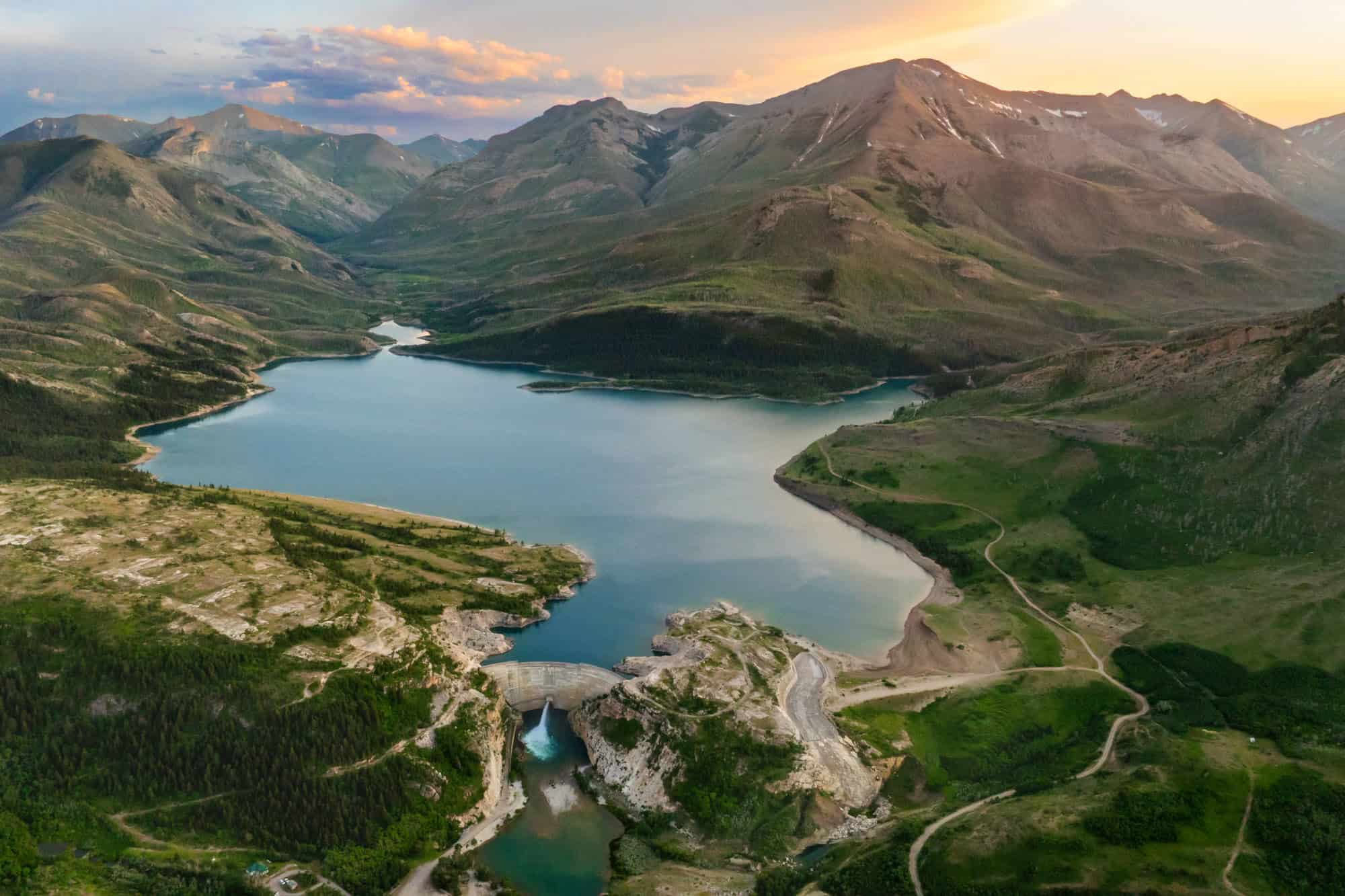
Then head for the mountains. About 17 miles west of town, on a gravel road, you’ll reach Swift Dam and Reservoir. The turquoise water and mountain backdrop look a lot like the views around Glacier National Park, without the crowds.
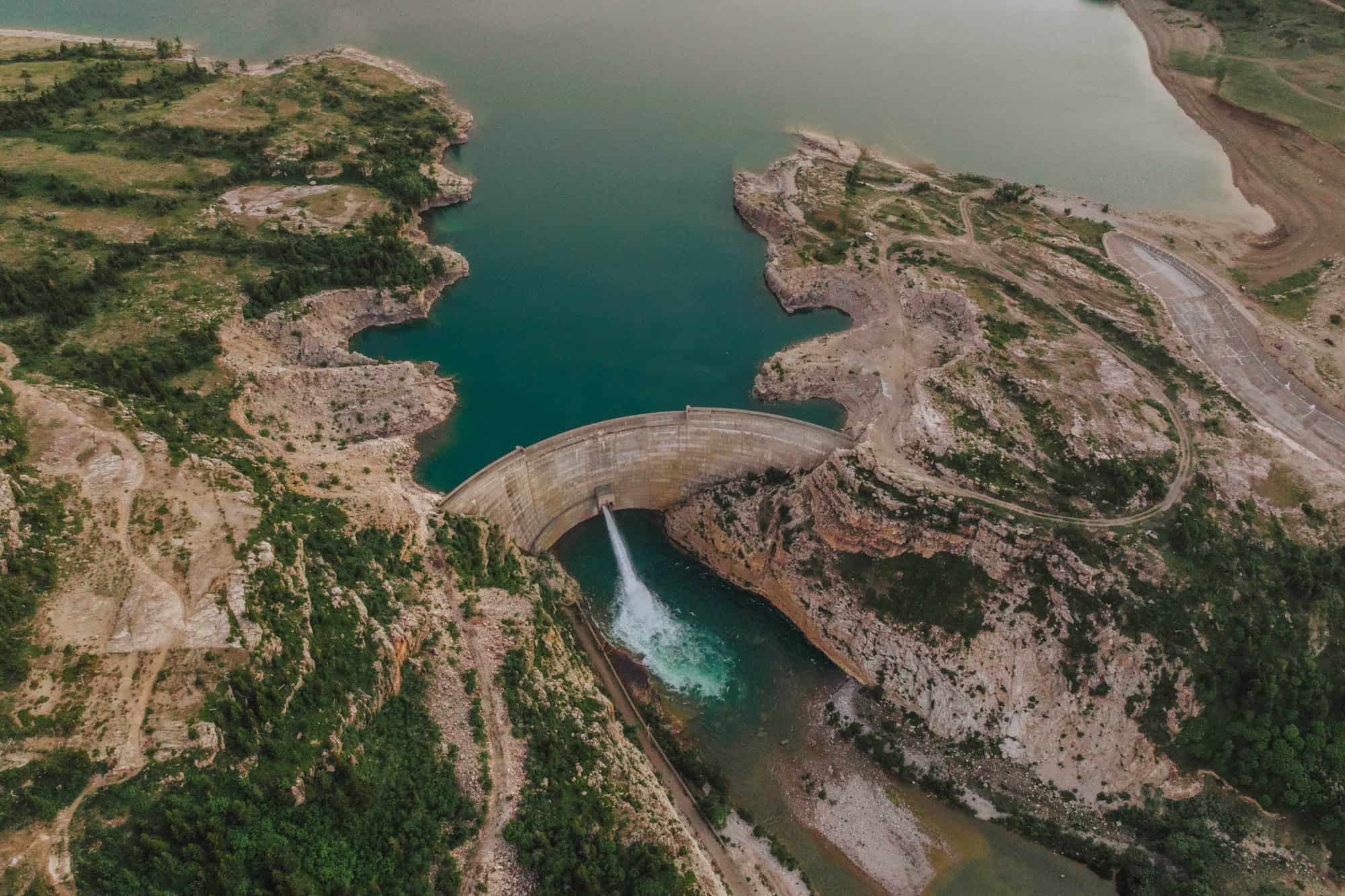
A 7.5-mile loop trail circles the reservoir, and the area is one of several gateways into the Bob Marshall Wilderness. “The Bob” covers more than 1 million acres, with over 1,500 miles of trails.
A few things to note:
- Cell service is unreliable or nonexistent near the reservoir.
- This is bear country. Carry bear spray!
- Spring can bring muddy roads and fast-flowing creeks.
- You’ll need a Blackfeet recreation permit if you cross onto tribal land on the north side of the lake.
Dupuyer is an hour south of Glacier’s east entrance, and 90 minutes north of Great Falls. Most people fly right past it on their way to the park. Don’t be most people.
2. Cascade
Cascade is a town of about 600 people on the banks of the Missouri River, between Great Falls and Helena.
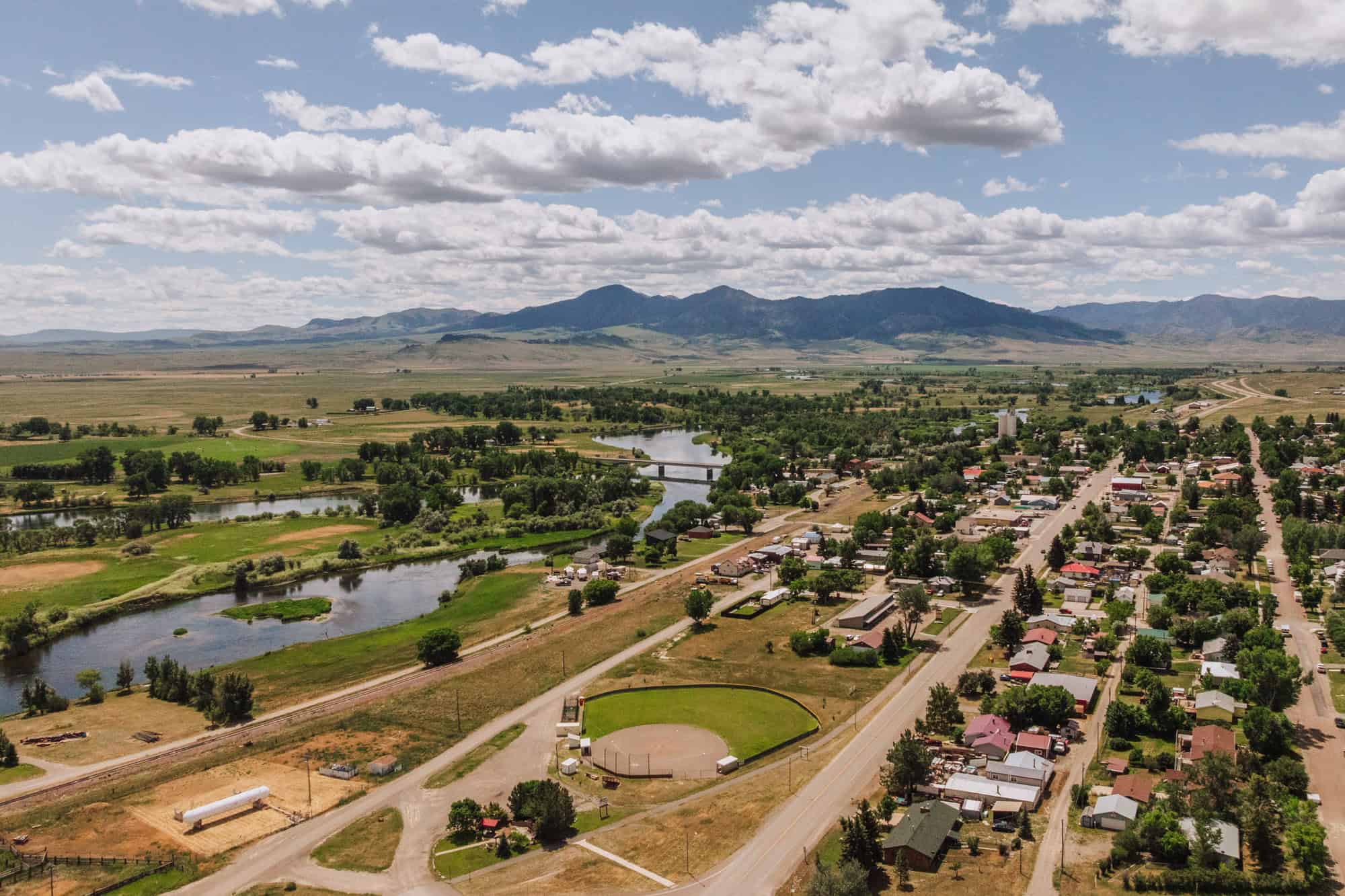
If you fly fish, you may already know the name. The fly fishing on the Missouri River here is considered world-class, with trout counts that have topped 6,000 fish per mile in good years. Cold, steady flows out of Holter Dam make for excellent sight-fishing, and anglers visit from around the world.
I struggle in the “patience” department, but I’ve now had two great floats with a local guide, and I can’t get over how clear the water is!
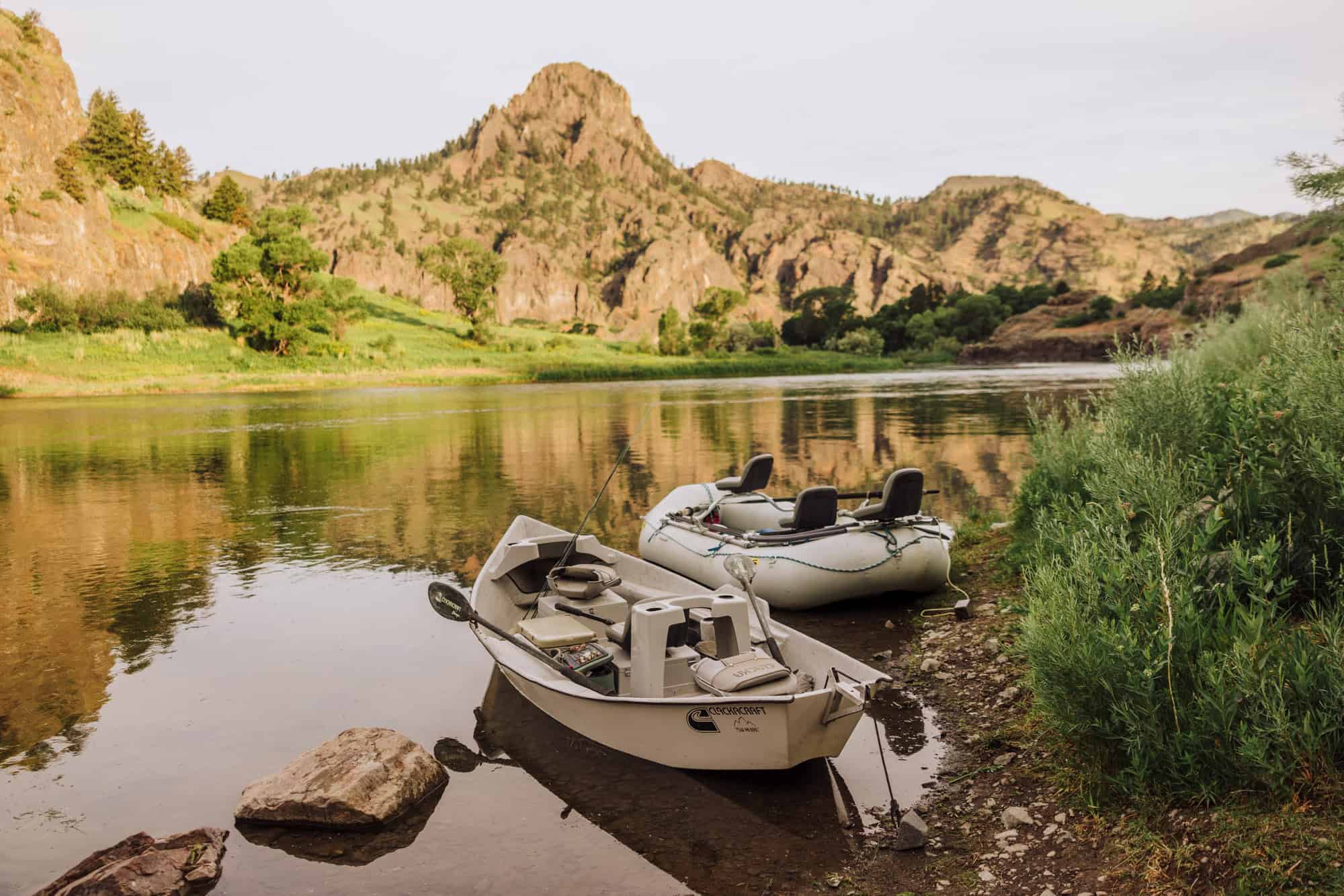
You don’t need a fly rod to enjoy it, though. South of town, the river leaves the plains and winds into a canyon of volcanic rock.
Tower Rock State Park marks the spot where the Lewis and Clark Expedition left the plains and entered the Rockies in 1805. It’s one of my favorite spots in Central Montana. Just behind it, Hardy Creek is a quieter stop for scrambling, kayaking, and floating. I’ve seen some amazing sunsets here!
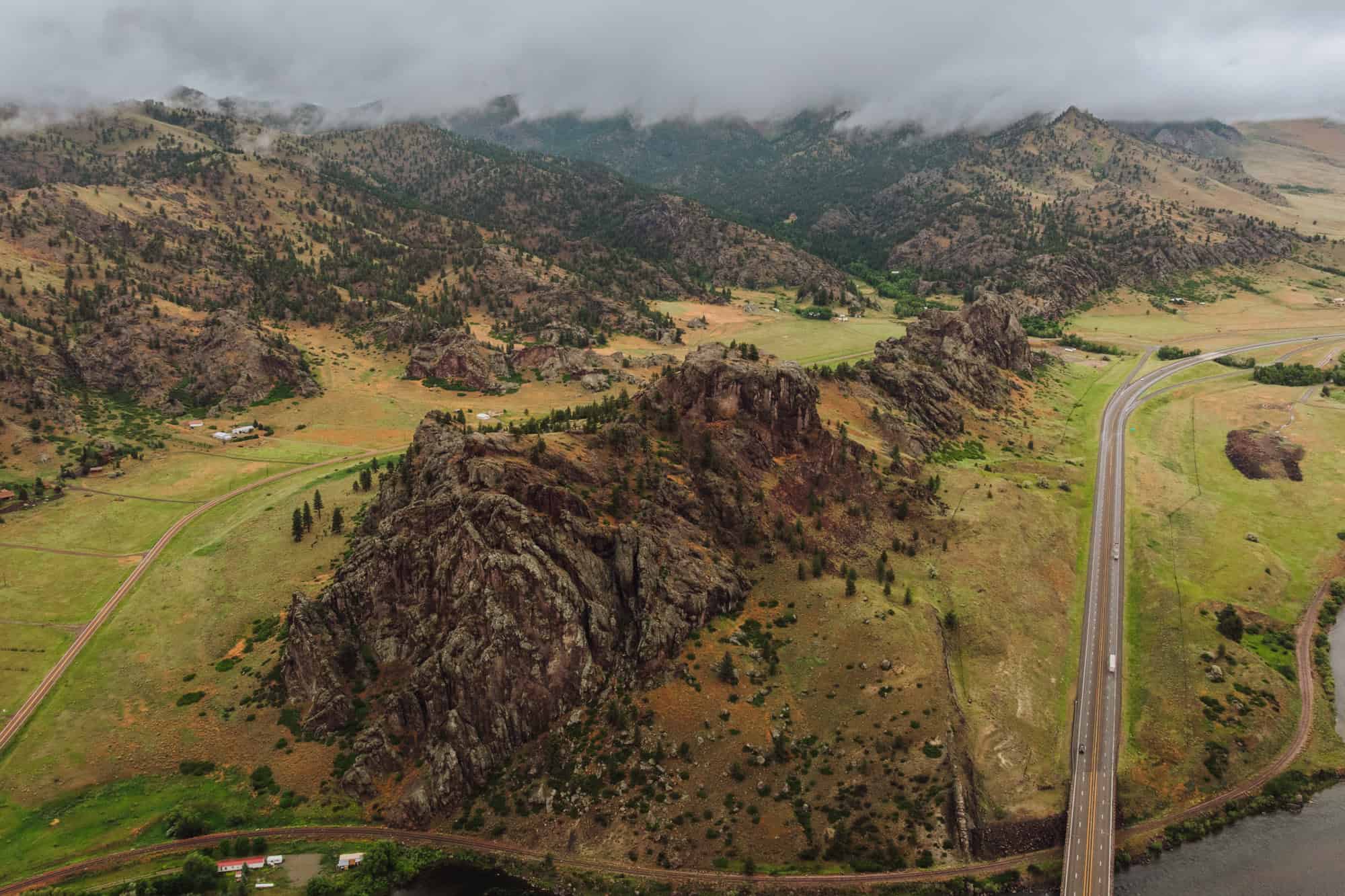
Cascade has some great history for a town of its size, too. Mary Fields, better known as “Stagecoach Mary,” delivered the mail here in the 1890s. And cowboy artist Charlie Russell married his wife, Nancy, in Cascade in 1896.
It’s less than 30 minutes from Great Falls, which makes it one of the easiest towns on this list to reach.
We have a whole separate post on places to stay while fishing the Missouri River.
1. White Sulphur Springs
I’ve saved the best for last.
White Sulphur Springs is a town of about 1,000 people in a wide valley, with the Little Belt Mountains to the north, the Castle Mountains to the east, and the Big Belts to the west. It’s about as far from a resort town as you can get, and that’s exactly why it’s at the top.
Start with the hot springs that gave the town its name. The pools at the Spa Hot Springs Motel are fed by natural mineral water, with no chemicals added. Soaking outside on a cold night, with steam rising and snow on the ground, is one of those Montana experiences you won’t forget.
Then there’s the food, which is far better than a town this size has any right to offer. Jawbone is the gem. It’s operated by a couple of young sisters, who also run Bar 47 and the Parberry across the street. Their arrival brought a new vibrance to White Sulphur Springs.
Up on the hill, you can’t miss The Castle: a granite mansion built in 1892, which is now the county museum.
The outdoors are right there in every direction:
- Skiing: Showdown Montana is about 30 minutes north, in the Little Belts.
- Floating: The Smith River, one of the most sought-after float trips in the country, starts nearby. Permits are handed out by lottery.
- Hiking and fishing: National forest land surrounds the valley on three sides.
And on the last weekend of July, the Red Ants Pants Music Festival takes over a cow pasture outside of town. Thousands of people show up for big-name country and folk acts, and the proceeds support rural communities.
White Sulphur Springs is the kind of town where you start looking at real estate listings before you leave!
The Wrap-Up
Montana has more great mountain towns than one list can fully capture.
The big names are worth seeing, and you can start anywhere on this list and find something worth the trip. But the towns I keep coming back to are the small ones: the places that still feel like communities, where the mountains are the main attraction and nobody’s in a hurry.
If you’re asking where I’d send you first, the answer is White Sulphur Springs.
Go see it for yourself, and you’ll understand immediately.
More Things To Do In Montana
Check out our other blogs: